Likes
Comments
Share
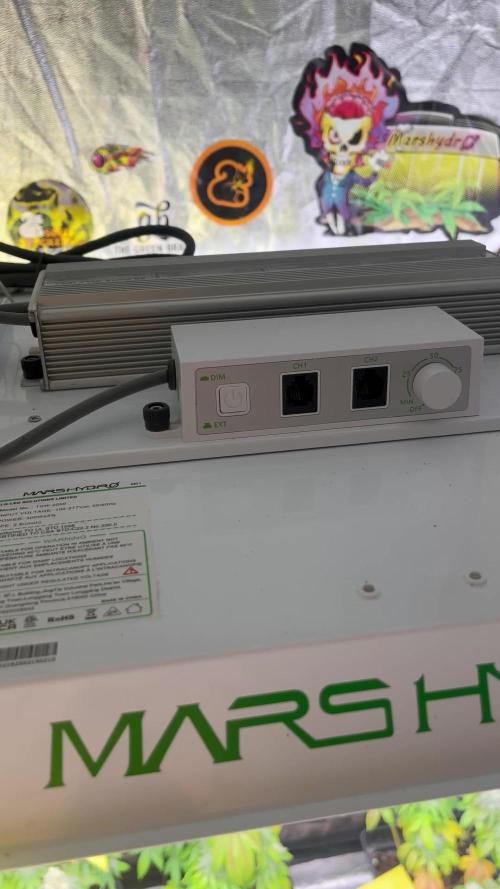
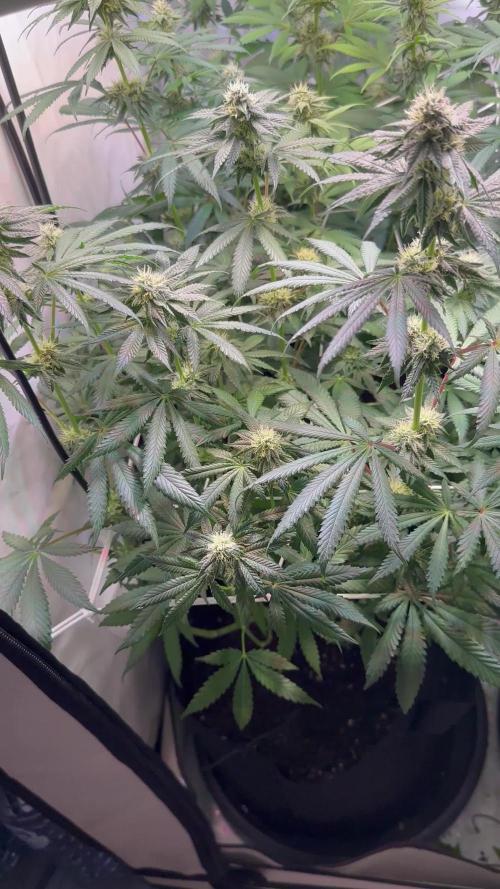
Que pasa familia, vamos con la décima semana de floración de estas Barcelona Puff feminizadas de Seedstockers. Vamos al lío ,se trasplantaron en macetas de 7 litros definitivamente. El ph se controla en 6.0 , la temperatura la tenemos entre 25/21 grados y la humedad ronda el 50%. El ciclo de floración puse 12h de luz, el foco está al 75% de potencia. De momento tienen un buen color, la flor está madurando y a tricomado bastante, por el momento todo bien. Agradecer a Agrobeta por el envío del kit gold series para la temporada 🙏. - os dejo por aquí un CÓDIGO: Eldruida Descuento para la tienda de MARS HYDRO. https://www.mars-hydro.com Hasta aquí todo, Buenos humos 💨💨💨
Likes
17
Share
@DevelGrow
Follow
Hallo Freunde 👋 Velvet Candy Widow Auto von Monkey Genetics 🦍 ist zur Welt gekommen nach nur 3 Tagen vom Samen zum 1,5 cm Samling 👍 Respekt!!! Abwarten wie es weiter geht! ✌️Keep Green and grow High 🍀💚🍀
Likes
11
Share
@Socal6pak
Follow
I LIKE TO PLANT DIRECTLY IN SOIL. LESS I HANDLE THE BEANS THE BETTER. KEEP IT SIMPLE. SHOULD HAVE STARTED EARLIER THIS MONTH. BUT THE NIGHTS WERE STILL GETTING BELOW 60S, SO I WAS WAITING. THESE SHOULD BE DONE 8-10 WEEKS ANYWAY. SO BY EARLY AUG SHOULD BE DONE, WHICH IS STILL FULL SUN. 1/2 LST, 1/2 NO TRAINING. I'VE GROWN PLENTY OUTDOORS AND AUTOS ARE THE EASIEST. IF YOU LIVE IN SOCAL GET A PACK OF FASTBUDS AND START GROWING YOUR OWN OUTDOORS. HARVEST THE SUN. JUST NEED A 3-5 GAL POT, ORGANIC SOIL AND WATER. NOTHING FANCY.
Likes
18
Share
Die kleine Dame ist geschlüpft und es geht in die erste Woche. Sie bekommt nun einen "Topf" und kann sich erstmal darin ausleben.
Likes
7
Share
Week 4 was actually pretty smooth. she was showing nitrogen and potassium deficiencies because she was being terribly underfed and because i had weened her off the veg nutes WAY too soon. I found the dyna gro nutrient schedule and ive been following that. i will definitely be following the schedule much better next round as i wasnt actually aware they had a schedule out. Shes currently week 5 day 1 and shes already fat af and super trichomey.s he still got at least 2 weeks left. she might be ready by week 7 honestly tho who knows guess well see. Ive been giving her 1 gal each time of dechlorinated tap water just straight water. it has been phd to 6.6 ph. runoff tested at 6.3 ph. will probably flush one last time before continuing the bloom feed.
Processing
Likes
9
Share
Aqui esta mi primer time lapse. No tenia ni idea de como se hacía, así que para lo poco que se, he quedado satisfecho. La cámara no es de calidad, y al ser una cámara deportiva no tiene un buen enfoque tan de cerca. Ahora que la planta se ha espigado he rellenado lo que quedaba de la copa para que gane estabilidad. Intentaré seguir con el time lapse si la vuelta al trabajo me lo permite.
Likes
23
Share
I love growing with GrowDiaries! It's great to be able too look back at previous grows and compare. Being able to share with the community is a bonus!! This strain was so easy to grow I found her and her brothers picky on ph, but most are. I'm excited to growing again. @honeycombhydrollc @thefreakoff2021
Processing
Likes
12
Share
@rhodes68
Follow
9/22 Week 10 update... finally Looks good but going to add more Phos due to some red stems showing upping to 3ml/g 9/23 Reducing Bloom nuets @10% a day for a couple, down to the 80% mark now Add Soul Peak PK to mix as well as Koolbloom need to use up the Peak and we want to see if it brings anything special. Be in flush within 7-10 days on all but the sativa FF2 Vids finally 9/25 Adjusted nuets slightly 9/26 Like how it looks leaving nuets as is till flush down the road 9/27 And the tricones have over ruled me they are getting ready, 80-90% white 10-20% clear so taking the nuets to our ripening doses. Up PK down Bloom nuets
Likes
5
Share
@prem895
Follow
Well here we are at the beginning of week 8. Super windy today but I got my new rain tarp up. June 25th gave all the plants pretty good snip except for Cinderella number 2 which is still slow but coming along tomorrow I may top all the other little branches not quite sure yet. just fucked up my pH metre by hitting the calibration button by accident and now I have no solution to recalibrate it so I'm going to have to wait and kind of wing it until the new one gets here in a couple of weeks but my pH in my house water is around 7- 7.5 12 ml of vinegar in 12 qts should be the ticket. Friday June 26th well I found a way to use clothes pins to use them as wait to hold the branches down I kind of like it tell me what you think. well looks like everything is coming along okay I keep the newts down I rather have them a little too lower than too high. well this is the last day of week 8 in July 1st and everything seemed to be going along fine but it looks like my Cinderella 99 run into a bit of a deficiency on the nitrogen and somebody let me know if this is right or not and if there's somebody in Toronto who can test the tap water for pH levels and let me know my pH metre is broken right now
Likes
12
Share
Well firstly the team at seedstockers has some great genetics and they perform well , this girl could have been a real producer if it was grown better.. but that being said the customer service was great and so was the strain selection ...She had no real issues except I was growing in a unfinished basement which really hurt me in the beginning and I had hot soil so it was a rough start ...These are weds though and they bounce back as fast as the go down hill ..The plant has a great structure a main fat bud with many side branches that could have really gotten fat ...The colour and the smell is fantastic so is the taste when you smoke her ..she dried for 6-7 days and is easily burned with grey / White ash , flushed for a week prior to harvest .. I would defenitely grow again just in amore stable environment to get the most out of her but with all my mistakes she still gave me some stinky and sticky buds cheers canna family ...
Likes
24
Share
*****Week 14 growth – March 6 to 12, 2021 – Week 5 flower ****** This girl keeps chugging along. Her resin rails are looking awesome. A little dark green maybe but not worried. Looking for some bud swelling to kick in!! Bud Fusion being introduced this week. Into the last phase of feeding during flower now. Nitrogen is continued to be reduced as its late flower. Keeping up the feeding ppm this week as we are getting to the end. May be pushing them a little more than I should but finding out how they react for next run. Still continuing to play with the light intensity and seeing how the girls react to my environment conditions when pushed harder. Could have backed off and stayed with 100, 300, 600, 900 PAR levels at the different stages but I have trying to go a little higher in the late stages and going over 1,000 PAR. Little more detail….. Mar 6/21, Day 29 - Dry out day - Changed light cycle to 11/13 today to help with light intensity and reducing DLI. - Light power reduced to 425 watts Mar 7/21, Day 30 - Keeping up the feeding but reducing nitrogen. - feeding with micro – 1.5, bloom – 2.5, ult B – 0.5, carbs – 1, B Storm – 2, S Storm – 2.5, Bud Fusion 0.15gr/l, Terp – 1.5, Jet Fuel – 0.5, Rezin 1 - 1150ppm and 6.0pH - 2.5L Mar 8/21, Day 31 - Watering with 2L feed from yesterday and 16L plain water - Over shot the pH - 400ppm and 5.9pH Mar 9/21, Day 32 - Feeding again with Grow – 0.5, Micro – 1, Bloom – 1.5, Carbs – 1, Magnifical – 1 - Didn’t add many of the supplements - 875ppm and 6.0pH - 2.5L Mar 10/21, Day 33 - Middle of the week and just giving some enzymes today - Enzymes – 1.5ml - 300ppm and 6.1pH - 3L Mar 11/21, Day 34 - Microbes again today - Tap water with Jet Fuel – 1ml, Terpinator – 2ml, Nature’s Candy – 1.5ml, Rezin – 1ml, Ultimate B+ - 0.5ml, Recharge – 1tsp/gal - 800ppm and 6.0pH - 3L Mar 12/21, Day 35 - Dry out day - Been feed a couple of times this week so work with ¾ strength next week.
Likes
5
Share
Der Geruch wird intensiver! Es riecht so unglaublich lecker, etwas nach Haze und stark nach tropischen Früchten! Wachstum ist gut, die Blüten werden schön dick :)
Likes
17
Share
@Smokwiri
Follow
Development is good, plant smells very nice Not too skunky, i like it ;) Plant is loving the nutrients...
Likes
25
Share
ANTHOCYANIN production is primarily controlled by the Cryptochrome (CR1) Photoreceptor ( !! UV and Blue Spectrums are primary drivers in the production of the pigment that replaces chlorophyll, isn't that awesome! 1. Diverse photoreceptors in plants Many civilizations, including the sun god of ancient Egypt, thought that the blessings of sunlight were the source of life. In fact, the survival of all life, including humans, is supported by the photosynthesis of plants that capture solar energy. Plants that perform photosynthesis have no means of transportation except for some algae. Therefore, it is necessary to monitor various changes in the external environment and respond appropriately to the place to survive. Among various environmental information, light is especially important information for plants that perform photosynthesis. In the process of evolution, plants acquired phytochrome, which mainly receives light in the red light region, and multiple blue light receptors, including his hytropin and phototropin, in order to sense the light environment. .. In addition to these, an ultraviolet light receptor named UVR8 was recently discovered. The latest image of the molecular structure and function of these various plant photoreceptors (Fig. 1), focusing on phytochrome and phototropin. Figure 1 Ultraviolet-visible absorption spectra of phytochrome, cryptochrome, phototropin, and UVR8. The dashed line represents each bioactive absorption spectrum. 2. Phytochrome; red-far red photoreversible molecular switch What is phytochrome? Phytochrome is a photochromic photoreceptor, and has two absorption types, a red light absorption type Pr (absorption maximum wavelength of about 665 nm) and a far-red light absorption type Pfr (730 nm). Reversible light conversion between the two by red light and far-red light, respectively(Fig. 1A, solid line and broken line). In general, Pfr is the active form that causes a physiological response. With some exceptions, phytochrome can be said to function as a photoreversible molecular switch. The background of the discovery is as follows. There are some types of plants that require light for germination (light seed germination). From that study, it was found that germination was induced by red light, the effect was inhibited by subsequent far-red light irradiation, and this could be repeated, and the existence of photoreceptors that reversibly photoconvert was predicted. In 1959, its existence was confirmed by the absorption spectrum measurement of the yellow sprout tissue, and it was named phytochrome. Why does the plant have a sensor to distinguish between such red light and far-red light? There is no big difference between the red and far-red light regions in the open-field spectrum of sunlight, but the proportion of red light is greatly reduced due to the absorption of chloroplasts in the shade of plants. Similar changes in light quality occur in the evening sunlight. Plants perceive this difference in light quality as the ratio of Pr and Pfr, recognize the light environment, and respond to it. Subsequent studies have revealed that it is responsible for various photomorphogenic reactions such as photoperiodic flowering induction, shade repellent, and deyellowing (greening). Furthermore, with the introduction of the model plant Arabidopsis thaliana (At) and the development of molecular biological analysis methods, research has progressed dramatically, and his five types of phytochromes (phyA-E) are present in Arabidopsis thaliana. all right. With the progress of the genome project, Fi’s tochrome-like photoreceptors were found in cyanobacteria, a photosynthetic prokaryotes other than plants. Furthermore, in non-photosynthetic bacteria, a homologue molecule called bacteriophytochrome photoreceptor (BphP) was found in Pseudomonas aeruginosa (Pa) and radiation-resistant bacteria (Deinococcus radiodurans, Dr). Domain structure of phytochrome molecule Phytochrome molecule can be roughly divided into N-terminal side and C-terminal side region. PAS (Per / Arndt / Sim: blue), GAF (cGMP phosphodiesterase / adenylyl cyclase / FhlA: green), PHY (phyto-chrome: purple) 3 in the N-terminal region of plant phytochrome (Fig. 2A) There are two domains and an N-terminal extension region (NTE: dark blue), and phytochromobilin (PΦB), which is one of the ring-opening tetrapyrroles, is thioether-bonded to the system stored in GAF as a chromophore. ing. PAS is a domain involved in the interaction between signal transduction-related proteins, and PHY is a phytochrome-specific domain. There are two PASs and her histidine kinase-related (HKR) domain (red) in the C-terminal region, but the histidine essential for kinase activity is not conserved. 3. Phototropin; photosynthetic efficiency optimized blue light receptor What is phototropin? Charles Darwin, who is famous for his theory of evolution, wrote in his book “The power of move-ment in plants” published in 1882 that plants bend toward blue light. Approximately 100 years later, the protein nph1 (nonphoto-tropic hypocotyl 1) encoded by one of the causative genes of Arabidopsis mutants causing phototropic abnormalities was identified as a blue photoreceptor. Later, another isotype npl1 was found and renamed phototropin 1 (phot1) and 2 (phot2), respectively. In addition to phototropism, phototropin is damaged by chloroplast photolocalization (chloroplasts move through the epidermal cells of the leaves and gather on the cell surface under appropriate light intensity for photosynthesis. As a photoreceptor for reactions such as escaping to the side of cells under dangerous strong light) and stomata (reactions that open stomata to optimize the uptake of carbon dioxide, which is the rate-determining process of photosynthetic reactions). It became clear that it worked. In this way, phototropin can be said to be a blue light receptor responsible for optimizing photosynthetic efficiency. Domain structure and LOV photoreaction of phototropin molecule Phototropin molecule has two photoreceptive domains (LOV1 and LOV2) called LOV (Light-Oxygen-Voltage sensing) on the N-terminal side, and serine / on the C-terminal side. It is a protein kinase that forms threonine kinase (STK) (Fig. 4Aa) and whose activity is regulated by light. LOV is one molecule as a chromophore, he binds FMN (flavin mononucleotide) non-covalently. The LOV forms an α/βfold, and the FMN is located on a β-sheet consisting of five antiparallel β-strands (Fig. 4B). The FMN in the ground state LOV shows the absorption spectrum of a typical oxidized flavin protein with a triplet oscillation structure and an absorption maximum wavelength of 450 nm, and is called D450 (Fig. 1C and Fig. 4E). After being excited to the singlet excited state by blue light, the FMN shifts to the triplet excited state (L660t *) due to intersystem crossing, and then the C4 (Fig. 4C) of the isoaroxazine ring of the FMN is conserved in the vicinity. It forms a transient accretionary prism with the tain (red part in Fig. 4B Eα) (S390I). When this cysteine is replaced with alanine (C / A substitution), the addition reaction does not occur. The effect of adduct formation propagates to the protein moiety, causing kinase activation (S390II). After that, the formed cysteine-flavin adduct spontaneously dissociates and returns to the original D450 (Fig. 4E, dark regression reaction). Phototropin kinase activity control mechanism by LOV2 Why does phototropin have two LOVs? Atphot1 was found as a protein that is rapidly autophosphorylated when irradiated with blue light. The effect of the above C / A substitution on this self-phosphorylation reaction and phototropism was investigated, and LOV2 is the main photomolecular switch in both self-phosphorylation and phototropism. It turns out that it functions as. After that, from experiments using artificial substrates, STK has a constitutive activity, LOV2 functions as an inhibitory domain of this activity, and the inhibition is eliminated by photoreaction, while LOV1 is kinase light. It was shown to modify the photosensitivity of the activation reaction. In addition to this, LOV1 was found to act as a dimerization site from the crystal structure and his SAXS. What kind of molecular mechanism does LOV2 use to photoregulate kinase activity? The following two modules play important roles in this intramolecular signal transduction. Figure 4 (A) Domain structure of LOV photoreceptors. a: Phototropin b: Neochrome c: FKF1 family protein d: Aureochrome (B) Crystal structure of auto barley phot1 LOV2. (C) Structure of FMN isoaroxazine ring. (D) Schematic diagram of the functional domain and module of Arabidopsis thaliana phot1. L, A’α, and Jα represent linker, A’α helix, and Jα helix, respectively. (E) LOV photoreaction. (F) Molecular structure model (mesh) of the LOV2-STK sample (black line) containing A’α of phot2 obtained based on SAXS under dark (top) and under bright (bottom). The yellow, red, and green space-filled models represent the crystal structures of LOV2-Jα, protein kinase A N-lobe, and C-robe, respectively, and black represents FMN. See the text for details. 1) Jα. LOV2 C of oat phot1-to α immediately after the terminus Rix (Jα) is present (Fig. 4D), which interacts with the β-sheet (Fig. 4B) that forms the FMN-bound scaffold of LOV2 in the dark, but unfolds and dissociates from the β-sheet with photoreaction. It was shown by NMR that it does. According to the crystal structure of LOV2-Jα, this Jα is located on the back surface of the β sheet and mainly has a hydrophobic interaction. The formation of S390II causes twisting of the isoaroxazine ring and protonation of N5 (Fig. 4C). As a result, the glutamine side chain present on his Iβ strand (Fig. 4B) in the β-sheet rotates to form a hydrogen bond with this protonated N5. Jα interacts with this his Iβ strand, and these changes are thought to cause the unfold-ing of Jα and dissociation from the β-sheet described above. Experiments such as amino acid substitution of Iβ strands revealed that kinases exhibit constitutive activity when this interaction is eliminated, and that Jα plays an important role in photoactivation of kinases. 2) A’α / Aβ gap. Recently, several results have been reported showing the involvement of amino acids near the A’α helix (Fig. 4D) located upstream of the N-terminal of LOV2 in kinase photoactivation. Therefore, he investigated the role of this A’α and its neighboring amino acids in kinase photoactivation, photoreaction, and Jα structural change for Atphot1. The LOV2-STK polypeptide (Fig. 4D, underlined in black) was used as a photocontrollable kinase for kinase activity analysis. As a result, it was found that the photoactivation of the kinase was abolished when amino acid substitution was introduced into the A’α / Aβ gap between A’α and Aβ of the LOV2 core. Interestingly, he had no effect on the structural changes in Jα examined on the peptide map due to the photoreaction of LOV2 or trypsin degradation. Therefore, the A’α / Aβ gap is considered to play an important role in intramolecular signal transduction after Jα. Structural changes detected by SAXS Structural changes of Jα have been detected by various biophysical methods other than NMR, but structural information on samples including up to STK is reported only by his results to his SAXS. Not. The SAXS measurement of the Atphot2 LOV2-STK polypeptide showed that the radius of inertia increased from 32.4 Å to 34.8 Å, and the molecular model (Fig. 4F) obtained by the ab initio modeling software GASBOR is that of LOV2 and STK. It was shown that the N lobes and C lobes lined up in tandem, and the relative position of LOV2 with respect to STK shifted by about 13 Å under light irradiation. The difference in the molecular model between the two is considered to reflect the structural changes that occur in the Jα and A’α / Aβ gaps mentioned above. Two phototropins with different photosensitivity In the phototropic reaction of Arabidopsis Arabidopsis, Arabidopsis responds to a very wide range of light intensities from 10–4 to 102 μmol photon / sec / m2. At that time, phot1 functions as an optical sensor in a wide range from low light to strong light, while phot2 reacts with light stronger than 1 μmol photon / sec / m2. What is the origin of these differences? As is well known, animal photoreceptors have a high photosensitivity due to the abundance of rhodopsin and the presence of biochemical amplification mechanisms. The exact abundance of phot1 and phot2 in vivo is unknown, but interesting results have been obtained in terms of amplification. The light intensity dependence of the photoactivation of the LOV2-STK polypeptide used in the above kinase analysis was investigated. It was found that phot1 was about 10 times more photosensitive than phot2. On the other hand, when the photochemical reactions of both were examined, it was found that the rate of the dark return reaction of phot1 was about 10 times slower than that of phot2. This result indicates that the longer the lifetime of S390II, which is in the kinase-activated state, the higher the photosensitivity of kinase activation. This correlation was further confirmed by extending the lifespan of her S390II with amino acid substitutions. This alone cannot explain the widespread differences in photosensitivity between phot1 and phot2, but it may explain some of them. Furthermore, it is necessary to investigate in detail protein modifications such as phosphorylation and the effects of phot interacting factors on photosensitivity. Other LOV photoreceptors Among fern plants and green algae, phytochrome ɾphotosensory module (PSM) on the N-terminal side and chimera photoreceptor with full-length phototropin on the C-terminal side, neochrome (Fig. There are types with 4Ab). It has been reported that some neochromes play a role in chloroplast photolocalization as a red light receiver. It is considered that fern plants have such a chimera photoreceptor in order to survive in a habitat such as undergrowth in a jungle where only red light reaches. In addition to this, plants have only one LOV domain, and three proteins involved in the degradation of photomorphogenesis-related proteins, FKF1 (Flavin-binding, Kelch repeat, F-box 1, ZTL (ZEITLUPE)), LKP2 ( There are LOV Kelch Protein2) (Fig. 4Ac) and aureochrome (Fig. 4Ad), which has a bZip domain on the N-terminal side of LOV and functions as a gene transcription factor. 4. Cryptochrome and UVR8 Cryptochrome is one of the blue photoreceptors and forms a superfamily with the DNA photoreceptor photolyase. It has FAD (flavin adenine dinucle-otide) as a chromophore and tetrahydrofolic acid, which is a condensing pigment. The ground state of FAD is considered to be the oxidized type, and the radical type (broken line in Fig. 1B) generated by blue light irradiation is considered to be the signaling state. The radical type also absorbs in the green to orange light region, and may widen the wavelength region of the plant morphogenesis reaction spectrum. Cryptochrome uses blue light to control physiological functions similar to phytochrome. It was identified as a photoreceptor from one of the causative genes of UVR8 Arabidopsis thaliana, and the chromophore is absorbed in the UVB region by a Trp triad consisting of three tryptophans (Fig. 1D). It is involved in the biosynthesis of flavonoids and anthocyanins that function as UV scavengers in plants. Conclusion It is thought that plants have acquired various photoreceptors necessary for their survival during a long evolutionary process. The photoreceptors that cover the existing far-red light to UVB mentioned here are considered to be some of them. More and more diverse photoreceptor genes are conserved in cyanobacteria and marine plankton. By examining these, it is thought that the understanding of plant photoreceptors will be further deepened.
Likes
9
Share
Welcome Back!💚 Nach der vierten Woche des Wachstums entwickelt sich die S Apple Apple zu einem richtigen kleinen verastelten Busch. Allmählich ist eine reguläre Triebform erkennbar, dennoch bilden sich die Triebe sehr langsam und eng anliegend aus. Sie fasziniert mich sehr und ich bin so gespannt, ob sie dann auch ordentlich so die Triebe ausbildet. Ich bin gespannt, wie sich die Pflanze entwickelt. Diese Woche habe ich die Pflanze Mal mit dem BioTabsNl Boom Boom Spray foliert. Die Umgebungsgegebenheiten sind OK: ————— 🌞 Temp: 21°C 🌚 Temp: 18°C bis 19°C 💨 RH: 54% VPD: 0,85 kPa ————— Viele Grüße 👋
Likes
10
Share
------------------------------------------------- Day 15 Water: N/A Humidifier: 60% (LOW-MIST) Fan Speed: High Light on @ 19:00 (24.5° celsius @ 62% RH) Light off @ 13:00 (22° celsius @ 64% RH) ------------------------------------------------- Day 16 Water: 150ml RO water Humidifier: 55% (LOW-MIST) Fan Speed: High Light on @ 19:00 (24.5° celsius @ 59% RH) Light off @ 13:00 (21.5° celsius @ 60% RH) ------------------------------------------------- Day 17 Water: N/A Humidifier: 55% (LOW-MIST) Fan Speed: High Light on @ 19:00 (24.5° celsius @ 59% RH) Light off @ 13:00 (22.0° celsius @ 61% RH) ------------------------------------------------- Day 18 Water: N/A Humidifier: 55% (LOW-MIST) Fan Speed: High Light on @ 19:00 (24.7° celsius @ 59% RH) Light off @ 13:00 (20.9° celsius @ 61% RH) ------------------------------------------------- Day 19 Water: N/A Humidifier: 50% (LOW-MIST) Fan Speed: High Light on @ 19:00 (23.6° celsius @ 57% RH) Light off @ 13:00 (22.9° celsius @ 57% RH) ------------------------------------------------- Day 20 Water: 0.5 gallon RO water Humidifier: 45% (LOW-MIST) Fan Speed: High Light on @ 19:00 (26.2° celsius @ 49% RH) Light off @ 13:00 (22.5° celsius @ 59% RH) ------------------------------------------------- Day 21 Water: N/A Humidifier: 45% (LOW-MIST) Fan Speed: High Light on @ 19:00 (26.5° celsius @ 50% RH) Light off @ 13:00 (22.9° celsius @ 58% RH) -------------------------------------------------
Processing
Likes
10
Share
The tallest lady harvested (too early) My light cant set to lover position
Likes
25
Share
@AsNoriu
Follow
Day 88. Had to do it quickly, before remaking space and better air circulating by root level for Bagseed run, so Mr Earlier OG is chopped. No photos, had no time, dry trim chosen, same as for all that run. Some day. Absolutely forgot to make photos of Tallest Og. That girl was with amazing citrus aroma, but was chopped earlier, trimed wet and given away as a present to one friend after 6 days of drying.
Likes
5
Share
@RunWithIt
Follow
This plant is looking like an awesome candidate for outdoors. I feel so indecisive lol. At least I have many options to choose from this season. Same level of nutes this week as last. No training this week.
Likes
2
Share
When I did the hard flip turning lights off for 72 hours she is stretching 3 “ a day loving every minute of it
Likes
46
Share
@Ju_Bps
Follow
Hello my friends, Start to be smeel end, This end week more and more milky trichromes. I've stop to give fertilizer this week, I'll start flush. I think my yellow leaves was the senescence, thanks for help guy 👍. Have a good week, and see you next week. Enjoy mt friends.