


Likes
Comments
Share

@JamesBarre
Follow
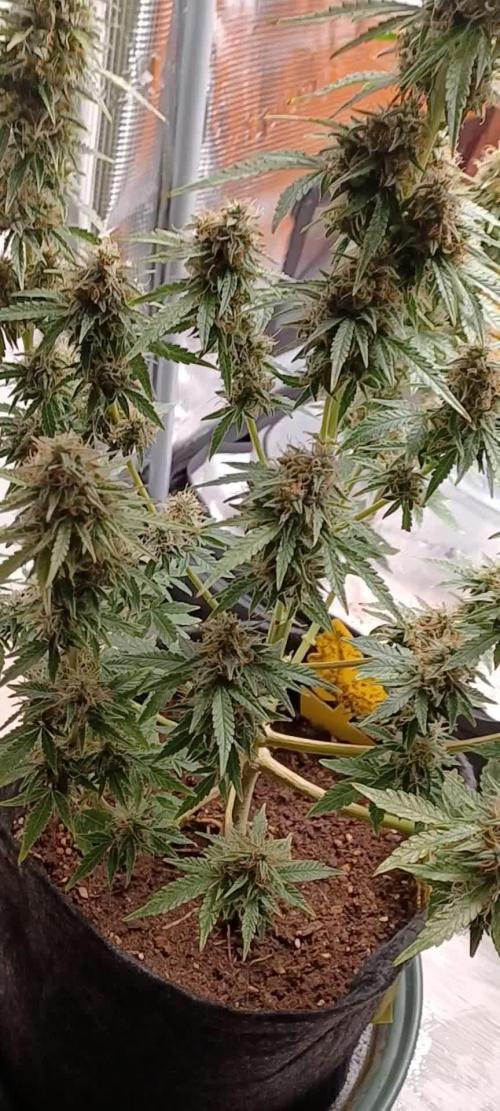
On arrive en fin de parcours pour Hardy qui va bientôt rejoindre Laurel dans mes bocaux 😋😊👍🏽.
Les buds sont denses et dure ! Super résultat que je n'arrivais pas à atteindre en culture extérieure.
Je vais continuer de l'observer pour voir si les buds prennent du volume 🙏💪🏽🤲😋😊

Likes
6
Share


@Naujas
Follow
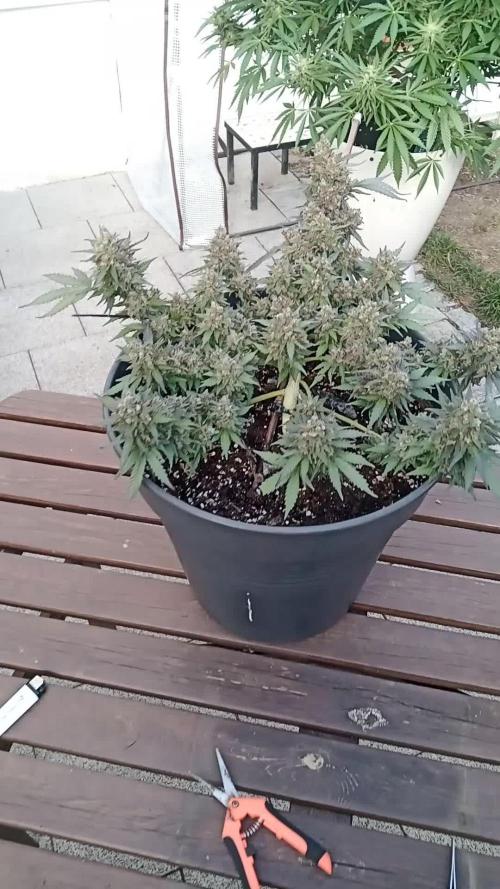
Day 35!!!! Everything seems to be going smoothly; the girl appears cheerful during the day :) She is receiving water with a pH of 6.3 and 600 ppm, along with @Plagron nutrients. On day 35, I trimmed off quite a few leaves and branches—we’ll see how she fares next week :) Good luck, everyone!




Likes
227
Share


@JUNGLE_B4RNS
Follow
Every beginning has an end 😊
This is the last update for The Royal Jumanji.
Harvest tiiiiime 👍😄
I would like to say thank you at :
James from Royal Queen Seeds for providing great seeds
Platiniumhydroponics and Cellmax for the Nutrients and Soil
The Grow Boss and his channel on YouTube
Victoria and all the rest of the GrowDiaries team
All the followers and peoples for your kinds comments
I will put all Strains on Harvest when dried in about 15 days .
To be continued.... 😉
Likes
1
Share


@CaliJ
Follow
Day 50: Start of rinsing.
Day 54, the branches break under the weight of the heads, on day 56 it will be time to cut🍀
Likes
4
Share

Likes
21
Share


@AutoCrazy
Follow
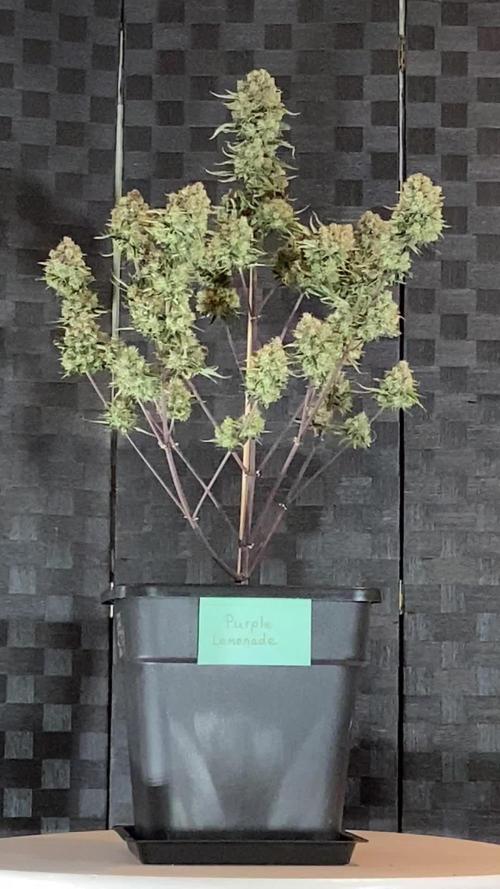
Things are really starting to look good. This plant has really stretched a lot for an Indica dominant plant.
The frost is starting to come on now. The tent smells quite nice when I first open it now.
Cooler internals are:
5.9 pH
600 ppm on the 500 scale
1.2 EC
66F solution temp
Can’t wait to see how she fills out over the course of the next week.


Likes
48
Share
@Arcadium
Follow
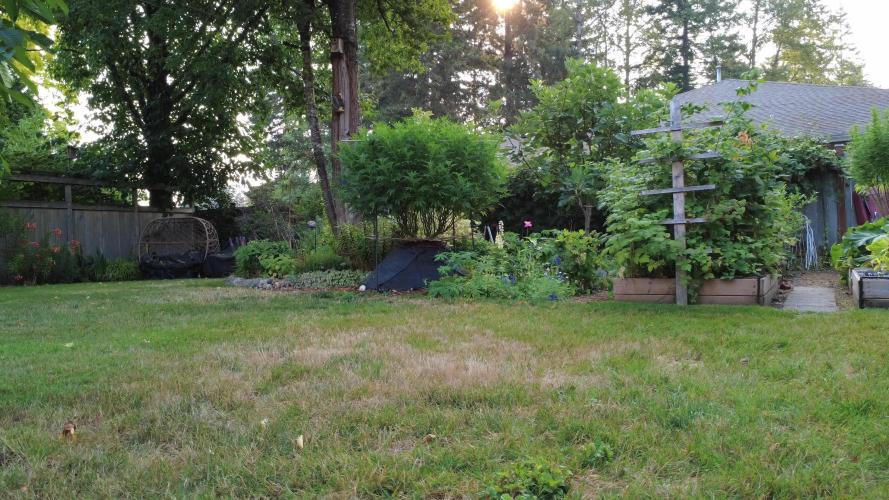
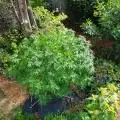
Did some major defoliating and general inner cannopy cleanup this week, spacing is beautiful, lots of airflow. Inner cannopy leaves are yellowing and dropping she's really pushing into flower hard now. Pistils are exploding, overall she looks amazing.
Had yet another massive mushroom spring up at the base, fungal colony on overdrive! Top dress this week, may push to 40 Tbsp 70/30 AP/PB mixed with compost. Will alternate LCPT and BT sprays starting this week ever 3 days, should keep caterpillars away.
Going into the rest of August looks beautiful, sunshine, no rain, though we are already getting mornings of 97% humidity, so I can feel that fall air creeping in, hoping this strain can handle the humidity, last year I hardly lost any to budrot (Blueberry Pie F1 Fast), but I did pull much earlier then I would of liked, but it turned out great regardless.

Likes
25
Share


@Herbz_Unkraut
Follow
i accidently bought some unbuffered coco and mixed it with my ussual earth, had major calmag problems in mid-flower but i´m still pleased with the results...also had a little trouble with mold at the end due to bad weather and high humidity in the final weeks of the grow, had to remove a few buds and harvest early @ day 55 of flower....but there's still alot of great looking buds left for me to enjoy and all look mostly done...
Just harvested and hung them upside down, currently drying them at constant 19.5-20.5°C and 50-60% RH..will update as soon as they are dry

Likes
14
Share


Likes
50
Share


@00110001001001111O
Follow
Room setup rundown, examples of bud, et al in pictures...
Seedlings/Clones lights - Viparspectra XS1500.
Vege lights - Mars Hydro FC-4800
Flower Lights - 650w 3400K 1900umol/s PAR, (3) 226w DIY 2900K 630umol/s PAR (678w and 1890umol/s),
Substrate - 50/50 sphagnum peat moss and vermiculite in 5-gallon pots
Climate Control - Luckily, the lights, winter and normal furnace use all equate to a decent temperature, though a bit on colder side in in vege phase, sadly. Humidifier is needed early and later a dehumidifier is needed when canopy develops. I only grow in the winter months.
Irrigation - do not use the emitters in this diary. They suck a big fat dick to skip a line to suck a bigger dick. Use the pressure compensating type. https://growdiaries.com/diaries/232811-strawberry-cookies-og-r1-cherry-diesel-bbgs-ego-epg-ebg-grow-journal-by-001100010010011110/week/1366923 -- use something similar to those. They come in different shapes, too.
Basic process
The little light takes care of seedlings in 2.5" wide seedling pots until first up-pot. The 1-gallon pots fit well under the FC4800 in a 4x4 tent until day 21 after sprout. I plant 150% or more of what i need, so i can kill the weak without concern. The goal is for every plant that makes it to the 5-gallon up-pot being capable of producing a minimum of 160 grams with a maximum of a 35-40 day vegetative phase.
Third up-pot is into 5-gallon nursery pots and now under the 3 DIY lights and the 650W light in the big tent for a couple more weeks of vege. An irrigation system in the big tent saves a lot of time. One scrog for training and another for support, just in case. Reverting back to a more systematic approach to canopy composition moving forward. About 2.3 colas per sq ft and 8 primary colas per plant.
Yields were similar when over-crowding and being less systematic, but the proportion of less dense nugs is greater and trim time is needlessly elevated because of that fact. I was very controlling about this the first couple years but got away from it for far too long at this point.
Drying / Curing - Into mesh racks for 9 days. I wet trim and cut down to similarly sized buds for even drying. Temps are controlled around 68F and RH is set to 60%. Then into some 5-gallon buckets with gamma seal lids and (3) 2-way 67g boveda humidipaks (58% or 62%) in each bucket - 1 at bottom, 2 at top. Temp/RH probe confirms that they hold the RH steady at 60-63%.
Cost - 0.33 cents (USD) per gram produced. This includes an accelerated depreciation expense for all equipment used, fertilizer, water, electricity for all equipment used, new filters and other yearly purchases - bti, ph strips, sticky traps, etc. I'm a finance guy, so these numbers are comprehensively accurate and purposely err slightly on high side of cost. The only facet not included is the cost of my labor.
Likes
10
Share


@SnoopyShaggy
Follow
All 3 autos are mid flowering, all of them are in day 63 from seed. Cant wait to see them trichomes forming very very soon😄.
No issues so far except of overwatering, all this plants are monstrous in size so i am guessing the roots have gone crazy in them 5 gallon pots.
Fed them PK boost compost tea using bananas since they are organic but beware if your tent has no good air-circulation and top layer soil is all wet all the time then you are inviting them fungus gnats. Use banana at ur own risk. Best to cover them teas because the queen gnats will lay them larvae in the water so when you water the plants, the larvae hatch on depending on how moist your soil is.
Likes
2
Share


Likes
14
Share


@CrazyRussian
Follow
This is the fourth week of growing. These flowers are amazing. I've germinated them the same way, the same time with the same conditions, they got the same amount of soil, light, nutrients, but the difference between them is huge. The tallest plant is 100 cm, the middle is aprox. 50 cm, and the smallest is 15 centimetres. I have never seen any seeds with the same genetics and such a huge difference between each plant. The plants got blooming nutrients for the second time, except the smallest one, she still gets veg nutes. Unfortunately I've got fruit flies again, so I am protecting the plants with some glue traps. I had to buy some Secret Jardin Monkey Clip fans, because the old fan did not fit into the wardrobe. The wardrobe is actually a pretty good growbox, the only disadvantage is that it can't fit more than 3 plants.

Likes
10
Share


@TheMedicatedFarmer
Follow
New Tent, Started with Mr Canucks GRO medium, and planted directly in 5 gallon pots with a light watering center and plastic cap to hold the humidity. Currently 2 of 4 have broken the soil in 4 days now it’s time to keep the medium moist. The weather is chiller right now. I adjust my grow tent temp to 78. It feels the tent is dialed in for the othe 3 to germinate. When checking the seeds I realized I put them to deep. So I knuckle depth to see if there is success. The soil was cold so hopefully increasing the temp provides better results.
Likes
4
Share

@El-Ecko
Follow
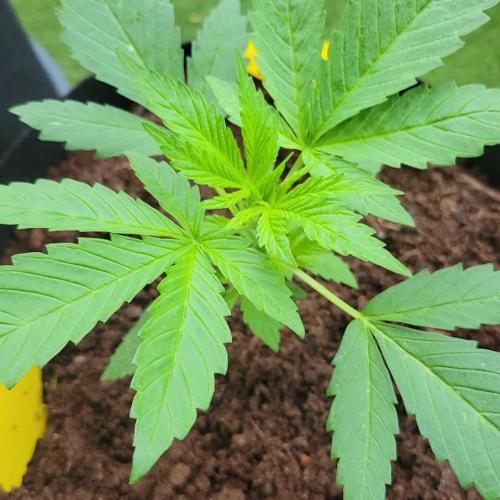
Week 3 of VEGETATION
Wow... I love how this plant is growing and thriving.🌱 At the start of this vegetation week, I fertilized the Gelato with Neudorff's Azet tomato fertilizer.🍅
And it seems to have done it good. ⬆️
The last three days have been relatively cool and it looks like it’ll stay that way for a few more days. ❄️ But this strain seems to be handling it wonderfully so far. I’m really looking forward to the next few weeks with this strain.☺️
Translated with DeepL.com (free version)


Processing
Likes
21
Share


@kushh
Follow
Hello friends. I have 1 problem
Could you help ?
[seed , genetic, manufacturer company, I do not know.]
day 37 flower started. day 65 low flower.
Likes
31
Share


@Stince1981
Follow
Dec27. D63. COP fed and defoliated.
Dec29. D65. Watered. Thirsty girl... one more feed to do.. then just aqua!
Jan1. D68 Fed.

Likes
16
Share


@Andres
Follow
I would believe this variety again ... I think it could be better ... and do not make some mistakes in it ... I recommend it to all growers ...
