


Likes
Comments
Share

@cangrowz
Follow
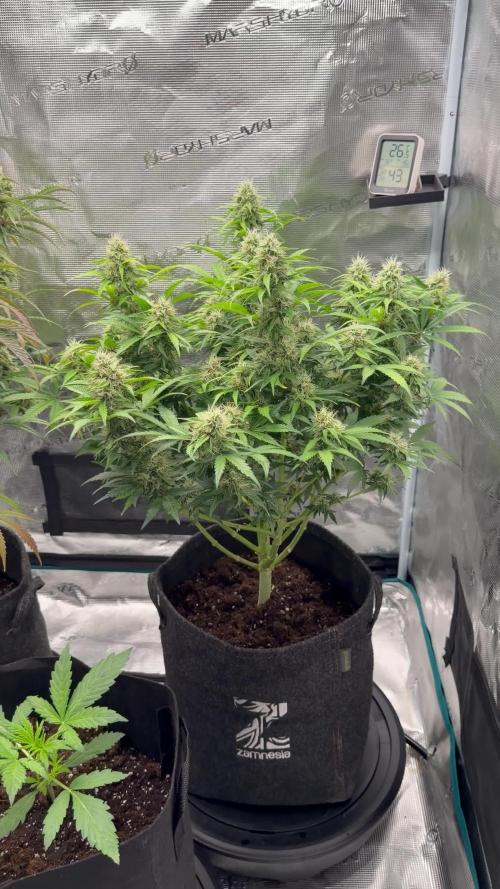
Grow Diary Update – Lemon Haze 🍋
So langsam geht es Richtung Ende. Am Samstag oder Sonntag werde ich die linke von den beiden Pflanzen ernten. Die kleinere lasse ich noch etwas länger stehen, da sie bei der Bud-Entwicklung noch gut nachlegt und sicherlich noch etwas Potenzial hat.
Generell bin ich wirklich überrascht, wie stark die Buds in den letzten Wochen noch aufgebaut haben. Gerade gegen Ende haben die beiden Lemon Haze nochmal ordentlich Masse zugelegt.
Außerdem habe ich gestern schon die **Seeds für den nächsten Run bestellt: Mimosa x Orange Punch Auto von Barney’s Farm.
Davon werde ich zwei Pflanzen starten, allerdings erst, wenn die beiden Lemon komplett fertig sind und das Zelt wieder frei ist.
Die Runtz Auto lasse ich einfach nebenher weiter wachsen und schaue mal, was daraus wird.
Der Geruch der Lemon Buds ist inzwischen richtig stark geworden – sehr citrus-lastig, genau so wie man es von einer Lemon erwartet. 🍋
Happy Growing Growmies 🌱


Likes
34
Share


@PEAKYPLANTERS
Follow
hi to all, brothers of the weed!
my orange juice is nice and ready to be harvested!this beautiful plant was really very strong and resistant, in a short time it dominated all the cousins that were in the room! as always we will perform a dry trim and we will do a lot of good content and other reviews on the smoke so stay up to date!

Likes
46
Share


@DogDoctorOfficial
Follow
Hey, cannabis enthusiasts and connoisseurs! 🌿🔥 The journey with our Runtz F1 has been nothing short of legendary, and now we’re at the stage that every grower eagerly awaits—the trim and smoke report. This Runtz F1 has delivered beyond expectations, and I can’t wait to share the details with you. Let’s dive in!
The Trim Process 🌾✂️
The trimming process was an experience in itself, filled with care and attention to detail. Here’s how it all went down:
• Breaking Down the Branches 🌿:
• First, we carefully broke down the plant into manageable branches, making sure to preserve the integrity of each bud. The structure of the Runtz F1 made this easy, with its dense, compact colas ready for precision trimming.
• Trim Bin Magic ✂️:
• Using a Trim Bin, we meticulously trimmed away the sugar leaves, leaving behind only the most beautiful, resin-coated buds. The Trim Bin isn’t just a tool; it’s a game-changer, allowing us to catch every last bit of precious kief that falls during the process. This extra kief is like a bonus for those special moments when you want to add a little something extra to your smoke.
• Preserving Terpenes with Grove Bags 🛍️:
• Once trimmed, the buds were placed into Grove Bags for curing. These bags are revolutionary in the cannabis world, designed to lock in terpenes and keep your buds fresh for the long haul. Unlike traditional jars, Grove Bags use a special TerpLoc technology that creates a perfect microclimate within the bag, balancing out oxygen and moisture levels. This means your buds cure evenly without the need for burping, preserving that incredible citrus terpene profile we’ve come to love from the Runtz F1.
The Legendary Smoke 🌬️🔥
Now, let’s talk about the smoke—because this is where the Runtz F1 truly shines.
• Flavor Explosion 🍊🍋:
• The moment you take your first inhale, you’re hit with a symphony of citrus flavors. It’s like walking through a citrus grove with the sun shining down—notes of oranges, tangerines, and lemons come through strong, each one distinct yet harmoniously blended. But the magic doesn’t stop there; an underlying hint of vanilla sneaks in on the exhale, rounding out the flavor with a creamy, smooth finish. It’s an experience that dances on your palate, leaving you craving more.
• Aroma 🌿🌸:
• The smell is just as captivating as the flavor. As soon as you open the Grove Bag, the room fills with that zesty citrus aroma, complemented by a subtle sweetness from the vanilla undertone. It’s the kind of smell that makes you pause and appreciate the craft that went into growing this plant.
• The Effects 🌟:
• The effects of the Runtz F1 are as balanced as its flavor profile. Expect an initial wave of uplifting energy—perfect for daytime use or when you need a creative boost. As the high settles in, it mellows into a relaxed, yet focused state. It’s the best of both worlds: energizing without being overwhelming, and calming without knocking you out. This makes it an ideal strain for those who want to stay productive while still enjoying a potent, flavorful smoke.
Final Thoughts and Invitation 🎥✨
The Runtz F1 has proven itself to be a true connoisseur’s strain—a perfect blend of flavor, aroma, and effects that’s both complex and satisfying. This was a journey that showcased the importance of patience, precision, and care, from germination all the way to the final cure.
If you want to dive deeper into the entire process, from the first week of veg to the final trim, I’ve documented it all on my YouTube channel. Join me there for a closer look at how this incredible strain came to life, and learn more about the tips and techniques I used to bring out the best in these plants.
Thank you to everyone who’s been part of this journey, from the community to the amazing brands like Gro Diaries, TrolMaster, Aptus Holland, Kannabia, and more. Your support and tools have been invaluable.
Remember, the magic is in the details—so never stop learning, growing, and enjoying the fruits of your labor. Stay positive, stay curious, and keep spreading the love! 🌿💚
#RuntzF1 #LegendarySmoke #CannabisConnoisseur #GroveBags #TrimMagic #StayPositive #GreenMagic #YouTubeJourney
Germination method 🌱 @thecannakan
Genetics Runtz F1 @zam.nesia Runtz auto @kannabiaglobal
Nutrition
@aptusholland 🌿
@aptus_world 🌎
@aptus_es 🌍
@aptusbrasil 🌱
@aptus_thailand 🌿
@aptus_portugal 🌳
@aptususa_official 🍀
@aptusplanttechnz 🌺
@aptusplanttechaus 🍃
Ambient controls🎮
@trolmaster.eu @trolmaster.eu.support @trolmaster.support @trolmaster.agro
Soil @promix_growers_eur @promix_cannabis
LED - @lumatekeu
Watering- @autopot_usa @autopot_global
Love and attention- @dogdoctorofficial
#aptus #aptusplanttech #aptusgang #aptusfamily #aptustrueplantscience #inbalancewithnature #trolmaster #trolmastereurope #trolmastersecrets #Autopots #RuntzBattle #KannabiaVsZamnesia #GreenJoy
As always thank you all for stopping by, for the love and for it all , this journey of mine wold just not be the same without you guys, the love and support is very much appreciated and i fell honored and so joyful with you all in my life 🙏
With true love comes happiness 💚🙏 Always believe in your self and always do things expecting nothing and with an open heart , be a giver and the universe will give back to you in ways you could not even imagine so 💚
More info and complete updates from all my adventures can be found ⬆️ link in the profile description ⬆️
Friendly reminder all you see here is pure research and for educational purposes only
💚Growers Love To you All 💚


Likes
10
Share


@Cocogrow1234
Follow
3rd week of flower , I’ve started the boost at 1.5ml per litre , both my lights are about 6-7” away from the tops of the plants and are not causing any issues .
I’ve lowered my humidity to 45% in the day and about 55% at night , had to purchase a decent dehumidifier and put it outside the tent .
Gave them there last lollipop and defoliation on end of week 3 .Will only take some fans leaves off when needed from now

Likes
11
Share

@GreenEldritchGardens
Follow
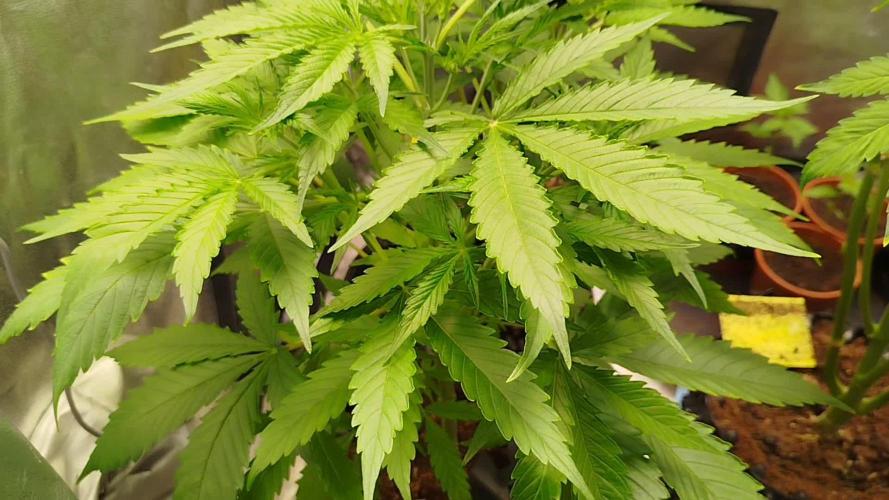
Wow what a stretch in a week! 20cm +!
She took a bit to move to flow but when she did, she did in style.
So far no smell but by the way she grows looks like a nice smoke 😂
Likes
49
Share

@DrGruen
Follow
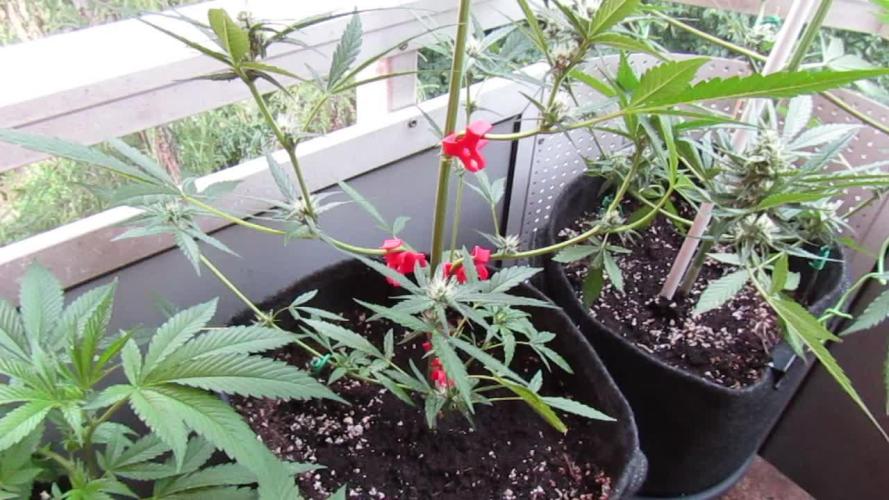
Diese Woche war uns der Wettergott nochmal hold und hat uns super Sommerwetter beschert....😎
Den beiden hat das natürlich sehr gut gefallen und sie haben sich super gemacht.😁
Der Nachzügler der beiden, ist bis auf ca.20cm an die erste Lady rangekommen und hat auch schon eine stattliche Grösse erreicht......
Die grössere der beiden wächst nicht mehr ganz so schnell, dafür sind ihre Buds auch schon viel grösser und mächtiger.😎
Freue mich schon auf den Rest der Blüte und kann die Ernte kaum noch erwarten.😜
Ich hoffe, es läuft so problemlos weiter und das Wetter bleibt stabil.😎
Likes
9
Share


@Peace59
Follow
C est la fin pour la strawberry gorilla, elle a quelques trichromes ambrés. Elle sera récoltée demain à D86. Elle est petite mais les têtes ont l air très lourde et elle sent tes fort !
Il reste environ une semaine pour l orange sherbet. Elle a l air délicieuse avec des têtes très denses également. C est celle que j ai le plus hâte de goûter.
Il reste un peu plus d une semaine pour la gorilla cookies, Elle est énorme avec de grosses têtes !
Processing
Likes
9
Share


@Cogollo_eu
Follow
**Encontrarás la traducción a español al final de la descripción**
From/Desde: 01/09/19 || To/Hasta: 08/09/19
From day/Desde día: 00 || To day/Hasta día: 07
Ocean Grown Cookies Diary / Diario de las Ocean Grown Cookies:
https://growdiaries.com/diaries/38831-oceangrown-cookies-blues-sisters
-----WEEK SUMMARY-----
If you like this week, please hit a like, it costs you nothing! 👊. Thanks in advance 😉!
Hi buddies, i'm very happy to welcome you to my new Dinafem's Cookies grow. In this grow I'm going to run 4 Dinafem seeds, 2x BlueBerry Cookies (this diary) and 2x OceanGrown Cookies. The seeds were provided by Dinafem itself, a thing that i want to thank a lot to Dinafem Team, specially to you Mark! 👊 ;). I will try to do my best 🙏.
The first week was as expected, buried the seed on Sunday night in a small pot (i'm not sure if it's 0.3 l, but +/-), it be came to seedling on Wednesday afternoon and grown till Sunday as it should be... (AK Déjà vu).
Equipment used
-----------------
Platinum Grow Lights P300 (93W grow, 180w Flora, full spectrum)
DR90 growing tent (90x90 cm)
10 l AeroPot
Mid-size Oscillating vent 20w
Soil from Bio-Bizz (Light-mix) i will use a small layer of Hard-mix in the bottom of the AirPot and mix the rest with Superguano & Top Vulcan (Both from Top Crop) on transplant.
-----WATERING CALENDAR-----
Using all week nutrients @ PH 5.8 & EC 0.7
01/09/19: 130 ml
04/09/19: 60 ml
08/09/19: 120 ml
*****ESPAÑOL*****
-----SUMARIO SEMANAL-----
Por favor, si te gusta esta semana dale un like, no te cuesta nada 👊. ¡Gracias por adelantado 😉!
Hola compañeros, estoy feliz de presentaros mi nuevo diario de Cookies Dinafem. En este cultivo voy a plantar 4 semillas, 2 BlueBerry Cookies (este diario) y 2 OceanGrown Cookies. Estas semillas me las ha mandado el propio Dinafem, cosa que quiero agradecer al equipo de Dinafem, especialmente a Mark! 👊. Intentaré hacerlo lo mejor posible.
La primera semana fué como se esperaba, planté las semillas el Domingo por la noche en un tiesto pequeño (no se si es exactamente de 0,3 l pero +ó-), se hizo plántula el Miércoles por la tarde y creció hasta el Domingo como debía... (DejaVú de la AK)
Equipo usado
-----------------
Platinum Grow Lights P300 (93W crecimiento, 180w floración, espectro completo)
Tienda de cultivo DR90 (90x90 cm)
10 l AeroPot
Ventilador oscilante mediano de 20w
Sustrato BioBizz (Light-mix) usaré una pequeña capa de top-mix en el fondo del AirPot y mezclare el resto con Superguano & Top Vulcan (ambas de top crop) cuando transplante.
-----CALENDARIO DE RIEGO-----
Usando todos los nutrientes de la semana @ PH 5,8 & EC 0,7
01/09/19: 130 ml
04/09/19: 60 ml
08/09/19: 120 ml

Likes
56
Share


@Prilyfe13
Follow
May 3, 2024 Day 78
This week is what seems to be the last week before flushing and a light intensity drop. Both ladies look really nice and coming along swimmingly. More orange pistils, more amber trichomes. Not enough of either, but they are getting there. Probably the next week of nutrients and a week of flush.
Speaking of nutrients, I decided to cut the whole regimen in half. There's clearly nutrient burn and I can't seem to get rid of it. I also believe the plants aren't taking in as much water as they were before. The containers are holding more water and that tells me it has nowhere to go besides in the soil and the ants aren't keeping up. Nutrient lockout? Age of plants? They are an 8 week strain while we are starting week 11 today. I'm sure I'll find out. So I'm guessing about a week and a half left before harvest. I'm not sure if it will be 2 weeks or not, but I've been saying 2 weeks for over a week now. We are definitely close to comfortably call 2 weeks or earlier. Hopefully earlier.
Banana Purple Punch A is getting heavy. Branches are starting to lean and buds are covering buds from the weight. Apparently these branches aren't as strong as Banana Purple Punch B whose branches are stiff as boards. Very healthy though. Although, she did take a hit from the nutrient burn. Not much and definitely not as bad as the Tropicana Cookies did.
Banana Purple Punch B is a thing of beauty. She is small and compact, but her buds are fat and she smells amazing. Tons of trichomes and lots of bud throughout the plant. She'll definitely need a trimming before I harvest. I think I've decided to do a mostly wet trim and leaves just the sugar leaves on the plant. Anything with a stem I can reach will be cut off. Same with Banana Purple Punch A, but her buds to leaf ration is fantastic. I won't have to do much trimming on her. Banana Purple Punch B, on the other hand, will need a whole lot of trimming.
I've got this week's first set of trichome pics. One for each plant. Looks pretty good. A bunch of cloudy, a bunch of clear and some amber. Definitely not ready.
No watering today as I topped off the reservoirs with a half gallon of plain water. PHed at 6.2 which took a bit of PH down. Apparently my water is really low in acid.
The lighting will be staying the same for most of the week. As these ladies have only a couple of weeks left, I'll try to time the light intensity drop accordingly.
The environment is still messed up. SMH. The temp is still fine, but the humidity is still high. Now only 55%, but still too high. I'd prefer 40% now, but I'll take 50% somehow. It stopped raining and the weather is really nice, so I don't see why the humidity is still high. Last night the temp was averaging out at 67.9° with a low of 65° with the humidity still being high at 55.8%. At least it's staying the same.
Grow System Environment:
Temp: 73.2°
RH: 55.0%
VPD: 1.23 kPa
May 4, 2024
May the 4th be with you! Star Wars all the way!
Not a lot going on today. Both ladies got a full gallon of half dose nutrients. I think it's time. They have about a week and a half left to go. Maybe less. Hopefully less.
Banana Purple Punch A was rotated today. Her branches are so top heavy now that the whole plant jiggled when I moved it. Honestly, kinda funny to see. Her reservoir was almost empty. She's definitely still thirsty. With the half dose of nutes, I expect to start to see a fade.
At the end of the week I'll start the real flush with Flawless Finish. Only for the first watering though. Also, I don't top flush. All of the nutrient buildup on the top soil will just poison the plants. So I continue to run the reservoir. Afterall, that is the place where the nutrients get absorbed.
So Flawless Finish blocks some sort of beta things that prevent the plant from taking in nutrients. I've used it for the last 3 runs and I have no idea if it works or not. I very rarely get a good fade. Too many nutrients at the end? Maybe.
Banana Purple Punch B hasn't changed position at all. She fits perfectly in the tent where she is. She had a little bit more water than her sister, but still low enough to fill the reservoir with a whole gallon and not overdo it.
She also has about a week and a half left. Her buds are huge now. The very tops are the huge ones, but the lower buds are all dense. Should be decent popcorn for pressing.
Her leaves are a deep color of green. Not so deep to be a concern for toxicity. However, FastBuds says the leaves should turn light green at the end. We shall see. Also, I'm not seeing purple at all. Hence the half dose and flush next week.
The lighting of course is going to be dropped to 70% power in a few days. Then down to 60% at the start of next week and will be brought down to 50% for the final few days.
The environment is bad today. The humidity is back to 60%. I can still control the temp though. I think I need to drop it to 74° for the day and try to keep it at 65° at night. A tall order, but I think I can pull it off. I just wish I could get rid of this damned humidity. Not that I think anything will get ruined. I have 3 clip fans running at half power each, so airflow is fantastic. These also quite a bit of open space for Banana Purple Punch A. Not so much with Banana Purple Punch B. But she still has a decent amount of open space. Definitely enough to not get any issues. At least that's the theory.
Grow System Environment:
Temp: 74.0°
RH: 57.9%
VPD: 1.19 kPa
May 5, 2024
Trichome day!
I got a couple of decent trichome pics from each plant. They aren't perfect, but they are pretty good for what I can do.
No watering today obviously. That won't be for another day or 2.
Banana Purple Punch A looks great! Her colas are getting heavier and slightly fatter. I'd say I'm on point with when she will be done. I say another 10 days. Flush will start at the end of this week. That should leave me a good 5 to 6 days of flushing before harvest. She's also getting more and more orange pistils and some amber trichomes. I still see mostly clear and a good amount of cloudy. Definitely not ready yet.
Banana Purple Punch B also looks great! Her buds are just as fat as her sister plant. They aren't nearly as far along though. I'd give this one 2 weeks. But maybe the same 10 more days. They are different phenomes afterall.
Her branches are like SUPER stiff. No leaning, no anything except the jiggle when moved. Such a strong little one.
Neither plant is showing signs of fade yet. I expect it will start to show up in the next week. The buds are also still quite green. I'll also be expecting purple in the next week. We shall see.
Light power will be dropped at the end of the week I think. I was going to drop it tomorrow, but I think these two need a bit more time.
The environment is still messed up. It's mid spring now and it's just getting humid. I can expect to have a lot of humidity for the next 3 weeks. I will just have to do my best to fight it.
Currently, the temp is at 76° and the humidity is still at 60%. It just refuses to drop down. I had the humidity in my room all the way back down to 50% and it did absolutely nothing. I'll have to periodically open the tent until this humidity levels back out. No big deal, I'm always home.
I also keep trying to get the temp down at night. I can't seem to get it below 67°. I'd really like it at 65° and the day temp at 74°, but it doesn't seem to be working. The problem is I can't get the humidity down without cranking the heat. But if I crank the heat, the temp goes above 77° and gets dangerously close to messing up the trichomes.
Grow System Environment:
Temp: 73.1°
RH: 59.7%
VPD: 1.10 kPa
May 6, 2024
Not much going on today. No trichome pics, no watering, no light changes. The only thing I have to mess with is the humidity still. It should go down today. I have my room at 47%.
Banana Purple Punch A looks great! Super heavy colas and dense... Very dense buds. Solid. She has a few more orange pistils, but that's a good thing. She should be finishing up in about a week now.
Banana Purple Punch B is stunning. For a small plant, her structure is wonderful, bud are huge and solid. She is pretty bushy, so I will be very happy when I can trim all the foliage off before harvest. She should need about another 10 to 12 days.
The aroma coming off of these has changed since that last time I said something about it.
It's more pungent now and smells of sweet fruit and something heavy. I'm not getting much or any banana smell, but I'm a smoker, so my sniffer is a bit off. It's still strong enough for me to smell the essence of this strain. Unfortunately, I don't know anyone who doesn't smoke and will be willing to smell my weed. Lol
And the one person I know who would smell it smokes more than I do.
As before, the lights will stay the same for the rest of this week. Then I'll drop them down to a DLI of 36 mol/m²/d.
The environment is still kind of wonky with the temp being around 75° and the humidity being still high at 58%. But as I said earlier, I have my room back down to 48% humidity, so I should be able to get the tent down to 50% sometime this afternoon, and hopefully it will stay that way for at least another week.
Grow System Environment:
Temp: 73.8°
RH: 62.3%
VPD: 1.06 kPa
May 7, 2024
Watering day. Both ladies got a full gallon today. Other than that I took some pictures. I'm not bothering with trichomes for the next few days with these 2. They clearly aren't ready, so no point in checking clear trichomes. When I see more orange pistils, I'll start checking them.
Both ladies have super heavy buds. They are making the tops sway a bit when moved. So big, so dense, so heavy. I look forward to harvest.
The lighting is the same as always. It'll be dropped by the end of this week I think. I'm planning on dropping it down to 36 mol/m²/d for the last week of flower. It should work to bring out purple and to help tighten the buds up.
I'm also considering cutting the nutrients off at the end of this week and go for plain water. It's just about time for flushing as it is, so in 2 days, I'll do one last nutrient dose and that's it.
The environment is starting to readjust to a normal level, it's just taking a long time. Currently the temp is at 76° and the humidity is at 54%. Still high humidity, but better than 60%. My room has 42% humidity, so the humidity should eventually drop below 50%. I'll try to drop the temp as well. I'd like to see 74° for the rest of the grow.
I'm still having issues with night temp. I cannot get it to go down enough. It sat at 68° and 55% humidity.
Grow System Environment:
Temp: 73.6°
RH: 54.6%
VPD: 1.25 kPa
May 8, 2024
So I have been doing a bit of image research and have found that these two should start showing purple anyway now. At least that's what it looks like. These ones have super green buds. Nowhere near ready for harvest. Still another week and a half or so.
No water needed today. I will note that the reservoirs are still nearly full. Interesting.
Banana Purple Punch A looks great. Her buds are super fat and smell great. They are dense and when they are ready will be hard as rocks.
Her leaf to bud ratio is perfect. Not too many but no bare. I was more worried about her getting super bushy. Nothing of the sort. Very nice. I'll be trimming her down before harvest, but I'm not bothering with the sugar leaves until after drying. They will help give more of an even dry.
Banana Purple Punch B has caught up in bud size with her sister plant. Although, she has more leaves. Trimming will be a nightmare with this one. I plan to do it in 2 sessions. Once before harvest to clean out all of the stemmed leaves. Anything I can reach at the base of a leaf is gone. After drying, I'll complete the trimming session with basically a manicure and that's it.
The lights are staying as they are for a bit longer. I can't really tell if these two are actually done yet or not. I'll do a trichome check tomorrow and post pics.
The environment is a nightmare. It's still 60% humidity with the temp being a bit high at 77°. I'd rather it be at 74°, but the humidity gets higher that way. I'll just have to keep opening the tent as I have been for what seems to be the last week. Either way, I will not get mold. Not if I can help it. Now drying in such high humidity is a concern. Very little airflow. Hopefully I can keep the temp in the low 60's in there. I highly doubt it.
Grow System Environment:
Temp: 74.0°
RH: 57.6%
VPD: 1.19 kPa
May 9, 2024
Some noticable things today. First off, neither plant is taking in as much water as they were. A sign of either nutrient lockout or they don't need as much water because they are finishing up. Finishing up makes the most sense.
Banana Purple Punch A was rotated again today to keep the plant from growing mold and keep the lights hitting all the buds from every angle. She's definitely closer to being done than her sister plant is. I'd say about 5 days difference? Maybe slightly less. This is kind of a blessing and kind of a curse. I have 4 other plants in 3 gallon containers that need to go in the tent asap. If I can clear at least 2 of the 4 plants currently in the tent, including this one, I could fit all 4 plants in the tent with the last 2 plants. Then I can harvest those two separately kind of.
Banana Purple Punch B has huge buds now. Some are a little bigger than her sister. They seem to have the same amount of bud, just structured differently. This plant has the super compact structure with buds all up and down, but it's only like 19" where the other one is closer to 23" and has more space between buds.
But it's a larger plant, so there is the roughly the same amount of bud. At least that's what it looks like. I'm seeing no signs of fading yet. I'm guessing this is one of those strains that waits for the last week or so before showing color.
Although, other diaries I've seen show different. The weird thing is that the majority of the other plants I've seen all have purple buds. Mine are still bright green. But they are definitely not ready. So I'm guessing another week and a half.
Frankly, I have a lot of trouble timing harvests. I don't know what the plants do or are doing, for example, I've never had a plant finish up based on breeder specs. I've even had an autoflower go well over 15 weeks. Granted it was HUGE (understatement), but it still took over 15 weeks. But then I have strains that finish up in 12 weeks. But I couldn't tell if they were done or not. Disadvantages of not having the proper equipment. This time around I have a microscope, so I can get a really good idea of when to harvest.
As for trichome check, I was supposed to do it yesterday. Then I thought maybe today. But then I realized tomorrow is a new week, so I'll take my trichome pics tomorrow. Plus, they clearly aren't ready, so no point in checking yet.
The lighting as I said will stay the same for now. These 2 are showing no signs of needing it and are definitely not ready for it to drop. Not for another few days to a week anyway.
The environment is kind of calming down. I can keep the day temp down to 74°, but the humidity is still high at 55%. I'll be spending the day opening it up periodically... again. I did manage to get the average night temp down to 66°, so that's something. It messed up my Sour Diesel seedlings in my 2x2 though. The temp in there went all the way down to 62°. I really need to get them in this tent.
Grow System Environment:
Temp: 72.6°
RH: 58.7%
VPD: 1.11 kPa
Likes
4
Share


@Iceni
Follow
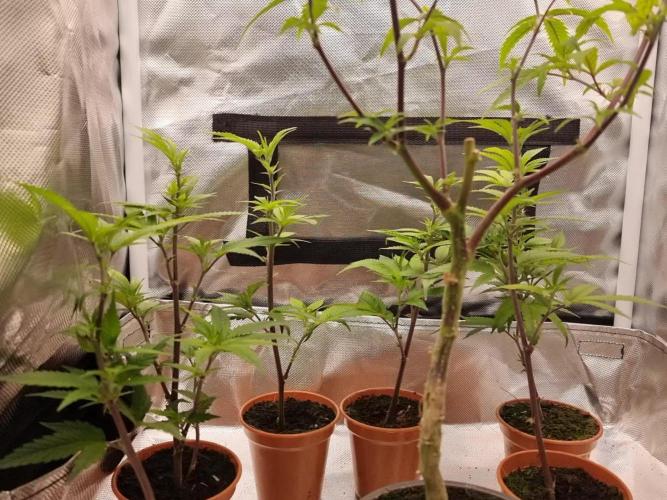
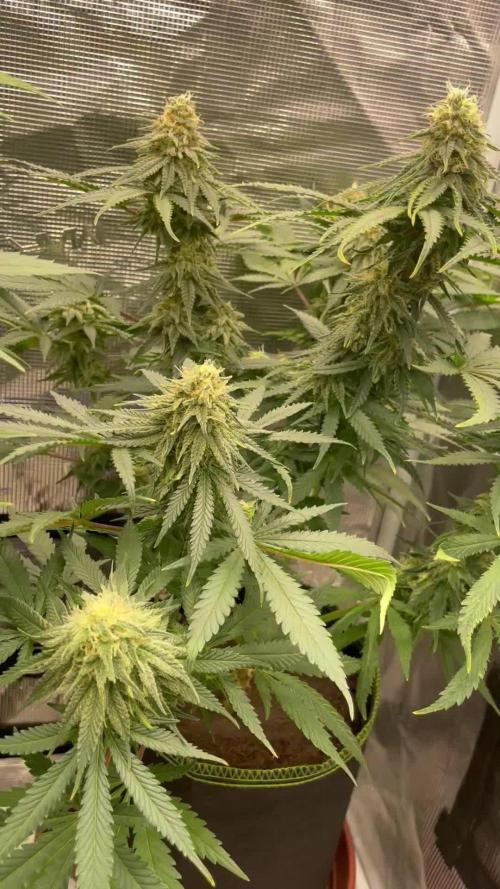
Some of my finished and flowering plants included in pictures, found a small amount of slider mites in my veg tent , as you can see I'm managing it , one more week in the veg tent before I flip them all, I also decided to start one in flower before the rest as I want to stagger my harvest and get back into perpetual growing,
Hope you're having a good day everyone 😁



Likes
47
Share


@KA_LE
Follow
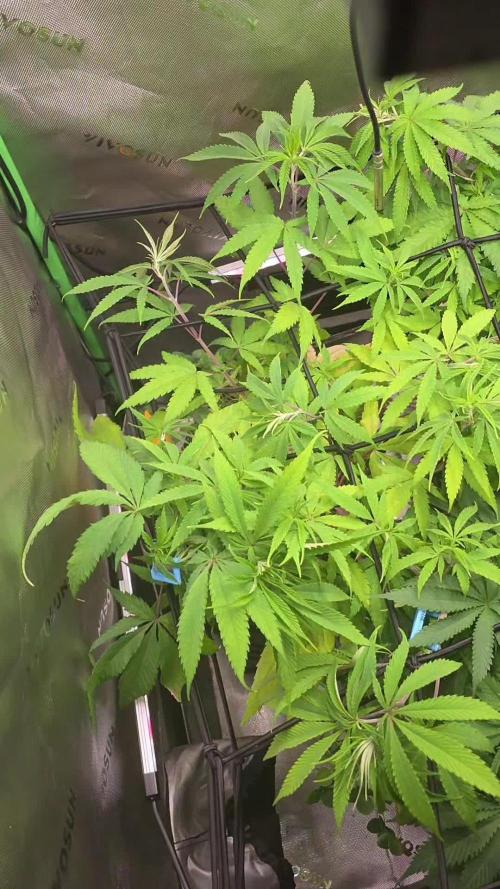
07-AUG-18 - Started this Week off by topping the three main branches and doing a minor defoliation removing the leaves on the first node of each branch. As well as mixing up a fresh batch of nutrients and feeding her 1liter of solution.

Likes
4
Share

@GothBotanical
Follow
Stayed in veg for all three photoperiods (Oracle OG, Blue Bitch, Strawberry Cola Sherbet). Raised the main light to ~80% on Sept 30; side lighting unchanged. Oracle OG remained on the lighter side but structurally sound with steady new growth; Blue Bitch stayed the tent leader—dense, dark, and vigorous; Strawberry Cola Sherbet held steady, slightly lighter than Blue Bitch but not worsening. No new amendments this week (last top-dress was Sept 17). Environmental focus dominated: tent RH was stubborn around ~60% even with the inline exhaust cranked, and local rain on Oct 3 kept the garage/tent humidity elevated. Overall, a stabilization week: dialing environment, keeping inputs moderate, and queuing a compost tea before any flip.

Likes
31
Share


@valiotoro
Follow
Beautiful buds super sticky✂️
Delicious smell something new to me!
Cant Wait the curing to taste this beauty


Likes
31
Share


@Mrs_Larimar
Follow
2024-07-13
Indoor
The Indoor Lady is fading, chrystals are building and well
i think the longest Time for her is over
and we are slowly coming to an end.
OUTDOOR
Despite the bad outdoor conditions, the Tangerine Snow stands brave and strong
i was feeding her today, and i think i have seen some Preflowers?
this week i made Videos from Both, In and- Outdoor Plants
BREEDER INFO
Tangerine Snow F1 Fast Feminised is a 75% sativa, four-way cross of (Boost x Tangelo) with (Lavender x Power Plant).
This Fast F1 hybrid is bred from Cali genetics and boasts great citrus terps, high resin production for extracts,
high levels of THC, very good yields and excellent mould resistance.
Tangerine Snow F1 Fast can be grown indoors as well as outdoors. Indoor flowering times are between 8 - 10 weeks
while harvest time in northern latitudes is during September while in the southern hemisphere growers will be harvesting during March.
Recommended climate regions are hot, dry, humid and warm. These are tall, semi-branched plants that grow in excess of 200cm
and display a high degree of vigour with very good uniformity.
In common with many other heavily sativa-dominant strains, Tangerine Snow F1 Fast offers excellent resistance to mould
as well as to plant pests and diseases. The combination of citrus terps and plenty of resin makes thi
a very good extract strain with the 'washing' method delivering very good yields of hash.
The citrus terpene profile is reminiscent of mandarins and tangerines and also has sweet candy notes.
THC production has been lab-verified at a strong 24% while CBD is low. The effect is uplifting and energising,
perfect for use during the day and early evening.

Likes
83
Share


@Natrona
Follow
Blue Cheese F1 automatic
Week 11 Flower 7
Blue Cheese 1 is in her last week; March 17 Blue Cheese 1 that was planted in coco had her wet trim and was put in the dark for 2 days before getting the chop on March 20.
Blue Cheese 1 shows fade and nutrient usage in the upper leaves. I also see pinks and purples in the buds and leaves. They look pretty with lime greens, pinky purples in the bud formation. The buds are stacking fatter and packing on more resin on the buds which are sticky and hard. The trichomes look mostly milky with some amber as well. The stems are strong and support the heavy buds.
Blue Cheese 2 in soil will remain with her tent mates Pink Rozay & Love Potion. After flushing excess nutrients out of the soil and plant, Blue Cheese 1 in coco is matured faster than Blue Cheese 2 in soil.
Blue Cheese 2 shows trichome formation starting to milk up compared to BC1. Her leaves are still green with no fading. The older pistils are turning orange brown and water consumption is slowing down for both girls. She still needs a few more weeks before I’ll start flushing.
Blue Cheese 2 was fed on March 17 & 19. Pics were taken on the 17th.
Bloom Juice 120 ml
Royal Rush 0 ml
Power bud 15 ml
Green sensation
15ml
Cal Mag
20ml
Recharge 5ml
Ppm ranged from 676-777
Ph 6.5
Temp 68
Your likes and comments are appreciated. Thanks for stopping by.
Growers love 💚🌿
💫Natrona💫
Likes
13
Share


@BostonGreenParty
Follow
The 3rd week was a big one all plants finished stretch period and it was becoming a little wild for a second. I moved 4 of the bigger girls into their own room with their own 1000w LED plus a shared 250w HPS in the center. I will be tying down branches to get flat canopy then each of the 4 will be pushed more towards the center for better light coverage do not mind the setup its not fully there but will be finished before the end of the week. In the main grow room there is a single 1000w HPS cool tube running at 100%. To remove the 4 bigger plants I had to cut the entire trellis off the canopy but will be placing a new layer this week as well. As for nutrients feedings well clearly from the size of these girls you can tell they have been eating. In about 2 weeks I will defoliate one last time and then its them vs. the world til havest. Happy Growing!

