



@Growzzbud
Follow
Pense que tenía deficiencia de nitrógeno, pero creo que pasa algo con el mag a ver cómo evoluciona


@EastCoastGrowShow
Follow
We are going to continue on with tying and tucking and spreading. I cannot wait to see what suprises this strain has, as I get the feeling her true colors will be wild.
This week I also show the HydroHalo system I have installed to better assist with watering these girls under the net.
There is a 5 gallon bucket with lid as resivior, tubing, T fittings x2, valves x2, a small submersible water pump, air pump with hose and air stone in the resivior to keep it aerated.


@DogDoctorOfficial
Follow
Hey fellow green thumbs! 🌿💚 The day has finally come—our Auto Northern Dragon Fuel from Super Sativa Seed Club has been harvested! After an exciting journey, we’re thrilled to share the details of this incredible plant’s final stage. Let’s dive into the harvest report!
🌟 Harvest Details:
Day 75: Harvest Day
• Harvest Date: Day 75
• Harvest Method: Our beautiful Auto Northern Dragon Fuel was harvested yesterday. After weeks of careful nurturing, the time was right to bring in this amazing plant. 🌿🌼
• Preparation: Before hanging, we meticulously cleaned the plant, removing all leaves without trichomes to ensure a smooth drying process and to enhance the quality of the final product. 🌿✂️
Current Drying Process:
• Method: The entire plant is now hanging upside down to dry. This method helps maintain moisture levels within the buds, allowing for a slower and more even drying process. 🌿🔄
• Environment:
• Temperature: 18-22°C (65-72°F)
• Humidity: 50-60%
Maintaining these conditions is crucial for achieving a perfect dry and preserving the plant’s aromatic and flavorful profile. 🌡️💧
🌟 Plant and Bud Characteristics:
Auto Northern Dragon Fuel:
• Bud Structure: Dense and sticky, with an impressive trichome coverage. The buds are beautifully formed, showcasing the robust genetics of this strain.
• Aroma: Even in the drying phase, the rich and potent aroma is unmistakable. Expect a delightful scent that hints at the powerful experience to come.
• Trichomes: A thick layer of trichomes covers the buds, promising a potent final product with a great flavor profile. 🌿✨
🌟 Care Tips:
• Drying Process: Patience is key. Allowing the plant to dry slowly will enhance the final quality, preserving both flavor and potency. Ensure good airflow around the hanging plant to prevent mold and mildew. 🌬️💧
• Trimming: Once the drying process is complete (typically 10-14 days), it will be time to trim the buds. This is where we’ll shape the final product and get it ready for curing. ✂️🌿
• Curing: After trimming, curing the buds in jars for at least 2-4 weeks will further enhance the flavor and smoothness. This final step is essential for achieving the best possible smoking experience. 🍁
🌟 Genetics Spotlight:
Auto Northern Dragon Fuel:
• Characteristics: Known for its robust structure and dense buds, this strain has shown remarkable resilience and impressive bud development throughout the grow. The final product promises to be potent and flavorful, thanks to the thick trichome coverage and rich aroma.
• Harvest Expectations: High-quality buds with a strong aroma and potent effects. The slow drying process will ensure the best possible preservation of cannabinoids and terpenes.
🌍🌿 Fun Fact:
Did you know? 🌿✨ Drying the entire plant slowly helps retain more terpenes, which are responsible for the plant’s aroma and flavor. This method also helps preserve the potency and quality of the buds, resulting in a smoother and more enjoyable experience.
For all the in-depth action and detailed explanations, head over to my YouTube channel! 🎥✨ I’m sharing all the tips, tricks, and step-by-step guides to help you get the best results from your grow. This week’s harvest has been particularly exciting, and there’s so much more to explore and learn together!
👉 Join me on YouTube Link in my profile 👈
🌟 Conclusion:
Harvesting Auto Northern Dragon Fuel at Day 75 has been a rewarding experience. With the plant now drying, we’re eagerly awaiting the final product. Stay tuned for updates on the drying, trimming, and curing process, and get ready for a high-quality harvest!
Happy growing, and see you next time! 🌿💚✨
#SuperSativaSeedClub #HarvestReport #NorthernDragonFuel #PlantMagic #GardeningJoy #NatureLovers #PlantPower #InspireGrow #YouTubeJourney




@Merulix
Follow
Everything is fine. Switched to a more customized approach of nutrition... noticed some yellowing on the fresh leaves but no drama, already getting better. PAR is at 850-900


@MrJones
Follow
MrJones Cream Mandeiran Auto XL - ViparSpectra XS2000 240W Infrared Full Spectrum LED Grow Light
´🍪⊱╮🍪╰⊰🍪 WEEKLY GOALS 🍪╰⊰´🍪⊱╮🍪
🏡Indoor - 3"x4"x8" Custom Built Grow Closet
🌞Environment - 80F and 60%Humidity - using Humidfyer as needed.
🌾LST and Defoliation - this strain likes to stretch!
🗓️Week 6 Flower
⚱️5-Gallon 📊5.8/6.2 PH
💧 Feeding / Using Dr. Earth Dry Organic Amendments - Home Grown & Bud / Bloom Booster
🌞ViparSpectra XS2000 240W x2 Infrared Full Spectrum LED Grow Light
🕷️ IPM - Will be using Green Cleaner" 1 OZ per Gallon, and CannControl from Mammoth alternating between products each month for Integrated Pest Management.
´🍪⊱╮🍪╰⊰🍪 PLANT UPDATES 🍪╰⊰´🍪⊱╮🍪
📝 Notes - With week 8 underway, Started the week off with an IPM treatment of Green cleaner, the buds are hard and getting very fat, the ViparStrectra XS-2000 lights are just blowing up on these ladies, just amazing!
╰⊰🍪╰⊰´🍪⊱╮🍪╰⊰🍪╰⊰🍪╰⊰´🍪⊱╮🍪╰⊰🍪╰⊰🍪╰⊰🍪⊱╮
🔶Sunday 08.01.21/ Just watering with H20 PH to 5.8/6.2
🔶Monday 08.02.21/ Watering with 32 ounces daily of H20 PH 5.8 / 6.2 - The plants are starting to show signs of nutrient lockout, adjust the PH to see if I can correct it, just not much time to do anything else.
🔶Tuesday 08.03.21/ Watering with 32 ounces daily of H20 PH 5.8 / 6.2
🔶Wednesday 08.04.21/ Watering with 32 ounces daily of H20 PH 5.8 / 6.2
🔶Thursday 08.05.21/ Watering with 32 ounces daily of H20 PH 5.8 / 6.2
🔶Friday 08.06.21/ Watering with 32 ounces daily of H20 PH 5.8 / 6.2
🔶Saturday 08.07.21/ With the week ending, the ladies ae looking great, just Watering with 32 ounces daily of H20 PH 5.8 / 6.2
╰⊰🍪╰⊰´🍪⊱╮🍪╰⊰🍪╰⊰🍪╰⊰´🍪⊱╮🍪╰⊰🍪╰⊰🍪╰⊰🍪⊱╮
Cream Mandarine XL Auto®️ Information
Tall-stemmed auto-flowering strain. This high-yielding 4th generation auto-flowering strain is the resulting hybrid from the cross between selected specimens of our Cream Mandarine Auto®️ (SWS29)) and a Super Tai’98 elite clone.
The genetic coming from the Super Tai’98 elite clone contributes with interesting Sativa characteristics to this hybrid, such as bigger size, but also subtle aromatic and spicy tones with hints of wood and nuts. The so much appreciated Cream Mandarine Auto®️ genetic contributes with traits from the Indica side, such as high flower and resin production, but also sweet and fresh aromas with tones of citric fruits of the mandarin orange type.
DATA SHEET
Variety SWS55
Indica: 35% / Sativa: 63,4% / Ruderalis: 1,6%
THC: 18-23% · CBD: 0,6%
Indoor Yield: 450-650 g/m2
Outdoor Yield: 50-300 g/plant
Indoor/Outdoor Harvest: 9 weeks from germination
Height: 110-150 cm



@Ultraviolet_
Follow
The nighttime VPD does not need to mirror the daytime VPD. Daytime VPD dictates the pull of water and nutrients, while nighttime VPD acts mostly as a prevention tool. A high nighttime VPD increases the risk of the leaf temperature dropping below the dew point, which can trigger bud rot and powdery mildew.
Switched down to 12's hours of light mid-week, changed spectrum, increased light intensity from 840umol up to 1150umol at current height. Overnight from 800ppm to 1500ppm, morning compensation point (microorganisms) 46-47 days from germination, she fills the canopy herself, once the apical dominance is broken.
Measuring a plant's overnight CO2 emissions provides an accurate estimate of its dark respiration rate. Because photosynthesis stops in the dark, you are isolating the respiration process, which allows you to gauge how much stored energy (glucose) the plant has consumed and estimate the scale of oxidative phosphorylation. Oxidative phosphorylation is the final stage of respiration that generates the bulk of the plant's ATP (90%) and relies directly on the oxidation of these respiratory substrates NADH and FADH2 along with the consumption of oxygen.
From a thermodynamic standpoint. Growth is an energy-capturing process, and the rate of that growth is bound by the available free energy (Gibbs free energy) and the First Law of Thermodynamics. While the ceiling or upper limit is dictated by free energy (such as photosynthetically active radiation), the actual amount of growth relies on how the plant balances that energy with other limiting factors. These are often described as the nine cardinal parameters of plant growth. 4 Above, 5 Below. If any one of the 9 becomes bottlenecked, the entire plant's cycle is restricted.
Operating an 80F+ environment at night to force rapid carbon conversion comes with major drawbacks, as the biochemical processes work differently than the deductive logic suggests. While raising nighttime temperatures to 80F indeed accelerates respiration and speeds up the conversion of captured sugars (sink activity), doing so also radically increases the plant's overall metabolic baseline. If the plant's metabolic rate is artificially forced too high via heat, it can actually "burn" through more energy than it managed to assimilate during the day. This leads to carbohydrate starvation, stretching, and a net loss in final biomass yield.
400 ppm is near the standard ambient level; the plant's stomatal intake is the primary limiting factor, not the dark-reaction enzymes. To push 45 DLI without burning out the plant. Trying to force the conversion of a massive daylight DLI in a compressed time frame (12 hours) becomes highly inefficient because the Rubisco enzyme simply hits a saturation limit. To successfully convert a 45 DLI into dense, productive mass, the ambient CO2 generally needs to be elevated to the 1000 to 1200ppm range. This creates a steeper concentration gradient, driving the stomata to inhale CO2 fast enough to match the high photon energy.
It's not all about the amount of light, but the ratio too, as this will dictate growth through the ratio of phytohormones. In order for correct bud development, there needs to be a correct ratio of RGB. Different wavelengths have different penetration depths. When one grows using top-down lighting, only the entire canopy is limited to 2-3 layers of leaf, meaning there will only be correct bud development in those layers, regardless of getting 45DLI.
The biomass potential of a plant is linked to root mass. Generally, when a plant reaches its maximum biomass, you can help to chop off parts of the plant that are in less than efficient areas of the plant (low light) so that it can create new biomass growing towards the light.
Strength is the maximum potential, and power is the rate of conversion. You can have the biggest veg period of 18 weeks, and it means nothing, as soon as you start flowering, the chronological clock starts ticking, the only metric that matters to bud size is how much energy you convert each cycle, not by how long it took you to build the framework, it helps a lot nonetheless.
Not saying anyone should not defoliate for a reason, only that you should have one, and at the right time. Don't defoliate 30+% on autoflowers or 4 weeks into the flower period and expect an increase in yields; it doesn't work like that. There is room for dictating growth patterns and clearing out overcrowded nodes, but it needs to be done in veg because once that timer starts and buds start growing, it's all just energy conversion. One barely needs to defoliate at all in a 4x4 because with side lighting, turning a 2d canopy penetration into a 3d, even lower buds are 90% the quality and density of top ones. The rate of photosynthesis and the ultimate density of lower buds aren't just about the sheer number of photons PPFD. The specific ratio of R:G:B dictates canopy penetration and drives different photochemical reactions. The Electron Transport Rate (ETR) measures the speed at which electrons are driven through Photosystem II (PSII) during photosynthesis. The ratio of Red, Green, and Blue (RGB) light heavily dictates this rate.
Plant leaves continuously perform cellular respiration regardless of the time of day, using energy and oxygen to fuel essential metabolic maintenance. If you over-defoliate, the remaining canopy may be unable to produce enough net sugars during the day to offset the constant respiratory demands of the plant. Must balance fixation with assimilation; there's no point in capturing 45 DLI if you only convert 20% every cycle due to an extreme lack of respiratory capacity to perform cellular oxidative phosphorylation.
You can have a 4x4 canopy or a 4x4x4 canopy, yes, we know that side lights are not as effective at absorption from the sides or underneath, but it's not about DLI, it's never been just about efficiency, it's about the penetration ratios of RGB that drive ETR of/photosynthesis and trigger correct bud development. The size of each bud is its own ability to perform the ETR required for its own personal growth, and bud development is dictated by the ratio of RGB. It drives localised growth and acts as a regulatory switch for that development. Turgor pressure is another very important factor in understanding if you want big buds, for it is the "steam engine" that dictates the rate of bud expansion. Simply, a lot harder to achieve metabolically at ambient 75F than at say 86F
Because buds have less chlorophyll, they do not suffer from the same photosynthetic shutdown that over-exposed, light-stressed leaves do. They can soak up direct light energy to swell in density and size. Their tolerance to intense light is heavily limited by the temperature and humidity, but if you can control those temps and keep the rot away, buds have a much, much higher tolerance to high light than leaves. Beneficial to hammer with high light before trichomes appear. Balancing this with trichome maturity is key for rich terpene and flavonoid profiles, want it just right, somewhere in the middle, not too much, not too little. Find cannabis plants can defoliate themselves come harvest, given the right signals. Every last ounce of potential is recycled into buds by the plant itself (senseceance), given you can keep the level of conversion high enough to prompt a need to do so.
Get the canopy @ optimal PPFD range, 45-55DLI, then let the plant "stretch" the stems into a "PPFD range much higher, one that leaves don't like to grow in, but buds thrive in. What is optimal for a bud is different from what is optimal for a leaf photosynthetically. Genes provide the blueprint, but the environment dictates how, when, and if those genes are expressed. Must first signal the condition to increase the expression you want to exist through stress and response, cause and effect. A well-buffered CEC medium prevents extreme nutrient swings, allowing plants to maximise their dedicated genetic expression.
A plant is either genetically expressing "growing" or "recycling" genes based on its nutrient starvation level in the medium. Constantly toggling between "growing" and "recycling" hormonal states creates a futile cycle that wastes valuable metabolic energy. Plants rely on sophisticated biochemical switches to manage this trade-off and prevent rapid fluctuations that disrupt that balance.
This energy inefficiency is a recognised biological challenge. Plants avoid this costly "flip-flopping" by using hierarchical master regulators (like the TOR and SnRK1 protein kinases) that act as strict molecular switches. These networks enforce cellular commitment to either growth or survival, preventing mixed signals.
This is something that was missing from previous grows.
Under nutrient-rich conditions, TOR promotes protein synthesis, cell division, and structural expansion.
Under starvation, TOR is inhibited, and SnRK1 is activated. This triggers autophagy—where the plant breaks down old macromolecules and organelles to scavenge and reallocate essential nutrients to critical sinks.
"What's the point in flushing?"
The core idea behind a PK booster is to deliver a massive, concentrated surge of P&K exactly when buds are swelling in conjunction with a N starvation. Because these are short, targeted windows, the nutrients must be highly bioavailable so the plant can process them immediately. As soon as you go "organic," that's out the window. Much slower release, uncontrolled, very difficult to "spike". to cause the ratio that will initiate a response.
High-volume PK spikes rely strictly on the immediate uptake capabilities of mineral fertilisers. Making it far less efficient in organic/living soil setups.
When you use organic nutrients, it changes the dynamic with which the plant delivers and trades its nutrients; organic is always releasing new nutrients into the immediate EC. This prevents a lot of autophagic responses from occurring due to a constant stream of new nutrients into the immediate medium's EC. This can prevent nutrient starvation from being signalled.
PK boost is essentially just N starvation, triggering an autophagic response. Concentrated ratio of P&K while tapering off the Nitrogen base. To the plant, the sudden drop in Nitrogen registers as a severe environmental stressor—essentially, the beginning of starvation protocols. She aggressively strips nutrients and proteins from older leaves and vegetative structures and shuttles them directly to the developing flowers and fruit. Ta daaa. Call it a PK booster and sell it. Nothing to do with the P and K itself, it's the ratio immediately available in the medium triggering a nutrient recycling mechanism within the plant itself; all the "booster" sells is the trigger to the signal.
PK BOOST with 50% ammoniacal N signals floral maturation.
PK BOOST with N starvation signals nutrient recycling/sinking.
Very difficult to initiate a response when organic nutes are doing their thing. It takes 4x5x more water significantly to leach or wash ammonia out than it does nitrates. This can prevent triggering N starvation from having its normal impact.
Manipulating the C:N ratio in the medium. One autophagic response has multiple potential signal triggers. Nutrient starvation is not an option.


@Jays_Not_Here_Man
Follow
Another week has flown by! The girls are doing great, cruise control this week as I have just been monitoring RH and temps. Trying to keep them as low as possible, I’ve been getting as low as 74 during the day and 68 at night.
I finally took a look a look at the trichomes with my jewellers loop, lots of cloudy, and a few amber around the leaves and top colas, but still lot’s of clear trichomes. I’ve ordered myself a wireless/usb digital microscope to assist with the process, and looks like it will be here just in time to determine harvest day. 😎🎄
I started by eliminating the nutrients at the beginning of the week. I typically allow for 3-4 pure water feeds before I harvest, and at the rate they have been drinking, this should be enough to get through the 7-12 days they have before harvest. I don’t flush, but rather “rinse” with normal water amounts, allowing the plant to use up the remaining nutrients in the soil. This also allows me to recover most of the soil from my grows and reuse ♻️ with other soil mix.
There has been great debate and a great deal of bro science out there for many years, but the recent studies suggest there is no difference in end result when it comes to flushing or using nutrients right until the end, if a proper dry and cure is performed. What do you think? What do you prefer to do? Thanks for reading this far, leave me a comment with your preferred method 👊🇨🇦❤️


@carlitoshaze44
Follow
Estamos sufriendo en este periodo de secado unas inclemencias increíbles fuertes vientos y lluvias torrenciales acompañado de una gran humedad.
Seremos muy pacientes para ver el resultado final


@Green_Peace
Follow
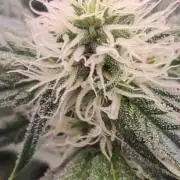
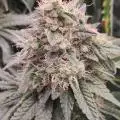
Added Buddy halfway through this week. Really impressed with these nutrients so far, there's been no problems or defeciences the entire grow. All plants look happy, healthy and green. This plant is on the left of the timelapses.

@BioGrowBayer
Follow
Blütetag 28 nach der Umstellung auf 12/12 ist erreicht und was soll ich sagen … Es läuft einfach!
Die drei Ladys entwickeln sich prächtig und mittlerweile macht es richtig Spaß, jeden Tag ins Zelt zu schauen.
Der Stretch scheint langsam durch zu sein und die Energie geht jetzt immer mehr in die Blütenbildung.
Die Buds legen sichtbar zu und es wird von Woche zu Woche interessanter.
Auch die eine Lady, die beim Stretch völlig übertrieben hat, macht sich weiterhin super.
Mit Guanokalong bin ich nach wie vor rundum zufrieden, Grow ist mittlerweile reduziert und Bloom sowie BatBoost laufen weiterhin nach Herstellerangaben.
Die Pflanzen stehen richtig gut da und bisher gibt es weder Anzeichen von Mangel noch von Überdüngung.
Viel mehr gibt es eigentlich gar nicht zu erzählen.
Manchmal läuft es einfach so, wie man es sich wünscht, und genau so darf es gerne weitergehen.
Bin gespannt, was die nächsten Wochen noch bringen!


@0JuJu0
Follow
Planted in 25L Pot with pre-fertilized compost soil and a little bit of coco, perlite and little pieces of old woodsticks.
As a fly protection i use spiders and there web to solve this problem because thats the only one i have. So when you see in my tent, webs and the little bit of soil on the bottom what keeps the tentfloor dry and is also good for the spiders, please keep that in your mind.


@Coopmc
Follow
Testing 9 seeds I expeckt 2 winners 2 losers and 5 ok let’s see how she rolls!
The plant the seeds and pollen cam from a seedling I grew from a seed found in a Bag of SFV that J was given 3 of I back crosses the best with itself !!
3 up already!!
6 playing peekaboo
7 of 9 up 2-3 look hands down better plants !!
8 out of 9 up!
9 up 3 losers and 6 to chose a few winners from!!
9 seams to be good number to ensure I find one exception copy usually 2-3
First cut down to the too3 all 9 did germinate!!
The three look strong


@SillyTrippyHippy
Follow
Back left looks hungry gave her an extra top dressing.
Increased lights to 75% today
Trying to keep VPD around 1.4 the heavy rain is making it somewhat difficult lol. 😕
Any tips or advice is appreciated!


@Sider79
Follow
Another hot week in the 30s but obviously they like it due to the amount of growth considering ,really just 19 days in growth and two days germination. Is this normal for auto flower growth?



@Growfather1
Follow
Hello everyone,
I'm 5 days late with week 4 i uploaded the transplant video.
Strangely she didn't do much in the past week like the growth stagnate. Now she sits in a bigger pot she will take off.
I will update week 5 in 2 days from now.
Thanks for stopping by and have a nice day.
Growfather


@Hawkbo
Follow
This week they are all just putting on some weight still a few weeks left to go. Pics were taken on Monday video on Tuesday. The aromas are pretty strong in the tent in general.
These 2 are startin to stink like candy I hope they fatten up some more.


@DonPerion1983
Follow
So forgot to add last week I took out the scrog net as I personally think the plants were to far into flowering now to be trying to tie them down! This week I’ve been trying to check trichomes!! Also I’ve added canna pk13/14 nutrients! As I think there getting closer to harvest time! I’m planning on using this 13:14 for two weeks feeding?? Then flush for 7-10 days with just normal soft tap water ph’d down to 5.8!!??
Also ordered a microscope just waiting on arrival! So I need to keep checking these trichomes until turning a little milky?? But overall still happy with my first grow so far! Notice leaves are turning yellow do I trim them? Or let them die naturally? Any help still needed cheers


@NanoLeaf
Follow
Follow my grow to see full grow cycle. Happy with what I learned during this run. Only going to get better and better!


@Herbalize
Follow
Hello Folks 😎
7th week of flowering,I'm really amazed by these girls !
They are beautiful, the smell is powerful, and these buds are dense like rock !! 💪
They drink 4/5 liters every 5/6 days, for the last watering with fertilizer, I reduced the dose about 650 ppm
my plan is to start the flush from day 50 until day 65 and from there, I'll see if I have to push a few more days while checking the color of the trichomes
I think I'm going to enjoy this already legendary strain, like the smell a lot 😻
Follow, like and comment if you enjoy it
I also have a second diary with 2 Moby Dick
Peace Love & Weed 😍👊
