


Likes
Comments
Share

@Sobreruedas
Follow
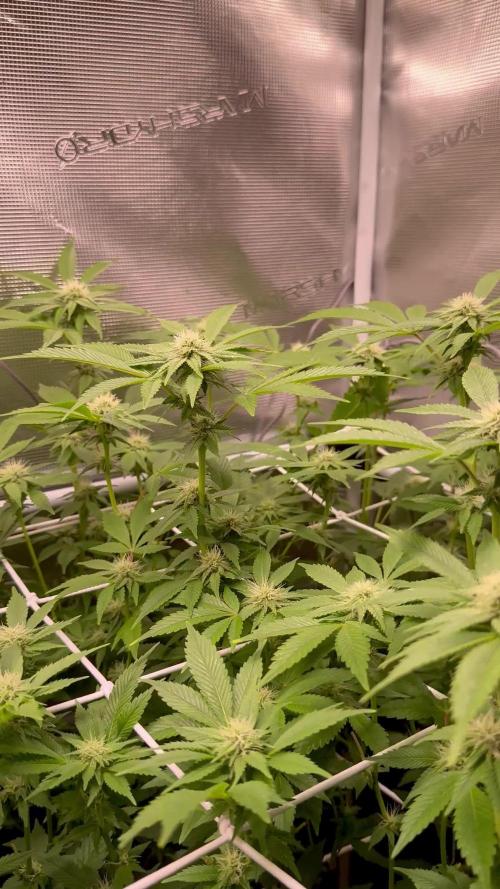
This week I didn’t make any structural changes and just let the plant develop naturally.
I’ve now introduced Green Sensation and removed Power Buds from the feeding schedule.
Also, I forgot to mention that last week I set the LED to 100%, and it’s currently running at around 800 PPFD.
Everything is progressing well so far, now it’s just about maintaining stability and letting the plant focus on flower development 🌸💪

Likes
16
Share


@smallscaleorganics54
Follow
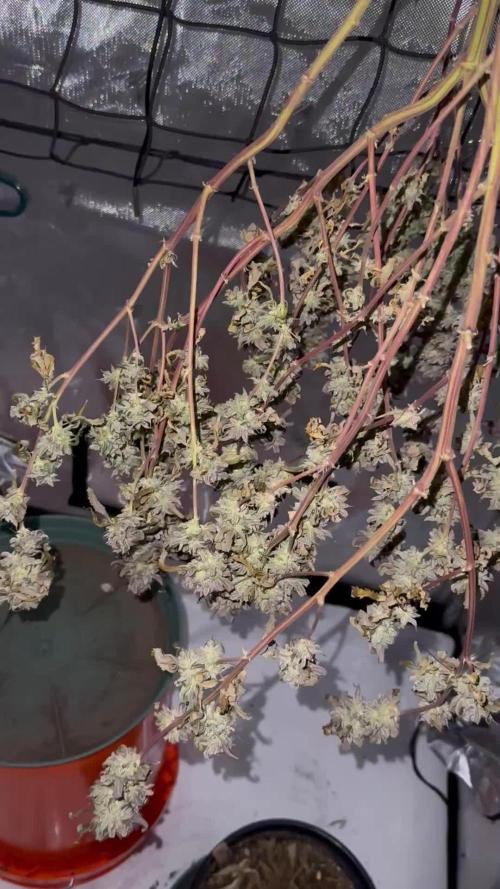
On day 67 of flowering I chopped both plants. Trichomes were mainly milky with some amber. After the chop both plants were hung upside down in the grow tent. The humidity ranges between 57-61 % at 18-20 degrees celcuis. The buds should be dry in about 14 days.


Processing
Likes
8
Share


@eldruida_lamota
Follow
Que pasa familia, esta semana hemos lavado las raíces de un ejemplar, el otro ejemplar se le sigue echando nutrientes.
Ph controlado, intentaremos aguantar esa planta alguna semana más, las otra por lo menos aún le quedan un par de semanas.
Ph controlado bajamos humedad a 35% y la temperatura la mantenemos por debajo de 27.
Estas flores están cogiendo unas tonalidades increíbles, y empieza a desprender unos aromas brutales como a ácido.


Likes
58
Share


@Rap_a_cap
Follow
Of the three, SK is the one that receives the least direct light, but nevertheless she's starting to grow faster. Excellent branching but sensible to the cold. Using this adjustable curved trace I stopped the apical dominance obtaining a thick plant with many well-formed branches. No need 4 feed.
Happy and frosty growin for all of you 🤞

Likes
19
Share


@Ganjagrandaddy
Follow
Day 92: I half expected to be still saying this but they are still only showing milky trichromes in the main. I have trimmed and started to dry the #1 L.o.s girl a few days ago as she looked ready visually. She smells amazing close up and was a pleasure to trim. I do think she could have gone another week in hindsight but it will be interesting to see the difference in the end result too. #2 is pushing new white pistil sets out still and her trichs are generally milky with a few still clear globes around , no signs of amber anywhere in her so far so at least a week I think.
#3 The poorly girl has a few amber trichs knocking about so I think she will be taken down in the next few days. Despite her looking line rubbish the entire grow , she is producing some nice solid nugs. Their smell is so sweet and sickly that after the cure they will be so fruity to smoke. This week should see them finish perfectly. peace and blessings.


Likes
25
Share

@biglittlebird
Follow
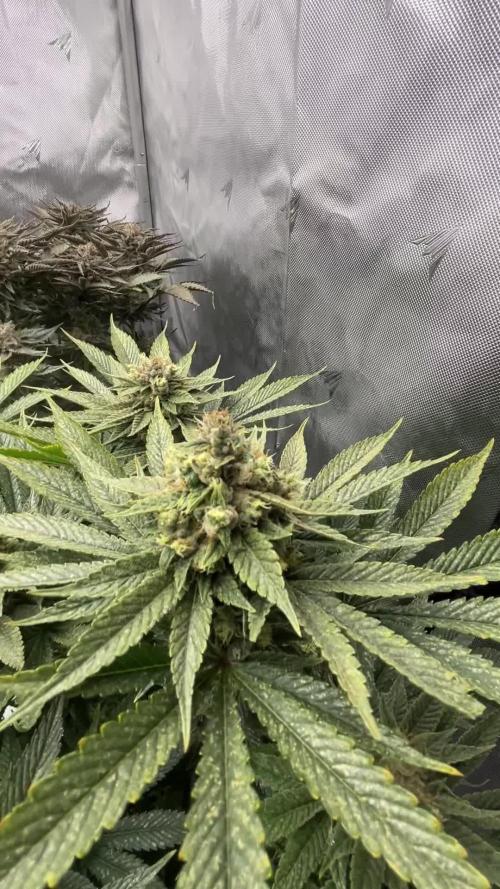
Takže finální rovinka , děvčice mají před sebou maximálně poslední týden ,už se pomalu trichomy zabarvují do jantaru. Byl to občas boj s časem,ale nakonec to vypadá na…. ze jsem to zvládl . Tak za týden u sklizně ! At se daří growers ‼️?🤤


Likes
5
Share


@Jankky
Follow
Threw a shade cloth over the top to help with a week of 90's into the 100's. Due too some time limitations and dry room space restrictions, two of the furthest along girls will be harvested in the next 7-10 days. Then 7-10 days after that the last two will need to be harvested, hoping they get far enough along :).


Likes
Comments
Share

@TrunkoKush
Follow
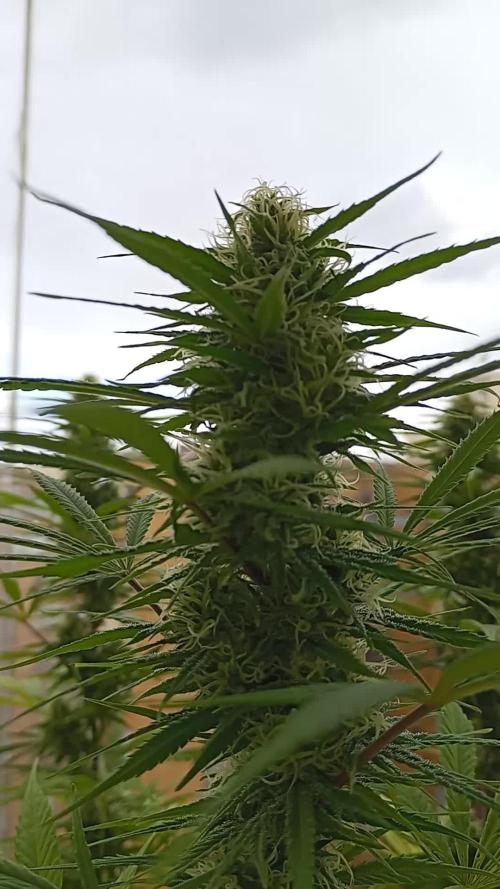
Earthy Wood and Lemons. Purple Trichome Necks. Purple Stems. Senescence. Purpling Leaves

Likes
7
Share

@The_Doctor_Green
Follow
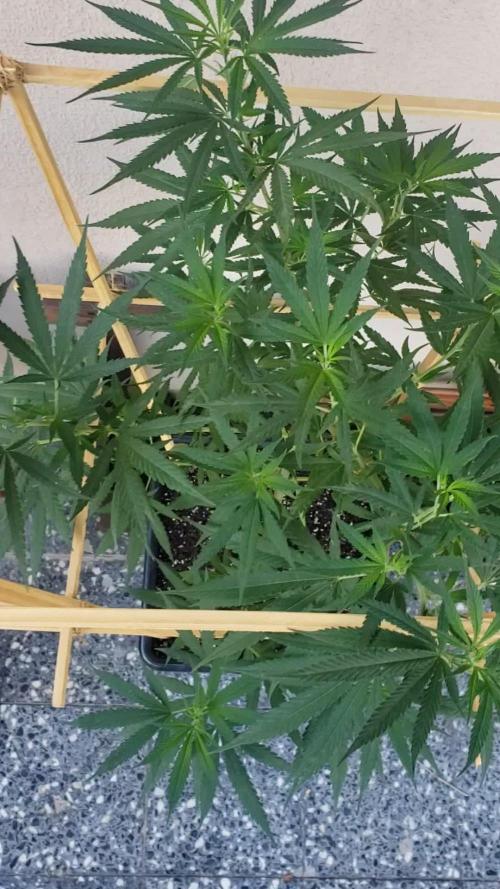
Hola a todo el mundo!!!🙋♂️🙋♂️😀😀.
Esta semana anduve muy atareado y solo he regado con agua .
Nada de nutrientes, y se ve a esta planta creciendo de forma saludable.
La próxima semana me pondré más al día con todo🙏😁
Likes
3
Share

@NyBushDr
Follow
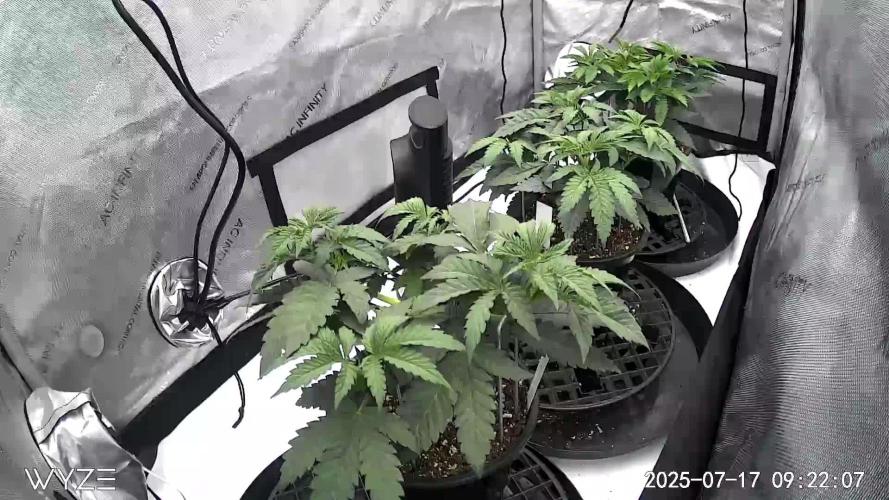
Good morning, we just completed week 4 of veg and today is day 29 which is the start of 5. Temps are steady and these girls like it a little cooler and more humid, I tried to increase kpa to 1 slowly from .9 and they were not happy at all so I’m just keeping it at .9 for now! They also are thirsty girls wanting water every 2 days drying the pots up quickly! They got a dose of recharge which I like to do every 3 weeks! Also starts silica now that I started training the branches down for a better even canopy ! Moving forward I will alternate fish shit one watering and silica the next the rest of the way! I’ll be transplanting to their final 10 gallon pots today or tomorrow then will do some more training once they recover from that! I don’t usually notice transplant shock so I’m not anticipating any issues! Thanks for reading and see ya next week
Likes
5
Share


@Bengrowerbr
Follow
this plant surprised me, its flowers became dense and heavy, much more than its mother's. The yield was much better than I imagined. I am really satisfied. I had never cloned an autoflowering plant and that sounds cool.
Likes
Comments
Share


@Lucidite
Follow
Sat 7/8:
- Transplanted a runted Purple Lemonade auto into a small plastic pot (1/2 litre), from 3 gal fabric pot. Put it back in the veg tent where there is more room. It is wasting space in the flowering tent. Suspect over watering early on as issue.
- Shifted a Grapefruit auto from the veg tent to the flowering tent to replace the Purple Lemonade. A little early, so it is on a pedestal to reach the canopy.
- Planted a Fastberry and a Gorilla Cookie auto.
- Harvested 20g wet from the CBD20:1 (8w).
Sun 8/8:
- Changed light cycle from 18/6 to 20/4.
- Fed plants, varying mixture by plant age. CBD20:1 is now only on water at every feed.
- Tied main stem down on Grapefruit auto (3w).
- Set up endoscope camera to capture the Grapefruit response to LST.
- Continued lollipopping Strawberry Pie (5w) and Kosher Cake(4w).
Tues 10/8:
- both the Gorilla Cookie and the Fastberry seeds popped. I’ve put them under icecream containers in the veg tent so they don’t dry out too quickly.
Wed 11/8:
- Small targeted watering with no feed.
Thurs 12/8:
- feed plants that needed to be watered.
Sat 14/8:
- Harvested the remaining CBD20:1 at 9 weeks, 73g wet
- Harvested undersized Lemon Pie at 8 weeks, 26g wet.
- Planted a Gelato auto and a Wedding Cheesecake auto from Fast Buds.
Next weeks diary: https://growdiaries.com/diaries/118288-grow-journal-by-lucidite
Likes
2
Share


@High_Grade_Dadli
Follow
Girls are doing well....seed looking like she earning her name..have some cutting off her n am please with the first week of flower....one got super stress n she dont even look like it jus watchin to see how things look later

Likes
3
Share


@samuraifroggig
Follow
She got to big for the 2x2x4 so I had to move it to a bigger 2x4x5 that has a new never before used 320w kingbright so this whole grow is evolving as it goes I had no clue that hydro and 200w in veg would make the plant this big. Temps are much easier to control now in the bigger setup. the 7 gallon res. is loseing about 1 gal a day I top it off and check PH/EC once a day it almost never needs adjusting so that is really nice.

Likes
8
Share

@Big-Daddy
Follow
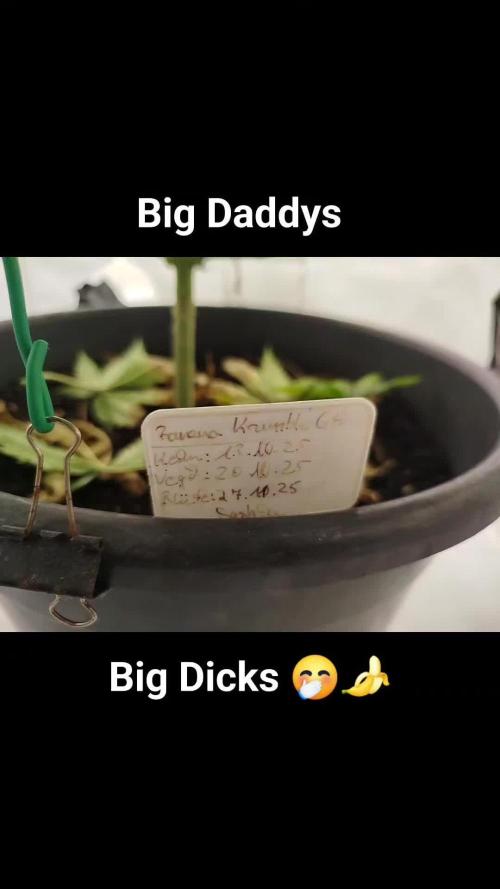
In der letzten Woche hat die Pflanze sich sehr gut entwickelt. Wenn man couch-look nicht mag, reichen 9 Wochen Blütephase.
Der Besitzer der Pflanze konnte in seinem ersten Indoor Durchgang sehr viel lernen, an Erfahrung sammeln und sich den ein oder anderen Fehler gleich abgewöhnen. Auch muss man dazu sagen, das die Pflanze sehr heftig unter den Temperaturen gelitten hat. Teileweise waren es zwischen 13 und 30 °C.
Auch war eine lange Durststrecke dabei.
Alles in allem, für die erste Pflanze doch recht in Ordnung.

Likes
3
Share


@Northern_Ent
Follow
June 7: Tropicana Cookies is growing quickly after the late start. Should be a good strong plant.
June 9: warm today and she’s ready for the first topping to build the manifold. See video.
Tip: spray hose water on the leaves to compensate for the low relative humidity during the daytime. Plants grow much better in the dry air when their leaves get wet. Maybe a couple times a day. Makes a big difference.
June 10: wildfire smoke is back but not as bad as in 2023. At least not here, and not yet. Tropicana Cookies FF growing fast after being topped yesterday. This is going to be a very good plant, I’m sure.
Likes
200
Share


@Ferenc
Follow
Day 72, 21st of November 2020:
Hi! Wao this is what I can say and luckily stoppe streching....
All LST has been removed as the plants remain the same so no need to keep them in "chains".
Those Original Sensible girls 3 of them (Gelato, Runtz Gum, Do-Si-Dos OG)went crazy, except Black Ghost OG she did not strech much typical little indica lady. And the THC crystals alrady on the leaves on the Runtz Gum and Do-Si-Dos OG just simply beautiful.
Buds are coming getting thick they are gorgeous only I can see some some sort of deficiency on Do-Si-Dos OG a bit on some leaves.
The fertilization schedula isnthe same every 2nd day and happens with the mix and ratio above.
Wedding Gelato is beautiful also I hope the nice purple colour will come out as well in late flowering stage. :)
The lamp is on 11.30 min and off 12.30 min.
Last week was 15 min longer light cycle....
So every week 15 min shorter light cycle until the 5th week. So far -30 min. It switches on at 6 am and off at 17.30 pm.

Likes
19
Share


@Tommy716
Follow
The overdrive worked great. We are grabbing all the weight and letting her fill in her final race to the finish. Waiting for the perfect time to harvest. She has Nice tight and frosty buds. Tricomes are turning to a milky haze. The weight of the multiple colas is causing a little bit of a issue. I've staked a few of the larger plants.
Have a flush scheduled for tomorrow. Time to clean out the soil and clear up any residual nutrients.Its her final chance to pack on a little more weight and at the perfect time we will wrap it up.Great growing this far. Thanks for all the comments. Can't wait stoked to finishing up and tasting the fruit of our labor.