


Likes
Comments
Share



Likes
52
Share


@jmsky
Follow
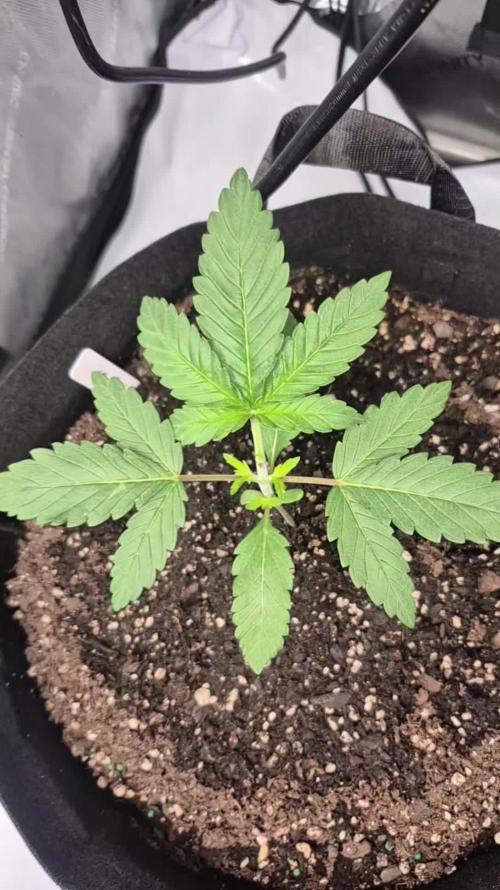
Blueberry Muffin was also chopped on day 64. It never seemed to take off and was the smallest and weakest in the tent. Honestly it was out of frame in so many pictures just because it was embarrassingly small.
The terps never really became the Blueberry Muffin that was promised. At most, there is a sweet cedar hardwood spice smell, kind of like men's cologne, on top of a classic dank weedy taste. There's a hint of something like pastry crust when I smell it in the bag. It does kind of remind me of a classic well rounded smoke from decades ago. One friend even preferred this strain over the others in the grow due to the simple classic flavor... not me though, I rank this 3rd out of the 3 harvests so far.
It was tiny and so was the yield, with the official weight coming in at 20g. It was truthfully a little less on the scale but I also tested more than a gram, so I'm calling it an even 20.
I'll definitely try this again sometime, I support HSC and think they have quality genetics, I don't want this to sour my perception of them.


Likes
39
Share


@AestheticGenetics
Follow
5/8/25
Chopped at day 65 of flowering. Will update more soon.
Not sure if the plagron product did much of anything.
Thank you to Zamnesia and Plagron for sponsoring this Grow.
5/9/25 first day/night of drying and temps are at 67.8 and humidity is at 61%
5/12/25 i had left for vacation for the weekend but when i came back the whole house smelled like a dispensary lol and the humidity was down to 55% sadly
but i have it back up to 60% and 67°F. tonight will be day 4 of drying and i suspect theyll be done in the next couple days around day 6 or 7
Eternity Grow Cup 2025 🤙💣🤘

Likes
10
Share


@Grilla
Follow
March 25, 2023 at 1:48 PM
-Ever since I started watering them with lower pH water, 6.0 to 6.3, the 2 BOH’s really started to takeoff. I might do some slight defoliation on all the plants. I’ll takeoff their lower nodes to make it easier to bend them from the main stock. The strawberry crinkle has very close internodes and is really bushy with large and thick fingers. It’s too short to try and bend over so I might have to do more of the defoliation job in order for the lower nodes to get more light.
March 28, 2023 at 5:24 PM
-
March 29, 2023 at 2:01 PM
-I’ve bent over several stems this week. I have only had one small accident with the strawberry crinkle. The top was snapped off somehow but I don’t remember it happening, but it seems to be taking it well. I watered them the day before with some tea with ph at 6.3. so far I could bend over things every day. They are starting to cover the entire pot.
- Today’s the last day of week three.

Likes
2
Share


@EtnoGrow
Follow
todo muy bien! esperando paciente el desarrollo de los cogollos, conociendo y viendo los puntos de maduracion asi como la fertilizacion ajustando a su maximo que creemos posible para incentivar que los cogollos engorden, ahora en adelante les hare segumiento de la grande principalmente, que es la que cumple con la edad del diario, ya que las otras como se explico en un principio venian recien cultivadas por eso tienen un par de semanas de retraso , tambien hay una hermafrodita, que al detectar como comentamos semanas anteriores aplicamos al tecnica vista de un cultivador mexicano, consistia en romper los brotes de machos las pelotas con el fin de que no vuelvan a salir, dejando solo los pelos estigmas de las hermbras, si bien el cogollo queda maltratado, al parecer se detiene el crecimiento, asi que estamos viendo como rinde ese experimento.


Likes
5
Share


@Gingercannacat
Follow
Beginning of week 4 so far so good. The girls are reacting well to there training. Vita race from plagron is a game changer. They are super green and healthy everytime I feed them you see the difference.Did some defoliation. Nothing major just removed any leaf overlapping or blocking light to lower parts of the plant.

Processing
Likes
25
Share


@Heady_McDank
Follow
Ladies going smooth 1st week is behind and #1, #2, #4 are the best going.
#5 stays behind and is the only one still in the 0.25cl cup the rest is 0.50cl now.


Likes
17
Share


@Sativa_Juice_Grows
Follow
Shes killin it. Nugs are starting to
Fill in nice. More and more trichomes growing
Slowly getting more and more dense.
Thinking about giving this last week of
the nute schedule for biobizz
then im gonna give her the water treatment until shes ready
Super happy with this girl!!
Finally think i got the weeks to sync.
this video is the start of week 8 flower.
getting some purple hues on her
Had to give the branches some support
buds are gettin fatter and fatter each day
Super excited

Likes
8
Share


@kronoslogic
Follow
Super heavy yielder, nice dense, dripping and exotic looking nugz. Definitely recommend if you need to pull as much uhq dank with restrictions on plants or space. Grows very tall for an indica dominant hybrid, almost hit the light after stretch. Ultimately very hq stable genetics

Likes
5
Share


@LedDave
Follow
Hi guys. Here is week 2 update, baklava seem to he really going for it 😍 hoping for big dense buds from this girl. On the other side the crystal runtz has still been quite sensitive to nutes and water Aswel as an ongoing problem I've had since day one with her leaves.


Likes
59
Share


@JeyGanesha
Follow
Ho portato le mie piccole amiche che mi ripuliranno la mia terapia .forza belle coccinelle 🐞 mie mangiate tutti. Ragni e uova... gnam gnam gnam 😋🤤

Likes
16
Share


@Boomdrawfyah
Follow
Dia 108 en el proyecto A la semana 15 ha sido pasada por agua y tormentas, han aguantado como unas campeonas, aunque he visto dos orugas y eso me preocupa, cuando paró de llover la rocie con xentari un producto agricola que lleva bacilus, esperemos que no vaya a más, y se terminen estos dias de lluvia para poder terminar bien el cultivo
Likes
4
Share

@DogDoctorOfficial
Follow
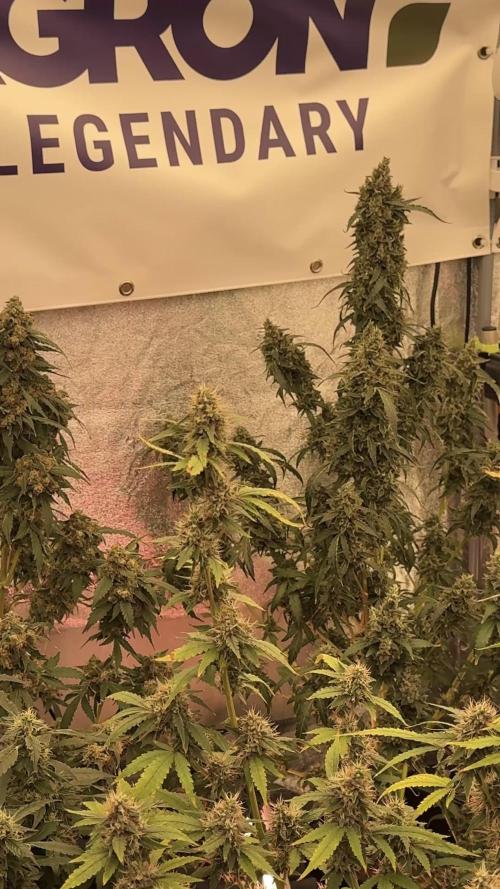
💜 8×8 Adventure – Week 12
Purple Haze by Zamnesia – Pheno A
The Girl Who Keeps Hitting Fast-Forward 🔥💜👑🌸
Welcome back to another chapter of the 8×8 Adventure! 🌱💚
And...
I honestly don't know how many more times I can say this girl is moving fast.
😂🔥
Because every single week...
she proves me wrong again.
Purple Haze Pheno A.
Still shining.
Still building.
Still evolving.
Still moving at a ridiculous pace.
And those flowers?
Well...
"Big" doesn't really seem to cover it anymore.
😂
Enormous.
Ginormous.
Gigantic.
Massive.
Pick your word.
She's got the flowers to justify pretty much all of them.
🌸🔥💜
And here's the funny part...
SHE'S STILL FAR FROM FINISHING.
😂
That's probably the most impressive part of this whole story.
We're looking at flowers that are already becoming seriously substantial, we're seeing obvious week-to-week evolution, we're watching the structure change in front of our eyes...
and yet...
there is still plenty of road ahead.
So once again...
we're not calling her finished.
We're not calling her close.
We're not predicting the ending.
We're simply documenting what she's doing right now.
And right now?
She's absolutely flying.
🔥💜👑
────────────────────────
🔥 WEEK 12 – STILL ON FIRE
────────────────────────
If last week was:
"This girl is really on fire."
Then this week is:
"Okay... somebody check the fire extinguisher."
😂🔥🚒
Purple Haze Pheno A keeps moving.
And what's particularly noticeable isn't just the size of the flowers.
It's the speed of the evolution.
Every week...
I can look at the previous photographs and immediately see something different.
The flowers are bigger.
The structures are more developed.
The stacking is more obvious.
The resin is becoming more visible.
The plant is becoming increasingly impressive.
And that change isn't subtle anymore.
It's becoming notorious.
You can actually see it from one weekly update to the next.
That's one of the things I love most about keeping these individual diaries.
Memory can play tricks on you.
You walk into the room every day.
You see the same plants.
And because you're looking at them constantly, gradual change can become difficult to appreciate.
Then you put last week's photographs next to this week's...
and suddenly:
"WHAT THE HELL HAPPENED HERE?" 😂
That's Purple Haze Pheno A.
She's evolving.
Fast.
────────────────────────
🌸 THE BUDS ARE GETTING RIDICULOUS
────────────────────────
Let's just talk about the obvious part.
The flowers.
😂🌸🔥
They're getting BIG.
And I mean...
really big.
Looking at the photographs this week, the flowering structures are becoming increasingly substantial throughout the plant.
They're no longer simply developing little clusters.
They're becoming serious flowers.
The branches are carrying increasingly impressive structures.
The stacking is becoming more pronounced.
And the overall appearance is starting to change dramatically.
The plant is beginning to look less like:
"I am building flowers."
and more like:
"Look what I've already built."
😂💜🔥
But again...
she's not done.
That's what makes this so fascinating.
We're looking at enormous flowers...
while still knowing there is more development to come.
So I'm not trying to imagine the final result.
I'm simply enjoying the chapter we're in.
And this chapter?
It's a good one.
────────────────────────
🚀 FASTER. AND FASTER. AND FASTER.
────────────────────────
I know I've used the word "fast" a lot in this diary.
But...
what else am I supposed to call it?
😂
She keeps moving faster.
Or at least, the visible evolution from one week to the next keeps becoming more obvious.
The difference between photographs is becoming increasingly difficult to ignore.
Week after week:
🌸 More flower development.
💎 More visible resin.
🌿 More substantial structures.
🔥 More stacking.
💜 More personality.
It's almost like watching a time-lapse...
except we're doing it one weekly update at a time.
And that makes this phenotype incredibly satisfying to follow.
Because you don't have to imagine the progression.
You can actually see it.
Photograph by photograph.
Week by week.
And Purple Haze Pheno A is giving us one hell of a visual timeline.
────────────────────────
💎 THE FROST IS FOLLOWING THE FLOWERS
────────────────────────
Of course...
the flowers aren't developing alone.
The resin is continuing to become increasingly noticeable too.
💎💎💎
The more substantial the flowers become, the more obvious that frosty character becomes throughout the structures.
And this is where the camera becomes such an important part of the diary.
From across the room, you see big flowers.
Get closer...
and you start seeing the resin.
Get closer again...
and suddenly there's an entire microscopic landscape happening on the surface.
😂🔬💎
That's one of the reasons I never get tired of photographing these girls.
The plant gives you one story with your eyes.
The camera gives you another.
And Purple Haze Pheno A is becoming particularly rewarding to photograph because there is simply more and more happening inside those flowers.
────────────────────────
💜 SHE'S STARTING TO LOOK LIKE HER NAME
────────────────────────
There's something about this phenotype that has become increasingly recognizable.
The structure.
The flower formation.
The colour.
The way she stacks.
The way she develops.
The way she seems to accelerate from one week to the next.
She's developing her own signature.
And that's exactly what we want from an experiment like this.
We're not looking for twelve identical plants.
We're looking for individual expression.
And Purple Haze Pheno A has certainly made her expression clear.
She's the fast girl.
The girl who doesn't seem particularly interested in waiting around.
The girl who looks at the room and says:
"Everybody ready?"
😂💜🔥
And then takes off.
────────────────────────
🌿 SAME ROOM – DIFFERENT SPEED
────────────────────────
And once again...
this is where the 8×8 Adventure becomes fascinating.
Because nothing about her environment is being specially designed to make her behave this way.
She's sharing the room.
Same general environmental conditions.
Same lighting philosophy.
Same irrigation approach.
Same nutritional foundation.
Same 12/12 schedule.
Same general care.
And yet...
look at her.
She's moving differently.
This is why I keep coming back to genetics.
The environment provides the opportunity.
The phenotype determines how that opportunity is expressed.
And Purple Haze Pheno A is clearly making her own decisions.
😂💜🌿
She's not waiting for anybody else.
She's doing her thing.
────────────────────────
💡 SAME PHOTONS – BIGGER RESPONSE
────────────────────────
The lighting environment also remains the upgraded setup we've been testing in the 8×8.
We've added the two additional Future of Grow Black Series 600W fixtures.
Rather than running everything at maximum output, we've reduced the power to approximately:
🔌 ~59% from the plug
And we're seeing approximately:
☀️ ~1,500 PPFD across the upper canopy
with intensity naturally changing according to canopy height and position.
And this is another part of the experiment I really enjoy.
The room has more lighting capability than before.
But we're controlling how much of that capability we're actually using.
We're not chasing a number simply because we can.
We're creating a powerful lighting environment and then managing it.
And Purple Haze Pheno A?
She's clearly putting those photons to work.
😂☀️💜
────────────────────────
☀️ PHOTONS IN – FLOWERS OUT
────────────────────────
Obviously, biology is much more complicated than saying:
"More photons = bigger flowers."
😂
But there is something beautiful about watching the invisible become visible.
The lights provide photons.
The leaves capture energy.
The plant processes that energy.
And the results become visible over time.
Leaves.
Branches.
Flowers.
Resin.
Structure.
Growth.
We can't see the photons themselves.
But we can see the consequences of the plant using that energy.
And when you compare Purple Haze Pheno A from week to week...
those consequences are becoming very obvious.
She's building.
She's developing.
She's filling out.
And she's doing it quickly.
────────────────────────
🌸 THE STACKING IS BECOMING SERIOUS
────────────────────────
One of the biggest visual changes I'm seeing is the amount of structure developing within the flowers.
The stacking is becoming more pronounced.
Flower sites are becoming increasingly substantial.
And the branches are starting to look like they're carrying much more than they were only a few weeks ago.
This is where I really appreciate having those full-plant photographs.
Because you can step back and see the architecture.
Then you can move closer and see the flowers.
Then closer again...
and see the individual details.
The whole plant tells one story.
The individual flowers tell another.
And together?
They show us how quickly this girl is evolving.
🔥🌸💜
────────────────────────
📸 THE WEEK-TO-WEEK DIFFERENCE IS GETTING NOTORIOUS
────────────────────────
This deserves its own section because it's honestly one of the most satisfying things about this plant.
Look at last week's photographs.
Now look at this week's.
😂
There it is.
That difference.
It's not something I have to invent with words.
It's right there in the images.
The flowers are becoming more substantial.
The structure is changing.
The plant looks fuller.
The developing buds have more presence.
The resin is increasingly obvious.
And the whole girl simply looks further along.
That's the beauty of a weekly diary.
We don't have to rely on memory.
We can document.
Compare.
Observe.
And learn.
Purple Haze Pheno A is giving us an excellent example of how quickly a phenotype can visibly change over a relatively short period.
And we're lucky enough to have the photographs to prove it.
📸💜🔥
────────────────────────
📏 SHE DOESN'T NEED TO BE THE TALLEST
────────────────────────
At around 120 cm, she's still not one of the giants of the room.
And that's another thing I love about her.
She doesn't need to be the tallest plant to make herself noticed.
She's making the space count.
Her flowers are doing the talking.
Her structure is doing the talking.
Her development is doing the talking.
😂💜
It's not about how many centimetres she has added.
It's about what she's doing with the structure she already has.
And right now...
she's doing a lot.
────────────────────────
🌿 LET HER DO HER THING
────────────────────────
And just like with the rest of the room...
I'm not trying to manufacture work.
She's healthy-looking.
She's developing.
She's building flowers.
She's responding to the environment.
So my job is becoming increasingly simple.
Observe.
Pay attention.
Check the environment.
Monitor irrigation.
Monitor nutrition.
Watch the plant.
And if something actually needs attention...
then we respond.
Otherwise?
Let her work.
😂🌱
I don't need to constantly interfere just because she's moving quickly.
In fact, the opposite.
When a plant is doing beautifully...
sometimes the smartest thing you can do is stay out of her way.
She's got a job to do.
And she's doing it.
────────────────────────
⚗️ NUTRITION – SAME FOUNDATION, GRADUAL CHANGES
────────────────────────
The room continues with the current nutritional programme, with the flowering nutrition being adjusted gradually as we move further into the later stages.
Current room recipe remains approximately:
🌱 Plagron Terra Bloom – 2.3 ml/L
🌱 Power Buds – 1 ml/L
🌱 Green Sensation – 1 ml/L
🌱 Sugar Royal – 1 ml/L
⚗️ pH adjusted as required
Current solution values remain around:
⚗️ pH – ~6.02
⚡ EC – ~2.14 mS/cm
And the important thing for Purple Haze Pheno A is not simply what goes into the reservoir.
It's how she responds.
And she's responding beautifully.
She's building.
She's developing.
She's progressing.
And she's giving us absolutely no reason to start inventing problems where there aren't any.
────────────────────────
🌡️ WEEK 12 – ROOM CONDITIONS
────────────────────────
The room remains broadly stable around:
🌡️ Day temperature: ~26.5°C
🌙 Night temperature: ~26°C
💧 RH: ~61%
🌱 Substrate temperature: ~25°C
💦 Nutrient solution: ~25°C
⚗️ pH: ~6.02
⚡ EC: ~2.14 mS/cm
💨 CO₂: ~693 ppm
💡 Light schedule: 12/12
💧 Irrigation: ~1.45 L/plant/24h
? Pot size: 15 L
Same room.
Same general conditions.
Same lighting upgrade.
Same overall approach.
And Purple Haze Pheno A keeps showing us her own answer.
🔥💜🌿
────────────────────────
🔬 THIS IS THE PART I LOVE ABOUT PHENOTYPES
────────────────────────
If you look at this plant on her own...
she's simply a beautiful Purple Haze.
But put her beside the other eleven plants...
and suddenly the story becomes much more interesting.
You can see the differences.
Different speed.
Different flower formation.
Different structure.
Different timing.
Different expression.
And that's why I don't want to compare these girls as if they're supposed to reach identical milestones at identical times.
The value is in the differences.
Purple Haze Pheno A is showing us a particularly fast-moving expression.
Passion Fruitz is showing us a much slower rhythm.
Other girls sit somewhere in between.
Same room.
Different clocks.
And that's exactly what makes this adventure so much fun.
────────────────────────
🔥 STILL FAR FROM THE FINISH
────────────────────────
Now...
I need to say this again because those flowers are getting ridiculous.
😂
SHE IS STILL FAR FROM FINISHING.
Yes.
The buds are enormous.
Yes.
The stacking is impressive.
Yes.
The weekly evolution is obvious.
Yes.
She's moving faster and faster.
But no...
we are not suddenly at the finish line.
😂💜
There is still plenty of development ahead.
The flowers can continue to change.
The structures can continue to develop.
The resin can continue to evolve.
The plant can continue maturing.
So I'm not looking at her thinking about an ending.
I'm looking at her thinking:
"How much more is this girl going to build?"
And that's a much more exciting question.
────────────────────────
📸 KEEP THE CAMERA READY
────────────────────────
At this point...
I think the camera needs to stay permanently ready for her.
😂📸
Because with the rate she's changing, I don't want to miss the little details.
Every week is giving us another snapshot.
Another moment.
Another version of Purple Haze Pheno A.
And when we eventually look back over the entire diary...
I think this plant is going to be one of those where the transformation is particularly obvious.
Because the weekly progression is already becoming so noticeable.
The plant isn't just growing.
She's visibly changing.
And the photographs are capturing it.
────────────────────────
👑 THE FAST GIRL CLAIMS THE SPOTLIGHT
────────────────────────
Some plants quietly develop.
Some take their time.
Some surprise you later.
And then there is Purple Haze Pheno A...
who apparently has somewhere to be.
😂🔥💜
She's moving.
She's building.
She's stacking.
She's getting bigger.
She's getting frostier.
And she's doing it week after week.
So yes...
the spotlight belongs to her again.
Not because she's competing with anyone.
Not because we're declaring her better than another phenotype.
But because her particular story this week is impossible to ignore.
She's changing rapidly.
And she's beautiful while doing it.
That's worth celebrating.
────────────────────────
🔮 WHAT AM I WATCHING NOW?
────────────────────────
At this point, the questions are getting more interesting.
How much more will the flowers develop?
How much more substantial will the buds become?
How will the resin expression continue to evolve?
How will the plant change over the coming weeks?
How long will this rapid visible progression continue?
And perhaps most importantly...
what is this girl going to look like when she finally decides she's done?
😂💜🔥
I have no idea.
And I'm perfectly happy keeping it that way.
Because the fun is watching her answer those questions herself.
No predictions.
No forcing the story.
Just documentation.
Week by week.
Photograph by photograph.
────────────────────────
💭 FINAL THOUGHTS – SHE'S STILL ON FIRE
────────────────────────
Week 12.
And Purple Haze Pheno A is still absolutely on fire.
🔥💜👑
If anything...
she's turned the heat up again.
The flowers are enormous.
Ginormous.
Gigantic.
Whatever word you want to use...
they're getting seriously substantial.
😂🌸
And yet...
she's still far from finishing.
That's what makes this so fascinating.
We're watching a plant that is clearly progressing rapidly, while still having plenty of journey ahead.
The difference from one week to the next is becoming notorious.
You can see it.
The flowers change.
The stacking changes.
The structure changes.
The resin changes.
The whole plant evolves.
And that's exactly what I want from this diary.
I don't want to guess what she'll become.
I want to document it.
I want to look back later and say:
"Look at her here."
Then:
"Look at her here."
Then:
"WHAT THE HELL?!" 😂🔥
That's Purple Haze Pheno A.
Same room.
Same photons.
Same general environment.
Same irrigation.
Same nutritional foundation.
Different genetics.
Different expression.
And one hell of a fast-moving girl.
💜🌿🌸💎🔥
So let's give her the spotlight.
Let's turn the lights up on the story.
Let's keep the camera ready.
Let's keep watching those enormous flowers evolve.
And let's let this girl continue doing what she's clearly very good at:
moving.
Building.
Stacking.
Frosting.
Evolving.
And shining.
🔥💜👑
She's not finished.
She's not close to being finished.
She's simply moving faster and faster toward whatever comes next.
And I cannot wait to keep documenting it.
────────────────────────
🙏 THANK YOU
────────────────────────
As always, a massive thank you to everyone following the 8×8 Adventure. 💚🌱
Thank you to GrowDiaries for giving us the platform to document these individual journeys and share what we're learning along the way.
Thank you to Zamnesia for the Purple Haze genetics and for giving us the opportunity to explore this beautiful phenotype.
Thank you to Plagron for supporting the room with the growing media and nutrition throughout the adventure.
A huge thank you to Future of Grow for supplying the additional Black Series 600W fixtures and allowing us to test this expanded lighting setup in the 8×8. 💡☀️🌿
Thank you to Lumiflora for helping illuminate the deeper and lower areas of the canopy.
And thank you to TrolMaster for helping us monitor and manage the environment behind the scenes.
And finally...
thank you to everyone following along.
Every comment.
Every question.
Every message.
Every person stopping by to watch these girls evolve.
It genuinely means a lot. 💚
This project continues to remind me why I love growing different phenotypes together.
One room.
One environment.
One lighting strategy.
One general approach.
And completely different expressions.
Purple Haze Pheno A is giving us one of the fastest-moving stories in the room.
🔥💜
She's beautiful.
She's developing incredibly quickly.
Her flowers are becoming enormous.
Her resin is increasing.
Her structure is evolving.
And every week...
she gives us another reason to grab the camera.
📸💜🔥
So let's let her shine.
Let's give this girl the spotlight.
Let's watch those gigantic flowers continue to evolve.
Let's keep documenting every step.
And let's see just how much more this fast-moving beauty has left to show us.
💜🌿🌸💎🔥👑
Growers Love, my friends. 💚🌱
Happy growing, everyone.
And I'll see you next week in the 8×8 jungle...
where some girls take the scenic route...
some girls cruise...
and Purple Haze Pheno A?
She's apparently got the accelerator stuck to the floor.
😂🔥💜👑
See you next week! 🌱📸💚
Likes
120
Share


@OrganicNature420
Follow
Germination date 🌱 02/12/2021
Day 80 23/02/2022
Strain 🍁 Barneys Farm Biscotti Mintz
(Biscotti x Mintz)
THC% • 30% 🤤
💡 Mars Hydro FC-E6500
• Power draw 650W + 5%
• Max coverage 5 x 5
• LED 3978 pcs high quality chips
• Max Yield 2.5g / watt
• Noise level 0 DB
• Removable Driver & Light bars
• Daisy chain
• Fast cool system
https://marshydroled.co.uk/ 🇬🇧
PROMO CODE • (organicnature420) DISCOUNT
https://www.mars-hydro.com/ 🇺🇲
PROMO CODE • (ORG420) DISCOUNT 👍🏻
⛺ Mars Hydro 150 x 150 x 200cm
📤📥 AC infinity 6inch
💧 10lt dehumidifier
❄️ 3.1kw air con system
💉 Nutrients GreenBuzzLiquids 🇩🇪
⭐⭐⭐⭐⭐
Organic Grow Liquid • 1-4ml until 2wk flower
Organic Bloom Liquid • 2-4ml flower stage
Organic More PK • 2-4ml +wk3 of flower
Organic Calmag • 1-2ml/lt whole grow
Fast Plants Spray • first 2wks at night lights off
More Roots • 2-5ml veg +2wks flower
Fast Buds • 5ml 12days before flower until wk1
Humic Acid Plus • 2-5ml whole grow
Growzyme • 2-5ml whole grow
Big Fruits • 2-5ml flower stage
Clean Fruits • 5ml flush 1wk
Ph powder
Root Gel
Living Organics
https://greenbuzzliquids.com/
PROMO CODE • organicnature420 15% off ✌️🏼
🥥 Growing Media • Coco Coir
Notes 📝
These beautiful lady's are so frosty. In my view best of the bunch along with the coco Bahama Bussdown. I can't wait to stick my nose In a huge bag of this when it's done. Unreal smell coming from them and both look on par to each other. Looks like these will be 1st to finish so I will stick them on a dose of clean fruits for the next week and go from there. Certainly room to pack some weight on so will see how it goes. I don't want to pull them early 🌱💚
Discount codes in bio for Mars and GreenBuzzLiquids 👍🏻 game changers 🏆
Likes
2
Share


@NEPA-Cultivations
Follow
this was a homemade grow tent grow..i now have x2 Vivoson tents 3x3 and a 4x4
Processing
Likes
6
Share


@Fastbudsuk
Follow
Looking really good now I would say cumming in to day 18 of its life all in all I'm really happy with progress so far
I would like any advice as to when I should start low stress training on my little lady
Likes
66
Share


@DogDoctorOfficial
Follow
So far so good they are handling quite good , keeping ,y Ppfds around 1400 on average with some points closer to 1600 Umols/m2s 😜🤦♂️💪💪💪 always believing hahahaha
Day 32 Flower and all seems to be running on track , leafs are tip burned just as i like , this means im pushing them to they’re limits , more they wold go in lock mode and that as we all know is not a good thing 😆
Day 32 Flower and I’m starting to think in defoliation again, i know im not supposed, but as always i will read my garden and leaf strip as many times needed during flower or no flower time 😆😜😅💚 let’s see how they grow but i fell they need space asap already 😆💚💚💚
Trying big numbers on the Ppfd department and see how far they can take without supplement extra CO2, i mean i have the bags they help but lol
Ppfd- 1400 Umol/m2s
VPD- 1.51 kPa
Girls :
Tropicana Poison @sweetseeds - 7X
Chocolate Skunk @00seeds - 2X
Badazz Cookies OG @seedsman- 3X
Lights 2X Lumatek Zeus 465W Compact Pro @ 100%
All i Grow is medicine for myself, i do it with love for the love 💚💚💚
Growers love to you all

