


Likes
Comments
Share

@tantrumrage
Follow
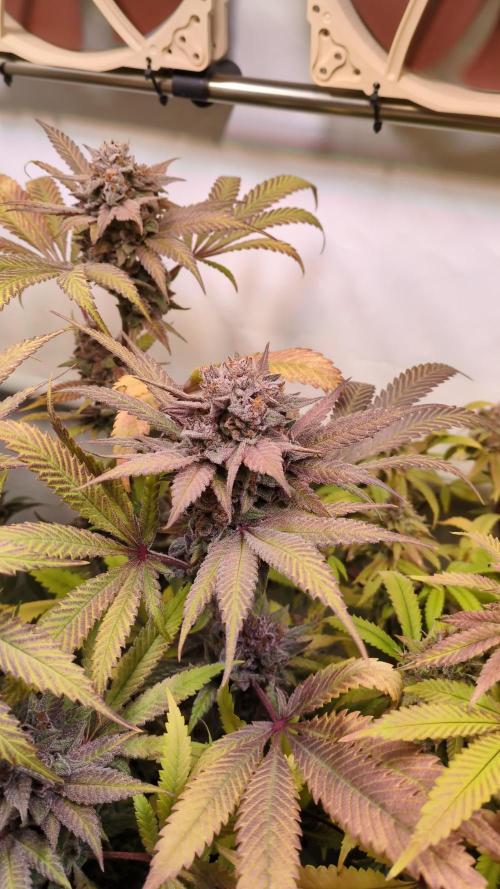
23/03/26 -29/03/26: this will probably be the last entry for the blueberries as they're close to harvest. Cloudy trichomes with some amber, will probably give them another 2-3 days.
Vanilla Créme Pie and Chicken n' Wafflez also have a couple of amber trichomes but they'll need a bit more time. My guesstimate is 7-14 days.
So I guess we're nearing the end of this diary, always a happy-sad moment. You take care of them for months and then the tent is empty. But not for long 🙌🏻
Thanks for stopping by and see you next week!

Likes
131
Share


@Roberts
Follow
Just cut down the Miller high life bottle grow with QP. Was a really neat micro grow. It got much bigger then I expected. Was a pain to get started, and growing. Finally got it. The Unit Farm UF2000 worked great. Thank you Unit Farm 🌱
I will be back when dried to weigh out.
Happy growing 🌱🌱
Thank you grow diaries community for the likes, follows, comments, and subscriptions on my YouTube channel. 🍻🌱👍
https://youtube.com/channel/UCAhN7yRzWLpcaRHhMIQ7X4g



Likes
14
Share


@PREPPYPUNK
Follow
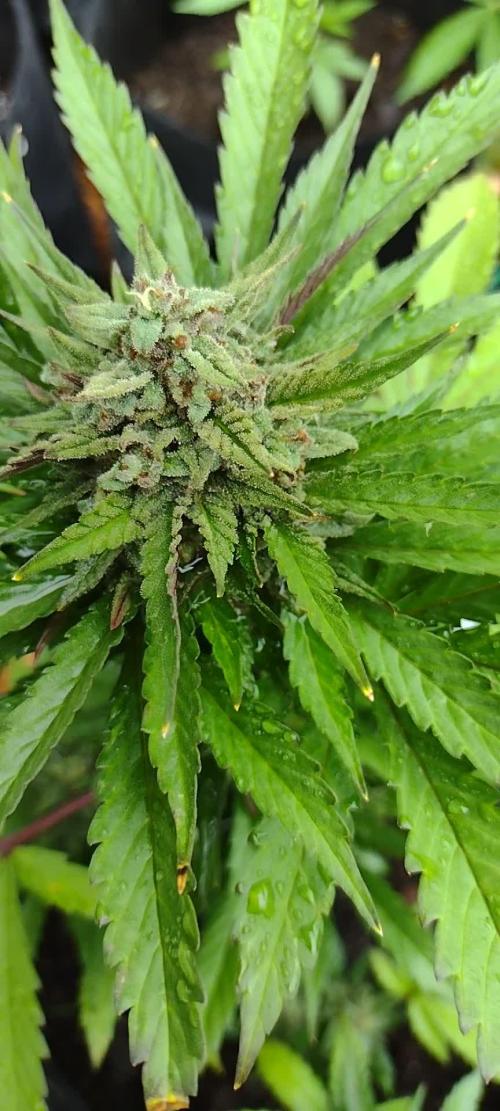
defoliation to expose bu d sights on left side plant at 7 weeks. leaves were and are not looking super healthy, seem to be drooping which can be over water most likely but i also noticed they start to droop same way when lights are too low so raised lights 3 inches and put material under right side 2 weeks younger plant to meet hight of other one. now letting it dry out for a couple days but bottom line, must keep plants healthy and must be patient for up to 11 weeks on bud developement as it tends to be slower than most auto flowers for critical purple. you can pull a bit off when its close to done and dry it out if you are a fiend or patiently wait this out and pray for big dense buds.

Likes
92
Share


@CachimboDaPaz
Follow
Day 60....I've set them free from LST and I'm gonna give them plain water tomorrow..can't wait this last 2 weeks to go.
As it is my first grow, i am already happy by getting closer and closer to harvest...can't really wait for the cure and the final results.

Likes
12
Share


@SuiXideGhXsT
Follow
Added video on may 16 for a good look
May 11
We are now almost at the end and I must say it sparkles more than anything else I have had so far I specifically took photos and the video using only the light from my phone. Despite the burn marks, she's a real sight to behold. She makes it difficult for me to take photos with a flash because she's covered in trichomes that simply bounce the light back. The buds look great and healthy and are now in their final stages of ripening.
I hope everyone enjoyed this cup. I've been through thick and thin with this plant, and I really enjoyed it.Regardless of whether I win the cup or not, I'm already a winner with this beautiful plant. It smells great, and I'm already looking forward to smoking it.
Thank you all for your attention. This is the largest diary entry I'll be making, in terms of pictures. Of course, there will be more pictures and videos until the end of May.
She will now receive advanced nutrients as prescribed and Plagron's Green Sensation for the rest of the time. In one or two weeks I change the water and just let them stand in normal water.
THANKS 🙏🏻🔥😌❤️



Likes
13
Share


@DieselKush
Follow
Nov.8 - Watered girls 250mL each, 0.25mL of each nutrient for each plant
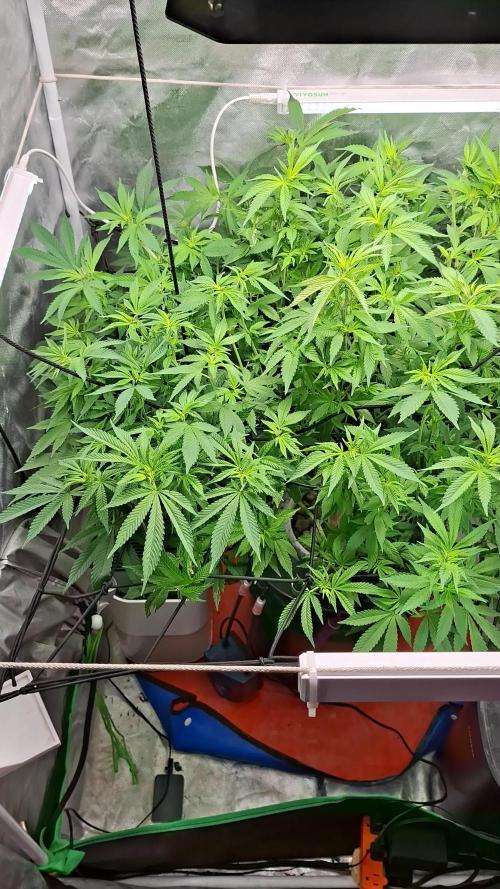
Nov.9 - Moved these girls into Vivosun tent under Phlizon 1200w light from a Marz Hydro tent 5x5 with Marz Hydro ts 1000 light. We needed to move these girls to this tent and have our DWC in the bigger tent so the DWC plants don’t get too hot at the bottom
*once girls were transported to new tent the leaves turned to curl and lift upwards, the light is on veg and is 24” high
Nov.10 - Watered girls 250mL each, 0.25mL of each nutrient for each plant
Nov.10 - Decided we don’t like the blurple light and took one of our Mars Hydro lights from our big tent and switched it
Nov.11 - Watered each plant, 500mL, 1mL of each nutrient. Our girls drank soo fast so we are bumping it up a bit
Nov.12 - Our girl #1’s leaves are a little droopy and are looking a bit weird in some spots (darker green and almost wrinkled). Our girl #2 though is going great and we started some LST training on her today. Let her growww
Nov.14 - Started our girl #1 on LST her leaves are much happier now! Ohhh boy #2 is sprouting so nice she’s starting to fill out so well and she just blossomed once we started LST, she was facing upwards in less than 24h!!
Nov.15 - Our girls are thriving so I wanted to FIM #2 and my boyfriend wanted to Top girl #1
Let’s see how these girls groooww
Nov.15 - Watered each girl 250mL and 0.25 mL of each nutrient we are going to water them just enough to soak into the ground every day for them to soak up as much nutrients and drink as possible without over watering.
Likes
41
Share


@TerpTurtle
Follow
HLG 350R hanging with the Mars Hydro UR45
-added a clone of a Malt Milkshake
-clones I took from these plants, majority have rooted so far and transplanted

Likes
90
Share


@AsNoriu
Follow
Day 127. Chop day !!!!
Zkittalicious #6 is my first plant without any airy or small bud !!!! Plus he will be like others in 100g range ...
#2 should beat all single plant records ;)))
Happy Growing !!!

Processing
Likes
10
Share


@yaron
Follow
Hi guys!its getting kind of boring but again a rainy day.They need sunlight bad,the coming days the sun will shine so we will see what happens.
Cheers!
Finally we have sunshine!The smallest one,a gg,just will not grow i dont know whats wrong with her and she is already in flower.
The rest is doing fine i think.
Cheers!
Likes
2
Share


@autofloweronly
Follow
Week 6 from seed. No pollen on this run. I think the silver is old so better luck next time.
Likes
29
Share


@HarvesterOfSorrow
Follow
What I can i say other than Ethos Genetics kicks ass. I love growing their gear and will continue for as long as I can. This girl here took very well to training and feeding increases. Her terpene profile early on was undeniably Strawberry but gradually took a citrus dominant turn with some notes of pine. She was a moderate strechter and produced nice full trichomes that I'm sure would give a great return if pressed. The buds themselves are extremely sticky,pungent and dense. I used CX Horticulture and did what most dont do and used the recommended feeding chart 😲🙈🙊. I am glad to say she took it like a champ and for future grows of this strain I know I can up my ppm/EC next time. I yielded 6.25 ounces off of a 10 gallon pot and I know that's not impressive but it's my first time growing in a pot that big so many things learned. I will say after looking at the rootball I could have vegged for several more weeks but again knowledge is power and I've gained some 😉


Likes
7
Share


@inversi0n
Follow
Hello, readers!
Frida feels alright. She drinks more every day.
Stretching a lot.
83: Photo of usual defolation, which i perform once in 2-3 days.
83. Photo of some pimple, that appeared on the stem. I have no idea, what is that, but it's not insects. It's how she grow something.
I've noticed, water in a tank becoming more greeny, so I should change it.
I recon, I wouldn't be able to finish to finish this grow properly, so I'm trying to shift schedule to 12/12, not rushing yet. But moving towards it day by day.
I'm not sure it helps with autoflower, but i need to finish it faster
Likes
80
Share


@Greenwolvesfarmer
Follow
Igual que sus otras hermanas sativas .esta belleza ha estado muy bien estimulada , creciendo rápido llegando a unos 15cm ..a su día 20 , hice corte apical , y hoy se veía bastante sanita y sin reacción de stress...que lindas sativas. Nunca había tenía esta alegría ...de todas maneras
La lemon Shining silver haze , tiene una hoja que luce "híbrida"....
Las amo a todas !

Likes
11
Share


@LaughingDragon
Follow
What a wonderful week of growth and flowering! been watering twice a day at 250ml per watering session, usually morning and evening.
Not being able to plug in a humidifier has resulted in me misting twice a day as well.

Likes
7
Share


@CannaGrowmie
Follow
She finished up beautifully with deep silver and purple colors throughout, extra frosty, and super dank!
Will update with dry weight
Likes
3
Share


@blacknpearl
Follow
Beginning of the week: I started feeding her nutrients. Megacrop. 0.5 grams/litre.
End of the week: third megacrop feed. 1 gr/litre. Transplanted to 3.8 L fabric pot.

