


Likes
Comments
Share

@Kokothegrower
Follow
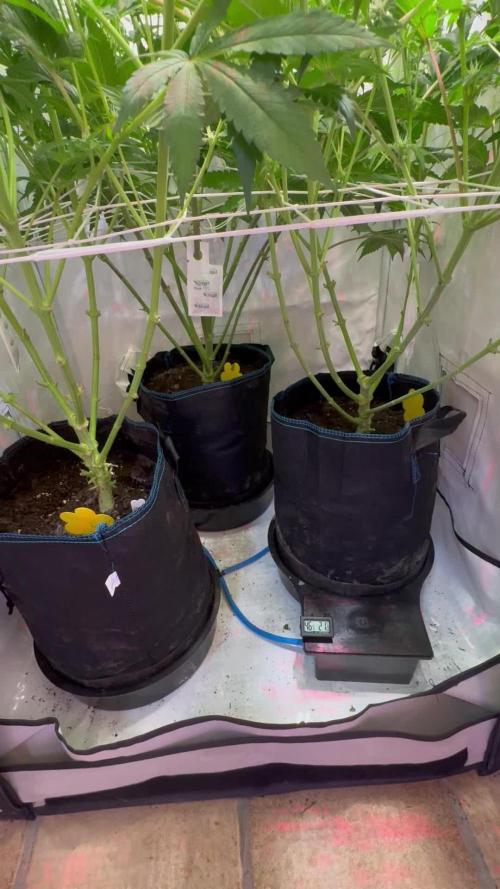
Anfang Blütewoche 4.
Sensationeller Geruch bei der Candy Lime!
Ich mache das nun seit 35 Jahren und hat viele verschiedene Strains, aber einen derart intensiven Geruch nach frischen Orangen habe ich noch nicht erlebt.
Zmoothiez macht seinem Namen alle Ehre!


Likes
21
Share


@Meisterwulle
Follow
Moin Leute,
hab vor paar Tagen mit der Ernte der beiden Pflanzen begonnen, war etwa 3 Stunden mit dem Trimmen der beiden Pflanzen beschäftigt. Von der Farbe sind keine großen Auffälligkeiten erkennbar, Standard orange, hell bis dunkelgrüne Buds dabei. Die Größe der Buds variiert von den beiden Pflanzen, die eine eher mit sehr langen aber eher dünneren Headbuds, die andere eher mit breiten und kürzeren Headbuds. Insgesamt kam jetzt circa 640g Nass auf die Waage zusammen (gewogen am darauffolgenden Tag), denke das wird schon eine ganz gute Ausbeute. Im Nachhinein hätte ich schon eine Woche früher ernten können: Die trichome sind schon an manchen Stellen sehr bernsteinfarben gewesen (siehe Bilder). Auch musste ich ein paar Stellen aufgrund von Schimmel wegschneiden (denke das lag daran, dass manche Triebe zu nah an der Zeltwand lagen und aufgrund des wechselhaften Klimas insgesamt). Insgesamt bin ich natürlich sehr zufrieden mit dem Grow, ich konnte einiges an Erfahrung sammeln und werde diese auch für weitere Grows nutzen.
Zurzeit trocknen die beiden im Zelt mit aufgehängtem Trockennetz bei etwa 23 grad und zwischen 55-60 RH. Denke in einer Woche werden diese schon bereit für die Gläser sein, und dann kann man schon mal ein wenig naschen ;)
Ich danke nochmals dem Sponsor Dutch Passion für die Gelegenheit, bei diesem Contest dabei gewesen zu sein. Ich bin mit dem Strain sehr zufrieden - es gab kaum Komplikationen, die Pflanzen waren relativ resistent und das Wachstum ziemlich schnell.
Ein endgültiges Review werde ich erst nach dem Tasting machen können (um ehrlich zu sein hatte ich mir schon vor ner Woche mal einen Trieb abgeknapst und schon probiert, ist aber natürlich nicht ganz repräsentativ für den Grow - war aber mega :P).
Weiter gehts für mich erst mal mit den zwei Stecklingen von den Pflanzen und der dritten Pflanze, die anfangs im Zelt war - diese ist draußen in die reveg gegangen und wird - nachdem die Pflanzen im Zelt trocken sind - zusammen mit den Stecklingen in die Blüte geschickt.
Auch möchte ich jedem nochmal danken der dieses Diary supported und mich auf diesem Weg unterstützt - ich bin sehr froh Teil dieser Community zu sein, der gegenseitige Austausch ist wirklich super und alle sind sehr freundlich :)
Ich wünsche euch ein schönes Wochenende und ich melde mich zum smoke review wieder.
LG Wulle 😻🏻.
Edit:
Die Buds waren jetzt ca. einen Monat in den Gläsern und melde mich damit zum smoke Review :) Insgesamt ein sehr nices high, je nachdem, wie man an die Sache rangeht und grade mit dem Mindset unterwegs ist, fühlt man sich auch dementsprechend. Für Partys gut geeignet, man ist gut gelaunt, locker am dancen und auch noch recht kommunikativ (aber keinen Laberflash ;)) Zum Zocken oder einfach mit seinen Freundenabzuhängeb auch genau richtig Der etwas süsslicher Geschmack erinnert, je nach Phenotyp, entweder an Zitrone (Pflanze #1) oder etwas cremiger aber dennoch fruchtig an Gelato-Vibes (Pflanze #3). Zu Pflanze #2 kann ich bisher noch kein Review abgeben, da ich sie erst heute in die Gläsern getan habe. Und ja - sie hatte wirklich noch geschafft etwas abzuwerfen haha Die Buds sind jedoch sehr klein und insgesamt denke ich nicht, dass sie viel abgeworfen hat, aber ich wollte sie nicht aufgeben, nachdem sie zweimal in der reveg war :P Von den Pflanzen #1 und #3 hatte ich auch noch Steckis gezogen - diese sind auch in etwa 2 Wochen erntereif. Diese sind aber nicht mehr Teil von diesem Diary, denke das würde dann alles zu umfangreich werden. Nichtsdestotrotz da auch noch mal die Bestu00e4tigung, dass auch das (bisher) gut geklappt hat. Falls ich noch mal in dieses Diary schaue oder ihr einen kleinen Tipp haben wollt: Steckling eine Woche in ein Glas Wasser geben, danach die abgeschnittene Stelle in Zimt tunken, und dann direkt in die Erde - hat bei allen Stecklingen wunderbar funktioniert. :PDas wars soweit mit dem Diary, wünsche euch noch viel Spaß und viel Erfolg mit eurem Grow! Noch mal ein großes Danke an jeden, der mich supportet hat und dem Diary folgt. Zudem danke ich Dutch Passion für das Sponsoring und die Möglichkeit bei dem Cup mitzumachen! Schaut dort gerne mal vorbei, die Sorte kann ich definitiv empfehlen! (Unbezahlte Werbung, persönliche Empfehlung :))

Likes
13
Share


@GanjaFarmar
Follow
To be honest overall this strain done good so as the others. Reflecting back on how i started with just a tent and light, and slowly buying the fans and filters whiles the plants were growing.
But i did want these plants to grow naturally without topping and Low Stress Training. I regret not removing the lower branches becuase i did get alot of small airy buds down there. But it was all trial and error. All i done was remove some fan leaves when good to do so every now and then. Not on a mad level tho, i did have alot of sugar leaves which i will be making some stuff with!
At veg the plants had deficiencies due to out of date Biobizz bottles. But that got sorted with the magic of Algimac and Calmag.
Overall
Next time I will definitely train the plants and maybe top a few.
Final Yield:
Plant #1 21.88 Grams
Plant #2 33.36 Grams
Plant #3 56.06 Grams
Which yield exactly 110 grams! Ounces come out very fat with these light buds
Not bad for the conditions they were brought up in, and with no training!
Thanks for everyone who has followed this diary throught out the journey! I hope this diary will help people out.
And thank you to Seedstockers for very cheap and quality seeds.
And special thanks for the GrowDiaries Team for providing the best platform for growing journals! I couldnt explain how much this Diary helped me. Its like a dream come true finding a site like this! And if you do see this message, i would love to see a Iphone app coming soon!
Kind Regards!
One love!

Likes
23
Share


@cadur
Follow
Buds are hardening but not getting much bigger, 0 vertical growth.
Leaf tip burn so diluted the nutrients.
Funny little plant.


Likes
29
Share

@GoodTimesOrganics
Follow
Hi liebe Community and Welcome Back! 🌿💚
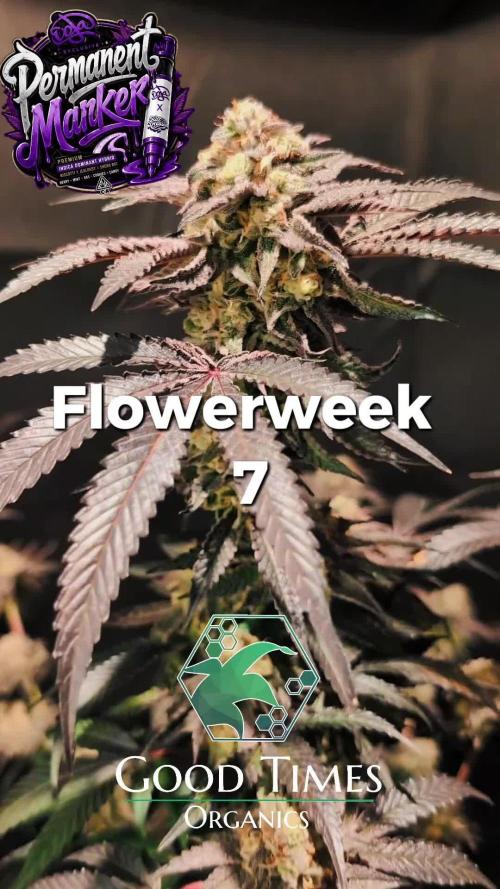
🖍️Permanent Marker von Seed Junky Genetics x Doja Exklusiv!
Wir befinden uns in Wachstumswoche 13 seit dem Eintopfen (Tag 82 + Tag 49 Blüte).
Die siebte Blütewoche ist nun vorbei.
Eine schöne tief lilane Einfärbung zeichnet die Pflanze immer mehr! 😁
Eine richtig schöne Pflanze 💚
Die Pflanze legt insgesamt eine top Performance hin.
Die Blütenstruktur ist fest und Kompakt.
Die Trichome überziehen langsam alle Blätter.
Der Geruch nimmt nun auch zu und es entwickelt sich so ein etwas Gasy Lakritz Earthy flavour.
Gegrowt wird wie immer rein Organisch, ab dieser Woche bekommt die gute nur noch Wasser.
Nun kann ich auch sagen, das es sich um das Original wie auf den Hersteller Bildern handelt! Top Versprechen!
Die Bedingungen sind aktuell gut!
—————
🌞 Temp: 26
🌚 Temp: 18°C bis 19°C
💨 RH: 58%
VPD: 1,07 kPa
💡ppfd: 830 mpm
—————
Grüne Grüße 💚🌱

Likes
2
Share


@Homestickycannabis
Follow
Easy,fast,fat,dense,stinky,sticky and absolutely tasty. These were 2 clones I took at the middle of flowering and the only retreat or issues I had is I wish I would have vegged these two clones at least 3 weeks more. Dos si Dos 33 from Barney's Farm is one the most beautiful strains to look at. !!!!


Likes
24
Share


@1Right_Angle
Follow
Mar 20,
- These plants are putting on a show, about how to fill a Bud.
The Maui Wowie are stuffing the buds into hard little nuggets. First-time I have seen true Nuggets indoors. Week 9 is going to be fun.
- White Pistils have begun to turn Brown/Amber and are getting “crinkly”.
- not to mention sticky as hell
- final Flower meal (Sunday) posted above = 8L
- TDS = 1125ppm for the final feeding.
Mar 22nd
- some fresh air for a few Pictures in Daylight and a thorough Flushing; 15 gal pot w/ 2 plants and it took 35 gallons of prepared h20 to get the TDS below 130ppm
- Drip-dry in the Sun for a couple of hours then back inside before any insects find us. Early spring warmth here in southern Ontario.
Mar 24
- it’s an amazing plant with the canopy looking like it’s full of Buttons. But in reality each of these buds are getting Longer every day, all at the same time.
Harvest will be a real Surprise.
I’ve not been poking around too much, these girls have simply run their course without needing any Help !
Great work Beaver Seeds!!!
When the time comes, I look forward to seeing what an Outdoor one produces. And how the plants would look without 1 aggressive LST session.
- Trichome-check tonight = large number of cloudy, with very few Amber. Still some clear with ~ 70% cloudy
26th,
- A gallon of Molasses / Rezin / H20 tonight to keep the juices flowing. Plant rotation etc. Day 5 since flush. Fluff the plants and arrange for Max exposure for the final couple of weeks.
No A/C in the small tent, humidity is just over 50%.
Air is being kept moving

Likes
16
Share


Processing
Likes
7
Share


@gablmo
Follow
I finally turned 600 watts on, would love to get comments from you folks, so clueless here. If you see something wrong, please let me know.

Likes
10
Share


@Elpicor
Follow
the weather forecast says 2 weeks of rain, it will be a challenge to keep the humidity low in the house and of course in the growbox.

Likes
13
Share


@Dunk_Junk
Follow
She grew 24cm this week! Really starting flowering too! She's doing well. Nothing else to the report as I'm just letting her do her own thing.
I notice her leaves are VERY thin and Sativa-like!! 😍
For nutrients I'm using 15g of 20-20-20 mixed with 10L of water. Also added 4ml/L of both Cannazym and Terpinator. This brings it to around 1600ppm including ~300ppm for my clean water.
Timelapse Sequence:
Pineapple Express
*** Blue Dream ***
Auto Jack (Not in shot)
Pineapple Express
CBD Compassion

Likes
5
Share


@Willy_Balls
Follow
1st week of 12/12 light going beautifully. They are doing really well. Although I still experienced root issues. I think this spot is cursed :P
Likes
1
Share

@Growfather1
Follow
Hello everyone!
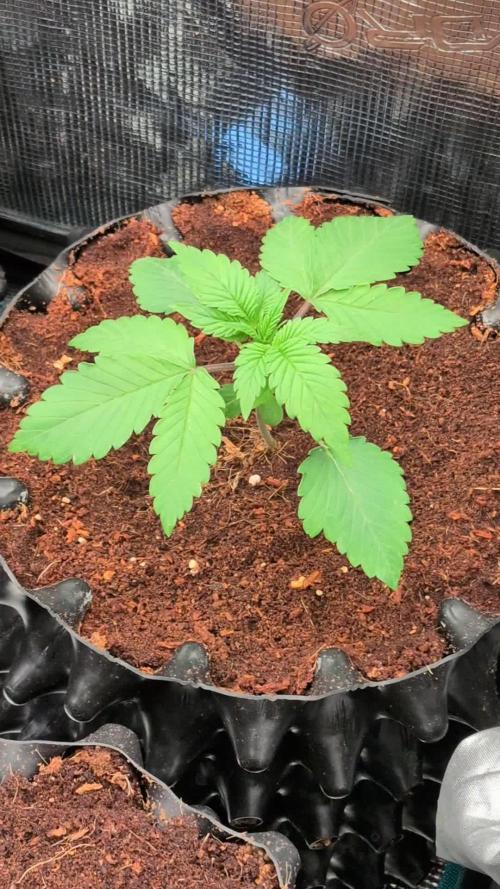
The Tangerine Dream enters her third week of veg.
Everything looks fine.
Temperatures are in check, between 20 at night and a maximum of 26 during the day.
I am feeding her on the lower side, don't use too much nutrients, I'm using 4 ml of Canna Rhizotonic to support the root stimulation.
There is for the rest not much to tell, she's just out of seedling stage, so next week I'm expecting more, like defoliation or maybe topping.
We'll have to see!
Thank you for stopping by and have a nice day.
Best regards,
Growfather.



Likes
93
Share


@MrJones
Follow
Mr-Jones Shockwave F2
🔹🔹🔹🔹🔹🔹WEEKLY GOALS🔹🔹🔹🔹🔹🔹
🌞Environment - 75/80℉ and 45/50% Humidity
💧 Feeding - Using "Super Coco" amended soil. compost teas, Dechlorinated H20 PH/6.5 Fish Fertilizer, Started feeding the plants because they are only in 1-gallon pots.
🍃Training / towards the end of the week will be Schwazzing the plants, along with cleaning out the bottoms,.
🕷️ IPM - Will be using Green Cleaner" 1 OZ per Gallon, and CannControl from Mammoth alternating between product each month for Integrated Pest Management.
💡Mars Hydro FC 4800 / 480W Led Grow Light - "Instagram: MarsHydro_Aliexpress"💡
🔹🔹🔹🔹🔹🔹🔹🔹🔹🔹🔹🔹🔹🔹🔹🔹🔹🔹
📜- Rambling - Yay! Looks like plants are responding well to the Earth Juice, decided to Re-Veg 3 of these ladies for an experiment, after harvest, will be transplanting them into 7-gallon pots and see what I can shake out of the,
🔹🔹🔹🔹🔹🔹🔹🔹🔹🔹🔹🔹🔹🔹🔹🔹🔹🔹
▶️Sunday 12.20.20 / Last BioBix feeding, this product is great!
▶️Monday 12.21.20 / So moving to Earth Juice Sea Blast Bloom, 3-26-22 will make sure PH is in the proper range around 6.5
▶️Tuesday 12.22.20 / Day 2 with just using Earth Juice, the heavy P-K should start to become noticeable good or bad by week's end.
▶️Wednesday 12.23.20 / Day 3 with just using Earth Juice
▶️Thursday 12.24.20 / Day 4 with just using Earth Juice, you have to look close but the heavy Nitrogen greens in the leaves are just starting to fade, and the buds are still stacking, I am sure if these ladies were in 7-gal pots it would be different.
▶️Friday 12.25.20 / Continuing with the Earth Juice, the heavier P=K is doing well and the buds are still blowing up!
▶️Saturday 12.26.20 / Continuing with the Earth Juice these girls are specked to flower 7/9.5 weeks, so closing out week 6 of flower I would think we are right on target! See you next week! I am also very happy with the Mars Hydro Light the FC-4800 is rocking it!
🔹🔹🔹🔹🔹🔹🔹🔹🔹🔹🔹🔹🔹🔹🔹🔹🔹🔹

Processing
Likes
5
Share


@MichaelMan
Follow
Had to change the lamps bc some changes were made in my other tent.


Likes
22
Share

@Bread_n_Buds
Follow
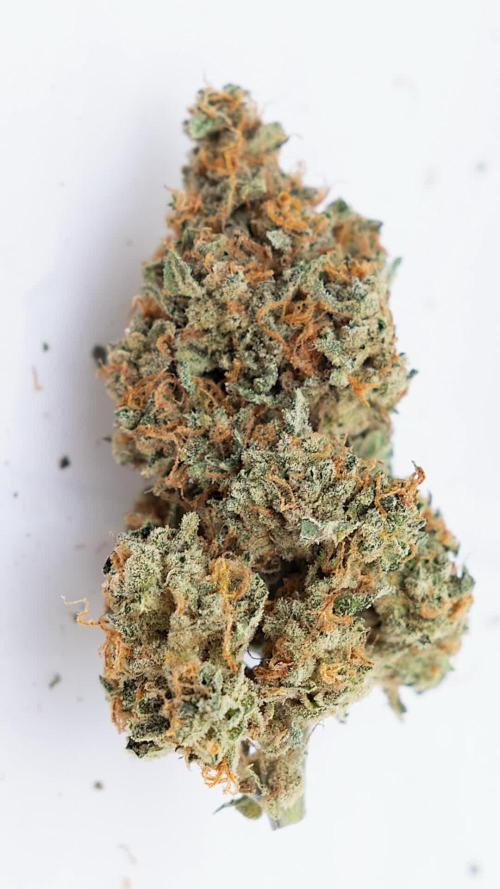
Here is the second Fruit Punch Automatic, the main lining has given it a very beautiful shape and high quality flowers.
** We remind all users that we grow two plants per variety, one worked with techniques and the other left to grow freely and beautifully to preserve its speed.
Description // This plant has undergone the first cut and then we went to create the Mainfold at the second internode. In autoflowering plants I choose to cut very early to lengthen the vegetative phase as much as possible and give the plant a lot to make as much cannabis as possible.
She is a plant with a low internodal distance so she remained low but the quality believe me is high.
I can't let you smell it, smoke it, vaporize it, put it under a press but I can show it to you, take a look at how juicy it is.
The flowers are big, large, very hard like Carrara marble and very very full. Really excellent quality of buds.
Do I do it with techniques or let the plant grow? They are really two beautiful plants with excellent quality flowers. Maybe this one has a little more quality of flower and the other a little more production, however they are both around 50gr clean, without stakes and no residue, only dry buds.
Trichomes and maturation // We carried out a careful observation under the microscope at 10x (and 10x x 1.6) and we noticed a good percentage of amber trichomes, mostly milky and a few transparent; for us it is a great time for harvest. I do a lot of daytime use, so I do not want to over-mature the plants, oxidize the THC and make them relaxing. Even the best sativa matured on the palate becomes more indica. I have to monitor the effect of daytime use a lot.
Fertilizers and soil // We used the organic line of Plagron fertilizers the whole time, all the recommended additives and the unfertilized and organic Pro Mix soil. Calculate everything according to your needs on the website ------ https://plagron.com/
The nutrients are available in convenient packs on the Zamnesia website
--------- https://www.zamnesia.io/en/11457-plagron-easy-pack-natural.html
One of the best in recent years with a very high THC level
------------------------------------------------------------------
https://www.zamnesia.io/en/10965-zamnesia-seeds-fruit-punch-automatic.html
A short description of Zamnesia // Sativa strains are very rewarding to grow, but their long flowering times and greater susceptibility to disease and over-fertilization can make them a little more difficult to manage. Additionally, their imposing heights are less suitable for indoor use and can attract unwanted attention when grown outdoors. However, with the arrival of Fruit Punch Automatic, growing sativa strains at home just got a whole lot easier. Combining Skunk #1, Haze and ruderalis, Fruit Punch Auto is a 70% sativa-dominant strain that produces up to 21% THC, along with a delicious blend of terpenes. Plus, it can be grown indoors, outdoors and in a greenhouse. With bright green hues, golden pistils and a thick layer of resin, Fruit Punch Auto buds always have a great appeal. When you smoke her, you will be amazed by her flavours, aromas and effects! As the name suggests, Fruit Punch Auto boasts delicious tropical aromas reminiscent of banana, pineapple, mango and citrus. Opening the jars will make you feel like you are in a tropical cocktail bar on an exotic beach. Fruit Punch Auto will delight your palate with pungent fruity notes followed by light notes of Skunk and spice on the exhale. Within minutes of taking your first hit, this potent sativa will stimulate your mind, leaving you in an energetic and carefree state, ideal for morning or daytime sessions, as well as social settings or creative pursuits.
The whole world of growing and much more is at Zamnesia: just take a look at the site and you will find "all the best that nature has to offer" in various shapes and colors.
---------------
www.zamnesia.com