


Likes
Comments
Share


Processing
Likes
12
Share


@Tazard
Follow
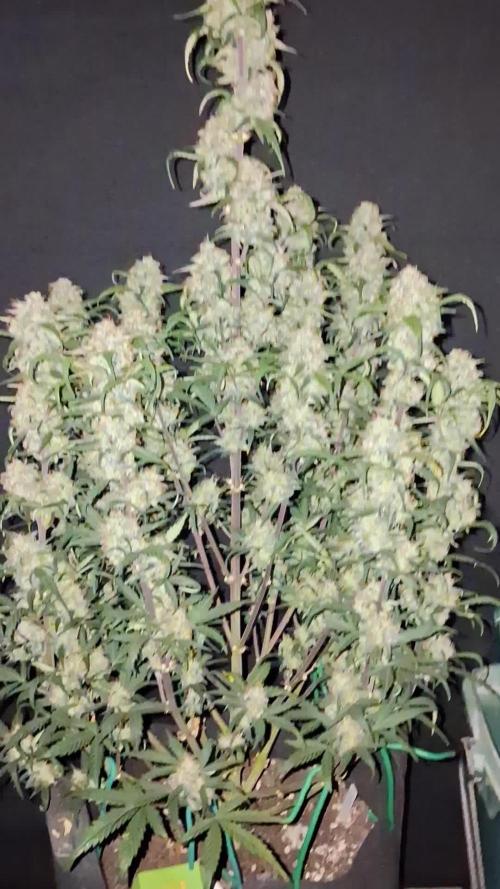
These are clones that I managed to take from my summer garden that became a disaster due to a heat wave that we had breaking 100 year records. I expect everything to be 48” in height at maturity.

Processing
Likes
14
Share


@Mr_Og_GreenThumb
Follow
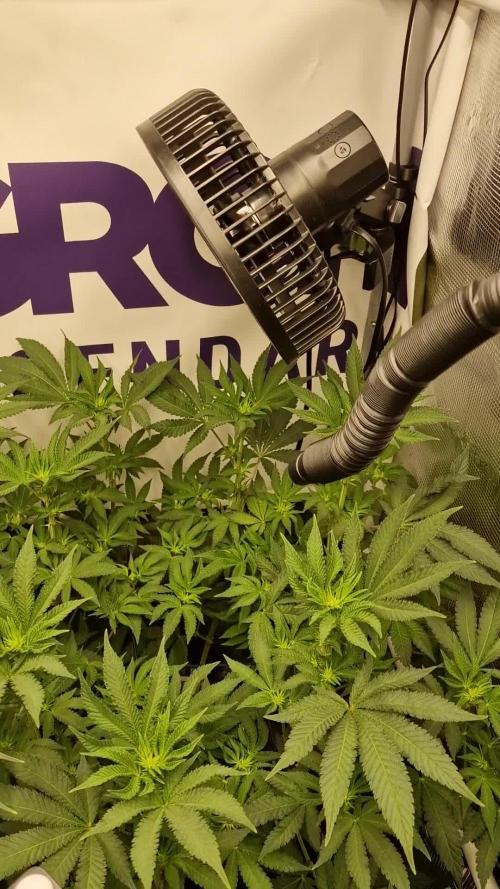
Week 12, Day 83 from seed and 3rd day of flower.....The 5 day of this week officially marked the start of the flowering season!! So I flushed both of these bad boys with ph'd water for two days and then today I switched them to 12/12. I gave them their first dose of bloom nutrients and then lollipoped them as you can see, pixs . Grateful no issues to report for the past 3 weeks have been trouble-free!! I'm going to leave the MH bulb in for an additional 2 weeks to prevent any stretching before switching to the HPS. But so far they are still loving their environment. I'm also in the process of keeping clones of fat banana and hulkberry while i try this new strain of Peanut Butter Tree.


Likes
15
Share


@MrGrowMan
Follow
Week 9-10
1 nutrient water
1 non nutrient water
LsT and Scrog
Diesel and Mimosa (front 2) start flowering
2 break up cake no flowering, i guess my flowers fem and
If it continues like this for another 1-2 days, I will switch to 12/12 light period.
all pH problems, runoff 6.8 pH




Likes
26
Share


@KingSalomonsWeed
Follow
Day 33
02.06.
Hallo Leute
Gefimmt bis zum abwinken.
Sehr gesund.

Likes
12
Share


@StoneyMelony
Follow
Overview of my grow:
Tent: Secret Jardin DS120 4 x 4 (120 cm by 120 cm)
Lights: 2 x 120 Watt CTlite c4 clusterled
Climat: Trotec Dehumidifyer 240 watt- 10L/24h
Filter: Prima Klima carbon filter PK2600
fan: 2 x Secret Jardin 20watt osc. fan
Pots: Gronest 4 x 11 liter airpots
Water : automated water system
PH: bluelab
Nutrients: Plagron cocos A + B
Plagron PK 13/14
ATA cal/mag
Epsom salt
no rights to music in the videos
Week 6 She is doing great, She has grown another 18 cm in height. I did some LST. It is a very open plant i think this is from her sativa haze parents. Also did some defoliation. Her main cola is really stacking up very nice. i hope and think this is going to be a nice huge main cola. You can see the difference in genetics really good compared to my DP plants. I'm a terpene lover and hoping for something different and special ones with her. Thanks for checking and stay safe all 😋
Processing
Likes
34
Share


@Damonkey
Follow
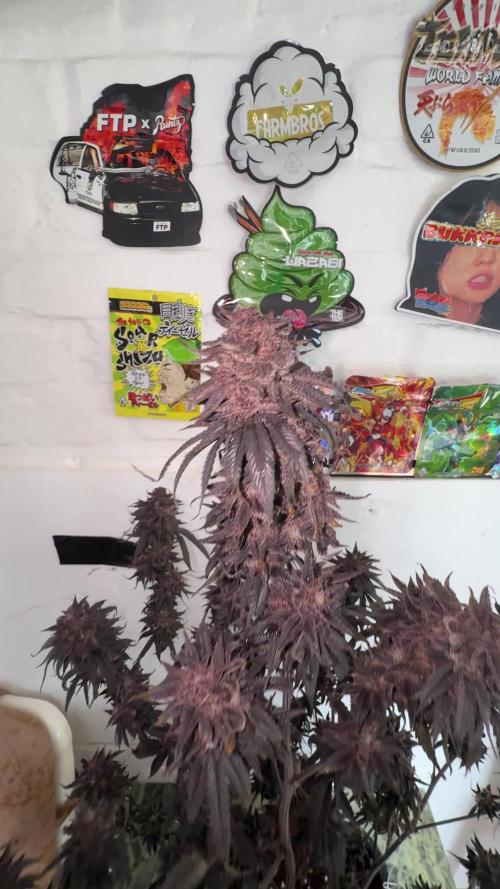
So, starting the 6th week of flower with the phantom OG. BIg Bud has been stopped and has passed over the baton to Bloombastic for the last two weeks(ish) before flush. The POG. Are looking nice hopefully the next 3 or 4 weeks will get them looking a bit better than that.😍😍😍
The smell is awesome very fresh and clean, one leaning towards a minty aroma.

Likes
18
Share


@JO_GROW
Follow
So It's been a great week!
Apologies to anyone following as I'm a couple days late updating the diary this week due to work.
Anyway, bud growth is really coming on! They're starting to fatten up nicely and the smell is just fantastic. Lots of trichomes as you can see from the pics and her parentage is really starting to show with those lovely bright orange pistils.
The addition of PK warrior has certainly given them a boost but I have a feeling she is going to need longer than the advertised "8 weeks" to fully mature.
We will see.
Have a good week. 😁👍🌴

Likes
5
Share


@Johnny_B_Good_br
Follow
🌱 SLH - Day 47 - 📅 24/02/2025
🔆 PPFD: 620
💧 Watering: 150ml
📈 Summary:
The plant continues to grow vigorously, with well-developed lateral shoots and a balanced structure. LST is ensuring an even canopy, improving light distribution. The stem is getting stronger, and the leaves remain healthy with no signs of deficiency. 🚀🌿
🌱 SLH - Day 45 - 📅 22/02/2025
🔆 PPFD: 600
💧 Watering: 250ml
📈 Summary:
The plant continues to show strong and compact growth, with lateral shoots expanding steadily. The structure remains balanced, with LST helping to create an even canopy. The leaves are healthy and well-spread, maximizing light absorption. Internodal spacing remains ideal, with no signs of excessive stretching. The stem appears noticeably thicker, indicating vigorous development. 🚀🌿
📸 Perspective:
1️⃣ Side view highlighting the compact structure and balanced growth.
2️⃣ Top-down shot showcasing cola distribution and even light penetration.
🌱 SLH - Day 44 - 📅 21/02/2025
🔆 PPFD: 580
💧 Watering: 250ml
📈 Summary:
The plant continues its evolution in the vegetative stage, showing a more open and structured growth response to LST. Lateral shoots are more developed, and internodal spacing remains balanced, allowing better light penetration. The upper leaves are standing strong and healthy, indicating good nutrient absorption and efficient photosynthesis. The transition to the flowering phase is approaching, and careful nutrient monitoring will be essential to maintain plant health. 🚀🌿
🌱 Grow Diary - SLH: Day 42 🚀
📊 Observations & Adjustments
📈 Comparison with Day 41: The 6th node reached the ideal stage for topping, and the first topping was successfully performed today. This will encourage lateral growth and a more structured canopy.
🌱 Growth Progress: After the topping, the plant is expected to redirect energy to the lower branches, promoting a more robust structure.
💧 Irrigation Update: A 300ml watering was applied evenly, ensuring proper hydration without over-saturating the soil. The automated watering system continues to be tested for consistency.
🔆 Light: PPFD remains at 550 µmol/m²/s, supporting post-topping recovery and vegetative development.
📷 Photo Perspectives
SLH - Day 42 - Top View
SLH - Day 42 - Side View
SLH - Day 42 - Close-up of Topping Cut
✂️ Topping Performed
The main apex was removed at the 6th node, officially initiating the first topping. This will help develop multiple main colas and improve light distribution across the canopy.
📌 Next Steps
⚠️ Monitor the plant’s response to topping and adjust environmental conditions if needed.
💧 Continue observing automated irrigation efficiency to maintain stable soil moisture.
🌿 Track lateral growth to ensure a balanced canopy and guide future training.
SLH handled the topping well and received a uniform 300ml watering for optimal hydration! 🚀🌱
🌱 Grow Diary - SLH: Day 41 🚀
📊 Observations & Adjustments
📈 Comparison with Day 38: Noticeable increase in leaf size and internodal spacing, indicating steady and vigorous growth.
🌱 Development: The 6th node is almost fully formed, approaching the ideal moment for topping.
💧 Irrigation Automation: Automated watering system is being tested to ensure consistent soil moisture.
🔆 Light: PPFD maintained at 550 µmol/m²/s, promoting healthy growth without signs of stretching.
📌 Next Steps
⚠️ Monitor the 6th node's development to time the topping correctly.
💧 Evaluate the efficiency of the irrigation system and adjust as needed.
🌿 Track the plant’s response to environmental adjustments to ensure balanced growth.
SLH continues to progress well, showing stable growth and responding positively to adjustments! 🚀🌿
🌱 Grow Diary - SLH: Day 38 🚀
📊 Observations & Adjustments
📈 Growth: The plant continues to develop well, showing a balanced structure.
🌱 Development: Leaves are expanding, and the stem appears to be strengthening.
💧 Soil Moisture: The soil retains adequate moisture, so watering was postponed.
🔆 Light: PPFD set to 550 µmol/m²/s to ensure efficient absorption without stretching.
📌 Next Steps
⚠️ Monitor the plant’s response to the watering interval and adjust as needed.
🌿 Track stem strengthening to prevent the need for additional support.
🌱 Plan the first light nutritional boost (Juicy Root & BioBizz Haven) in the coming days.
The plant is progressing well, growing healthy and responding to adjustments. Tomorrow will be another day to monitor its evolution! 🚀🌿
📅 Growth Schedule (UPDATE!)
📌 Phase | Week | Start of the Week | End of the Week
🌱 Vegetative | 1 | 09/01/2025 | 15/01/2025 - ok
🌱 Vegetative | 2 | 16/01/2025 | 22/01/2025 - ok
🌱 Vegetative | 3 | 23/01/2025 | 29/01/2025 - ok
🌱 Vegetative | 4 | 30/01/2025 | 05/02/2025 - ok
🌱 Vegetative | 5 | 06/02/2025 | 12/02/2025 - ok
🌱 Vegetative | 6 | 09/02/2025 | 15/02/2025 - ok
🌱 Vegetative | 7 | 16/02/2025 | 22/02/2025 - Current
🌱 Vegetative | 8 | 23/02/2025 | 01/03/2025
🌱 Vegetative | 9 | 02/03/2025 | 08/03/2025
🌱 Vegetative | 10 | 09/03/2025 | 15/03/2025
🌱 Vegetative | 11 | 16/03/2025 | 22/03/2025
🌱 Vegetative | 12 | 23/03/2025 | 29/03/2025
🌱 Vegetative | 13 | 30/03/2025 | 05/04/2025
🌱 Vegetative | 14 | 06/04/2025 | 12/04/2025
🌸 Flowering | 1 | 13/04/2025 | 19/04/2025
🌸 Flowering | 2 | 20/04/2025 | 26/04/2025
🌸 Flowering | 3 | 27/04/2025 | 03/05/2025
🌸 Flowering | 4 | 04/05/2025 | 10/05/2025
🌸 Flowering | 5 | 11/05/2025 | 17/05/2025
🌸 Flowering | 6 | 18/05/2025 | 24/05/2025
🌸 Flowering | 7 | 25/05/2025 | 31/05/2025
🌸 Flowering | 8 | 01/06/2025 | 07/06/2025
🌸 Flowering | 9 | 08/06/2025 | 14/06/2025
💦 Flush | 10 | 15/06/2025 | 21/06/2025
✂️ Harvest | 11 | 22/06/2025 | 28/06/2025
Likes
10
Share


@Hashy
Follow
10/5/19 Day 43. Removed a few fan leaves and lowered the height of the lamp to flowering distance. The plant is just starting to show pistals.
No feed today. Think all is good.
11/5/19 Day 44. Fed 1.5L. 3.0ml/L coco A and 3.0ml coco B, 1.0ml silicon, 0.5ml cal mag, 1.5ml boost. Ph 6.0 Ec2.1
run off 0.4L ph 6.4 ec 2.3
So far so good really, if anyone thinks I'm doing anything wrong then give me a shout.
12/5/19 Fed 2L. 3.5ml/L coco A and 3.5ml coco B, 1ml silicon, 0.5ml cal mag, 1.5ml boost. Ph5.9 Ec2.5
run off 1.5L Ph 6.3 Ec2.3
13/5/19 Day 46 fed 1L. 3.0ml/L coco a and b, 1ml silicon, 0.5ml cal mag, 1.5ml boost. Ph6.0 Ec2.3.
run off 0.5L Ph6.4 Ec 2.5
Going to start reducing Coco a and b, then adding Pk9/18 soon.
14/5/19 Day 47. No feed today, just did a little more LST and leaf tucking. Think that's it for the LST. May release all the clamps in next few days and drop my net on it.
15/5/19 Day 48. Decided to release the plant from the LST, I have managed to get the hole canopy level with a cig box, so with it hopefully flower any day now it can stretch evenly (touch wood). Also removes a load of fan leaves.
Fed 2L. 2.5ml/L coco A&B, 1ml silicon, 1ml cal mag, 1.5ml boost. Ph6.0 Ec2.1
Run off 0.7L Ph6.4 Ec2.9. yikes that's a big jump for my run off on the Ec.
So fed again but 1L and changed A&B from 2.5ml/L to 2.0ml/L. Final Ph6.0 Ec1.9
Run off 0.6L Ph 6.3 Ec2.5
Going to try and get the run off down a bit more 2mo. Looks like I might have to feed once a day from this point onwards.
16/5/19 Day 49. Week hasn't gone as expected, I thought pistils would be showing by now. I am going to leave it released from the LST for a while and apply when it starts to get uneven again. I do think I have got the canopy quite even.
Fed 2L. 2ml/L coco A&B, 1ml silicon, 0.25ml cal mag, 1.5ml boost. Ph 5.9 Ec 1.6
Run off 1.4 L Ph 6.3 Ec 2.6.
This is quite high which I think is caused by my boosting agent. I might ditch sumo boost and try something else.

Likes
23
Share


@Kakui
Follow
Primera ves cultivando una cepa de esta calidad, algo ansioso por obtener los mejores resultados posibles con estás genéticas.
Básicamente elegí la Grandpa's Stach R2 y la Grandpa's Cookies #6 S1 solo por sus tiempos de floración, espero que sean buenas tanto de sabor y resina, cómo también de producción.
G1, brotaron las semillas, solo 1 semilla brotó chueca, por lo que tuve que ayudarla con un alambre y va un poco atrasada en comparación del resto.
G3, primer riego con pH 6.1 y EC 0.6, y micorrizas Great White.
G5, creciendo bien.
G11, riegos cada 2 o 3 días, a punto de pasar a etapa vegetativa.

Likes
22
Share


@Aedaone
Follow
The temperatures, humidity, and watering volume(if measured) in grow conditions are all averaged for the week. The pH is soil pH. Any watering done by me is well water which is 7.6 pH and 50° F. Any listed nutrients are ml/gallon of soil.
Day 1 we had partly cloudy skies, low humidity, and temps in the lower 80's. I watered about 1/4 gallons from the water hose for each pot.
Day 2 we had lite showers in the morning, partly cloudy skies and temperatures in the low 80's the remainder of the day. The rain provided the water today.
Day 3 we had showers in the early morning until afternoon. Then it was mostly sunny with high temperature around 79. I noticed a few spots of powdery mildew on the leaves. I removed the leaves.
Day 4 we had lots of sunshine and temperatures in the low 80's. I watered about a half gallon out of the water hose.
Day 5 we had thunderstorms, rain, and drizzle early morning and intermittently throughout the day. Temperatures were in the lower 80's.
Day 6 we had thunderstorms and rain in the morning, then rain and drizzle intermittently throughout the day. High temperature for the day was 71°. It was raining so much I brought them inside. They've proven very resistant to boytritis, but this close to finish, I'm not testing them further. Four hours of rain in below 70°F temps at night is tuff enough.
Day 7 we had lots of sunshine and high temperature around 84°.
The #2 plant had a very mild outbreak of powdery mildew on the lower leaves this week. The #1 plant has proven immune. These girls are nearly finished. They've gotten loud smelling. The #2 plant smells like straight cat piss and very loud. The #1 plant smells like fruit roll ups berry and loud. I'll harvest these sometime next week. Over a very hardy strain that's taken a beating in the Ozarks Spring.
Likes
40
Share


@SubliminalSociety
Follow
Week 23 - kitty says hi!
This lady is getting out of control. We're 4 weeks from harvesting. Autumn gets very wet and last year I had bud rot, so end of october is the last day. I really need to defoliate to give those buds all the sun they can get.


Likes
3
Share

@sellem
Follow
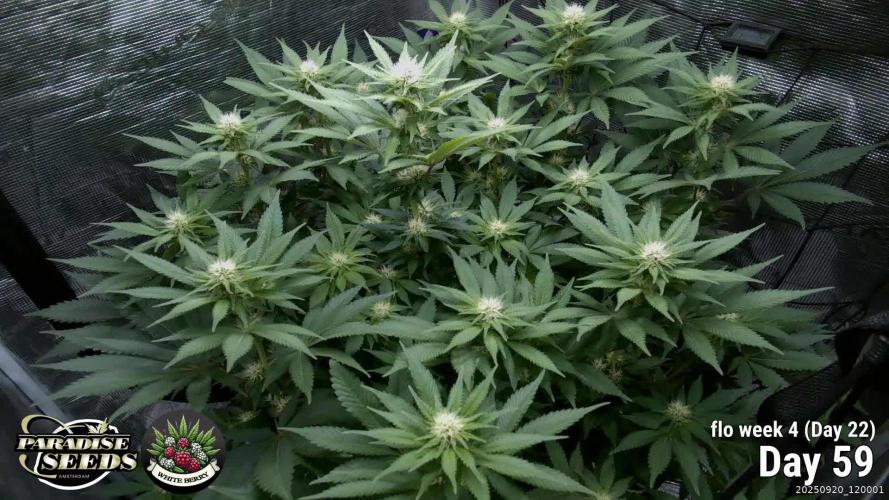
Week 4 of Flower coming to an end. Budding up real nice and beginning to develop a strong and potent odor! Always happy to open the tent to look at her, being greeted by that developing STENCH 😋😍
Watering stays every 3 Days 6L ~6PH, with 5ml/L Terra Bloom and 1ml/L Green Sensation. Added another dose of mycorhizzae last time i watered, just sprinkled some generously onto the soil before watering. 👽
Cant wait to see what she has got in store for me over her last couple of weeks of flowering! Shes shaping up to become a real beautiful stunner 😌

Likes
28
Share


@MadeInGermany
Follow
Hey everyone ☺️.
It gets more beautiful from week to week 😍👍.
I have them all this week Sprayed again properly with neem oil in the veggie phase ☺️.
There have been no trips for 2 weeks, but prevention is better 😀.
Because of the neem oil, the plants look very dark and shiny, which I really like when they shimmer like that 😝.
With a heavy heart I unfortunately had to sort out a phenotype for reasons of space but it is not bad because the pheno did not have to die but was allowed to see the light of a friend 😃👍
I didn't do any training these days, that will be done again the next few days 👌.
it was watered twice this week with around 0.6 l per plant.
The Ph / Ec measuring device was also recalibrated.
Otherwise there is nothing to report for this week and we'll see you again with the next update ☺️👍.
I wish you and your families a Merry Christmas 😊.
Stay healthy and let it grow 🍀
You can buy this Strain at :
https://www.royalqueenseeds.de/feminisierte-hanfsamen/115-amnesia-haze.html
Type:
Amnesia Haze
☝️🏼
Genetics:
Original Amnesia Haze
👍
Vega lamp:
2 x Todogrow Led
Quantum Board 100 W
💡
Bloom Lamp :
2 x Todogrow Led
Cxb 3590 COB 3500 K 205W
💡💡☝️🏼
Soil :
Canna Coco Professional +
☝️🏼
Fertilizer:
Green House Powder Feeding
☝️🏼🌱
Water:
Osmosis water mixed with normal water (24 hours stale that the chlorine evaporates) to 0.2 EC. Add Cal / Mag to 0.4 Ec Ph with Organic Ph - to 5.5 - 5.8 .
Likes
3
Share

@00110001001001111O
Follow
Gorilla Glue #4 x White Widow from Expert Seeds
Harvested 2020 - Solo Cup grow
While I am not a fan of this plant in hindsight with greater expereince, it was definitely a robust plant. This thing was nearly bursting through the solo cup by the end. Unfortunately, they were really late announcing an extension to the contest at the time and I had already harvested a bit early to make the original cutoff date. ~40 grams and it needed another week or so.
I wasn't trying for max yield. I just trained it into a slender candelabra type shape and called it a day.
Hindsight -- If I new then what i know now.... I'd shave off 2 weeks from vege and it'd end up the same size. This also would have allowed it to finish before the contest end date. I'd also do my normal addition of vermiculite or perlite to the promix. I was afraid of needing multiple waterings per day as it grew out, so i went with pure Pro-Mix HP, which is only ~20-25% perlite.

Likes
9
Share


@Atom_x_Andromeda
Follow
Stunted 1 got an Oz.
The Other Stayed Small And Responed To LsT Great Lil Bush Produced Roughly 3-4 Oz. Thanks For Following Along

Likes
201
Share


@MagnoliaFrost
Follow
10/5
Day 28 - LED lamp now on 24h
-
Water: Both plants got 1L of water with nutes.
Summary for the day:
I still do some LST but truing to do less and focusing on spreading the tops. LED in 40cm full effect. Did some defoliation today but not sure if I'm doing right.
-
12/5
Day 30 - LED lamp now on 24h
-
Water: Both plants got 1L of water with nutes increased to 1.5ml because it's been 10 days since I started with giving them 1ml each time they got water.
Now I started to see they drink much more. Last time it was 3 days between watering. This time it was only 1 day since they got 1L water. Maybe increase 1L to 1.5L next time.
Summary for the day:
I still do some LST but truing to do less and focusing on spreading the tops. LED in 40cm full effect. Did some defoliation today as well.
-
14/5
Day 32 - LED lamp now on 24h
-
Water: Nothing
Maybe increase 1L to 1.5L next time.
Summary for the day:
I still do some LST but truing to do less and focusing on spreading the tops. LED in 40cm full effect. Did some defoliation today as well.
-
15/5
Day 33 - LED lamp now on 24h
-
Water: Both plants got 1L of water with 1.5ml nutes x2 (A+B)
