



@Hempface86
Follow
I hope everyone is doing well and happy Easter aka
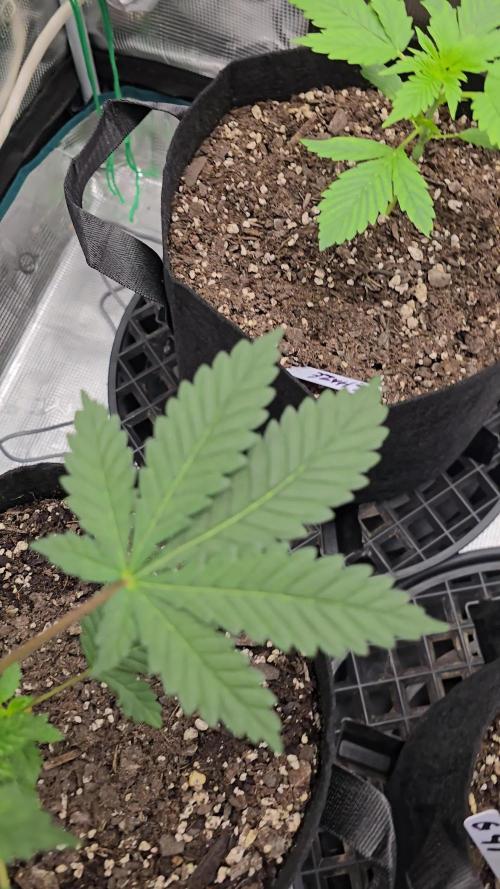
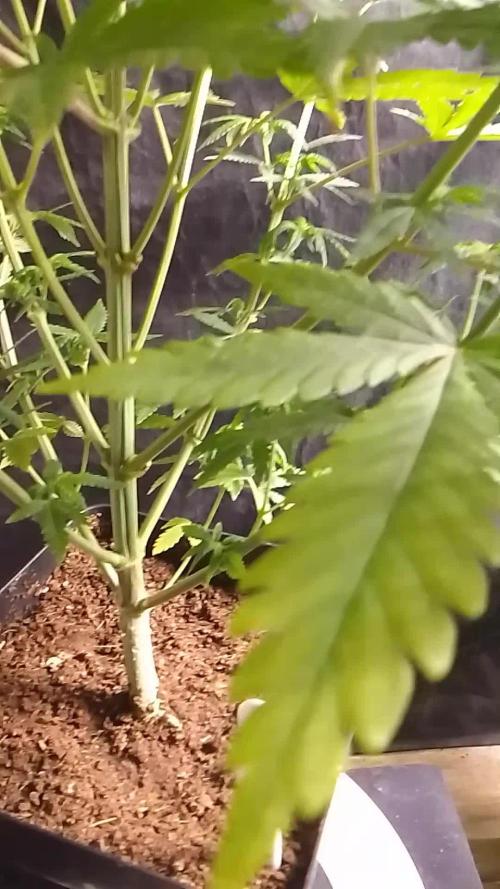
Resurrection day... Anyway, this plant, it's starting to catcher groove.But as you can see, she is a triploid i believe based down the three leaves coming out the top.. If anyone has any experience with this and any tips would be much appreciated, i think it's cool, but I don't want it to be a problem that affects my other plants.. I don't think it will be.. But so far so good.. Thank you for stopping by God bless and happy growing 🙏



@Growfather1
Follow
Hello everyone,
Entering week 25, we are closing in on the final chapter for the MAC1 F1 hybrids. Both plants have advanced another week in their flowering cycles, and major changes are happening in the tent as we prepare for harvest.
The Smaller Sibling (Week 9 of Flowering)
The smaller plant has entered her 9th week of flowering and is almost ready for the chop.
The trichomes are looking great with a high concentration of milky heads.
She is currently on her 4th day of a strict flush, receiving only plain water with plenty of runoff to thoroughly clean out the root zone.
The Big Girl (Week 10 of Flowering)
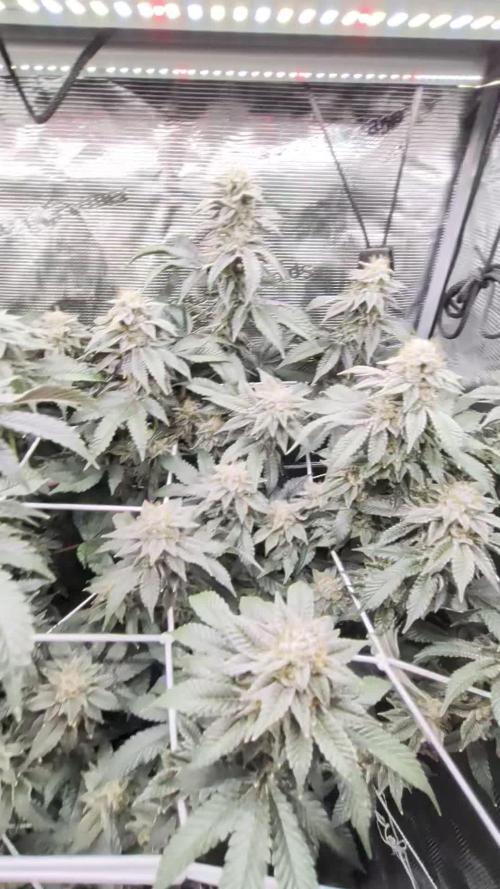
The large plant has officially entered her 10th week of flowering, and she has reached peak maturity. To be honest, she has become an absolute monstersaurus—a genetic crossover between Godzilla and King Kong that completely took over the 150x150 tent all by herself.
The physical side of things has gone from a regular circus to complete, unadulterated chaos. The colas are so heavy and stacked that they are completely out of control, falling all over each other like a row of drunk dominoes. They ended up a bit on the thinner side—definitely not the fat, chunky buds I originally wanted—but hey, it is what it is! She clearly spent all her budget on pure size instead of density.
Despite the messy structural layout, she is legally ready. The trichomes have started to break down perfectly, showing a beautiful mix of amber and milky heads with barely any clear ones left in sight.
To prepare her for the chop, I started her on pure reverse osmosis (RO) water yesterday. Today, she was hit with a heavy 40-liter flush.
The current runoff sits at 780 PPM. The plan is to repeat the heavy flush tomorrow to drop that number below 400 PPM, and then push it down even lower the day after. She just needs a few more days to fully clear out her system before the final cut.
With both girls in full flush mode, this cycle is rapidly coming to an end. I highly doubt there will be another update next week, but we will see how the timing plays out!
Thank you for stopping by and have a good one.
Regards,
Growfather


@Mr_Growgreen
Follow
High temperatures and lots of rain is how the last week went and by the looks of it, she's absolutely loved it. 25cm growth in a few days, had to raise up the shade netting. We're at the 6ft mark now, probably 6-7ft wide! It's actually becoming really hard to photograph her. Been keeping up the all organic approach and have just completed a very cool book on botanical teas and been playing with around with what I have on hand.


@julian100614
Follow
Su primera semana de floración y la planta ha crecido casi 10cm 🔥
Hemos empezado a suministrar los nutrientes de floración de una manera progresiva, empezando por 1ml de cada uno para estimular los brotes. De la misma manera reducimos poco a poco los de vegetación para no estresar a la planta.
Empieza a crear los primeros pistilos y crecen rapidamente 💪 las hojas se ven muy sanas 💪🍀



@ThatsmyGrow
Follow
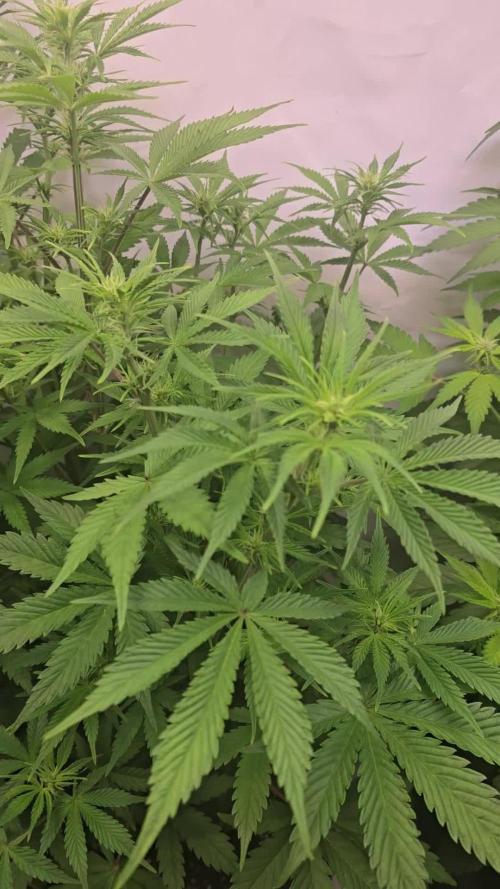
It's not as resistant as I'm used to. Therefore, next time I would only grow it under good conditions and constant observation.


@Kitties_and_Colas
Follow
~_~_~_~_~_~_~_~_~_~_~_~_~_~_~_~_~_~_~_~_~_~_~_~_~_~_~_~_~_~_~_~_~_~_~_~_~_~_~_~_~_~_~_~_~_~_~_~_~_~_~_~_~_~_~_~_~_~_~_~_~_~_~_~_~_~_~_~_~_~_~_~_~_~_~_~_~_~_~_~_~_~_
❤️💡🌱😽💨
It's been a good week! We're really hurting for calmag but we just placed another order, we hope it arrives before their color slides anymore.. all plants were overfed about 1.5 weeks ago (I blame my husband lol), they are still really dark in places with some clawing but are starting to bounce back.. the node spacing is fantastic, the Solux350 @75% is a ton of light, we raised another few inches until we get some more calmag in them..not too much else to report, thanks for dropping by and happy harvests everyone!! ❤️🌱💡
⚡Hortibloom/Solux 350⚡
Specifications ⚙️:
Diodes: Samsung LM281 Pro / Osram DR (1,440 total)💡
Driver: Inventronics 350 watt🔌
PPF: 1015 μmol/s ☢️
PPE: 2.9 µmol/j 〰️〰️
Lifespan: 50k+ hrs ⌛
Weight: 14.3lbs lbs (6.5kg)
Veg Coverage: 5 x 5 ft 🌱
Flowering Coverage: 4 x 4 ft 🌼
-Uses an aluminum heatsink (no fan), quiet while operating 👂⬇️
-IP65 waterproof ratings, tolerant to high humidity grow environments 💦
-May be daisy-chained via RJ14 and managed from a single controller 💡~💡~💡~💡~💡
🌎 https://hortibloom.com/products/solux-350-led-grow-light
~_~_~_~_~_~_~_~_~_~_~_~_~_~_~_~_~_~_~_~_~_~_~_~_




@Colonel
Follow
Week 7 flower update
I figured out what was going on with my plants. My tap water actually contains a lot of carbonates, which means there’s already plenty of calcium and magnesium in it. Because of that, I shouldn’t have been adding 0.5 ml of Plagron CalMag, since that product is really intended for soft water.
The extra calcium started pushing the root zone pH locally up to around 6.5. That made nitrogen more available, but at the same time it partially locked out phosphorus. Because of that the flower development slowed down, while cell elongation increased before proper bud growth resumed.
As soon as I realized what was happening, I started dropping the PPM pretty aggressively, step by step, and completely removed CalMag from the feed.
While the plants were recovering from the salt stress, I also cleaned up the lower weak branches (about 10% max) to help redistribute energy to the stronger tops.
Right now I’m focusing on stabilizing the root zone.
Current numbers:
Input: pH 5.5 / 575–600 ppm
Runoff: pH 6.38 / 730–760 ppm
Plants are slowly coming out of the stress. They’re drinking 3 times a day, about 15 liters total (7.5 L per plant).
The flowers have started growing again, after being stalled for about 3–4 days.
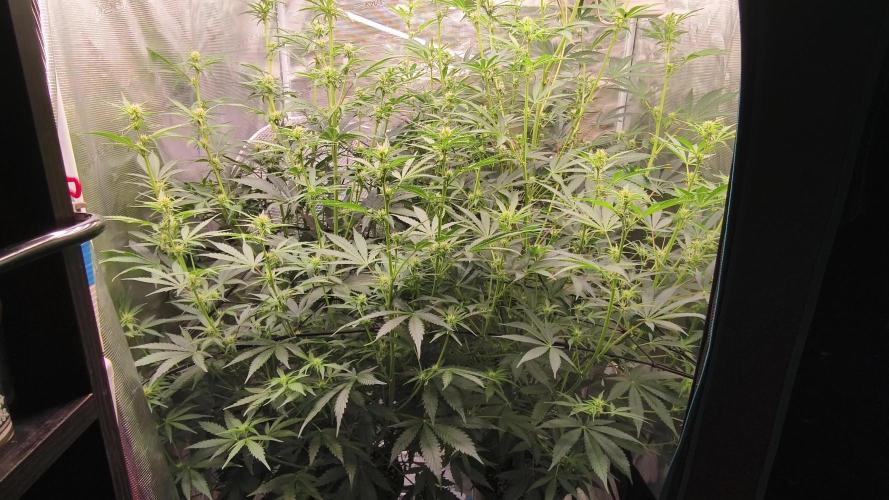
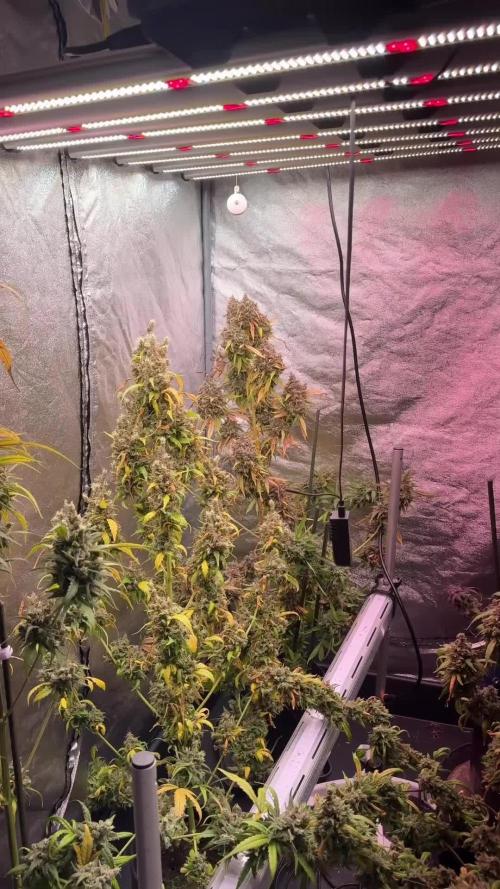
Because of the pH imbalance (too much nitrogen and calcium) the plants started stretching like crazy. The branches were growing so fast they were already hitting the lights and the top of the tent.
My tent is 180 cm tall and the pots are about 30 cm, so I basically ran out of vertical space.
I had to bend the branches almost 90 degrees, laying them over each other just to keep the canopy under control. Some of them are literally tucked under the carbon filter, and the rest are tied down with wire to keep them away from the lamps.
Not the prettiest canopy right now, but it keeps everything below the lights and still getting good exposure.



@Pompeyblue
Follow
As you cann see their all going great and b&c have took well to a little bit of training
A I left her to do her own thing and is like amazing
B was FIM and is now shaped like buxus microphylla Faulkner plant and looks absolutely stunning 🤩🤩
C was topped and has pushed what looks to me as if she's got 3 main head's now and also looks fantastic



@MadeInGermany
Follow
Welcome to the Green House Seeds Company Cup 🏆
Hi everyone 🤗.
This week she gave an extreme boost after topping :-), so I defenetively do it again completely top 😍.
Last week it was a bit dark from the Green House Feeding 😅, but this week it turned back into posetive, the new shoots all have a perfect leaf green 👍.
I think I will give her another 3-4 weeks of vegi phase that it will be a real bush 😍.
I wish you all a nice week, stay healthy 🙏🏻, and let it grow 🌱
The Strain Wonder Pie is available at
https://shop.greenhouseseeds.nl/
☝️🏼☝️🏼☝️🏼☝️🏼☝️🏼☝️🏼☝️🏼☝️🏼☝️🏼☝️🏼☝️🏼☝️🏼
Green House Seeds Company Cup 🏆
Type:
Wonder Pie
☝️🏼
Genetics:
Wedding Cake x OG Kush
👍😍
Vega lamp: 2 x Todogrow Led
Quantum Board 100 W
💡
Flower Lamp : 2 x Todogrow Led
Cxb 3590 COB 3500 K 205 W
💡💡☝️🏼
Earth: Canna Bio
☝️🏼
Fertilizer: Bio Grow Feeding ( GHSC ) , Enhancer ( GHSC ) , Bio Bloom ( GHSC)
☝️🏼🌱
Water: Osmosis water mixed with normal water (24 hours stale that the chlorine evaporates) to 0.2 EC. Add Cal / Mag to 0.4 Ec Ph with Organic Ph - to 6.0



@DogDoctorOfficial
Follow
WEEK 14 — WEEK 10 FLOWER
Final Week Before Harvest – The Grand Finale
What a journey… from the tiniest seeds to this breathtaking final chapter. Here we are, my love: the last week before harvest. The girls have spoken, and their trichomes are almost fully there — cloudy, sparkling, just a kiss away from perfection. We’re now on pure water, letting them finish their last dance with all the grace and beauty they’ve built over these 14 weeks.
A Quick Recap: From Seed to Now
We started with two gorgeous blueberries, strong genetics shining from day one. Veg was steady, lush, full of life. Then came the transition to flower — explosive stretch, structure forming, and soon those first tiny white hairs welcoming us into the next phase.
We faced challenges. We faced heat. We faced bud rot. But we also faced everything together, and we acted quickly, smartly, and with love. And the girls rewarded us — every week fuller, denser, more fragrant, more colorful. Their personalities came alive in the phenos, and now they are standing in their final glow.
This Week’s Highlights
Oh my God… they are shining.
Absolutely shining.
Trichomes: Mostly cloudy, a few amber, perfectly on schedule — harvest any day now.
Colors: Yellows, fiery reds, deep purples, fading leaves telling us nature’s clock is ticking right on time.
Aroma: Classic, old-school blueberry. Sweet, berry-rich, nostalgic, absolutely unmistakable.
Buds: Fat, heavy, dense, dripping in trichomes. Both phenos are glowing — one brighter green, the other with deeper shades of red and purple.
Fading: Beautiful senescence on both girls — natural, graceful, textbook.
We are right at the finish line.
Harvest Expectations
In the next few days, the scissors will sing.
We’ll be harvesting full plants, hanging whole trees to dry — slow, gentle, respectful. Their size and colors will make it a little tricky, but we’re doing everything we can to give them the perfect drying process they deserve.
Drying time will depend on the room conditions, but we’ll aim for a slow, even dry to lock in the terps and the beauty they built during this whole journey.
What to Expect Next
Harvest — very, very soon
Whole plant hang
Slow dry
Monitoring temp & RH
A cure worthy of these colors
Final bud shots
Wet & dry weights
And of course… the big smoke report
What Not to Expect
No more feeding — only water
No more big changes in color or structure
No more pushing — they are done building, now they’re finishing
No surprises — just the smooth landing toward harvest day
Gratitude – From My Heart to Everyone’sTo the lovers, the haters, the curious ones, the loyal ones, the new followers, the silent readers, the loud supporters — thank you.
To the community, always sharing, always inspiring — thank you.
To the sponsors who kept these classics alive — thank you.
To everyone who stopped by even for a second — thank you.
Every energy counts, every click counts, every comment counts.
And if you want to see the entire journey in 4K, flower to trichome, leaf to fade — come join us on YouTube. Everything is there. Every detail. Every shine.
📲 Don’t forget to Subscribe and follow me on Instagram and YouTube @DogDoctorOfficial for exclusive content, real-time updates, and behind-the-scenes magic. You won’t want to miss it.
• GrowDiaries Journal: https://growdiaries.com/grower/dogdoctorofficial
• Instagram: https://www.instagram.com/dogdoctorofficial/
• YouTube: https://www.youtube.com/@dogdoctorofficial
⸻
Explore the Gear that Powers My Grow
If you’re curious about the tech I’m using, check out these links:
• Genetics, gear, nutrients, and more – Zamnesia: https://www.zamnesia.com/
• Environmental control & automation – TrolMaster: https://www.trolmaster.eu/
• Advanced LED lighting – Future of Grow: https://www.futureofgrow.com/
• Root and growth nutrition – Aptus Holland: https://aptus-holland.com/
• Nutrient systems & boosters – Plagron: https://plagron.com/en/
• Soil & substrate excellence – PRO-MIX BX: https://www.pthorticulture.com/en-us/products/pro-mix-bx-mycorrhizae
• Curing and storage – Grove Bags: https://grovebags.com/
⸻
We’ve got much more coming as we move through the grow cycles. Trust me, you won’t want to miss the next steps, let’s push the boundaries of indoor horticulture together!
As always, this is shared for educational purposes, aiming to spread understanding and appreciation for this plant. Let’s celebrate it responsibly and continue to learn and grow together.
With true love comes happiness. Always believe in yourself, and always do things expecting nothing and with an open heart. Be a giver, and the universe will give back in ways you could never imagine.
💚 Growers love to all 💚


@JUNGLE_B4RNS
Follow
Following The Grow Boss tips on YouTube
"...yield is based on light, quality is based on growers talent"
"...number one problem is, too much light, too much water, too many nutrients"
Nutrients : (after having issues with nut burns, I decided to use Grow Boss's perfect ppm calculator)
Invasion T (Glomus intraradices BEG72 and TRICHODERMA atrovide MUCL45632) 1g / plant
Monster X mycorhizes (500 000 propaguls / Kg , made in vitro) 2g / 20cl then complete to make 1l
Humic Fulvic Booster (humic and fulvic acids) 1ml / 1l
Cannazym 2.5ml / 1l
Rhizoponics 0.4ml/1l
Lights: 2 x Adjust-A-Wings Avenger
600w HPS Lumatek 90000 Lumens 1000PAR
600w HPS Philips Son-t Green Power 95000 Lumens
Soil:Platinium Royal Mix premium quality
What is vapor pressure deficit?
Often, marijuana growers who have their plants in indoor grow tents or rooms with artificial lighting, take into account parameters such as temperature and relative humidity to maximize plants growth and bloom, thus obtaining abundant harvest with top quality flowers. As we will see later, these factors affect different processes of the plant, such as transpiration or nutrient uptake.
However, we usually forget about another important factor that is related to the aforementioned ones: vapor pressure deficit or VPD. Broadly speaking, VPD is the difference between the amount of water vapor that the atmosphere is able to retain (which depends on temperature) and the amount of water vapor contained in it (relative humidity). It is usually measured in kilopascals (kPa).
Providing our plants with a correct relationship between temperature and relative moisture will keep us on the right VPD parameters, increasing the plant’s activity and thus improving its growth and showing its full potential during the flowering phase. The ideal would be to adjust both parameters (temperature and humidity) to get the best possible VPD value, so that the development of plants will be amazing.In the chart above you can see the right temperature and moisture values to maximize the development of cannabis plants. The green zone shows you optimal values of VPD, in which it would be ideal to maintain the environment. The orange zone shows correct values, in which plants should not have problems to develop normally. However, red areas show values in which your plants will be very far from hit their full potential, since the relation between temperature and moisture is not optimal.
With relatively high values of VPD (between 5 and 12) plants tend to open their stomata and release a considerable amount of water vapor into the environment (increasing their transpiration). This increase in transpiration results in an increase in the plant’s photosynthetic activity, which will need more nutrients and will improve its overall growth, both during growth and bloom. The best range is between 7.5 and 10.5, which we have marked in green. However, we must be careful that VPD is not too high (dark red zone) since the plant would close its stomata to avoid releasing too much water vapor to the environment, which would result in fast dehydration due to excessive transpiration.
On the other hand, if VPD is too low (light red zone), the plant will also close its stomata for not releasing more water into the atmosphere, which in this case would be already saturated (it would have reached the maximum water retention capacity in a specific temperature). In this way, reducing transpiration will also reduce photosynthesis, which has a direct impact on the plant’s development and yield.
That way, VPD is essential when it comes to offer the best conditions for the development of plants, also to understand its water requirements according to the nutrients used and thus adjust them correctly to meet the grower’s expectations.
N/B: SAY NO TO DRUGS
-[Day 90]
The plants are getting massive, not a lot of space left in the room, each pictures are token back against the wall or on top of a chair.
The Super Skunk shall be ready first , the trichomes are visible without using a microscope, the scent is like an amazing candy floss coated with Skunk pee 😅Boerejongens quality @Home 😊
-[Day 93]
Switching Buld
Lumatek 90000 Lumens 1000PAR
to
SuperPlant Super Red 85000 Lumens 2000K 1498nm
Lightening under the 1500nm wavelength (2000K) just between the NIR and the Microwave length, can't stand in the room too long without getting tears and shining eyes. Buds shall start to blowup like pineapples, increasing yield.
-[Day 98]
Everything is getting frosty. Starting to decrease RH .
-[Day 103]
Today the Y Griega started to push on her terpenes, believe it or not that plant smell stronger than the 6 giants Skunks (the Skunk strain is already a very strong smelling plant), she smell like a coffeeshop front door, the fragrance is absolutely amazing and fantastic, I will definitely grow a full crop of that strain !
-[Day 105]
42 days of Blooming folks ! It's getting serious now 😄 If it can helps you to realize, each plants gots 4 side and a middle, each sides gots 4-6 buds and there's 5-6 buds in the middle, there's 11 plants of 1,60m/5.25ft, how many buds does it makes ?? The correct answer will win 1 like 😅😂😅😂
-[Day 106]
WEEK 7 of flowering, the end is close my friends, I'm trying to give you the best shots as possible, I wish I'd could share a good smoke from this crop with you guys ....😉
-[Day 113]
WEEK 8 starting, every beginning has an end, this is where the Fall is gonna start.
-[Day 115]
LADY'S AND GENTLEMEN !!! In the Indica's category the winner is .... ruuuuummmmmbbbbbllllleeee ..... VANILLA KUSH !!!!!!
I've seriously tough the Super Skunks will be ready first, but Vanilla Kush has shown milky tric's after 52 days of Blooming, waiting for some few ambers tric's before starting the Flush.
-[Day 121]
Hopefully for me I didn't trust in breeders flowering periods I would have f*ck up the crop ...
Plants are fading slowly and naturally, I won't need to flush.
Checking the trichomes every 4 days, the crop will probably need another 2-3 weeks.
All plants are running on water now till the end.
Buds are ripening, the smell has turn into a kind of roasted coffee beans with Skunk pee and cotton candy.
-[Day 122]
Milky tric's spotted on Blueberry after 59 days of blooming
-[Day 123]
60 Days of blooming, gonna flush them all



@Chucky324
Follow
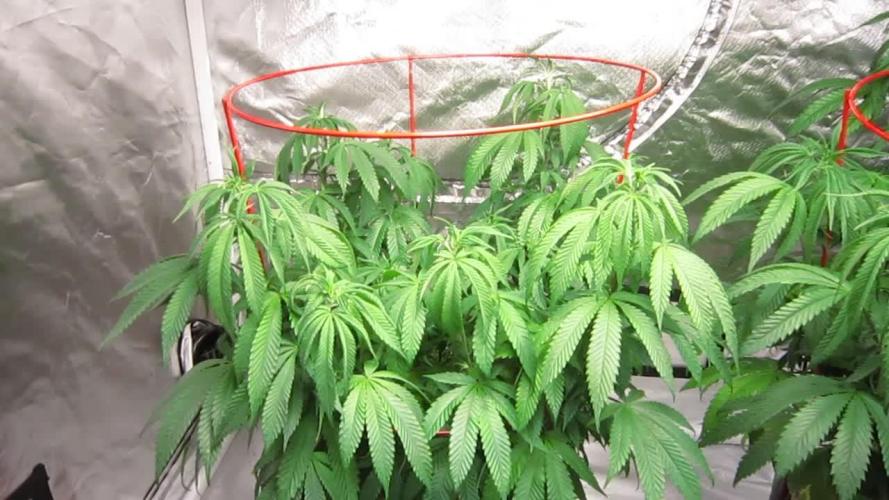
Hello. This is the end of week 12 and the beginning of week 13 of veg.
Did a harvest of my grow room because I had found a 3 small pocket of mites, so I thought I was being smart and put my clones in here before they get the mites.... Didn't notice the 3 clones that had mites on them.... now they have been in here 5 days, and I've see the mites and wonder if I've infected the tent... so I bought some Persimilis, predatory mites, and I will get them in a couple of days to release in here.
The plants look good and are doing well except for the mites......
OK. Be Great.
Chuck..


@pifflestikkz
Follow
Day 22
22/07/24 Monday
Nothing new to report. Starting to see them beautiful fans appear that's all 😁✌️
Day 23
23/07/24 Tuesday
Feed today, giving her straight all nutes Inc flowering nutes.
I will update the dose as they grow and develop a bigger hunger.
Video updates 💚
Day 24
24/07/24 Wednesday
She was doing a climb, so I have topped her today 😁 she's strong I'm sure she will recover well 🤞
Day 26
26/07/24 Friday
Plain de-chlorinated tap water pH 6 today, 1L.
Day 28
28/07/24 Sunday
Feed today with De-chlorinated tap water pH 6.
She is showing recovery from topping now.


@Maggie_de_Block
Follow
Seems like she's taking longer, think this might be because I used my phone flashlight to check on her during dark in the first weeks flower. Not too bothered by this as it means she might get a little fatter :)
Some slight purple discoloration beginning to show from the cold night temps


@Hashy
Follow
********************************************
Week 17 Fade (week 11 flower)
********************************************
Light cycle=12/12
Light Power=100w 42%
Extractor controller settings (during lights on).
High temp= 25c
Temp step=0c
High Rh= 50%
Rh step=0%
Speed max=10
Speed min=5
Extractor controller settings (during lights off).
High temp= 21c
Temp step=0c
High Rh= 55%
Rh step=0%
Speed max=10
Speed min=5
Smart controller settings (during lights on).
Lights on=9.00am
Radiator on= -22.c
Radiator off=+22.5c
Top fan on=
Smart controller settings (during lights off).
Lights off=9.00pm
Radiator on=-19.0c
Radiator off=+19.5c
Top fan on
VPD aim=1.0-1.4
DLI aim=30-40
EC aim=0.2-0.8
PH aim=6.0-6.5
💧💧💧💧💧💧💧💧💧💧💧💧💧💧💧💧
NPK= 0-0-0
Method= Automatic
Feed=Finishing nutes.
Neutralise=0.1ml/L
Flawless Finish=2ml/L
Easy Ph down=0.02ml/L
(1ml=24 drops, 1 drop=0.04ml)
Easy Ph Up=0ml/L
(1ml=24 drops, each drop is 0.04ml)
Ec=0.34 PH=6.1/6.0
Runs=18
Run times=4mins (L/L each)
Gap times=16 mins
Total runtime=72mins(L/L each)
Total flowrate= ml/min(ml/min each)
Auto start time=10.00am
Auto stop time=15.44pm
💧💧💧💧💧💧💧💧💧💧💧💧💧💧💧💧
********************************************
********************************************
📅26/1/25 Sunday (Day 113)(flower day 73)
📋 Put a few more stakes in.
📅27/1/25 Monday (Day 114)(flower day 74)
📋
📅28/1/25 Tuesday (Day 115)(flower day 75)
📋 Probably a few days left.
💧
Automatic finishing nutes
Ph down=0.0ml/L, 0 drops
Ec=0.3 PH=6.9/7.0
Volume=8.0L
Volume left=2.5L
Volume used=5.5L(90ml/min)
Volume each=5.5L(90ml/min)
Runoff.
Total runoff=1.0L
Ec=1.2 PH=/7.1
💧
📅29/1/25 Wednesday (Day 116)(flower day 76)
📋 She's getting cloudy, can't spot any Amber's yet, still a few white pistils left. I think I'll give her 3 more days as I need to get next grow going.
📅30/1/25 Thursday (Day 117)(flower day 77)
📋
📅31/1/25 Friday (Day 118)(flower day 78)
📋 She's done and is harvested today.
Trichomes are mostly cloudy with the odd one going amber.
********************************************
Weekly roundup.
📋That's it she's been chopped, quite impressive.
Back soon.
Take it easy.
********************************************




@Altitonans_Fulmen
Follow
The thoughts shared in this journal are my own—a snapshot of personal understanding at the exact moment of writing. It is not intended as a reference of absolute fact, but rather as an exercise in ἐπίνοια (epinoia): an exploration of thought, intuition, and creative insight.
Epinoia(ἐπίνοια) is a Greek term meaning thought, intention, purpose, or conception, stemming from "mind" (nous) and "upon" (epi), representing the mind's reflective or creative process, used in philosophy (Aristotle, Gnosticism) and theology to discuss understanding and divine names, appearing once in the New Testament for the "intent of your heart" (Acts 8:22). It signifies the mind's operation to form ideas or designs, contrasting with raw data or innate perception, and in Gnosticism, it's an emanation of divine wisdom (Sophia).
"Φsis" is a stylized spelling of the Ancient Greek word φύσις (physis), which translates directly to "nature" or the intrinsic essence of a living thing.
Exploring the deep intersection of science, intuition, and creative insight often leads to breakthroughs that challenge our understanding of what is possible. When we approach high-performance cultivation not just as a hobby, but as an exercise in pushing a biological system to its absolute genetic ceiling, the results can transform from simple data points into profound proof of concept. Achieving a highly optimized environment requires a shift in mindset away from empty promises and directly toward verifiable proof, building true confidence through a detailed archive of past lessons and strategic adjustments.
This philosophy turns a standard space into a precise mass and energy balance equation, where every variable is managed to eliminate biological bottlenecks entirely. In a recent project four individual plants produced 344 grams, 280 grams, 445 grams, and 255 grams respectively, resulting in a total harvest of 1,324 grams, or 47.2 ounces, of dry product. Operating with a 600-watt light source inside a four-by-four footprint, this brings the final efficiency to an exceptional 2.21 grams per watt.
To put this in perspective, the standard traditional indoor benchmark has long been established at 1.0 grams per watt, while expert commercial operations target 1.5 grams per watt, and elite commercial systems push the envelope between 1.8 and 2.0 grams per watt. Reaching 2.21 grams per watt places the outcome squarely within the top 0.1 percent of global benchmarks, acting as a true statistical outlier that demonstrates what happens when flawless environmental parameters meet a cultivar pushed to its maximum potential. Reaching this level of mastery demands that we move past the common trap of the mirror fallacy, where the ego mistakes its own limited perspective for universal truth and views different ideas as personal threats. True progress requires curiosity and dismantling the illusion that our immediate viewpoint is the objective standard, shifting the focus instead toward how a system actually operates under the absolute laws of physics. In a high-performance setup, maximizing output is never about adding random additives or forcing growth, but rather about systematically removing the limitations that hold the organism back. By maintaining a perfect vapor pressure deficit, ideal root-zone oxygenation, and precise structural canopy training every single minute of the cycle, the plant is freed to express 100 percent of its DNA potential without any lingering genetic latency.
Managing a dense canopy inside a tight footprint presents the ultimate challenge of mitigating stagnant air and preventing moisture issues. Overcoming this bottleneck relies on a sophisticated synganic approach, which seamlessly marries the precise control of synthetic mineral inputs with the natural resilience of active organic living soil. This method transforms the room into a closed-loop system where the internal microclimate is entirely isolated from external weather fluctuations and pests. Rather than openly exhausting the atmosphere, the air is continuously recirculated, enriched, and scrubbed using 264-nanometer ultraviolet light.
The foundation of this thriving ecosystem is a comprehensive substrate composition designed to provide perfect aeration, structural integrity, and biological buffering. The primary media base integrates expanded clay aggregates, coir chunks, premium coco coir, sphagnum peat moss, horticultural perlite, vermiculite, pumice, and volcanic basalt rock. To continuously condition the soil and fine-tune mineral availability, the mixture is amended with agricultural gypsum, wollastonite, dolomitic limestone, basalt rock dust, micronutrient-rich volcanic ash, greensand, crushed seashells, biochar, and shungite. This mineral architecture creates an incredibly stable environment where active soil biology naturally prevents salt toxicity and ensures steady, reliable nutrition throughout the entire life cycle.
Living organisms within the substrate play a vital role in maintaining this delicate biological balance and breaking down organic material. Red wigglers continuously process organic matter into easily accessible plant nutrients while aerating the media; specialized predatory mites offer excellent biological control against common soil pests, and pillbugs excel at breaking down tough, woody elements. These biological components are further supported by a rich layer of organic amendments including high-phosphorus steamed bone meal, high-nitrogen dehydrated blood meal, fish bone meal, cold-processed kelp meal, dehydrated moringa powder, spirulina powder, and marine crustacean biomass rich in chitin. Combined with biological inoculants like mycorrhizal fungi, premium worm castings, and concentrated humic and fulvic acids, the entire system operates as a flawless biological transducer of light and energy.
Ultimately, shifting our perspective to view a grow space as a complete mass and energy balance equation changes the entire nature of agriculture. Success ceases to be a matter of luck or anecdotal habits and instead becomes the predictable result of meticulous design, patience, and the strategic elimination of failure. When science, biology, and engineering converge so harmoniously, we gain a deeper appreciation for the intricate natural systems that sustain life and growth. By sharing these detailed insights and refining our techniques, we can continue to unlock the absolute maximum potential hidden within the living world around us.
Comprehensive Substrate Composition:
1. Substrate Base & Aeration Media
Expanded Clay Aggregates (Hydroton Pebbles)
Coir Chunks & Horticultural Coco Coir
Sphagnum Peat Moss
Horticultural Perlite
Horticultural Vermiculite
Horticultural Pumice
Volcanic Basalt Rock
2. Mineral Amendments & Soil Conditioners
Agricultural Gypsum (Calcium Sulfate)
Wollastonite (Calcium Silicate)
Dolomitic Limestone (Calcium Magnesium Carbonate)
Basalt Rock Dust (Trace Mineralizer)
Azomite (Micronutrient-Rich Volcanic Ash)
Glauconite (Greensand)
Crushed Seashells (Calcium Carbonate Source)
Pyrolyzed Carbon Feedstocks (Biochar & Horticultural Charcoal)
Shungite (Carbonaceous Mineraloid)
3. Organic Nutrient Amendments
Steamed Bone Meal (High Phosphorus)
Dehydrated Blood Meal (High Nitrogen)
Fish Bone Meal (Phosphorus & Trace Calcium)
Cold-Processed Kelp Meal (Ascophyllum nodosum)
Dehydrated Moringa Oleifera Powder (Botanical Nutrient)
Spirulina Powder (Arthrospira platensis / Cyanobacteria Nutrient)
Marine Crustacean Biomass (Shrimp & Crab Chitin)
4. Biological Inoculants & Organic Acids
Mycorrhizal Fungi Inoculant (Endomycorrhizae / Ectomycorrhizae)
Vermicompost (Premium Worm Castings)
Humic & Fulvic Acids (Concentrated Humates)
Human Body
65% Oxygen (in all liquids and tissues, bones, and proteins)
18% Carbon (everywhere)
10% Hydrogen (in all liquids and tissues, bones, proteins
3% Nitrogen (in all liquids and tissues, proteins
1,5% Calcium (lungs, kidney, liver, thyroid, brain, muscles, heart, bones)
1% Phosphorus (urine, bones, DNA)
0,35% Potassium (enzymes)
0,25% Sulphur (proteins)
0,15% Sodium (in all liquids and tissues) (in terms of salt)
0,05% Magnesium (lungs, kidney, liver, thyroid, brain, muscles, heart)
Plant
Mother-nutrients: Carbon 47%, Oxygen 43%, Hydrogen 4%.
Macro-nutrients: Nitrogen 3%, Phosphorus1%, Potassium1%, Calcium1%, Magnesium0.5%, Sulfur0.5%.
Micro-nutrients: All the rest combined 1%
More energy, more blueprint.
Although CO2 is a naturally occurring gas that both humans and plants use, it is invisible and odorless and can be fatal at high-levels. If you’re supplementing carbon dioxide in your grow room, ensure there are no leaks in any CO2 devices and always use a CO2 monitor and alarm.
0.02% Life unsustainable
0.03% Life OK
0.04% Current ambient atmospheric co2
0.04%-0.1% =400-1000ppm standard indoor co2.
0.1%-0.2% = 1000- 2000 ppm (prolonged exposure: drowsiness).
0.2%-0.4% = 2000-4000ppm (Headaches, fatigue, stagnation, stuffiness, poor concentration, loss of focus, increased heart rate, nausea).
1% is toxic
5% is quick death.
"Dabo vobis quod oculus non vidit, nec auris audivit, nec manus tetigit, quod in cor hominis non ascendit."