


Likes
Comments
Share
@Vems1337
Follow
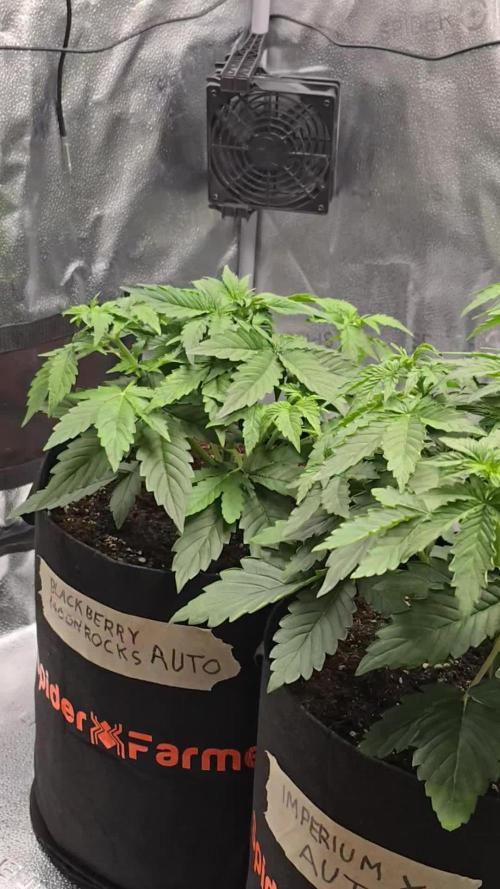
this week is starting off strong with the veg phase and they are enjoying the soil a lot, no nutrients given by hand just all in the soil from the Plagron All mix 😄 all going good so far 😅

Likes
9
Share


@TRASHGROW
Follow
Week 8
Last couple of days to go, she's been getting only water for a few days now and I also pulled the lamp up a bit. She's starting to tilt under the weight of the buds so I tied a couple to make sure they don't snap/bend.
Looking and smelling amazing, super sticky tho it doesn't too look .
I'll be taking a closer look at the trichomes over the next few days.
Can't wait😁

Likes
10
Share


@Dgessy
Follow
Elle pousse très rapidement mais la trouve très fine. Toujours au engrais croissance. Je pense avoir remarqué des organes mâle sur la plante. si vous pouvez m'éclairer, vous pouvez voir une photo de ces organes mâle. Faut ils les couper ou les garder pour récupérer les graines ? Semaine prochaine je passerai le journal de culture en floraison.
Likes
56
Share


@Drgreen13
Follow
Hi guys, nothing seemed to happen this week, probably producing tricomes. I've upped the dosage of early flower and I'll start adding boost next week. Thanks for stopping by. Please check out my other diaries and feel free to leave a like, maybe even a follow and I'll be sure to check out your diaries to.
The light being used Is the Mars hydro SP150, its a great quality light and is very bright, idea for a rectangular space. Visit www.marshydro.co.uk to purchase this and many other leds.
Drgreen13#6724 (discord)
Stay high, stay fly, #420everyday 🥃

Processing
Likes
7
Share


@420keef
Follow
Weather is fucked up again, i hope i don’t run into any issues with mold once they gain some weight :(

Processing
Likes
2
Share


@UnknownT58
Follow
Couple days ago the Autoflower started producing couple pistils.
Likes
45
Share


@Robbaus
Follow
Ciao a tutti! C'è stata un'accellerata imprevista e così mi sa che raccoglierò una settimana prima del previsto! Tra 3 o 4 giorni taglio tutto! Ho svuotato completamente i vasi e ho messo solamente acqua liscia per far sì che le radici scarichino bene tutti i nutrimenti ancora presenti. Devo registrare purtroppo un piccolo problema di muffa, dovuto sicuramente all'umidificatore (purtroppo ho dovuto tenerlo acceso per tenere bassa la temperatura) in quanto si è formata sugli 8 apicali della pianta più vicina ad esso. Ho dovuto purtroppo tagliarli e buttarli via quasi per intero, ci avrò rimesso una ventina di grammi, anche 30. Post memoria per me: l'anno prossimo a luglio non devo avere niente e iniziare il ciclo a metà agosto con le temperature più accessibili. Comunque sta andando benissimo a parte l'imprevisto, non vedo l'ora di raccogliere e fumare! Ci vediamo la prossima per l'ultima settimana 🤣🤣🍀🍀💪🏼💪🏼


Likes
Comments
Share

@CheeRz
Follow
🌿 VEG WEEK 4: AK-47 XL | Divine Seeds
🌱 VEGETATIVE PROGRESS
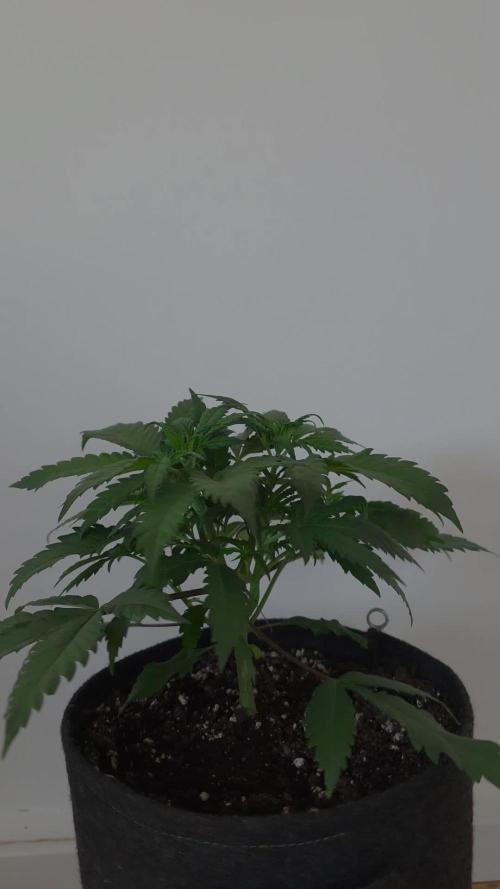
Moving through Week 4 and the response to the topping has been phenomenal. The growth hormone distribution has shifted completely, turning this AK-47 XL into a beautifully thick, bushy canopy with multiple strong shoots pushing up.
Looking at the lower structure, the main stem is getting incredibly thick, acting like a solid tree trunk already. The node spacing remains tight, and the plant is developing a very dense structure from the top-down view. The fan leaves are wide, lush, and a healthy dark green, showing that she’s soaking up the light and converting it efficiently into rapid growth. No shock, no slowing down—just pure vegetative vigor. 📈
💧 NUTRIENT FEEDING & WATERING
She is processing the current feeding well, supporting both the thick stem development and the new branch expansion.
Current Feeding Schedule (per Liter):
Root-Juice: 2.0 ml/l
Acti-Vera: 1.0 ml/l
Calmag: 0.5 ml/l
Parameters:
pH: 6.5
Relative Humidity (RH): 69%
Temperature: 23°C
VPD: 0.88 kPa (Perfect spot!)
CO2: 716 ppm
💭 GROWER'S NOTE
The canopy is filling out perfectly after the top. We now have a great multi-topped baseline, and the side branches are catching up fast to create an even profile. Stem thickness is 10/10 for Veg Week 3, which is exactly the robust foundation needed for the heavy AK-47 XL yields later on. With a stable VPD of 0.88 kPa, environmental stress is at an absolute minimum. Ready to explode! 🚀


Likes
4
Share


@ukgrower1
Follow
repotted into 1 gallon pot for few weeks then into 7 gallon untill the end topped and fed for first time biobizz grow heaven and acti Vera
Likes
9
Share


@Kushizlez
Follow
Black Garlic #1
Yield: 53.6
Smell: 8/10 - gassy, piney, earthy, skunky
Bag appeal: 7/10 - slightly leafy/stemy
Crystal coverage: 7.5/10 - very impressed
Ash: 8/10 - thick, uniform white ash
Fire holding: 7.510 - stays lit for 45+ sec
Smoke: 7.5/10 - taste is good until the end
High: 7/10 - sativa dom
Comment: looks nice, smells nice, tastes nice, burns great but quite leafy.
52.5/70 = 75% 👍🔥
Black Garlic #2
Yield: 42.3
Smell: 7/10 - woody, earthy, tea
Bag appeal: 6.5/10 - slightly leafy/stemy
Crystal coverage: 7/10 - impressed
Ash: 6/10 - flaky, mostly white/grey
Fire holding: 4/10 - stays lit for 10-30 seconds
Smoke: 6/10 - taste is decent, needs curing
High: 8/10 - sativa dom
Comment: looks nice, smells nice, tastes nice, burns like shit.
44.5/70 = 63% 👎🗑️

Likes
Comments
Share


@LokalGrenz
Follow
bottom watering has been working perfect so far I top water once with the tea I made everytime the bottom Watering pot is dry
Likes
14
Share


@Stork
Follow
Drying time , to bad i can't dry her in the tent because the rest are not ready yet... i will try my best to make it ideal temp for drying, so i can have the best taste 😋 I hope is sweet 😋 😊
Likes
2
Share



Likes
59
Share


@Mastr
Follow
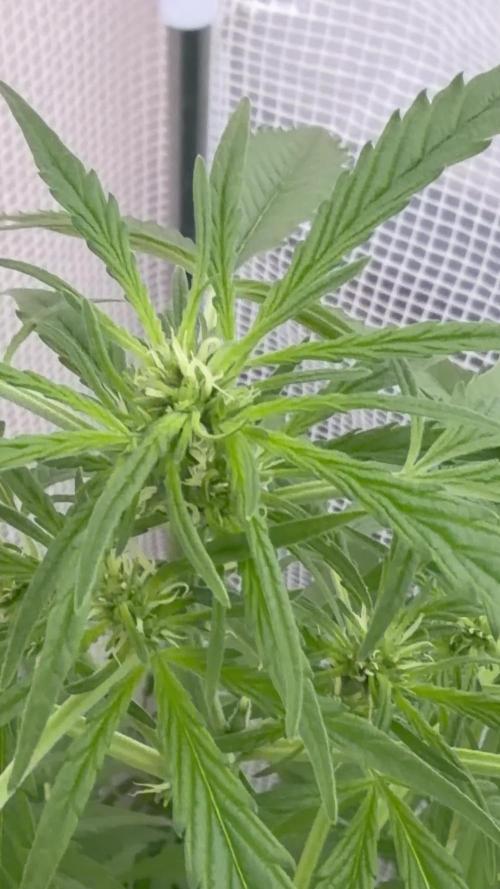
Hi everyone I chop her down day 86 and let her dry in 19° temp and RH 65 % I'm going to slow drying for best results 7 to 8 days
She is very dense and sticky bud and so heavy too I think she yield over 150g plus but the bud are not 100% purple its mix with light purple and green ass you can see in pic or video but still I'm very very happy and already germinate another purple lemonade 💜 next week I will update smoke reviews and final dry weight 😀
Likes
97
Share


@AsNoriu
Follow
Day 106. Trim jaiiiiiilllllllll !!!!
First done, think it could reach my record 240. Insane quality. 4 rows of solid buds hanging ....
Next one ....
Both finally finished and honestly, that's my plants to be proud of !!!
Day 114. All is done, no doubts its my best grow.
Happy Growing !!!

Likes
102
Share


@OrganicNature420
Follow
Germination date 🌱 02/12/2021
Day 22 27/12/2021
Strain 🍁 Barney's Farms Biscotti Mintz
(Biscotti x Mintz)
THC% • 30%
💡 Mars Hydro FC-E6500
• Power draw 650W + 5%
• Max coverage 5 x 5
• LED 3978 pcs high quality chips
• Max Yield 2.5g / watt
• Noise level 0 DB
• Removable Driver & Light bars
• Daisy chain
• Fast cool system
https://marshydroled.co.uk/ 🇬🇧
PROMO CODE • (organicnature420) DISCOUNT
https://www.mars-hydro.com/ 🇺🇲
PROMO CODE • (ORG420) DISCOUNT 👍🏻
⛺ Mars Hydro 150 x 150 x 200cm
📤📥 AC infinity 6inch
💧 10lt dehumidifier
❄️ 3.1kw air con system
💉 Nutrients Dr Forest (dry amendments)
Grow
Bloom
Bloom2
🌱 Growing Media • Soil
Notes 📝
Would be interesting to know what kind of mutant this is? Any ideas? Look at the stem, it looks like a piece of celery. Anyone reckon it's worth topping from the side that's got a decent shoot. Don't won't to stress it anymore than it looks ✌️🏼💚🌱
Discount codes in bio for Mars hydro


Likes
13
Share
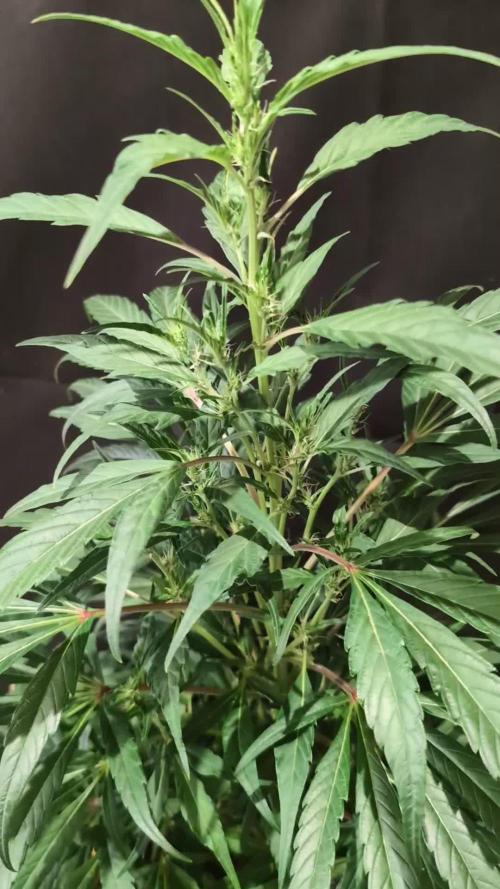

@GoodTimesOrganics
Follow
Hi liebe Community and Welcome Back! 💚
Nach der ersten Blütewoche entwickelt sich die Orange Bud weiterhin top.
Zur Geschlechtsbestimmung, gab es kurz eine Woche einen Ausflug in die Blüte Phase gefolgt von den letzten 2,5 Wochen ReVeg.
Durch die ReVeg. Periode, hat sich die Pflanze etwas zur Mutation verleiten lassen.
Das sieht Mann stark an der Blattform im oberen Bereich.
Jetzt am 07.03.2026 ging es dann final in die Blüte Phase.
Die neuen Blätter sehen sehr Gesund aus und insgesammt hat sich die Pflanze gut entwickelt. Oldschool Baby! 💚
Die Pflanze wurde nicht gestoppt.
Die Seittriebe beginnen nun in die Breite zu gehen und kommen allmählich gut hervor.
Die unteren Triebe wurden rausgeschnitten, damit die Pflanze nun ihr Potential nach oben entfalten kann.
Die Umgebungsgegebenheiten sind aktuell gut:
—————
🌞 Temp: 26°C
🌚 Temp: 18°C bis 19°C
💨 RH: 58%
VPD: 1,10 kPa
💡ppfd: 830 mpm
—————
Viele Grüße 👋
