


Likes
Comments
Share

@sunshinegroww
Follow
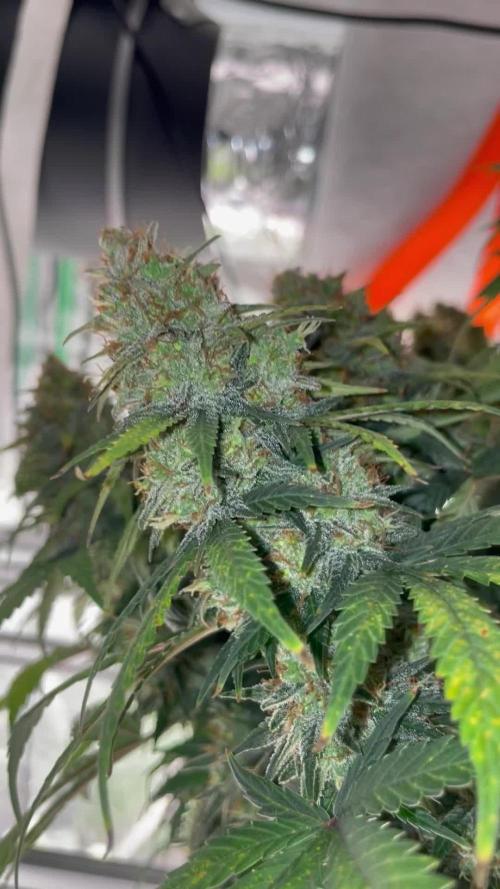
Its been in a flush for a week and now ready to be enjoyed after the drying process

Likes
5
Share


@Suemchen
Follow
Sanlight EVO 3-60 at 80%
Day 22: did nothing today 👌🏻
Day 23: looking good and watered again🌊. Watered with rain water, 1 ml/l Cal Mag, and 1 ml/l Green Sensation. Transplanted into a bigger Pot👌🏻
Day 25: looking good and watered again. Watered with rain water and 1ml/l Powerzyme, 1 ml/l Hesi Boost, 1 ml/l Cal Mag, 1 ml/l Bloom Complex and 1 ml/l Green Sensation. EC at 1.0 and a pH of 6.4.

Likes
17
Share


@CanabisLoverHobbyGrower
Follow
Zkittles defo hit stretch this week and started showing more bud sites, smoothie has been as straight forward as always ,.. everything looks good to me, defoliating zkittles is crazy, the rate the leaves grow back I've never seen anything like it but hopefully now will start putting the effort into the bud sites,... roll on next week 👌




Likes
23
Share


@lemonairlines
Follow
I washed Moby's soil with 20L water and the leaves started to turn yellow. Ready to cut when dry the soil🙏. The trichomes are almost ready, I can't take a photo of them , i tried and she is so strong 😏
Silver's middle branches are falling, I have to find a solution for that, the branches should not touch each other. She drinks a lot of water and has consumed my fertilizers she always hungry 😅 , 4.5 liters in 3 days but its okey .Looks like it needs at least 10-12 more days but will be alone 😎
Bloom 61: Silver is lonely right now but i untied her to strech sideways . Maybe it was not good idea :)) All branches are falling down , i have to tie up to plastic string but it was too hard . I think i got this

Likes
52
Share


@Ultraviolet
Follow
Lacewings seemed to have mostly killed themselves by flying into hot light fixtures. I may have left the UV on which was smart of me :) Done very little to combat if anything but make a sea of carcasses, on the bright side its good nutrition for the soil.
Made a concoction of ethanol 70%, equal parts water, and cayenne pepper with a couple of squirts of dish soap.
Took around an hour of good scrubbing the entire canopy.
Worked a lot more effectively and way cheaper.
Scorched earth right now, but it seems to have wiped them out almost entirely very pleased.
Attempted a "Fudge I Missed" for the topping. So just time to wait and see how it goes.
Question?
If I attached a plant to two separate pots but it was connected by rootzone, one has a pH of 7.5 ish the other has 4.5. Would the Intelligence of the plant able to dictate each pot separately to uptake the nutrients best suited to pH or would it still try to draw nitrogen from a pot with a pH where nitrogen struggles to uptake?
Food for stoner thought experiments!
Another was on my mind.
What happens when a plant gets too much light?
Well, it burns and curls up leaves.
That's the heat radiation, let's remove excess heat, now what?
I've always read it's just bad, or not good, but when I look for an explanation on a deeper level it's just bad and you shouldn't do it.
So I did.
How much can a cannabis plant absorb, 40 moles in a day, ok I'll give it 60 moles. 80 nothing bad ever happened.
The answer, finally. Oh great........more questions........
Reactive oxygen species (ROS) are molecules capable of independent existence, containing at least one oxygen atom and one or more unpaired electrons.
"Sunlight is the essential source of energy for most photosynthetic organisms, yet sunlight in excess of the organism’s photosynthetic capacity can generate reactive oxygen species (ROS) that lead to cellular damage. To avoid damage, plants respond to high light (HL) by activating photophysical pathways that safely convert excess energy to heat, which is known as nonphotochemical quenching (NPQ) (Rochaix, 2014). While NPQ allows for healthy growth, it also limits the overall photosynthetic efficiency under many conditions. If NPQ were optimized for biomass, yields would improve dramatically, potentially by up to 30% (Kromdijk et al., 2016; Zhu et al., 2010). However, critical information to guide optimization is still lacking, including the molecular origin of NPQ and the mechanism of regulation."
What I found most interesting was research pointing out that pH is linked to this defense mechanism. The organism can better facilitate "quenching" when oversaturated with light in a low pH. Now I Know during photosynthesis plants naturally produce exudates (chemicals that are secreted through their roots). Do they have the ability to alter pH themselves using these excretions? Or is that done by the beneficial bacteria?
If I can prevent reactive oxygen species from causing damage by "too much light".
The extra water needed to keep this level of burn cooled though, I must learn to crawl before I can run.
Reactive oxygen species (ROS) are key signaling molecules that enable cells to rapidly respond to different stimuli. In plants, ROS plays a crucial role in abiotic and biotic stress sensing, integration of different environmental signals, and activation of stress-response networks, thus contributing to the establishment of defense mechanisms and plant resilience. Recent advances in the study of ROS signaling in plants include the identification of ROS receptors and key regulatory hubs that connect ROS signaling with other important stress-response signal transduction pathways and hormones, as well as new roles for ROS in organelle-to-organelle and cell-to-cell signaling. Our understanding of how ROS are regulated in cells by balancing production, scavenging, and transport has also increased. In this Review, we discuss these promising developments and how they might be used to increase plant resilience to environmental stress.
Temperature stress is one of the major abiotic stresses that adversely affect agricultural productivity worldwide. Temperatures beyond a plant's physiological optimum can trigger significant physiological and biochemical perturbations, reducing plant growth and tolerance to stress. Improving a plant's tolerance to these temperature fluctuations requires a deep understanding of its responses to environmental change. To adapt to temperature fluctuations, plants tailor their acclimatory signal transduction events, specifically, cellular redox state, that are governed by plant hormones, reactive oxygen species (ROS) regulatory systems, and other molecular components. The role of ROS in plants as important signaling molecules during stress acclimation has recently been established. Here, hormone-triggered ROS produced by NADPH oxidases, feedback regulation, and integrated signaling events during temperature stress activate stress-response pathways and induce acclimation or defense mechanisms. At the other extreme, excess ROS accumulation, following temperature-induced oxidative stress, can have negative consequences on plant growth and stress acclimation. The excessive ROS is regulated by the ROS scavenging system, which subsequently promotes plant tolerance. All these signaling events, including crosstalk between hormones and ROS, modify the plant's transcriptomic, metabolomic, and biochemical states and promote plant acclimation, tolerance, and survival. Here, we provide a comprehensive review of the ROS, hormones, and their joint role in shaping a plant's responses to high and low temperatures, and we conclude by outlining hormone/ROS-regulated plant-responsive strategies for developing stress-tolerant crops to combat temperature changes.
Onward upward for now.
Next!
Adenosine triphosphate
(ATP) is an energy-carrying molecule known as "the energy currency of life" or "the fuel of life," because it's the universal energy source for all living cells.1
Every living organism consists of cells that rely on ATP for their energy needs. ATP is made by converting the food we eat into energy. It's an essential building block for all life forms. Without ATP, cells wouldn't have the fuel or power to perform functions necessary to stay alive, and they would eventually die. All forms of life rely on ATP to do the things they must do to survive.2
ATP is made of a nitrogen base (adenine) and a sugar molecule (ribose), which create adenosine, plus three phosphate molecules. If adenosine only has one phosphate molecule, it’s called adenosine monophosphate (AMP). If it has two phosphates, it’s called adenosine diphosphate (ADP).
Although adenosine is a fundamental part of ATP, when it comes to providing energy to a cell and fueling cellular processes, the phosphate molecules are what really matter. The most energy-loaded composition for adenosine is ATP, which has three phosphates.3
ATP was first discovered in the 1920s. In 1929, Karl Lohmann—a German chemist studying muscle contractions—isolated what we now call adenosine triphosphate in a laboratory. At the time, Lohmann called ATP by a different name. It wasn't until a decade later, in 1939, that Nobel Prize–-winner Fritz Lipmann established that ATP is the universal carrier of energy in all living cells and coined the term "energy-rich phosphate bonds."45
Lipmann focused on phosphate bonds as the key to ATP being the universal energy source for all living cells, because adenosine triphosphate releases energy when one of its three phosphate bonds breaks off to form ADP. ATP is a high-energy molecule with three phosphate bonds; ADP is low-energy with only two phosphate bonds.
The Twos and Threes of ATP and ADP
Adenosine triphosphate (ATP) becomes adenosine diphosphate (ADP) when one of its three phosphate molecules breaks free and releases energy (“tri” means “three,” while “di” means “two”). Conversely, ADP becomes ATP when a phosphate molecule is added. As part of an ongoing energy cycle, ADP is constantly recycled back into ATP.3
Much like a rechargeable battery with a fluctuating state of charge, ATP represents a fully charged battery, and ADP represents a "low-power mode." Every time a fully charged ATP molecule loses a phosphate bond, it becomes ADP; energy is released via the process of ATP becoming ADP.
On the flip side, when a phosphate bond is added, ADP becomes ATP. When ADP becomes ATP, what was previously a low-charged energy adenosine molecule (ADP) becomes fully charged ATP. This energy-creation and energy-depletion cycle happens time and time again, much like your smartphone battery can be recharged countless times during its lifespan.
The human body uses molecules held in the fats, proteins, and carbohydrates we eat or drink as sources of energy to make ATP. This happens through a process called hydrolysis
.
After food is digested, it's synthesized into glucose, which is a form of sugar. Glucose is the main source of fuel that our cells' mitochondria
use to convert caloric energy from food into ATP, which is an energy form that can be used by cells.
ATP is made via a process called cellular respiration that occurs in the mitochondria of a cell. Mitochondria are tiny subunits within a cell that specialize in extracting energy from the foods we eat and converting it into ATP.
Mitochondria can convert glucose into ATP via two different types of cellular respiration:
Aerobic (with oxygen)
Anaerobic (without oxygen)
Aerobic cellular respiration transforms glucose into ATP in a three-step process, as follows:
Step 1: Glycolysis
Step 2: The Krebs cycle (also called the citric acid cycle)
Step 3: Electron transport chain
During glycolysis, glucose (i.e., sugar) from food sources is broken down into pyruvate
molecules. This is followed by the Krebs cycle, which is an aerobic process that uses oxygen to finish breaking down sugar and harnesses energy into electron carriers that fuel the synthesis of ATP. Lastly, the electron transport chain (ETC) pumps positively charged protons that drive ATP production throughout the mitochondria’s inner membrane.2
ATP can also be produced without oxygen (i.e., anaerobic), which is something plants, algae, and some bacteria do by converting the energy held in sunlight into energy that can be used by a cell via photosynthesis.
Anaerobic exercise means that your body is working out "without oxygen." Anaerobic glycolysis occurs in human cells when there isn't enough oxygen available during an anaerobic workout. If no oxygen is present during cellular respiration, pyruvate can't enter the Krebs cycle and is oxidized into lactic acid. In the absence of oxygen, lactic acid fermentation makes ATP anaerobically.
The burning sensation you feel in your muscles when you're huffing and puffing during anaerobic high-intensity interval training (HIIT) that maxes out your aerobic capacity or during a strenuous weight-lifting workout is lactic acid, which is used to make ATP via anaerobic glycolysis.
During aerobic exercise, mitochondria have enough oxygen to make ATP aerobically. However, when you're out of breath and your cells don’t have enough oxygen to perform cellular respiration aerobically, the process can still happen anaerobically, but it creates a temporary burning sensation in your skeletal muscles.
Why ATP Is So Important?
ATP is essential for life and makes it possible for us to do the things we do. Without ATP, cells wouldn't be able to use the energy held in food to fuel cellular processes, and an organism couldn't stay alive.
As a real-world example, when a car runs out of gas and is parked on the side of the road, the only thing that will make the car drivable again is putting some gasoline back in the tank. For all living cells, ATP is like the gas in a car's fuel tank. Without ATP, cells wouldn't have a source of usable energy, and the organism would die.
Eating a well-balanced diet and staying hydrated should give your body all the resources it needs to produce plenty of ATP. Although some athletes may slightly improve their performance by taking supplements or ergonomic aids designed to increase ATP production, it's debatable that oral adenosine triphosphate supplementation actually increases energy.
An average cell in the human body uses about 10 million ATP molecules per second and can recycle all of its ATP in less than a minute. Over 24 hours, the human body turns over its weight in ATP.
You can last weeks without food.
You can last days without water.
You can last minutes without oxygen.
You can last 16 seconds at most without ATP.
Food amounts to one-third of ATP production within the human body.


Likes
3
Share


Likes
23
Share


@Piorkeed
Follow
Week 4 (06/04 - 12/04)
D22: -
D23: -
D24: added 1ml of Root-juice and 1 ml of Bio-Bloom to 0.5 l of tap water @ pH 6
D25: -
D26: -
D27: added 1ml of Root-juice and 1 ml of Bio-Bloom to 0.8 l of tap water @ pH 6
D28: -

Likes
39
Share


@AestheticGenetics
Follow
4/15/25 Things are progressing nicely. Some plants dont seem to be doing too much but 3 of them or so that are really standing out.
Im curious if some of these are going to be longer flowering time than anticipated with the very obvious sativa dominant plants.

Likes
5
Share


@Ninjabuds
Follow
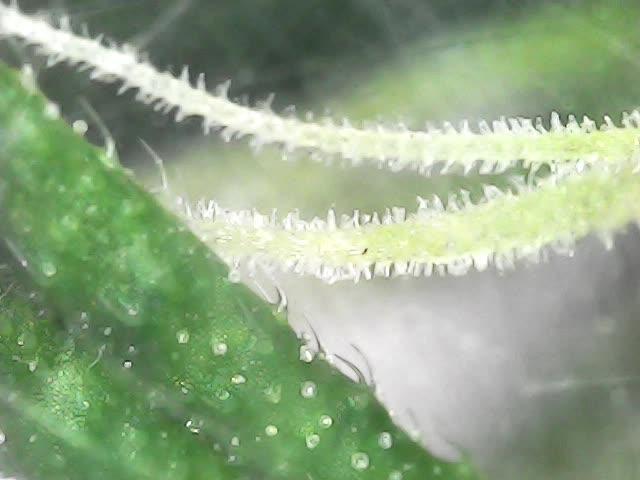
Hey there the 2 pound cake plants are doing well they grew a decent amount sense a week ago. I turned the light up to about 200umol they seem to be able to take more light earlier than photo plants. I'm wandering if I should be giving it even more light I don't want them to be to small when they go into flower they look nice and the leaves are never sagging


Likes
76
Share


@Canna96
Follow
Hey now, this week went pretty good, the buds are about done bulking up, and just waiting on the trichomes, I was really hoping she would be about ready, but I think she needs another week to week and a half total. The buds are rock hard, and super sticky. I have no clue what she will yield because the colas are not that thick, but there are definitely alot of them. I plan to squeeze her into rosin, and hopefully I can break the 25% mark for the first time with her, but we will see. Thanks for stopping by, I hope you enjoy the videos, Happy Memorial Day Family, Stay Safe and Blaze On!!!
Likes
16
Share


@GODSGIFT_2005_JM
Follow
🍼Greenhouse Feeding BioGrow & Bio Enhancer
⛺️MARSHYDRO
The ⛺️ has a small door 🚪 on the sides which is useful for mid section groom room work. 🤩
☀️ MARSHYDRO FC 3000 LED 300W
☀️Also special thanks to VIPERSPECTRA P2000 (200W) & XS2000(240w) LED growlights
🌱 DUTCH HEADSHOP SEEDS:
www.dutch-headshop.eu
www.dutch-headshop.nl
ONE STOP SHOP
. 100% germination success on first try! with HUGE seed selection!
. Very friendly customer service
. Best bio-seed packaging
. Sells other products @ best prices:
. Nutrients
. Vaporizers
. Smoking accessories (grinders, cones)
. CBD Tinctures
. Resin Extracts
. Boveda humidity packs
. Ziplock bags
. Other health supplements such as:
. Lion’s Mane Organic Capsules
. Hemp Seed coffee


Likes
4
Share


@MetallicaDave
Follow
Welcome to week 8 day 1, in this tent 7 plants 1 in 3 gallon fabric pot California Snow, 3 in 5 gallon fabric pots a California Snow and 2 Blue Dream. 3 in 1 gallon fabric pots 2 Blue Dreams and a Blue Amnesia. This week I Lollipoped lightly, the elastic scrog net is on 5 plants all buds and canes are liking being layed under the net. Seeing I’m in Midflower I raised the ppm’s of nutrients to 1000 they were slowly being added Added Mykos and molasses cal mag silica fox farm flower nutes and new to the party my all time secret Miracle Grow Bloom Booster about a widdle spooney per gallon of water added them all in perfect sequence with Gods on pure RAIN WATER, oh I have a short plant on an upside down bucket to get full 800 par or whatever it’s called in light volume I’m mostly at 85%-100% with the 2 Marz Hydro LED’s and Dragon LED 75 extra watts supplemental. Big fan outside the tent keeps it 78’ and 70 for sleep 4 hours, I smoke by my plants and I got a killer Mini Garden tools kit for Christmas so I’m stoked
Likes
3
Share


@NocturnalGardner44
Follow
Caught up... things are going well, Bruce stretched like crazy and has evened up its canopy to the others idk if it's that big bud in it or what. Lilac has looked a solid week and half ahead of the others since flower, she looks wicked though, trichromes are starting to build. I've done my last training, I usually go hard on thinning but I'm trying to be conservative and only uncover buds under leaves. Still same feeding routine.. looking forward to the finish line but know this is an important time with terms and trichromes beginning to resonate... I sick at this guy's but I want to get better at chronicling my grows.. so hourly I will improve in the process of Journaling.


Likes
3
Share


@Bdawg
Follow
Grow went well.
Spider farmer produces again the se5000. One day they myt sponsor me beofre someone else does.
Dyno myco somw gd stuff chek out ppl.
Likes
2
Share
@HealthHunterFarms
Follow
Bubble Gum @SeriousSeeds
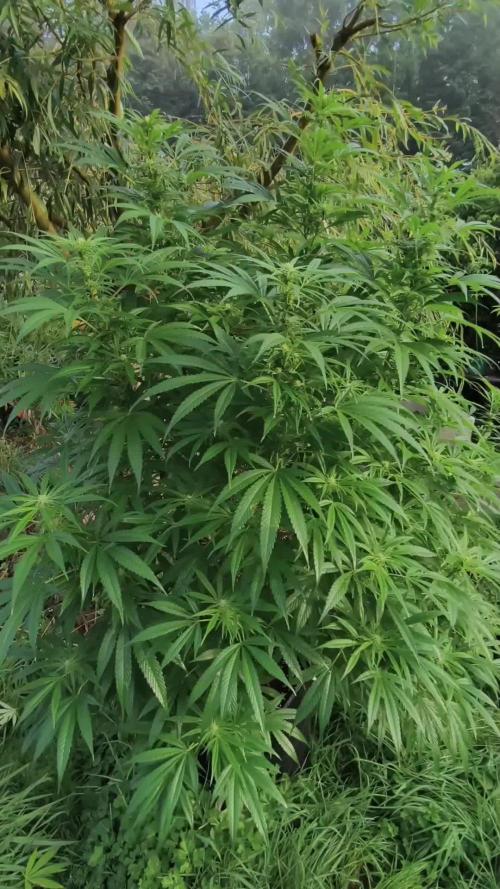
We have one plant with sweet chewing Gum smell with a fresh Feeling in the nose and another plant with a earthy Fruity and darker warmer smell.
Selected the 2 best growing females and Males from 50popped Seeds. A few promising crosses have been Made this year.


Likes
29
Share


@Myrcene_Dream
Follow
Day 1 - Sprout came up from peat pellet and was put in chalice containing ocean forest. Chalice was placed in tent where temp/humidity is constant at 78F and 70%
Day 7 - Everything going well. I have been sparingly watering every second day

