



@Nedizzle
Follow
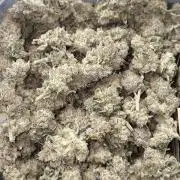
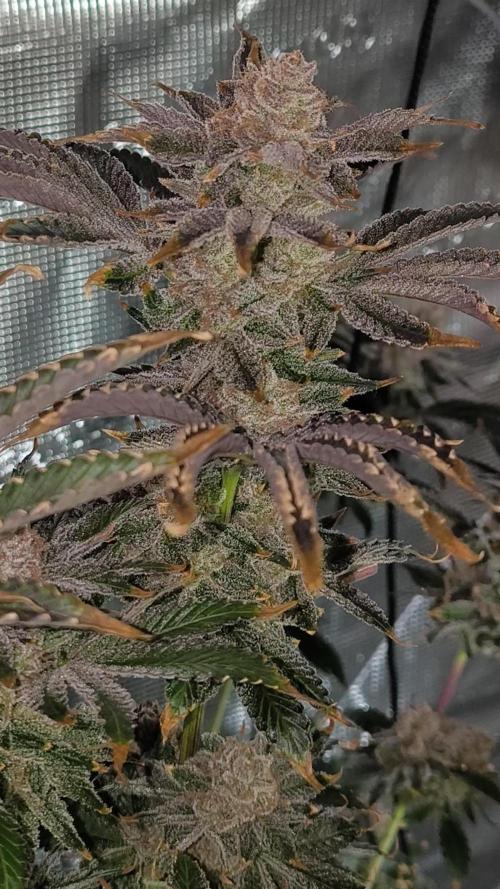
Harvest day on day 66. She's a big gyal. I gave her Flawless Finish for 5 days.
Jealousy was harvested a week before, because she stopped drinking and was "done".
I already tested one J and it was pretty strong.
Not much more to say, enjoy the pictures and videos. I'm hyped for the next run, but i will start somewhere in July.
I will return with the harvest reports in two weeks.
Cya 🌌🍁


@Dutchhobby
Follow
Can't tell I was happy with the outcome but I think this is more a indoor type.lots of problems with bugs and to hot weather.they did not Heald as fast as other autos..but still can't wait to smoke..


@MrFink
Follow
The girls have basically exploded this week! They were drinking a ton and have responded really well to the steady increase in nutrients. With the room being basically self sustaining, it’s been a lot less work. Yesterday was the second round of defoliation and because this is my first time getting this far, I decided to be pretty moderate. There’s a few plants I took quite a bit off as an experiment and they seem to be doing great! The guy at my local hyrdo store recommended GH Floralicious Plus for flavor and smell, so I decided to try it out and this is some pretty potent stuff. After their first feeding of the Floralicious they are smelling delicious! The one plant furthest into flower is starting to show some fade in the lower leaves, she will certainly be done before the rest. She has a very sweet and sour aroma, especially if she gets rustled around a little bit. I’m stoked for the rest of flower and seeing their progress. Also I haven’t seen a fungus gnat in weeks so those yellow sticky traps are a must.


@Bones_1986
Follow
Drinking 1.7 liters every 2/3 days like clockwork. Grown 5inch in 3 days. Let the stretching commence

shorts_status_processing


@Silverback_Guerilla
Follow
1/14:
All 3 are looking great!
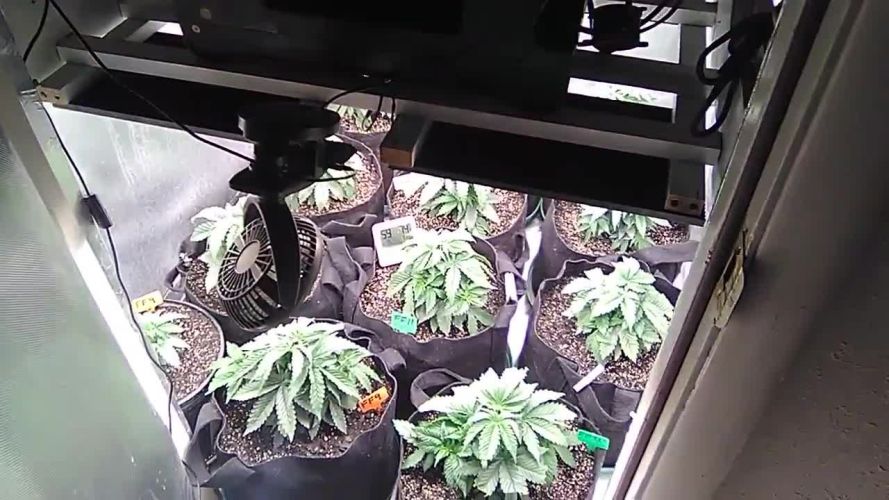
This morning, I did a foliar application of big bloom and fulvic acid, then about 5 hours later I watered them with about a half-gallon of rainwater each and added armor si, humic acid, endoboost myco/tricho, liquid molasses, and a bunch of cal-mag. Today, I also I wired up and mounted my new samsung sun board strips (660nm/730nm) and my Solacure FlowerPower UVB fixture.
I'm running the deep red/far red bud boosters a few hours per day right now, but will run them for the entire photoperiod once I start flowering them. I'll run the UVB for 4 * 15-minute sessions a day for the full flowering cycle, and if they don't protest too much I'll increase each session by 5 minutes and evaluate again. Some strains are more forgiving than others and I've got 5 different strains in this space...so really not sure much time I'll get away with exposing them to the deadly rays without damaging them too much...😈
1/15:
I received one of the rapid led/growmau far red initiator pucks today. With the placement of my UVB light, I'm realizing I'll need another far red puck to have even and intense far red coverage, so I'm ordering another with Prime delivery and waiting to start flowering until I receive it.
I sprayed them down really well with ph adjusted rainwater tonight to rinse off nutrient build-up from foliar applications.
1/16:
I'm really excited to try flowering under 14/10. I grew photos indoors on an off for 15 years before I semi-retired. If I added up all the additional flowering time I could have done through the years if LED technology existed, I'd have had an extra truckload of bud to smoke.
I did another application of Axiom Harpin a|b Proteins this evening, right before dark. I'm expecting a big growth burst this week, leading up to the flower stretch. I really need them to trigger under 14/10 within 4 or 5 days🙏
...if not, I'll switch to 13/11 and wait a few more days🙏😟..if still no pistils are poppin, I'll go to 12/12 and chalk it up as bad luck or varietal indifference to Pr and Pfr manipulation.
1/17:
I fed each of them about 3/4 gallon of full strength veg nutes. This will be the last. I'll go with half-strength veg and half-strength bloom for a week, then go with full strength bloom nutrients until I start flushing them in 6-8 weeks.
1/18:
I installed the second far-red flowering initiator today and got all my timers configured for flowering:
=========================================
timer#1 - power strip with qb's and red boosters
10:00am -12:00am
timer#2 - (dual/independent setting)
sideA- 3-way cube with uva bars
10am - 3pm
7pm - 11pm
sideB- flowerpower uvb
1pm - 1:15pm
4pm - 4:15pm
7pm - 7:15pm
11pm - 11:15pm
timer#3 - far red pucks
11:00pm - 12:15am
timer#4 - sub-canopy tube
10am - 1pm
3pm - 6pm
8pm - 11pm
========================================
I also did some testing on the timers and sealed myself into the closet to check for any light leaks. All good.👌
1/19:
Tonight is their first long night. It's ON!👍
1/20:
I watered them today with about a half gallon each. I'm seeing calcium and magnesium deficiencies here and there, so added some boomerang and heavy cal-mag-Fe along with liquid molasses, humic acid, and endoboost myco. I also foliar fed with big bloom and fulvic acid.
That's it for week 4-


@Jimmy89
Follow
The the buds were small so it made trimming a nightmare! But it’s done and the end product is worth all the time. I have loads of trim and small popcorn buds that will be dry Ice sifted and pressed into a hash brick. Will update the diary when I have some bcp hash
Weighed up the trim at 588 grams, used my trim bins with dry ice to sift the trim and pressed it into blocks using a rosin pre press, I’ll now jar this and put it to one side. My first time doing this, definitely worth the effort!


@Roberts
Follow
She has a citrus smell with earthy tones. She has grown well in the solo cup. She is on ph water and will get harvested next update. Thank you Medic Grow, and Zamnesia seeds. 🤜🏻🤛🏻🌱❄️
Thank you grow diaries community for the 👇likes👇, follows, comments, and subscriptions on my YouTube channel👇.
❄️🌱🍻 Happy Growing 🌱🌱🌱
https://youtube.com/channel/UCAhN7yRzWLpcaRHhMIQ7X4g


@Rugginho94
Follow
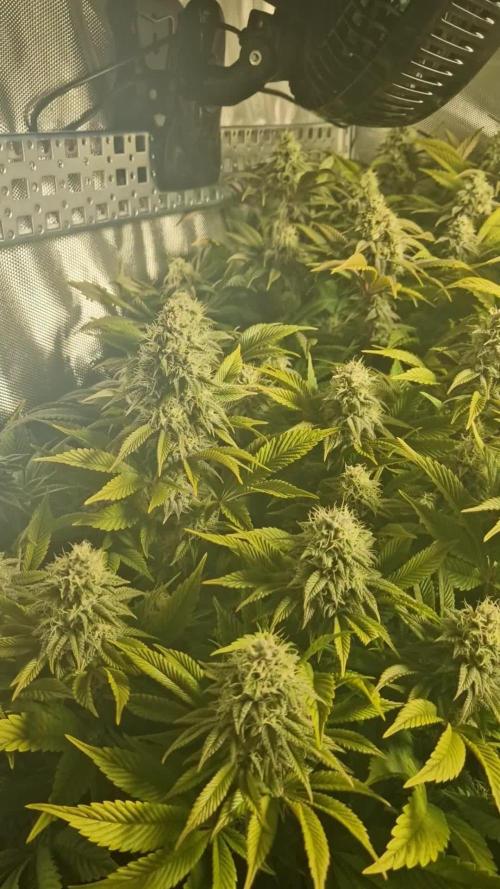
I cut another part of the girls, and the total is even greater than the first part!
We wait another week for the final sums, but right now the flavor is unique.



@Mimi420
Follow
Day 42 — FLO | Mixed SCROG (120×80) Box smells unreal — sticky as hell. Buds are packing weight and the trichs are starting to turn milky in spots, but most are still crystal-clear so I’m letting them cook a bit longer. Canopy is fat, structure solid; loads of resin on every cola — fingers already gluey from checking. Night temps and RH still a pain (cold garage), so I’m watching for any mold hotspots and keeping airflow moving. Overall super happy with how this mixed run turned out so far.
Quick state:
Lights: 400W HPS + 300W LED (4000K) — plenty of punch.
Media: 20 L smart pots, BioBizz soil + myco, organic feeds (BioBloom, TopMax, Green Sensation).
Training: SCROG, LST/HST done, minimal tweaks now — mostly letting the flowers fatten.
Trichomes: pockets of milky, majority still clear — not chop-ready yet, keep peeping with scope every 2–3 days.
Plant-by-plant notes (position → short ID + what I see)
Back-left — Wedding Cake (Portland)
Very frosty, main colas are dense and sugary. Pistils starting to darken a bit, buds showing early signs of swelling. Trichome coverage is heavy — this one will likely be a resin monster. Watch for the classic sweet/creamy aroma to deepen.
Back-center — Kush Crasher
Properly turning purple and looking gorgeous. Leaves are showing that cool kush coloration and the colas are chunky and stout. Very sticky, strong nose developing (earthy / diesel kush). Keep temps stable so the purple stays and you don’t stress it too hard.
Back-right — AK-47
Shorter, compact nodes but stacking nice little cola clusters. Classic AK structure — not the frostiest but reliable bud density and a punchy terp profile expected. Nice even development under the HPS.
Front-left — Double Krush
Buds forming tight clusters — a little leaner than the gassier strains but foxtailing less and stacking nicely. Shows vigour and is filling in under the canopy. Good candidate for chunky colas if you let it finish a touch longer.
Front-center — Wappa
Main cola is a beast — this one’s the show-stealer for bulk. Fat, chunky top cola, already showing awesome density and slight color shift. Expect a heavy, compact cola at chop. Loving how the Wappa is responding to your SCROG.
Front-right — Detroit Runtz
Longer, slightly looser colas compared to the others but super resinous. Shows those fruity/runts vibes — buds are coating in trichomes and the structure looks promising for aroma/density trade-off. Might finish a touch sooner or later depending on phenotype, keep an eye on the trichs.
What I’d do next (short checklist):
Keep scope-checking trichs — pockets of milk = start of the final swell. Most still clear → not ready yet.
Hold off major defol or HST now; only small tidy-up if airflow spot is tight.
Watch RH closely at night — lower if I can (dehumidifier or heater + intake trick). Mold is the enemy at this point.
Last heavy feed flush plan: stay conservative — these look on the edge of finishing, so taper nutrients as trichs go 30–50% milky and pistils darken.


@OldskoolHed
Follow
Love this strain and breeder, he is a Virginia based and local. Super easy to grow.


@Ultraviolet
Follow
Green light is radiation with wavelengths between 520 and 560 nm and it affects photosynthesis, plant height, and flowering. Plants reflect green light and this is why they appear green to our eyes. As a result, some growers think that plants don’t use green wavelengths, but they actually do!
In fact, only around 5 – 10% of green light is reflected from leaves and the rest (90 – 95 %) is absorbed or transmitted to lower leaves [1].
Green wavelengths get used in photosynthesis. Chlorophyll pigments absorb small amounts of green wavelengths. Light that doesn’t get absorbed is transmitted to leaves that are shaded out from direct light. This means that leaves at the bottom of the canopy get more green light than leaves at the top. A high proportion of green wavelengths compared to other colors tells lower leaves that they are being shaded out, so they are able to react accordingly. Lower leaves may react by opening or closing their stomata or growing longer stems that help the leaves reach brighter light [1, 2, 3].
When it comes to growing cannabis, many cultivators are interested in the quality of light used for the flowering stage. In many plants, flowering is regulated by two main photoreceptors: cryptochrome and phytochrome. Both photoreceptors primarily respond to blue light but can also respond to green, although to a lesser extent. Green can accelerate the start of flowering in several species (although cannabis has yet to be tested) [1, 4, 5]. However, once flowering has begun, it’s important to provide plants with a “full spectrum” light that has high amounts of blue and red light, and moderate amounts of green, in order for photosynthesis to be optimized.
Green light mediates seed germination in some species. Seeds use green wavelengths to decide whether the environment is good for germination. Shade environments are enriched in green relative to red and blue light, so a plant can tell if it is shady or sunny. A seed that senses a shaded environment may stay dormant to avoid poor growing conditions [1]. Some examples of plant species where researchers have documented this response are: ryegrass (a grass that grows in tufts) and Chondrilla (a plant related to dandelion) [1, 6].
Although green wavelengths generally tell plants NOT to germinate, there are some exceptions! Surprisingly, green wavelengths can stimulate seed germination in some species like Aeschynomene, Tephrosia, Solidago, Cyrtopodium, and Atriplex [1, 6, 7].
Of course, light is not the only factor affecting seed germination – it’s a combination of many factors, such as soil moisture, soil type, temperature, photoperiod, and light quality.
When combined with red and blue light, green can really enhance plant growth [1, 8]. However, too much green light (more than 50% of the total light) can actually reduce plant growth [8]. Based on the most current research, the ideal ratio of green, red, and blue light is thought to be around 1:2:1 for green:blue:red [9]. When choosing a horticultural light, choose one that has high amounts of blue and red light and moderate amounts of green and other colors of light.
Not many studies can be found about the effect of green light on cannabis growth or metabolism. However, if one reads carefully, there are clues and data available even from the very early papers.
Mahlberg and Hemphill (1983) used colored filters in their study to alter the sunlight spectrum and study green light among others. They concluded that the green filter, which makes the environment green by cutting other wavelengths out, reduced the THC concentration significantly compared to the daylight control treatment. It has been demonstrated that green color can reduce secondary metabolite activity with other species as well. For example, the addition of green to a light spectrum decreases anthocyanin concentration in lettuce (Zhang and Folta 2012).
If green light only reverses the biosynthesis of some secondary metabolites, then why put green light into a growth spectrum at all? Well, there are a couple of good reasons. One is that green penetrates leaf layers effectively. Conversely red and blue light is almost completely absorbed by the first leaf layer.
Green travels through the first, second, and even third layers effectively (Figure 2). Lower leaf layers can utilize green light in photosynthesis and therefore produce yields as well.
Even though a green light-specific photoreceptor has not yet been found, it is known that green light has effects independent from the cryptochrome but then again, also cryptochrome-dependent ones, just like blue light. It is known that green light in low light intensity conditions can enhance far red stimulating secondary metabolite production in microgreens and then again, counteracts the production of these compounds in high-intensity light conditions (Kim et al. 2004). In many cases, green light promoted physiological changes in plants that are opposite to the actions of blue light. In the study by Kim et al. blue light-induced anthocyanin accumulation was inhibited by green light. In another study it has been found that blue light promotes stomatal opening whereas green light promotes stomatal closure (Frechilla et al. 2000). Blue light inhibits the early stem elongation in the seedling stage whereas green light promotes it (Folta 2004). Also, blue light results in flowering induction, and green light inhibits it (Banerjee et al., 2007). As you can see, green light works very closely with blue light, and therefore not only the amount of these two wavelengths separately is important but also the ratio (Blue: Green) between these two in the designed spectrum. Furthermore, green light has been found to affect the elongation of petioles and upward leaf reorientation with the model plant Arabidopsis thaliana both of which are a sign of shade avoidance symptoms (Zhang et al. 2011) and also gene expression in the same plant (Dhingra et al. 2006).
As mentioned before, green light produces shade avoidance symptoms which are quite intuitive if you consider the natural conditions where the plants grow. Not all the green light is reflected from the highest canopy leaves in nature but a lot of it (50-90%) has been estimated to penetrate the upper leaves at the plant level ((Terashima et al., 2009; Nishio, 2000). For the plant growing in the understory of the forest green light is a signal for the plant of being in the shade of a bigger plant. Then again, the plants growing under unobstructed sunlight can take advantage of the green photons that can more easily penetrate the upper leaves than the red and blue photons. From the photosynthetic pigments in higher plants, chlorophyll is crucial for plant growth. Dissolved chlorophyll and absorb maximally in the red (λ600–700 nm) and blue (λ400–500 nm) regions of the spectrum and not as easily in the green (λ500–600 nm) regions. Up to 80% of all green light is thought to be transmitted through the chloroplast (Terashima et al., 2009) and this allows more green photons to pass deeper into the leaf mesophyll layer than red and blue photons. When the green light is scattered in the vertical leaf profile its journey is lengthened and therefore photons have a higher chance of hitting and being absorbed by chloroplasts on their passage through the leaf to the lower leaves of the plant.
Photons of PPFD (photosynthetic photon flux density) are captured by chlorophyll causing an excitation of an electron to enter a higher energy state in which the energy is immediately passed on to the neighboring chlorophyll molecule by resonance transfer or released to the electron transport chain (PSII and PSI). Despite the low extinction coefficient of chlorophyll in the green 500–600 nm region it needs to be noted that the absorbance can be significant if the pigment (chlorophyll) concentration in the leaf is high enough.
The research available clearly shows that plants use green wavelengths to promote higher biomass and yield (photosynthetic activity), and that it is a crucial signal for long-term developmental and short-term dynamic acclimation (Blue:Green ratio) to the environment. It should not be dismissed but studied more because it brings more opportunities to control plant gene expression and physiology in plant production.
REFERENCES
Banerjee R., Schleicher E., Meier S. Viana R. M., Pokorny R., Ahmad M., Bittl R., Batschauer. 2007. The signaling state of Arabidopsis cryptochrome 2 contains flavin semiquinone. The Journal of Biological Chemistry 282, 14916–14922.
Dhingra, A., Bies, D. H., Lehner, K. R., and Folta, K. M. 2006. Green light adjusts the plastic transcriptome during early photomorphogenic development. Plant Physiol. 142, 1256-1266.
Folta, K. M. 2004. Green light stimulates early stem elongation, antagonizing light-mediated growth inhibition. Plant Physiol. 135, 1407-1416.
Frechilla, S., Talbott, L. D., Bogomolmi, R. A., and Zeiger, E. 2000. Reversal of blue light -stimulated stomatal opening by green light. Plant Cell Physiol. 41, 171-176.
Kim, H.H., Goins, G. D., Wheeler, R. M., and Sager, J. C. 2004.Green-light supplementation for enhanced lettuce growth under red- and blue-light emitting diodes. HortScience 39, 1617-1622.
Nishio, J.N. 2000. Why are higher plants green? Evolution of the higher plant photosynthetic pigment complement. Plant Cell and Environment 23, 539–548.
Terashima I., Fujita T., Inoue T., Chow W.S., Oguchi R. 2009. Green light drives leaf photosynthesis more efficiently than red light in strong white light: revisiting the enigmatic question of why leaves are green. Plant & Cell Physiology 50, 684–697.
Zhang, T., Maruhnich, S. A., and Folta, K. M. 2011. Green light induces shade avoidance symptoms. Plant Physiol. 157, 1528-156.
Wang, Y. & Folta, K. M. Contributions of green light to plant growth and development. Am. J. Bot. 100, 70–78 (2013).
Zhang, T. & Folta, K. M. Green light signaling and adaptive response. Plant Signal. Behav. 7, 75–78 (2012).
Johkan, M. et al. Blue light-emitting diode light irradiation of seedlings improves seedling quality and growth after transplanting in red leaf lettuce. HortScience 45, 1809–1814 (2010).
Kasajima, S., et al. Effect of Light Quality on Developmental Rate of Wheat under Continuous Light at a Constant Temperature. Plant Prod. Sci. 10, 286–291 (2007).
Banerjee, R. et al. The signaling state of Arabidopsis cryptochrome 2 contains flavin semiquinone. J. Biol. Chem. 282, 14916–14922 (2007).
Goggin, D. E. & Steadman, K. J. Blue and green are frequently seen: responses of seeds to short- and mid-wavelength light. Seed Sci. Res. 22, 27–35 (2012).
Mandák, B. & Pyšek, P. The effects of light quality, nitrate concentration and presence of bracteoles on germination of different fruit types in the heterocarpous Atriplex sagittata. J. Ecol. 89, 149–158 (2001).
Darko, E. et al. Photosynthesis under artificial light: the shift in primary and secondary metabolism. Philos. Trans. R. Soc. B Biol. Sci. 369 (2014).
Lu, N. et al. Effects of Supplemental Lighting with Light-Emitting Diodes (LEDs) on Tomato Yield and Quality of Single-Truss Tomato Plants Grown at High Planting Density. Environ. Control Biol. 50, 63–74 (2012).

@Avengergreen
Follow
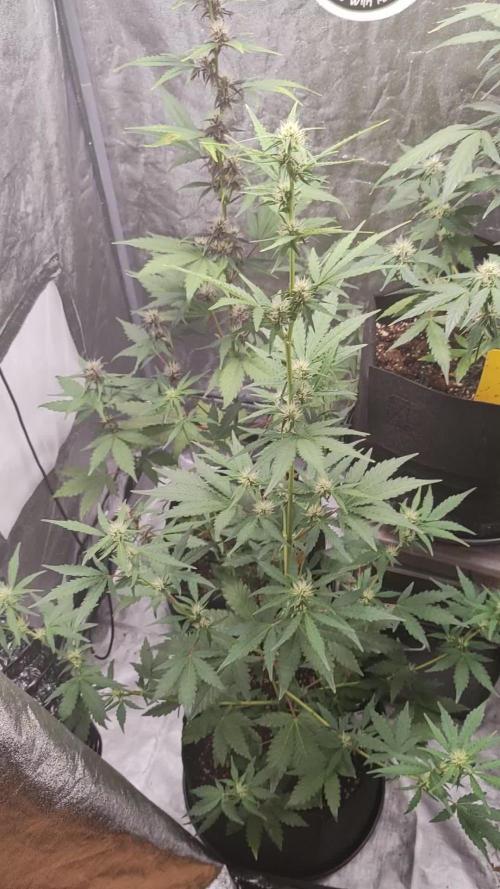
I am starting the third week of flowering. This week I will slightly increase the dose of fertilizers per flower. The plants are responding to the nutrients very well, which can be seen as the flower buds are becoming denser every day.


@taisoncreamcaramel
Follow
Trichome immer noch nicht bernsteinfarben.
Heute am 78. Tag einen Großteil der Blätter entfernt.Spüle weiter mit Wasser ...Diese Woche nochmals gutes warmes Sonnenwetter.


@Sejnik
Follow
Dnes jsem s nimi byl u kadeřníka a odstranil jsem velké množství vějířovitých listů aby se světlo dostal i na spodní květy. Zároveň jsem tím chtěl podpořit proudění vzduchu protože jsem v jednom vrchním květu objevil plíseň šedou. Příští vikend to vidím na sklizeň 🙂


@FlavoursUk
Follow
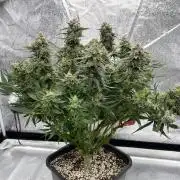
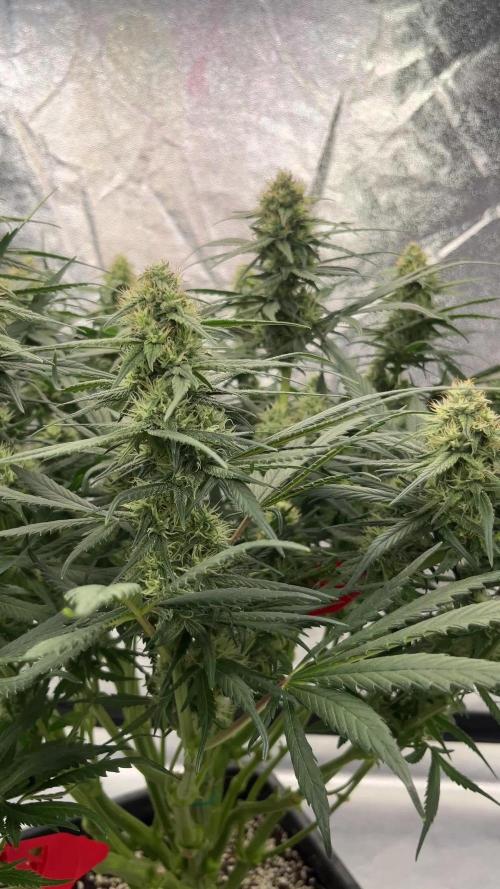
Day 44 - The smell is divine, and the buds are looking very pretty. Beautiful fade going on in the leaves, almost like a purple/red/black. Planning to tapper down the nutrients as we are coming closer to Harvest.
Crucial to keep the pH in range during flowering and being away a few days, I wasn't able to correct it until I was back. So they were drinking more water than uptaking nutrients.. leaving a high EC in the system. Corrected the issue by adding plain RO water, treated with cleanse, no nutrients.
They are now on track and could do with a last defoliation, but I've been holding it off. Will get around to it over the next few days.
The buds are sticky, smell great and rock hard. Dehumidifier was added to the tent to try lower the humidity to a better range.
Can't wait to see the end results and product. Another 2 weeks an I think we will be good.


@MedicaL
Follow
Bloom:
-23 den FF
-30 den Auto
Proběhla defoliace, hodně šlo pryč, snad to poberou.Auťák sype pěkně na 12h 🌞


@Dargaville_Dukes
Follow
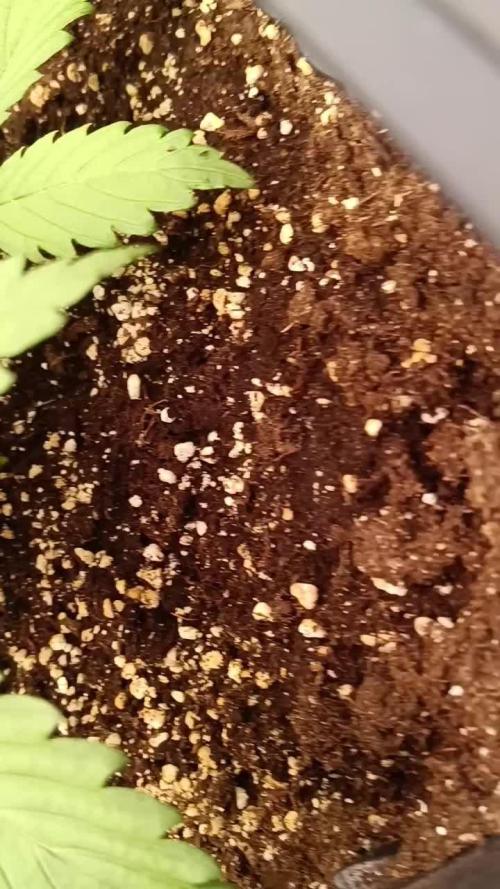
Getting near the end now. Plants are smelling magnificent! I think it'll be two more weeks until harvest. Fingers crossed the buds continue to gain weight. I'll be fully stoked if I get an ounce of nice flower off each plant.


@AlbStoned
Follow
Die Pflanzen wachsen sehr schnell, und sehr groß. Die Durban Poison haut hierbei Riesen Blätter raus, und wächst wie ein Urwald. Die Mango Cream x Cinderella Pflanze wächst sehr gut, ist dennoch luftiger und zierlicher als die andere Pflanze. Bei dieser Pflanze bilden sich prächtige Seitentriebe mit Blättern aus. Die Stengel sind rot ,und richtig schön anzusehen.


@Godino
Follow
I start seeding in 17 October. 20 October all seed are germinated.The grow was so fast that i decide to start lst and topping after less 20 days( i get 5 nodes to all plants very fast ). LST will continue and i will add scrog soon! This This my first grow surprise me, the canopy grow very fast and seem thats it's all very good!!
Comments and suggestions are appreciated!
