Likes
Comments
Share
@Ribemarti
Follow
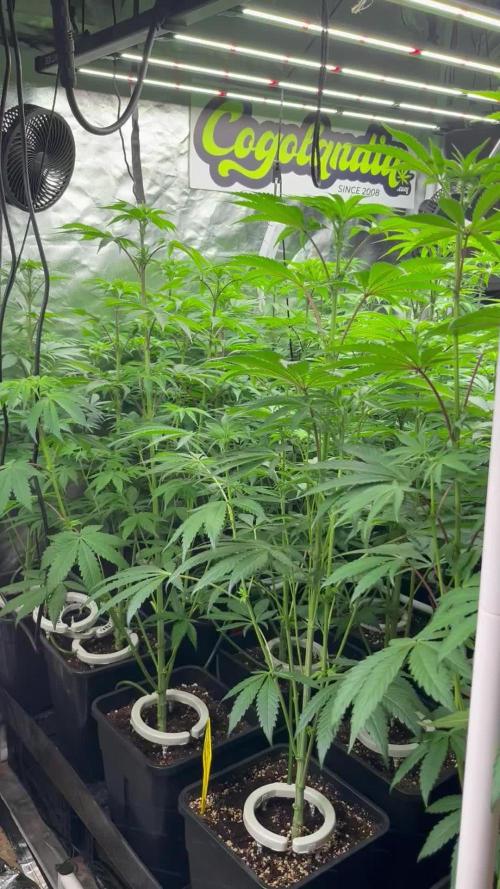
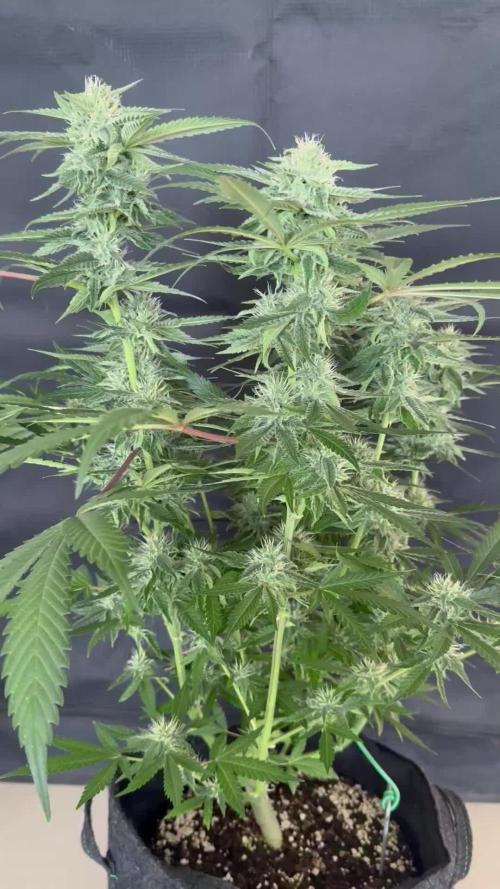
LAS PLANTAS MAS GRANDES YA MIDEN 1 METRO ESTAN EMPEZANDO A SACAR LA FLOR, EN LAS PROXIMAS SEMANAS VEREMOS LA ALTURA FINAL DE LAS PLANTAS ESTOY REGANDO CADA 3 DIAS SIGUIENDO LA TABLA DE BIOBIZZ Y ESTOY REGANDO CADA PLANTA CON 2 LITROS E.C 1300 P.H 6,4 YA ESTAN PODADAS Y YA NO QUITAREMOS NADA MAS AHORA A ESPERAR QUE VAYAN SACANDO COGOLLITOS , PROXIMA SEMANA PONDREMOS 2 BARRAS A LOS LADOS DE 100W DE LED KAPPA
Likes
46
Share
Hey there, green warriors and cannabis enthusiasts! 🌱✨ We’ve made it to week 10 of flowering with our incredible Runtz F1, and the anticipation is at an all-time high. This week has been all about those final touches—letting the plants reach their absolute peak before the big harvest. The Runtz F1 has truly outdone herself, and now she’s just about ready to show us everything she’s got. Let’s dive into what’s been happening during this critical final week of flowering. Week 10 Flowering Progress 🌿🌟 This final week of flowering has been a masterpiece in slow, steady ripening. Here’s what’s been happening with our star plant: • Bud Development 🌸: • The buds have reached their maximum size and density, with each cola a solid mass of sticky, resin-coated goodness. The trichomes are so thick that they give the buds a frosty, almost white appearance, making them look like they’re covered in a blanket of snow. The compact nature of the Runtz F1 has resulted in some of the most beautiful buds we’ve seen this grow. • Trichome Maturity 🔬✨: • This week, the trichomes have matured beautifully, with a perfect blend of milky and amber colors. The ratio has tipped slightly more toward amber, indicating that the cannabinoids are fully developed and the plant is ready to deliver a potent, well-rounded high. This balance ensures that the effects will be both uplifting and deeply relaxing—exactly what we’re looking for in this strain. • Aroma and Terpene Profile 🌿🌸: • The aroma in the grow room has hit its peak, filling the space with an intoxicating blend of sweet, fruity, and gassy notes. The terpene profile is fully expressed, promising a flavorful smoke that’s as complex as it is enjoyable. This final week has really brought out the best in the Runtz F1’s aroma, making it clear that we’re in for a treat once these buds are cured. Final Preparations Before Harvest 🌾✂️ With the buds fully matured, this week has been all about the final touches to ensure everything is just right for the upcoming harvest: • Continued Flushing 🚰: • We continued with the flush, ensuring that any remaining nutrients were cleared out, leaving behind clean, pure buds. The plants have responded beautifully, with the fan leaves fading as the buds take on their final form. This step is crucial to ensure that the smoke is smooth and the flavors are pure, free from any lingering harshness. • Environmental Control 📊: • Maintaining a stable environment has been key this week. We’ve kept a close eye on temperature and humidity, making sure everything stayed within optimal ranges to prevent any last-minute issues like mold or mildew. The plants have been in a perfectly balanced environment, allowing them to finish strong. Anticipation for Harvest 🌱💚 As we reach the end of week 10, the Runtz F1 is in the best possible position for harvest. The buds are bursting with potency, the aroma is at its peak, and the trichomes are telling us it’s time. However, we’re holding off just a bit longer, making sure that every aspect of the plant is fully ready before we take the final step. The excitement is real, and the anticipation is almost overwhelming. We’re just days away from harvest, and everything is set for an incredible finish. The Runtz F1 has been a dream to grow, and we can’t wait to see what the final product will bring. Stay tuned for the harvest report, where we’ll take you through the final steps and celebrate the culmination of this amazing journey! 🌟💚 #RuntzF1 #Week10Flower #CannabisCommunity #GrowStrong #FinalTouches #StayPositive #GreenMagic
Likes
8
Share
Everything is progressing normally. The weather is changing and temps outside are dropping so high temps in tent are no longer an issue. Other than the burnt tips from some sort of burn or defiency I have no complaints. I plan on harvesting BBK next week Wednesday. I fed them regular water right before taking the pics with 3 oz liquid worm castings mixed into 2 gallons. I have been feeding them each until first signs of run noff. The watering before this one (Sun 10/24) I gave them plain water, the one before that (Thur 10/21) I gave them the max dosage of what the general hydroponics 3 in 1 bottles recommend and didnt hold back like I normally do which is to give about half of what they recommend. It didn't appear to affect the plant to much as far as burn, the tips were already fried and the sclerosis didn't progress. I will flush the BBK this Friday and prepare her to harvest next Wed or Friday. I can't wait!!
Likes
1
Share
Very happy with the results so far. Diligently doing nothing lol
Likes
6
Share
@Smokwiri
Follow
This was an easy cycle with some average problems, dealt with the gnats by topping the soil. anyway it was a plant that was easy to grow, a very pleasant non weedy smell around. and was ready within 70 days, i left it a couple of days more till first amber trichomes The most strains taste far better after curing, with this one i don't agree with that rule. This strain actually tastes better when it's fresh. The curing brings back more of the kush, and makes the smoke stronger, but the taste of fresh dried sugar kush is close to undescribeable.
Processing
Likes
14
Share
(12-8)Roots are growing. Emily is increasing height everyday. My humidity is really low (low 30's) so I have ordered a small humidifier to put in the A.B.L.E. Grow Chamber. Music selection includes Nirvana, Lou Reed, Joy Division, Fugazi and Led Zepplin. will keep my pH between 5.8 and 6. will also post end of week photos. (12-9) Added small humidifier to the chamber. It raises the humidity by @ 15% which is OK but I need more humidity for my clone these first weeks. Have ordered a larger humidifier and hopefully that will get me in the high 60's. I'm around 45% at the moment with the small humidifier. (12-10) The large humidifier did the trick. Got humidity up to 70% and I also installed a drip ring around the top of the container so hopefully that will help the roots grow better.
Likes
34
Share
hi to all, brothers of the weed! my orange juice is nice and ready to be harvested!this beautiful plant was really very strong and resistant, in a short time it dominated all the cousins that were in the room! as always we will perform a dry trim and we will do a lot of good content and other reviews on the smoke so stay up to date!
Likes
13
Share
Dropped light hours down to 16 . Topped off nutrient solution with 5.0 ph evened out .removed none chosen phenos to be flowered in separate room no longer tracking those we will only follow the chosen mothers clones i cut clones today as well had the lady friend clean floor with bleach and dawn put clones in ez cloner 32 systems
Likes
13
Share
@Canadian
Follow
I feel sorry for my plans this 2 weeks I haven't been able to look after them properly I've been working long shift with Christmas approaching there's no time for anything so I was pushing in a lot of nutrients into them and I caused a nutrients lockout .I have flush them out with just clean water at the right pH 6.5 and they are responding very well from now on I will continue to Baby them so they gave the best result possible within the circumstances of the plants. Thank you for reading I will continue to update have a happy grow
Likes
52
Share
Lacewings seemed to have mostly killed themselves by flying into hot light fixtures. I may have left the UV on which was smart of me :) Done very little to combat if anything but make a sea of carcasses, on the bright side its good nutrition for the soil. Made a concoction of ethanol 70%, equal parts water, and cayenne pepper with a couple of squirts of dish soap. Took around an hour of good scrubbing the entire canopy. Worked a lot more effectively and way cheaper. Scorched earth right now, but it seems to have wiped them out almost entirely very pleased. Attempted a "Fudge I Missed" for the topping. So just time to wait and see how it goes. Question? If I attached a plant to two separate pots but it was connected by rootzone, one has a pH of 7.5 ish the other has 4.5. Would the Intelligence of the plant able to dictate each pot separately to uptake the nutrients best suited to pH or would it still try to draw nitrogen from a pot with a pH where nitrogen struggles to uptake? Food for stoner thought experiments! Another was on my mind. What happens when a plant gets too much light? Well, it burns and curls up leaves. That's the heat radiation, let's remove excess heat, now what? I've always read it's just bad, or not good, but when I look for an explanation on a deeper level it's just bad and you shouldn't do it. So I did. How much can a cannabis plant absorb, 40 moles in a day, ok I'll give it 60 moles. 80 nothing bad ever happened. The answer, finally. Oh great........more questions........ Reactive oxygen species (ROS) are molecules capable of independent existence, containing at least one oxygen atom and one or more unpaired electrons. "Sunlight is the essential source of energy for most photosynthetic organisms, yet sunlight in excess of the organism’s photosynthetic capacity can generate reactive oxygen species (ROS) that lead to cellular damage. To avoid damage, plants respond to high light (HL) by activating photophysical pathways that safely convert excess energy to heat, which is known as nonphotochemical quenching (NPQ) (Rochaix, 2014). While NPQ allows for healthy growth, it also limits the overall photosynthetic efficiency under many conditions. If NPQ were optimized for biomass, yields would improve dramatically, potentially by up to 30% (Kromdijk et al., 2016; Zhu et al., 2010). However, critical information to guide optimization is still lacking, including the molecular origin of NPQ and the mechanism of regulation." What I found most interesting was research pointing out that pH is linked to this defense mechanism. The organism can better facilitate "quenching" when oversaturated with light in a low pH. Now I Know during photosynthesis plants naturally produce exudates (chemicals that are secreted through their roots). Do they have the ability to alter pH themselves using these excretions? Or is that done by the beneficial bacteria? If I can prevent reactive oxygen species from causing damage by "too much light". The extra water needed to keep this level of burn cooled though, I must learn to crawl before I can run. Reactive oxygen species (ROS) are key signaling molecules that enable cells to rapidly respond to different stimuli. In plants, ROS plays a crucial role in abiotic and biotic stress sensing, integration of different environmental signals, and activation of stress-response networks, thus contributing to the establishment of defense mechanisms and plant resilience. Recent advances in the study of ROS signaling in plants include the identification of ROS receptors and key regulatory hubs that connect ROS signaling with other important stress-response signal transduction pathways and hormones, as well as new roles for ROS in organelle-to-organelle and cell-to-cell signaling. Our understanding of how ROS are regulated in cells by balancing production, scavenging, and transport has also increased. In this Review, we discuss these promising developments and how they might be used to increase plant resilience to environmental stress. Temperature stress is one of the major abiotic stresses that adversely affect agricultural productivity worldwide. Temperatures beyond a plant's physiological optimum can trigger significant physiological and biochemical perturbations, reducing plant growth and tolerance to stress. Improving a plant's tolerance to these temperature fluctuations requires a deep understanding of its responses to environmental change. To adapt to temperature fluctuations, plants tailor their acclimatory signal transduction events, specifically, cellular redox state, that are governed by plant hormones, reactive oxygen species (ROS) regulatory systems, and other molecular components. The role of ROS in plants as important signaling molecules during stress acclimation has recently been established. Here, hormone-triggered ROS produced by NADPH oxidases, feedback regulation, and integrated signaling events during temperature stress activate stress-response pathways and induce acclimation or defense mechanisms. At the other extreme, excess ROS accumulation, following temperature-induced oxidative stress, can have negative consequences on plant growth and stress acclimation. The excessive ROS is regulated by the ROS scavenging system, which subsequently promotes plant tolerance. All these signaling events, including crosstalk between hormones and ROS, modify the plant's transcriptomic, metabolomic, and biochemical states and promote plant acclimation, tolerance, and survival. Here, we provide a comprehensive review of the ROS, hormones, and their joint role in shaping a plant's responses to high and low temperatures, and we conclude by outlining hormone/ROS-regulated plant-responsive strategies for developing stress-tolerant crops to combat temperature changes. Onward upward for now. Next! Adenosine triphosphate (ATP) is an energy-carrying molecule known as "the energy currency of life" or "the fuel of life," because it's the universal energy source for all living cells.1 Every living organism consists of cells that rely on ATP for their energy needs. ATP is made by converting the food we eat into energy. It's an essential building block for all life forms. Without ATP, cells wouldn't have the fuel or power to perform functions necessary to stay alive, and they would eventually die. All forms of life rely on ATP to do the things they must do to survive.2 ATP is made of a nitrogen base (adenine) and a sugar molecule (ribose), which create adenosine, plus three phosphate molecules. If adenosine only has one phosphate molecule, it’s called adenosine monophosphate (AMP). If it has two phosphates, it’s called adenosine diphosphate (ADP). Although adenosine is a fundamental part of ATP, when it comes to providing energy to a cell and fueling cellular processes, the phosphate molecules are what really matter. The most energy-loaded composition for adenosine is ATP, which has three phosphates.3 ATP was first discovered in the 1920s. In 1929, Karl Lohmann—a German chemist studying muscle contractions—isolated what we now call adenosine triphosphate in a laboratory. At the time, Lohmann called ATP by a different name. It wasn't until a decade later, in 1939, that Nobel Prize–-winner Fritz Lipmann established that ATP is the universal carrier of energy in all living cells and coined the term "energy-rich phosphate bonds."45 Lipmann focused on phosphate bonds as the key to ATP being the universal energy source for all living cells, because adenosine triphosphate releases energy when one of its three phosphate bonds breaks off to form ADP. ATP is a high-energy molecule with three phosphate bonds; ADP is low-energy with only two phosphate bonds. The Twos and Threes of ATP and ADP Adenosine triphosphate (ATP) becomes adenosine diphosphate (ADP) when one of its three phosphate molecules breaks free and releases energy (“tri” means “three,” while “di” means “two”). Conversely, ADP becomes ATP when a phosphate molecule is added. As part of an ongoing energy cycle, ADP is constantly recycled back into ATP.3 Much like a rechargeable battery with a fluctuating state of charge, ATP represents a fully charged battery, and ADP represents a "low-power mode." Every time a fully charged ATP molecule loses a phosphate bond, it becomes ADP; energy is released via the process of ATP becoming ADP. On the flip side, when a phosphate bond is added, ADP becomes ATP. When ADP becomes ATP, what was previously a low-charged energy adenosine molecule (ADP) becomes fully charged ATP. This energy-creation and energy-depletion cycle happens time and time again, much like your smartphone battery can be recharged countless times during its lifespan. The human body uses molecules held in the fats, proteins, and carbohydrates we eat or drink as sources of energy to make ATP. This happens through a process called hydrolysis . After food is digested, it's synthesized into glucose, which is a form of sugar. Glucose is the main source of fuel that our cells' mitochondria use to convert caloric energy from food into ATP, which is an energy form that can be used by cells. ATP is made via a process called cellular respiration that occurs in the mitochondria of a cell. Mitochondria are tiny subunits within a cell that specialize in extracting energy from the foods we eat and converting it into ATP. Mitochondria can convert glucose into ATP via two different types of cellular respiration: Aerobic (with oxygen) Anaerobic (without oxygen) Aerobic cellular respiration transforms glucose into ATP in a three-step process, as follows: Step 1: Glycolysis Step 2: The Krebs cycle (also called the citric acid cycle) Step 3: Electron transport chain During glycolysis, glucose (i.e., sugar) from food sources is broken down into pyruvate molecules. This is followed by the Krebs cycle, which is an aerobic process that uses oxygen to finish breaking down sugar and harnesses energy into electron carriers that fuel the synthesis of ATP. Lastly, the electron transport chain (ETC) pumps positively charged protons that drive ATP production throughout the mitochondria’s inner membrane.2 ATP can also be produced without oxygen (i.e., anaerobic), which is something plants, algae, and some bacteria do by converting the energy held in sunlight into energy that can be used by a cell via photosynthesis. Anaerobic exercise means that your body is working out "without oxygen." Anaerobic glycolysis occurs in human cells when there isn't enough oxygen available during an anaerobic workout. If no oxygen is present during cellular respiration, pyruvate can't enter the Krebs cycle and is oxidized into lactic acid. In the absence of oxygen, lactic acid fermentation makes ATP anaerobically. The burning sensation you feel in your muscles when you're huffing and puffing during anaerobic high-intensity interval training (HIIT) that maxes out your aerobic capacity or during a strenuous weight-lifting workout is lactic acid, which is used to make ATP via anaerobic glycolysis. During aerobic exercise, mitochondria have enough oxygen to make ATP aerobically. However, when you're out of breath and your cells don’t have enough oxygen to perform cellular respiration aerobically, the process can still happen anaerobically, but it creates a temporary burning sensation in your skeletal muscles. Why ATP Is So Important? ATP is essential for life and makes it possible for us to do the things we do. Without ATP, cells wouldn't be able to use the energy held in food to fuel cellular processes, and an organism couldn't stay alive. As a real-world example, when a car runs out of gas and is parked on the side of the road, the only thing that will make the car drivable again is putting some gasoline back in the tank. For all living cells, ATP is like the gas in a car's fuel tank. Without ATP, cells wouldn't have a source of usable energy, and the organism would die. Eating a well-balanced diet and staying hydrated should give your body all the resources it needs to produce plenty of ATP. Although some athletes may slightly improve their performance by taking supplements or ergonomic aids designed to increase ATP production, it's debatable that oral adenosine triphosphate supplementation actually increases energy. An average cell in the human body uses about 10 million ATP molecules per second and can recycle all of its ATP in less than a minute. Over 24 hours, the human body turns over its weight in ATP. You can last weeks without food. You can last days without water. You can last minutes without oxygen. You can last 16 seconds at most without ATP. Food amounts to one-third of ATP production within the human body.
Likes
11
Share
I think all is going well. Please comment if you see anything that I need to address.
Likes
5
Share
@420Hydro
Follow
Clones got flipped before i wanted mom plant was getting to big. Just trying squeeze quick run in before move. Still trying dial in my new nutrient line.. masterblend 0 12 24 and cal nit
Likes
3
Share
I finally found the time to transplant the Bubblegum ladies to the flowering tent. The seeds were planted on the 13th of Januari, all the seedlings have been topped on february 2nd and transplanted today. They will remain under the 18-6 schedule for the oncoming days.
Likes
13
Share
@Stork
Follow
Day 30 Wed PH 5.7 EC 0.6 DLI 18h PPFD Water 24c Day 31 Thu Add Ph Up PH 5.4 - 5.8 EC 0.6 - 0.7 DLI 18h PPFD Water 20 Day 32 Fri Add water PH Up PH 5.5 - 5.8 EC 0.6 - 0.5 DLI 18h PPFD Water 22c
Likes
15
Share
Por los vecinos indiscretos habemos tenido cambios muy grandes. He comprado una tienda y un sistema Led PhytoLed Nx2 200 Full Spectrum y con la floración empezando he tenido que tomar la decisión más drástica de los últimos anos. Convertirme del Outdoor de siempre al Indoor. Del Outdoor hemos traído problemas que no teniamos presentes - la existencia de gusanos en el grow que me han atacado los primeiros dias de grow indoor. Las he detectado caso todas pero las hon hojas guias estaban comidas y detecte a tiempo de eliminarla un casulo que no dio en mariposa con mucha suerte mia. Detecte tambien en un estadio temprano algo de Spider mites y una que otra mosca Blanca...uffff...Menudo lio tenia...Pero le he estado combatiendo una guerra sin limites con óleo de neem y buscas dos a tres veces Al dia hoja por hoja y la cosa se ha normalizado un poco...pero sigue la guerra. Además por el tiempo que lleva ya tengo claro que no se trata del strain Dark Purple Auto y si una Northern Light Blue Feminizada o sea una fotoperiodica que tomará sus más de 25 semanas en estar lista a la cosecha. Por lo que este grow se há convertido en una clase practica de grow y un experimento que será muy valioso cara al futuro. A todos los amigos y al dios Jah les pido fuerza, conocimiento y que me apoyeis en los consejos que creais más importantes para que saquemos adelante mi reyna.
Likes
2
Share
: Total days - 46 Plants are overgrown, but otherwise still happy and healthy. The drip system used here is garbage. Never use those types of mini sprinklers. You'll spend endless time adjusting based on any minor thing that causes pressure changes in the line. Use pressure-compensating emitters. The videos shows these functioning, but it was an endless nightmare of constant adjustment. Adjusting at the emitter sounds like a good idea, but it is the devil.
Likes
2
Share
Estoy en la ultima semana todo salio genial vamos por ese secado y curado
Likes
10
Share
so here we are, didn't really have time or effort to finish just because was really busy doing other stuff, but can't complain about anything in this grow, the condition and the space was limited but I'm really happy with the final result, big thumb up for zamnesia
Likes
48
Share
Day 106 14/10/24 Monday Her colours are really coming through now 🤩 Nearing her end now, possibly another week after this ✌️💚 Picture and video update 📸💚 Day 108 Day 58 flower now 🗓️✅ 16/10/24 Wednesday De-chlorinated tap water with flawless finish to pH 6.2. She really is starting to mature, weight on her buds is increasing. Trichomes now forming cloudy Picture and video update 📸 Day 109 Day 59 Flower 17/10/24 Thursday Nothing to update - she is just maturing now, picture and video update 📸💚 Day 110 18/10/24 Friday Allowing her today, then Saturday she will be 24 hrs dark 🌑 and chop Sunday. She is incredible, black and purple buds, leaves to match, coated, I mean sugar laced looking like tony Montana ❄️ sneezed on my grow, she is glistening with trichomes, seeing some amber's now. Will upload pictures at harvest now Day 111 19/10/24 Saturday Here we go 😍 time for the dark side 😈🌑 I do 24hrs for my autos, I find they start wilting after this for me. I'll update Sunday before the
Likes
13
Share
@GrowGuy97
Follow
Day 36 - This beautiful lady is starting to show some purple, she does seem to have a bit of nutrient & or light burn been trying to figure out but overall she is doing great! Thanks for following & happy growing friends!✌️🏼🌱