Likes
Comments
Share
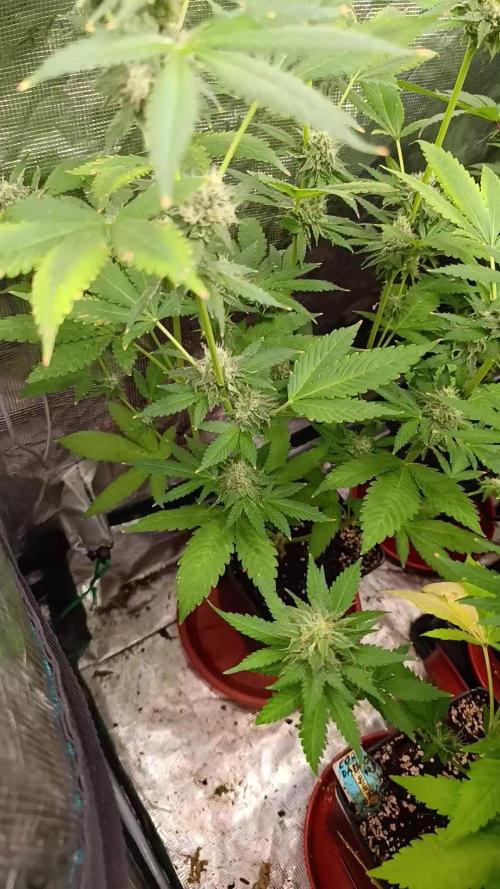
Day 49 - Lamp dostanę 45cm at 75% power. She is very wide (50cm) and short bushy plant covered with buds like blueberry's. The buds are getting from very nicely 👌
Likes
10
Share
@Eauderay
Follow
She is truly a banner! But sadly she was a male at the very beginning of flowering and not after sadly I did not successfully removed all pollen sacks and so she seeded here and there! Some branches more than others, I removed all those! She seeded the watermelon candy too here and there....not a total disaster but could have been bad...Next time I will discard those very pronounced early and keep those who have only few flowers at set! The phenotype i have is very lightly scented, sweet faint grape. She sparkles with trichomes! I am thinking she does not smell much must be weak thc content...but been reading and they say terpenes and the not the same! You can have little thc and high terpenes and resin contents in Mj! And vis versa!
Likes
15
Share
@AK1210
Follow
New flowering continues to develop on this lady, she seems to be swelling up day by day. Yellowing of the fan leaves has started which usually means it's time to flush, I need to check the trichomes to see how amber they appear before I do just in case the flavour or yield could be effected.
Processing
Likes
54
Share
@rhodes68
Follow
3/18 Week 12 Day 33/Flower Have a Norto virus in the house so being brief All looks good no changes at this time waiting on buds to say when Tricones 80% Milky 20% clear with no amber so at least a week to go before flush 3/19 Pics Lot happened overnight, looking like end of week for flush. Will continue PK for one more day as time for the last push here now as upped nuets about 200ppm. PK ends Friday, nuets will drop back 200ppm at the same time. Flush begins 3/24 Tuesday... 08:05 PDT ... 😏 3/21 Day 36/Flower Ended PK dropped CT to below 900ppm On track for flush mid-week which will be real close to Fast Buds estimate of 45 days. 3/22 D 37/F Pics Just waiting for the ripening and flush day next week. Trics pretty much all white now, still no amber but that will come during flush. Will be dropping nuets to half Monday on last feeding. 3/23 D38/F Last feeding at half strength but tossed in a dose of Recharge just to see if it matters. doubt it would but it needed using as it hitting its effective date. Flush begins tomorrow morning 3/24 D39/F Flushed each using 10 gallons PHed tap water and 5ml/gal flushing agent. Pics and vid 3/25 D40/F Runoff @235ppm about 80 ppm over the water ppm so looks like the pot is empty and we can cease the FloraKleen those roots are stripped and I am no rush on this flush.
Likes
Comments
Share
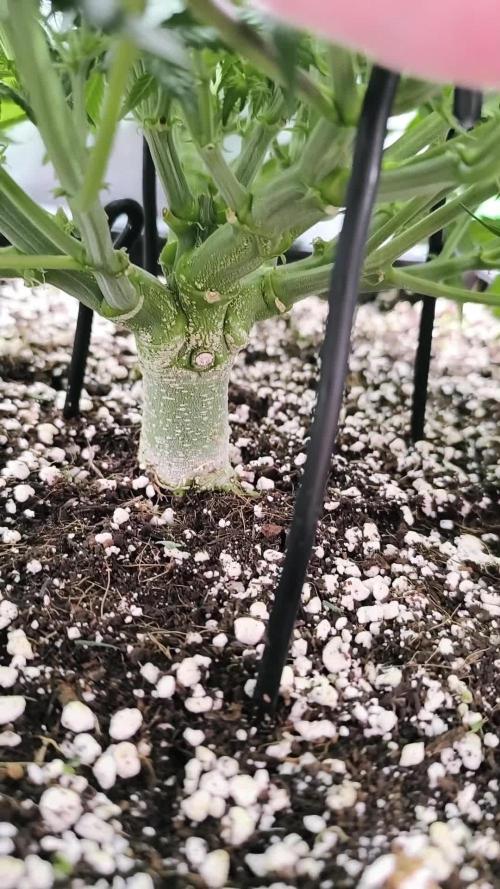
She grew easy and smells great. Chopped at day 91 after 48 hours of darkness, ended up with 37 grams of dried and cured nuggets. Very interesting bud structure, very dense, first time I saw literal dripping. The smell is sweet, skittles, tropical fruit. The flavor on the smoke hasn't tasted as pronounced, still tasty. The high is good for a sativa, still somewhat motivated. RQS has sold me some great genetics so far, and the cheapest as well.
Likes
55
Share
What's in the soil? What's not in the soil would be an easier question to answer. 16-18 DLI @ the minute. +++ as she grows. Probably not recommended, but to get to where it needs to be, I need to start now. Vegetative @1400ppm 0.8–1.2 kPa 80–86°F (26.7–30°C) 65–75%, LST Day 10, Fim'd Day 11 CEC (Cation Exchange Capacity): This is a measure of a soil's ability to hold and exchange positively charged nutrients, like calcium, magnesium, and potassium. Soils with high CEC (more clay and organic matter) have more negative charges that attract and hold these essential nutrients, preventing them from leaching away. Biochar is highly efficient at increasing cation exchange capacity (CEC) compared to many other amendments. Biochar's high CEC potential stems from its negatively charged functional groups, and studies show it can increase CEC by over 90%. Amendments like compost also increase CEC but are often more prone to rapid biodegradation, which can make biochar's effect more long-lasting. biochar acts as a long-lasting Cation Exchange Capacity (CEC) enhancer because its porous, carbon-rich structure provides sites for nutrients to bind to, effectively improving nutrient retention in soil without relying on the short-term benefits of fresh organic matter like compost or manure. Biochar's stability means these benefits last much longer than those from traditional organic amendments, making it a sustainable way to improve soil fertility, water retention, and structure over time. Needs to be charged first, similar to Coco, or it will immobilize cations, but at a much higher ratio. a high cation exchange capacity (CEC) results in a high buffer protection, meaning the soil can better resist changes in pH and nutrient availability. This is because a high CEC soil has more negatively charged sites to hold onto essential positively charged nutrients, like calcium and magnesium, and to buffer against acid ions, such as hydrogen. EC (Electrical Conductivity): This measures the amount of soluble salts in the soil. High EC levels indicate a high concentration of dissolved salts and can be a sign of potential salinity issues that can harm plants. The stored cations associated with a medium's cation exchange capacity (CEC) do not directly contribute to a real-time electrical conductivity (EC) reading. A real-time EC measurement reflects only the concentration of free, dissolved salt ions in the water solution within the medium. 98% of a plants nutrients comes directly from the water solution. 2% come directly from soil particles. CEC is a mediums storage capacity for cations. These stored cations do not contribute to a mediums EC directly. Electrical Conductivity (EC) does not measure salt ions adsorbed (stored) onto a Cation Exchange Capacity (CEC) site, as EC measures the conductivity of ions in solution within a soil or water sample, not those held on soil particles. A medium releases stored cations to water by ion exchange, where a new, more desirable ion from the water solution temporarily displaces the stored cation from the medium's surface, a process also seen in plants absorbing nutrients via mass flow. For example, in water softeners, sodium ions are released from resin beads to bond with the medium's surface, displacing calcium and magnesium ions which then enter the water. This same principle applies when plants take up nutrients from the soil solution: the cations are released from the soil particles into the water in response to a concentration equilibrium, and then moved to the root surface via mass flow. An example of ion exchange within the context of Cation Exchange Capacity (CEC) is a soil particle with a negative charge attracting and holding positively charged nutrient ions, like potassium (K+) or calcium (Ca2+), and then exchanging them for other positive ions present in the soil solution. For instance, a negatively charged clay particle in soil can hold a K+ ion and later release it to a plant's roots when a different cation, such as calcium (Ca2+), is abundant and replaces the potassium. This process of holding and swapping positively charged ions is fundamental to soil fertility, as it provides plants with essential nutrients. Negative charges on soil particles: Soil particles, particularly clay and organic matter, have negatively charged surfaces due to their chemical structure. Attraction of cations: These negative charges attract and hold positively charged ions, or cations, such as: Potassium (K+) Calcium (Ca2+) Magnesium (Mg2+) Sodium (Na+) Ammonium (NH4+) Plant roots excrete hydrogen ions (H+) through the action of proton pumps embedded in the root cell membranes, which use ATP (energy) to actively transport H+ ions from inside the root cell into the surrounding soil. This process lowers the pH of the soil, which helps to make certain mineral nutrients, such as iron, more available for uptake by the plant. Mechanism of H+ Excretion Proton Pumps: Root cells contain specialized proteins called proton pumps (H+-ATPases) in their cell membranes. Active Transport: These proton pumps use energy from ATP to actively move H+ ions from the cytoplasm of the root cell into the soil, against their concentration gradient. Role in pH Regulation: This active excretion of H+ is a major way plants regulate their internal cytoplasmic pH. Nutrient Availability: The resulting decrease in soil pH makes certain essential mineral nutrients, like iron, more soluble and available for the root cells to absorb. Ion Exchange: The H+ ions also displace positively charged mineral cations from the soil particles, making them available for uptake. Iron Uptake: In response to iron deficiency stress, plants enhance H+ excretion and reductant release to lower the pH and convert Fe3+ to the more available form Fe2+. The altered pH can influence the activity and composition of beneficial microbes in the soil. The H+ gradient created by the proton pumps can also be used for other vital cell functions, such as ATP synthesis and the transport of other solutes. The hydrogen ions (H+) excreted during photosynthesis come from the splitting of water molecules. This splitting, called photolysis, occurs in Photosystem II to replace the electrons used in the light-dependent reactions. The released hydrogen ions are then pumped into the thylakoid lumen, creating a proton gradient that drives ATP synthesis. Plants release hydrogen ions (H+) from their roots into the soil, a process that occurs in conjunction with nutrient uptake and photosynthesis. These H+ ions compete with mineral cations for the negatively charged sites on soil particles, a phenomenon known as cation exchange. By displacing beneficial mineral cations, the excreted H+ ions make these nutrients available for the plant to absorb, which can also lower the soil pH and indirectly affect its Cation Exchange Capacity (CEC) by altering the pool of exchangeable cations in the soil solution. Plants use proton (H+) exudation, driven by the H+-ATPase enzyme, to release H+ ions into the soil, creating a more acidic rhizosphere, which enhances nutrient availability and influences nutrient cycling processes. This acidification mobilizes insoluble nutrients like iron (Fe) by breaking them down, while also facilitating the activity of beneficial microbes involved in the nutrient cycle. Therefore, H+ exudation is a critical plant strategy for nutrient acquisition and management, allowing plants to improve their access to essential elements from the soil. A lack of water splitting during photosynthesis can affect iron uptake because the resulting energy imbalance disrupts the plant's ability to produce ATP and NADPH, which are crucial for overall photosynthetic energy conversion and can trigger a deficiency in iron homeostasis pathways. While photosynthesis uses hydrogen ions produced from water splitting for the Calvin cycle, not to create a hydrogen gas deficiency, the overall process is sensitive to nutrient availability, and iron is essential for chloroplast function. In photosynthesis, water is split to provide electrons to replace those lost in Photosystem II, which is triggered by light absorption. These electrons then travel along a transport chain to generate ATP (energy currency) and NADPH (reducing power). Carbon Fixation: The generated ATP and NADPH are then used to convert carbon dioxide into carbohydrates in the Calvin cycle. Impaired water splitting (via water in or out) breaks the chain reaction of photosynthesis. This leads to an imbalance in ATP and NADPH levels, which disrupts the Calvin cycle and overall energy production in the plant. Plants require a sufficient supply of essential mineral elements like iron for photosynthesis. Iron is vital for chlorophyll formation and plays a crucial role in electron transport within the chloroplasts. The complex relationship between nutrient status and photosynthesis is evident when iron deficiency can be reverted by depleting other micronutrients like manganese. This highlights how nutrient homeostasis influences photosynthetic function. A lack of adequate energy and reducing power from photosynthesis, which is directly linked to water splitting, can trigger complex adaptive responses in the plant's iron uptake and distribution systems. Plants possess receptors called transceptors that can directly detect specific nutrient concentrations in the soil or within the plant's tissues. These receptors trigger signaling pathways, sometimes involving calcium influx or changes in protein complex activity, that then influence nutrient uptake by the roots. Plants use this information to make long-term adjustments, such as Increasing root biomass to explore more soil for nutrients. Modifying metabolic pathways to make better use of available resources. Adjusting the rate of nutrient transport into the roots. That's why I keep a high EC. Abundance resonates Abundance.
Likes
13
Share
Eccoci qui... Tutto va per il meglio, questa settimana si inizia a vedere la resina e ora si inizieranno a formare le cime, per questo aggiungo Sugar Shot di @xpertnutrients vedremo l'evoluzione settimana prossima. Odore intenso di Big Bubble, strato di resina pazzesco e numero di cime formate più alto di tutto il ciclo, sono molto curioso di questa varietà.... STRAORDINARIA Grazie a tutti per il supporto🔥🌲❤️
Likes
14
Share
Summer is in full sail and it’s getting hot in there.decided to run a terpene enhancer just in case the heat effect’s my terpene’s . The plants are taking the heat like a champ 💪. They haven’t stopped preying sense I bumped that alchemist Silica up to 5ml .it’s like I’m in church and I’m a god damn plant priest😂🙏
Likes
18
Share
June 7 - We ordered some new lights last week, they are 240w kingbrite samsung lm310h with uv/ir, 3000k, and meanwell drivers. We setup the new room and moved the girls into there. After a bit of LST and a watering (with nutrients) at roughly 7ph, they were ready to go under the 2 new lights and the same SF-1000 we have been using in this grow. The new room is a 12 ft enclosed trailer. I moved everything from the small tent into this. I put clear poly on the walls, floor and ceiling. I put poly on the shelf I am going to be keeping in there as well. I bought 50ft of 6mm mylar and lined the floors, roof and sides with it. I plan to get some reflective tape to seal everything and to cover the wood. I did not get much of a chance to watch temp's today as they it was later in the evening after all was said and done. The inline fan blowing in air from outside. June 8 - 9 AM i checked the plants, they were at 25.2 and 50% RH. Late through the day I had checked and we had gotten up to around 32 degrees. So I moved the inline fan to the closer vent, hooked up to that, and had the air blowing out of the trailer with the inline fan sucking it from above the lights. I then added oscillating fan and had it blowing air on the left side of the room so it would somewhat circulate once I closed the doors. I then checked at about 9pm and we were at 22 degrees. Definitely noticed a decent amount of growth already. I have the lights on a 22/2 cycle as I was worried about the heat at night time. June 9 - Some great growth from the girls, still having problems controlling the temps in the afternoon. I decided to prop the door open a bit to have a constant breeze throughout the day while I am at work. Decided to do some more LST and also a bit of defoliation. I took about 25% of the leaf's that were blocking the new growth as it was getting a bit bunched up. I was then told the leaf's are almost solar panels for them. So from now on I will be trying to just do some tucking unless needed. The leaf's I removed were most of the damaged leaf's, I am not to sure if that makes much of a difference. I gave them a watering with only water as there is a potential I am getting a bit of a nutrient buildup along with the PH problem. Or potentially the reason for the ph problem is nutrient buildup. After watering with A PH of 7 I got some run off and tested it. The smaller plant gave me a PH of about 5.5 where the bigger one is around 5.0. June 10 - Plants are looking happy and showing tons of growth. Seems to be trying to stretch outwards. Not a ton of sign of PH issues showing so potentially getting it under control. Still a bit of damage to previous leaf's but it is what it is! The last few days I have been leaving the door open a bit in order to keep the temps down. I decided to test something and turn the lights off (automatically) at 11AM and back on at 5PM so light schedule has now changed to 18/6 and it seems I may have figured out the issue. We haven't had lots of sun the last couple days so it hasn't been to hard and I have yet to know if it truly fixed the heat issue for now. (I will be looking into a ac unit as well since it typically gets to around 30-35 around here. June 11 - Pulled some of the branches back down and added a few more LST spots. Seems we have a good amount of growth from the smaller plant out of the 2 topped spots. Unfortunately it looks like I fucked up on the bigger plant and only one of the nodes seems to have new growth. I will continue to monitor that but I think I cut the node to low and also to soon. Other then that, the girls are doing great. They seem to be absolutely loving these new lights. I gave them some nutrient water today as well. roughly 3L each. They seem to be A hell of A lot more thirsty under these new lights. June 12 - The girls are doing great , they are still just doing growing away. Lots of progress everyday. I am going to be getting a go-pro so I can set-up a time-lapse for the rest of this grow. I received my new inline fan, I got A ac infinity CLOUDLINE T4 with the temperature humidity controller. I am going to be having one fan pushing fresh air in and one fan pulling out the hot air. I will be doing that tomorrow since I have to work today. June 13 - I ordered another 50ft of mylar and that showed up today. I have decided to remove the shelf and add another 3+ feet to the grow space. So today I installed more poly, mylar, the ac infinity fan. I have it set-up to pump in air if it gets to warm. I am thinking of switching it to the output that way if it gets to hot or to humid I can have that air pulled out of the trailer. Right now my other inline fan is the outtake and I just have it set on full. Overall I think everything is set-up a bit better and more accessible. I will be putting my 2x2 tent in there at the left of the doors so I can have a veg room when these 2 are in flower. I plan to have 4 in veg and 4 in flower for the next grow. Still waiting on JOTI seeds, ordered 3 weeks ago and still have not been shipped. I will be getting those going the moment they arrive. The girls seem to be happy still, did a bit more LST to try to keep everything even, mainly I'm just pulling down on the spots I already have tie wire on.
Likes
11
Share
@Chubbs
Follow
420 Fastbuds BlueDream Auto Week 5 These girls have taken off. I swear they get prettier every week. It's been such an easy strain to grow just giving it well water and using good soil. I have been spraying 50ml per gallon of PureCrop1 on them as a preventive maintenance and pest control. All in all Happy Growing
Likes
3
Share
almost done. dense nugs. smells and looks greatv
Likes
Comments
Share
À la jamaïquain les poto la Good weed en gwadalouper toum toum visiteurs regarder la bonne
Likes
2
Share
@Mrdub
Follow
This girl is almost done about another week left on you can see the fade coming in heavy colas not to big but they reek of fermented fruit super sticky super bushy I gonna have to buck a lot of leaves before I hang her gonna cut the nutes out hit her with the carboflush I check checking the trichomes not to many amber yet but I keep checking haven't checked my pH being in late flower and my water has been pretty consistent lately turn the lights down to 75 percent to keep from burning her the under canopy lighting is rocking u can see from the colas so here to another week of growing lfg
Likes
2
Share
Buenas a tod@s... Bueno otra semanita más para estas niñas que están gigantes, en breve pasarán a floración y a seguir desarrollando, de momento va todo bien solamente unas puntas que marcan exceso de nutrientes, siempre colocando lo mínimo, pero bueno cosas q pasan, se las ve que van creciendo dentro del todo uniformemente... Ojalá siga todo bien como hasta ahora... Un saludo y buenos humos... 💨💨💨😎👍🏻
Likes
64
Share
@Hologram
Follow
My bubatz has finally got some sunshine the last few days and she is loving it! 💪😎 She drinks a bit more too (she is busy feeding the hedgehogs..) i removed the lower branch and leaves bc they are useless In this stage there is not much to say, i just enjoy how she is enjoying the sunshine en let the hedgehogs get FAT!😍 Happy growing for all✊ ***KISS! growtechnique: KeepItSimple, Stupid!😍
Likes
7
Share
Day 73-25/5/23 So only got 3.30g wet of this tiny pot! It’s a very small pot probably a joint after drying 😅😂 we will try again!!! But does smell amazing 🤩
Likes
38
Share
@Snakeking
Follow
Guys i swear it’s like my girls are awakened after a few changes and i love to share with who interested about it. One of them is put something under your fabric pots in outdoor growing to keep your bottom of your pot a little bit wet and don’t worry about water sitting in there because there will be no water after just a few hours. There are 2 other things and i will answer to who ask only! Believe me you want to know about this
Likes
11
Share
Likes
1
Share
Muy caros los productos, efectivos pero me sigen pareciendo caros, probaré nuevas gamas! Un saludo