


Likes
Comments
Share

@Canda
Follow
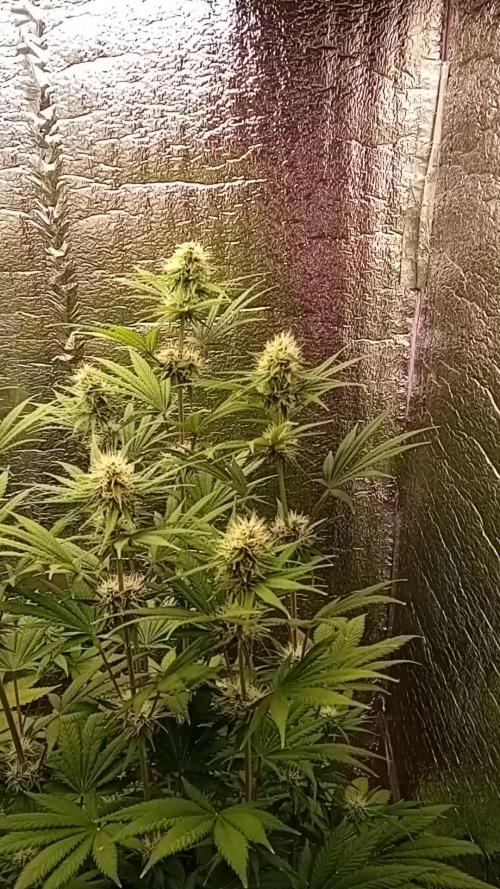
Tyden jsem nebyl na streamu protoze sem kokot a makam ;) takze asi takle holkám se daří zatim dobre ale pristi zalivku dáme trosku dusiku zda se mi ze az moc odhazuje spidni plachty a zloutne ..jasnej dusik si myslim takze tak jinak to vypadá pěkně zatim ..co se týče guana tak to uz dávno sezrali a to sem ho tam celkem nakydal ranec..tak uvidíme jaky bude dalsi vývoj..zatim pekne zacineji holky cukrovar a kynout..at vám to roste ..

Processing
Likes
20
Share


@victor_lion
Follow
This is a strain that is very easy to grow and resistant, after the fourth week it sticks a lug, and does not need a lot of vitamins, it grew with only 13 and 12 hours of light and went through cloudy days and a lot of humidity


Likes
19
Share


@WulfBlud
Follow
Pretty good tester from mephisto. I found two different phenotypes with my 4 plants. Two were purple and a bit more earthy while the other two were normal color green fading to light green/yellow with bright yellow pistils and a sweet mango sugar smell.


Likes
4
Share

@The_Doctor_Green
Follow
Hola a todo el mundo!!!😃😃 como estan??..
Antes que nada, GRACIAS GRACIAS GRACIAS🙌 a todos aquellos que me han comenzado a seguir en las redes🙌🙌.
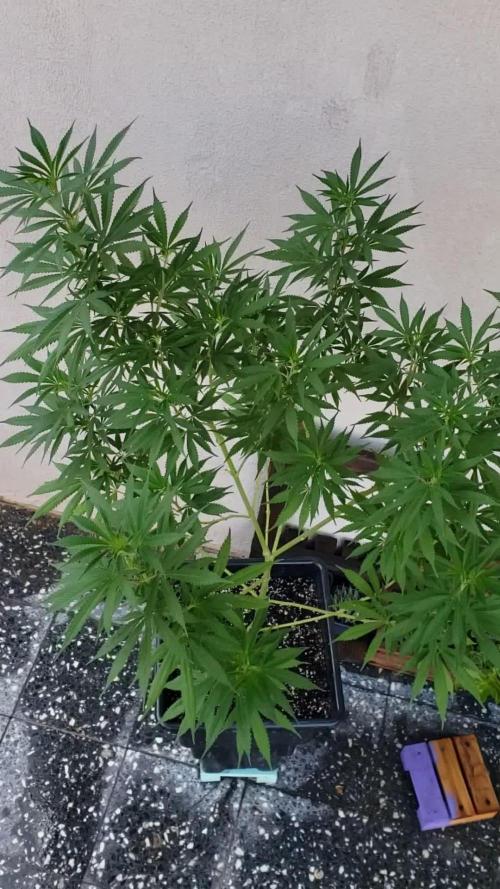
Bueno, volvamos a lo interesante, semana 14 de esta hermosa planta, he regado como mencionó en los detalles de la planta, y lo que he notado es que la planta sigue creciendo fuerte y saludable 🤩💪.
Ha soportado las altas temperaturas de estos días, (máximas de entre 34 y 37°)💪. Poco a poco veo que se van engordando los tallos, signo de que pronto comenzará la floracion😃😃🙌🙌🤩🤩.
Pd: si no me sigues en las redes, porfavor hazlo, no te cuesta nada😅🙏😃🙋♂️

Likes
8
Share


@taylordarling
Follow
I don't have much to show or say for this week..
It was incredible to notice the radical differences in the plants appearance in just sever days but it was also quite nerve wracking!!! Once I got the plant transferred I decided to go ahead and feed her with Green Planet's Medi-One (an organic bottled nutrient that I still had lying around). The original plan was to attempt a dry amendment grow but as the dry amendments where no where to be found after placing my order, I opted to use what I had handy.
I went ahead with a water soluble nutrient that would immediately activate the roots and supply nutrients to the sterile medium and I am happy that I did. The very next day after the 1st feeding the plant already started to look different and just "perkier"

Likes
25
Share


@PacMan420
Follow
All the plants are doing great, the Lsd-25 is flowering the other one is still short, the blackberry Autos are done stretching, the other one is tall. I dont think the blackberry autos will yield much. The short Lsd-25 is real bushy ive defoliated that plant twice and its leaves grows back fast. Next week i will begin to use full tilt and over drive. Im going to stop using fish it and liquid seaweed

Likes
5
Share


@2x2UkGrow420
Follow
3 weeks in already, plants seem to be looking good, little bit of Nute burn on the plant on the right but only on 1 of the older leaves so not too concerned. Fastbuds GSC starting to smell, piney fresh ganja smell, are are now stretching a bit more. Really happy so far and loving my new hobby, excited to see what the next weeks brings! Happy growing!!!

Likes
2
Share


@Guerillafarm
Follow
D31 die triebe wurden mit Klonex Mist besprüht.
D32 Klonex Mist
D33 pflanze wurde gegossen und Setzlinge entnommen 3 x , Topping zum zweiten mal
Die Setzlinge stehen unter blühenden pflanzen etwas schattig bei 24-26*C Feuchtigkeit 70%
Beim verwenden von klonex
Unbedingt Handschuhe tragen Klonex enthält ein Hormon dass bei Säugetieren zu Unfruchtbarkeit führen kann.

Processing
Likes
102
Share


@GirlGoneWeed
Follow
Entering week 3 nice and strong, my big girl have formed 4 levels of branches, we can now see the fan leafs starting to get thick and shaped like Indica leafs. Both girls show such good resistance to drastic changes so far, I had to travel and got a friend to come over and give them some love, boy oh boy, for my surprise (as a newbie) the variations of humidity jumping from 45% to 80%, I thought the plants were going to show sign of stress, however they are as green as ever, leafs look nice and healthy!!
I am having some difficulties in stabilizing the environment inside my grow tent since transplanting both plants into the 5 gallon smart pots, humidity is all over the place. I have to be constantly checking, turning the exhaust system on and off if I want to maintain the levels between 50 and 60%. Now, When I get up in the morning and check the thermometer humidity have been as low as 44% and as high as 77%, I am wondering if my light schedule is the problem…I have lights off from 12am to 4am and than lights on for the rest of the clock.
If anyone (TheBudWhisperer help! lol) have some advice and suggestion please let me know!
Happy Grow and Stay Lit Folks😎

Likes
17
Share


@420DeepGrow
Follow
Gracias al equipo de Kannabia Seed, Marshydro, XpertNutrients y Trolmaster sin ellos esto no sería posible.
💐🍁 Moby Dick 🐋:
Criada a partir de dos parentales icónicos, como es el cruce de White Widow y una Haze pura G13, este choque de titanes provoca un híbrido que golpea a las puertas de las sativas más fuertes disponibles en el mercado.
Estamos ante una criatura impresionante en todos los sentidos, con ejemplares que florecen en solo 9-10 semanas en interior y arrojan un peso en lonja de 550 gr./m²
Al igual que su padre Haze, nuestra Moby Dick ofrece agradables notas cítricas, pero con efluvios de vainilla y eucalipto, una mezcla de aromas que genera una combinación intrigante, que puede llenar cualquier habitación con una fragancia inolvidable.
El sabor es muy parecido a su olor, con toques de limón agrio que harán que tu lengua cosquillee al inhalar, convirtiéndose lentamente en un humo dulce y terroso, con pinceladas de madera e incienso que se adhieren al interior de la boca al exhalar.
💡TS-3000 + TS-1000: se usaran dos de las lámparas de la serie TS de Marshydro, para cubrir todas las necesidades de las plantas durante el ciclo de cultivo, uso las dos lámparas en floracion para llegar a toda la carpa de 1.50 x 1.50 x 1.80.
https://marshydro.eu/products/mars-hydro-ts-3000-led-grow-light/
🏠 : Marshydro 1.50 x 1.50 x 1.80, carpa 100% estanca con ventanas laterales para llegar a todos los lugares durante el grow
https://marshydro.eu/products/diy-150x150x200cm-grow-tent-kit
🌬️💨 Marshydro 6inch + filtro carbon para evitar olores indeseables.
https://marshydro.eu/products/ifresh-smart-6inch-filter-kits/
💻 Trolmaster Tent-X TCS-1 como controlador de luz, optimiza tu cultivo con la última tecnología del mercado, desde donde puedes controlar todos los parametros.
https://www.trolmaster.com/Products/Details/TCS-1
🍣🍦🌴 Xpert Nutrients es una empresa especializada en la producción y comercialización de fertilizantes líquidos y tierras, que garantizan excelentes cosechas y un crecimiento activo para sus plantas durante todas las fases de cultivo.
Consigue aqui tus Nutrientes:
https://xpertnutrients.com/es/shop/
📆 Semana 5:
Comienzan a formarse los cogollos, las hojas se llenan de resina cada dia y el olor es bastante fuerte. Parece que ha terminado de estirar. Practico una defoliación intensa para airear los futuros cogollos y dejar mas espacio en el cuarto de cultivo.
Agrupo de nuevo las macetas en su lugar optimo para asi rellenar por completo la carpa @marshydro.
Me quedé algo corto de nutrientes pero estoy muy contento con los resultados, cada vez le voy encontrando mas su punto optimo. Siempre es mejor quedarse corto que pasarse.

Likes
9
Share


@Wiebechillin
Follow
- Flushed the big 3 with water only
- Still gave nutes to 5th seed
- Used microscope to check out trichomes from up close
- I will be doing a sequential harvest starting at the top and leaving the bottoms to develop longer.
- Harvested a few buds off big papi. May be a bit early but I was excited


Likes
11
Share


@Gonach
Follow
Al principio de la semana se subió la luz a 70 cm aproz de la planta, reduciendo la potencia al 50%. Se regó a cada una de manera foliar con Alg-a-mic de biobizz para regularizar la deficencia de nitrógeno. A mitad de semana se regó con 3 ml x litro de biobizz a c/u. Cada planta consume aproximadamente 1.6 lt.
Al final de la semana se cambio el ciclo a 12/12 y los resultados como se puede ver en el video.
Gracias a todos x sus posteos....

Likes
17
Share


@ipoke_smot420
Follow
Day 78- still not seeing any ambers under the trich-scope
As always, I got to shoutout to my sponsors @Fast_Buds and @atlasseed, and to my friends @seedsman. Thank you all for the amazing genetics🙏🏼💯🤙🏼💚💚💚


Processing
Likes
2
Share


@eldruida_lamota
Follow
Que pasa familia , vamos actualizar estas misty gorilla auto de Zambezaseeds, están increíbles, vaya color, como van formando esas flores , añado mega PK(0,5gr),Terminator, tricoma y explotacogollos (0,2gr),todo de la gama AgroBeta, que por cierto contentísimo con los resultados hasta ahora , cubren todas las etapas de principio , hasta el final de la floración.
Sigo controlando la humedad en que no suba de 50% la temperatura que no aumente de 27 grados y el ph controlado en 6,2 siempre en cada riego tenga nutrientes o no.
Pues lo que veis es lo que hay espero que os este gustando este diario, ya que no soy partidario de poner autoflorecientes en indoor, os traigo el lst en indoor con autos para seguir aumentando los diarios y que os puedan servir de referencia o futuras dudas, un saludo fumetillas y que tengáis buenos humos.

Processing
Likes
12
Share


@jennamontana
Follow
DAY 8 // Week two started, as you can see the babies doing well. I began to fed them with BioBizz Bio-Grow today.
DAY 12 // Week 2 is gonna end soon, plants doing great, planted them today in the bigger 18l pots with BioBizz All Mix. Feeding with Bio Grow will be the same as before.

Likes
15
Share


@SouthernOnions
Follow
Fully into flush this week just running 0.6 tsp per gallon(3g/gal) of the FullTilt from FloraFlex. Next week I'll be running plain water ph'd to 6.3-6.5 for the last week of flush. That being said, Plant #1 is developing quickly though she may need an extra week or two to finish out. If she does I will probably pull her out of the autopot system and put her directly in the middle to finish out while my next run is starting in the system. Been an exciting grow watching this cotton candy do her thing, cannot wait to see what the final week has in store! Have also narrowed down my deficiency that began last week down to possibly cal/mag deficiency. Will correct this is the feeding schedule next run.


