Processing
Likes
Comments
Share


Likes
4
Share


@CannaIGrow
Follow
Topped this girl this week. Growing pretty good so far. I’ll be potting up to 3 gal pots next week sometime. I also have a Bison Brew that I’ll be using sometime after transplant.
Likes
14
Share


@heavengarden
Follow
The first pistils appeared a little earlier then expected, but it has be developing very well. I’m excited! I believe the growth is going well. I’m very happy and excited!

Likes
20
Share

@Naujas
Follow
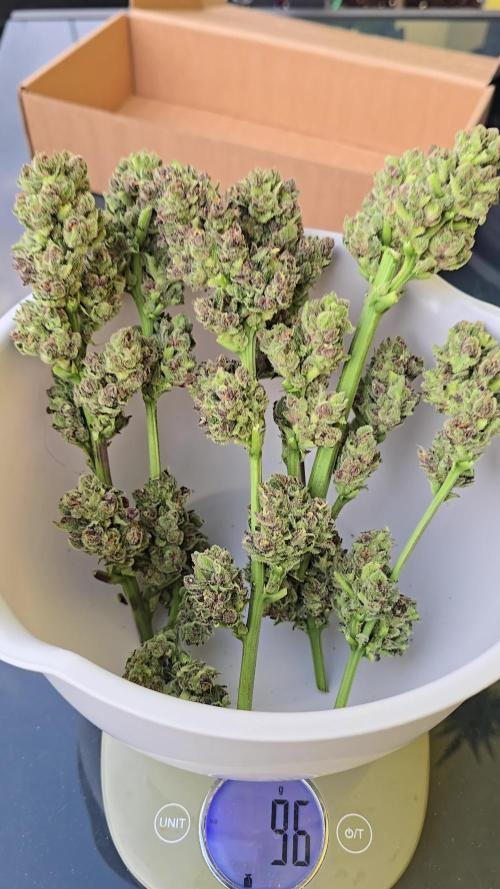
73 dienos!!!! Tiek laiko dingo mano projektas šiauriniame namo balkone, pastarąsias dvi savaites buvo labai karšta, apie 35°, o dabar artėja audros, tad nusprendžiau nerizikuoti ir nuimti derlių :) Visas augimas vyko gana sklandžiai, jokių sunkumų nekilo:) Žiedai atrodo labai pilni trichomų :) (Jau noriu paragauti) :D žinant, kad mano mergaitės saulės šviesos gavo tik labai ribotą laiką, apie 4-5 val. ryto, ji sunokino tikrai gražius žiedus:) @Plagron maistinės medžiagos, jas buvo labai lengva dozuoti (tai nuostabu) kitais metais, manau, tęsiu savo balkono projektą:) sėkmės visiems.

Likes
3
Share


@Adam420
Follow
Long flowering due to minor reveg.
Bouncing back well and should show true colors by next week

Likes
7
Share


@FourTwenty_Plants
Follow
They got so tall over the last few weeks im hoping for the best :D
Also did some defoliation to get the lower bud sites off and to help the air flow
Date: 20.8.2024


Likes
12
Share


@CanadianFillmore
Follow
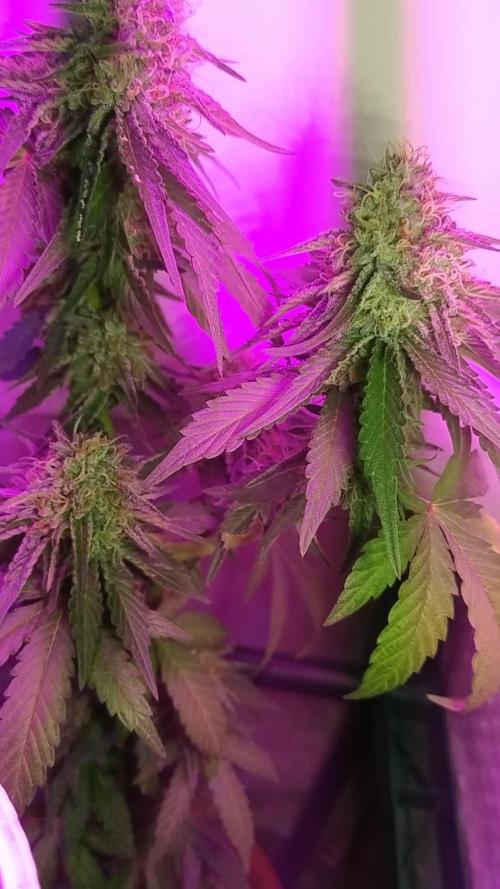
Welcome growfessors to the harvest of Green Crack! This strain has been a pleasure to grow, very hearty strain, small and compact during veg then a nice stretch in bloom. Sticky dense buds, strong fuel smell with an underlying sweet aroma.
Will update in 2 weeks with the initial smoke report and dry weight.
Update April 30 - dry weight of 155 grams. Buds are big but not as dense as the LSD buds.
Initial smoke report, earthy tones with a bit of fuel.


Likes
22
Share


@Grass_castle2020
Follow
Day 43- Not sure about defoliation on these girls. Looking for advice.
Day 44 wow the growth is fast have three girls in flower and the rest following :) all got watered again today
Day 45 girls are drinking daily and growing so well
Day 46 wow so much growth we will defoliant tonight just so full they got watered today looks like they are drinking every day now
Day 47 girl only drank two cups I think I’m going to pass on watering tomorrow. One of our bigger gelato girls grew two inches in a day!!
Day 48 girls are growing so much bigger then I thought they would :)
Day 49 girls got some defoliation looking great wish we had more room for them


Processing
Likes
21
Share


@RussianGrower
Follow
Hello, friends, I Welcome you again from Russia. Comes week 5 photoperiod Bubblelicious. I planned to make clones of this plant, but unfortunately the whole place is occupied by other projects, and temporarily I have to give up this idea, but I will continue to grow this plant, later on, I still make clones, and while I tear off the vegetative leaves and give free growth.

Likes
9
Share


@buckyfellini
Follow
Probably only a couple weeks left, so I changed the DWC water to just pH adjusted tap water; pistils are slowly changing color, still less than half are turned. Trichomes are crystal clear and the buds are looking frosty.
Likes
2
Share


@XoticGROW666
Follow
SS 4/5WK IN FLOWER
CRAZY RAINBOW TERPS COMIN OFF HER FEED COMPOST TEA N SST TEA NO BOTTLES NO NUTES (y)


Likes
9
Share


@pzwags420
Follow
On day 1 I transplanted 2 BB clones into 3 gal smart pots with coco coir. I watered them in with veg formula and set up my blumat watering system with week 1 flower nutes. I raised PPFD to 600-700.
On day 2 the reservoirs PH was adjusted from 6.4 to 6.0. The rez is 823 ppm. The tops are 16.5" from the grow light. The blumats have not started watering yet and I will monitor to ensure it goes smoothly. I have the blumats set at 1.25 carrots on left plant and 1 carrot on right plant. The average PPFD of my 16 tops is 703 PPFD. I increased temps to 85 day 81 night to get leaf surface around 80 f during day.
On day 3 the reservoirs PH is 6.2. The rez is 782 ppm. The blumats have started watering and I will monitor closely over the next few days.
On day 4 the reservoirs PH was adjusted from 6.3 to 6.1. The rez is 717ppm.
On day 5 the reservoirs PH is steady at 6.1. The rez is 706 ppm. The highest top is 15.25" from the light. I defoliated to bring in more air and light to deeper into the canopy. I increased the flow rate of blumat by .5 carrot on the right plant as it was a little to dry for my liking. The Clones are preforming well.
On day 6 the reservoir PH is going down so I adjusted up from 6.0 to 6.2. The rez is 730 ppm. The highest cola is 14.75" from the light. The left plant had a runaway so I reduced blumat by 1 carrot. I increased flow of blumat on right plant by .5 carrot as it is still drier than I would like.
On day 7 the reservoirs PH was adjusted from 6.3 to 6.0. The highest cola is 14.25". I reset rez with nutes.

Likes
13
Share


@dbCooper7
Follow
KONG BREATHE - MEPHISTO
GRAPE WALKER KUSH - Mephisto
Samsquanch OG - Mephisto
Auto Pina Rbx2 - Ethos Genetic


Likes
49
Share


@masterofsmeagol
Follow
6/23 Due To The Two 8 Day weeks this week will only consist of five days to get me back on track. SEE LAST WEEK FOR DETAILS. I DID ANOTHER EIGHT DAY WEEK. I'LL DO THIS WEEK AS SIX DAYS. THAT WAY IM BACK ON SCHEDULE. WATERED 6/22. WENT BACK AT NIGHTCAND WATERED ANOTHER GALLON WITH 1/3 TSP Armor Si. I mixed the solution with kelp you kelp me but I dumped it out. I've mixed silica with other nutes before but I had read something earlier about bioavailability issues and I didn't want to risk it. My plants are the healthiest I've ever grown. I'm considering transplanting the large 10th planet that I'm light depping. I also need to develop my ipm and my nute schedule. Still gonna have to keep an eye onvthe water situation. Luckily I have a buddy in my corner that's co tinualkt Bern a great help.
WENT BACK OVER AROUND NOON. BEAUTIFUL OUTSIDE AND THE PLANTS WERE LOVING THIS SUN. I DEFOLIATED SOME BURNED LEAVES AND MIXED A SOLUTION IF KELP ME KELP YOU THAT I PLAN TO FEED TO THE GARDEN TODAY. IM HAPPY WITH HOW THINGS ARE GOING. WE HAVE SOME RAIN AND THINDERSTORMS COMING. I NEED TO GET MY IPM UP AND RUNNING AND THE NUTES ONLINE. I ALSO NEED TO DECIDE IF IM GOING TO TRANSPLANT THE LIGHT DEP 10th PLANET. Went back over to put the girls to bed at six and if was still 90 degrees. The water from yesterday had dissipated. The tops were dust dry. I mixed two gallons of kelp you kelp me and fed it to the garden. Afterwards I pointed qbd found a couple plants that were more open to the wind were a little lighter. I know tomorrow will be very hot. Maybe quarter inch of rain. However after that it will rain (showers) off and on for days. I wanted to make sure the girls had what the needed to make it through tjis heat wave until they get that rain. I had another gallon mixed up and I'm thinking I should've given it to them. Oh well. I'd rather underwater than overwater any day. I did notice a burnt top on the plant furthest from the tarp that the sun JUST BARELY TOUCHES when the rest are in shade. I'll just raise the tarp a little. These are tiny problems. Can't upload video until tomorrow.
6/24 Good thing u gave the plants that water. I know it wasn't much but we didn't get any rain. Suppised to get a qtr in today and another qtr in tomorrow. Then rain a couple more days. It's working our really good for my watering schedule lol. Yesterday the girls got there first dose of a bottled nute. They got two gallons of kelp me kelp you (1/3 tsp per gallon) and another gallon of just phed water. I was going to do another gallon but held off due to the threat of syring rain. Didn't get it bur it looks like the plants loved the kelp. It had reached 90 yesterday. They look better today. It's 70 at 9 today. I LST the 10th planet in the 3 gallon. It's getting huge. I should start a separate diary for those three light dep plants. Its cool as hell watching this. One of the purple punches is flowering pretty good. I probably should start another diary for them. I'll be starting to feed my plants soon. Wondering if I should pinch plants again. TUCKED THE LITTLE GIRLS IN AT SIX AND SHOT A VIDEO AND TOOK SOME PUCTURES. PLANTS LOOKED PHENOMINAL! GOT HOME AND AROUND SEVEN IT JUST STARTED RORREBTIAL DOWNPOURS! THE TYPE OF RAIN THAT BREAKS STEMS. I SHOULDVE PUT MY OTHET TARP UP BUT I DIDNT. I WISH I HAD. IM A LITTLE NERVOUS. I KNOW THESE GIRLS ARE STRONG THOUGH! TOMORROW. ILL ROLL THE RARP UP AND SECURE THE BOTTOM FOR FAST ACCESS. IM ALSO GOING TO KOOK INTO FINDING A TOP FOR MY CAGE I CAN USE IN INCLIMENT WEATHER.
6/25 That little qtr in of rain we were supposed to get turned into torrential downpours and high winds. Luckily no REAL damage. If you watch the video you'll see what I mean. I'm going to havecto be cognizant moving forward. Noticed a few chunks from leaves butvplants are still healthy. I'm surprised how well these girls withstood this storm. They are certainly resilient. The 2 purple punch 1 10th planet that I'm light depping are flowering nicely now. They missed all the commotion from the storm as they were inside. It's smelling good. I'm happy.
6/26 It's what a friend would say is "maineing") out. That mistcthe plants love. I'm surprised the plants are doing as good as they have been considering the wind. Will be adding nutes soon. Need to add extra supports too. Light dep
6/27 Brief periods or torrential downpours. Light depped 3 gallon 0lants are under an overhanfcwhete the hatsxrain can't hurt them but they still get sun. They are really starting to flower now! I'm going to begin feeding with a base nute and a flower nute I think. I'm thinking about giving the light dep some open sesame or something similar. I need to set up a nute program soon but the plants ALL look so healthy! And it's been raining! I've only watered like once or twice since they've been in the big pots. I've seen zero pests aside from a chunk missing from a grasshopper. Usually by now I'd have battled half a dozen things and be battling another half dozen. However I was posing from clones. These are seeds and boy don't I see the difference!

Likes
15
Share


@902EastCoast
Follow
Day 43 of flower: This week was great again. Tied a few branches up that had fallen. All the ladies look and smell amazing. Afghan kush early harvest will be the first done for sure. 🔥💨✌️🏼💚

Likes
12
Share

@WaffleTerps
Follow
This week was fully focused on correcting salt buildup and preparing a clean, controlled finish, with quality and terpene preservation as the main priorities.
🔹 Key irrigations
– Final Flush was applied with real 30–40% runoff, successfully reducing EC levels in the root zone.
– Follow-up irrigation with plain water only (pH 6.2) confirmed a consistent EC drop across all pots.
– Plants are now in controlled senescence, with no signs of active nutrient lockout.
🔹 Runoff data
Runoff EC is now within safe ranges (≈1.5–3.0 mS depending on plant), confirming the flush worked and roots are in end-of-cycle mode rather than aggressive uptake.
🔹 Environment & light
– PPFD adjusted (~700–780 µmol/m²/s)
– Stable temperatures
– Humidity tightly controlled to protect dense colas
Everything dialed in to preserve resin and avoid unnecessary stress.
🔹 Plant status
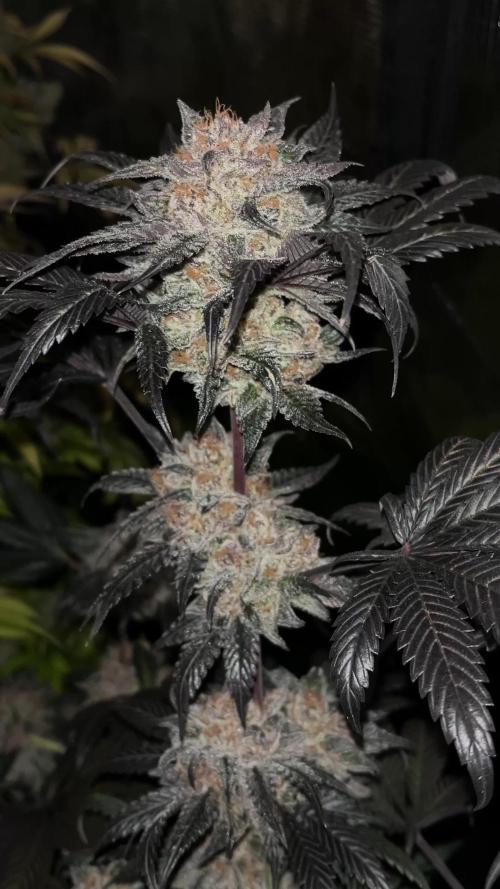
Flowers are fully formed, trichomes mostly cloudy with early amber showing, final structure locked in. At this stage we’re no longer chasing bulk, but ripeness and internal clean-up.
📌 Plan
Final days with minimal intervention, observing real pot weight and plant response.
Harvest window is very close and right on target.
➡️ Next post will be harvest day and the start of drying.
Thanks to everyone following the project and sharing feedback — every cycle is a step forward. 🌱💪
Likes
16
Share


@IQuSX
Follow
^^Now moment is retime 12/12 & SCROG.
The second branch is equal in thickness to the main one and this pleases!
Defoliation 60 % of the green mass>>