Likes
Comments
Share
@grimm420
Follow
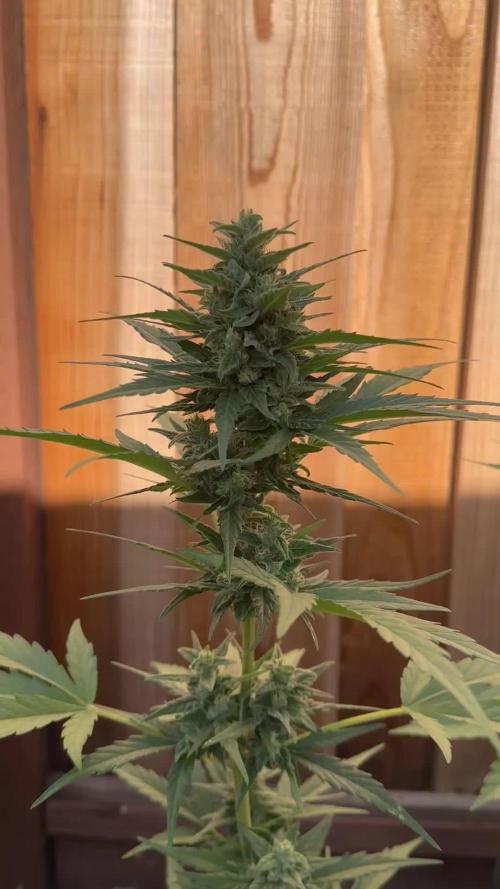
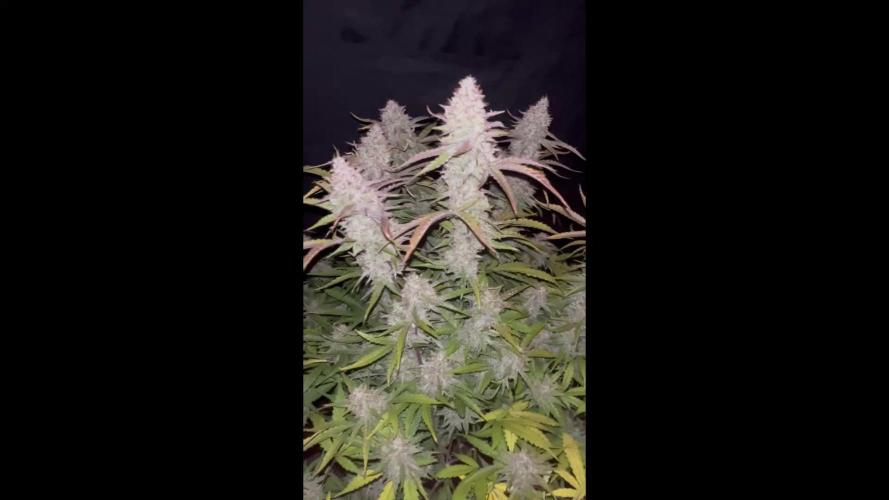
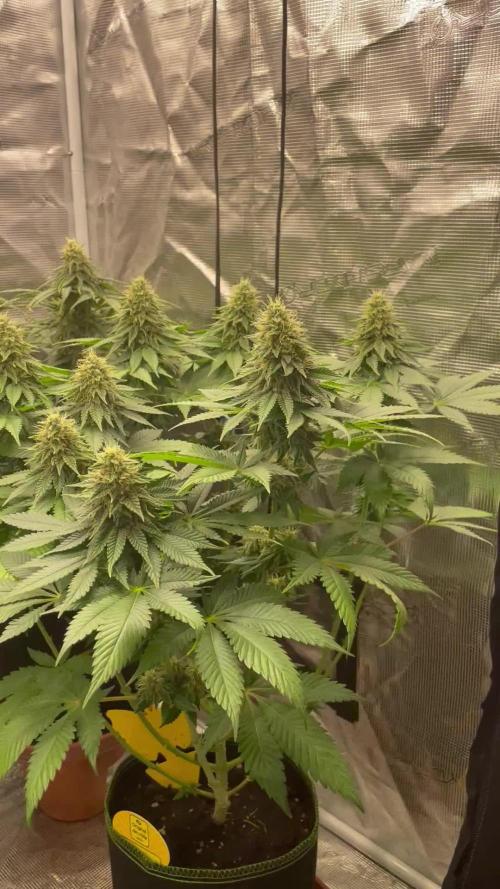
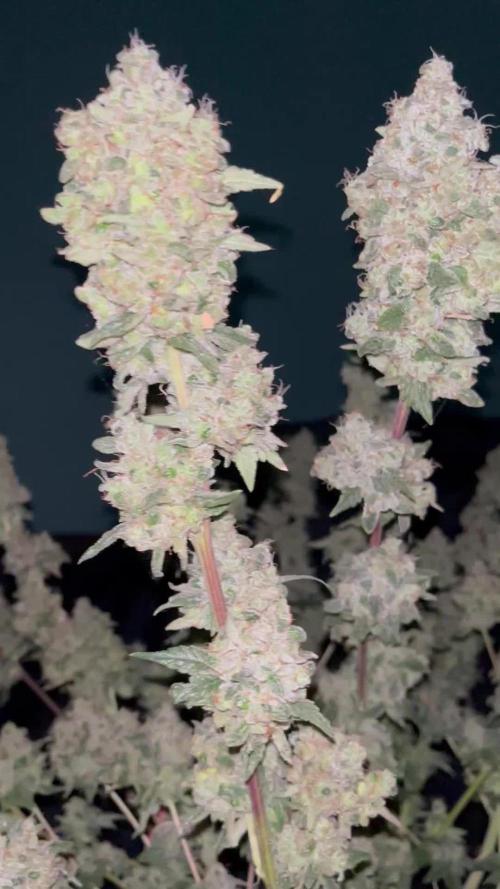
Opinions on this strain: That damn smell and frost! I always get compliments about how it smells when people come over. It smells like artificial grape, imagine smelling the color purple 🤔 and tootsie rolls combined. As for the frost, it’s more frosty than the things you forgot all the way in the back of your freezer lol! 😆 I wonder what the results would be if I make concentrate from this! This plant is a heavy feeder! Super easy to grow, did no training and she came out beautiful! No purple yet, and I think I’m gunna wait about a week or three to chop. Now the cons. The bud development is a little slow and these buds do fall on the shorter side, it might’ve been a growers mistake, it might swell up the last couple weeks, I’m not sure. But imma record it and keep you guys updated!
Likes
4
Share
Привет садоводы и огородники !!! Началась новая неделя и ветки уже заваливаются ,не смотря на то ,что они стянуты проволокой Но с другой стороны это хорошо ,видимо шишки стали большими и тяжелыми понаблюдаю еще недельку поливаю ее простой водой красивый вырос цветок, оправдал ожидания я доволен !!!
Likes
19
Share
Hats off to this F3 strain. All healthy, no leaf discolouration. She is drinking her tonics twice a day & really enjoying the side lighting. The buds are picking up weight at quite a speed. No purple hues yet. Midweek update: I added additional side lighting, bringing the total up to 268 W. Her feeds will be more frequent too. Let there be light! 👽
Likes
178
Share
Probably the smoothest week since the start, I think that this pheno is a light feeder compared to Strawberry Lemonade in DWC, still running EC at 0.9 max and they’re doing fine, will be increasing the EC in a few days time to around 1.2, last thing I want is lockout during the stretch! Roots are pretty darn big, the bottom right plant is growing well again now although she has probably lost a week or two on the rest of the pack, I’ll try to train plants close to her away so she can get a decent share of light. Flipping them to 12/12 today so the long march to harvest starts now. Dates on the time lapse are unfortunately the dates I uploaded to the app, not necessarily when the pic was taken, but it gives a good enough steer on progress and how long it has taken. Take care all!
Likes
64
Share
@DevilsBud
Follow
New week for Anesia Captain future Anesia Captain future is doing great topping is done and doing some last LST on them preparing them for flowering soon cannot wait 19/10/2 made 360 video today enjoy🤣 20/10/21 Thinking of switching to flowering soon don't want them to grow to big in 8L pots 21/10/21 Decided to order some 11L pots to transfer them in so before flowering i probably transfer them so roots can grow some more also gone try Mycorrhiza Mix with transfer More photos Tru the week visit www.marshydro.eu for your best gear and use the PROMO CODE: DEVILSBUD Some info about the Marshydro FC-4800 Superb Quality LED Chips: The whole light is composed of 1206 pcs Samsung lm301b and Osram 660nm chips. More than two times as many LEDs are used to drive the grow lights at low currents and to avoid overdrive. Quality is guaranteed and efficiency is up to 2.8 μmol/j. Even PAR Distribution and High PPFD Output: The multi-light bar design and the densely distributed light chips enable the LED grow lights to achieve the optimum PPFD required for plant growth over the entire effective coverage area. Specifically Designed Spectrum: To ensure even plant growth, blue and red light are enhanced on the basis of a full spectrum combination. Not only does this accelerate plant growth, but it also improves the yield and quality of the plants at the same time. Dimming Daisy Chain Function: The dimming function saves on electricity costs and enables brightness from 10% to 100% for the different stages of plant growth. A single master light can connect up to 30 lights in a daisy-chain system. Business LED Grow Light: The light's wavy heat sink dissipates heat quickly and the IP65 waterproof allows the light to operate in humid conditions. 180° collapsible feature for easier installation. All these features provide favorable assistance for commercial cultivation. And some tent info ●【Lock All Light Insid】MARS HYDRO Grow Tent Interior is made of diamond mylar. Non-toxic to the environment, no harm to plants. High-quality 1680D canvas being double stitched, (ALL OTHERS BRAND grow tent is 601D canvas) which is tear-proof for perfect light locking, No light leaks or rips at all. ●【Durability Grow Tent】Stable Metal corner adapters and poles are the trustful supporters of the tent. No rusting nor paint-falling. Quick easy tool-free installation. Carries strong heavy-duty SBS zippers, double layer lining to create a light-proof seal. ●【Easy Observation of your Plants】Special peeks window made by double layers of cloths. Observe the growing conditions of your plants without opening the tent and avoid disturbing plants. The peek window also serves to dissipate heat and ventilate air. ●【Removable Tray Keep Clean】The package includes a removable waterproof floor tray to hold soil and fallen leaves. The tray can be taken out easily to wash. Removable and water-proof makes cleaning easy. ●【Good Ventilation&Fast Assembly】 Circular double-sleeved vent holes with adjustable nylon strap for air circulation by exhaust fan, ducting, carbon filter, or reflector. Better allows proper light, heat, and airflow. Quick tool-free installation. Reinforced by a sturdy metal frame to ensure security and stability, supports up to 140lb. Perfectly safeguard your plants to thrive even in winter.
Likes
5
Share
@CalGonJim
Follow
9/15 12AM MONDAY!!! THEY ARE ALL DOING GREAT!!! VERY HEAVY AMINOS YESTERDAY, NO DAMAGE. 9/15 11:24PM. In plant cells, glutathione S-transferases (GSTs) act as transporters, facilitating the movement of anthocyanins from the endoplasmic reticulum (ER) to the vacuole for storage, though their exact mechanism is still being studied. The synthesis of glutathione (GSH) itself occurs in the cytosol of mammalian cells through two ATP-requiring enzymatic steps, while anthocyanins are synthesized via a separate phenylpropanoid pathway 9/15 11:42PM glutathione metabolism glutathione S-transferases plantsThinkingKicking off 5 searchesLooking at 71 sitesPutting it all together In plants, glutathione S-transferases (GSTs) are a diverse family of enzymes integral to glutathione (GSH) metabolism, primarily functioning in detoxification and stress response. The core of this process involves GSTs catalyzing the conjugation of the tripeptide GSH with various toxic compounds, or xenobiotics, making them less harmful and easier to sequester or transport. Glutathione (GSH) metabolism in plants GSH metabolism is a tightly regulated process that maintains cellular redox balance and protects against stress. Biosynthesis: GSH is synthesized in two adenosine triphosphate (ATP)-dependent steps:(gamma )-Glutamylcysteine synthetase (GSH1) joins L-glutamate and L-cysteine to form (gamma )-glutamylcysteine. In Arabidopsis, this enzyme is located exclusively in the chloroplasts.Glutathione synthetase (GSH2) adds glycine to (gamma )-glutamylcysteine to produce GSH. This enzyme is found in both the cytosol and the chloroplasts.Oxidation and reduction: GSH exists in two forms: a reduced monomer (GSH) and an oxidized disulfide dimer (GSSG).Oxidation: In the process of scavenging reactive oxygen species (ROS), GSH is oxidized to GSSG.Reduction: Glutathione reductase (GR) uses NADPH to reduce GSSG back into active GSH, which is essential for maintaining a high GSH-to-GSSG ratio inside the cell.Degradation: Glutathione can be degraded in the cytosol, apoplast, and vacuoles by (gamma )-glutamyltransferases (GGTs) and other peptidases, allowing for recycling of its amino acid components.Transport and compartmentalization: While synthesis occurs in the chloroplasts and cytosol, transporters move GSH and its conjugates throughout the cell, including to the mitochondria, peroxisomes, and vacuoles. Functions of glutathione S-transferases (GSTs) GSTs are a large, ancient gene family with diverse roles that extend beyond detoxification. The primary functions involving GSH are: Detoxification of xenobiotics and heavy metals: GSTs catalyze the conjugation of the thiol group of GSH to a wide range of electrophilic and hydrophobic substrates, including herbicides, pesticides, and heavy metals. The resulting GSH-conjugates are then recognized by ATP-binding cassette (ABC) transporters and sequestered in the vacuole, reducing their cellular toxicity.Protection from oxidative stress: Stress conditions like drought, salinity, and high light increase levels of ROS, which cause lipid peroxidation. 🚨Some GST isoforms have glutathione peroxidase (GPOX) activity, using GSH to reduce toxic lipid hydroperoxides to less damaging alcohols, thereby protecting cell membranes.Defense against pathogens: During pathogen attacks, GST activity increases to detoxify microbial toxins and secondary defense-related compounds. This helps to bolster the plant's resistance response.Metabolism of endogenous compounds: GSTs play roles beyond immediate stress response by participating in the normal metabolic processes of plants. Examples include:Hormone transport: Some GSTs act as binding proteins (ligandins) that transport plant hormones like auxins within the cell.Metabolite transport: Specific GSTs facilitate the transport of important compounds like flavonoids and anthocyanin pigments into the vacuole.Tyrosine degradation: The zeta GST class (GSTZ) catalyzes a critical step in the breakdown of the amino acid tyrosine.Redox signaling: By influencing the GSH/GSSG ratio and interacting with plant hormones, GSTs can regulate cellular signaling pathways that control growth and stress response. 🚨GSTs and plant stress response The expression of many GST genes is highly inducible by various environmental and endogenous cues, making them key players in a plant's ability to adapt to adverse conditions. Abiotic stress: Drought, salinity, heavy metals, and extreme temperatures all trigger increased GST expression, which helps plants manage resulting oxidative damage. Overexpression of specific GST genes has been shown to enhance stress tolerance in transgenic plants.Herbicide resistance: The ability of crops and weeds to detoxify herbicides through GST-catalyzed conjugation is a well-studied example of GSTs in stress adaptation. Herbicide safeners, chemical agents that protect crops from herbicide injury, work by boosting the activity of these GST enzymes.Developmental processes: Studies have linked the expression of certain GST genes to specific stages of plant development, such as fruit ripening, root and stem development, and flower formation. "" 9/16 12:32am AI Overview In plants, phenylalanine is the precursor for anthocyanin synthesis, a process that involves a multistep pathway in which glutathione (GSH) plays a critical role in the transport of the final pigment to the cell vacuole. Phenylalanine initiates anthocyanin synthesis The biosynthesis of anthocyanins begins with the amino acid phenylalanine, which is produced via the shikimate pathway. The conversion process, known as the phenylpropanoid pathway, involves a series of enzymatic reactions: 1. Phenylalanine ammonia-lyase (PAL): This enzyme catalyzes the first committed step of the pathway, converting L-phenylalanine into trans-cinnamic acid. 2. Downstream enzymatic reactions: A series of additional enzymes, such as chalcone synthase and chalcone isomerase, convert the intermediate compounds into unstable anthocyanidins. 3. Glycosylation: Glycosyltransferase enzymes stabilize the anthocyanidins by adding sugar molecules, creating the final, stable anthocyanin pigments. 4. Glutathione is crucial for anthocyanin transport After synthesis, glutathione is essential for transporting anthocyanins for storage. * Glutathione S-transferases (GSTs): These enzymes bind to the newly formed anthocyanins in the cytoplasm. This binding is a key step that facilitates the transport of the anthocyanin-GST complex across the tonoplast (the vacuolar membrane) and into the vacuole. * Vacuolar storage: Once inside the vacuole, the anthocyanins accumulate and provide color to plant parts, such as flowers, fruits, and leaves. * Catalytic role: Recent research has also found that certain GSTs have a catalytic role in anthocyanin synthesis. They can catalyze a dehydration step to form specific anthocyanidins, significantly boosting production in engineered systems. * The process in summary The synthesis and accumulation of anthocyanins involve a coordinated process of multiple steps: 1. Production from phenylalanine: The amino acid phenylalanine enters the phenylpropanoid pathway, where enzymes convert it into the basic flavonoid structures. 2. Formation of anthocyanidins: Further enzymatic modifications produce the colored but unstable anthocyanidins. 3. Stabilization and transport with glutathione: These anthocyanidins are stabilized by glycosylation and then bound by GSTs (which use glutathione). This binding enables their transport into the vacuole for storage and visible pigmentation. 9/15 12:46AM https://pmc.ncbi.nlm.nih.gov/articles/PMC7238016/ 9/16 1:30AM BKO is looking great!!! Conclusion The “butter frosting” resin on Cookie Apple F1, healthy yellow-green fusiform, and Blueberry KO’s pigmented cotyledons show your anthocyanin-glutathione-phenylalanine strategy is working—phenylalanine drives synthesis, glutathione ensures transport. Tweak amino acids to 100–150 mg/L to reduce tip burn. 9/16 3:34am 9/16 4:31AM Anthocyanin glutathione synthesis phenylalanine proline tmg powder relating current project: * Phenylalanine is a precursor: Phenylalanine is an amino acid and the starting point for the phenylpropanoid pathway in plants. * Anthocyanin synthesis: This pathway creates various secondary metabolites, including the flavonoid pigments known as anthocyanins, which give plants their red, purple, and blue colors. * Pathway activation: Multiple enzymes, such as phenylalanine ammonia-lyase (PAL), catalyze the conversion of phenylalanine into the building blocks for anthocyanin. * Anthocyanin and glutathione synthesis * Glutathione S-transferase (GST): This enzyme is crucial for synthesizing anthocyanins in plants. It transports anthocyanins into the cell's vacuole for storage. * Glutathione (GSH) production: Anthocyanins can promote glutathione synthesis in certain cells. For instance, the anthocyanin cyanidin-3-O-β-glucoside (C3G) has been shown to increase the expression of glutamate-cysteine ligase (Gclc), a key enzyme in GSH synthesis. * Antioxidant effect: By upregulating GSH production, anthocyanins contribute to the antioxidant defense system, protecting cells from oxidative stress. * Proline and glutathione synthesis * Shared precursor: In some organisms, the synthesis pathways for proline and glutathione share a precursor molecule called γ-glutamyl phosphate. * Alternative pathway: Research on bacteria and yeast has revealed an alternative, trace pathway where γ-glutamyl phosphate from the proline synthesis pathway can be diverted to produce the glutathione precursor γ-glutamylcysteine. * Oxidative stress response: Studies in mouse oocytes show that supplementing with proline upregulates genes related to glutathione synthesis (Gclc and Gclm), increases glutathione levels, and reduces oxidative stress. * TMG powder, methylation, and homocysteine * Methyl donor: Trimethylglycine (TMG), or betaine, is a potent methyl donor, meaning it provides methyl groups needed for various biochemical processes in the body, including the methylation cycle. * Homocysteine regulation: One of TMG's primary functions is to convert the amino acid homocysteine into methionine. This helps regulate homocysteine levels, which is important for cardiovascular health. * TMG and proline interaction: In plants and some organisms, TMG and proline act as compatible solutes or osmoprotectants, helping cells stabilize against osmotic stress like drought or salinity. However, in human biology, TMG mainly functions through methylation, while proline is involved in different metabolic and antioxidant roles. * How they all relate The listed components are connected through several overlapping metabolic and regulatory pathways: * Anthocyanin synthesis starts with phenylalanine. * Anthocyanins can promote glutathione synthesis via upregulation of key enzymes like Gclc. * Glutathione synthesis can be influenced by the proline synthesis pathway, as they share an intermediate in some contexts. * TMG powder supports the methylation cycle, which helps regulate homocysteine levels. While TMG and proline serve similar protective roles in some organisms, their primary human metabolic functions differ, with TMG focusing on methylation and proline having distinct roles in antioxidant response and metabolism 9/17 217am Die Hard Christmas Grow 9/18, 11:34 AM. I ordered some square saucers that were cartoonishly too small but they fit inside the AC infinity germination kit and they fit with the Bud Cups perfectly really nice so it’s not a total loss. 9/18 11:45AM mix. Foliar Spray, the rest of the mix ec 0.46 Mixed up Aminos first and separate and use 16 oz for foliar spray. Then mixed up: Root: 1 mL/L Connoisseur A & B GROW, .2 mL/L CaliMagic, .2 mL/L Purpinator. Setria Glutathione: 150 mg/L(Brand: Emerald 250mg capsule.) TMG: 150 mg/L = (Brand Nutricost) Phenylalanine: 150 mg/L (Brand Nutricost) Proline: 150 mg/L (Brand Nutricost). 9/18 228PM AI Overview Glutathione influences plant colors by regulating the accumulation of pigmented compounds, primarily anthocyanins. The tripeptide accomplishes this through its role in transporting pigments within plant cells and in protecting against environmental stresses like UV radiation that can cause oxidative damage. Transporting pigments into plant cell vacuoles Glutathione works with a class of enzymes called Glutathione S-transferases (GSTs) to transport pigments like anthocyanins into the vacuole for storage. Anthocyanin transport: In plants with pigmented tissues, such as purple grapes or red flowers, glutathione-conjugated pigments are transported by GSTs across the tonoplast membrane into the vacuole. This process is crucial for the stable accumulation of pigments. Genetic manipulation: Research shows that manipulating specific GST genes can alter a plant's pigmentation. For instance, silencing a particular GST gene in purple grape hyacinths caused their petal color to shift to a lighter shade of purple. Similarly, defective GST genes in carnations resulted in pale-colored flowers. Protecting against UV light and stress Glutathione helps regulate plant pigmentation in response to environmental factors, especially UV-B radiation. Activating flavonoid production: When plants are exposed to UV light, a surge in glutathione triggers the expression of genes involved in producing flavonoids. Flavonoids, including anthocyanins, can act as protective sunscreens for the plant, and their increased synthesis and accumulation can alter visible coloration. Balancing oxidative stress: Intense UV-B radiation increases reactive oxygen species (ROS) in plants, which can cause oxidative damage. Glutathione is a master antioxidant that helps detoxify these ROS, preventing cellular damage that can affect a plant's pigment-producing mechanisms. Indirectly influencing plant colors By regulating cellular redox status and interacting with other molecules, glutathione also affects pigment expression in more indirect ways. The xanthophyll cycle: As part of a plant's antioxidant system, glutathione helps maintain the reduced state of other protective antioxidants like tocopherol and zeaxanthin. Zeaxanthin is a carotenoid pigment involved in the xanthophyll cycle, which helps dissipate excess light energy. Redox signaling: The balance between reduced glutathione (GSH) and oxidized glutathione (GSSG) is a key cellular signal for stress response. A shift in this ratio during environmental stress can influence the production of secondary metabolites like pigments, allowing the plant to adapt. " 9/19 1:41AM AI Overview The key difference is that anthocyanins are the sugar-containing form (glycosides) of pigments, while anthocyanidins are the sugar-free form (aglycones). Anthocyanidins are the foundational molecules, and when a sugar molecule attaches to them, they become anthocyanins, which are more stable and water-soluble, making them the forms found naturally in plants, such as berries and purple vegetables. Anthocyanidin (Aglycone) Structure: The basic, sugar-free molecule of the anthocyanin structure. Location: Not found freely in nature but is the core component that is then glycosylated. Properties: Color changes with pH, being visible in acidic conditions but colorless in basic conditions. Examples: Cyanidin, delphinidin, pelargonidin, peonidin, petunidin, and malvidin. Anthocyanin (Glycoside) Structure: Consists of an anthocyanidin linked to one or more sugar molecules. Location: Found in the vacuoles of plant cells. Properties: Water-soluble and are the pigments responsible for the red, purple, and blue colors in plants. Function: The sugar attached provides stability, allowing for accumulation in plants and providing antioxidant properties. Examples: Cyanidin-3-glucoside and other derivatives like acylated anthocyanins. " 9/19 2:43AM I also saw a good mans immediate accent into Heaven, that perspective matters too. no less angry about it though. 9/19 10AM Heavy Amino spray 250mg each in 1L of Setria Glutathione and Phenylalanine 9/19 10:10PM The sons and daughters of americas real terror organization carried out the last horror show, and the one before that and before that. It's not a foreign country, it's always the anti white anti human black sheets and badges that did this. 9/19 10:43PM AI Overview Phenylalanine and glutathione contribute to plant colors through different biochemical pathways . Phenylalanine is a precursor for the pigments themselves, primarily anthocyanins, while glutathione is involved in the transport and stabilization of these pigments within the plant cell. Phenylalanine: The pigment precursor The source of aromatic compounds: Phenylalanine is an aromatic amino acid and the starting compound for the phenylpropanoid pathway in plants. This pathway produces a vast number of secondary metabolites, including anthocyanins, which give many plants their red, purple, and blue colors. Color enhancement: Research has shown that increasing the amount of available phenylalanine can lead to more intense red coloration in some fruits, such as mangoes and apples. Pathway stimulation: Phenylalanine ammonia-lyase (PAL) is a key enzyme in this pathway that converts phenylalanine into precursors for anthocyanin biosynthesis. An increase in phenylalanine levels stimulates this entire process. Glutathione: The pigment transporter Anthocyanin transport: After anthocyanin pigments are synthesized in the cell's cytoplasm, they must be transported into the central vacuole for storage. Glutathione S-transferases (GSTs) are a family of enzymes that facilitate this process. Color intensity: A functional GST is essential for proper anthocyanin accumulation. Mutations in GST genes can result in a significant decrease in color intensity, as seen in the pale or white flowers of certain gentian mutants. Mechanism of action: The GST binds to the anthocyanin pigment and moves it from the cytoplasm into the vacuole. If the GST is defective, the pigment cannot be transported correctly, leading to a loss of coloration. Summary of interactions The roles of phenylalanine and glutathione are distinct but cooperative in producing plant colors: Phenylalanine provides the essential building blocks for creating the colored compounds (anthocyanins). Glutathione, with the help of GSTs, ensures these colored compounds are correctly moved to their storage location (the vacuole). This cooperative system explains why mutations or deficiencies in either process can lead to reduced or altered coloration in plants." 9/19 10:51PM AI Overview. Trimethylglycine (TMG) supports the production of glutathione, a vital antioxidant . However, there is no evidence to suggest a direct relationship between these supplements, the amino acid phenylalanine, and the colors of plants. The concepts are linked indirectly via complex biological processes. Trimethylglycine (TMG) and glutathione TMG and glutathione are connected through the body's methylation cycle. TMG as a methyl donor: TMG plays a critical role in the methylation process by donating a methyl group, which helps convert the harmful amino acid homocysteine back into methionine. Support for glutathione production: This methylation cycle, which is supported by TMG, is essential for producing glutathione. Glutathione is a powerful antioxidant that protects against cellular damage and is crucial for detoxification. Supplementation considerations: TMG supplements are sometimes taken alongside other supplements to support health, though consultation with a healthcare provider is recommended. Phenylalanine and the methylation cycle Phenylalanine is an essential amino acid, but its role is distinct from the TMG-glutathione process. Essential nutrient: Phenylalanine is a key nutrient for cellular metabolism. Potential interactions: A separate medical study on experimental hyperphenylalaninemia (abnormally high phenylalanine levels) in chicks observed a decrease in other amino acids in the brain, including those involved in the glutathione pathway. This demonstrates how excessive levels of one amino acid can potentially influence others, though this does not represent a typical interaction. Plant colors The connection between the supplements and plant colors is purely conceptual, as the colors are determined by completely different biological processes. Anthocyanins: The colors of many plants, including red, purple, and blue flowers, come from pigments called anthocyanins. Glutathione in plants: While plants contain glutathione as an antioxidant to combat stress, it influences color by regulating the transport and accumulation of anthocyanin pigments, not by being a pigment itself. TMG and phenylalanine in plants: Plants contain TMG, which functions as an osmoprotectant (protecting against osmotic stress). They also contain phenylalanine, but these substances do not directly determine the plant's visible color." 9/19 11:21PM. !!!!!! this was pointless and im dumber for having read it. !!! Light intensity and spectrum affect metabolism of glutathione and amino acids at transcriptional level: https://pmc.ncbi.nlm.nih.gov/articles/PMC6938384/ 9/20 11:08 AM the seedlings and the four autos are doing just great. The amino spray with phenylene and glutathione really had nice effects no burning nice solid growth even seedlings from basil lavender various lettuce all are perfect.🚨🚨🚨👍👍👍👍👍 9/21 2AM I AM BECOME ANTHOCYANID!!! ITS WORKING AND ON A SEEDLING I SEE THE GELATO COLLORS IN BLUEBERRY KO AND THE LEAF SHAPE OF BUBBLES BLUEBERRY,!!!
Likes
2
Share
New week, so far the feed was recently a pinch of seaweed bliss with some fulvex, to assist with the heat. New feed will be posted soon. I am re-entering the Fruity Pebbles!! She never died, and in fact, I’d looking pretty good considering!!!!! Super cool
Likes
1
Share
💐 22 dias de flora. Muita resina, estrutura incrível. Eu só preciso de um led melhor, as plantas estão lindas e a iluminação não permite que a câmera capte toda a sua beleza.
Likes
19
Share
@Tazard
Follow
I knew she wasn’t going to get very tall as they are height limited plants so I vegged her until she was as tall as she would get. I lollipped her to an 18” canopy depth in the third week of flower. She reacted very well and even broke my previous single plant harvest record of 434g set by one of my S1 Acid Dough plants!
Likes
4
Share
Origen: Afganistán Tipo: Indica / Sativa Floración: 63 Días THC: 29% Cosecha: 400 g / m2 Altura: 150-205 cm Clasificación:####  Divine Seeds desarrolló Opium como una nueva cepa campeona. Las variedades autóctonas más potentes y resinosas de Afghani Indica se crearon junto con una poderosa sativa brasileña, de la que Opium hereda su brillante sabor a bayas. El genotipo de Opium es un gran trabajo: los criadores estaban decididos a obtener el nivel más alto de THC, hacer que Opium fuera lo suficientemente fuerte para cualquier condición de cultivo y superar los límites de la productividad. Sus creadores describen Opium como la hierba con la que siempre soñaron cultivar. En el interior, estas plantas se mantienen en su mayoría de altura media (1,5 m), alcanzando hasta 2,0 m en el exterior. Dependiendo de sus limitaciones de altura, Opium se puede cultivar universalmente en cajas de cultivo, balcones, invernaderos y terrazas. Debido a su ascendencia afgana, Opium puede soportar el clima cálido si se le proporciona suficiente agua y algo de sombra. Responde bien a cualquier técnica de entrenamiento: ScroG y SoG, LST, topping y FIM, supercropping. El inicio de la floración se marca con una oleada de crecimiento, cuando las plantas se estiran casi 1,5 veces. El opio desprende un penetrante hedor terroso con matices afrutados. Listo para cosechar en exterior en octubre. El impacto psicodélico de lapidación con el que te golpea Opium es como estar hipnotizado. Lo suficientemente fuerte para matar los dolores, Opium también es médicamente eficaz contra el insomnio, las náuseas, los trastornos del apetito, los espasmos musculares, los dolores de cabeza, la irritación, la fatiga, los ataques de pánico y la epilepsia. El uso recreativo de Opium significa viajar silenciosamente de una visión a otra. Se consume mejor por la noche.
Likes
4
Share
Sorry I was a few days behind. Had a busy weekend. So did these babies right here! The one is catching up to the other 2! But the other 2 are totally taking off! I've been letting the roots growth take off ✨️ I do how ever think its time for another transplant. And into final pot. I'll do a 3g. Then about a week to recover and then we will be heading to bloooom! Let's keep rocking yalll The Diamond Belle 💎 @ beanpatchseeds.com
Likes
16
Share
On day 169 I did the final flush on both ladies. I went through about 6 gallons per lady. The final runoff measured at around 400 PPM. Right around where I wanted to be. In my previous grows I did not flush as thoroughly, I'll see if I can even tell any difference and if it's worth it. I started the 48 hour period of darkness of day 171 (flower for 72 days). I chopped and hung the buds on day 173. I expect it to take about 7 days for the stems to start snapping when bent. Wanda weighed in at 659 grams on harvest day with stems and leaves. Wilma weighed in at 731 grams on harvest day with stems and leaves. I am estimating I'll end up harvesting and jarring over 15% of the bud wet weight. So around 200 grams. I ended up trimming all the large fan leaves before I hung the flowers to dry. My hands got very sticky while just handling the stems and cutting leaves. Will update once the buds are dry and I've tried some of the bud. Can't wait!
Likes
8
Share
Mimosa Evo Clone doesn’t seem to like the new home and shows some yellowing on the tips. I assume that this might be some sort of Nitrogen toxicity but i keep a close eye on it. LST continues. Only Lemon Orange and Exotic Runtz have been topped and they will cover the most of the tent. They are going into Flowering end of this week.
Likes
11
Share
Such an amazing flower, really great especially a phenomenal hash producer yall will be super satisfied with this one!! She’s a shorty but Make sure you top 4 to 6 times or even more to have all them gooey bud producing heads , Dirtyblonde is absolutely an amazing plant!!
Likes
7
Share
@BIYEI
Follow
Floracion (Tiempo estimado 64 dias) Quinta Semana de Floracion 05/02/2024 - 5:00hrs y 22hrs: Se hace cambio de solucion nutritiva, con parametros ajustados a la semana, Se hace Lavado de cubetas, tuberias, bomba, humificador, y perifericos, Se realiza limpieza completa del indoor, Se verifican parámetros básicos del agua, mantener cuidados específicos, el olor es mas penetrante pero gracias al filtro de carbono se mantiene fuera del indoor sin aroma, empiezan a observarse mas el crecimiento de los Cogollos. Agua de osmosis: Ph 6.0, PPm 950-1200, Ec 1.9-2.3, Temperatura 18°C - 24°C Ambiente: Temperatura 19-25 °C, Humedad 65%, Ventilación 20%, 12 hrs de luz , 12 hrs de obscuridad. 06/02/2024 - 5:00hrs y 22hrs: Se verifican parámetros básicos del agua, mantener cuidados específicos. Agua de osmosis: Ph 6.0, PPm 950-1200, Ec 1.9-2.3, Temperatura 18°C - 24°C Ambiente: Temperatura 19-25 °C, Humedad 65%, Ventilación 20%, 12 hrs de luz , 12 hrs de obscuridad. 07/02/2024 - 5:00hrs y 22hrs: Se verifican parámetros básicos del agua, mantener cuidados específicos. Agua de osmosis: Ph 6.0, PPm 950-1200, Ec 1.9-2.3, Temperatura 18°C - 24°C Ambiente: Temperatura 19-25 °C, Humedad 65%, Ventilación 20%, 12 hrs de luz , 12 hrs de obscuridad. 08/02/2024 - 5:00hrs y 22hrs: Realize por la mañana riego foliar con agua de osmosis sobre toda la planta, quedo empapada, al iniciar el ciclo de luz y verificar la planta se noto lama dentro del recipiente de la solucion y canastilla hidroponica por arriba y abajo de ella, La unica accion que realize fue quitar la malla de guia para que subieran los tallos y no se contaminaran, Se verifican parámetros básicos del agua, mantener cuidados específicos. Agua de osmosis: Ph 6.0, PPm 950-1200, Ec 1.9-2.3, Temperatura 18°C - 24°C Ambiente: Temperatura 19-25 °C, Humedad 65%, Ventilación 20%, 12 hrs de luz , 12 hrs de obscuridad. 09/02/2024 - 5:00hrs y 22hrs: Se realizo limpieza de la mold en el cubo hidroponico, acomode los aspersores de modo que el chorro de agua diera al mold, cambie la bomba de oxigeno, se nota un cambio por la tarde considerable, Se verifican parámetros básicos del agua, mantener cuidados específicos. Agua de osmosis: Ph 6.0, PPm 950-1200, Ec 1.9-2.3, Temperatura 18°C - 24°C Ambiente: Temperatura 19-25 °C, Humedad 65%, Ventilación 20%, 12 hrs de luz , 12 hrs de obscuridad. 10/02/2024 - 5:00hrs y 22hrs: Se observa mejoria considerable en las raices y el cubo hidroponico, Se limpia el prefiltro del extractor de 8 pulgadas, Se verifican parámetros básicos del agua, mantener cuidados específicos. Agua de osmosis: Ph 6.0, PPm 950-1200, Ec 1.9-2.3, Temperatura 18°C - 24°C Ambiente: Temperatura 19-25 °C, Humedad 65%, Ventilación 20%, 12 hrs de luz , 12 hrs de obscuridad. 11/02/2024 - 5:00hrs y 22hrs: Se nota una mejora considerable en la raiz y en el cubo de reserva, Parece haber desaparecido el moho, Se verifican parámetros básicos del agua, mantener cuidados específicos. Agua de osmosis: Ph 6.0, PPm 950-1200, Ec 1.9-2.3, Temperatura 18°C - 24°C Ambiente: Temperatura 19-25 °C, Humedad 65%, Ventilación 20%, 12 hrs de luz , 12 hrs de obscuridad.
Likes
6
Share
@rvabudman
Follow
Cant take my eyes off my plant. This is my second round of growing and I am the type of person who learns through failure (not gonna upload the pics of the first round plants lol). The buds are thickening up very nicely. Hoping to get between 3-4oz , the strain is high yielding but I have a smaller tent. My auto yielded 2oz with the same space (2 plants in one tent splitting the space), but the buds definitely didn't develop as well as these buds.
Likes
8
Share
@BruWeed
Follow
☘️30/11 - Empieza su segunda semana en etapa de crecimiento. ☘️Se encuentra muy fuerte y estable, creció muy rapido. ☘️Hoy esta cumpliendo 28 dias de vida desde su germinacion. ☘️Al big one lo agregue en la mezcla para regar a la planta y despues la rocíe con el mismo. ☘️Esta semana ya le agregue la red de scrog. ☘️En estos dias seguire subiendo mas imagenes de como viene. 😶‍🌫️🇦🇷☘️ Podes seguirme en Instagram como @bruweed_arg ☘️🇦🇷😶‍🌫️
Likes
5
Share
Venga familia ya viene la cosecha de estas Runtz de MSNL, que ganas que tenía ya de darles tijera. Para empezar es buena variedad un poco tardía de lo que dicen pero me encantó cultivarla , aún con la plaga de trips que sufrí las 2 últimas semanas aguantaron y sacaron unas flores alucinantes. Las flores aparte se ven resinosa y tienen colores llamativos. La planta pues si creció vigorosa, no es muy frondosa y es resistente. Fue una genética con la que disfruté bastante y es bastante fácil de cultivar. Agrobeta: https://www.agrobeta.com/agrobetatiendaonline/36-abonos-canamo Mars hydro: Code discount: Eldruida https://www.mars-hydro.com/ Hasta aquí es todo , espero que lo disfrutéis, buenos humos 💨
Likes
6
Share
6 settimana di fiori e tutto procede bien
Likes
3
Share
Welcome to Week 8! Both plants have been growing a lot lately! I started to bend the cola of Plant 7 because she is finally 10” tall 😁 I will need to be extra careful though! Last grow I accidentally broke a cola while trying to train it! Ended up fine, but don’t want to do it again on these!
Likes
67
Share
@AsNoriu
Follow
Day 29. No feed still. I spray them with Bio Heaven and CalMag light mix, sometimes adding a bit of Silica acid too. All not higher than 1ml/L. Think this week I will try to push best ones, smallest coming up too, but very slow, droped them to the shade and don't put any hopes into them. Day 33. Did little repositioning, space looks better now I think, plus big plants should be happier. Spray spray spray ;)))) Happy Growing !!!