


Likes
Comments
Share

@Mati_86
Follow
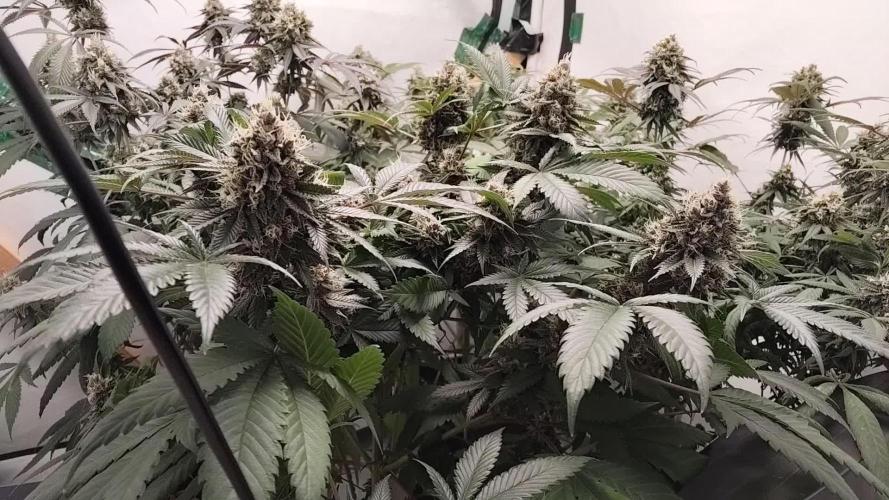
die buds schwellen an und ab jetzt gibt es keinen dünger mehr. ich hatte diese woche mal leicht gespült sodass ich ca 1 l drain hatte. der ec lag bei 2.0 ca.. werde kommende woche nochmal leicht spülen und wieder messen. zurzeit faden die oberen blätter aber die unteren sind mir etwas zu grün. habe noch 1.5 bis 2 wochen bis ich ernte. denke bis dahin wird das grün verschwinden. bin bis jetzt zufrieden und hoffe das die rlf sich senkt, denn es hat viel geregnet in der vergangenen woche und im zelt hatte ich gestern mittag 63% rlf😐.
ist aber bis zum abend auf 52 %runter..
heute hab ich 48% rlf im zelt.
die super boof und rainbow melon halte ich mir als mutti's 😁


Likes
55
Share


@BodyByVio
Follow
Just got done with trimming the 4x4 @greenhouseseedco Super Silver Haze / @blimburnseeds Silver Surfer Haze tent.
The final yield is exactly 1000g plus some (kind of a lot)that I smoke in the last 2 weeks 😃
Also got 6, gallon size ziploc bags filled with good quality trim for concentrate.
To be honest I was expecting a little more but keeping in mind that this grow I did not supplemented with bottled CO2 I think I’m good with the results.
Definitely I enjoyed a lot this grow and I’ve learned even more.

Processing
Likes
56
Share


@Ganjagrandaddy
Follow
Day 49 flowering: Hi all , I hope your all well and healthy.
I think I have made a few miscalculation errors of flowering weeks here.lol
I began timing their flowering period a little later than had been flowering I think. Seeing how advanced the #2 has been the entire grow followed very closely by the #1 , and adding the natural fading and leaves dying off that is very obvious too , these are very near their ripen time. looking back over the diary to when I began timing , the buds are fairly well in process so must have begun earlier but I missed the switch with the other seedling dramas I had going on at the time. oops. I am using the time line to keep the other Gorilla girl (#4) and the switch cheese at least on track timing wise ( sort of .lol) I expect the #2 girl will be ready within 2 weeks now but will show as an early harvest on the days. I have added the Shogun Dragon Force into their feed now for a week ( 2 more feeds at least) and then its a mild feeding of the Megacrop till finish. I do love their products and have been impressed by the dragon forces result on trichs. These Darker Gorilla (#2 +#4) girls are so trich laden already and very tacky to touch with a beautiful fruity smell pushing out too. The pictures just don't compare to the live and direct context with these buds but I tried to catch their best anyway. I haven't seen any pictures on sweets seeds grows of gorilla girls that are this dark purple at all and their examples are more akin to the #1 and #3 i have . I live them appearance of the dark phenos and a sure fire selling point for them ?. @sweetseeds ?. you seen these beautiful girls guys ?.
With that said the younger ladies are also doing brilliantly with the #4 starting to swell and frost up similar to her older sister#2. Her structure was set slightly looser than the other 3 to see how it altered their bud production compared. She has wider node gaps that have their own clusters with them and she has grown taller from less ties obviously but , it also created a more airy frame for the density of the buds which is a bonus in a smaller environment. I don't feel as worried about bud rot with her as I do the other 3. I plan to brutal defol one of the next autos being run to see how this affects the final result. using the same strains should be a fair comparison.
The Sweet cheese has also allowed me to satisfy my curiosity and try a natural untouched grow. She has some beautiful coloured on her tight single stemmed main and the side branching is attempting to keep up with the main but nowhere near as productive . while she is a capable height , i prefer the L.S.T for shape and working on so far. Being so hands off is a new one for me too.lol Her diesel smell is really evident now and even the lowers are getting a nice chalky appearance of trichs hiding the pink hues she has going on all over. Inhave enjoyed this grow with the sweet girls and only wish I hadn't lost so many of the other strains so early on. A breeder to re visit without doubt. enjoy the pics and video folks . keep well and loved ..

Likes
1
Share


@Barzenegger
Follow
Transplanted them into the AutoPots this week, humidity could be higher. Maybe I can turn on the reservoir next week already.
Likes
16
Share

@TrickzGrowz
Follow
Servus Moin!
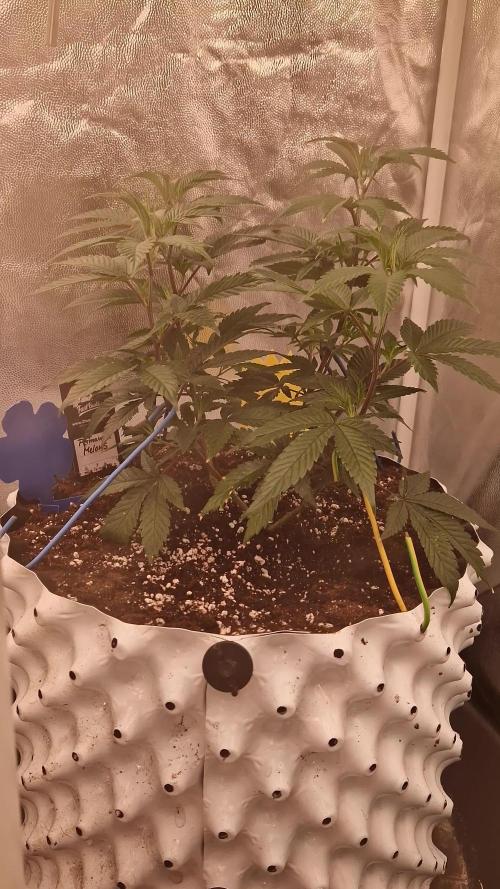
Die Permanent Melons wächst wieder wie ein Monster. Sehr schön anzusehen. Eine Woche noch wachsen, dann geht es in die Blütephase.
Am Sonntag wird auf 12/12 umgestellt.
Likes
70
Share


@Kid_Colombia
Follow
They are doing good, flipping into flower next week. They love the new light.
It’s been a little too hot since adding in new light. 30-31 degrees during peak heat - thinking about getting an ac machine next week


Likes
12
Share


@TSXpress
Follow
Purple punch auto Harvested! Everything went fine and was an easy growing season for me. I’ll come back and update on the dry weight result :)
Likes
16
Share


@CzAlmighty
Follow
Hi friends. 🍰🍰🍰
beautiful next week behind me .Flowers and looks healthy and strong. I water the flower every two days. The fruits look beautiful. And the scent is incredibly amazing💚

Likes
5
Share


@Eljardindemargarita_grower
Follow
Buenas compis .
Iniciamos vida
12 bombas de los compañeros de @gbsatrain
Con ganas de darle ganas y fuerza
Con toda mi energía para ellas
Siempre es positivo y satisfactorio iniciar vida
Vamos al lío

Likes
3
Share

@JefyKennedy
Follow
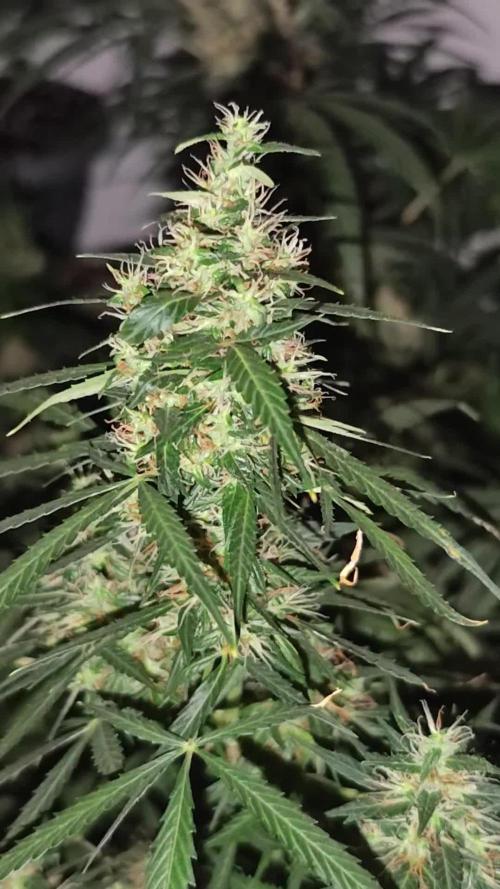
KICKASS AUTO Day 77
Critical and Ssh bloom 50
Jack bloom 40
Fertilizers
Kickass 4th dose overdrive.
Ssh big bud 1.5ml continued
Critical and Jack 1st dose overdrive (I started overdrive 1 on Jack's 40th bloom day because I watered him incorrectly)😂
An Sensi a+b 2 ml
Big Candy 1.5 ml
Sensizym 1.5 ml
Intake ppm 850, outlet ppm 850 (all)
The temperature goes up to 34°C during the day, nothing to do anymore.
Light 480 qb ppfd 700
DLI 50
Likes
27
Share


@Chocolates1390
Follow
Well, this is my end for now.
I'm so happy as this has been my first grow, don't pay a lot of attention on the numbers, i don't have a weighing machine so i don't know what are the exact numbers, anyway i tried to aproximate them. Maybe if you can help me with an aproximate i would apreciate it!
I've got a total of 6 complete 750cc Jar and 3/4 from the 7th one. You have more experience than me an maybe can correct me .
Those numbers correspond to all the weight that i've got from 4 plants, as you can see there is a strange plant there, that was a mutant one that i was growing with the moby dick, idk what strain is, so I won't do any report of that, just posted the pictures because i liked them.
As you can see all my grow was super cheap, I didn't used special lights or special nutrients, i never measured the ph and the EC but thos things paid me a lot, for the next grows I know that get the right measures is the best for growing cannabis, control they way they feed is essential.
As I said before, i made a lot of mistakes that make that the plants didn't become XXL they wer like 60-80cm i just let them grow, i didn't use LST or something like that, just defoliate some times the yellow leafs.
I want to say thank you to all the people that helped me during the grow, i think that my plants wouldn't made it if you didn't help me, thank you so much!
Thanks to the growdiaries community!
I just tried a little from the production and it was fantastic, i think that all the love that i have putted on the grow was returned on that smoke. I enjoyed a lot that woody taste. It's super nice.
Will edit maybe in 2 months after a good cure is done.

Likes
7
Share


@ppfdsabre
Follow
Moved to final 20l pot on day 8, great growth sonce then. No nutrients just phd water.


Likes
2
Share


@CannaIGrow
Follow
Plant is growing well. Probably the prettiest one outta the bunch so far.


Likes
58
Share


@Wastent91
Follow
Ehi ragazzi come va! A me tutto bene! È appena arrivato il nuovo impianto Mars hydro più grande e spazioso in cui potrò far crescere nel modo più libero possibile ogni ragazza che cresce, il mio obbiettivo è ridurre i training al mi imo i dispensa ile e testare davvero la potenzialità genetica della ragazza senza troppe manipolazioni, vabbè comunque ognuno ha il suo metodo.. Sono proprio felice di avere un 100x100x180 almeno ora ho lo spazio "vitale" per dare il meglio alle mie ragazze! Ora siamo solo all inizio ma a giudicare dalla professionalità e qualità dei componenti, penso proprio che faranno la differenza anche nella qualità delle cime!! 🧑🌾👊 Speriamo! Bene ringrazio Mars hydro per questa opportunità di collaborare e crescere assieme! Vi lascio qua sotto i link ai quali acquistare questa bellezza!
https://marshydro.eu/products/mars-hydro-100x100x180cm-grow-tent/
https://marshydro.eu/products/4-inch-inline-duct-fan-and-carbon-filter-combo-with-thermostat-controller/

Likes
23
Share


@Herbman420
Follow
This week was good .plants are starting to get bigger . I keep getting little bites out of one or two leaves from the bugs but other than that it's not too bad .it is in soil though so as expected.Justin feeding it mainly some silica and root expander due to high PPM in the soil this is why I normally grow in coco . like I said last week instead of flushing it I'm going to just give it plain6.5ph water with root and silica . They seem to be happy and have no signs of burning or any stress they are a bit small but I think it's due to the genetic. Hopefully by the end of this year I would have bread some of my plants with a larger autos and get a bit better outcome next time . Thank you for looking at the diary and will be updating every week
Likes
35
Share


@Compassionate_Gardener
Follow
At the beginning of week 2 the plants have grown fine, but also developed some yellow leaf-tips, which I assume is from the amount of light they receive. Therefore I decide to hang the both LED-fixtures higher. The LUMATEK ZEUS PRO 600W is now at 75 cm distance and the two SANlight Q6W-Gen.2 are at 90 cm distance from the top of the clones of CANNALOPE HAZE from DNA-GENETICS. The humidity inside the HOMEBOX-tent is kept permanently at 60% during veg. The grow-controller GROWBASE PRO from GROWCONTROL does a GREAT job in keeping a constant environment inside my growtent. As a precaution I put up some yellow sticky traps against fungus-gnats and also hang sachets with predatory mites from KOPPERT (=Thripex PLUS) on every plant. This will prevent spider-mites and thrips to invest my tent, since the predatory mites will eat them right away. I LOVE BIOLOGICAL TREATMENTS and decide on it every time instead of using chemicals, because I grow my own medicine here and dont want ANY CHEMICALS on my cannabis! 👍😎 At the end of week two I slightly increase the light intensity again, by adjusting the dimmers of my LEDs. The Lumatek is now set to 50% dimm-level and the SANlights are running at 60%. Until now there is not much difference to see between the two sides, all plants are healthy and doing well.


Likes
27
Share


@Dunk_Junk
Follow
Wow she's grown 24cm this week.
I'm getting excited about her! I think she's looking to be a fab plant.
Doing well in her fabric pot.
