


Likes
Comments
Share

@Growbody
Follow
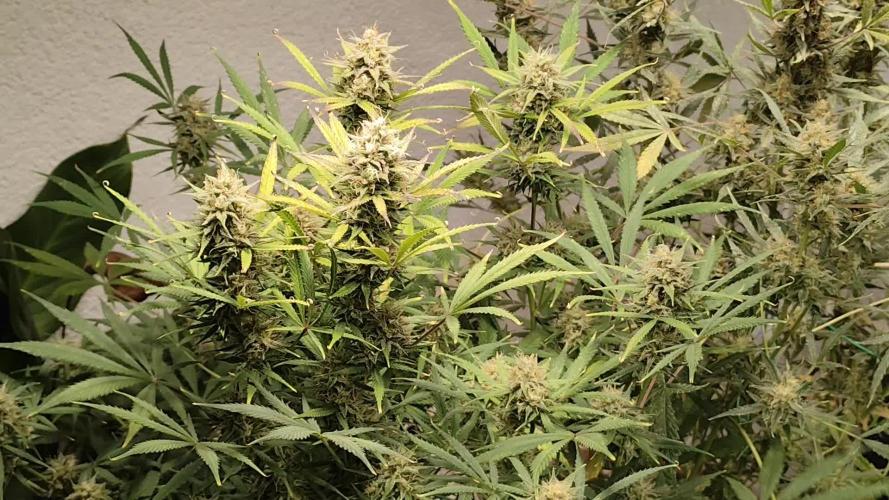
Herzlich willkommen zu meinem neuen Grow mit der Orange Sherbet Auto von 2Fast4Buds. Die Eltern sind Cookies Auto F5 x Tangie´matic, der Typ ist F3 Feminized Polyhybrid Autoflower. Der Strain war Winner of the American Autoflower Cup 2025, Kategorie Best Auto Hash. Die Aussicht auf frischen Orangensaftgeschmack macht mich wunderfizzig.
Wieder verwendet wurde für diesen Grow der 15Liter Stofftopf von ROOTiES, die Sonnenerde Bio Hanferde, BioBizz Wurmhumus, BIONOVA + zamnesias MonsterBud Mix Living Soil, zamnesias Smart Start Plugs und Plagrons Seedbooster Plus. Hat sich alles bestens bewährt.
Tag 86: 1,0 Liter Wasser. Die Blüten der Orange Sherbet Auto von 2Fast4Buds werden dicker und duften fein.
Tag 88: 1,0 Liter Wasser.
Tag 89: Die Orange Sherbet Auto von 2Fast4Buds hat neue Nachbarn bekommen.
Tag 90: 2,0 Liter Wasser.
Schön, dass du dich für meinen Grow interessierst. Schau gerne wieder rein 👋😎


Likes
16
Share


@Eroben
Follow
The Gorilla Glue has some rust spots on the top leaves, added some cal/mag to counteract that. Last week I thinned her out a good bit, no more fans covering bud sites more or less... Probably should have done that before she got into flower.
The Gelato has recovered from the topping/fimmings and is growing its new tops, I also removed the very top leaves to keep it from growing much taller before I yoink the Gorilla Glue. Still an experiment plant, still growing better than I thought it was going to, still just sitting in the back vegetating.
Day 63: This Gorilla Glue is doing markedly better than I thought it was going to. It has about 8 satellite nugs and one monster nug in the middle. The monster nug stem is zig zagged because I trained it multiple times so it's getting light on multiple levels directly to the top. I feel like there should only be 2 more weeks or so looking at the trichome production, there are some cloudy heads on the sugar leaves but still all clear on the nugs.
Day 69: Don't think I'm going to feed the Gorilla Glue again, whatever happens, happens. Final feeding was 1tsp Tiger Bloom 0.5tsp cal/mag.
I also removed the Gelato from the diary. It's still in there but I'll start a new diary if I decide to flower this plant.

Likes
5
Share


@SugarandTerps
Follow
Bloom W2 Fastbuds Mendofrost ❄️❄️
12.6
Nährlösung 3L PH-WERT 6,5 mit Plagron Silic Rock, Power Roots, Power Buds und Sugar Royal, Alfa Boost All in one
15.6
Nährlösung 3L PH-WERT 6,5 mit Plagron Silic Rock, Power Roots, Power Buds, Sugar Royal und Green Sensation, Alfa Boost All in one
17.6
Morgen soll das Wetter sehr warm werden.
Es werden noch mal 3L Nährlösung angemischt. PH-WERT 6,5 mit Plagron Silic Rock, Power Roots, Power Buds, Sugar Royal und Green Sensation, Alfa Boost All in one.
Stretch scheint sich dem Ende zu neigen und die Buds werden immer dicker😎💚
Likes
5
Share


@Random80
Follow
I was keeping them as low as possible with LST, now I ll try to keep buds away from each other.
Likes
18
Share


@Statesman_0007
Follow
Well the first seedling week is out of the way. Now to start my nutrients and transplant the Root Riot cubes into the net pots with Hydroton. I have 2 ladies that are keeping up with each other while I have one that seems to be a little behind, and then the 4th lady is for sure a runt of the liter but I will keep working with her and will make the best of her, who knows maybe she'll catchup some how.
Next time I germinate I make make sure to put each seed in its own 16oz. Mason jar 2/3 full of water so each seed does not suffer because it can't soak up nutrients in the small amount of germ water that all seeds soak in. Every seed has plenty of micronutrients to start out with, without it fighting for it due to many seeds in the same jar soaking it up the same minerals.
I'm super excited and can't wait to start to see these girls flourish 😁
Going by an Autoflower feed schedule with my Current Culture nutrients
Week 1 germination is plain water
Starting week 1 of vegging 👍-09/20/2021
Likes
3
Share

@EchoEcho77
Follow
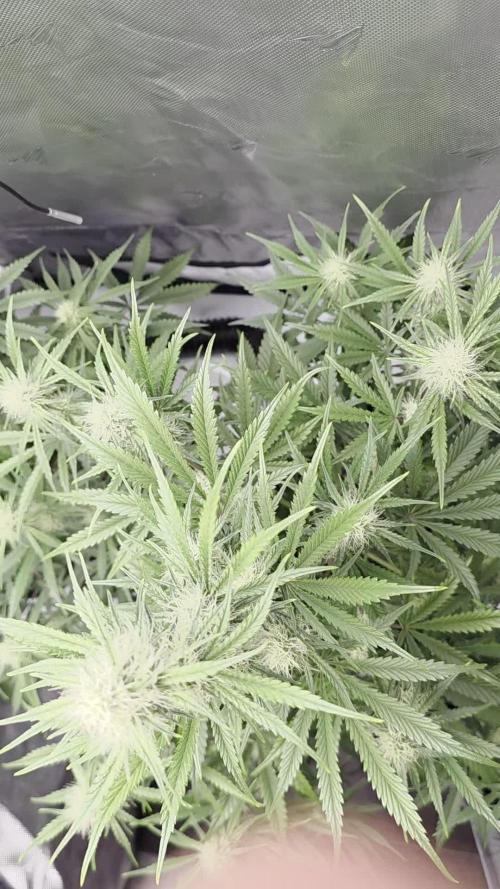
This week is exciting! I lowered the nutrients a little because I was pushing them a little hard, and wound up with a few little brown tips. Overall growth has been solid. Plants are 30.5 and 24 inches tall respectively. Buds are stacking and they are putting on weight.
Likes
17
Share


@420DeepGrow
Follow
📆 Semana 6
Blue Zushi está mostrando su lado más exótico esta semana.
Los cogollos han comenzado a compactarse con fuerza y se nota una producción de resina que va en aumento. Visualmente, empieza a asomar ese tono azulado que tanto llama la atención en esta genética, sobre todo en las puntas más expuestas a la luz.
A nivel nutricional, sigo con la base de XpertNutrients y ya se nota el empuje adicional de Sticky Fingers, que está potenciando claramente la formación de tricomas y dando un pequeño salto en la intensidad del aroma, que empieza a volverse más dulce y fresco.
Los Adlite están funcionando a la perfección: gracias a su uniformidad, incluso las ramas laterales están sacando cogollos densos y con buena pinta.
Temperaturas estables entre 22 y 25 °C y humedad en torno al 55%, controlada con buena ventilación para evitar condensaciones y problemas en la fase más delicada.
En cuanto a olores, empieza a destacar ese perfil afrutado y ácido con fondo kush, muy característico de la Blue Zushi. Los tricomas están en su mayoría lechosos, por lo que aún queda recorrido antes de pensar en cosecha.
Una planta vistosa y con mucha clase.
¡Seguimos creciendo fuerte! 💪

Likes
2
Share


@velouria
Follow
Week 6! This is a seed from this mix (https://www.dutch-headshop.eu/auto-rainbow-mix-private-label-5-cannabis-seeds), and I started the others about two and a half weeks before this one. I can see the others started flowering this week, but this one seems content to keep vegging out. The others had smaller pots and shared resources, so this makes sense.
It's going to be very hot and bright here this week, which is terrible for me, but lovely for the weedlings.
The shape is like a lovely squatty Christmas tree. I'd grow it again so it'd be at this stage for the holidays, but we'll be back to sunup at 10AM and sundown at 4PM by then :/

Likes
5
Share

@CannabisDemon
Follow
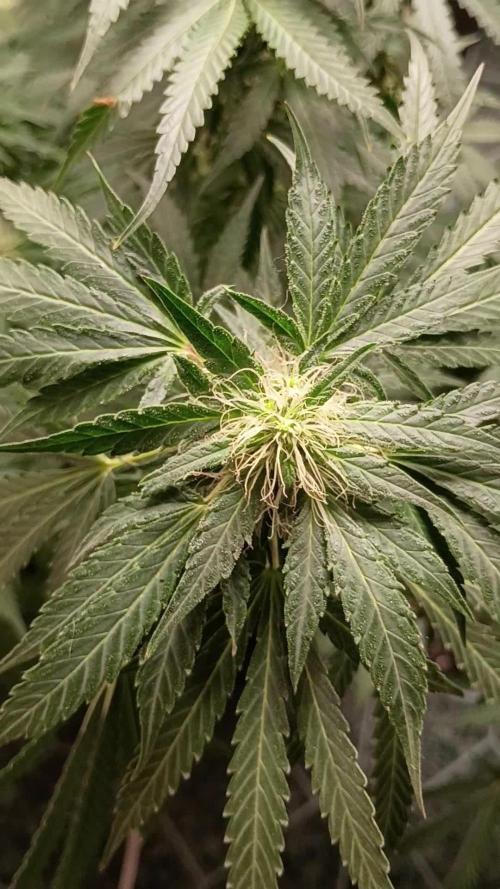
This one is doing very well for being damaged twice during high stress train

Likes
14
Share


@Rock_n_Roll_Randy
Follow
ALMOST TIME. TOOK A PEEK AT THE GERMINATING SEEDS AND SOME ARE POPPING OPEN. PROBABLY TOMORROW APRIL 23RD I WILL START PUTTING SOME IN THE SOIL👍
FOR EVERYTHING MARS HYDRO VISIT:
www.mars-hydro.com
www.marshydroled.ca
PROMO CODE: rocknroll
VISIT THE ALIEXPRESS STORE:
@marshydro_aliexpress
Instagram: @marshydropenny
https://youtube.com/channel/UChU5ZWwNi-DvnO3oWVU3ceA
Thanks for taking the time to read and check out my diary🤜🤛
FC-E6500 LED GROW LIGHT:
FC-E6500 grow light with 3978pcs OSRAM BridgeLux Diodes & Moso Driver, market-leading PPF 2.7 µmol/J, Max 2.5g yield/watt with 30% higher Average PPE, more cost-effective when compared to same style type lights. Only consumes 650W, perfectly cover 5x5ft (personal), 4x4ft (commercial) grow space. Innovative Precise Uniform Lighting-Built-in removable bars interval & dimmability enable the exact & dynamic PPFD control over each of the plant growing stages, FC-E6500 detachable bars deliverSuperior Heat Dissipation: Real Aluminum heatsink together with 6 slim profile passive cooled bars (THINNER & LARGER surface) and detachable Meanwell Driver, create less heat. save 50% hydro than other old grow lights! Driver can be mounted remotely on the side of a grow tent/rack or on an adjacent wall to remove heat from grow space. Full Spectrum UV IR LED: With Yield Max spectrum (660nm Osram enhanced Deep Red,2800k-5000k,730-740nm IR,380-410nm UV LEDs), Average PPFD the FC-E6500 LED grow lamp enables cultivators to produce BIG FAT Dense Buds, perfect for full-cycle hydroponic, soil, grow tent/grow room.
Dimmable Commercial Grow Light: Cost-efficient, easy dimming & daisy chain With a max up to 20 lights, IP65 Waterproof, master light easily controls the rest. Perfect for commercial & home horticulture.
FC4800 LED GROW LIGHT:
GET THE MAX FROM MARS👍: Welcome one of the newest members of the Mars Hydro family🤜🤛🤘. The Mars Hydro FC 4800 480W LED Grow Light can accommodate up to a 4' x 4' area for flowering. It has OVER 2000 LED chips consisting of the best selling Samsung LM301B diodes which has a Luminous Efficacy of: 220 lm/W
0.2 W, 3 V mid power,
Osram 660nm Diodes, Infrared light and UV LIGHT👍. It boasts the incredible efficiency of 2.8 µmol/J, maximum 2.5gram yield per watt with 30% higher Average PPFD. This High-intensity spectrum is beneficial for plants at all stages - from veg to bloom, and creates Big dense Buds👍. achieve 50% higher yields & quality compared with the old lights! Only consumes 480W for 4x4ft personal grows, and 3x3ft for commerical grow. It comes with a dimmer and daisy chain function with a maximum of up to 15 lights, the master light controls the rest👍. Wide 6-bar design offers even & wide canopy coverage and can maximizes your grow space. slim 180° FOLDABLE DESIGN... YES I SAID FOLDABLE🤘🤣 , making it compact and easy to install, it's IP65 WATERPROOF and will give you no worries while growing in a humid environment and makes it a flexible high performance commercial grow light for enormous SUPER FROSTY yields.😛😛😛. MARS GETS EM FROSTY BOYS👍
AWESOME HEAT DISSIPATION: The Low energy consumption FC4800 growing light has 6 passive-cooled bars and an aluminum heat-sink a removable driver you can upgrade later or have it outside your tent. with zero noise you can save up to 50% in your electricity bill compared to HID's or HPS lights!
It also has a removable driver so you can upgrade it in the future or have it outside your grow space for better heat control in your growroom👍
UPGRADED FULL SPECTRUM: Yield Max Spectrum with enhanced red (Top-Bin Samsung 3000k-5000knm, Osram 660nm Deep Red), speed up blooming & fruiting, perfectly suited for full-cycle growing. The FC4800 LED grow lamp was born for Big Buds, perfect for commercial, grow tent, grow room, hydroponics, and all soil grows.👍
THE BEST SAMSUNG DIODES: THE FC4800 has Top Bin genuine Samsung Osram Diodes, combined with remarkable 2.8 µmol/J Efficacy, 30% higher Average PPFD, 50% less energy consumption, to maximize your yields. They give you a TRUSTED 3 years warranty 100% Satisfactory guaranteed!!!
TSW2000 LED GROW LIGHT:
INCREASE YIELD AND CROP QUALITY WITH MARS HYDRO LED GROW LIGHTS: NEWEST SMD LED technology provides the highest PAR/LUMEN output (1122umol@18") and can make you get 30% higher yield compared to OLD blurple led lights. Max 2.5g yield per wattage and achieve maximum quality and quantity, much better than traditional HPS grow systems
LOW ENERGY CONSUMPTION LED GROW LIGHT: Consuming only 300W true output with 684 LEDS! It saves up to 50% energy than other led grow lights. Perfect for 3.5x3.5ft bloom stage, 4x4ft veg stage. Over 90% light energy can be absorbed by plants, it will have higher intensity in a MARS HYDRO grow tent with diamond design mylar, or by crossing over using multiple TSW2000
HIGH EFFICIENCY FULL SPECTRUM INDOOR GROW: 3000K 5000K and IR 660nm 760nm RED, makes it close to natural light, highly engineered to provide improved growing performance for plants at all stages of growing, rapid plant response from seed to flower; Uniform and wide-beam light distribution for your plant's optimal growth
8x8 1680D GROW TENT
The MARS HYDRO 8x8 Grow Tent interior is made of a unique diamond design mylar which is highly reflective. (Other companies mylar and reflective rate is as low as 50%, and it won't provide efficient light. They use thick 1680D oxford canvas, and being double stitched, it is tear proof and perfect for locking in the light. Their grow tent keeps 100% of the light inside the tent and helps your plants absorb more light. EXTRA-THICK material means No light leaks or rips at all.👍
Strong Stable metal corner adapters and poles are the trustful supporters of the tent. It's very sturdy, neither rusting or paint flaking off. quick and easy tool-free setup. They use heavy-duty metal zippers, with double layer black lining, by far the best on the market which creates a light-proof seal.
The Easy observation windows are made by double layers of cloth. Observe the growing conditions of your plants without opening the tent and avoid disturbing your plants. The observation windows also serves to dissipate heat and ventilate the air.
The tent includes 2 removable waterproof floor trays to hold soil and water. The removable tray can be taken out to wash easily.
They guarantee the grow tents are easy to install even if you've never done something like this before. Clear Instructions and no tools needed! They also offer 30-day unconditional refunds for quality problems. Just contact their friendly 24 hours customer service 👍
Likes
21
Share


@The_La
Follow
Good week so far, I laid my net down , always a Nice feeling when the net goes down and I can start focusing on creating my canopy.
I will start bending my branches out to fill the net space up and to create room for lower branches to get some light.
I defoliated a bit and stripped the lower branches just after I took these pictures , i know there are different schools of thought surrounding defoliating so soon into flowering , but im doing hst and i like to see what I'm doing dealing with and what my branches are producing.
I'm happy so far
Likes
6
Share

@Chubbs
Follow
Weekly update:
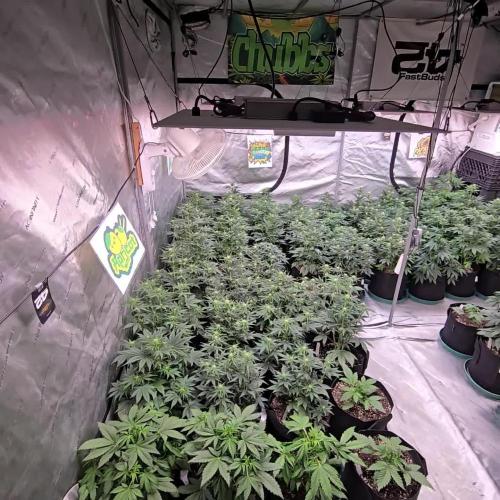
Crazy how time flies when your having fun. Seems like yesterday I did last week's update. I did some defoliating and lollipoping on them this week and switched from grow nutes to bloom. Wild how fast the preflower sites grow as it looks like they're everywhere. I'm still feeding 16oz per day, some are drinking more then others but overall Happy Growing.
Likes
23
Share


@Vincent11
Follow
Yes it's going amazing 21 days and the plant looked great after lifting the lights to 38000 lux there is no current issues that I can notice.
Hope it goes all the way without a hinge.
Please leave your comments below.


Likes
5
Share


@killerjoint
Follow
10-24-2024
ALL THE STRAIN RECOMMEND FLOWERING TIME IS 7-8 WEEKS
TRY TO FINISH WEEK 8
STILL HAS 19 MORE DAYS...
LAST FEED WITH NUTS .BURNED SOME OF TOP FAN LEAVES ......
BUT CHECK OUT QUEEN,DR SLEEP , WULFF ,POWER... CRAZY FROST TOE TO HEAD
SMELLS .............NEED TO RUN FANS WITH HIGHER SPEED FOR SMELL...
NO MORE NUTS....JUST WATER .....STAY IN THE COURSE...
STAY GREEN ....
10-27-2024
-HIT THEM WITH HUMBOLDT COUNTY NUTS
G10 -5ML PER GAL
SNOW STORM -5ML PER GAL
PURPLE MAXX-7ML PER GAL
EVERY TWO DAY NEED TO WATER....


Processing
Likes
20
Share


@ThatZimbo
Follow
From week 2 to 3 in flower the plant took off and almost shot itself into the light overnight.
Upped the bloom nutrients to 36, interested to see how the plants handle it.
I have maxed the height in the tent, reflector is on the top of the tent and the plants are 20 to 24cm away. Can't do much about the height so managing the heat between the bulb and plants.


Likes
14
Share


@Kakui
Follow
Exotic Genetix: Event Horizon (x3) y Toasted Toffee(x3).
Thug pug Genetics: Peanut Butter sunset(x3).
Una ves sean transplantadas a su macetero definitivo(5 litros) se comenzará con riego automático, drip to waste, y protocolo Crop Steering.
20 Octubre(15:30): 9 semillas en remojo, solución de 2 partes de agua de ósmosis + 1 parte de peróxido de hidrógeno 3%, 5.8pH, 0.6EC, 28°C~30°C. Antes ser puestas a remojar se lijaron las semillas para favorecer la absorción del agua.
21:30: puestas en toalla de papel con la misma agua de remojo, dentro de un contenedor de vidrio hermético y sobre una alfombra de calor a 28°C~30°C, para aumentar la actividad metabólica.
21 Octubre: Pre carga del coco, con solución de nutrientes Athena en 2.0EC y 5.7pH, saturación hasta lograr drenaje, el drenaje fue de 1.5EC y 5.6pH.
21:50: Todas las semillas presentan radicula de distintos tamaños(1cm aprox) son inmediatamente pasadas al sustrato.
22 Octubre: 21:10, se aprecian todas ya brotando, se mantiene el ambiente en 26°C~28°C y 70%+ de humedad.
23 Octubre: 9/9 semillas brotadas, se ven algunos Cotiledones.
24 Octubre: (9:30)8/9 cotiledones abiertos, altura entre 3cm~5cm, etapa de plantula iniciada.
Toffee n3 se atrofió por mala manipulación, espero que crezca aunque sea lento, si no, tendré que seguir solo con 8 plantas.
25 Octubre: Toffee n3 está viva!!! Estuve a punto de quitarla, y está mañana apareció sin su capucha, cotiledones afuera. Yujuuuu!!
26 Octubre: hoy tuvieron su primer riego con nutrientes Athena, 2.0EC y 5.8pH. Se regó hasta alcanzar drenaje, el drenaje fue de 1.9EC y 5.7pH.
27 Octubre: Se desarrollan a buen ritmo, algunas han estirado más que otras, alturas entre 4cm~7cm.
31 Octubre: Segundo riego, 120ml casa una, 2.0EC y 5.8pH, runoff de 2.3EC y 5.7pH.
2 Noviembre: Creciendo a buen ritmo, alturas entre 5cm y 9cm.
4 Noviembre: Riego 180ml cada una, 2.0EC y 5.8pH, runoff 2.8EC y 5.8pH, desde ahora se regarán más seguido, removí las primeras hojas, solo por comodidad para regar, de igual manera los primeros nodos y esas hojas se terminan podando pronto.
8 Noviembre: Riego 2.0EC, 5.8pH, 240ml cada una para aumentar el runoff, valores de runoff de 3.0EC y 6.0pH. Alturas entre 9cm y 14cm.

Likes
20
Share


@Mosquito_Haarlem
Follow
Ze heeft het naar haar zin en wordt steeds dikker.
Heb wat spintmijt gezien, maar was er op tijd bij en heb haar een knoflookwater behandeling gegeven. Er zijn geen beestjes meer te bekennen.
Bladeren die al wat aangetast waren en de grote bladeren die veel licht blokkeerden heb ik weggeknipt.
Verder doet ze het zeer goed.
Dag 60: Het lijkt er op dat ze de honing die is meegegeven met haar voeding erg lekker vindt.
De toppen zijn in massa toegenomen de laatste paar dagen.
Dag 62: Vanaf morgen ga ik haar alleen nog water (Spa Reine) geven dus flushen.
De voeding van Plagron heeft haar laten smullen.🌳 Zeer tevreden.
Wordt vervolgd...
Likes
26
Share


@pifflestikkz
Follow
Day 22
22/07/24 Monday
Nothing new to report. Starting to see them beautiful fans appear that's all 😁✌️
Day 23
23/07/24 Tuesday
Feed today, giving them straight all nutes Inc flowering nutes.
I will update the dose as they grow and develop a bigger hunger.
(Not sure what's wrong with Overdose #2, bit mutated, we'll see how she gets on 😅)
Video updates 👌💚
Day 26
26/07/24 Friday
De-chlorinated watering pH 6 with 5ml calmag to 5L water.
Watered each with 250ml and had small run off.
I will continue to feed/water with small run offs to help prevent salt build ups.
Video update.

