


@Mo_Powers
Follow
She’s had a big growth spurt. She’s now twice as big as she was a week ago. However, I get the feeling she’s not quite living up to expectations. The first pistils are starting to show.



@GorkedOut
Follow
For the 2 plants: chopped on day 78
Days drying: 7
Dry weight: 123.1 grams (4.40 ounces)
Plant 3: chopped on day 85
Days drying: 8
Dry weight: 43 grams.
Total dry weight: 166.1 (5.93) ounces for all 3 plants.
Sticky and smells good.
Very happy with how they came out growing in 1 gallon fabric pots.


@Swanberg
Follow
Just very happy with the structure of the plant and how well it was maintained. Was very worried during drying and cure as I lost a lot of terpene and became woody and until 10 days of curing the smell and taste just totally evolved into very desirable terpene. Very happy strain if you want “rock hard egg shaped buds” this is your go to, the main line did wonders. Will be trying this strain again when I upgrade light


shorts_status_processing


@Squaregrouper
Follow
plant is healthy about to feed her her meal... Bud development is right on point.


@KingSalomonsWeed
Follow
Läuft Läuft sogar hervorragend.
Bin mal gespannt, wann sie in die preflower kommen.
Müsste bald soweit sein. @ hope.
Leute es macht einfach nur Spaß dabei, zuzuschauen wie sie wachsen.
Jeden Tag gibt es was neues zu entdecken.
Kein Wunder.
Jetzt sind 3 äußerst mächtige Kandidaten im Reaktor .
Der Favorit Sensi Seeds TITAN
RESISTENT
MÄCHTIG
RESARCH
OLD WORLD
DIE HERAUSFORDERER:
Fastbuds
USA
NEUE IDEEN
SEHR ERFOLGREICH(bin neugierig warum)
RESISTENT
Seedstockers (Guerilla Kämpfer)
GENIAL ODER WAHNSINNIG (ich werde es sehen, aber normal?
Nein sind die nicht.)
RESISTENT
RIESIG (die ist anders gewesen, schon der Samen( schwärm))
WORLDWIDE GUTE VERBINDUNGEN ZU ANDEREN GUERILLA BREEDERS (man hört so Gerüchte)
So long.
Long enough.
You see there only 2 plants left.
What happens?
Ill try to explain: Opaman.
Opaman us over 60,, always smiling with a joint who goes along.
Today he was not smiling. The joint goes along.
"my friend, why re you sad today?"
He looked in my eyes. He said one word. MÄHDRESCHER!
Then both looked down to the ground.
Jonny goes.
I asked "all three?"
He breathes hard out, no words.
I said wait to him, went to my bike gave full throttle and went to where i live and stolen myself the GREAT ZKITTLEZ AUTO from F A S T B U D S!.!
For all from USA and Kanada Russia, China, and Ostfriesland (this re examples of mighty big country's)
I live in Legoland (Deutschland). I went from his village to mine 3 miles than back 3 miles. So i just needed 30 min for this way. FULL THROTTLE. Full Risk fast as i can. Ignored traffic signs. Speedlimits. Who cares. Full throttle with my 0,25 kw bicycle, just to see the smile comes back to Opaman eyes, as i gave him the plant.



@Lvnsource
Follow
Feed log;
D:30 - 4.0L + 4.0L - [pH 6.8] Si[0.5ml] ,Vega[5ml], Flores[6ml],Ca[0.3g/L/]Mg[0.1g/L] INPUT; [1.1 EC] OUTPUT; 3.6L pH 6.0 [1.74 EC] previous irrigation: D:23
———————————————————————————
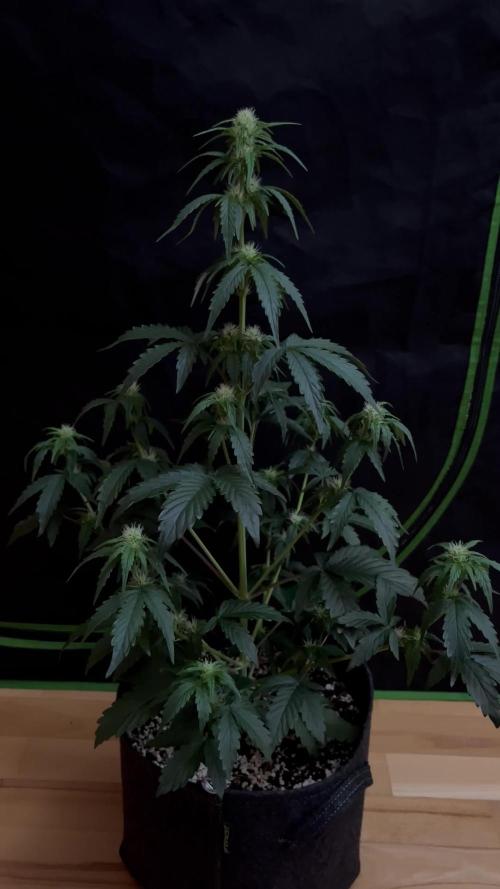
This phenotype decided it wanted to be stout as she entered flower early ; the plant is currently still putting on height and has grown 12cm since day 27! 🌱
I’m still keeping the PAR levels around 550-580 ppfd to squeeze out a few more cm of height 🌞



@Ultraviolet
Follow
What's in the soil? What's not in the soil would be an easier question to answer. 16-18 DLI @ the minute. +++ as she grows.
Probably not recommended, but to get to where it needs to be, I need to start now.
Vegetative @1400ppm 0.8–1.2 kPa 80–86°F (26.7–30°C) 65–75%, LST Day 10, Fim'd Day 11
CEC (Cation Exchange Capacity):
This is a measure of a soil's ability to hold and exchange positively charged nutrients, like calcium, magnesium, and potassium. Soils with high CEC (more clay and organic matter) have more negative charges that attract and hold these essential nutrients, preventing them from leaching away.
Biochar is highly efficient at increasing cation exchange capacity (CEC) compared to many other amendments. Biochar's high CEC potential stems from its negatively charged functional groups, and studies show it can increase CEC by over 90%. Amendments like compost also increase CEC but are often more prone to rapid biodegradation, which can make biochar's effect more long-lasting. biochar acts as a long-lasting Cation Exchange Capacity (CEC) enhancer because its porous, carbon-rich structure provides sites for nutrients to bind to, effectively improving nutrient retention in soil without relying on the short-term benefits of fresh organic matter like compost or manure. Biochar's stability means these benefits last much longer than those from traditional organic amendments, making it a sustainable way to improve soil fertility, water retention, and structure over time. Needs to be charged first, similar to Coco, or it will immobilize cations, but at a much higher ratio.
a high cation exchange capacity (CEC) results in a high buffer protection, meaning the soil can better resist changes in pH and nutrient availability. This is because a high CEC soil has more negatively charged sites to hold onto essential positively charged nutrients, like calcium and magnesium, and to buffer against acid ions, such as hydrogen.
EC (Electrical Conductivity):
This measures the amount of soluble salts in the soil. High EC levels indicate a high concentration of dissolved salts and can be a sign of potential salinity issues that can harm plants.
The stored cations associated with a medium's cation exchange capacity (CEC) do not directly contribute to a real-time electrical conductivity (EC) reading. A real-time EC measurement reflects only the concentration of free, dissolved salt ions in the water solution within the medium.
98% of a plants nutrients comes directly from the water solution.
2% come directly from soil particles.
CEC is a mediums storage capacity for cations. These stored cations do not contribute to a mediums EC directly.
Electrical Conductivity (EC) does not measure salt ions adsorbed (stored) onto a Cation Exchange Capacity (CEC) site, as EC measures the conductivity of ions in solution within a soil or water sample, not those held on soil particles.
A medium releases stored cations to water by ion exchange, where a new, more desirable ion from the water solution temporarily displaces the stored cation from the medium's surface, a process also seen in plants absorbing nutrients via mass flow. For example, in water softeners, sodium ions are released from resin beads to bond with the medium's surface, displacing calcium and magnesium ions which then enter the water. This same principle applies when plants take up nutrients from the soil solution: the cations are released from the soil particles into the water in response to a concentration equilibrium, and then moved to the root surface via mass flow.
An example of ion exchange within the context of Cation Exchange Capacity (CEC) is a soil particle with a negative charge attracting and holding positively charged nutrient ions, like potassium (K+) or calcium (Ca2+), and then exchanging them for other positive ions present in the soil solution. For instance, a negatively charged clay particle in soil can hold a K+ ion and later release it to a plant's roots when a different cation, such as calcium (Ca2+), is abundant and replaces the potassium. This process of holding and swapping positively charged ions is fundamental to soil fertility, as it provides plants with essential nutrients.
Negative charges on soil particles: Soil particles, particularly clay and organic matter, have negatively charged surfaces due to their chemical structure.
Attraction of cations: These negative charges attract and hold positively charged ions, or cations, such as:
Potassium (K+)
Calcium (Ca2+)
Magnesium (Mg2+)
Sodium (Na+)
Ammonium (NH4+)
Plant roots excrete hydrogen ions (H+) through the action of proton pumps embedded in the root cell membranes, which use ATP (energy) to actively transport H+ ions from inside the root cell into the surrounding soil. This process lowers the pH of the soil, which helps to make certain mineral nutrients, such as iron, more available for uptake by the plant.
Mechanism of H+ Excretion
Proton Pumps: Root cells contain specialized proteins called proton pumps (H+-ATPases) in their cell membranes.
Active Transport: These proton pumps use energy from ATP to actively move H+ ions from the cytoplasm of the root cell into the soil, against their concentration gradient.
Role in pH Regulation: This active excretion of H+ is a major way plants regulate their internal cytoplasmic pH.
Nutrient Availability: The resulting decrease in soil pH makes certain essential mineral nutrients, like iron, more soluble and available for the root cells to absorb.
Ion Exchange: The H+ ions also displace positively charged mineral cations from the soil particles, making them available for uptake.
Iron Uptake: In response to iron deficiency stress, plants enhance H+ excretion and reductant release to lower the pH and convert Fe3+ to the more available form Fe2+. The altered pH can influence the activity and composition of beneficial microbes in the soil. The H+ gradient created by the proton pumps can also be used for other vital cell functions, such as ATP synthesis and the transport of other solutes. The hydrogen ions (H+) excreted during photosynthesis come from the splitting of water molecules. This splitting, called photolysis, occurs in Photosystem II to replace the electrons used in the light-dependent reactions. The released hydrogen ions are then pumped into the thylakoid lumen, creating a proton gradient that drives ATP synthesis.
Plants release hydrogen ions (H+) from their roots into the soil, a process that occurs in conjunction with nutrient uptake and photosynthesis. These H+ ions compete with mineral cations for the negatively charged sites on soil particles, a phenomenon known as cation exchange. By displacing beneficial mineral cations, the excreted H+ ions make these nutrients available for the plant to absorb, which can also lower the soil pH and indirectly affect its Cation Exchange Capacity (CEC) by altering the pool of exchangeable cations in the soil solution.
Plants use proton (H+) exudation, driven by the H+-ATPase enzyme, to release H+ ions into the soil, creating a more acidic rhizosphere, which enhances nutrient availability and influences nutrient cycling processes. This acidification mobilizes insoluble nutrients like iron (Fe) by breaking them down, while also facilitating the activity of beneficial microbes involved in the nutrient cycle. Therefore, H+ exudation is a critical plant strategy for nutrient acquisition and management, allowing plants to improve their access to essential elements from the soil.
A lack of water splitting during photosynthesis can affect iron uptake because the resulting energy imbalance disrupts the plant's ability to produce ATP and NADPH, which are crucial for overall photosynthetic energy conversion and can trigger a deficiency in iron homeostasis pathways. While photosynthesis uses hydrogen ions produced from water splitting for the Calvin cycle, not to create a hydrogen gas deficiency, the overall process is sensitive to nutrient availability, and iron is essential for chloroplast function.
In photosynthesis, water is split to provide electrons to replace those lost in Photosystem II, which is triggered by light absorption. These electrons then travel along a transport chain to generate ATP (energy currency) and NADPH (reducing power). Carbon Fixation: The generated ATP and NADPH are then used to convert carbon dioxide into carbohydrates in the Calvin cycle. Impaired water splitting (via water in or out) breaks the chain reaction of photosynthesis. This leads to an imbalance in ATP and NADPH levels, which disrupts the Calvin cycle and overall energy production in the plant. Plants require a sufficient supply of essential mineral elements like iron for photosynthesis. Iron is vital for chlorophyll formation and plays a crucial role in electron transport within the chloroplasts. The complex relationship between nutrient status and photosynthesis is evident when iron deficiency can be reverted by depleting other micronutrients like manganese. This highlights how nutrient homeostasis influences photosynthetic function. A lack of adequate energy and reducing power from photosynthesis, which is directly linked to water splitting, can trigger complex adaptive responses in the plant's iron uptake and distribution systems.
Plants possess receptors called transceptors that can directly detect specific nutrient concentrations in the soil or within the plant's tissues. These receptors trigger signaling pathways, sometimes involving calcium influx or changes in protein complex activity, that then influence nutrient uptake by the roots. Plants use this information to make long-term adjustments, such as Increasing root biomass to explore more soil for nutrients. Modifying metabolic pathways to make better use of available resources. Adjusting the rate of nutrient transport into the roots. That's why I keep a high EC. Abundance resonates Abundance.
shorts_status_processing


@Mr_Di
Follow
Starts VII week of veg!!!
During VI week:
Day 41 Added net (5cm X square)
Day 41 added co2 (Smart bags, cause I finished gas at day 40 :( )
DAy 41-42 only RO water
—————————-
During this week:
1 I will add potassium silicate for improve resistance and encrease size of stem and branches to have big colas in blooming phase
2 removed soil bacteria from solution
3 i turned on extractor and IN air flow (before was off cause I had co2 in tent)
4 I will encrease amount of water to 250 ml per day

shorts_status_processing


@MisFit219
Follow
Crazy week with work and the girls. Day 37 and flowers are foaming nicely. Did give her a haircut and the leafs I removed were nice and green and healthy. After a few years of using Canna I can say its has grown on me as one of my favorite nutrient companies. Did have a mess this week with the pump kicking on by accident and pumping the girls with 3 gallons of nutrient water. No worries as the girls recover fast. When I grow autos or photo periods I give Cannas PK 13/14 from about 35-55. Then no more after that. The results at the end speak for themselves.




@hyperborean
Follow
Went to harvest them in the midst of night with a friend. Not as much mold as I was expecting considering how dense the vegetation was surrounding the spot. Lost less that 5% to mold which is good.


@darb35
Follow
Day 14 - no water today, the girls seem to like their new pots (10 cm)
Day 15 - 300 ml water with Acti+Heaven+Grow (Ph 6.8)(11 cm)
Day 16 - litttle bit water (Ph 6.6)(13 cm)
Day 17 - 300 ml water with Acti+Heaven+Grow+Calmag (Ph 6.7)(14 cm)
Day 18 - 400 ml water + LST (Ph 6.6)(15 cm)
Day 19 - no water (16 cm)
Day 20 - 660 ml water with Acti+Heaven+Grow (Ph 6.5)(17 cm)
Day 21 - no water (starting to show preflower pistils)(20 cm)


@Bud_Koenig
Follow
The Trop Cherry was harvested on day 56 and dried in the tent at around 16-20°C with a humidity level of 60%. After a week, she was ready to be trimmed and then spent another two days drying in a cardboard box. Now the buds are in their container for curing. Updates to follow
Dry Weight - 40 Grams



@PavementPunk
Follow
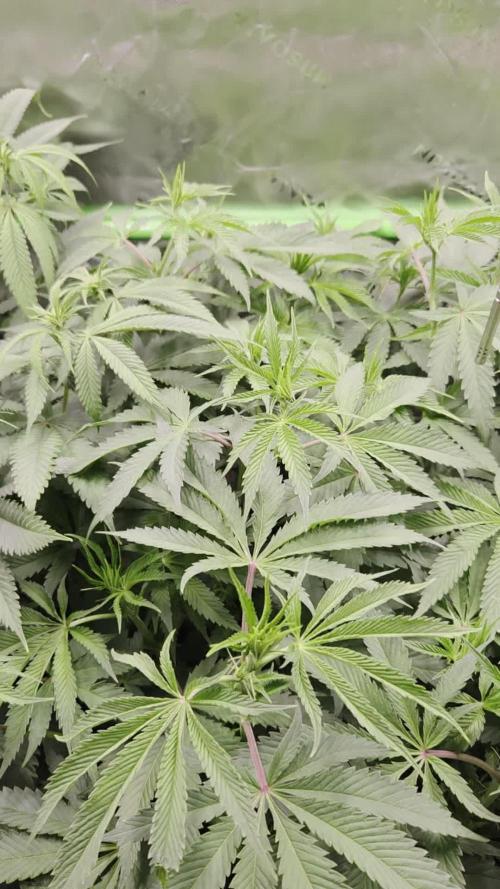
9/18/26 🦍 Gorilla Cookies — Early Bloom & Canopy Breakdown (Day 13 Flower / 9 Weeks 3 Days Total)
Vital Stats & Setup
* Growth Stage: Flowering — Day 13 (9 Weeks 3 Days overall)
* Plant Height: 18.0 inches
* Container Size: 7.0 Gallon fabric pot
* Light Distance: 24 inches under MiGRO LED array
* Schedule: 13h on / 11h off
Watering & Maintenance Log
* Sep 12 (Day 8 Flower):
* 0.7 Gal feed/water — shift toward smaller, higher-frequency waterings
* Sep 14 (Day 10 Flower):
* 0.7 Gal water (pH 6.5, ~72°F)
* Sep 15 (Day 11 Flower):
* 0.3 Gal mini-watering (plain pH 6.5) at 12:33 AM, followed by 1.0 Gal (pH 6.5, 74°F) at 11:02 PM
* Sep 17 (Day 13 Flower):
* Height entry recorded at 18.0 inches
Grower’s Notes & Garden Observations
Canopy Height & Vertical Clearance:
Sitting at 18.0 inches with 26.0 inches of light distance remaining. The low-profile profile keeps tops well clear of the LED bars while maintaining even light spread across the tent.
Structure & Training Progress:
Main stalk training and low-stress ties have yielded a thick, wide structural base with multiple sub-canopy lateral branches reaching into the trellis frame.
Flower Initiation & Health:
Early pistil clusters are established at key bud sites across the upper canopy. Foliage presents consistent greening and active leaf posture. I swear just yesterday this thing was like two or three inches shorter. I just noticed that the AI thinks that my tense temperature was at 90°, when it was actually a 90 out of 99 score for the environment for flowering conditions. Just reiterating the fact that I should do these notes myself. It's insane how quickly it just caught up and evened out the whole canopy of the tent. It's beautiful I love it LOL happy growing friends✌️


@Gejlord
Follow
Starting a new episode of the experiment, 16 flowers 4x4 models. Half organic using florian organic fertilizers. And the other half classically anorganic using canna nutrients.



@Rangaku
Follow
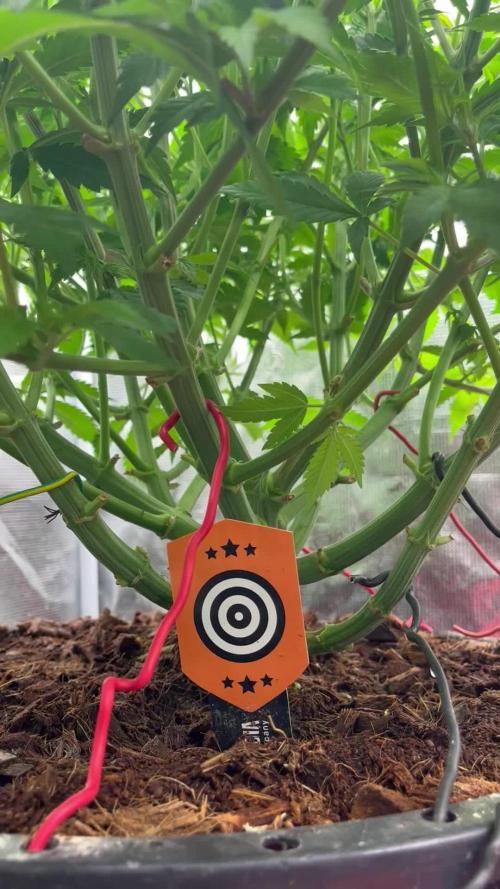
Switched to 12-12 4 days ago and she’s bushing up and taking off . Just gonna keep up the defol and tie down next week and watch her stretch .




@Natrona
Follow
NYC Diesel Auto (Was Hey Abby)
W12 F1 12/7-13
12/8 Since I flipped NYC Diesel to flower last week, I gave only ph 6.3 water ppm 194 temp 64.5. Her budsites are showing flowers now and pushing more hairs. I had to bend her over as she grew taller than the box. She looks like a porcupine with the spines running up her back. train her She is drinking a lot more, so I increased to 1.5 gallons on 12/10 & 13
Calmag 5ml/g
Flower time 1.5 tsp/g
6.42ph, ppm 648, temp 64.2f
You will see in the pics the main stalk has stems about an inch apart and the stems have bud sites 1/2 inch apart going up the stem.
This multi stem and branching is not how I like my plants. It makes it very hard to trim. I defoliated again. I stripped the lower 25% off all the stems and I cut off all the under branches because the tent is too small for NYCD and the tomato. The under branches are shadowed and there is not enough light. The root ball must be huge, when I stick in the soil probe there is resistance and not many places where it inserts easily.
Stay green, growers love 💚🌿
💫Natrona💫


@CanarianGrow92
Follow
Week 3 flowering for the strawberry cookies 🍓🍪 from super sativa seeds club
Using Tent X from Trolmaster to control the temperature and using Xpert nutrients for the food.
We started slowly to add some addictives like bloom booster and cal-mag amino.
Next week we will add some more addictives.
Temperature marks around 23.8 on TentX
