Likes
Comments
Share
@Hempcules
Follow
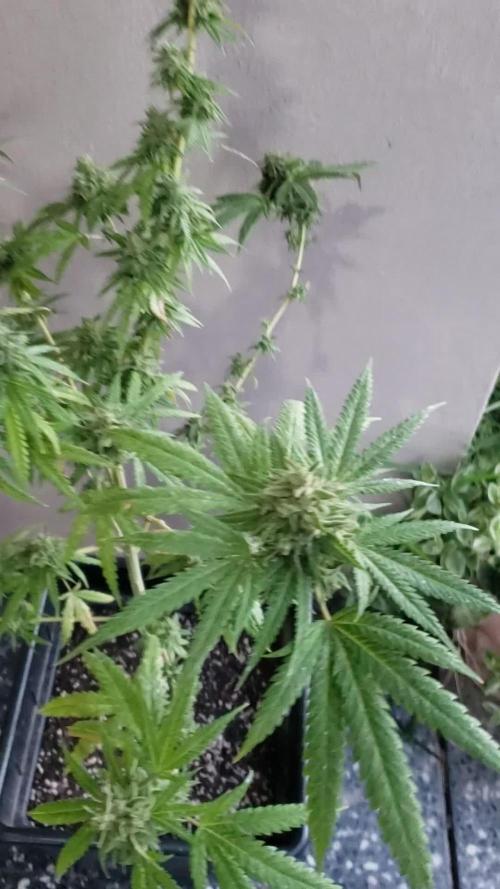
WEEK 18 Not much happened during the final week. Most of the trichomes turned milky, which was exactly what I was hoping for. PPFD: 1000µmol/m²/s Water: 2x plain water Vpd: 1,8Kpa
Likes
13
Share
@buzbun
Follow
Its good growing plant,good cloning its all from 1 freebie seed!On flowering they stretching 2x maybe more im not expect it but all good.think need more Silica for plant like that for more strong stems
Likes
22
Share
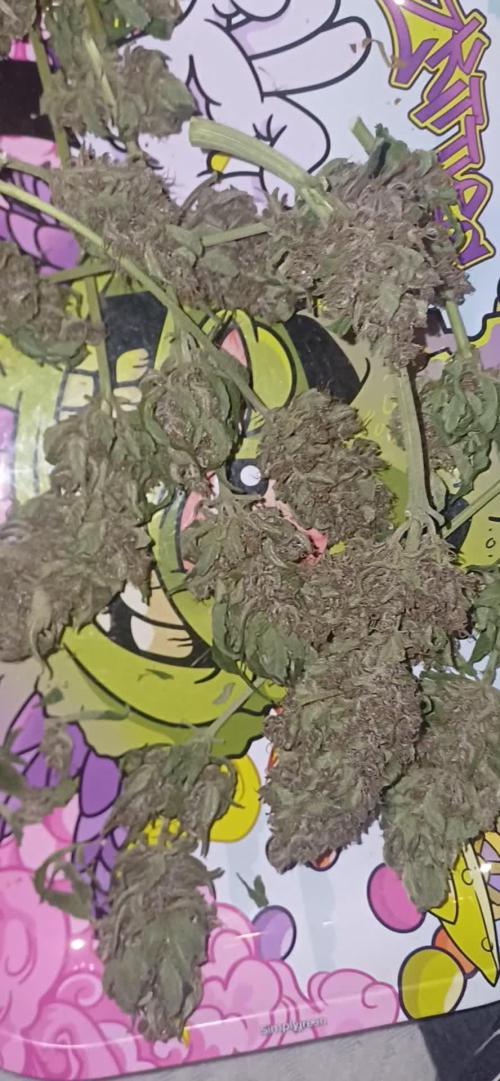
I will be growing her again, as I feel like I let her down, by letting her PH drift so low.. Other than that, she grew beautifully, and fumes of potency as you gaze at her! She yielded more than I expected! She's not that far below my previously lowest yielding plant! :)
Likes
178
Share
This week has gone fine except for one thing which I’ll come to later on. Still stretching, canopy par level is 900 on average and I don’t have any way of getting the lights up further. Hoping the intense light will slow the stretch down a bit but we will have to wait and see. Worst case I’ll have to dim the lights down a bit. That leads me onto the mystery of this week. The nearly dead plant. I have no idea why it has gone so limp. You can kind of see on the photo lapse how quickly it collapses. Incase it’s some kind of disease I’ll give it another day in there. If it doesn’t recover I’ll have to pull her out and try to train the other plants over her empty spot so I don’t waste any light. EC is around 1.2-1.5 atm, the highest dose I’ll be giving them will be week 4 and 5 of flower when the buds seem to do the most weight gains (visually). Canopy is actually quite even if you overlook the hole in the canopy, maybe a couple inches between highest and lowest. Anyway, thanks for checking in guys, if anyone has any thoughts/comments about the dead plant let me know as I’m struggling to find answers online. 😊
Likes
3
Share
@DRAZ_420
Follow
All of the branches have been tied down for LST she is reacting super well so far. The smell on it is definitely becoming apparent. Love how they are reacting ti the nutrients from green leaf as well very responsive. Everytime i prune leaves of more just grow immediately pretty amazing. Cant wait to smoke this plant :)
Processing
Likes
10
Share
Buenas Farmers! Otra semana más y pasaremos a Flora, esperando a ver si podemos obtener nuevo equipo de @todoGrowled para llevar el verano más llevadero... Después de recuperase de las Plagas empieza coger buen color esto.🍁
Likes
13
Share
I’m very concerned about baby 1. Her growth pace is behind her sister baby 2. Working with someone to help me figure out how to remedy this. Fresh batch of water and nutrients for baby 1. Loving how rapid they are growing!
Likes
20
Share
Venga familia que ya viene la cosecha de estas Apple Fritter de RoyalQueenSeeds, que ganas que tenia ya de darles machetazo. No veas que pinta que tienen estas plantas. Las flores aparte de prietas se ven bien resinosas. a sido una genética con la que disfruté mucho cultivarla, es algo complicada cultivarla pero merece la pena si eres cultivador con experiencia no te será problema cosechar. Agrobeta: https://www.agrobeta.com/agrobetatiendaonline/36-abonos-canamo Mars hydro: Code discount: EL420 https://www.mars-hydro.com/ Hasta aquí es todo , espero que lo disfrutéis, buenos humos 💨💨.
Likes
52
Share
You don't become confident by shouting affirmations in the mirror, but by having a stack of undeniable proof that you are who you say you are, outwork your self-doubt. Nitrogen fixation is a chemical process by which molecular nitrogen (N2), which has a strong triple covalent bond, is converted into ammonia (NH3) or related nitrogenous compounds, typically in soil or aquatic systems but also in industry. The nitrogen in air is molecular dinitrogen, a relatively nonreactive molecule that is metabolically useless to all but a few microorganisms. Biological nitrogen fixation or diazotrophy is an important microbe-mediated process that converts dinitrogen (N2) gas to ammonia (NH3) using the nitrogenase protein complex (Nif).[2][3] Nitrogen fixation is essential to life because fixed inorganic nitrogen compounds are required for the biosynthesis of all nitrogen-containing organic compounds, such as amino acids and proteins, nucleoside triphosphates and nucleic acids. As part of the nitrogen cycle, it is essential for agriculture and the manufacture of fertilizer. It is also, indirectly, relevant to the manufacture of all nitrogen chemical compounds, which include some explosives, pharmaceuticals, and dyes. Nitrogen fixation is carried out naturally in soil by microorganisms termed diazotrophs that include bacteria, such as Azotobacter, and archaea. Some nitrogen-fixing bacteria have symbiotic relationships with plant groups, especially legumes.[4] Looser non-symbiotic relationships between diazotrophs and plants are often referred to as associative, as seen in nitrogen fixation on rice roots. Nitrogen fixation occurs between some termites and fungi.[5] It occurs naturally in the air by means of NOx production by lightning.[6][7] All biological reactions involving the process of nitrogen fixation are catalyzed by enzymes called nitrogenases.[8] These enzymes contain iron, often with a second metal, usually molybdenum but sometimes vanadium. Green clover (Fixation) White clover (Fixation) Red Clover. (Fixation) Yellow Clover. (Fixation, deeper roots) Sweet Thai Basil. (Terpenes) Italian Basil. (Terpenes) Chamomile.(Oil production) Borage.(Pest attraction taste) Lavender.(Pest attraction smell) Marigold(Pest attraction visual) Mycorrhizae are beneficial associations between mycorrhizal fungi and a plant’s root system. Mycorrhizal fungi spores germinate in the soil, creating filaments (hyphae) that penetrate the root cells, thus establishing a symbiotic relationship. This collaboration leads to the development of both intra-radical and extra-radical networks of filaments, enabling efficient exploration of the soil for enhanced access to nutrients and water. Consequently, these vital resources are transferred to the plant, resulting in numerous benefits for crop cultivation. Various mycorrhizal products are available in diverse formulations (powder, granular, and liquid), concentrations, and qualities. Ongoing advancements in products, technologies, and research are reshaping our understanding of mycorrhizae. Despite these positive developments, certain misconceptions persist. In the following discussion, we aim to clarify the truths and dispel the myths surrounding mycorrhizae products. MYTH #1 A HIGHER NUMBER OF MYCORRHIZAE SPECIES MEANS BETTER RESULTS. Contrary to common belief, having a higher number of mycorrhizae species in a product does not translate to better results; in fact, it often yields the opposite outcome. A plant can sustain only one association with a particular mycorrhizal fungi species. Introducing multiple species creates competition among them, which is not advantageous for the plant. The initial colonizer does not ensure the highest success; instead, it gains precedence. It is recommended to select a product with a concentrated presence of a single mycorrhizae species known for its effective performance, rather than opting for a product with multiple species at lower concentrations. MYTH #2 ECTOMYCORRHIZAE ARE EFFECTIVE FOR CANNABIS PLANTS. Although ectomycorrhizae can colonize five to ten percent of plant species, cannabis is not among them. Ectomycorrhizae do not penetrate the root cells; instead, they develop around the roots and on the exterior. For cannabis plants, it is essential to seek out endomycorrhizae. Endomycorrhizae are capable of colonizing 70% to 90% of plant species, including cannabis. Unlike ectomycorrhizae, endomycorrhizae penetrate the root cells, forming structures like arbuscules for the exchange of nutrients and water with the plant. MYTH #3 WHOLE INOCULANT (PROPAGULES) PERFORM BETTER THAN ONLY VIABLE SPORES. The propagule count specified on most mycorrhizae products indicates the presence of spores (viable and unviable), hyphae, and root fragments. However, it is crucial to note that only viable spores, those with the capacity to germinate, can successfully colonize a plant’s root system. Spores are to mycorrhizal fungi what seeds are to cannabis plants—a fundamental component enabling fungi reproduction. Consequently, even if a mycorrhizal product boasts millions of propagules, its effectiveness hinges on the presence of viable spores. Without viable spores, the product will not contribute to plant development. Therefore, the genuine value of a mycorrhizal inoculant lies in the quantity of viable spores it contains, as only viable spores can efficiently initiate symbiosis. MYTH #4 ALL METHODS OF APPLICATION YIELD IDENTICAL RESULTS. To establish the symbiosis, mycorrhizal fungi spores must be close to the plant roots. The optimal recommendation is to directly apply mycorrhizal inoculant to the roots, either in powder, granular or slurry form. This method ensures maximum proximity between the spores and the roots, facilitating a rapid establishment of symbiosis. Particularly with crops like cannabis, which have a short growing cycle, employing this technique is the most effective way to obtain optimal benefits. Alternatively, techniques such as blending the inoculant with the soil are effective, but there may be a delay in the establishment of symbiosis. This is because the roots need to grow and come into contact with the dispersed spores throughout the growing media. MYTH #5 MYCORRHIZAE CAN ONLY BE GROWN ON LIVING PLANTS. While the predominant method for commercially producing mycorrhizae involves growing them on the root systems of living plants (in vivo production), it is not the exclusive nor the optimal technique. In fact, this production approach has notable drawbacks that the “root organ culture” method just does not have (in vitro production). In vitro production occurs in meticulously controlled, aseptic laboratory conditions, allowing for the consistent generation of products that are viable, highly concentrated, species-specific, and free from pathogens. Achieving such precision and quality is impossible when relying on the cultivation of mycorrhizal fungi on plants exposed to external conditions. In conclusion, it is crucial to take all these factors into consideration when choosing the appropriate product for your crop to fully harness the wide array of benefits provided by a high-quality mycorrhizal product. STRONGER PLANT – Stress resistance. FASTER GROWTH – Improve plant structure and shorter veg time. INCREASE YIELD – Overall more biomass. IMPROVED QUALITY – Increase cannabinoids and terpenes content.
Likes
2
Share
Wow!! It was sunny and hot all week! You can see that they almost doubled their size and are looking pretty much more healthy. That is also because I followed @MadeInGermany 's advice and decided to wait more until I had to water. They seem to have liked that, beacuse there is no more sign of Ca blocking in the leaves. And they grew very nicely, no need of everything. Also following his advice I will use Cal/Mag in the next watering. But, you know, I'm making it cheap... so I will use another home-made recipe: wood ash fertilizer, which include those nutrients and some that are needed in flowering stage -which seems to be starting, so next week will have the flowering label-. It also degrades the N in the soil that could be still causing a little overfeeding (leaves' tips are a bit burnt). However, I admit that my mistake was overwatering from the beggining. Lesson learned! No watering for the whole week and the plnat didn't seem to worry about it. Man! If only it had been this sunny all the time! Plants look very healthier and are way bigger, with huge new leaves. A little amount of pistils showed up in the last days, so I guess it is the moment for stretching. Knowing that, I decided to do a little training on Sweet, as it is the one a bit behind. You can see in the last picture how I took a couple leaves that were blocking light from side branches-future bud sites- and taped them, so they didn't. If results are good I might do the same with Rebel, but I have a feeling that she'll do good without it. Sadly, next week will be all rainy and cloudy... Nothing to do tho. Any commentary will be thanked, even if it is about how cheesy the videos are! 😂
Processing
Likes
10
Share
@4F1M6
Follow
I started germination of 2 Jack F1 beans on 29/12/2020. I pre moistened my rockwool cubes with ph balanced water to 6.4. Made sure the plugs were just damp and not soaked. Using a small wooden dowel I increased the size of the plugs pre made holes. Than I sowed my beans into the holes. Ripped off a small piece of rockwool and mulched it up. Lightly filled the holes in with the mulched rockwool. Than stuck the plugs into a misted humidity dome, to complete germination. Shouldn't take anymore than 4-5 days to see some sprouts. Once I see some cotlydon leaves bursting to the surface. I will get the plugs planted into some 1 gallon pots. Plus get these ladies situated into their new home. Cant wait! Just some background information on my last run with the Jack f1. It was relatively strong during veg. But was middle of the pack in size after the 6 weeks of vegetative growth. After the flower stretch she became the largest quick! With a enormous stretch rate of 300%... Yes she tripled in size. Forcing me too super crop her which she didnt like at all. Setting her back and definitely hurting her all around yeild. Despite the staggering, unexpected stretch amount. Leading to the stress inducing supercropping. She still pulled off immaculate bud structre, density, and trichome production. She just took much longer than she should have... and didnt pack on the whopper size buds I'd expect out of these genetics. Definitely learned alot out of my first go. So I'm amped for the second run with this variety. This time around I'm going to anticipate the stretch and cut veg time shorter. To roughly 4 weeks or 1 ft in height. Also utilize a bit of very light lst to their side branching to open them up a little bit. Without stressing them out... well hopefully.
Likes
Comments
Share
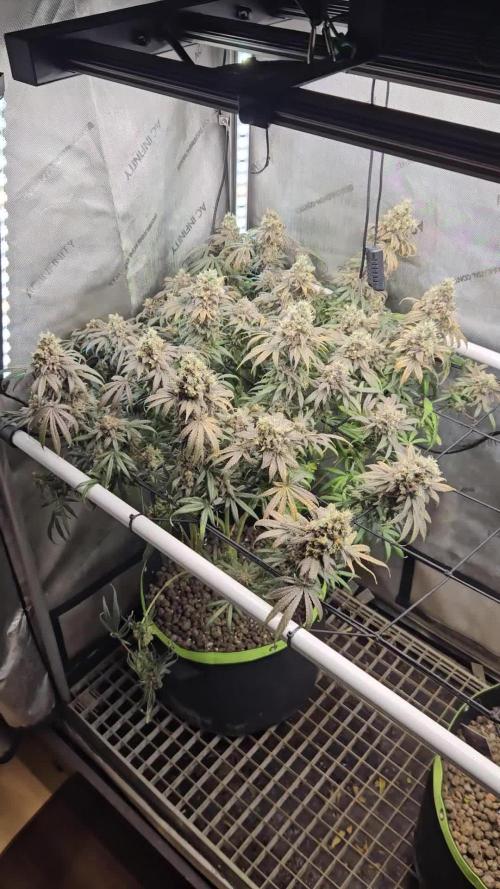
No complaints about these girls this week so far so good.
Likes
2
Share
@Drehpaper
Follow
Woche 9 Tag 57-63 / Blüte Tag 29-35 Luftfeuchtigkeit 47,8 Tag 25,8 Nacht 21,3 PPFD 879 DLI 38 Höhe 55 VPD 1,38 Lampe Abstand 44cm Lampe auf 80% Die Daten entnehme ich immer am Ende der Woche von meinem Pulse Grow, kann nicht sagen wie genau die Werte sind. Der PPFD Wert wird ab jetzt immer an den acht höchsten Punkten gemessen und der Durchschnitt ermittelt, alles bei einem offenen Zelt. Anscheinend hat die Lampe zu viel Power und die Dame kommt mit der Nährstoff Aufnahme nicht nach. An BT 32 gab es mal 2ml/l PK 13/14 von Plagron. bin gespannt ob ich alles richtig analysiert habe oder ob ein totaler Griff ins Klo war :) Meinte damit die Braunen Flecken auf den unteren Blättern siehe Bild! In den nächsten Wochen könnte es mit den Temperaturen Probleme geben. Wird wohl die magischen 26 Grad Celsius überschreiten Tagsüber. Da es mein Erster Grow seit mehr als 20 Jahren ist kann ich noch nicht viel sagen zur Genetik, scheint sehr stabil zu sein und kommt mit Stress bis jetzt gut klar. Paar Mutationen sind zu sehen Siehe Bilder! Hab von einigen Kollegen gehört das die ganzen neuen Genetiken sehr sehr zickig werden können was ich zur PBR bis jetzt nicht sagen kann. Ist das normal ? Blütenkelche auf der Blüte und aufn Blatt? Was sagt ihr dazu?
Likes
116
Share
@GMSgrows
Follow
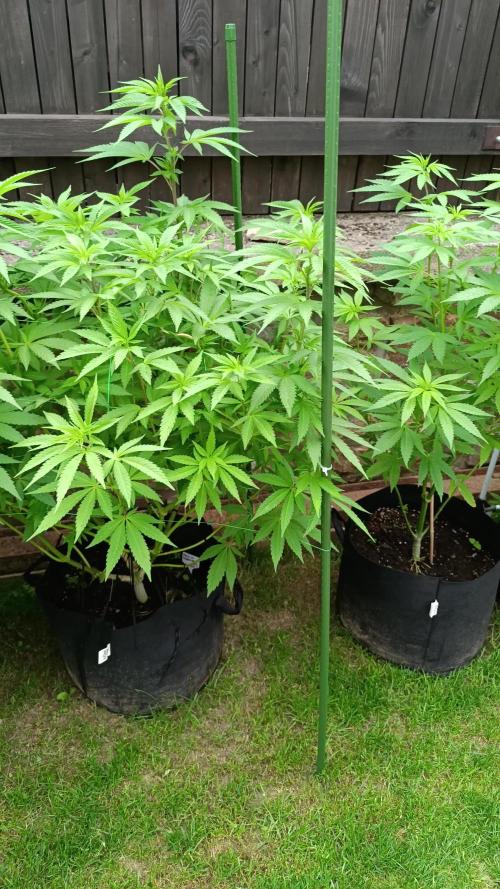
First off. I DO NOT USE TERRA AQUATICA NUTRIENTS. I USE FLORANOVA GROW AND FLORANOVA BLOOM The Silver Widow is a beautifully structured girl with great resistance to the elements. She is naturally one big bush without topping her. The smells from this girl is something to behold. At times it's all you can smell throughout the entire yard. This girl makes me smile every time I look at her. Flowering time is approaching very soon. Looking forward to some sticky flowers. Thanks for the interest my friends.
Likes
20
Share
Estoy muy satisfecho de mi primer cultivo Indoor. El resultado a superado con creces mis mejores expectativas. Ciertamente disponía de unas condiciones mas que buenas para llevarlo a buen término. Una habitación de 6 metros cuadrados que con un radiador, un deshumificador, un ventilador y por supuesto un termohidrómetro wifi que en todo momento me indicaba temperatura y humedad.
Likes
8
Share
🚨 Durbin Thai/Cinderella 99 week 19 update 🚨 🚨 134 days old!! 🚨 🌸 Day 43 of Flower 🌸 So this is a clone I received on Jan 31st. She has been transplanted from a solo cup 2 a 5 gal pot. She had 2 be topped in her second week of rooting do 2 the top frying from to much light in young clone stage. Since the topping this lady has come 2 life!! She has been defoliated 4 times! Most recent defoliation 3/24! She spent her first month feeding just off nutrients in fox farm soil. On 3/2/22 I gave her her first Gaia Green trio feeding!! She has exploded with growth since!! She was defoliated on 3/27 again. She was given her second feeding of @gaiagreenorganics on 4/02. This lady was defoliated on 4/10 and 4/19 and 5/1. She received a all purpose/bloom feed of Gaia green on 5/2. She was also flipped to 12/12 light cycle on 5/2. She received a heavy defoliation on 5/29. 5/30 gave the girl a 15 tablespoon dose of Gaia green worm castings. Installed the new Marshydro Fc-4800 in the tent on 5/31!! She received her full bloom feeding of 5 tablespoons of power bloom on 6/2!!This is what she looks like today!! 💡 Grow Sponsor💡 @marshydroled__amazon @marshydronnier #marshydro #fc4800 Marshydro equipment-- Marshydro- 4x4 grow tent Marshydro- Fc4800 Marshydro- 6" inline exhaust fan with digital temp and humidity sensor Marshydro- 6" carbon filter Marshydro- 6" Black duct line Other companies in this grow- @foxfarmsoilandfertilizer - 100% ffof @gaiagreenorganics @inkbirdofficial - WiFi temp control @madmanplant- 6" Tent shelves #rvagrown #rvagrower #cannabisgrower #homegrown #hightimes #weed4ptsd #weed4veterans #veterangrown #tricomes #ledgrown #weedstrains #indoorgrow #indoorgrown #tentgrown #supportlocal #growlocal #letsgrowrva #weedismedicine #420 #veterangrower #clonegrown #marshydro #fc4800
Likes
51
Share
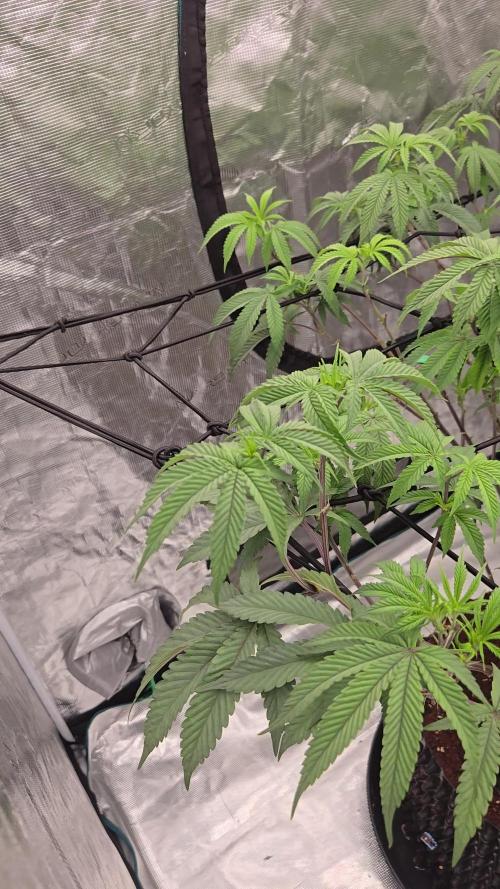
Super bien, están creciendo con mucho vigor. La alimentación se mantiene igual. No he tenido ningún contratiempo. Armario completamente cubierto. Cambiamos el ciclo de luz a 12-12. 👌