


Likes
Comments
Share

@Organic_G
Follow
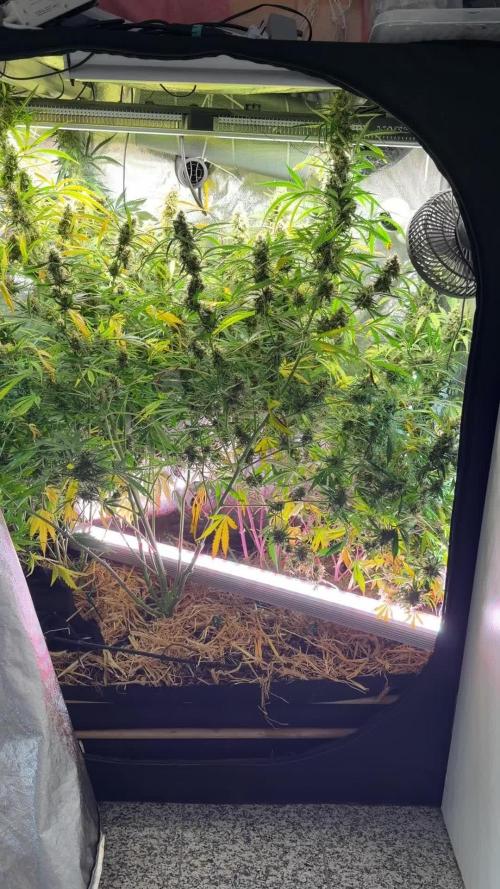
Wachsen und reifen ganz gut, überlege bereits eine zu cutten aber denke warte noch ne Woche oder so
Good Things Take time ;)
Ansonsten Terps sind jut



Likes
Comments
Share

@Samsationalseeds
Follow
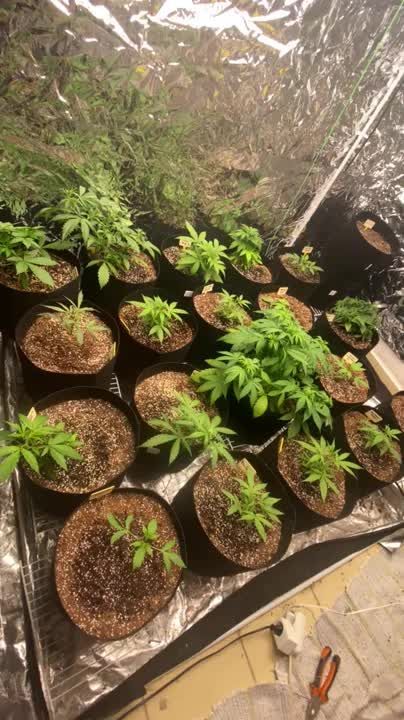
Most of my autos in photos were put to pop nearly fifteen days ago. Some of it has been slow.But it's okay because they're gonna pick up soon.
Processing
Likes
28
Share


@TerpedUp
Follow
I went ahead and gave them a lil bit of voodoo just one watering with it.
I am doing leaf tucking or leaf breading whenever I see possible. They all seem to like it especially #1 and #3.😊

Likes
2
Share


@fabialien
Follow
Semana 5 de crecimiento, notamos ligera aparición de Araña roja, vamos a combatir con jabon potásico y neem hoy 8 de agosto se aplica jabón potásico y neem con esponja para erradicar posibles nidos.


Likes
12
Share


@ItsCannaDog
Follow
This is the start of week 9, just feeding the plants just ph water. Been noticing the tips yellowing and curling and a little brown. So we are thinking it's just over nutrients. Ppm is based at recommended amount from manufacturer, but might be high for this strain. I noticed some of the sugar leaves have some terpines starting to come. It's like a twinkling vampire, lol.


Likes
10
Share


@MG2009
Follow
09/26/2021
Starting week #7 of flower still picking caterpillar, and eggs of leaves, not to serious as we are on top of it.
Starting the week with banana peel tea drench 2 gallons per girl, which is all she will get besides water till harvest.
Still small flushes of pistils coming out I believe she (Hulk) is in final stage of flower (4) lots of orange hairs (pistils) but fresh one coming out daily albeit slower. Hopefully she fatting up in coming weeks.
09/28/2021
Week7
Day #3
Definitely seeing more calyx swelling.
#1 is chunking up nicely
#2 looks good little bud rot were caused from cattipillar poop!
#3 coming from behind Will be last to harvest for sure.
Likes
9
Share


@Ninjim8
Follow
Day 28 from Light Flip
Pruned lower and weak branches along with some lower tiny bud sites
Final Top Dressed
Tbsp not Tsp
Feeding liquid nutes twice a week
Saw a single nat and put up the sticky traps gonna keep them up for a little while in case
Likes
31
Share


@THCpapa
Follow
Week 7 in the comedy of my garden journey, and my green squad has decided to embrace the art of being vertically challenged – they're like the plant version of a pocket-sized superhero team. "Short and sassy" seems to be their new motto.
In an attempt to uplift their spirits, two of the ladies scored a new, roomier 3-gallon final home – it's like they moved from a cozy apartment to a botanical mansion, hoping a change of scenery would inspire some vertical ambition. They're probably comparing their new homes and deciding who has the fanciest leafy chandelier.
However, the plot thickens as one plant emerges with a leafy fashion statement that's a bit too avant-garde – discoloration that could rival a Picasso painting. Is it a magnesium deficiency or an oxygen rebellion? The plant might as well be holding a tiny protest sign that says, "Give me answers or give me wilting!"
Playing the role of a plant detective, I cranked up the fans, turning my grow tent into a botanical wind tunnel. It's like a leafy hurricane is sweeping through, and my plants are either loving the breeze or planning their escape. As a bonus, I threw in a leafy spa day – deformation and topping, because who doesn't love a good horticultural makeover?
But wait, there's more! In the midst of the botanical sitcom, the humidity decided to play the villain in this leafy drama. It's like the humidity gauge is staging a rebellion of its own. So, armed with misters and perhaps a leafy motivational speech, I'm on a mission to turn my grow tent into a tropical paradise and give my plants the humidity vacation they didn't know they needed.
Week 7 – where the plants are short, the homes are upgraded, the leaves are avant-garde, and the humidity is throwing a curveball. Stay tuned for the next episode of "The Green and the Humid" – because in the world of my garden, every week is a new episode filled with laughs, surprises, and a touch of leafy chaos! 🌿🌧️🎭


Likes
3
Share


@mquintero7
Follow
Buds are forming very well. Smell is nice and increasing. Been removing big fan old leaves so sunlight can penetrate all the plant, and concentrate energy on flowers. Organic fertilization very carefully to prevent nutrient burn.
Likes
3
Share

@all_about_420
Follow
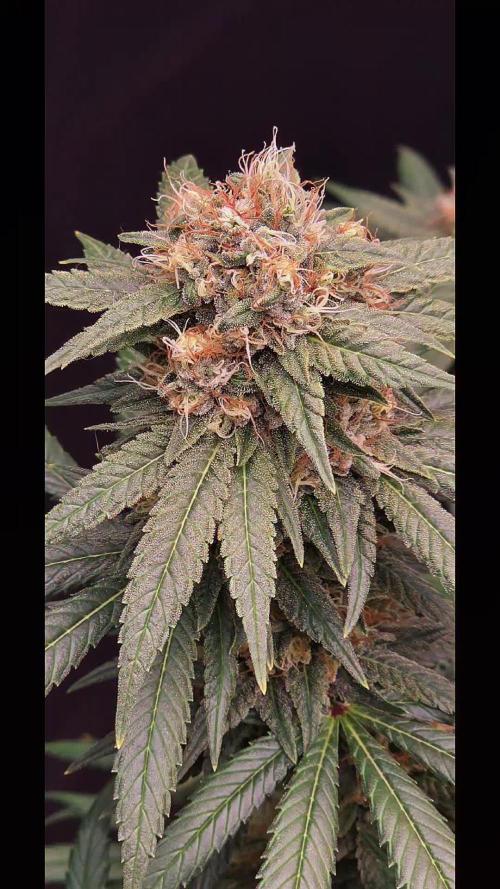
Die RS11 von Traphouse Genetics in ihrer vollen Pracht und die Reife ist unübersehbar weit fortgeschritten. Die zwei Aufnahmen aus dem Zelt dokumentieren perfekt, wie kompakt und schwer die einzelnen Blütenbälle mittlerweile über dem sauber rasierten Profil stehen.
Die orange-braune Färbung der Stigmen hat das gesamte Blätterdach eingenommen, während die Blütenkelche maximal angeschwollen und dicht gepackt sind. Dank der vorausgegangenen, präzisen Gabe von Advanced Nutrients hält die Pflanze ihre tiefgrüne Vitalität bis zum Schluss, während sie die letzten Reserven mobilisiert. Die Homogenität der Krone ist durch das damalige Training makellos geblieben; jeder Haupttrieb hat sich zu einer stattlichen, festen Cola entwickelt. Es ist unverkennbar, dass wir uns hier am absoluten Höhepunkt des Runs befinden und die Ernte kurz bevorsteht.
Likes
3
Share

@HeizraumGrower
Follow
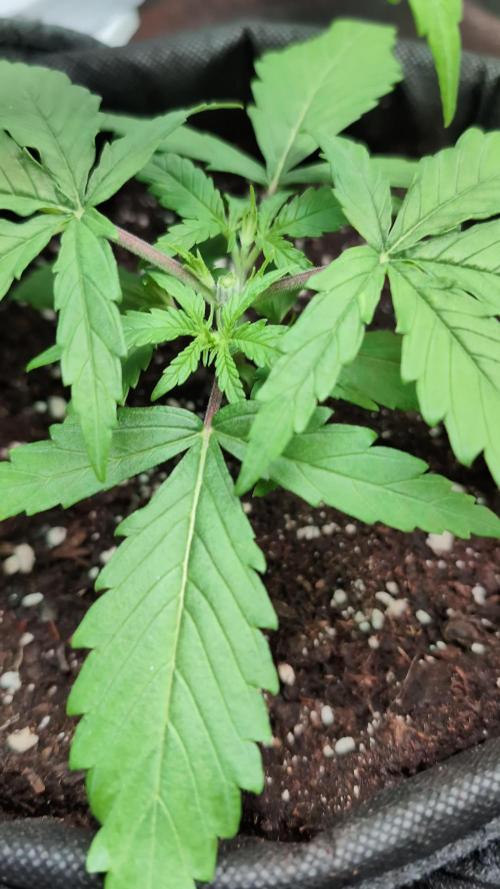
The grow is going exactly as planned so far, and the plant was topped on day 16. To minimize stress from the procedure and boost recovery, I bumped up the relative humidity, dropping the VPD for 24 hours. At the same time, I slightly dialed back the light intensity for this short recovery phase.
I watered twice this week with one liter of nutrient solution each time. The first feed was at an EC of 1.8, and for the second one, I lowered it a little to an EC of 1.4.
Right after the short recovery phase, I applied some LST to pull the final 4 main shoots outwards. By the end of the week, the light intensity was increased again and is now sitting at 75% (around 450–500 PPFD). The plant is now ready for a very early flip to the 12/12 light schedule.
Likes
6
Share


@AcidBurn_41
Follow
07.03.24
BT #47
Servus Buddy's
Alles unverändert den Lady's geht es gut.
Skunk #1 wird immer frostiger und die Knospen schwellen immer noch an sie hat meine reife noch nicht erreicht es sind nicht mal 5% Amber.
Tangerine Plustert ihre Knospen jetzt richtig auf und ihre Tricome gehe bis zu den Stängel über.
Beide zusammen ergeben ein Duft der nicht mehr von dieser Welt ist einfach Herlich.
Skunk #1 bekommt nur noch reines ph neutrales Wasser somit bekomme ich bis sie fertig ist alles raus.
Die Nährstoffe die noch gespeichert sind werden jetzt komplett aus der Pflanze gesaugt.
Tangerine bekommt weiter hin Ihr Futter Hesi Blüh Complex 5ml/L ,Hesi Phosphor + 0,5ml/L,Hesi Boost 2ml/L,Hesi SuperVit.
Danke für's vorbei schauen mögen all eure Lady's Gesund und brächtig Wachsen und euch mit schmackhaften Stuff versorgen 😉

Likes
8
Share


@Bostonbud781
Follow
Very pleased so far always looking for advice. I moved three out of 10 they were too confined. Looking forward to clipping soon.

Likes
10
Share


@Bigbombbudz
Follow
Another week closer, Not much to say but everything is dialed in and the girls are growing beautiful.
Until next week, smoke a fatty, help out your fellow grower.

Processing
Likes
8
Share


@hi_bengal
Follow
This little girl is loving life! 16 days old today! 6.4 ph water 18/6 light schedule watering when soil looks and feels dry.
Likes
2
Share


@XTheJX
Follow
After several methods of much appreciated advice I chose to:-
1. Cut off all the s**te
2. Let fully dry out.
3. Water only.
4. Lowered light.
I had noticed a faint mark on inside of plant pot of which I had a previous grow (from clones, I only supplied the room) so topped soil up to that mark also.
Quite happy with results


Likes
9
Share


@TheBulldozerSicily
Follow
Niente da dire, 0 stress questa settimana non ho fatto niente, la prossima settimana aggiungeremo acqua se necessario.
Si iniziano a vedere i fiorellini,

Likes
Comments
Share

@WalachianGrowinDiary
Follow
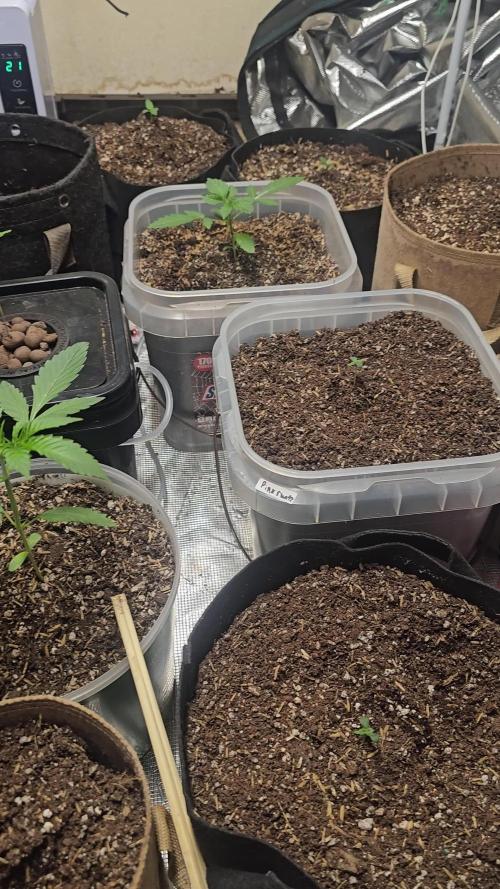
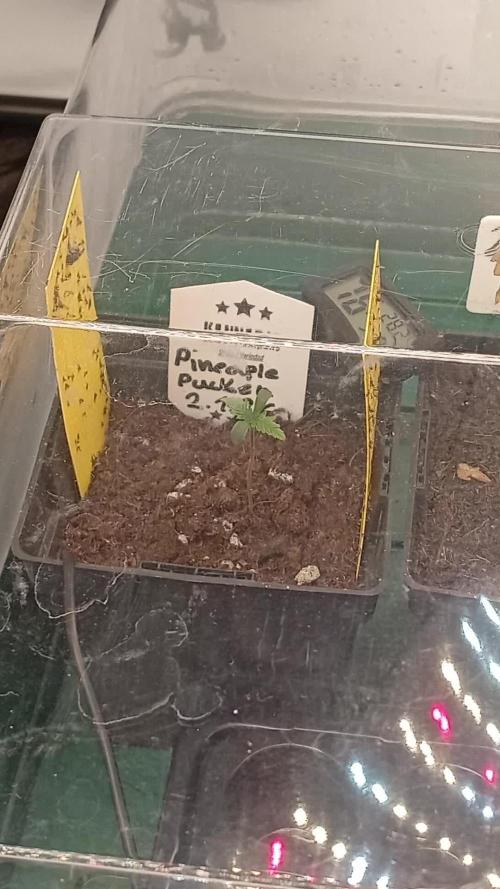
Mixed living soil with GHF grow 3g/liter of substrate . Watered with Bioenhancer 1g/lof dechlorined water