


Likes
Comments
Share

@420DeepGrow
Follow
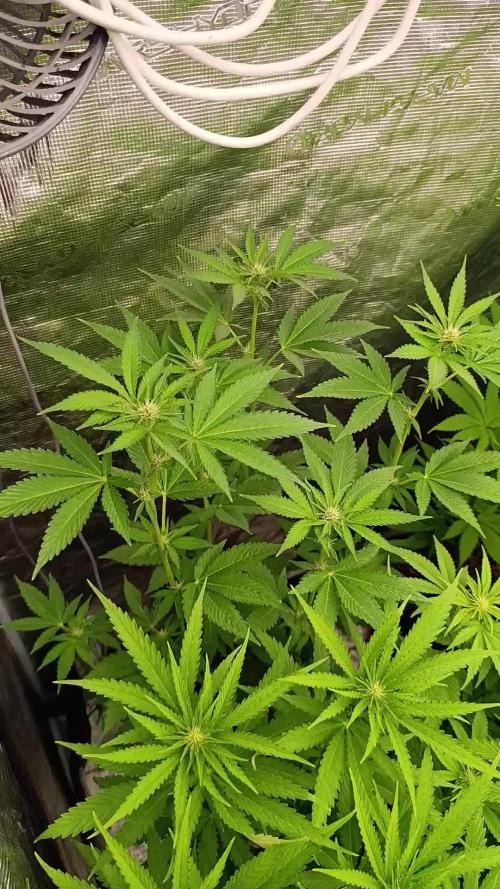
📆 Semana 3
Las plantas alcanzan el punto máximo de estiramiento, mostrando una rápida expansión de las puntas principales y una consolidación de la estructura formada durante las semanas anteriores. Las ramas secundarias ganan protagonismo y comienzan a igualar alturas, creando una superficie de floración más uniforme y eficiente para el aprovechamiento de la luz.
Los primeros grupos florales empiezan a definirse con claridad en todos los puntos de crecimiento. La demanda de agua y nutrientes continúa aumentando, impulsada por el elevado ritmo metabólico propio de esta fase. La planta dirige gran parte de su energía a establecer la futura producción floral mientras mantiene un crecimiento vegetativo residual.
⚡ EC: 1.6 – 1.7
💧 pH: 6.2 – 6.5
🌡️ Agua: 21°C
🌫️ Humedad: 45–50%
💡 Intensidad: 900–1000 PPFD
🔥 Nota de cultivo: La tercera semana de floración suele marcar el final del gran estiramiento y el inicio de la verdadera formación de cogollos. Una correcta gestión de la nutrición, junto con una buena circulación de aire y una distribución uniforme de la luz, permitirá que cada punto floral alcance su máximo potencial durante las próximas semanas.
Seguimos creciendo fuerte 💪!

Likes
24
Share


@Basementganja
Follow
Harvested the Clones!
I'm stoked how #4 grew out, I think she's the winner!
With limited space in my grow, I'm only going to be able to bloom out the rest of the phenos clones to week 3-4.. The show must go on..
It's the price I must pay for using non-ideal cloning methods... Next round of phenohunting will have 100% cloning success, using my new aeroponics cloning machine.


Likes
9
Share


@Kelly420
Follow
Everything is on point. I’m at day 35 of flowering. I remember a while back there were a lot of Barney’s farm haters saying they only got hermaphrodites or whatever their bs. Either you just sucked as a grower or you got an absolute fluke. Everything I have ever ordered from Barney’s farm has not only been stellar. But everything I have grown from them vs the same strain from other breeders , Barney’s farm has always taken number one. Many thanks to those wonderful people at BF across the world. Keep it up. I don’t work for them nor sponsored. But would love to. As they are tha shizznit.

Likes
52
Share


@TheDoctor
Follow
i know i know, i promised to harvest this week, but to me they just don't seem ready yet!
Although i harvested the main-buds from the LSD and put the other buds with the plant into a vase in order to let her ripe more, i want to harvest the other plants in one piece.
The Peyote Critical will be the next one, in three days or so, i'm just waiting for her to develop some amber trichomes and the lower buds should ripe some more.
The blue gelato could be harvested in a week or shorter, she seems damn sticky and rock solid!
Shiskaberry need a week or so, some pistils are still white and trichomes are pretty glassy at some points!
Srawberry lemonade will need one or two weeks, trichomes are glassy, but leaves are already yellowing, i think she will taste bests because she took so much nutrients and is now losing colour already!
Likes
11
Share


@Ferelite
Follow
Week 4 Bloom
31/08 - Mass defoliation day, #1 was suffering from the amount of leafs it had, #2 was not as bad, has filled its own structure out nicely and outgrown #1.
Flushed and changed water. Upped the liquid potash. Added a tiny bit of CMX due to #2 showing a slight magnesium deficiency. Switched from PSI to cyco silica due to running out of PSI.
Humidity and temperatures have been near perfect, 28-38% RH and 20-25 degrees celsius, extra exhaust ventilation helped a lot.
Likes
7
Share

@GERGrowDesigns
Follow
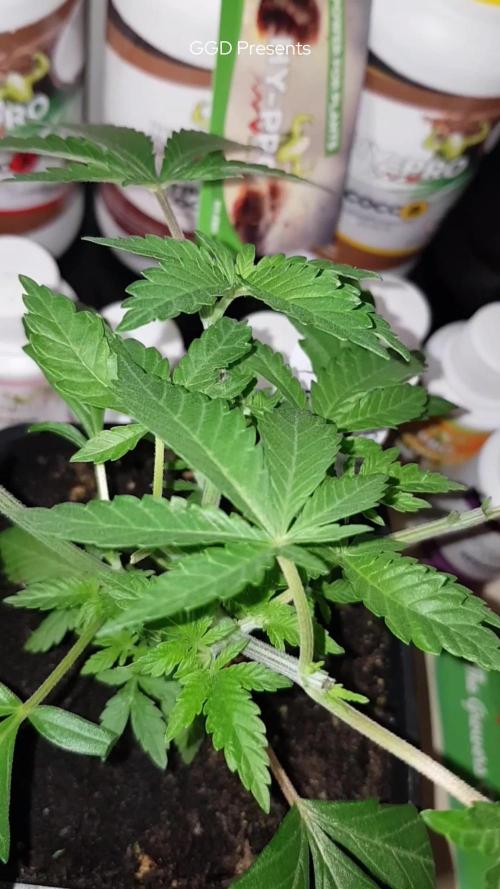
Welcome to Veg Week 3 of SuperStrains OreoZ
I'm excited to share my grow journey with you from my
SuperStrains Project . It's going to be an incredible ride, full of learning, growing, and connecting with fellow growers from all around the world!
For this Project , I’ve chosen the Feminized Photo Strain OreoZ:
Here’s what I’m working with:
• 🌱 Tent: 120x60x80
• 🧑🌾 Breeder Company: SuperStrains
• 💧 Humidity Range: 60
• ⏳ Flowering Time: 8-9 Weeks
• Strain Info: 22%THC
• 🌡️ Temperature: 26
• 🍵 Pot Size: 0.1
• Nutrient Brand: Hy-Pro
• ⚡ Lights : 600W x 2
A huge thank you to SuperStrains for allowing me to try my Best with this amazing collection from Photo Strains they managed to Sponsore side by side with theyre Hy-Pro Nutriets . Big thanks for supporting the grower community worldwide! Your genetics and passion speak for themselves!
I would truly appreciate every bit of feedback, help, questions, or discussions – and of course, your likes and interactions mean the world to me as I try to stand out in this exciting competition!
Let’s grow together – and don’t forget to stop by again to see the latest updates!
Happy growing!
Stay lifted and stay curious!
Peace & Buds!
Likes
7
Share


@ItsCannaDog
Follow
This week I've started flush, did a Chem change out and using flawless finish for flush. I'm a little disappointed with the grow due to no adequate light towards the bottom so it looks like I have a lot of popcorn nugs. Next grow I will try mainlining and have multiple stems really lolipopped. Maybe introduce some co² .


Likes
4
Share


@Hommero75
Follow
The Banana Purple Punch great strain with a super Sweet and Berries aroma.
I had bad issues in the beginning with the development and the grow of the plant. I amost gave up on the seed but she bounced back. She got cut today and put to dry. Give a 10 to the Banana Purple Punch

Likes
Comments
Share


@Trichomedream420
Follow
I have put them through stress by constantly trimming, I have did some topping and low stress training. I tried leaf tucking but plants were so bushy that no light was able penetrate the canopy. I did everything that I was told not to just to expirement with the girls.


Likes
Comments
Share


@Dankmark420
Follow
Now it’s just a waiting game to watch theese beautiful flowers bud up🙌🏼💪

Processing
Likes
13
Share


@MG2009
Follow
A new week begins
05/22/2018
Fed Espoma + worm castings top dressed no more nitrogen . Changing to higher P and K.
Looking for good organic P-K fertilizer,any suggestions? Anyone?. Thanks for looking at my grow hope you enjoy it.
05/28/2018
Should start seeing seeds popping in buds in next 2-3 weeks.
05/29/2018
Going to work on lowering humidity in last weeks of flowering , and prevent any mould issues
Likes
16
Share


@valiotoro
Follow
Hello everyone 😎
Week 2 of flower for the strawberry banana auto from Fast Buds 💥
She grew fast with beautiful green color,for the nutrient 4ml/L terra bloom & 1ml/L power buds from Plagron
Mars hydro SP-6500 60%
Have a nice day 😋


Likes
3
Share

@eldruida_lamota
Follow
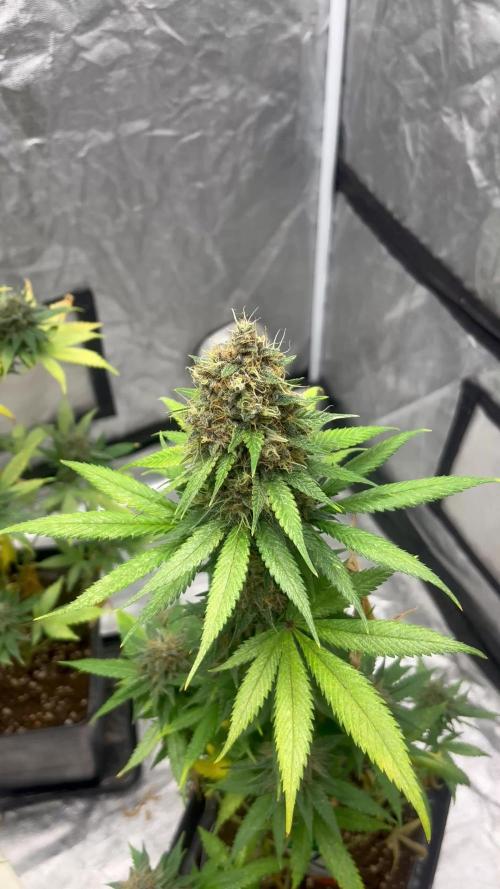
Que pasa familia, vamos con la novena semana de floración de estas Forbidden Mochi feminizadas de Seedstockers.
Vamos al lío, las plantas se trasplantaron a macetas de 7 litros.
El ph se controla en 6.5, la temperatura la tenemos entre 24/21 grados y la humedad ronda el 50%.
El ciclo de crecimiento puse 12h de luz, el foco está al 50% de potencia.
Me gustaría estar más encima este cultivo pero la salud me está impidiendo un poco estar 100% con el proyecto.
- os dejo por aquí un CÓDIGO: Eldruida
Descuento para la tienda de MARS HYDRO.
https://www.mars-hydro.com
Hasta aquí todo, Buenos humos 💨💨💨

Processing
Likes
11
Share


@BlumenBot
Follow
1/4 - fed 1gal distilled water, 6.0pH. Starting RAW nutes next feeding.
1/6 - first RAW feeding. Came out rather low ppm so I may double my feeding chart for flower. Everything else is looking good.
72.7*F
5.8pH
818 ppm
4g BLOOM
0.7g Phosphorus
0.75g Kelp
0.55g Cal/Mag
0.5g ominA
2g Microbes Bloom Stage
1.25g Amino Acids
0.25g Enzymes
1/7 - dropped the AC Infinity controller to level 2 as an experiment overnight to see how temps will rise in both compartments. Light is at about 900ppfd a few inches below the lowest tops
1/9 - no issues with fan speed at 2! RAW feeding tonight.
70.5*F
6.1pH
1390 ppm
8g BLOOM
0.96 Potassium
1.5g Kelp
0.25g Cal/Mag
4.2g Microbes Bloom Stage
1.25g Amino Acids
0.25g Enzymes
Also found a new way to mix my RAW nutrients without having them stick to the bottom...small landscaping pond pump! It gets the water moving nicely and I just drop the dry nutes in, mixes it for me and I can easily fine tune PH and test PPM without having to shake and take samples! Huge win.
1/10 - She's getting fatttttt!!! Long time to go but just sayin...my lady in veg needs at least 3 weeks so hopefully I'm not stepping on myself here soon!

Likes
8
Share


@Kirsten
Follow
19.1.25:
I have watered all plants with 300ml of dechlorinated water PH'd to 6.3, with 1/3 jar of black strap molasses with Ecothrive Biosys-1g.
I am looking to increase the sugars for microbial life and plant processes.
It'll also add some extra Calcium, Magnesium and trace elements.
I also, watered all plants with Bloom nutrients.
Using dechlorinated water PH'd to 6.3 with the following nutrients: (ml/l) ;-
♡ 2ml Cal-Mag
♡ 2ml Ecothrive Flourish
♡ 2ml Xpert Nutrients Bloom Booster
♡ 2ml Biobizz Bloom
♡ 2ml Biobizz Top Max
♡ 1g of Ecothrive Biosys
I watered around 1-3 litres per plant. Depending on size and requirements.
I'm still spilling water containing the nutrient solution. 🙄
I am using this to rub into the leaves. I think a nice foliar massage won't do any harm, make the most of the situation.
The plants have become very hungry and thirsty. Increased the water by double.
I ran out of my TNC cal-mag. I decided to order the Xpert Nutrients brand, as I like their products. It isn't organic as far as I can tell, but I don't think it matters too much to me, to be honest.
I also want to top dress this week, so I bought some Green Leaf PK bud Booster dry amendment from Amazon, too.
I'll mix it with canna coco, perlite, worm castings, and Ecothrive Life Cycle.
24.1.25:
I went ahead and top dressed all the plants with 4.5 gallons of my supersoil custom mix.
This consists of the following substrate and dry amendments:
♡ 60% Canna coco
♡ 20% Worm castings
♡ 15 % Perlite
The remaining 5% consists of the following dry amendments;-
♡ 10g Ecothrive Biosys
♡ 1 Tsp RHS Mycorrhizal Fungi granules
♡ 3 Tsp Vitalink Bat guano
♡ 4 Tsp Diatomaceous earth
♡ 8 Tsp Ground Cinnamon
♡ 10g Green Leaf Bud Booster PK booster.
♡ 3 Tsp Ecothrive Life Cycle.
•Worm castings for some all round nutrition.
•Cinnamon for mildew and bug repellent.
•Canna coco base substrate.
•Perlite for adding oxygen to the root and soil system.
•Green Leaf Bud Booster PK Booster for blooming. Building strong big buds.
•Vitalink bat guano again for Bloom.
•RHS Mycorrhizal Fungi granules, to boost beneficial microbes.
•Ecothrive Life Cycle for lots of great benefits.
•Diatomaceous earth for Silica.
•Ecothrive Biosys, for an extra microbial boost.
I have removed all LST equipment from both PPP1 and PPP2.
I'm going to let them grow up now, and I plant to implement a Scrog net, if they get any taller, which I hope they will.
However they are most likely finished with their final stretch. My mistake, I went too hard on the LST.
Thanks for checking out my diary 🍃 ✌️
Likes
55
Share


@Max1973
Follow
Day 29 - Things going along nicely .... i trimmed down some of the bigger bottom leaves, i didn't have enough soil to fill the pots, and the plants are short, bushy, weird little things, that filled out the inside of the pots..... they are only 15cm tall, but the leaves are 10+ cm .... really weird little plants.... haha....
i decided to trim the fk out of one of the ones in the double pot, and practiced topping on her.... i'll cut her down maybe trimmer her of the pot, and focus on just the 2........ they seem to be still growing upwards, so i'm not in a hurry to put em into flower mode......... on the main one i noticed some neut deficiencies ... so i upped the neuts.... should be ok, i put a good heavy neut and it stopped the spots etc..... i think some bug or something got in the double pot and is livin in there, but he doesn't eat much, haha....... the main stalks are as big as my thumb and under each canopy is all the branches..... it's really strange, to go in under all the growth and see it all .... they look kinda small, but the entire under canopy of leaves is all full .... i'm moving the huge sized leaves out and pulling each branch up over them as they grow..... this is 21 THC and 19 CBD, so it's all the good stuff for medicine ... the smell is getting abit noticable and i'm hoping the exhaust fan arrives from china soon.... just got positive ventilation into a carbon fil. ... and daily air out........ i think i had the led lights too low..... so i'll raise em abit more and see if i can get em to stretch ....
Day 30 -- added some video's...... daylight vids... worth watchin for a laugh ...... first grow, so idk what i'm doin, ... any help/comments appreciated
Day 32 -- added some pics of the late night trim and LST,... idk looks ok....
Day 34 -- added a video...
Likes
2
Share


@el_cultivito_colombia
Follow
Semana 3 (1/8/22 - 7/8/22)
Plantulas mostrando un buen enraizamiento.
Se preparo una solucion de Elite 91 Myco Jordan iniciando la semana con:
-PPM : 80
-pH : 5.8
3/8/2022 se transplanto a cubos de lana de roca de 15cm x 15cm.
Los cubos fueron submergidos bajo una solucion de Mills Start R con:
PPM : 100
pH: 5.7
En el transplante se uso Elite 91 Myco Jordan en forma de polvo para cubrir el hueco del cubo y cubrir las raizes de las plantulas para reducir el estres del transplante.