


Likes
1
Share

@Rogue2803
Follow
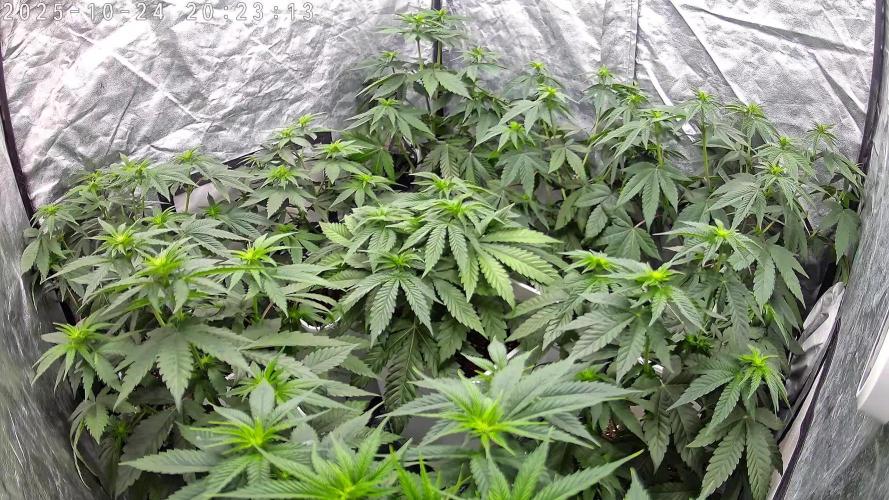
Desmonto autoriego. No me gusta como reparte agua a las diferentes plantas
Likes
Comments
Share


@Skynets_Growing
Follow
My "Black Light" (from Wizard Trees)—which I’ve nicknamed "Rihanna" for this competition grow—has moved into the grow box. I removed the seed shell so she could begin photosynthesis. Right after the shell was removed, she looked very compact, but by the next day, she had opened up. The leaf structure of this "Black Light" is incredibly tiny; it almost looks as if the essential cotyledons (seed leaves) failed to develop or aren't there at all. Because of this setback, Rihanna’s growth is significantly delayed—she hasn't even managed to grow another centimeter in height by day 7. On day 2, I transplanted her from the starter pot into a larger one, and I noticed that her taproot also appears rather underdeveloped. Still, the 16/8 light cycle I’ve chosen seems to suit her well, as I can at least observe the formation of the first true pair of leaves. Hopefully, Rihanna will gain more leaf mass over the coming week so she can show some more substantial development. After week 1, she is definitely underdeveloped due to her handicap, but that doesn't bother me—the main thing is that she’s alive and growing. That said, I would have expected a bit more—given that this seed cost 50 euros! 👀😅

Likes
5
Share


@420Hydro
Follow
Decided this week i was gonna keep a 2nd bubba kush seedling that i didn't think was gonna germinate...Gonna get rid of the sour diesel clone....might go back to that strain later..so i will just have KO in this diary..have another diary for the other 2 bubba kush...... also got a quantom board in from alibaba...kinda scary it coming from china but doesn't everything now days...gonna order a few more of the lights for my 4x8 next fall..after this grow probably gonna take July and august off growing maybe keep few clones, but not gonna flower
Likes
31
Share


@TheHighentist
Follow
Was away 18/6 allday
19/6 *Water day / Looking thirsty
-Temp 25-27day/21-23night
-60% RH (2+-)
-950ml
to Biobizz Topmax, Bio heaven, and Bloom (1ml/L) biobizz grow 1ml/L
20/6
-Temp 25-27day/21-23night
-60%RH (2+-)
21/6 - I did some defoliation/trimming and removed a couple of branches that i didnt believe in.
-Temp 25-27day/21-23night
-60%RH (2+-)
22/6 Some pistils are starting to show, they look happy, but soon thirsty.
-Temp 25-27day/21-23night
-60%RH (2+-)
23/6 *Water day + i denoted lower shoots and romoved a couple branches and small leafs
-Temp 25-27day/21-23night
-58% RH (2+-)
-1050ml
to Biobizz Topmax, Bio heaven (1ml/L) Bloom (2ml/L)
24/6 Removed a couple of top fan leaves that were shading some tops.
It looks good an healthy
-Temp 25-27day/21-23night
-55%RH (2+-)
25/6
-Temp 25-27day/21-23night
-53%RH (2+-)

Processing
Likes
20
Share


@BigBudWolf
Follow
STRAWBERRY PIE AUTO (FASTBUDS)
WEEK 3
Started very light nutrients.
I have noticed some pistils later in the week.. so likely not going to top this plant, as I have a feeling she is going to flower sooner than expected
Likes
Comments
Share

@Elguacho420
Follow
Muy buenos humos a tod@s…
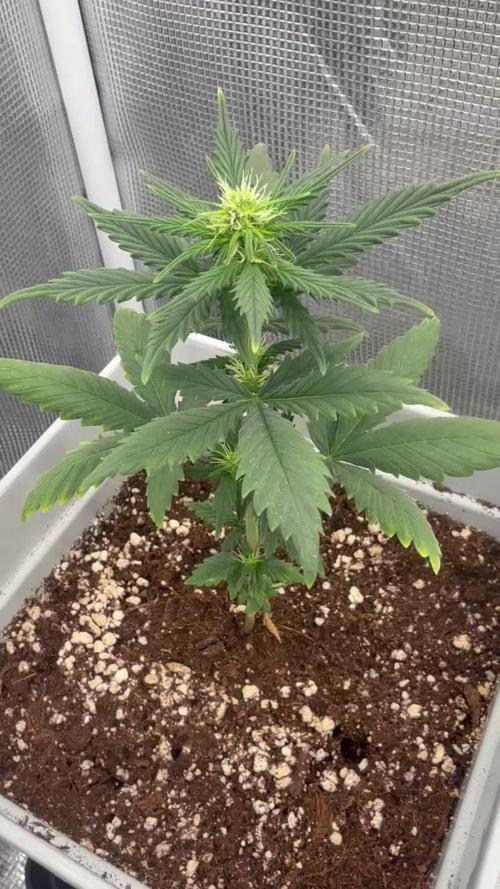
Las plantas avanzan bien pero no como nos esperábamos. Alguna de ellas nos está dando problemitas por falta de agua o de nutrientes, no queremos excedernos debido a experiencias pasadas pero tememos quedarnos cortos.
En el último riego no hemos aumentado los nutrientes si no que hemos vuelto a las bases anteriores ya que conocemos cómo funcionan y queremos ver cómo responden. No sabemos el porqué pero hay dosa que está como cogollando y eso es curioso, una fast de sweet, pero como hemos dicho en semanas anteriores no somos expertos solo queremos ver crecer las plantas y es algo que nos gusta mucho pero cada planta es un mundo y reacciona de distinta manera aunque llevemos el control de riegos y de más, cada una es diferente, y eso es muy bueno… 😎
Los riegos están siendo estables y hemos aumentado la cantidad de agua, pasando de 300ml a 350 ml, debido a la demanda de las plantas. El agua la estamos manteniendo siempre a un pH de 6,0.
En general estamos contentos con la evolución. Pero pendientes de ver su evolución para controlarlas y mejorarlas.
Hasta la semana que viene que volveremos con más avances ( dudas y problemas 😜)
SALUDOS PARA TOD@S🌱💀💨


Likes
2
Share


@Olduffybastard88
Follow
First week flower have moved them inside under the marshyrdo had to stuff them in there cause I had so many but I have loollipopped them all to make sure I have good air flow at the base topped a few aswell to compare them to u topped ones will be fun to see what works better



Likes
44
Share


@Dingle_Dangle
Follow
19/06/2021 - Day 28 - First day of the 5th week.
MEMO:
I'm using the following "names" for differentiating the two both in comments and pics:
🅰️ - "A" for the one transplanted in the garden soil and that will NOT receive any nutrient;
🅱️ - "B" for the one that will grow in the pot and that will receive nutrients.
👉 Started LST also for "A", 3 good spots for the flowers. She is starting flowering right today. Smaller than "B" but I'm positive.
👉 "B" started flowering basically the 2nd day of 3rd week. Isn't this a little too early? Didn't have time to optimize LST so now I have to remove fan leaves in order let the sun light reach all the flowering spot. Definitely not satisfied with the training. Started right today feeding with "Easy Bloom Booster Tablets" by RQS.
Hot and sunny week, zero rain, we good 😁
There is just one problem (is this a problem?): I think ants created a nest under both plants. Do I have to worry?
Wish me good luck and let's hope in sunny days (and friendly ants ahah) 🤞☀️
- DD
───── ⋆⋅☆⋅⋆ ─────
Likes
9
Share

@Mimi420
Follow
Day 50 – The Home Stretch
Plant Health & Progress:
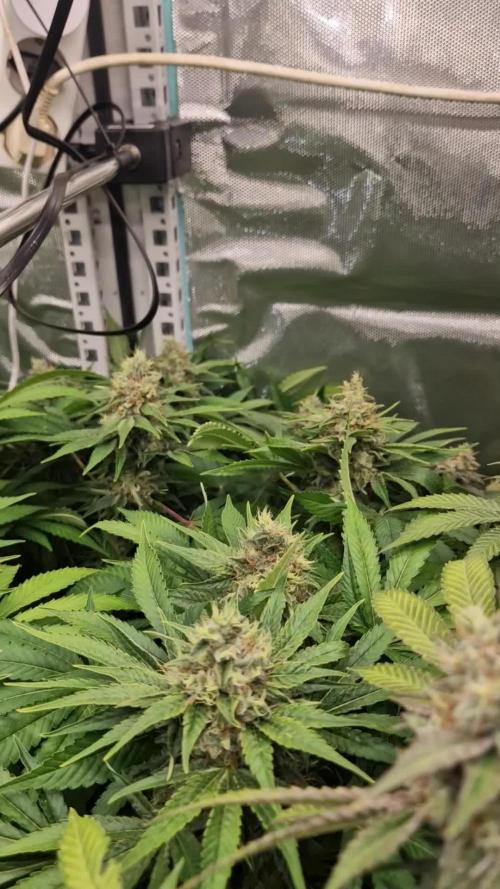
We’re at Day 50 and the girls are looking absolutely fire. The flowers are packing on serious weight, looking super dense and stacked. Everything is looking clean, and the SCROG setup is definitely paying off—the canopy is perfectly even and maxing out the light penetration.
Genetics & Phenos:
Paradise Seeds: Have to give a huge shout-out to Paradise Seeds for this run—their genetics are rock solid. You can tell they’ve been bred for stability and performance.
Nebula Phenotypes: It’s interesting to see the two different phenos on the Nebulas. They have slight variations in structure, but both are showing that classic elite vigor. It’s cool to watch them develop their own unique traits while keeping that top-tier quality across the board.
Caramba:
Status: She’s officially on the home stretch. She got her last heavy feed yesterday, so it’s straight water from here on out to start the flush.
Goal: Time to let her finish strong, drain those remaining nutrients, and prep for the cleanest smoke possible.
Nebula:
Status: Still pushing hard on the feed schedule.
Observation: Based on the trichome check, she’s lagging just a bit behind the Caramba. She’s still got too many clear heads, so she needs another week or so to really let those trichomes ripen up and cloud over.
General Observations:
Terpenes: The smell is straight-up insane. Every time I pop the tent, the terps are loud and complex—a real testament to the genetics being dialed in.
Vigor: The plants are thriving. Those red stems are just showing how hard they’re hitting the light; no signs of stress or nutrient issues.
Environment: Airflow is on point. The buds are getting thick and frosty, so keeping the humidity in check at night is now the top priority to avoid any mold issues this late in the game.
Yield Expectations:
If they keep stacking like this, we’re looking at a serious harvest. Everything is dialed, and the fade should be coming on nicely as we get closer to the chop.


Likes
5
Share


@DaedalusGrow
Follow
Willkommen in Woche 9😁 es haben sich schöne Blüten Entwickelt Trichome müssen sich noch etwas Entwickeln🍃🌱
Likes
14
Share

@DE_BW
Follow
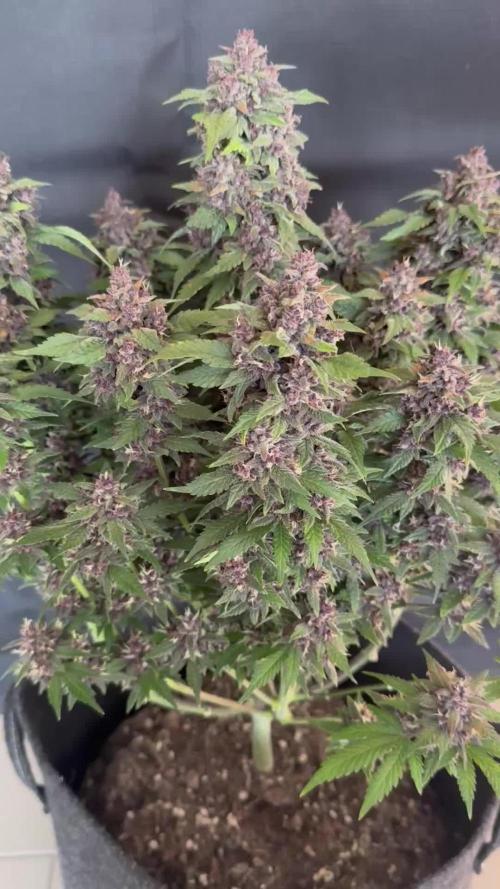
The plant keeps stacking buds nicely and the flowers are visibly thickening every day. Resin production is still increasing and the trichomes are fully milky, showing clear signs of late flower. A light fruity aroma is slowly coming through, getting more noticeable now. Overdrive has been introduced and harvest is expected in around 10–12 days.
Likes
49
Share
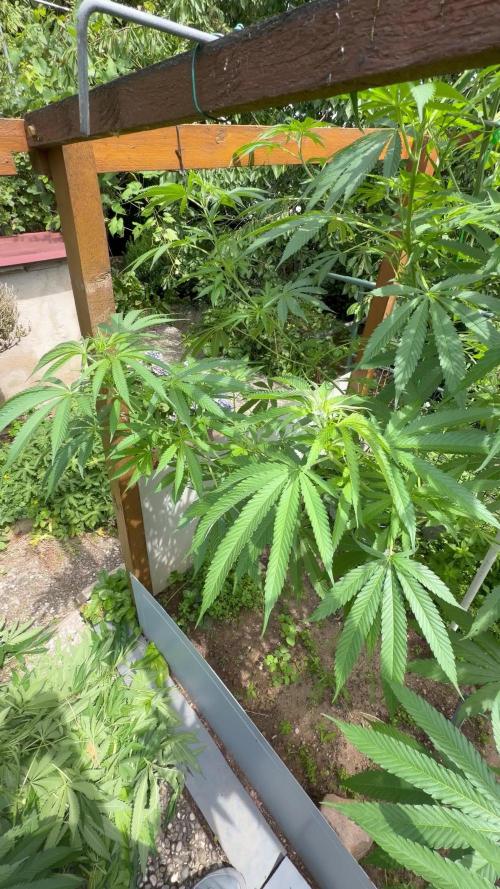

@cangrowz
Follow
🍋🍇 Air Lemon x Shishkaberry – Anfang Woche 14 🍇🍋
Die beiden entwickeln sich weiterhin richtig stark und wachsen gefühlt von Tag zu Tag. Ich finde es mittlerweile viel spannender, sie nicht täglich anzuschauen, sondern ihnen ein paar Tage Zeit zu geben. So erkennt man den Fortschritt jedes Mal deutlich besser.
In den letzten Tagen habe ich bei beiden Pflanzen einen ordentlichen Lollipop durchgeführt. Kurz hatte ich überlegt, sie noch zu toppen, mich dann aber dagegen entschieden. Da sie sich zu Beginn der Blüte ohnehin noch einmal ordentlich strecken werden, erschien mir das als die bessere Entscheidung. Aktuell dürften die beiden inzwischen ungefähr 2,30 bis 2,40 m hoch sein.
Jetzt liegt ungefähr noch einmal die gleiche Zeit vor ihnen, bis die Ernte ansteht. Damit ist mit diesem Update offiziell Halbzeit erreicht. Das Wetter spielt momentan ebenfalls perfekt mit. Tagsüber liegen die Temperaturen zwischen 26 und 32 °C, nachts bei angenehmen 18 bis 20 °C. Lange wird das vermutlich nicht so bleiben, denn nächste Woche sollen die Temperaturen wieder in Richtung 40 °C gehen. Ich bin gespannt, wie viel Fortschritt die beiden bis zum nächsten Update noch machen werden.
Vielen Dank an alle, die mein Grow Diary verfolgen und immer wieder vorbeischauen. Ein großes Dankeschön geht natürlich auch an Green House Seeds für das Sponsoring der Seeds.
Viel Spaß weiterhin beim Growen!
Happy Growing Growmies 🌱?💚
Euer Cangrowz

Likes
25
Share


@The_Lonely_Farmer
Follow
Overall a great strain too grow as grows with ease and seemingly without issues even with minimal care.
With care she can produce hefty buds, as kept mine small my flowers reflect but still produced great smelling powerfully buds 🌱
Cycle finished in time essentially with ease and I'd be happy too recomend this strain from fastbuds.
I will update with more images and videos upon timing complete and give dry weight ect, these girls wont bring much but smell absolute treat.
Atm I have tried 1 small nug but still not ready not long untill can trim up, great oils and taste just need a little cure up once finished.
Tried uploading longer videos but again says error 👎 have now added few extra videos
Likes
55
Share


@Ultraviolet
Follow
What's in the soil? What's not in the soil would be an easier question to answer. 16-18 DLI @ the minute. +++ as she grows.
Probably not recommended, but to get to where it needs to be, I need to start now.
Vegetative @1400ppm 0.8–1.2 kPa 80–86°F (26.7–30°C) 65–75%, LST Day 10, Fim'd Day 11
CEC (Cation Exchange Capacity):
This is a measure of a soil's ability to hold and exchange positively charged nutrients, like calcium, magnesium, and potassium. Soils with high CEC (more clay and organic matter) have more negative charges that attract and hold these essential nutrients, preventing them from leaching away.
Biochar is highly efficient at increasing cation exchange capacity (CEC) compared to many other amendments. Biochar's high CEC potential stems from its negatively charged functional groups, and studies show it can increase CEC by over 90%. Amendments like compost also increase CEC but are often more prone to rapid biodegradation, which can make biochar's effect more long-lasting. biochar acts as a long-lasting Cation Exchange Capacity (CEC) enhancer because its porous, carbon-rich structure provides sites for nutrients to bind to, effectively improving nutrient retention in soil without relying on the short-term benefits of fresh organic matter like compost or manure. Biochar's stability means these benefits last much longer than those from traditional organic amendments, making it a sustainable way to improve soil fertility, water retention, and structure over time. Needs to be charged first, similar to Coco, or it will immobilize cations, but at a much higher ratio.
a high cation exchange capacity (CEC) results in a high buffer protection, meaning the soil can better resist changes in pH and nutrient availability. This is because a high CEC soil has more negatively charged sites to hold onto essential positively charged nutrients, like calcium and magnesium, and to buffer against acid ions, such as hydrogen.
EC (Electrical Conductivity):
This measures the amount of soluble salts in the soil. High EC levels indicate a high concentration of dissolved salts and can be a sign of potential salinity issues that can harm plants.
The stored cations associated with a medium's cation exchange capacity (CEC) do not directly contribute to a real-time electrical conductivity (EC) reading. A real-time EC measurement reflects only the concentration of free, dissolved salt ions in the water solution within the medium.
98% of a plants nutrients comes directly from the water solution.
2% come directly from soil particles.
CEC is a mediums storage capacity for cations. These stored cations do not contribute to a mediums EC directly.
Electrical Conductivity (EC) does not measure salt ions adsorbed (stored) onto a Cation Exchange Capacity (CEC) site, as EC measures the conductivity of ions in solution within a soil or water sample, not those held on soil particles.
A medium releases stored cations to water by ion exchange, where a new, more desirable ion from the water solution temporarily displaces the stored cation from the medium's surface, a process also seen in plants absorbing nutrients via mass flow. For example, in water softeners, sodium ions are released from resin beads to bond with the medium's surface, displacing calcium and magnesium ions which then enter the water. This same principle applies when plants take up nutrients from the soil solution: the cations are released from the soil particles into the water in response to a concentration equilibrium, and then moved to the root surface via mass flow.
An example of ion exchange within the context of Cation Exchange Capacity (CEC) is a soil particle with a negative charge attracting and holding positively charged nutrient ions, like potassium (K+) or calcium (Ca2+), and then exchanging them for other positive ions present in the soil solution. For instance, a negatively charged clay particle in soil can hold a K+ ion and later release it to a plant's roots when a different cation, such as calcium (Ca2+), is abundant and replaces the potassium. This process of holding and swapping positively charged ions is fundamental to soil fertility, as it provides plants with essential nutrients.
Negative charges on soil particles: Soil particles, particularly clay and organic matter, have negatively charged surfaces due to their chemical structure.
Attraction of cations: These negative charges attract and hold positively charged ions, or cations, such as:
Potassium (K+)
Calcium (Ca2+)
Magnesium (Mg2+)
Sodium (Na+)
Ammonium (NH4+)
Plant roots excrete hydrogen ions (H+) through the action of proton pumps embedded in the root cell membranes, which use ATP (energy) to actively transport H+ ions from inside the root cell into the surrounding soil. This process lowers the pH of the soil, which helps to make certain mineral nutrients, such as iron, more available for uptake by the plant.
Mechanism of H+ Excretion
Proton Pumps: Root cells contain specialized proteins called proton pumps (H+-ATPases) in their cell membranes.
Active Transport: These proton pumps use energy from ATP to actively move H+ ions from the cytoplasm of the root cell into the soil, against their concentration gradient.
Role in pH Regulation: This active excretion of H+ is a major way plants regulate their internal cytoplasmic pH.
Nutrient Availability: The resulting decrease in soil pH makes certain essential mineral nutrients, like iron, more soluble and available for the root cells to absorb.
Ion Exchange: The H+ ions also displace positively charged mineral cations from the soil particles, making them available for uptake.
Iron Uptake: In response to iron deficiency stress, plants enhance H+ excretion and reductant release to lower the pH and convert Fe3+ to the more available form Fe2+. The altered pH can influence the activity and composition of beneficial microbes in the soil. The H+ gradient created by the proton pumps can also be used for other vital cell functions, such as ATP synthesis and the transport of other solutes. The hydrogen ions (H+) excreted during photosynthesis come from the splitting of water molecules. This splitting, called photolysis, occurs in Photosystem II to replace the electrons used in the light-dependent reactions. The released hydrogen ions are then pumped into the thylakoid lumen, creating a proton gradient that drives ATP synthesis.
Plants release hydrogen ions (H+) from their roots into the soil, a process that occurs in conjunction with nutrient uptake and photosynthesis. These H+ ions compete with mineral cations for the negatively charged sites on soil particles, a phenomenon known as cation exchange. By displacing beneficial mineral cations, the excreted H+ ions make these nutrients available for the plant to absorb, which can also lower the soil pH and indirectly affect its Cation Exchange Capacity (CEC) by altering the pool of exchangeable cations in the soil solution.
Plants use proton (H+) exudation, driven by the H+-ATPase enzyme, to release H+ ions into the soil, creating a more acidic rhizosphere, which enhances nutrient availability and influences nutrient cycling processes. This acidification mobilizes insoluble nutrients like iron (Fe) by breaking them down, while also facilitating the activity of beneficial microbes involved in the nutrient cycle. Therefore, H+ exudation is a critical plant strategy for nutrient acquisition and management, allowing plants to improve their access to essential elements from the soil.
A lack of water splitting during photosynthesis can affect iron uptake because the resulting energy imbalance disrupts the plant's ability to produce ATP and NADPH, which are crucial for overall photosynthetic energy conversion and can trigger a deficiency in iron homeostasis pathways. While photosynthesis uses hydrogen ions produced from water splitting for the Calvin cycle, not to create a hydrogen gas deficiency, the overall process is sensitive to nutrient availability, and iron is essential for chloroplast function.
In photosynthesis, water is split to provide electrons to replace those lost in Photosystem II, which is triggered by light absorption. These electrons then travel along a transport chain to generate ATP (energy currency) and NADPH (reducing power). Carbon Fixation: The generated ATP and NADPH are then used to convert carbon dioxide into carbohydrates in the Calvin cycle. Impaired water splitting (via water in or out) breaks the chain reaction of photosynthesis. This leads to an imbalance in ATP and NADPH levels, which disrupts the Calvin cycle and overall energy production in the plant. Plants require a sufficient supply of essential mineral elements like iron for photosynthesis. Iron is vital for chlorophyll formation and plays a crucial role in electron transport within the chloroplasts. The complex relationship between nutrient status and photosynthesis is evident when iron deficiency can be reverted by depleting other micronutrients like manganese. This highlights how nutrient homeostasis influences photosynthetic function. A lack of adequate energy and reducing power from photosynthesis, which is directly linked to water splitting, can trigger complex adaptive responses in the plant's iron uptake and distribution systems.
Plants possess receptors called transceptors that can directly detect specific nutrient concentrations in the soil or within the plant's tissues. These receptors trigger signaling pathways, sometimes involving calcium influx or changes in protein complex activity, that then influence nutrient uptake by the roots. Plants use this information to make long-term adjustments, such as Increasing root biomass to explore more soil for nutrients. Modifying metabolic pathways to make better use of available resources. Adjusting the rate of nutrient transport into the roots. That's why I keep a high EC. Abundance resonates Abundance.
Likes
19
Share


@Mikado
Follow
04/28 - Seeing a nice amount of stretch, don't think i'll have a problem with height, but they're bushy. Waiting another week to see what I'll prune off before bud starts stacking.

Likes
207
Share


@Legendaryseedthumb
Follow
I could let them sit in the pot for 1 more week, but I really need my weed. 100% cloudy but no amber