


Likes
Comments
Share

@Miketama
Follow
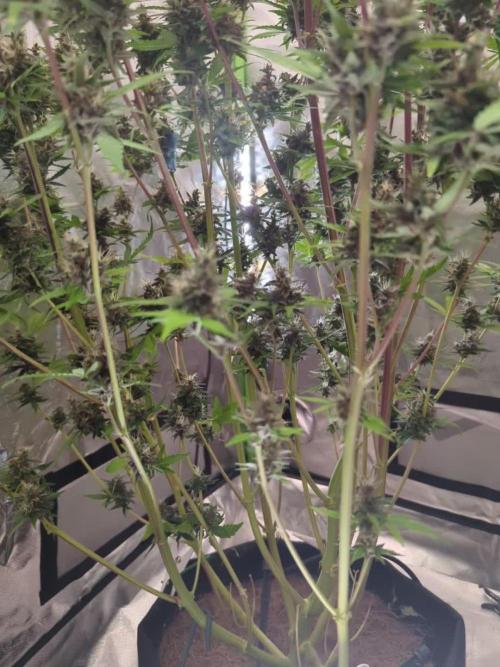
Quasi giunti al termine, questa bellezza produce grappoli di cime dall'odore di grappoli d'uva fragola e una nota floreale alla lavanda, oltre ad avere un aspetto bellissimo con colorazioni violacee di fiori e tricomi, il caldo delle settimane passate le ha causato foxtailing che mi avrà fatto perdere qualche grammo, ma mi ha regalato cime dalla forma insolita a mio parere molto belle da vedere.
Lei come le altre piante del ciclo sta bruciando i tempi e oggi al giorno 73 sono in procinto di tagliare non facendomi trarre in inganno dai pistilli bianchi usciti dai calici del foxtailing, se aspettassi che diventino bruni loro, la pianta che già ha un massiccio effetto narcotico di per sé diventerebbe troppo matura.
Completamente innamorato della genetica opium di @DivineSeeds grazie mille!
Al prossimo round andrò a coltivare la opium auto originale! manca solo lei e non c'è due senza tre!

Likes
8
Share

@Northfork
Follow
First week of bud 8-2-25
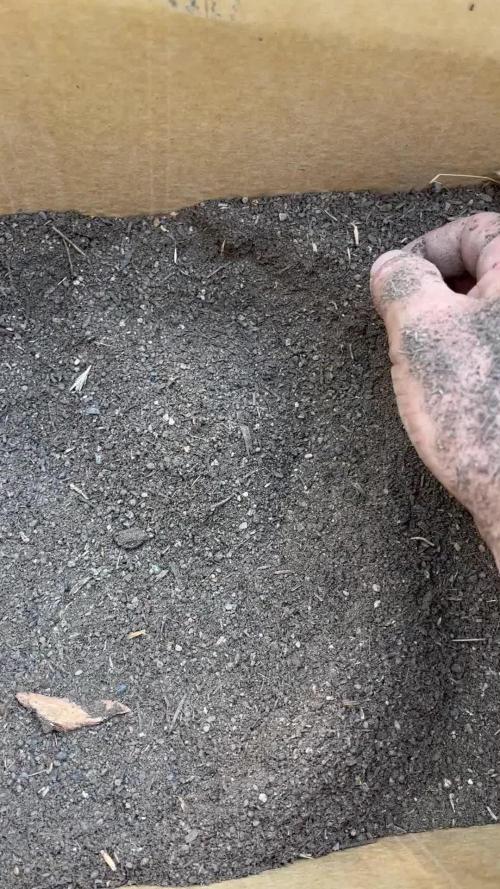
Apple fritter is doing great just top dressed for bud with bone meal ,kelp meal , compost ,worm casting and Sulfate of Potash Magnesia. Going to keep giving boogie brew heavy harvest, foliage spray and boogie brix till the end.


Likes
15
Share


@Cauli
Follow
So, In the End of Week 11 we have harvested two of three Sensi Skunks.
In the End of week 12 we harvested the last one (Sensi Skunk 2, day 83).
In Total we had around 130g of trimmed wet buds from the three plants:
– Sensi Skunk 1 30g wet buds
– Sensi Skunk 2 40g wet buds
– Sensi Skunk 3 63g wet buds
Placed the trimmed buds in a dry net and dried them vor around 4-6 days before placing them in jars and ventilating them regularly.
for now it seems to be around 25g in dry buds. Had hoped for a little more, but it was really bad weather so we think it's okay. smell is really nice!
For next year, we have learned and will make things a little different.
– will start way earlier in the year for more sunshine and better weather
– pots were way to big, none of the plants needed so much space for their roots – next year will try 10l
– maybe we will start different nutrient company. any suggestions?
All around this was a very fun project! Loved how the plants looked and miss them already.
The smell of the dry buds is already really nice and we are looking forward to test it. will update then!

Processing
Likes
65
Share


@Wicked_Stix
Follow
Been on 12/12 for a week. Just waiting for her to start showing some pistils. This is a bushy plant. Been plucking a few leaves every day but she will be getting a heavy defoliation soon.
Nutrients per gallon
.5 tsp maxigro
.25 tsp maxibloom
.25 tsp armor si
.5 tsp calimagic
.1 tsp 90/10 humic/fulvic acid
Ph to 6.0
Pumping nutrients 24 hours

Likes
26
Share

@Borberad
Follow
Finale Woche
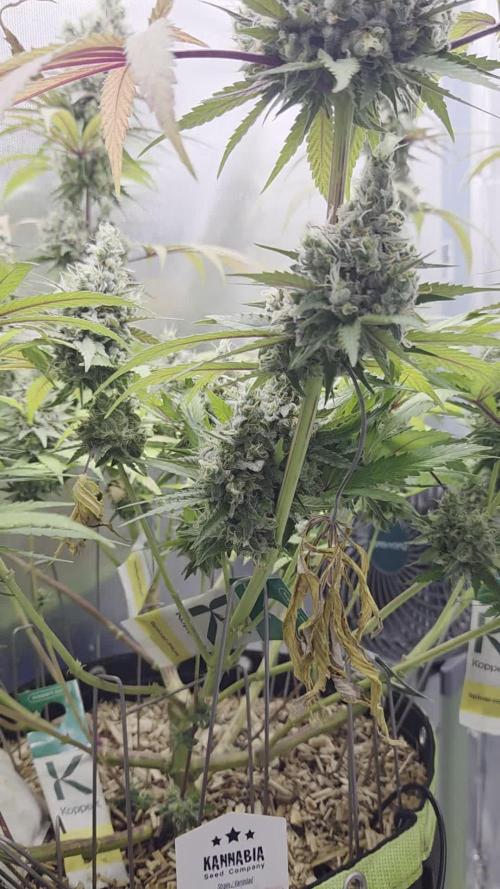
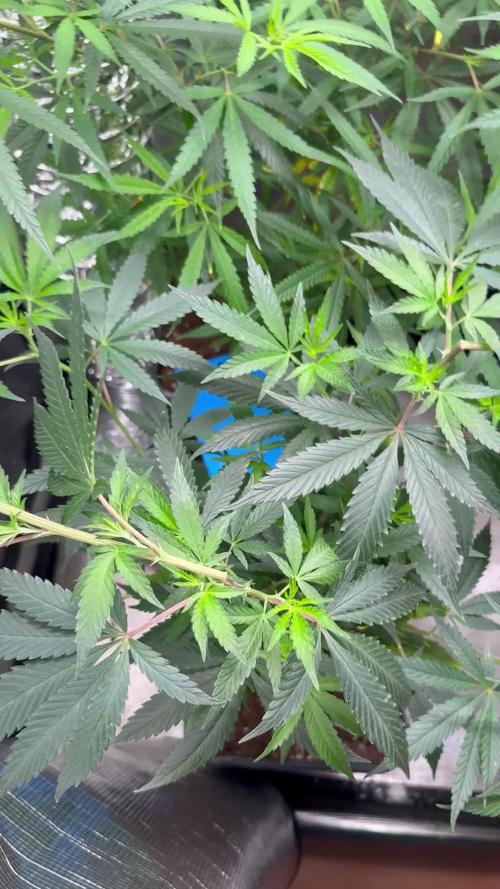
Blütetag 61 und die Köpfe rollen. Es duftet fruchtig süß. Die unteren Etagen dürfen noch reifen.


Likes
19
Share


@AutoDevilHQ
Follow
Another Defoliation at the end of stretch this week for the Northern and she's now in full bud mode at end of Week 8.
3-4 left I think before the chop and she's just a happy monster.
Buds forming nicely on't Chemdawg despite a bit of Nutrient Burn on some of the leaves. Skipped a feed last week and replaced with Molasses only just to help her fight off the excess
2nd Chemdawg looks like she will bud from head to toe a fairly straight forward week for all the girls but started to stink and show their flowers nicely.
Head over to www.autobeastmethods.com to find out how you can learn to Maximise your Autoflower. Head to the Forum and say Dr AutoDevil sent you.
Happy Growing Gang
Everyday Growing is a Day Learning
💚😈
www.instagram.com/AutoBeastMethods
Videos of the tent available on my IGTV just too big to upload here they keep crashing.

Likes
63
Share


@CrazyHorse
Follow
Hello Boys&Girls 😁 😁 😁
I think the comment is unnecessary here. Girls bloom beautifully as you can see. With new and crazy things, I had to put an extra lamp... and I'm proud of it 😅
Have a sunny Sunday, You Lovely Girls Growers
Likes
17
Share


@SpaceHaze123
Follow
Start of week 2 flowering. Put the triple cheese in my other tent under the spider famer SE3000 instead of the Sf2000 to give her that extra boost in flower. Because she is quite a biggie, she can use al the light I can give her. Gonne let her ride for another few days to a week before doing a heavy defoliation.
30 march. Defoliation time
Likes
39
Share


@AsNoriu
Follow
Day 78 from seed touching soil. #1 was eaten by bud rot, really heavy, buds all in dirt, she was very low, overstreched from lack of light and water, so went all to bin. Two plants were worthless, last hope on late one . #2 is still going, shows preflowers, big plant.
Happy Growing !!!

Likes
1
Share

@Cmftrblynmb
Follow
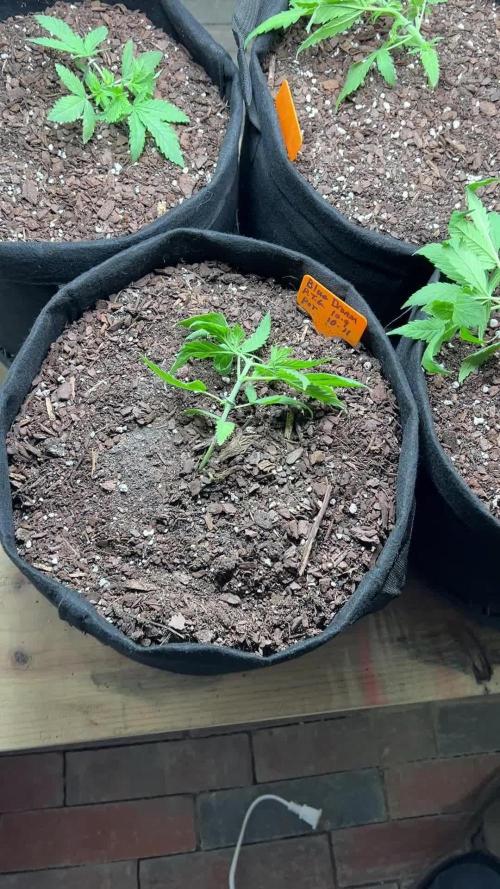
Day 27 LST and day 28 when the leaves turned toward the light, starting to see results of topping.

Likes
10
Share


@SnoopyShaggy
Follow
3 autoflowers which is Outlaw Amnesia, Purple Punch, and Strawberry cough are well undergoing veg stage. Since these 3 plant genetics breeded are a mix of 2-3 different strains. The grow results from this seed breeders are amazing no complaints.
I am really looking forward growing single strain very soon from international seedbanks asap once i finish experimenting all of my custom breeder strains.
I am having a crazy overthinking with 2 of my AK47 since they are seeds generated from a hermie AK47 autoflower.
The issue is more of a thought process whether the plant will flower since these 2 of them are under 1 tent with 3 Autoflowers😂, i hope they will follow the autoflower traits and not photoperiod.
If they are not flowering, i was informed to flip the light to 12-12,
If this situation happens, the only possible outcome i can think of is to defoliate/shwazz them and then flip them sf2000 to 12-12 right only i harvested 3 of the Autoflowers.
Officially planted these babies on Nov 9, i will log into GD diaries every Sunday.
Officially added 0.5ml of BigBud per litre, a very minute ammount just to top up some P and K since 3 plants are entering preflowering soon.
Likes
74
Share


@Rasta_Faraev
Follow
21.09.21.банана празднует 3х недельный юбилей, немного растянул сегодня. Опрыскиваю ежедневно динамексом и через полив корневой стим рутфармс. В принципе все по плану. Всё хорошо, а вам как кажется?
24.09.21. Полет в нормальном режиме, банана приземистая, плотная и яркая. Листья начали пахнуть, запах необычный. Гну, прыскаю, поливаю по графику. Ещё пару недель веги и на цвет😁до встречи, друзья
25.09.21 плановая тренировка LST прошла успешно, банану все нравиться, как и другим обитателям. Вчера давал слегка пониженным ррм компота, водой не поливаю вообще.
PS. ДОРОГИЕ ДРУЗЬЯ, было бы вам интересно и полезно видео процесса моего LST? Пишите в комментариях! Всем, Растафарай!

Likes
11
Share


@IndoorOrganix
Follow
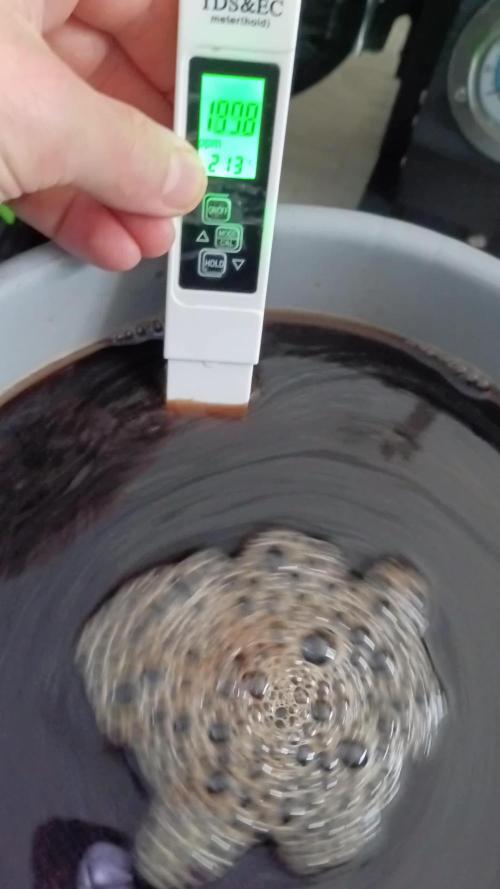
They've started to grow their first sets of leaves and although temperature was a little higher than I'd liked they're coming along nicely. You can see the difference from just three days growth and then 3 days afer that! Adding a small amount of bio canna vega and molasses.




Likes
Comments
Share


@Weedwithwes
Follow
“Tropicana cookies purple “Day 105 from seed.
Partial harvest at first, then 3 days later completed harvest and starting dry
Likes
10
Share


@Bread_n_Buds
Follow
Our Zamnesia Slurricane has reached 16 buds. I'm growing them a little more to make sure they don't go into flowering with small brunches but we're almost there, a few days and they'll go into flowering.
She's a plant with a low internodal distance, they're not the most suitable for topping due to the slow response of the mini brunches but you just need to let them grow a little and not go into flowering straight away to get an excellent result anyway.
As a general rule but very general plants with a low internodal distance are less suitable for the application of the techniques unlike plants with a wide internodal distance which are very easy to handle, they grow more slowly and can reach excellent dimensions even if worked with techniques that keep them low.
The Topping worked very very well the plant at the moment of topping went into overfertilization due to the evident slowdown in growth, so I slowed down the fertilizer for growth but it was about to go into crisis, so we're starting to give fertilizer again. When topping is a delicate moment it is probably better to do what I explain below.
The ideal when topping is probably to start with a soil fertilized with gradual release or to start preparing the soil for a period that is at least enough for the vegetative phase at most by adding a bit of alga grow which alone I must admit gives me some problems at least in this case if the plant grows straight much less indeed nothing.
We are always using soil, feeding and all the recommended additives from Plagron 100% organic, we have only lowered the amount of grow in this topping phase for the reasons mentioned above.
---- Decide on the right soil and calculate your fertilizer sheet based on the soil on the official website.
-- www.plagron.com
Try a seed of this strain that drives us crazy... It's a super News!
---- https://www.zamnesia.io/it/11177-zamnesia-seeds-slurricane.html
Zamnesia Description // Do you want to add a prestigious genetics to your grow room? Slurricane is a premium US strain created by In House Genetics and now available to growers thanks to the breeding processes implemented by Zamnesia. Born from the fusion of Purple Punch and Do-Si-Dos, Slurricane is 60% indica and incredibly vigorous. Whether grown indoors, outdoors or in a greenhouse, this strain can produce large quantities of dense and aromatic buds. Add Slurricane to your assortment and enjoy growing one of the most beloved hybrids in the United States.
All the best that mother nature can offer is on ---- www.zamnesia.com
Likes
199
Share


@CRiSPrGrow
Follow
So finally a dream come set off my next run . Thank you so much to the anonymous generous-hearted genetics inventors who sent me these mysterious seeds. Soaked them with a few drops of kelp extract concentrate i had made for my last grows. Meanwhile this is a bio tabs run, and let me just take the time right now to thank BIG K from @biotabs_f69 for all the help learning more about biotabs ! So it's a front loaded activity, followed the instructions on the box for the biotabs, placed two, added the myco to the substrate and the plug hole watered with orgatrex and my very own smart protein you guys. This is a different type of additive that works like carbos but is directly accessible to the plant. Let's see how it works out ! Germination rate for me was 10/10 , poked out overnight, now the veg begins. I'll be applying a variety of techiques while i set up a perpetual rotation. Advice welcome 🚀 watering 200 ml twice to three times a day , carefully as to not compact the soil - just something i learned from my last grow that really works out over time ! 🚀

Processing
Likes
19
Share


@MadeInGermany
Follow
Hi everyone :-)
This week she was repotted, just like the other Wonder Pie Phenotype from the GHSC Cup in the other diary :-).
I am excited to see how it will develop with canna bio in contrast to Grennhouse Feeding 😊👏🏻.
I wish you all a nice weekend, stay healthy 🙏🏻 and let it grow 👏🏻😎