


Likes
17
Share


@Hoodoo
Follow
2020-08-16 End of week 8 of flowering! Nutrients are still stable with the same amounts (EC=1600/1200). Gonna ride them out until the end of the growth. Gonna start monitoring the trichomes daily so I can figure out when to flush. They look about 100% milky!

Likes
123
Share


@MrHightimes
Follow
Getting there baby! my hope is to feed them GH Ripen next week then flush a week and be done!
______________________________________________________
My friend "The Defoliator" came by and helped me to see even MORE haircuts to give! I think I've set my Defolate schedule to a bit on week 3, alot on week 6 and a little more on 8 or 9.
Buds are looking great and I'm hoping my schedules are going to work!
______________________________________________________
They are drinking it all up and asking for more! Just letting it do its thing at this point!

Likes
11
Share


@Mo_Powers
Follow
summer is slowly coming to germany. this beautiful plant is growing tall and bushy. unfortunately, it is not yet showing any signs of flowering. harvest is planned for the end of october or mid november. so there is still plenty of time for her to grow. she is vigorous and healthy.💪😋

Likes
31
Share


@THCpapa
Follow
Week 18, and my buds are on a growth spree – they're growing and growing, reaching for the stars! But here's the funny part – I can actually smell them now when I open the tent. It's like a fragrant leafy surprise every time I peek inside.
As I watch my buds plump up and expand, I can't help but feel a sense of awe and wonder. It's like witnessing a tiny leafy miracle unfold before my eyes. Here's to Week 18 – a week of growth, fragrance, and the pure joy of watching nature at its best. Cheers to my amazing garden – may it continue to bloom and delight in the weeks to come! 🌿🌼


Likes
Comments
Share

@SubliminalSociety
Follow
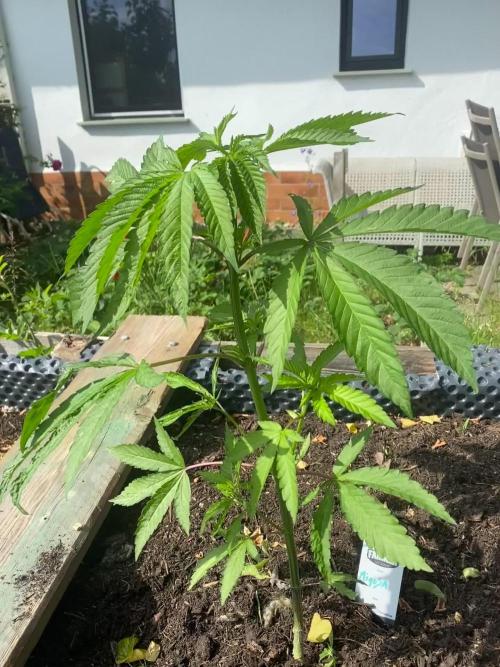
Growth is a little slower due to topping last week. She recovered well.
Trained some branches to grow into the light. She‘s developing really big leaves.
Weather was cooler and a little less sun.
Likes
73
Share


@MisterZ
Follow
Bonjour les amis,
Le développement des fleurs se poursuit. Le stretch semble terminé ou lent.
J'ai écarté les branches entre elles. La canopee est très uniforme.
Je mesure avec mon téléphone DLI 35~40.
Tout va bien 😀
M.

Likes
48
Share


@TheCannaProphet
Follow
~ WEDDING CHEESECAKE FAST FLOWER by FastBuds ~
Well fam, here we go again with another epic strain from FastBuds Fast Flowering stable. After having such tremendous success growing their Gorilla Cookies Fast Flower outdoors last year, I've decided to run another of their fast flowering strains outdoors this year... Wedding Cheesecake Fast Flower!
The best description of this awesome cultivar comes directly from my friends at FastBuds which is as follows:
"A delight for the mind and body: Wedding Cheesecake FF (Fast-Flowering) is a delicious strain that offers XXL yields in a 7-8 weeks flowering cycle. This terpene powerhouse produces loads and loads of mouth-watering vanilla-creamy-cookie-scented terps with hints of citrus and cinnamon. In addition to its delicious aromas, this variety grows very well in both indoor and outdoor setups, yielding up to 650 g/m2 without extra maintenance, making it the ideal strain for beginners as it allows you to maximize yields while minimizing work. This super-fast feminized photoperiod version offers upbeat and energetic yet deeply relaxing effects that are perfect for consumers looking for a heavily focused, motivating, and creative high. It’s the ideal strain for those needing that extra energy boost to start a busy day on the right foot.
Wedding Cheesecake FF boasts chunky, large-sized buds with a thick layer of silvery-white resin and bright orange hairs scattered all over: that just screams ‘quality’. The lime-green flowers sparkle with an array of hues ranging from dark to light green, to magenta and purple, and reek of a delicious aroma that’ll remind you of fresh store-bought cheesecake.
This is an XXL hybrid that grows extremely tall in height, reaching up to 3m with one huge main cola and multiple long side branches that can withstand enormous yields of up to 650 g/m2 with ease. Wedding Cheesecake FF is extremely resilient to the elements and can be grown in almost every climate as long as you’ve got the space and basics covered, making her an excellent choice for those looking for large-scale harvests with a quick turnaround time without much effort."
________________________________________________________________________________________________________________________________________________________________________________________________________________________________________________________________________________________________________________________
The Setup:
This is going to be an outdoor grow, but I have started the Wedding Cheesecake FF indoors as our weather is still too cold to put her outside (nighttime temp's dipping regularly into the 30's℉).
The plan is simple... let her grow inside under a 19/5 light schedule until the nighttime temperatures stay above the mid 40's℉, at which point she'll be moved outside and transplanted into the soil which I have already setup and inoculated with beneficial microbes, and then let the fun begin!🤪💚
________________________________________________________________________________________________________________________________________________________________________________________________________________________________________________________________________________________________________________________
Weekly Updates:
9/6- Well, Week Five of flower is here and the Wedding Cheesecake FF by FastBuds is rockin-n-rollin! Well fam, the 'Beast From The East' is going strong, and so far has not encountered any issues with any bud rot but is showing signs of the beginnings of Septoria. Luckily, this far into flower it shouldn't be too much of a concern at this point. This late in our growing season I always worry about Boytris, especially with cultivars that have really dense and tightly grouped flowers as our weather is now turning cooler and wetter.
9/8- I'm continuing to water the Wedding Cheesecake FF in the mornings on days that we do not get any substantial rain with well water via the garden hose. Today I went through the plant and removed a bunch of old dead leaves, along with any shade leaves that were totally yellow. I did not water today as we had a good amount of rain yesterday and the soil is still really moist.
9/10- My daily routine of watering, removing dead foliage and checking over the flowers continues. The aroma coming off of the Wedding Cheesecake FF is really loud now and you can definitely pick up some subtle hints of her Cheese lineage in it!
9/12- With Five weeks of flowers now behind her, the FastBuds Wedding Cheesecake Fast Flower only has 2-3 more weeks to go (weather permitting) and she's on track to be an enormous yielding plant! I can't wait!!!
Thank you for checking out my diary, your positive comments and support make it all worthwhile! 💚Growers Love!💚😎🙏


Likes
2
Share

@hassehujasse
Follow
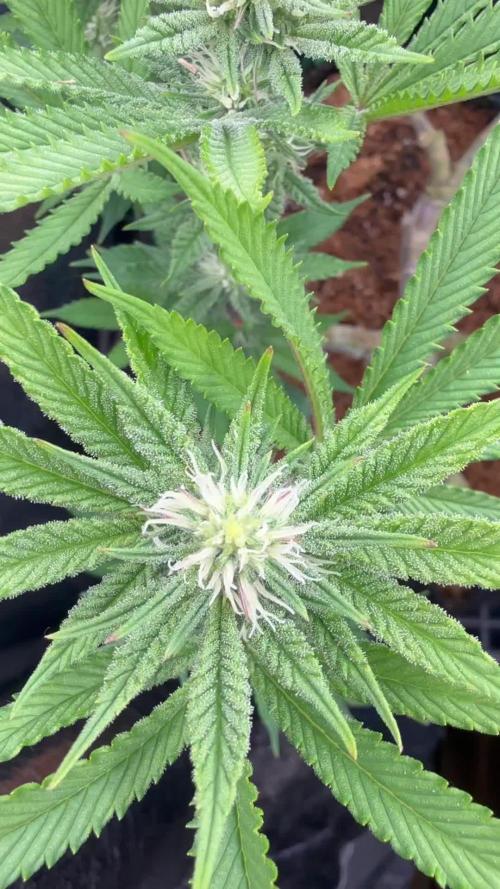
Un dia mas en buenas condiciones. Se sale como un bolido de Formula 1
Se esta andando bien despues de defoliacion. La dejo con las pocas hojas para mejor entrada de lal luz al los flores de abajo


Likes
5
Share


@ertaverd
Follow
Empieza el adiestramiento! Corte apical en el brote central y defoliacion general😋
Likes
47
Share


@Reyden
Follow
È arrivato il momento di pulire i boccioli delle ragazze di @anesiaseeds che sono fenomenali con dei fiori gelidi, pieni di resina, un ottimo profumo che ancora dovrà migliorare nel tempo…cercando di fare una buona concia che è sempre importantissima nel processo di guarigione per avere un fumo delicato e non pesante per la gola, questo fumo è già ottimo! Ottimo lavoro Anesia Seeds

Processing
Likes
45
Share


@Magich
Follow
More pistills showing everywhere! 😍 day 61: everyone is female, except for 2 plants, and it is not one of the big ones 😁 hasn’t shown male signs either day 63! Everybody has a pussy! All females in my beautiful garden now! 👩🏼☠️️
Likes
36
Share

@Kirsten
Follow
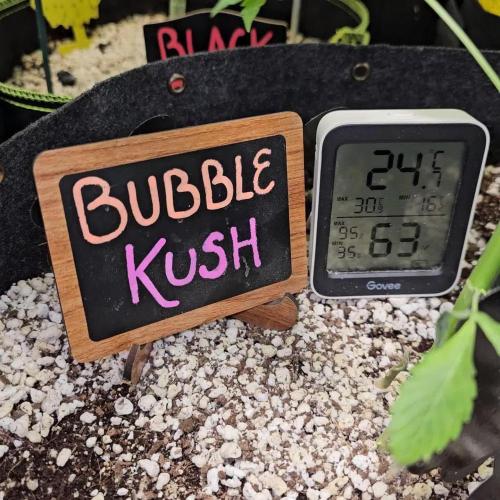
Bubble Kush and her training were not going very well. This week, basically I fimmed the plant last week. And it had just grown straight upwards, and that's not what I really wanted.
Due to that, I have decided to super crop the main stem again. Like I did with my Acapulco Gold and that worked really well. It just went absolutely crazy after I did that. So I'm hoping that it'll do the same thing with my precious Bubble Kush.
She is my last seed, and I really wanna try and make the most out of her so with that in mind, I super cropped her. She's doing really well and I'm so glad that I did.
Here is what I did this week.
Date of super crop: 11.9.25.
12.9.25:
I watered with 4L of dechlorinated water PH'd to 6.5 with;
💜 4ml Flourish
PH: 6.5
PPM: 308
The fungus gnats have really incresed since I did a watering of the whole tent.
I have some more sticky traps set out, and I will not water for several days.
Once it has dried the top soil, I will add some more Diatomaceous Earth to the top 5cm.
They are beginning to really annoy me. So lets hope I can get them under control here.
I'm excited to see how she takes to the super crop, next couple of weeks should be fun 😁
Thanks for stopping by this week and hanging out in the comments! 💚😁🌱✌️🧡🤞
Likes
16
Share
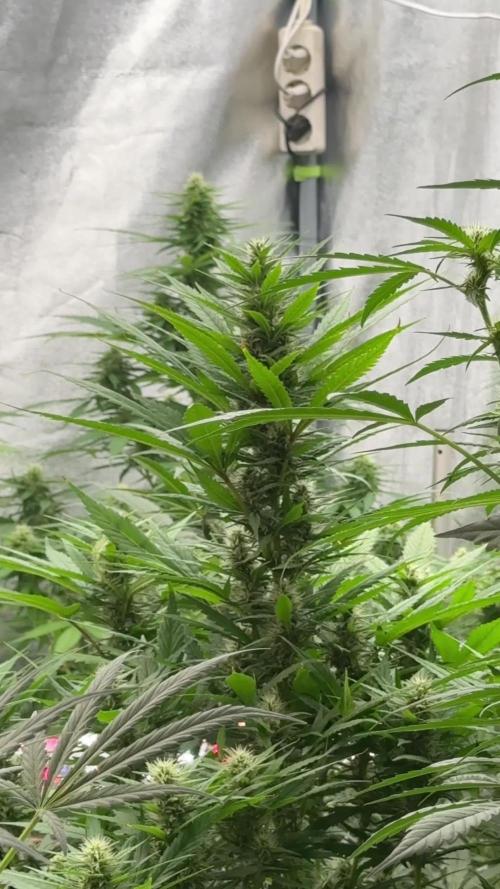

@DogDoctorOfficial
Follow
🌸 BlueBerry – Week 4 Flower Update
Grower’s Journal | Zamnesia BlueBerry
⸻
🌱 The Girls Today
Our two BlueBerry ladies are 120 cm tall, strong, elegant, and stretching beautifully into the light. Both are showing spectacular frost coverage already at Week 4.
💎 What frost means this early:
• Frost at this stage is a sign of healthy resin production beginning early.
• It points to strong genetics (thank you, Zamnesia) and a well-balanced environment.
• More frost now often means denser trichome carpets later, and with BlueBerry, that classic sticky sparkle is already writing its story.
⸻
💡 Inner Canopy Light – ICL 300
This week, let’s talk about a special piece of gear: the ICL 300 inner canopy light.
• Inner Canopy vs. Under Canopy:
• Under canopy lights push light upwards from below, filling shadows.
• Inner canopy lights like the ICL 300 spread 300° of light inside the plant structure, wrapping the middle and hidden nodes in usable spectrum.
• The result: more even growth, healthier lower bud sites, and improved overall stacking.
💡 Specs of the ICL 300:
• Designed for high penetration into dense canopies.
• Emits a balanced spectrum that complements the top LEDs.
• Reduces “shadow zones” and helps those mid-layer buds become full players, not just secondary fluff.
This week, the ICL 300 is clearly doing its work: the whole canopy feels alive, not just the tops.
⸻
✂️ Defoliation – Light Touch
I performed a light defoliation:
• Removed some fan leaves blocking major bud sites.
• Opened the canopy so light (especially from the ICL 300) could penetrate deeper.
Minimal stress, just enough to help airflow and light distribution. At this stage, it’s about balance, not stripping, just guiding.
⸻
🔄 Quick Recap of the Journey So Far
From Cannakan germination in pure water →
to early soil boosters with Aptus →
to steady veg under Future of Grow, ThinkGrow, and Lumatek Zeus LEDs →
to smart environment control with TrolMaster + sensors →
now flowering strong, stacked, and sparkling.
The girls have walked a legendary path already, just like their name. BlueBerry is not just any strain, it’s a classic, a true legend in the world of medicine. And this run is honoring that legacy with beauty and frost.
⸻
🔮 Looking Ahead – Week 5+
What to expect:
• Heavier bulking as flowers begin to swell.
• More trichome coverage, turning frost into snow.
• Stronger terpene release (that nostalgic BlueBerry perfume beginning to show).
What not to expect:
• No more big vertical growth. Stretch is nearly done, from here, it’s all about flower development.
⸻
💬 Final Thoughts
Week 4 is a milestone. The girls stand tall at 120 cm, frosty, thriving, and glowing from top canopy to inner canopy thanks to the ICL 300.
Every detail — from careful defoliation to balanced feeding, from genetics to gear, is creating a perfect environment for these legendary BlueBerries to shine.
This is only the beginning of their flower story, and they already look breathtaking.
📲 Don’t forget to Subscribe and follow me on Instagram and YouTube @DogDoctorOfficial for exclusive content, real-time updates, and behind-the-scenes magic. We’ve got so much more coming, including transplanting and all the amazing techniques that go along with it. You won’t want to miss it. • GrowDiaries Journal: https://growdiaries.com/grower/dogdoctorofficial
• Instagram: https://www.instagram.com/dogdoctorofficial/
• YouTube: https://www.youtube.com/@dogdoctorofficial
⸻
Explore the Gear that Powers My Grow
If you’re curious about the tech I’m using, check out these links:
• Genetics, gear, nutrients, and more – Zamnesia: https://www.zamnesia.com/
• Environmental control & automation – TrolMaster: https://www.trolmaster.eu/
• Advanced LED lighting – Future of Grow: https://www.futureofgrow.com/
• Root and growth nutrition – Aptus Holland: https://aptus-holland.com/
• Nutrient systems & boosters – Plagron: https://plagron.com/en/
• Soil & substrate excellence – PRO-MIX BX: https://www.pthorticulture.com/en-us/products/pro-mix-bx-mycorrhizae
• Curing and storage – Grove Bags: https://grovebags.com/
⸻
We’ve got much more coming as we move through the grow cycles. Trust me, you won’t want to miss the next steps, let’s push the boundaries of indoor horticulture together!
As always, this is shared for educational purposes, aiming to spread understanding and appreciation for this plant. Let’s celebrate it responsibly and continue to learn and grow together.
With true love comes happiness. Always believe in yourself, and always do things expecting nothing and with an open heart. Be a giver, and the universe will give back in ways you could never imagine.
💚 Growers love to all 💚
Likes
1
Share


@Dabcik
Follow
Aumentato distanza lampada e ph dell’acqua di irrigazione. Le piante stanno bene hanno un bello stretch che sto cercando di tenere sotto la rete. Ora i fiori iniziano a formarsi


Processing
Likes
147
Share


@MrJones
Follow
MrJones Black Berry OG
🔹🔹🔹🔹🔹🔹GOALS🔹🔹🔹🔹🔹🔹
🌞Environment - 75/80℉ and 55% Humidity
💧 Feeding - Going to switch over to Advanced Nutrients OIM and see how this run progresses.
🍃Training / Will be topping and creating larger plants and placing to flower under a trellis
🕷️ IPM - Will be using Green Cleaner" 1 OZ per Gallon, and CannControl from Mammoth alternating between product each month for Integrated Pest Management.
💡Mars Hydro LED / Veg TS-1000 / Flower 480W FC 4800
🔹🔹🔹🔹🔹🔹🔹🔹🔹🔹🔹🔹🔹🔹🔹🔹🔹🔹
📜 Rambling - Week 5 is here, the girls are doing great under the Mars Hydro FC-4800
🔹🔹🔹🔹🔹🔹🔹🔹🔹🔹🔹🔹🔹🔹🔹🔹🔹🔹
They are loving the Mars Hydro FC-4800!!
▶️ Friday - 02.05.21 / Watered with Dechlorinated H20 PH @ 5.8 / 6.2
▶️ Saturday - 02.06.21 / Watered with Dechlorinated H20 PH @ 5.8 / 6.2 -
▶️ Sunday - 021.07.21 / Topped and defoliated the girls again today, caught up on their cleaning as well, Watered with Dechlorinated H20 PH @ 5.8 / 6.2,
▶️ Monday - 02.08.21 / Watered today with dechlorinated H20 PH to 5.8 / 6.2
▶️ Tuesday - 02.09.21 / Watered today with dechlorinated H20 PH to 5.8 / 6.2, they bounced back nicely after their major pruning and topping.
▶️ Wednesday - 02.10.21 / Watered today with dechlorinated H20 PH to 5.8 / 6. they are just looking fabulous!
▶️ Thursday - 02.11.21 / Watered today with dechlorinated H20 PH to 5.8 / 6.2
🔹🔹🔹🔹🔹🔹🔹🔹🔹🔹🔹🔹🔹🔹🔹🔹🔹🔹
📜 Cultivar Information - We have created this strain by crossing the best Black Domina available with Very Berry and our own Lost Coast OG Kush, this plant produces large colas with a super intense sweet berry flavor with a sweet-smelling aroma that varies from fruit and berries to sweet candy. This lady offers tight internal stacking giving a perfect structure for those super heavy colas, which is perfect for growth both indoors and out, if grown outside she is fairly resistant to mold and powdery mildew which is a real bonus with such large colas.
🔹🔹🔹🔹🔹🔹🔹🔹🔹🔹🔹🔹🔹🔹🔹🔹🔹🔹
📜SOIL MIX
COCO - 70/30% Tupur Royal Gold 30 GALLON
WORM CASTINGS 5 GALLON
LOBSTER COMPOST 5 GALLON
PERLITE 6 GALLON
INSECT FRASS 2 CUP
ORGANICALLY DONE GROW 5 CUPS
BUILD A SOIL COCO MINERAL MIX 6 CUPS
🔹🔹🔹🔹🔹🔹🔹🔹🔹🔹🔹🔹🔹🔹🔹🔹🔹🔹


Processing
Likes
Comments
Share


@Deepgrower
Follow
Las tres primeras plantas del vídeo son gorilla glue 4 y las otras watermelon. Se observa en las watermelon un inicio de floración un poco raro, con malformaciones en las primeras preflores. Seguimos para ver evolución de esta planta!
