


Likes
Comments
Share

@Mimi420
Follow
Week 4 of Flowering – Post-Vacation Update & The Auto-Drip Setup
What’s up, grow family!
Just touched down from my trip and I’m buzzing to see the girls looking absolutely fire! Leaving them for a few days is always a bit stressful, but I had a solid plan in place.
The Irrigation Setup:
To keep them happy while I was away, I put together a custom drip system using irrigation bags from Amazon. I used two drip emitters per plant, each dialed in to a flow rate of approximately 25ml/h. To prep, the night before I left, I gave each lady a heavy 4-liter feed with my full nutrient mix (Bio Grow, Bio Heaven, Bio Bloom, Top Max, and Green Sensation). This was the perfect "insurance policy"—it ensured they had enough hydration and nutrients to stay happy and thriving the entire time I was gone.
The Ladies:
The stretch is officially over, and the girls are now entering full-blown "fattening" mode.
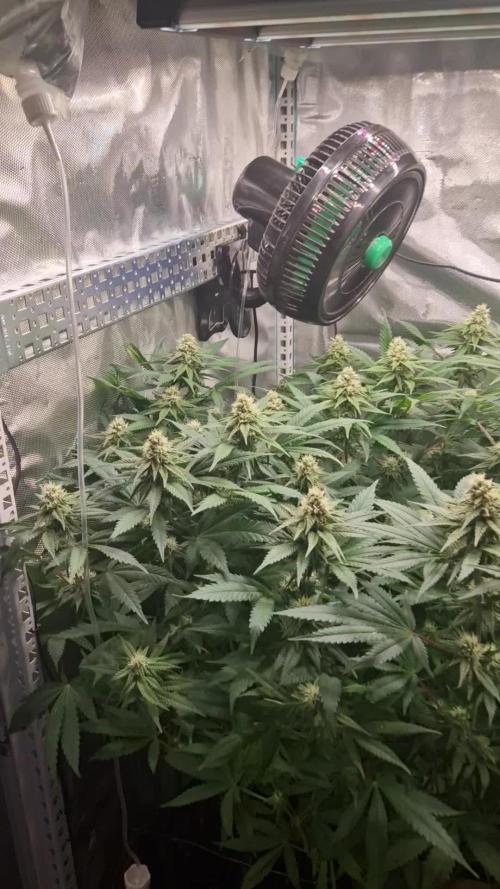
Nebula 1: She’s the leader of the pack—the tallest in the tent. She’s really pushing for the light and has some serious, heavy colas starting to form. The vigor on this one is insane.
Nebula 2: On the shorter side, but she’s a dense little monster! She’s packing on mass with super tight, rock-solid flower clusters. She might be the shortest, but she’s making up for it in density.
Caramba: Looking just as healthy and vibrant as the others! She’s settling in nicely with the rest of the crew and responding great to the feeding schedule. She’s got a beautiful structure and is definitely ready to pack on weight.
Did some light maintenance today—trimmed off some of the lower, older fan leaves to improve airflow and direct all that energy into the main tops. The tent is smelling absolute gas, and the structure is looking exactly how I want it for the second half of flowering.
Everything is dialed in, and the Spider Farmer gear is doing its thing. Time to watch these flowers swell up!
Stay growing, fam! 🌴🔥

Likes
Comments
Share


@eldruida_lamota
Follow
Vamos familia, actualizamos la quinta y última semana de crecimiento de estas Forbidden Mochi fast de Seedstockers, salieron las 5 de 5, 100% ratio éxito.
Aplicamos varios productos de Agrobeta, que son increíbles para aportar una buena alimentación a las plantas.
Temperatura y humedad dentro de los rangos correctos dentro de la etapa de crecimiento.
La tierra utilizada es al mix top crop, por cambiar.
De 5 ejemplares seleccioné 4 para completar el indoor y trasplanté directamente a macetas de 7 litros y aplique de manera foliar el tetra 9, cambie el fotoperiodo a 12/12 y aplique una buena poda de bajos, se ven bien sanas las plantas tienen un buen color y progresan a muy buen ritmo.
Agrobeta:
https://www.agrobeta.com/agrobetatiendaonline/36-abonos-canamo
Hasta aquí todo, Buenos humos 💨💨💨

Likes
Comments
Share

@Budhunter
Follow
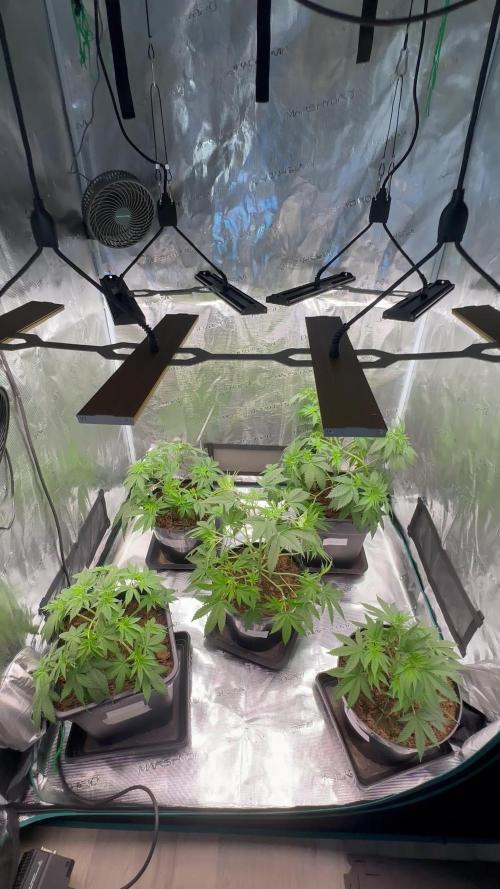
Week 5 Veg - day 41
Lemon tree is healthy and growing tall 🙏🏼
1 or 2 more weeks and I will be flipping into flower. Let’s go

Likes
15
Share

@GoodTimesOrganics
Follow
Hi liebe Community and Welcome Back! 💚
Slush Mint Cake von Dutch Passion!
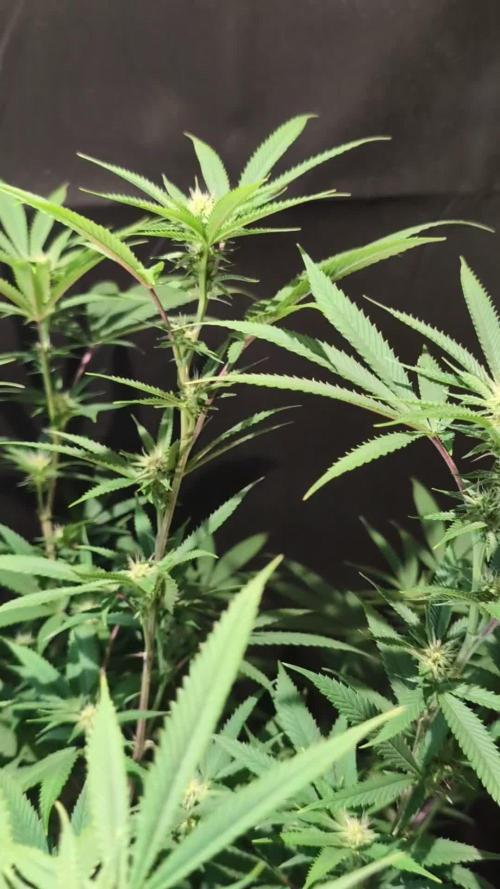
Die zweite Blütewoche ist vorbei und die Pflanze hat im Stretch bisher nochmal 7 cm zugelegt, daher wird in der höhe nun nicht mehr viel passieren.
Das heißt auch ihr Stretch ist insgesamt sehr moderat und super handelbar!
Die Pflanze hat nun eine Höhe von 111cm erreicht.
Sie hat eine wunderschöne und homogene Wuchsform.
Die Stimmen bilden sich nun langsam aus und es sind die ersten Trichome erkennbar.
Dass untere Drittel der Pflanze habe ich ausgedünnt und die Triebe rausgeschnitten.
Die Bedingungen im Growschrank sind für die Blütephase aktuell Top!
—————
🌞 Temp: 26
🌚 Temp: 18°C bis 19°C
💨 RH: 54%
VPD: 1,17 kPa
💡ppfd: 530 mpm
—————

Likes
46
Share


@Dreadnug
Follow
Final week report: Buds look ready for harvest and terps are showing a good mix of colors. Mostly white on both with the purple starting to show some amber. Only watered this week (heavily watering to flush a bit), no nutes and backoff the lighting schedule (UVBs) as well as added a small amount of distance between the light and the plant. My thought was there was some additional strain with the CO2 being turned off and the light level remaining the same.


Processing
Likes
12
Share


@Siriuz
Follow
Hey guys!
Started week #8
Day 52
Sorry for not uploading many pics these past few days ago but you get it we busy and sometimes can't do much even tho we want to!
Please check on the last picture at Day 50 and compare to new picture on day 53
You will noticed many changes!
We also expanded the net and modified some other lights from setup.
We've been good and theyve been great
Outdoors everyday and tons of lights and love so she can continue to flower :).
Day 53
Fed them medium hard
1710ppm /3.79g floranova bloom
Only 300ml followed by
900ml plain water
Plus outdoors from 7.30am til 2.30pm
Day 54
Ladies are looking good
Great day great weather
All day outdoors til 6pm
Now under CFL til 6.30am
Then back outdoors
Got some videos today!
Day 55 we've updated our set of lights to a new LED grow lights 600 watts plus 100 watts CFL :)
Day 56
It's already rocking their bodies
Rich in THC Content
Look at those crystals!!!!
Day 57
End of week 8
Start of Week 9
coming up soon
Likes
16
Share


@Rando1314
Follow
Really just a video from this week but I think I was a week or 2 behind anyways lol just so y’all can see some real color of my girls. Still haven’t named em but I’ll be doing that in the next week I’m switching em to 12 gradually within the next week to experiment with some stretching during the transition compared to a straight 12 switch


Likes
17
Share


@420DeepGrow
Follow
Gracias al equipo de AnesiaSeeds, Marshydro, XpertNutrients y Trolmaster sin ellos esto no sería posible.
💐🍁 Sticky Boof:
Prepárate para dejarte llevar por Sticky Boof, nuestra última obra maestra que está poniendo el listón muy alto para los amantes de las índicas. Nacida del legendario cruce de Super Boof y Cadillac Rainbow, Sticky Boof es una potente planta con un asombroso 80% de dominancia Indica que promete una relajación sin igual.
Prepárate para un viaje épico con el asombroso 37,5% de THC de Sticky Boof.
Sumérgete en una cosecha abundante con Sticky Boof, que produce hasta la friolera de 500 g/m² en interior y 800 - 900 g por planta en exterior. Esta variedad es generosa y está lista para llenar tu alijo de cogollos de la mejor calidad.
Sticky Boof es todo rapidez y eficacia, acelerando el tiempo de floración en sólo 7 u 8 semanas.
💡TS-3000 + TS-1000: se usaran dos de las lámparas de la serie TS de Marshydro, para cubrir todas las necesidades de las plantas durante el ciclo de cultivo, uso las dos lámparas en floracion para llegar a toda la carpa de 1.50 x 1.50 x 1.80.
https://marshydro.eu/products/mars-hydro-ts-3000-led-grow-light/
🏠 : Marshydro 1.50 x 1.50 x 1.80, carpa 100% estanca con ventanas laterales para llegar a todos los lugares durante el grow
https://marshydro.eu/products/diy-150x150x200cm-grow-tent-kit
🌬️💨 Marshydro 6inch + filtro carbon para evitar olores indeseables.
https://marshydro.eu/products/ifresh-smart-6inch-filter-kits/
🍣🍦🌴 Xpert Nutrients es una empresa especializada en la producción y comercialización de fertilizantes líquidos y tierras, que garantizan excelentes cosechas y un crecimiento activo para sus plantas durante todas las fases de cultivo.
Consigue aqui tus Nutrientes:
https://xpertnutrients.com/es/shop/
💻 Trolmaster Tent-X TCS-1 como controlador de luz, optimiza tu cultivo con la última tecnología del mercado, desde donde puedes controlar todos los parametros.
https://www.trolmaster.com/Products/Details/TCS-1
🍣🍦🌴 Xpert Nutrients es una empresa especializada en la producción y comercialización de fertilizantes líquidos y tierras, que garantizan excelentes cosechas y un crecimiento activo para sus plantas durante todas las fases de cultivo.
Consigue aqui tus Nutrientes:
https://xpertnutrients.com/es/shop/
📆 Semana 6:
Buena semana, ha habido sol agradable y buenas temperaturas, empieza q tomar fuerza.
Mantengo las dosis de nutrientes a 1/3 de lo recomendada por el fabricante al estar en suelo virgen ☘️🌲🌳.
Likes
2
Share


@DaRyza
Follow
Couldn't be happier 🤩 it's all about the buds now. Not long to go! Will be interesting to see yeild results in these small pots.
Likes
15
Share


@Bread_n_Buds
Follow
And it starts like this. an official collaboration starts with the friends of Zamnesia, from today I will only grow, grow and flower Zamnesia Seeds plants and I really like it.
We are close to a flowering in the extreme heat and therefore we opted to start with 4 very fast F1s, they are not joking guys when they tell you that they are made to be more resistant, stable and fast they are not telling you something false. The girls are super fast, even those from other brands tried in the past are excellent and a sliver and this one from Zamnesia have all it takes to be the best autoflowering on the market.
The Wurlz F1s were also born at the speed of light, 18 hours in water, 24 on land and we were already born, both of us.
Oh yes, a lot of research is being done on autoflowering plants, you have all noticed monstrous improvements compared to Low Rider and subsequent derivatives.
Whoever works best wins and from what I have been able to see so far Zamnesia is working very well. I know, there is a group of sceptics, friends I'm here on purpose, give me a couple of months and we'll see.
Zamnesia is the best online shop in the situation, you can find everything from seeds, to mushroom kits, through vaporizers and a thousand other things https://www.zamnesia.io
Wurlz F1 seeds specifically
https://www.zamnesia.com/10669-zamnesia-seeds-wurlz-f1-automatic.html
Site Description
ZAMNESIA SEEDS - WURLZ F1 HYBRID AUTOMATIC: EFFECTS TO LEAVE YOUR HEAD IN A WHIRL!
As the end product of combining Runtz with Watermelon Candy, Wurlz F1 hybrid Automatic showcases a reliable, uniform, and, above all, easy growing experience. The resulting buds offer mind-blowing flavors and soothing effects, making Wurlz F1 Automatic more than worthy of being on your radar.
GROWING WURLZ F1 HYBRID AUTOMATIC
As an autoflowering strain, it takes just 9–10 weeks for Wurlz F1 Automatic to move from germination to harvest. Fortunately, there's very little required other than a bit of maintenance along the way. This is partly due to the F1 genetics that make this strain robust and uniform, resulting in plants that reach a similar height and provide a similar (large) yield. Moreover, Wurlz F1 Automatic is highly resistant to disease, pests, and other ailments.
Reaching heights of about 65–80cm, Wurlz F1 Automatic is not an overbearing plant and can fit into smaller spaces with zero fuss. Once ready to yield, growers have the potential to see a return in the region of 450–500g/m² indoors and 50–150g/plant outdoors.
AROMAS, FLAVORS, AND EFFECTS OF WURLZ F1 HYBRID AUTOMATIC
After Wurlz F1 Hybrid Automatic wows you with its easygoing growing experience, the best is yet to come: the smoke test. Teeming with terpenes, this cultivar offers a fruity and candy-like flavor tinged with just a little bit of pine for good measure. In terms of effects, Wurlz F1 Automatic is bolstered by 24% THC and a finely tuned array of cannabinoids, making for a soothing, physically relaxing, and, in larger amounts, couch-locking high. So settle in with some of your favorite friends, snacks, and movies; this is relaxation at its finest.

Likes
5
Share

@Satax
Follow
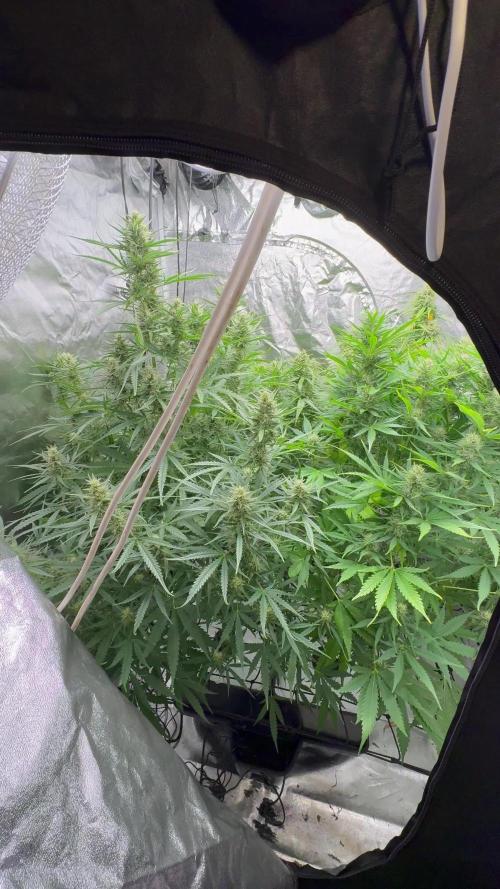
A good week has passed now. The light is at full power. The flowers are starting to bulk up. I’m trying to manage everything as best as I can. The plants are starting to get really heavy..


Likes
45
Share


@GreenHouseLab
Follow
I tend to forget about her as im mesmerized by others, she’s the one with the best perfume currently in the room. It’s very possible she starts busting late flower, trellis is up show me what you got girl. Coated top down she is some sticky icky oooooh weee!
Yep hydro still in Veg Ive topped for a second round shit will be bonkers and going in the flower tent after this round. Will most likely initiate flowering in aboit 2 weeks or until she blows the top off this tent.
Stay Safe Stay Fresh
GHL
Likes
9
Share


@Serhiosaez
Follow
Día tan esperado de esta cosecha de crítical mas con cogollos muy duros y muy apretado y compactos y grandes con un aroma muy fuerte con un olor a diesel

Likes
8
Share

@Salokin
Follow
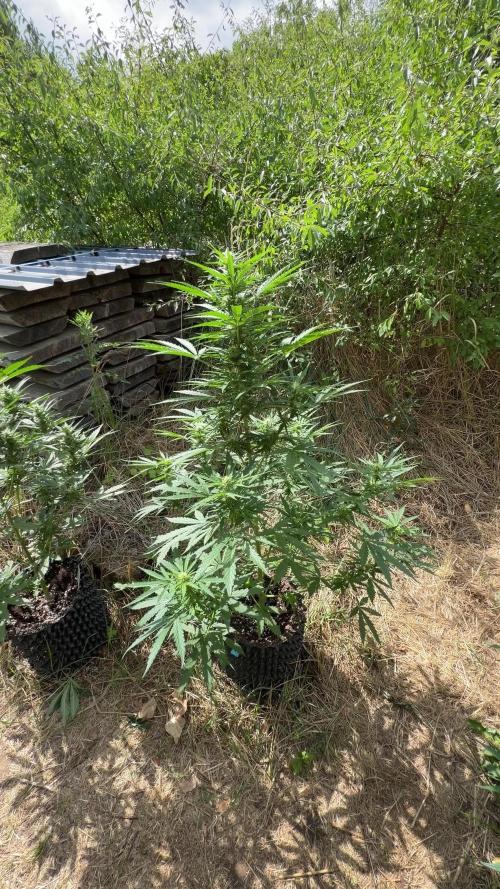
Week 8 | Glookies Auto | Flower
She's the biggest plant in the garden right now and she's earned it. At 106cm and properly into flower, the Glookies is doing exactly what a well-selected outdoor auto should do — she used every day of veg to build a frame, and now that frame is filling in with bud sites up and down every branch.
The nutrient stack has shifted to match where she is in the cycle. Base feed is now **CANNA Aqua Flores A+B** at 3 ml/l each, **CalMag Agent** holding at 0.9 ml/l, **Aptus Regulator** at 0.1 ml/l. **Plagron Green Sensation** has been introduced at 0.5 ml/l — the all-in-one flower booster covering PK, enzymes, amino acids and biostimulants in one shot. pH 6.2, EC 1.2 mS/cm, 1L per plant per 24h. Temps sitting at 25°C day, 18°C night, humidity 60%.
The main cola is stacking well and the lateral branches are following. Good things coming.
Updates every Sunday. Stay tuned.
Likes
17
Share


@GangbudsGenesgdl
Follow
18/01/21 se amarraron las dos puntas del corte apical con lst
19/01/21. se trato de hacer lst y una de los dos tallos del corte apical se rompio durante la noche, lo amarre para intentar salvarlo y aprobeche para sacar dos esquejes
22/01/21. hoy se aplico riego con nutrientes organico de Rootz.mx se aplico magnaflor y forzasilicia
MagnaFlor. Estimula la floración.
100% orgánico.
Contiene biocatalizadores que serán rápidamente absorbidos por las raíces de tus plantas. El comienzo de la floración será explosivo.
se esta recuperando bien de donde
24/01/21 cierre de semana esta pequeña esta sacando unas flores hermozas parese que no le afecto tanto la rama rota se noto mas vigorosa despues de eso

Likes
6
Share


@Sw015
Follow
Going well in the pre Flowering stretch very happy woth how she's coming along!!
Likes
2
Share

@Growfather2
Follow
Hello everyone,
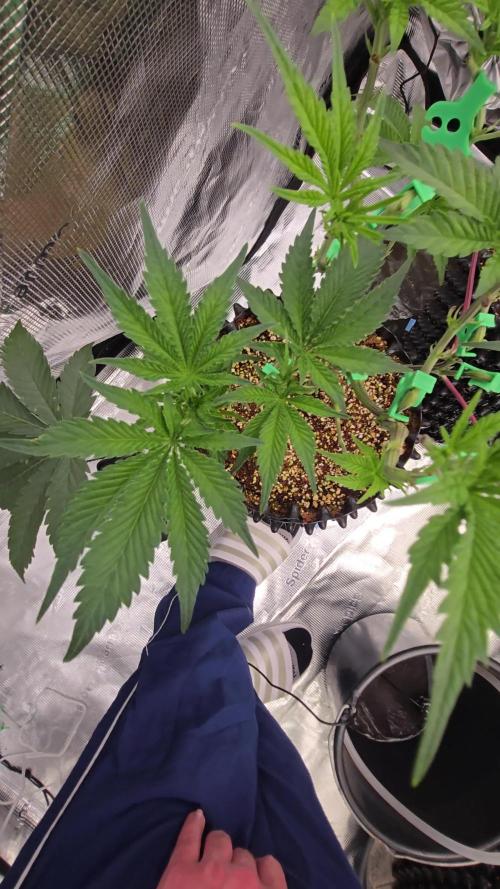
One hour ago the peyote cookies experienced for the first time total darkness and are officially in flower mode.
I vegged the plant for 7 weeks and am a little bit disappointed, they didn't stretch much and the main stem is to the thin side, but it is what it is.
Thanks for stopping by and have a nice day.
Growfather
Likes
8
Share

@HashishOculus
Follow
Week 11 | Feb 5 - Feb 11 | Flower Days 36-42
Feb 5 - Flower Day 36
00:15 pre-top-off: pH 5.75 / EC 1.852. A touch high, but still controllable. After top-off it settled at pH 5.70 / EC 1.724. She was drinking around 1.5 L/day, and buds were clearly starting to put on real mass. The canopy still carried scars from the earlier incident, but the flowers themselves looked active and healthy.
Feb 6 - Flower Day 37
00:15 pre-top-off EC hit 2.036. That was my cue to stop messing around with dilution. I did a full reservoir change, resetting the system cleanly instead of letting salt concentration creep. The new res went in at pH 5.74 / EC 1.614. She didn’t sulk at all, which was a relief.
Feb 7 - Flower Day 38
Pre-top-off the numbers were calmer: EC ~1.500 / pH 6.18. After topping off with pH-adjusted water and letting it circulate, pH settled at 5.98. She drank less than a liter this day, but given stretch was over and the plant had just had a full res swap, that didn’t automatically worry me. Trichomes were becoming more visible on the sugar leaves - resin building, not just “hair.”
Feb 8 - Flower Day 39
00:15 pre-top-off: pH 5.4 / EC 1.488. pH drifting down was a new pattern compared to earlier in the grow. After top-off it settled at pH 5.72 / EC 1.528. Drinking picked back up. That combination - falling EC with rising uptake - felt like the plant was properly feeding again.
Feb 9 - Flower Day 40
00:10 pre–top-off: EC 1.532 / pH 5.6. After top-off it landed at pH 5.7 / EC 1.488. Stable, predictable behavior. No new spread of damage. Bud sites looked more “structured” now, and the smell was back to pungent and sweet rather than that old hay panic.
Feb 10 - Flower Day 41
00:10 pre-top-off: pH 5.84 / EC 1.566. She drank about 2 liters over the last 24h, which was the clearest sign yet that she was working hard again. After top-off, 15 minutes later, she settled at pH 5.90 / EC 1.518.
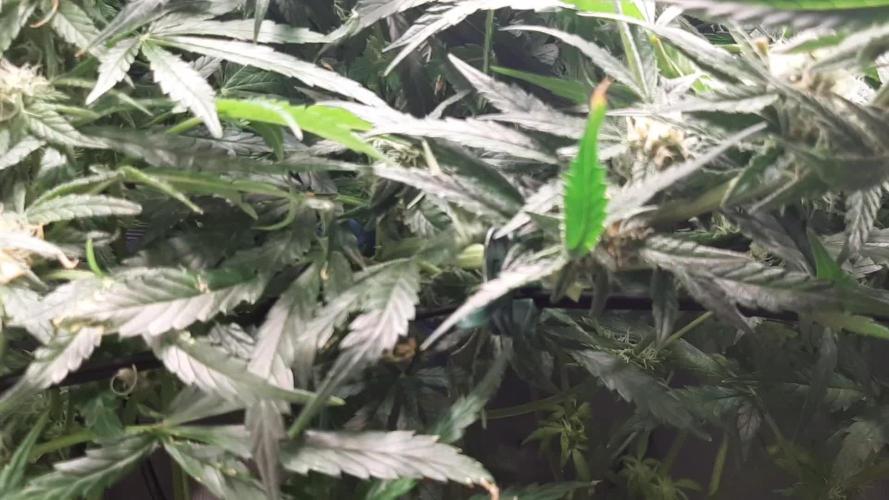
Then I did the big job: a major defoliation / cleanup. It was honestly a jungle down there and airflow needed help. I removed nearly all leaves with noticeable discoloration, plus a lot of shaded lower fan leaves that weren’t contributing. I left a few that were only slightly marked so I wouldn’t overstrip her. The difference was immediate: way better airflow, and more tops exposed properly. My fingers were ridiculously sticky afterwards and the smell was loud and pungent - and that was reassuring. Buds were clearly beginning to gain real mass.
Feb 11 - Flower Day 42
00:13 pre-top-off: pH 5.88 / EC 1.608. This was the night I decided to do a tiny, controlled nutrient bump in the top-off water: 1 ml per liter each of Micro, Grow, and Bloom. After circulation it settled at pH 5.88 / EC 1.670 - exactly the outcome I wanted. Slight lift, no spike, no instability.
This week felt like the real transition from recovery into bulk. The canopy still has scars, but the plant is behaving like a producer again - drinking, feeding, and stacking.

Likes
67
Share


@Ultraviolet
Follow
Inhale for 13s, Exhale for 13s,
Inhale for 8s, Exhale for 8s,
Inhale for 5s, Exhale for 5s,
Inhale for 3s, Exhale for 3s,
Inhale for 1s, Exhale for 1s,
Alignment. 1.618
A plant with both standard cellular respiration (occurring throughout the plant, including leaves and stems) and adequate root respiration will have a significantly higher ATP throughput than one restricted to only general cellular respiration in a limited way.
Cellular respiration is the fundamental metabolic process that occurs in all living plant cells (roots, stems, leaves, flowers, seeds) to convert glucose into usable energy (ATP). It requires oxygen and produces carbon dioxide and water as byproducts.
Root respiration is not a separate type of respiration, but rather a specific instance of cellular respiration occurring in the roots. Roots absorb oxygen from the air spaces in the soil to fuel their energy needs.
Roots require a substantial amount of ATP for essential functions like nutrient and water absorption, as well as growth and maintenance of their tissues.
The primary form of respiration in healthy plant roots is aerobic respiration, which is highly efficient, yielding up to 30-38 ATP molecules per glucose molecule.
Anaerobic Respiration (Inefficient): If roots are deprived of oxygen (e.g., in waterlogged soil), they switch to anaerobic respiration, which is far less efficient, producing only 2 ATP molecules per glucose molecule and also generating alcohol, which can be toxic and kill the plant.
Therefore, a plant with healthy, oxygenated roots performing efficient aerobic respiration in addition to the rest of the plant's cellular respiration has a much greater overall ATP production and energy capacity.
A soil without organic matter will generally have a low Cation Exchange Capacity (CEC).
Biochar is often prized for its potential to increase soil cation exchange capacity (CEC), but this effect is highly dependent on the specific properties of the biochar (feedstock and pyrolysis temperature) and the soil type to which it is applied.
High-ash biochars, especially those produced at lower temperatures and applied to acidic or sandy soils, can significantly boost CEC by providing abundant binding sites for cations like calcium (Ca²⁺), magnesium (Mg²⁺), and potassium (K⁺).
Biochar is more sustainable than typical organic matter for long-term soil improvement primarily due to its high stability and resistance to microbial decomposition, allowing it to persist in the soil for hundreds to thousands of years. This longevity provides a lasting positive effect on soil properties, particularly by increasing the cation exchange capacity (CEC) over time, while regular organic matter breaks down much faster.
Biochar generally offers a much higher CEC than coco coir, though specific values vary greatly; while coco coir might sit around 40-60 cmol/kg, biochar can range from tens to over 200 cmol/kg, with sources like Acacia wood biochar or even coconut shell biochar often surpassing coco's capacity due to its porous structure, creating significantly more cation-binding sites for nutrients, making it superior for nutrient retention.
Needs to be charged similar to coco but at a much higger rate. But shhhh.. it's a secret.
Recommend a balanced ratio of key cations, particularly calcium (Ca), magnesium (Mg), and potassium (K). A widely accepted general "ideal soil" cation saturation ratio is approximately 65-85% Ca, 6-12% Mg, and 2-5% K. That's roughly what mine gets.