Likes
Comments
Share
Popped the top for a sampler, probably take the rest down in a week.

Likes
16
Share
@DonKrika
Follow
Small problem with ph this week. I found out that one of the branches was showing problems, I found out that the ph of the water on the drip reservoir was around 6.3, I don't know what happen for the ph to change,, when I fill up the reservoir the ph was around 6. I turn off the drip system, empty the reservoir and gave ph correct water by hand and that solved the problem. This was my last week in veg, next week I will switch the lighting to 12-12. This week I used Kyle Kushman's "Chiropractic" Plant Training Method, and I'm very happy with the result. This is the tutorial for anyone interested https://www.youtube.com/watch?v=XdfW2p-lHN0&list=WL&index=29&t=1235s Used Foliar spray this week DAY 64 - Nutes PH - 5.97 Solution Temp - 19 PPM-1520 Watering Volume per plant - 4L DAY 66 - Water PH - 5.95 Solution Temp - 18 PPM-603 Watering Volume per plant - 4L DAY 69 - Water PH - 5.79 Solution Temp - 18 PPM-575 Watering Volume per plant - 4L
Likes
278
Share
A big hello to all the cannabis growing gardeners...and all the other visitors that came across my grow journal. This week i need to change the reservoir again, the plants drink solution just as I add fresh water the EC stays at 2.7 and i need to add PK and Calmag so that's why. The weather outside is very cold this whole week around -18 degree Celsius at night...this made my reservoir water go under 15 degree Celsius. Since i ran the Spider Farmer UV lights i noticed some purples on my cannabis plants i think it's their doing....i run it now for two weeks the UVs ---------------------------------------------------------------------------------- The SE 7000 is hanged at 28 cm. over the canopy and runs at 520W. This whole grow's main sponsor is Spider Farmer. You can easily obtain all the great grow equipment we use at: spider-farmer.com A big thank you to Jessie and the whole Spider Farmer crew for supporting me with the newest technological advancements in horticulture. Thanks to them what i do here is possible. Thank you Seeds Mafia for giving me the opportunity to try out your stock. seedsmafia.com/en/feminized-cannabis-seeds/moby-dick-feminized.html Plagron did send us their Contest package for the Power Buds competition . Thank you for your visit, please leave a like and hope to see you beck here in about a week.
Likes
8
Share
We decided on Pineapple Express (by Grower's Choice) as our summer strain this year, we veg anything going outside under 16hrs ..We only get 15hrs at peak light(Far North/East, Canadian border) and this prevents any pre-flowering and possible revegging downtime. We're going to flower 4 plants indoors ASAP (to ensure we don't run out )and bring 3 out to the field in about 2-2.5 months...
Likes
52
Share
Lacewings seemed to have mostly killed themselves by flying into hot light fixtures. I may have left the UV on which was smart of me :) Done very little to combat if anything but make a sea of carcasses, on the bright side its good nutrition for the soil. Made a concoction of ethanol 70%, equal parts water, and cayenne pepper with a couple of squirts of dish soap. Took around an hour of good scrubbing the entire canopy. Worked a lot more effectively and way cheaper. Scorched earth right now, but it seems to have wiped them out almost entirely very pleased. Attempted a "Fudge I Missed" for the topping. So just time to wait and see how it goes. Question? If I attached a plant to two separate pots but it was connected by rootzone, one has a pH of 7.5 ish the other has 4.5. Would the Intelligence of the plant able to dictate each pot separately to uptake the nutrients best suited to pH or would it still try to draw nitrogen from a pot with a pH where nitrogen struggles to uptake? Food for stoner thought experiments! Another was on my mind. What happens when a plant gets too much light? Well, it burns and curls up leaves. That's the heat radiation, let's remove excess heat, now what? I've always read it's just bad, or not good, but when I look for an explanation on a deeper level it's just bad and you shouldn't do it. So I did. How much can a cannabis plant absorb, 40 moles in a day, ok I'll give it 60 moles. 80 nothing bad ever happened. The answer, finally. Oh great........more questions........ Reactive oxygen species (ROS) are molecules capable of independent existence, containing at least one oxygen atom and one or more unpaired electrons. "Sunlight is the essential source of energy for most photosynthetic organisms, yet sunlight in excess of the organism’s photosynthetic capacity can generate reactive oxygen species (ROS) that lead to cellular damage. To avoid damage, plants respond to high light (HL) by activating photophysical pathways that safely convert excess energy to heat, which is known as nonphotochemical quenching (NPQ) (Rochaix, 2014). While NPQ allows for healthy growth, it also limits the overall photosynthetic efficiency under many conditions. If NPQ were optimized for biomass, yields would improve dramatically, potentially by up to 30% (Kromdijk et al., 2016; Zhu et al., 2010). However, critical information to guide optimization is still lacking, including the molecular origin of NPQ and the mechanism of regulation." What I found most interesting was research pointing out that pH is linked to this defense mechanism. The organism can better facilitate "quenching" when oversaturated with light in a low pH. Now I Know during photosynthesis plants naturally produce exudates (chemicals that are secreted through their roots). Do they have the ability to alter pH themselves using these excretions? Or is that done by the beneficial bacteria? If I can prevent reactive oxygen species from causing damage by "too much light". The extra water needed to keep this level of burn cooled though, I must learn to crawl before I can run. Reactive oxygen species (ROS) are key signaling molecules that enable cells to rapidly respond to different stimuli. In plants, ROS plays a crucial role in abiotic and biotic stress sensing, integration of different environmental signals, and activation of stress-response networks, thus contributing to the establishment of defense mechanisms and plant resilience. Recent advances in the study of ROS signaling in plants include the identification of ROS receptors and key regulatory hubs that connect ROS signaling with other important stress-response signal transduction pathways and hormones, as well as new roles for ROS in organelle-to-organelle and cell-to-cell signaling. Our understanding of how ROS are regulated in cells by balancing production, scavenging, and transport has also increased. In this Review, we discuss these promising developments and how they might be used to increase plant resilience to environmental stress. Temperature stress is one of the major abiotic stresses that adversely affect agricultural productivity worldwide. Temperatures beyond a plant's physiological optimum can trigger significant physiological and biochemical perturbations, reducing plant growth and tolerance to stress. Improving a plant's tolerance to these temperature fluctuations requires a deep understanding of its responses to environmental change. To adapt to temperature fluctuations, plants tailor their acclimatory signal transduction events, specifically, cellular redox state, that are governed by plant hormones, reactive oxygen species (ROS) regulatory systems, and other molecular components. The role of ROS in plants as important signaling molecules during stress acclimation has recently been established. Here, hormone-triggered ROS produced by NADPH oxidases, feedback regulation, and integrated signaling events during temperature stress activate stress-response pathways and induce acclimation or defense mechanisms. At the other extreme, excess ROS accumulation, following temperature-induced oxidative stress, can have negative consequences on plant growth and stress acclimation. The excessive ROS is regulated by the ROS scavenging system, which subsequently promotes plant tolerance. All these signaling events, including crosstalk between hormones and ROS, modify the plant's transcriptomic, metabolomic, and biochemical states and promote plant acclimation, tolerance, and survival. Here, we provide a comprehensive review of the ROS, hormones, and their joint role in shaping a plant's responses to high and low temperatures, and we conclude by outlining hormone/ROS-regulated plant-responsive strategies for developing stress-tolerant crops to combat temperature changes. Onward upward for now. Next! Adenosine triphosphate (ATP) is an energy-carrying molecule known as "the energy currency of life" or "the fuel of life," because it's the universal energy source for all living cells.1 Every living organism consists of cells that rely on ATP for their energy needs. ATP is made by converting the food we eat into energy. It's an essential building block for all life forms. Without ATP, cells wouldn't have the fuel or power to perform functions necessary to stay alive, and they would eventually die. All forms of life rely on ATP to do the things they must do to survive.2 ATP is made of a nitrogen base (adenine) and a sugar molecule (ribose), which create adenosine, plus three phosphate molecules. If adenosine only has one phosphate molecule, it’s called adenosine monophosphate (AMP). If it has two phosphates, it’s called adenosine diphosphate (ADP). Although adenosine is a fundamental part of ATP, when it comes to providing energy to a cell and fueling cellular processes, the phosphate molecules are what really matter. The most energy-loaded composition for adenosine is ATP, which has three phosphates.3 ATP was first discovered in the 1920s. In 1929, Karl Lohmann—a German chemist studying muscle contractions—isolated what we now call adenosine triphosphate in a laboratory. At the time, Lohmann called ATP by a different name. It wasn't until a decade later, in 1939, that Nobel Prize–-winner Fritz Lipmann established that ATP is the universal carrier of energy in all living cells and coined the term "energy-rich phosphate bonds."45 Lipmann focused on phosphate bonds as the key to ATP being the universal energy source for all living cells, because adenosine triphosphate releases energy when one of its three phosphate bonds breaks off to form ADP. ATP is a high-energy molecule with three phosphate bonds; ADP is low-energy with only two phosphate bonds. The Twos and Threes of ATP and ADP Adenosine triphosphate (ATP) becomes adenosine diphosphate (ADP) when one of its three phosphate molecules breaks free and releases energy (“tri” means “three,” while “di” means “two”). Conversely, ADP becomes ATP when a phosphate molecule is added. As part of an ongoing energy cycle, ADP is constantly recycled back into ATP.3 Much like a rechargeable battery with a fluctuating state of charge, ATP represents a fully charged battery, and ADP represents a "low-power mode." Every time a fully charged ATP molecule loses a phosphate bond, it becomes ADP; energy is released via the process of ATP becoming ADP. On the flip side, when a phosphate bond is added, ADP becomes ATP. When ADP becomes ATP, what was previously a low-charged energy adenosine molecule (ADP) becomes fully charged ATP. This energy-creation and energy-depletion cycle happens time and time again, much like your smartphone battery can be recharged countless times during its lifespan. The human body uses molecules held in the fats, proteins, and carbohydrates we eat or drink as sources of energy to make ATP. This happens through a process called hydrolysis . After food is digested, it's synthesized into glucose, which is a form of sugar. Glucose is the main source of fuel that our cells' mitochondria use to convert caloric energy from food into ATP, which is an energy form that can be used by cells. ATP is made via a process called cellular respiration that occurs in the mitochondria of a cell. Mitochondria are tiny subunits within a cell that specialize in extracting energy from the foods we eat and converting it into ATP. Mitochondria can convert glucose into ATP via two different types of cellular respiration: Aerobic (with oxygen) Anaerobic (without oxygen) Aerobic cellular respiration transforms glucose into ATP in a three-step process, as follows: Step 1: Glycolysis Step 2: The Krebs cycle (also called the citric acid cycle) Step 3: Electron transport chain During glycolysis, glucose (i.e., sugar) from food sources is broken down into pyruvate molecules. This is followed by the Krebs cycle, which is an aerobic process that uses oxygen to finish breaking down sugar and harnesses energy into electron carriers that fuel the synthesis of ATP. Lastly, the electron transport chain (ETC) pumps positively charged protons that drive ATP production throughout the mitochondria’s inner membrane.2 ATP can also be produced without oxygen (i.e., anaerobic), which is something plants, algae, and some bacteria do by converting the energy held in sunlight into energy that can be used by a cell via photosynthesis. Anaerobic exercise means that your body is working out "without oxygen." Anaerobic glycolysis occurs in human cells when there isn't enough oxygen available during an anaerobic workout. If no oxygen is present during cellular respiration, pyruvate can't enter the Krebs cycle and is oxidized into lactic acid. In the absence of oxygen, lactic acid fermentation makes ATP anaerobically. The burning sensation you feel in your muscles when you're huffing and puffing during anaerobic high-intensity interval training (HIIT) that maxes out your aerobic capacity or during a strenuous weight-lifting workout is lactic acid, which is used to make ATP via anaerobic glycolysis. During aerobic exercise, mitochondria have enough oxygen to make ATP aerobically. However, when you're out of breath and your cells don’t have enough oxygen to perform cellular respiration aerobically, the process can still happen anaerobically, but it creates a temporary burning sensation in your skeletal muscles. Why ATP Is So Important? ATP is essential for life and makes it possible for us to do the things we do. Without ATP, cells wouldn't be able to use the energy held in food to fuel cellular processes, and an organism couldn't stay alive. As a real-world example, when a car runs out of gas and is parked on the side of the road, the only thing that will make the car drivable again is putting some gasoline back in the tank. For all living cells, ATP is like the gas in a car's fuel tank. Without ATP, cells wouldn't have a source of usable energy, and the organism would die. Eating a well-balanced diet and staying hydrated should give your body all the resources it needs to produce plenty of ATP. Although some athletes may slightly improve their performance by taking supplements or ergonomic aids designed to increase ATP production, it's debatable that oral adenosine triphosphate supplementation actually increases energy. An average cell in the human body uses about 10 million ATP molecules per second and can recycle all of its ATP in less than a minute. Over 24 hours, the human body turns over its weight in ATP. You can last weeks without food. You can last days without water. You can last minutes without oxygen. You can last 16 seconds at most without ATP. Food amounts to one-third of ATP production within the human body.
Processing
Likes
21
Share
@rhodes68
Follow
9/28 Week 11 Look good still bulking Nuets as is till flush when ready 9/30 Trics going well, she is ripening well got no complaints Still looking at next week for flush
Likes
35
Share
@Da420Andi
Follow
Yo yo yo what's poppin It's day 2 in week 7 some more pics incoming this week Triple G and Wedding Gelato is fire. North Thunderfuck has the most weight and doing also great Hulk Berry is a sativa and will need a little bit longer. It smells already gasoline diesel berry like. The smell of Triple G is the best I've ever smelled. It's so fruity and has trichomes everywhere Day 46 today and I started feeding water only. I guess 14 to 16 days and they are ready to harvest. All plants do really good. Day 49 every plant got flushed today. 30 Liter clear water for every plant.
Likes
7
Share
@Andres
Follow
it seems that its vegetation is very fast ... we will see with the passage of the weeks ... we hope that it does not enter in flowering yet...
Likes
45
Share
7/3 Hot as fuck today. Japanese beetles were around. I killed a few. I'm going to have to go over and keep an eye on things. It reached 90° today for the majority of the day. I watered around 1pm as I noticed most of the bags were very light. I'm glad I held off on the BT. I've dealt with jpn beetles before so hopfully that won't be an issue. Things are getting big. It won't let me upload any pictures or the video I did. I may upload it to past week. Went back over at night and and plants looked dropy but it was after 7pm and they were just going to sleep. 7/4 Didn't take photos this morning. Found some jpn beetles. That's the damage I've been seeing. I went back over last night to hunt them but I only got two. There weren't any others. No biggie. I'll put some pics up from today after I get back 7/5 Didn't get a chance to check the plants out today. My intuition tingled around 1pm and I had just gotten home and I ran over to check them. They displayed minor signs of heat stress as seen in the pics (due to the super high humidity and 90° weather) and the bags were light. A few were REALLY light. I could see they needed water. I WATERED 4 1/2 GALLONS TO THE GARDEN. DO TO THE HIGH TENPS AND WINDS IVE HAD TO WATER THE LAST THREE DAYS IN A ROW. IVE SLOWLY STRARTED INCREASING VOLUME. I don't want to water until I get a shit ton of run off because I want to keep the nutes in my soil as long as possible. As you can see things are going great. Minor pests but notjing major. They're growing at a very rapid pace. I'll need to add another layer of supports soon and begin to LST some of these girls. I've got one seedling in a 10 gal and I'm pretty sure it's a feminized red runtz but it's in preflower and looks and SHOULD be a female but I haven't seen the white hair yet. Looks like a female preflower though. I do have one auto though in a 5 gallon tjats doing good too. I have a bunch of pics but the internet is too slow. I'll upload tomorrow. Started pouring around 6. 7/6 Poured sheet rain all night. After it had Bern super fucking hot and I watered my plants with 4 1/2 gallons. Oh well. If I didn't water we wouldn't have gotten the rain. The fabric bags makes watering easier. The wind will dry out the medium. We do have some rain in the forecast. A pallet fell over and knocked my 5 gal bucket with tje auto into a 10 gal seedling but it held the pallet up and didn't damage anything. Out of all the ways it coyldve landed it landed just right to not hurt anything. Everything is super healthy. I do have some random pest damage but it's minimal. I'll decide whether to use a spray or not. Didn't take pictures this morning. Was pressed for time. 7/7 Super hot even at 8a.m. Rained the majority of the day yesterday. Plants are getting HUGE. I'm going to have to build a second round of supports and should probably start some LSTing. They seem to like growing natural how they are (besides the original topping and FIMed. You can tell these are ALL very high % indicas. I'm seeing pistols spitting out everywhere. Event horizon and sherb cake seem to be in the lead. The seedlings have realky taken off. The one I put in the 50 has fan leaves the size of my hands. 7/8 Wow it has been extremely hot. It's going to be in the 90's again today. Checked my plants and it seems the GMOs seem to be using more water. Those bags were a little lighter. Seeing how there is no rain in for a few days I had to water. WATERED 3 1/2 GALLONS. LAST SEEDLING FINALLY SHOWED AS A FEMALE. 7/9 Bags are still heavy. Found ONE jpn beetle this morning. Plants seem to be bigger everytime I look.starying the stretch and spitting out some pistols. I took some pics of the pistles. I'll update 7/10 should've started a new week but I didn't. I'll make next week six days. Plants are starting ro stretch. Minor random pest damage but woth the heat they need lots of water. Noticed a couple dead interior leaves so I should probably go through everything and defoliate. I need to add another layer of supports as well.
Likes
23
Share
Likes
2
Share
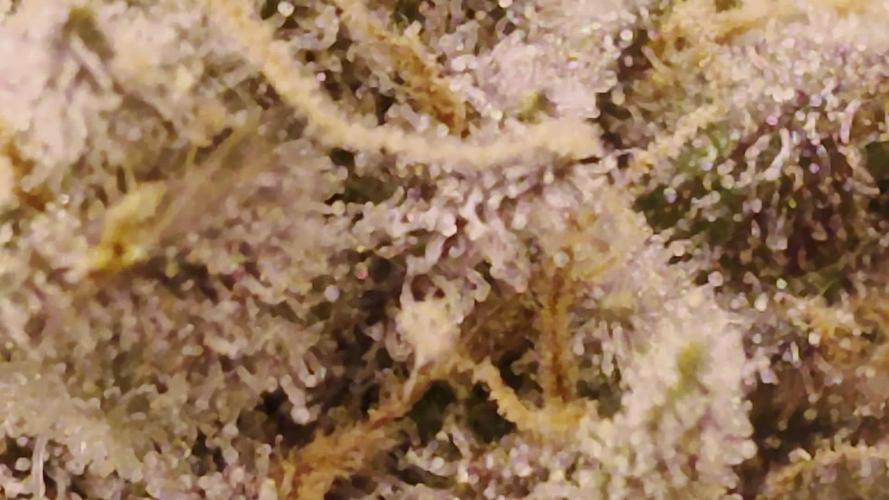
Things are getting frostyyyyyyy and densing up nicely and smelling amazing. I'm looking forward to smoking these beautiful ladies! 🤤🤤🤤🤤
Likes
15
Share
Week 5 ----- Day 29 ----- Fed 1100ppm at 6.4ph 23 Liters Everything's good. No real updates. Front right Glookies stretched a bit but has stopped. Plants are perfect, couldn't ask for a better beginning to week 5. *Update* Easy day, end of light cycle. 3 new pics. ---- Day 30 ----- Some fun photos today for this easy day. Humidity in basement FINALLY hit 40% this morning. Within 5 days it should be 30-35% residual basement and 45% tent for a good residual humidity. The hand shot has my fingers and palm forward from the bud tip, the bud tip is actually past my hand but it's nearly impossible to get a perfect shot with my arm in the tent and my other one far out trying to take a photo i can't see. The Tropicanna Popcorn nugs are already bigger than my thumb... gonna be fun in 4 weeks to see bud finishing sizes Wedding Cake - Cherry HubbaBubba smell Tropicanna Glookies - Pink Bubblegum with a strawberry like hint peaking through. Tomorrow is feeding. Today is just emptying water from buckets from dehumidifier. *knock on wood* it's easy streak from here on out... 35~ days roughly left. here we grow!! *** Update *** Took some measurements. Wedding cake is monstrous already. Upto 1.5 inch wide, 14inch long (it was longer than the 12" ruler). Popcorn nugs on Tropicanna Glookies already 1inch wide 3 inch long at the top. Beaaautiful. Slow and steady from here on out. ----- Day 31 ----- Beautiful as usual. Fattening up nicely. 1200 ppm 6.4 pH 23 Liters If anyone is wondering why I switched to Blackstrap Molasses I put up the Nutrition Facts.. in 20 grams you have carbohydrates, potassium, Calcium, Iron, B6 Vitamin, Magnesium, Zinc.. and that's only the "significant" nutrients (Human based for that picture) It also contains micro traces of copper and more. pH is quite nice too, with the nutrient regiment i'm on, it finishes itself at 6.4pH so I don't have to manipulate it with pH up/down... Loving everything so far. Humidity in basement was 39% today, SO damn close. Tent closed at lights on (highest residual humidity point) was at 48% ... woo hoo 3% more to go!!! ------ Day 32 ------ Wow. Wedding Cake larger buds I can't even wrap my hand around.. These buds are going to be mooooonstrous. Humidity was under 40% in basement, tent was 48% this morning. Great news for me. Easy day, pretty much standard operating procedures from here on out.. feed, drain dehumidifier, strengthen stems by shaking plants, open/close tents... rinse repeat. Both plants are amazing, great genetics so far regarding bud structure building/plant size. ----- Day 33 ----- 47.5% residual humidity Fed at 1150ppm 6.4pH 23L Everything's perfect, 30~ days left. ----- Day 34 ----- 48% humidity in tent, i'm a happy camper. Everything's perfect. Bulk has started, front right Tropicanna Glookies had double in thickness and diameter top buds of most stems. Wedding cake 14 inch stem I've named Big Bertha. Excited to watch her fatten up on the couch so-to-speak. I'm now on autopilot. Fed yesterday while half asleep, didn't even remember doing it. Thank god I take pics of ppm/pH before every feeding for data. One more feeding this week before week 6 happens tomorrow. This week Liquid Koolbloom ends, KoolBloom Dry begins for maximum bulk on week 6 first feeding (2 days into week 6) ----- Day 35 ----- Last day of week 5!!! Fed at 1150ppm 6.4ph 23L Plants are perfect, humidity is great. Smell is RAMPED up now. Strong candy weed smell.
Likes
9
Share
@valiotoro
Follow
Let’s start with the smell absolutely wonderful it’s floral & sweet it reminds me a jasmine green tea🤤 The buds are SUPER sticky✂️ See you in one month for the smoke review Take care 😎 Oh & happy new year
Likes
4
Share
@burnout
Follow
Day 35 chugging along. Adding 2 gallons of water to reservoir mid week with 1 teaspoon coconut powder per gallon. Top watering weekly with one gallon water mixed with 1 teaspoon build a bloom, 1/2 teaspoon recharge, 2 oz peach ferment.
Processing
Likes
19
Share
Seems I told a lie last week, I'm late one day and I've done videos again cos again 🤥 Its been a good week for bud production regardless of a hiccup this week which shows as cal/mag and nitrogen deficiencies throughout each plant🤒 My ph pen malfunctioned and I ended up feeding them all 4.5 and didn't notice till the leaves told me 🍂 The ph pen has been replaced, amendments made to buffer the root zone and fingers are crossed 💉🤞 Super stinky grow this, going to replace my carbon filter before starting a new one because I caught wiffs of them when I entered my home today. If the flavours match the smells in this tent I'm in for a treat come smoke time.👃⛽🍋🍇 Its that magic time in the tent now where each girls really showing their own characteristics, both the purple punches and the zkittlez are different phenos to their siblings so I'm excited to see what they finish up like🏁 So far mostly good 👍 Thanks for reading 📖 One Love💚 Fire Farmer🔥👨‍🌾
Likes
169
Share
🍪 😍🍪 😍🍪 😍🍪 😍🍪 😍🍪 😍 Great job, @anesia_seeds!! 💜 Growing the Foster was a beautiful experience, since reading the strain description i could not wait to try this tasty variety!! 😋 i wasn't disappointed! Thanks for showing up and supporting me and the girls, bless you, growmies!! 😘 Shouts go out to my sponsors @GreenBuzzNutrients, thanks so much for your support!! 💚 💚 💚 If anyone would like to try their amazing organic products, you can find a generous discount code of 25% in my weekly comments! 😜 🙏 If you want a recommendation which product to get first.. BIGFRUITS!! 😍 I love the tasty terps with this one!! https://greenbuzznutrients.com/ Thanks also of course @Anesia_Seeds, for the beautiful genetics!! 💜 💜 💜 ________________________________________________________ Strain Information: Foster Foster is a balanced hybrid with a slight sativa dominance and it’s the result of crossing a particularly THC-rich Emperor Cookies Dough with our highly potent Sleepy Joe. The combination of these two exceptionally strong parents has resulted in a premium strain that delivers a fine balanced aroma and an insane high. Foster’s high is deceptively slow at first and creeps up, but after a few minutes her outsized potency unfolds with dizzying energy and euphoria. The mind is suddenly full of motivation and a feeling of lightness spreads. At the same time, the body is flooded with tingling, warm effects and greatly relaxed. The strain clears your mind for new ideas and concepts, lets you dream and makes you feel really happy. Due to her high potency and measured THC levels of up to 35%, she will delight and challenge those with a high tolerance with ease, while certainly beaming away novices for several hours. Because of this, she is not recommended for beginners and you should not underestimate this fragrant beauty. Growing Foster Foster is a resilient and vigorous strain that produces excellent results indoors, outdoors and in the greenhouse. She tips the scales in yields of up to 550g/m² or 1000g per plant, grows quickly and forms many strong side branches with large heavy buds. Towards the end of the flowering period, the buds are covered in a thick layer of glistening resin and emit an intense sweet, fresh and floral scent. She is perfect for growing in a SCROG or SOG and has a very favorable calyx-to-leaf ratio, making manicuring easy. Her terpene profile is complex, offering an aroma and flavor reminiscent of coffee, caramel, freshly baked cookies, and vanilla. It’s a seductive treat that shouldn’t fool you with her mind-blowing potency. She is among the strongest strains on the market and has enough THC to blow your head off. Therapeutic effects Due to its complex terpene and cannabinoid profile, it has a similar wide range of uses in the therapeutic field as in the recreational field. It helps to reduce stress, has a mood-enhancing effect and is extremely helpful for pain and inflammation. https://anesiaseeds.com/product/foster/ ________________________________________________________________________________ SETUP: 80x80x180 cm Zelsius 240W Full Spectrum LED IR UV dimmable DW240H-A6-HS Heatsink color red LED Chips: 512pcs SAMSUNG LM301H 24pcs Osram 660nm 8pcs Osram IR 730nm 8pcs UV 385nm Color mix: 2700K 4000K 2,8umol/J Driver HLG-240H-C2100B Coverage: veg 5x3ft / flower 4x2ft Product size: 628x205x68mm Green Buzz Nutrients Shouts go out to my sponsors @GreenBuzzNutrients, thanks so much for your support! 💚 💚 💚 If anyone would like to try their amazing organic products, use code GD42025 for generous 25% discount (for orders of minimum 75€) ✨ https://greenbuzznutrients.com/ Biobizz Lightmix custom exhaust fan 320/270cm³/h Carbon Active Granulate 240cm³/h tab water pH 8 - EC 0,25 with Calmag to 0,5 Advanced Hydroponics pH minus Grow Bloom to pH 6.2 🍪 😍🍪 😍🍪 😍🍪 😍🍪 😍🍪 😍
Likes
4
Share
@Stork
Follow
Last week or maybe less then a week 🤔 Day 127 Mon PH 6.0 EC 0.2 PPM 70 DLI PPFD Water 18c Day 128 Tue PH 5.8 EC 0.2 PPM 70 DLI PPFD Water 17c Day 129 Wed Add Ph Up PH 5.6 - 5.9 EC 0.2 PPM 80 - 90 DLI PPFD Water 18c Day 130 Thu Add water PH 5.6 - 5.7 EC 0.2 - 0.2 PPM 100 - 90 DLI PPFD Water 20
Likes
4
Share
@Mismatas
Follow
PRIMERA SEMANA DE VIDA A PUNTO DE TRASPLANTAR
Processing
Likes
2
Share
@Palermo91
Follow
They look good to me ... keep give all the nutrient .. I gonna wait maybe 3 more days and I gonna topping 👍👍😊😊👌👌