


Likes
Comments
Share

@Organic_G
Follow
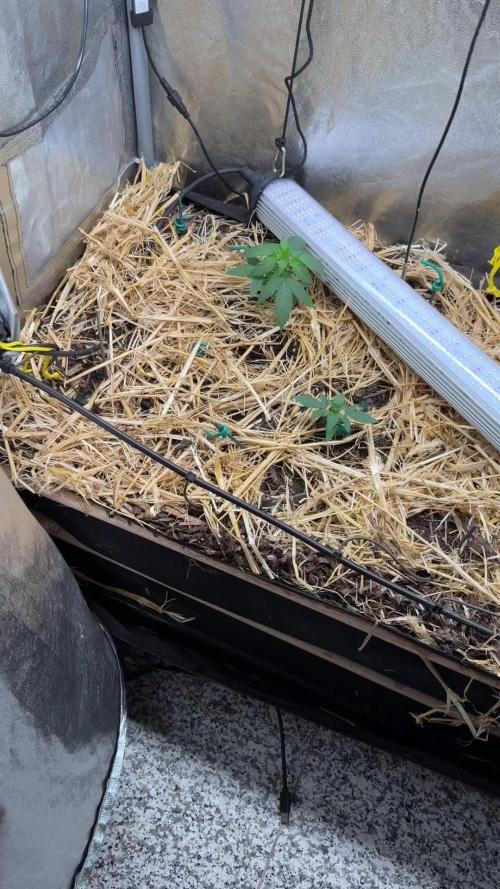
Einfach wachsen lassen bisher, haben wohl gut gewurzelt und jetzt mal schauen was wird. Bin einfach auf die blütenqualität gespannt ob DS was gutes ist.


Likes
6
Share


@Roberts
Follow
Grape Octane Auto is doing good. She has started showing her first pistils of flowering. I will be doing a solution change on her in about a week to a flowering solution mix. Everything is looking good at the moment. Thank you ILGM, and Medic Grow. 🤜🏻🤛🏻🌱🌱🌱
Thank you grow diaries community for the 👇likes👇, follows, comments, and subscriptions on my YouTube channel👇.
❄️🌱🍻 Happy Growing 🌱🌱🌱
https://youtube.com/channel/UCAhN7yRzWLpcaRHhMIQ7X4g.

Processing
Likes
8
Share


@Max1973
Follow
Day 42 - changing into flower, maybe 1 male/female... idk, yet....
adjust a little, here, there, add abit of water, and 6.2 PH and 1400 ppm ... been watchin the temps..
heading into summer so it'll be 33oC outside the tent tomorrow..... the tent is keepin below 26oC atm,
gotta watch the weather, lol........ keep the water in the tanks below 22oC if i can.....
goin to stock fridge and freezer with chilled frozen water/ice ... for the tanks on hot days.....
been bending them abit, they've fully recovered from the trim, i'll let em go now till they need a final mid flower trim.....
not much to report... "monitor, adjust" part of the grow...
👍😎

Processing
Likes
7
Share


@UnkleSkunk
Follow
last day of the week ...
everything goes well
the perfumes become more intense ...
the plant can be seen that it is dinafem, strong and luxuriant, now we wait for the enlargement of the tops

Likes
6
Share

@CheeRz
Follow
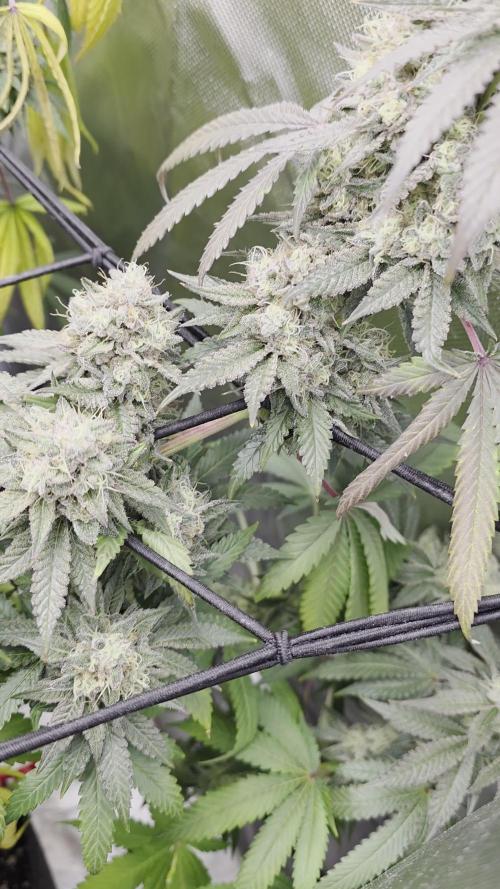
Lemon Cherry Gelato will need a little more time before she is ready. However, the buds are already covered with trichomes and also very sticky. Buds smell very sweet and lemony, with the classic Gelato aroma. 🍋🍋🍋🍒🍒🍒

Likes
4
Share


@Ultraviolet
Follow
0.23v tuned to 7.83Hz Plants exposed to the Schumann resonance often show greater resistance to stress factors such as drought, diseases, and pests. It is possible that these natural electromagnetic waves strengthen plants' immune systems and increase their ability to resist disease.
Pretty neat, in the afternoon when the tent hovers around 84F the plants are 🙏, can visually see in time around 10 minutes after I opened the tent the temp had dropped to 76 pressure was lost, she is still chilling but she doesn't quite have that perk anymore.
*Salinity3.5% - 100ml H2O=100g The concentration of salt in a solution 3.5%= 3.5g in 100ml.
Growing well. Not going to top or do any training, I'll let the plant do its own thing, she is constructing foundations now for what she senses ahead. Smart girl. ✨️ Let her, do her thing, let me do mine.
The voltage that is needed for electrolysis to occur is called the decomposition potential. The word "lysis" means to separate or break, so in terms, electrolysis would mean "breakdown via electricity. Green hydrogen is hydrogen produced by the electrolysis of water, using renewable electricity. The production of green hydrogen causes significantly lower greenhouse gas emissions than the production of grey hydrogen, which is derived from fossil fuels without carbon capture.
Electrolysis of pure water requires excess energy in the form of overpotential to overcome various activation barriers. Without the excess energy, electrolysis occurs slowly or not at all. This is in part due to the limited self-ionization of water. Pure water has an electrical conductivity of about one hundred thousandths that of seawater. Efficiency is increased through the addition of an electrolyte (such as a salt, acid or base).
Photoelectrolysis of water, also known as photoelectrochemical water splitting, occurs in a photoelectrochemical cell when light is used as the energy source for the electrolysis of water, producing dihydrogen . Photoelectrolysis is sometimes known colloquially as the hydrogen holy grail for its potential to yield a viable alternative to petroleum as a source of energy. The PEC cell primarily consists of three components: the photoelectrode the electrolyte and a counter electrode. The semiconductor crucial to this process, absorbs sunlight, initiating electron excitation and subsequent water molecule splitting into hydrogen and oxygen.
Water electrolysis requires a minimum potential difference of 1.23 volts, although at that voltage external heat is also required. Typically 1.5 volts is required.
Biochar, a by-product of biomass pyrolysis, is typically characterized by high carbon content, aromaticity, porosity, cation exchange capacity, stability, and reactivity. The coupling of biochar oxidation reaction (BOR) with water electrolysis constitutes biochar-assisted water electrolysis (BAWE) for hydrogen production, which has been demonstrated to reduce the electricity consumption of conventional water electrolysis from 1.23v to 0.21v.
Biochar particles added to the electrolyte form a two-phase solution, in which the biochar oxidation reaction (BOR) has a lower potential (0.21 V vs. RHE) than OER (1.23 V vs. RHE), reducing the energy consumption for hydrogen production via biochar-assisted water electrolysis (BAWE).
BAWE produces H2 under 1 V while eliminating O2 formation: key word "eliminating". Air with a normal oxygen concentration of around 21% is not considered explosive on its own; however, if a flammable gas or vapor is present, increasing the oxygen percentage above 23.5% can significantly increase the risk of ignition and explosion due to the enriched oxygen environment.
The addition of ion mediators (Fe3+/Fe2+) significantly increases BOR kinetics.
Air:
Nitrogen -- N2 -- 78.084%
Carbon Dioxide -- CO2 -- 0.04%
Hydrogen in homosphere H -- 0.00005%
Hydrogen "GAS" H2 in homosphere - 0%
"Nitrogen, oxygen, and argon are the three main components of Earth's atmosphere. Water concentration varies but averages around 0.25% of the atmosphere by mass. Carbon dioxide and all of the other elements and compounds are trace gases. Trace gases include the greenhouse gases carbon dioxide, methane, nitrous oxide, and ozone. Except for argon, other noble gases are trace elements (these include neon, helium, krypton, and xenon). Industrial pollutants include chlorine and its compounds, fluorine and its compounds, elemental mercury vapor, sulfur dioxide, and hydrogen sulfide. Other components of Earth's atmosphere include spores, pollen, volcanic ash, and salt from sea spray."
Although the CRC table does not list water vapor (H2O), air can contain as much as 5% water vapor, more commonly ranging from 1-3%. The 1-5% range places water vapor as the third most common gas (which alters the other percentages accordingly). Water content varies according to air temperature. Dry air is denser than humid air. However, sometimes humid air contains actual water droplets, which can make it more dense than humid air that only contains water vapor.
The homosphere(where you live) is the portion of the atmosphere with a fairly uniform composition due to atmospheric turbulence. In contrast, the heterosphere is the part of the atmosphere where chemical composition varies mainly according to altitude. The lower portion of the heterosphere contains oxygen and nitrogen, but these heavier elements do not occur higher up. The upper heterosphere consists almost entirely of hydrogen, cool.
78%nitrogen as N2, a far too stable bond to be used by organisms.
20%oxygen
0.04%co2
0.00005% hydrogen
When lightning strikes, it tears apart the bond in airborne nitrogen molecules. Those free nitrogen atoms N2 nitrites then have the chance to combine with oxygen molecules to form a compound called nitrates N3. Once formed, the nitrates are carried down to the ground becoming usable by organisms. Will it react with the oxygen in the air spontaneously, the answer is no. The mixture is chemically stable indefinitely. A mixture with air near the release point can be ignited, but if this does not happen then when its concentration gets below 4% it will be unable to carry a flame. Taking a small detour into chemistry here, a key concept to understanding the health impact of nitrogen-based compounds is knowing the difference between nitrates and nitrites.
What Are Nitrates and Nitrites?
A nitrite (NO2) is a nitrogen atom bonded to only two nitrogen atoms. Very strong bond
A nitrate (NO3) is a nitrogen atom bonded to three oxygen atoms. Weaker bond The optimal pH for nitrate (NO3-) depends on the process and the type of bacteria involved.
Nitrification
The optimal pH for nitrification is between 7.5 and 8.6
Nitrification is the process of oxidizing ammonia to nitrate and nitrite
Nitrosomonas has an optimal pH between 7.0 and 8.0
Nitrobacter has an optimal pH between 7.5 and 8.0
Nitrification ceases at pH

Likes
15
Share


@JeyGanesha
Follow
Ultima serata passata all'aperto ad una temperatura di 2/3gradi c°...un buon sbalzo termico.stamattina quando sono andato a tagliare la mia bella bimba mi è sembrata più brillante di quando l'ho tirata fuori dal box...bene bene😂🤣😉😋🤤

Likes
1
Share


@EgoDeath
Follow
Really loved this plant and how it grew other then the fox tails, Unfortunately I had to move this weekend and just couldn’t continue growing her and moving at the same time. She still had a good 1-2 weeks left but what is there looks really good will update when she finishes drying.

Likes
14
Share


@ConspiracyFly
Follow
Day 75 Gorilla Glue Auto
This week I watched the gorilla glue auto gain weight, I continued with the Defoliation and took 1.5 L of water and nutrients every two days.
See you next week


Likes
12
Share

@carlitoshaze44
Follow
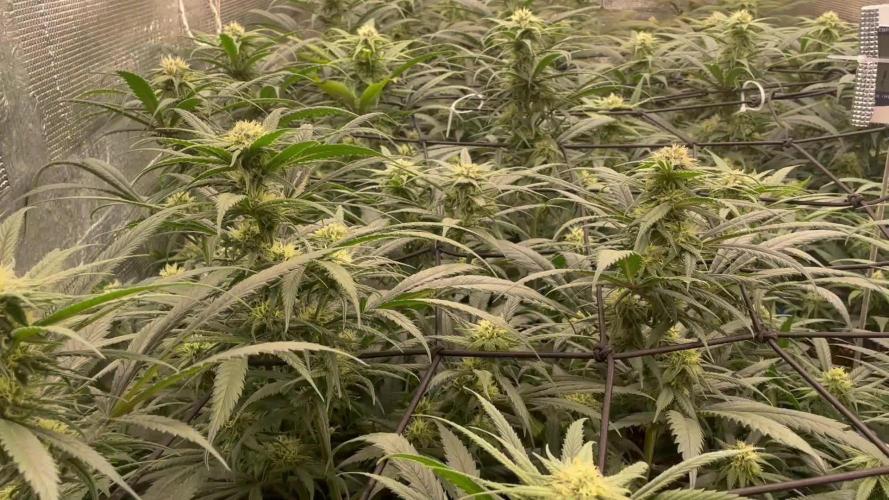
Buenas a todo compañer@s,otra semana más de cultivo.
Amnesia haze
Hoy día 3
Finalizamos la semana 5 de floración.
Cambiamos a la semana 6
Aumento de la EC hasta los máximos valores que acepte la variedad,proabado este fenotipo de amnesia haze en varios cultivos con una EC2600 en sustratos.
Una semana bastante jodida de agua,muchas lluvias,con lo que conlleva alta humedad en el exterior y con ello más alta en el cultivo.
Pero seguimos luchando!
Dia 5
Todo bien ,exceptuando una de las niñas que parece tener alguna deficiencia,magnesio pensé en primera estancia,pero otros compañeros me dijeron que podría ser que el magnesio bloqueó el potasio en unos riegos atrás.
Le reduciré el magnesio,y le seguiré dando la misma dosis de potasio que le doy a todas las demás..
El riego es por goteo y no queda otra, a esa pequeña le añado lo que pida de más con una pequeña pistola de agua por debajo.
Va afinando el cultivo con respecto a los olores.
Día 6
Al fin,puedo volver a decir ,tengo todo bajo control!! Al menos por ahora..
Correji,el problema de potasio de la planta con la deoficiencia que no sé cómo llegó a ese punto,tan pronunciado..
hoy quedó la cama regada con una buena cantidad de abono EC2200
En una cantidad de tanque de agua de 44 litros
Un ph6,2 controlado como en todo el ciclo de floración.

Likes
36
Share

@Hempface86
Follow
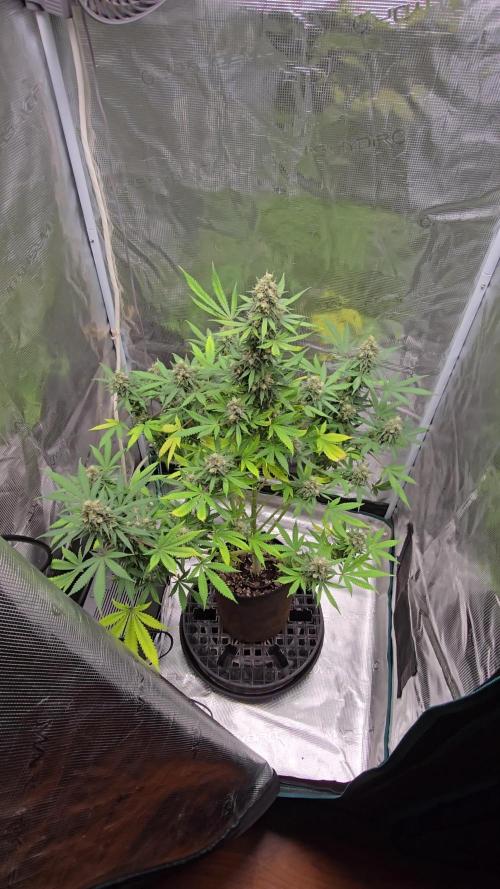
Another week passes and she is looking good... I have absolutely no idea what strain she is but she does smell good... Hopefully, it's not a cbd plant lol .. happy growing and thank you all for stopping by.. God bless and happy growing ✌️
Likes
53
Share


@cheetah844
Follow
Still chugging along even though I've neglected them a little. A fun little side experiment, I learned a lot. At least I'll have flower from 6 more girls, not a complete waste.
Likes
8
Share


@MistaOC
Follow
18.02. F30
Day 30 of flower — and this run just keeps getting better.
Today I finally applied Bio-PK. Each plant received 1 liter with 10 ml Bio-PK. Slightly later than the official feeding schedule — maybe 2–3 days behind — but honestly, no big deal. The plants are in peak condition, deep green from top to bottom, no yellowing anywhere — not even in the shaded lower areas. That alone says a lot.
I’m expecting the Bio-PK to give the bloom phase another serious push from here on out. If things continue like this, the coming weeks should be explosive.
I did a very light defoliation today and removed a few leaves that showed minimal signs of powdery mildew. It was extremely minor and fully under control. The environmental conditions simply don’t allow it to spread. Still, I’ll be upgrading airflow soon — two additional AC fans will definitely go in. Prevention is key.
Thrips are completely gone at this point.
And here’s the crazy part: this whole run started as a simple test. I popped a random seed, selected it as a potential mother without knowing what to expect, took clones — and what we’re seeing now are those exact cuttings. A total mystery box… but one that performs on an exceptional level.
Current height: 1.37 meters. Only about 10 cm away from the light. I could raise it a little more, but they’re handling it perfectly. No stress, no bleaching — just pure pressure.
They’re pushing hard. Real hard.
This is, without question, the strongest run I’ve had so far 🌱.







Likes
1
Share
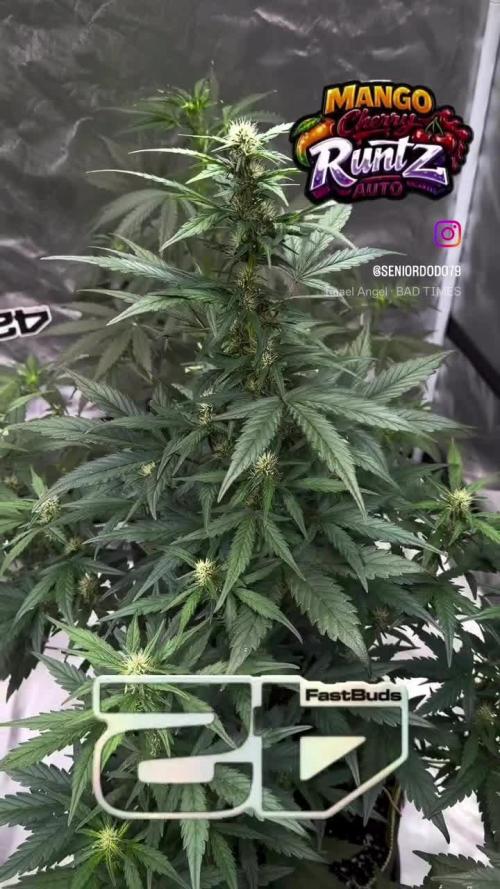

@DodoGarden
Follow
Ich liebe es?🏽😜
Blühte Phase hat begonnen die kleine Buds wachsen schnell und schön gleichmäßig.
Mango riecht momentan nach Kotze🤣😂😜🤷🏽♂️
Likes
2
Share


@Cosmodude
Follow
11/4/20-Day 29- watered #1 300ml, watered #2 200ml
11/7/20-Day 32- watered 300ml #1. No water for #2, possibly some shore flies in soil, gonna let it dry some.
11/10/20-Day 35- watered 300ml #1, no water for #2. Lowered lights to 12”, beginning to notice preflowers

Likes
79
Share


@JUNGLE_B4RNS
Follow
-Sensi Seeds Research:
The Sensi Seeds Research breeding project has created eleven cannabis seed varieties.
How? By combining new cannabis cultivars with a selection of strains from their long-established cannabis gene bank. For the first time in thirty-six years, they are opening the doors of the Sensi Seeds Research and Development Department.
Week #12, week 4 of Flowering.
The ladies are starting to smell very strong, it’s smells like living plants and fresh THC. Genetics are still doing great, no signs of weird buds formation or any signs of hermies, nothing can’t go wrong on this side now. I just need to keep an eye on the buds and under the canopy to pick up some few old dying leaves.
Switching to Bloom nutrients, following Cellmax feeding recommendations, to give them everything they need at the right time with the right amount.
It’s nearly the time to switch the dehumidifier on, to control RH levels to avoid any mold.
Stay tuned folks 😎
(I’m looking for a job in the Cannabis industry as Master Grower, Mineralogist, Quality Control 🐞)
