Likes
Comments
Share


@TrickzCutz
Follow
Servus Moin!
Die Blucci OG hat bereits richtig dicke Kronjuwelen. Der Geruch hat etwas von süßem Bubblegum zusammen mit dem BlueSherb und RS11 Aromen


Likes
107
Share


@Tropicannibis_Todd
Follow
💩Holy Crap Growmies We Are Back💩
Code Name FBT2309
Well growmies we are at 35 days in and everything is going great 👌
👉 So the low stress training👈 has been going great she's gonna be a big girl, shes in full flowering mode so let the stretch begin 👌
Lights being readjusted and chart updated .........👍rain water to be used entire growth👈
👉I used NutriNPK for nutrients for my grows and welcome anyone to give them a try .👈
👉 www.nutrinpk.com 👈
NutriNPK Cal MAG 14-0-14
NutriNPK Grow 28-14-14
NutriNPK Bloom 8-20-30
NutriNPK Bloom Booster 0-52-34
I GOT MULTIPLE DIARIES ON THE GO 😱 please check them out 😎
👉THANKS FOR TAKING THE TIME TO GO OVER MY DIARIES 👈


Likes
1
Share


@GrowFunMD
Follow
Plants are growing great. There is a little yellowing occurring. Right now, not sure if it is the plant(s) wanting nutrients already or if it is because of me getting water on the plant(s) when watering. Not gonna worry about it. I'll probably be turning on the AutoPot system in the next few days (with nutrients), anyway. Topped on day 15 (today).

Likes
22
Share

@MyLittleGarden
Follow
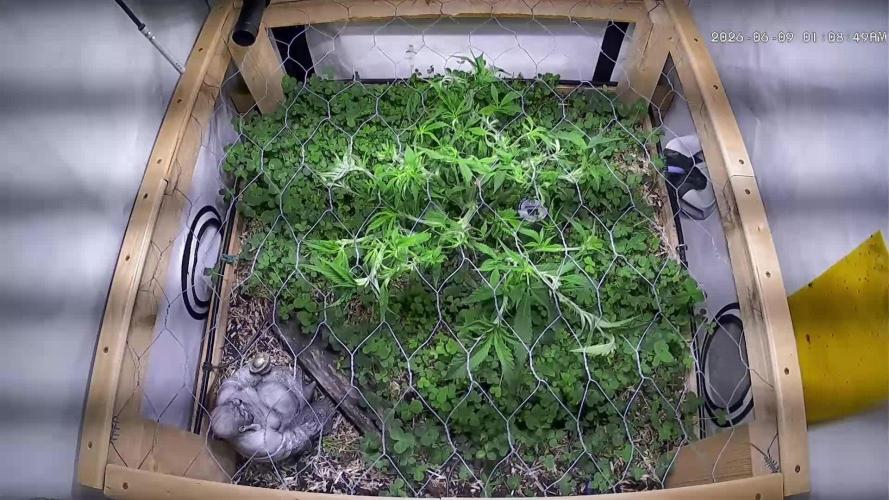
Vegetationswoche 9 - 05.06. – 12.06.2026
Diese Woche gab es eigentlich nur eine größere Aktion: Ich habe die Pflanze einmal recht stark entlaubt und die Triebe weiter unter dem Netz verteilt.
Im Nachhinein war die Entlaubung vielleicht etwas großzügig, aber die Utopia Haze hat sich davon gut erholt und mittlerweile wieder ordentlich Blattmasse aufgebaut. Sie sieht weiterhin sehr gesund und vital aus.
Auch das Klee-Cover-Crop wurde einmal gestutzt und ist inzwischen schon wieder kräftig nachgewachsen.
Ansonsten gab es nichts Besonderes. Das ist gerade die eher ruhige Phase des Grows: wachsen lassen, gelegentlich nachjustieren und beobachten.



Likes
34
Share


@Gruenerfinger85
Follow
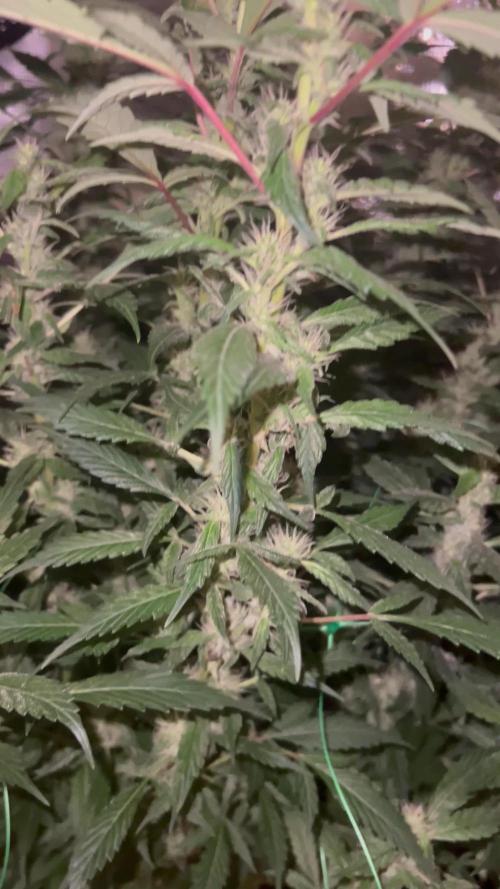
Hallo meine Garten Freunde.
Wieder ist eine Woche rum, und die Pflanzen machen den Anschein das sie glücklich sind.
In dieser Woche habe ich das Licht von 15 Std auf 12/12 umgestellt.
In zwei Wochen werden die Blütenkelche anfangen gut sichtbar zu sein, und die Pistels werden langsam anfangen immer mehr zu werden.
Das Topping und entlauben scheint erfolgreich gewesen zu sein.
Es gibt keinerlei Anzeichen für Probleme oder irgendwelche Anzeichen für Nährstoff Mängel.
Aktuell Höhe der Pflanzen am Tag:52
#1)18cm
#2)12.5cm
#3)13cm
Am 52 Tag wurden die Pflanzen ein weiteres Mal entlaubt, es scheint so das die Pflanzen überhaupt nicht beeindruckt davon sind wenn sie entlaubt werden, sie wachsen einfach weiter und produzieren neue Blattmasse.
Das entlauben stecken sie so gut weg, das nicht einmal das Wachstum gestoppt wird oder irgendwelche Anzeichen für Stress zeigt.
Das war es erstmal für diese Woche ich danke dir das du zu Besuch da warst und ein Like da gelassen hast.
Ich würde mich freuen wenn du in der kommenden Woche wieder mit am Start bist.
Verpass nicht wie sich die Pflanzen weiter entwickeln und ihr volles Potenzial entwickeln, in der Zwischenzeit kannst du dir gerne meine anderen Tagebücher anschauen, bestimmt ist was interessantes dabei.
Oder komm mich auf mein Instergram Profil besuchen.
Ich wünsch dir/ euch eine Erfolgreiche Woche und ein ruhiges erholsames Wochenende.✌️🏼
Processing
Likes
15
Share


@eldruida_lamota
Follow
Buenos días familia, hoy traemos la 3 semana de floración de nuestras crazy cookies, zambezaseeds.
Es una cepa bastante vigorosa con un tallo robusto 6mm, exactamente a mitad altura.
Su cultivo es fácil, apenas se ve bloqueo alguno, traga muy bien en lo que se refiere a nutrientes.
Ph en 6,5 y humedad por debajo de los 45 % . 48h entre riego y riego, no olvidemos que están en tiestos de 7L.
Su floración está siendo bastante rápida estas semanas se verá como engordan nuestras flores, sin duda este es el momento para meter caña a big bud y bud candy.

Likes
19
Share


@Showmethewaytogrowhome
Follow
Week commencing Friday 29/01/21;
- Switched from veg nutes to bloom nutes as the flowering had definitely started. Using half dosage and alternating feeds with clean water and nutrient water.
- Acquired a Brita 8.2l filter tank to remove chlorine, lead etc. Couldn't hurt!
- Dramatic height increase from the previous week.
- Strange right angle clawing on two of the fat bananas. Pretty sure it's heat stress.
- The water intake has increased to at least 750ml per plant.
- Some lower tier leaves discoloured. Again, I'm pretty sure it's heat stress.
- Stopped the LST this week. The stems have become very rigid and I don't want to risk damage.
- I have definitely run out of space and have employed SOG by default. I'll defoliate further next week as I don't want to shock the plants in the early stages of flowering.
- The heat is peaking too high and I have started opening the door for ventilation. No extraction is causing all sorts of heat regulation problems. God knows what the peaks are when I'm not here.
- I have ordered a digital hygrometer that will display 24 hour highs and lows of temp and RH.
Processing
Likes
12
Share


@LetItGrow420
Follow
Off to a good start , remove humidity dome once she pushed through


Likes
19
Share

@DogDoctorOfficial
Follow
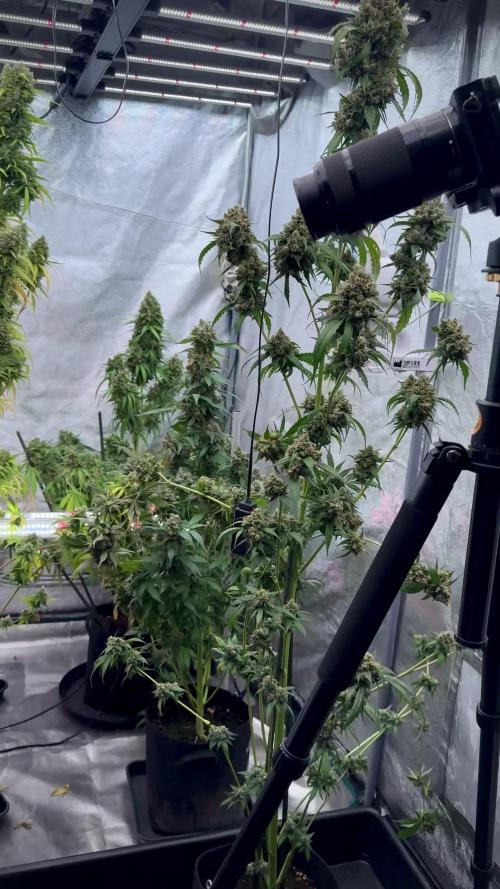
🌸 White Widow — Week 7 Flower (Week 11 from seed)
Status: Full flower, bulking rapidly.
Vibe: Dark foliage, compact form, heavy frost, 90s aroma profile.
Feeding: Aptus + Plagron lineup (Power Buds, Sugar Royal, Green Sensation, Regulator, CalMag, All-in-One)
Photos: Sony a6000 — loyal workhorse for studio shots. 📷
⸻
🧠 Deep dive — Why 12/12-from-seed makes a plant “go hard”
Plants evolved to reproduce. Their primary biological drive is to make seeds. Photoperiod (day length) is one of the most reliable seasonal cues plants use to decide: is it time to flower?
Mechanisms at play (simple → nerdy):
• Photoperiod sensing: Leaves detect day length via phytochrome systems (Pr Pfr). Short days (or the 11/13 rhythm) flip the hormonal cascade toward flowering.
• Florigen & flowering hormones: When the plant senses “short days,” it produces mobile signals (florigen) that travel to the shoot apex and shift gene expression from vegetative growth to reproductive development.
• Carbohydrate reallocation: Energy stops making more leaves/branches and is directed into calyxes, resin synthesis, terpene pathways, and seed/flower tissues.
• Result: A plant that thinks “the season’s ending — reproduce now!” goes all-in: denser flowers, rapid calyx swelling, intense trichome production.
Important point: they don’t know about pollination. The plant can’t tell you whether pollinators exist or whether pollen will land — it simply invests in attractive, resinous flowers to maximize reproductive success. As growers, we exploit that drive to produce potent sensimilla (unpollinated) flowers.
⸻
🔬 Why your White Widow is exploding in quality right now
• Immediate reproductive programming: Starting floral signals early (12/12 from seed) forces the plant to prioritize flower formation rather than vegetative mass. That yields compact, dense colas.
• High PPFD + short day = strong DLI in less time: With fewer hours of light, your lamp intensity is higher in those hours → powerful photosynthesis during the window the plant has chosen.
• Nutrition tuned to flower: the Aptus + Plagron stack feeds the metabolic surge — PK + biostimulators for bulking, sugar stimulators for terpene pathways, Ca/Mg for structural health.
• Genetics: White Widow is resin-happy; give it the right cues and it will frost up like a sugar cookie.
⸻
🌈 Why her colors are going dark (and why that’s beautiful)
Leaf & bud color comes from a balance of chlorophyll + accessory pigments (anthocyanins, carotenoids) and is influenced by:
• Genetic propensity (some phenos are naturally darker)
• Temperature swings (cooler nights often increase anthocyanin expression)
• pH / nutrient balance (some deficits/ratios nudge color pathways)
• Light spectrum intensity (strong red/far-red influence can shift pigment expression)
Dark phenos often correlate with high terpene and anthocyanin expression — visually stunning and often highly aromatic.
⸻
🔁 Quick timeline recap (for newcomers)
• Germination & early mistakes: initial heat-mat loss → restarted, one strong survivor.
• Veg: compact, short internodes under the 11/13/12-12 shuttle → stacked nodes.
• Early flower: slow to show, but once she flipped she committed.
• Now – Week 7 flower (Week 11 from seed): heavy bulking, thick trichomes, deepening color, classic White Widow aroma emerging.
⸻
🔭 What to expect next (this week → next week)
Expect:
• Continued bulking of calyxes and cola weight.
• Explosion of trichome coverage — white, cloudy glands multiply.
• Stronger terpene smell (earthy, spicy, resinous 90s profile).
• Possible color intensification — deeper greens, potential purples depending on phenotype & nights.
Do not expect:
• Major new stretch — she’s committed to flower and will remain compact.
• Immediate harvest — typical White Widow still wants its weeks; plan for patience (mid-late flower bulking happens over several more weeks).
⸻
⚖️ Should you run all seeds 12/12 next cycle? (pros & cons)
You asked if you might run every seed 12/12 — here’s the honest rabbit-hole:
Pros
• Much faster cycle → less time to harvest.
• Compact plants → ideal for small spaces or stealth grows.
• Often denser single-plant yields; less training needed.
• Great for experimentation, multi-strain rapid rotation.
Cons
• Generally lower total biomass per plant vs. long veg runs.
• Some genetics need veg time to express full canopy & branching; yields may be lower for those strains.
• Root systems can remain smaller → may stress under high PPFD if not supported.
• Less flexible for heavy-topping/lst/manipulation strategies.
Bottom line: for strains with good genetics for flowers (like White Widow), 12/12-from-seed can be very rewarding. For sativa-dominant, tall strains you might lose yield without long veg.
⸻
📷 Gear love — Sony a6000 shoutout
I’ve got to echo it: that camera is a workhorse for growers. Compact, responsive, great color fidelity, and perfect for low-light studio shots when paired with proper exposure. The a6000 captures the leaf texture, color depth, and bud gloss in a way phones struggle to match. Long live the loyal shooter. 📸✨
⸻
🙏 Gratitude — the usual and the real
Thank you to:
• Zamnesia — for the genetics & the nostalgia.
• Aptus & Plagron — the chemical & biological push that lets the plant sing.
• ThinkGrow / Future of Grow / TrolMaster — lighting, control, and environment orchestration.
• You — the makers, lovers, critics, curious readers — your energy fuels this diary.
And to our White Widow — for showing up, forgiving mistakes, and giving back in beauty. 💚
⸻
Week 7 flower — Week 11 from seed. Darker colors, heavy frost, the classic 90s scent, and a compact structure that proves 12/12-from-seed can produce absolute fire. We went full-in on Aptus + Plagron, kept the Emerson red-lead sunrise/sunset, and trusted the genetics. Watching her build is pure joy. Come see the series in 4K on YouTube — every detail, every shimmer. 🌿🔥📷 #WhiteWidow #Zamnesia #GrowDiaries #12fromSeed #EmersonEffect #Aptus #Plagron
📲 Don’t forget to Subscribe and follow me on Instagram and YouTube @DogDoctorOfficial for exclusive content, real-time updates, and behind-the-scenes magic. We’ve got so much more coming. You won’t want to miss it.
• GrowDiaries Journal: https://growdiaries.com/grower/dogdoctorofficial
• Instagram: https://www.instagram.com/dogdoctorofficial/
• YouTube: https://www.youtube.com/@dogdoctorofficial
⸻
Explore the Gear that Powers My Grow
If you’re curious about the tech I’m using, check out these links:
• Genetics, gear, nutrients, and more – Zamnesia: https://www.zamnesia.com/
• Environmental control & automation – TrolMaster: https://www.trolmaster.eu/
• Advanced LED lighting – Future of Grow: https://www.futureofgrow.com/
• Root and growth nutrition – Aptus Holland: https://aptus-holland.com/
• Nutrient systems & boosters – Plagron: https://plagron.com/en/
• Soil & substrate excellence – PRO-MIX BX: https://www.pthorticulture.com/en-us/products/pro-mix-bx-mycorrhizae
• Curing and storage – Grove Bags: https://grovebags.com/
⸻
We’ve got much more coming as we move through the grow cycles. Trust me, you won’t want to miss the next steps, let’s push the boundaries of indoor horticulture together!
As always, this is shared for educational purposes, aiming to spread understanding and appreciation for this plant. Let’s celebrate it responsibly and continue to learn and grow together.
Friendly reminder all you see here is pure research and for educational purposes only,
With true love comes happiness. Always believe in yourself, and always do things expecting nothing and with an open heart. Be a giver, and the universe will give back in ways you could never imagine.
💚 Growers love to all
P.S. — Deep dive on DLI (Daily Light Integral) — short, clear, and a little nerdy (in the best way). 🌞🌿
1) What is DLI, simply?
DLI = the total amount of photosynthetic light (photons) a plant receives over one day.
It’s expressed in moles of photons per square metre per day (mol·m⁻²·day⁻¹).
While PPFD (μmol·m⁻²·s⁻¹) tells you instantaneous light intensity, DLI tells you how much light the plant actually used that day.
⸻
2) The formula (how to calculate it)
Use this exact formula:
text{DLI (mol·m}^{-2}text{·day}^{-1}) = frac{text{PPFD (μmol·m}^{-2}text{·s}^{-1}) times text{seconds of light per day}}{1{,}000{,}000}
Where seconds of light per day = hours of light × 3600.
I’ll show worked examples so it’s easy to follow.
⸻
3) Worked examples (digit-by-digit so it’s crystal clear)
Example A — your reported PPFD ≈ 766 μmol·m⁻²·s⁻¹ and 11 hours light
• seconds of light = 11 × 3600 = 39,600 s
• photons per day = 766 × 39,600 = 30,333,600 μmol·m⁻²·day⁻¹
• convert to moles: 30,333,600 ÷ 1,000,000 = 30.3336 mol·m⁻²·day⁻¹
So: 766 μmol·m⁻²·s⁻¹ × 11 h → DLI ≈ 30.3 mol·m⁻²·day⁻¹
Example B — same PPFD but 12 hours
• seconds = 12 × 3600 = 43,200
• photons = 766 × 43,200 = 33,091,200
• DLI = 33,091,200 ÷ 1,000,000 = 33.0912 mol·m⁻²·day⁻¹
Example C — other quick refs
• 700 μmol × 11 h → DLI ≈ 27.72
• 800 μmol × 11 h → DLI ≈ 31.68
• 400 μmol × 11 h → DLI ≈ 15.84
• 1000 μmol × 12 h → DLI ≈ 43.2
(You can plug any PPFD and hours into the formula — those are ready-made reference points.)
⸻
4) What DLI targets are useful for cannabis?
• Vegetative (gentle): ~12–25 mol·m⁻²·day⁻¹
• Flower (typical good range): ~25–40 mol·m⁻²·day⁻¹ — most home/pro growers aim here
• High-intensity/CO₂-enriched commercial: 40–60+ mol·m⁻²·day⁻¹ (needs CO₂, stronger conditioning)
So your example (≈30 mol·m⁻²·day⁻¹ at ~766 PPFD × 11h) sits very nicely in the flower range. That explains the dense bulking + heavy resin you’re seeing — our DLI is right where White Widow loves to convert energy into flowers.
⸻
5) Practical implications — what DLI affects and what to watch
• Higher DLI → higher photosynthesis → more carbohydrate to drive bud bulking and terpene/trichome production.
• Higher DLI requires more water and nutrients. Plants transpire more and pull more minerals; be ready to feed and irrigate appropriately.
• Leaf temperature / heat stress: pushing PPFD up increases canopy energy/heat — keep airflow, VPD, and room temps under control.
• CO₂ matters: if aiming beyond ~40 mol/day, elevated CO₂ (e.g., 800–1200 ppm) becomes productive; otherwise additional light won’t be used efficiently.
• Distribution matters: DLI is an average over the canopy. Hotspots or shaded pockets mean some flowers get too much or too little — even light spread (and PAR mapping) matters.
⸻
6) Actionable tips for your run (based on your 11/13 / 12/12 experiment)
• We’re hitting excellent flower DLI (≈30 mol/day at 766 μmol × 11 h). That’s why buds are dense/frosty — keep the rhythm.
• If you shorten hours (e.g., 11 h) keep PPFD high to maintain target DLI. If you lengthen hours (12 h) you can reduce peak PPFD slightly and still hit the same DLI.
• If you raise PPFD to chase more DLI, ramp slowly (a few μmol/sec per day) to let stomata and roots acclimate — avoid sudden bleaching.
• Watch watering & EC — higher DLI → faster uptake → more frequent but measured feeding.
• If you ever push DLI 40 mol/day consider CO₂ enrichment and perfect VPD control to have that extra light used efficiently.
⸻
7) Quick rules of thumb
• Want to hit ~30 mol/day with 11 hours on the clock → aim for roughly 700–800 μmol·m⁻²·s⁻¹.
• Want ~33 mol/day at 12 hours → ~766 μmol·m⁻²·s⁻¹ matches that nicely.
• If you see leaf cupping/bleaching, you’ve likely exceeded safe PPFD for that canopy or temps are too high — back off, check VPD.


Processing
Likes
28
Share


@DudeGrowsWeed
Follow
Cream Cookies looking great! Bud sites everywhere. The leaves are a little more yellowish than I prefer. Going to try backing down on the nutes and give her Recharge only for the next week or two to see if that helps green things up at all.
Likes
12
Share


@ktkoi
Follow
Day 73: Early/mid flower for G. Crack & Mexican.. nearing late for CBD crack. These girls are thirsty, so much watering is happening, but the smell isn't nearly as strong as the first round is even though they are all bigger. This is a test post for videos, next one will be for the contest.
Day 75:
G-crack 58cm
CBD Crack 30cm
Mexican Airlines 20cm
CBD is closest to maturity. Her leggy stature gives ample opportunity for the different buds to get light. Mex is starting to get fuller buds, but she's short and stout and her leaves are in the way. G is way too large for me to get the right amount of light on her, wish I had defoliated her more, will probably harvest in parts.
None of these girls smell as strongly as the previous grow. CBD is a bit diesely but fresh. G is smokey but light right now. Mexican is spicey and woodsy. I can't really place the scents just yet.