Likes
Comments
Share
@RelaeX
Follow
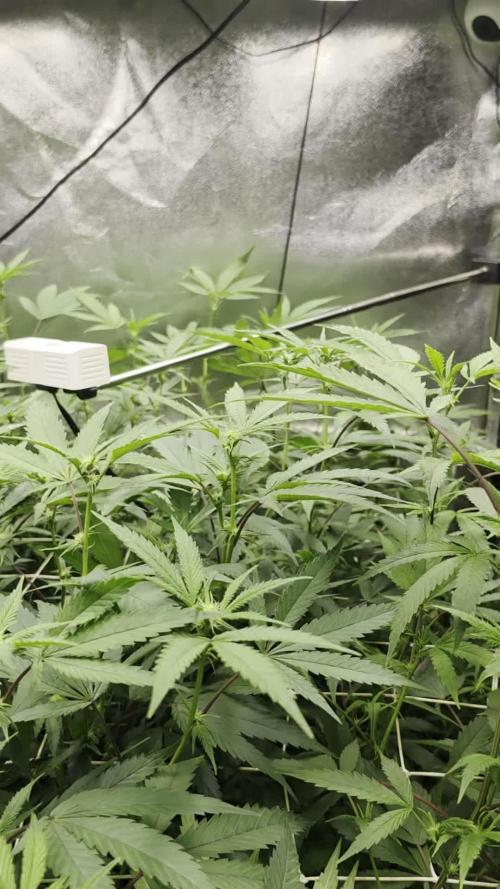
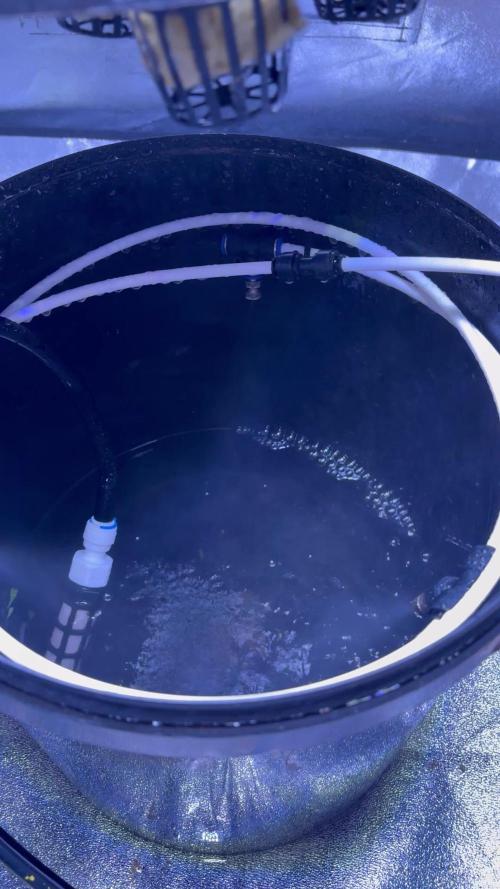
Week 20: Flowering Week 3 – Lollipopping, Climate Control & Heavy Water Intake 🌸🌸 Relax! Hey, it's Week 20—Flowering Week 3 is officially underway! We are entering the final stretch of the stretch phase, and the canopy is looking dense, lush, and super active. The Screen of Green (ScrOG) net, which was installed at the start of Week 18, is doing an amazing job keeping everything level and evenly spread out across the tent. Environment & Climate Adjustment šŸŒ”ļøšŸ’§ With the massive canopy and high transpiration, humidity started spiking. To keep the environment safe and prevent any mold risks in this critical phase, we installed a dedicated A/C unit with a dehumidification function. Day Temperatures: Ranging steadily between 21 °C and 27 °C. Relative Humidity: Kept under control between 54 % and 78 %. Plant Training & Maintenance āœ‚ļø Lollipopping & Defoliation: This week, we performed a thorough lower-canopy trim (Lollipopping) in the main tent. Removing the weak lower growth ensures the plants divert 100% of their energy to the top sites. Combined with regular defoliation, airflow through the ScrOG net is top-tier. Canopy Height: Total plant height is sitting right around 1.40 m (including our 30–35 cm pots). Light Distance: The lights are dialed in at roughly 40 cm from the canopy. Strains Progress 🌿 High Society: Absolute monster growth! It has reached impressive height and filled its section of the ScrOG screen completely. Zupernova: Catching up nicely, building compact and dense bud sites across the screen. Side Tent (Mothers): In the neighboring tent, the two mother plants are chilling under reduced light, growing slowly and steadily at a manageable pace. Feeding & Watering šŸ’§ Water consumption has surged massively this week—the plants are drinking non-stop! Total Volume: We are currently going through roughly 100 Liters of plain water per week, plus an additional 20 to 40 Liters (2–4 10L watering cans) mixed with nutrients. pH & Stability: After a short temporary fix with citric acid (which drifted up to pH 7.5 after settling), we are back to a rock-solid, stable setup using phosphoric acid to keep our water dialed in at a steady pH 6.5. Nutrient Mix: The flowering tents are receiving Hesi Bloom Complex, Root Complex, and SuperFit to keep up with the heavy demand during this key phase. Everything is primed for the buds to stack up over the coming weeks! Stay tuned and see you all next week! šŸš€
Likes
15
Share
Likes
10
Share
Net installed, last week of 18/6. I expect a lot of stretching starting this week, as a "pre-flower time" begins.
Likes
15
Share
Grow Specs: Breeder: Mephisto Genetics Strain: Skywalker F5 Genetic heritage: Skywalker Kush Cut (selected from DNA seeds) x Triangle F3 Indica/Sativa: 35/65 Est. cycle time: 65-70 days from sprout Medium: Soil, Mephisto Genetics Super Soil, Worm Castings Light: 1/2 - 132W actual LED Update schedule: I will try to send out the updates every Saturday or Sunday. For more frequent updates, add me on Instagram @grimbolthedruid Grow Schedule to Date: Sprout: 3/1/17 (Full moon) Age: Day 25 as of 3/25/18 Updates/Observations: - Water only for last week and next because the soil is plenty hot. No need to cycle down lots of nutrients right now. - I water about every 2-3 days. - Trying to keep the soil always slightly moist and never let it dry completely to keep microbes (and by extension the soil) at optimum health. - She has a very symmetrical structure and appears very healthy, though she is showing some leaf curl. - Growing very vigorously. Cheers! -G
Likes
50
Share
🌱 The Road to Eternal Glory: My Eternity Grow Cup Journey 🌟 First off, a massive thank you to Grow Diaries, Plagron, and Zamnesia for organizing this groundbreaking competition. Your efforts in bringing growers together and elevating the craft are nothing short of legendary. To all the participants: I wish you the best of luck. Let’s make this an inspiring and memorable experience for everyone involved! šŸ’š Why I’m Excited I can’t express how thrilled I am to be part of the Eternity Grow Cup. This is more than just a grow—this is about pushing boundaries, learning, and sharing the magic with this incredible community. For me, it’s also a chance to reconnect with an old friend: the Zamnesia Runtz. This was one of my all-time favorite strains, a true keeper, until an unfortunate heatwave took her away. But here we are again, Runtz and I, ready to make history together. The Setup: A Glimpse of the Future To make this grow truly legendary, I’m using state-of-the-art equipment: • Lighting: The Future of Grow LED Black Series 600W or the germination, and after i am moving it all to my TM ecosystem Stay tuned, and controlled by the powerhouse TrolMaster Tent-X system, ensuring precision and optimal conditions every step of the way. • Nutrients: A custom mix of Aptus Holland and Plagron nutrients—because innovation meets reliability in this grow. • Medium: The ever-dependable Pro-Mix HP with Biofungicide and Mycorrhizae, ensuring strong roots and vigorous growth. • Germination Station: Seeds will sprout in my trusted CannaKan Germination Station, which has never let me down. Let’s Make Magic Together This is more than a diary—it’s a journey filled with learning, growth, and shared passion. I invite you to follow along not just here, but on Instagram and YouTube, where the magic will truly unfold. Expect deep dives into every step of the process, tips, tricks, and, of course, a final smoke report that’ll be as epic as the grow itself. From this moment until the last puff, this journey will be nothing short of epic. Together, let’s make it one for the history books—educational, inspiring, and unforgettable. Stay tuned for the next update: The Germination Report. Let’s rise and shine, legends! 🌟 🌱 The Germination Report: A New Beginning for the Eternity Grow Cup 🌟 First and foremost, I want to wish the best of luck to all the participants in the Eternity Grow Cup. To our incredible hosts—Grow Diaries, Plagron, and Zamnesia—thank you for creating this phenomenal platform and competition. You’re elevating the craft, and I couldn’t be more thrilled to be part of it! šŸ’š The Journey Begins: Germination Success! Every great grow starts with the perfect germination, and I’m excited to share how I kicked off this legendary adventure. Using my trusted CannaKan Germination Station, I started the Zamnesia Runtz seeds—my old favorite strain—with the hope of finding a pheno as extraordinary as the passion fruit treasure I once had. The Process: My Way to Germination Glory Remember, there’s no ā€œone-size-fits-allā€ method in growing. What works best is what adapts to your environment. Here’s how I do it: 1. Choosing the Right Tools • I use the CannaKan Germination Station, a tool I trust for consistent results. • With cold temperatures in my setup, I relied on a heat mat to maintain warmth, though it was still a little nerve-wracking! 2. The 24-Hour Miracle • Within less than 24 hours, the seeds had already sprouted and were ready to move into their next home. Seeing that spark of life so quickly is always magical. 3. Moving to Soil • I carefully transplanted each seedling into tiny pots filled with Pro-Mix HP with Biofungicide and Mycorrhizae, which offers excellent aeration and support for root development. • Each pot was labeled Runtz #1–5, ensuring I can track every pheno individually as the journey unfolds. 4. Sprouting Against the Odds • Despite the cold temps, those little warriors jumped out of the soil within 48 hours! Their resilience and vigor have me beyond excited for what’s to come. Tips for Germination Success Here’s what I’ve learned to keep germination smooth: • Consistency is key: Whether it’s moisture, temperature, or light, try to create a stable environment for your seeds. • Gentle hands: Handle your seeds with care when moving them; they’re delicate at this stage. • Adapt to your environment: No method is universal—always tweak your process to fit your conditions. • Patience: Sometimes, seeds need a little extra time to sprout. Keep faith! Next Steps: The Adventure Awaits Now that the seedlings are up and thriving, it’s time to let the journey truly begin. I’ll be hunting for that passion-fruit-like pheno that captured my heart last time, but every seed holds the potential for greatness. For now, I’m keeping it simple: plain water, no nutrients—just letting them establish strong roots. Stay Tuned for the Magic This is only the beginning. I invite you to follow along on Instagram and YouTube, where I’ll be sharing photos, videos, and behind-the-scenes updates. Expect plenty of knowledge, tips, and excitement as we navigate this grow together. To all the participants: good luck, and let’s make this Eternity Grow Cup one for the history books! 🌟 Genetics - Runtz https://www.zamnesia.com/6000-zamnesia-seeds-runtz-feminized.html Nutrients - Plagron https://plagron.com/en/hobby - Aptus Holland https://aptus-holland.com/ Controls - Trol MAster https://www.trolmaster.eu/ LED - https://www.futureofgrow.com/en LED - https://www.thinkgrowled.com Soil - https://www.promixgardening.com/en Germination - Cannakan https://cannakan.com/?srsltid=AfmBOopXr-inLXajXu3QFgKXCXXos4F1oEvScjMKIB5MR5dk8-GJ-F49 DOGDOCTOR 15% off As always thank you all for stopping by, for the love and for it all , this journey of mine wold just not be the same without you guys, the love and support is very much appreciloved and i fell honored with you all in my life With true love comes happiness Always believe in your self and always do things expecting nothing and with an open heart , be a giver and the universe will give back to you in ways you could not even imagine so As always, this is shared for educational purposes, aiming to spread understanding and appreciation for this plant. The journey with nature is one of discovery, creativity, and respect. Let’s celebrate it responsibly and continue to learn and grow together! Growers Love To you All šŸ’š šŸ”„ Germination Begins! – Runtz We Meet Again | Eternity Grow Cup 2025 | TM Chronicles Chapter 2 šŸš€ - https://www.youtube.com/watch?v=DlOK28XS_o4 Germination episode in 4K
Likes
32
Share
@BB_US
Follow
Added a humidifier to the tent to try to raise the humidity. The ladies are doing great, nice green leaves and she is showing her pistols. I do a foliage spray with voodoo juice and cal /mag Xtra 3x a day.
Likes
8
Share
@Kelly420
Follow
Fattening up. Started using Herculean harvest. I’m liking it.
Likes
3
Share
Likes
18
Share
Well it's official the first week of flower is in the bag! All in all not an eventful week but it's always exciting to see the girls start their transformation to flower and seeing the stretch kick in! Netting is really filling in nicely, will be a good clean up job on fan leaves in a week or so. Did a diatomaceous earth treatment because I was noticing some fungus gnats still, had it on for 48 hours and since have not seen any new ones in the traps so šŸ¤ž. Added a 6" oscillating fan below canopy, should help keep temps even and keep bugs away. With all the trimming down there the fan doesn't even effect the leaves hahaha. Flower week 2 here we come!
Likes
2
Share
@Enki_Weed
Follow
This week was a quiet week to avoid disturbing the beginning of flowering. I think the deficiencies are under control and there's no worsening to fear. Nevertheless, I will need to remain vigilant. The plant is starting to smell.
Likes
18
Share
@Dunk_Junk
Follow
Wow she's still growing nicely!! 27cm more this week! She's looking nice.
Likes
6
Share
Week 2 in the books here and all is still Lookn good. Should be coming up on fim day pretty soon so that we can better manage plant heights through the stretch. Don’t expect to take much more than another week or so before we make the flip to flower. The Ghost Train clone is still fighting for roots so we’ll likely wait and see based on this cut. As soon as she starts to perk up we’ll move em over. Alls well so faršŸ‘. Background I’m killing a few birds with one cycle here. Got some famed breeder strains to show off - genetics that we just haven’t gotten around to growing successfully. Details as follows; Outlaw Seeds - Muffin Berry Why these guys aren’t listed on GD is surprising to me. All the hallmarks of a budding quality breeder from what he read although, I admit, this is our first go in real time. Just another addition to the berry strains as we continue our everlasting quest to find that ā€œbest berryā€ of them all.šŸ‘ AMS - Pineapple Express Great co. And I’ve got a full stable of their genetics kicking off this year. This strain has been a massive unicorn for us in the past and I still have yet to see one flower out to the finish proper. Can’t wait to see what this one does. The reviews have been terrific so šŸ¤ž. OSS - Banana Sherbet A kick in freebie that came with 2 other strains by OSS. Proven and reliable breeder with excellent hybrid combos. I expect this banana sherbet to be no different and early signs are that she’ll be one of the strongestšŸ‘Œ. AMS - Ghost Train (clone) Another unicorn that we’ve had issues with. Our outdoor plant that was supposed to be an auto and turned out to be a photo. Unlikely with the typical fall weather that she’ll see harvest so this is an opportunity to take a cut and possibly salvage that grow. Really looking forward to this one for sure. They’ll all sit in bucket company bags and containers and we’ll be irrigating on drip lines with fewer plants than usual in this space. Hopefully we don’t run into any deficiency issues given that these buckets are a slight detraction from our typical dutchies. Only time will tell, here we go againšŸ‘šŸ¤ž.
Likes
34
Share
Yellow butterfly came to see me the other day; that was nice. Starting to show signs of stress on the odd leaf, localized isolated blips, blemishes, who said growing up was going to be easy! Smaller leaves have less surface area for stomata to occupy, so the stomata are packed more densely to maintain adequate gas exchange. Smaller leaves might have higher stomatal density to compensate for their smaller size, potentially maximizing carbon uptake and minimizing water loss. Environmental conditions like light intensity and water availability can influence stomatal density, and these factors can affect leaf size as well. Leaf development involves cell division and expansion, and stomatal differentiation is sensitive to these processes. In essence, the smaller leaf size can lead to a higher stomatal density due to the constraints of available space and the need to optimize gas exchange for photosynthesis and transpiration. In the long term, UV-B radiation can lead to more complex changes in stomatal morphology, including effects on both stomatal density and size, potentially impacting carbon sequestration and water use. In essence, UV-B can be a double-edged sword for stomata: It can induce stomatal closure and potentially reduce stomatal size, but it may also trigger an increase in stomatal density as a compensatory mechanism. It is generally more efficient for gas exchange to have smaller leaves with a higher stomatal density, rather than large leaves with lower stomatal density. This is because smaller stomata can facilitate faster gas exchange due to shorter diffusion pathways, even though they may have the same total pore area as fewer, larger stomata. Leaf size tends to decrease in colder climates to reduce heat loss, while larger leaves are more common in warmer, humid environments. Plants in arid regions often develop smaller leaves with a thicker cuticle and/or hairs to minimize water loss through transpiration. Conversely, plants in wet environments may have larger leaves and drip tips to facilitate water runoff. Leaf size and shape can vary based on light availability. For example, leaves in shaded areas may be larger and thinner to maximize light absorption. Leaf mass per area (LMA) can be higher in stressful environments with limited nutrients, indicating a greater investment in structural components for protection and critical resource conservation. Wind speed, humidity, and soil conditions can also influence leaf morphology, leading to variations in leaf shape, size, and surface characteristics. Small leaves: Reduce water loss in arid or cold climates. Environmental conditions significantly affect gene expression in plants. Plants are sessile organisms, meaning they cannot move to escape unfavorable conditions, so they rely on gene expression to adapt to their surroundings. Environmental factors like light, temperature, water, and nutrient availability can trigger changes in gene expression, allowing plants to respond to and survive in diverse environments. Depending on the environment a young seedling encounters, the developmental program following seed germination could be skotomorphogenesis in the dark or photomorphogenesis in the light. Light signals are interpreted by a repertoire of photoreceptors followed by sophisticated gene expression networks, eventually resulting in developmental changes. The expression and functions of photoreceptors and key signaling molecules are highly coordinated and regulated at multiple levels of the central dogma in molecular biology. Light activates gene expression through the actions of positive transcriptional regulators and the relaxation of chromatin by histone acetylation. Small regulatory RNAs help attenuate the expression of light-responsive genes. Alternative splicing, protein phosphorylation/dephosphorylation, the formation of diverse transcriptional complexes, and selective protein degradation all contribute to proteome diversity and change the functions of individual proteins. Photomorphogenesis, the light-driven developmental changes in plants, significantly impacts gene expression. It involves a cascade of events where light signals, perceived by photoreceptors, trigger changes in gene expression patterns, ultimately leading to the development of a plant in response to its light environment. Genes are expressed, not dictated! While having the potential to encode proteins, genes are not automatically and constantly active. Instead, their expression (the process of turning them into proteins) is carefully regulated by the cell, responding to internal and external signals. This means that genes can be "turned on" or "turned off," and the level of expression can be adjusted, depending on the cell's needs and the surrounding environment. In plants, genes are not simply "on" or "off" but rather their expression is carefully regulated based on various factors, including the cell type, developmental stage, and environmental conditions. This means that while all cells in a plant contain the same genetic information (the same genes), different cells will express different subsets of those genes at different times. This regulation is crucial for the proper functioning and development of the plant. When a green plant is exposed to red light, much of the red light is absorbed, but some is also reflected back. The reflected red light, along with any blue light reflected from other parts of the plant, can be perceived by our eyes as purple. Carotenoids absorb light in blue-green region of the visible spectrum, complementing chlorophyll's absorption in the red region. They safeguard the photosynthetic machinery from excessive light by activating singlet oxygen, an oxidant formed during photosynthesis. Carotenoids also quench triplet chlorophyll, which can negatively affect photosynthesis, and scavenge reactive oxygen species (ROS) that can damage cellular proteins. Additionally, carotenoid derivatives signal plant development and responses to environmental cues. They serve as precursors for the biosynthesis of phytohormones such as abscisic acid () and strigolactones (SLs). These pigments are responsible for the orange, red, and yellow hues of fruits and vegetables, while acting as free scavengers to protect plants during photosynthesis. Singlet oxygen (¹Oā‚‚) is an electronically excited state of molecular oxygen (Oā‚‚). Singlet oxygen is produced as a byproduct during photosynthesis, primarily within the photosystem II (PSII) reaction center and light-harvesting antenna complex. This occurs when excess energy from excited chlorophyll molecules is transferred to molecular oxygen. While singlet oxygen can cause oxidative damage, plants have mechanisms to manage its production and mitigate its harmful effects. Singlet oxygen (¹Oā‚‚) is considered a reactive oxygen species (ROS). It's a form of oxygen with higher energy and reactivity compared to the more common triplet oxygen found in its ground state. Singlet oxygen is generated both in biological systems, such as during photosynthesis in plants, and in cellular processes, and through chemical and photochemical reactions. While singlet oxygen is a ROS, it's important to note that it differs from other ROS like superoxide (O₂⁻), hydrogen peroxide (Hā‚‚Oā‚‚), and hydroxyl radicals (OH) in its formation, reactivity, and specific biological roles. Non-photochemical quenching (NPQ) protects plants from damage caused by reactive oxygen species (ROS) by dissipating excess light energy as heat. This process reduces the overexcitation of photosynthetic pigments, which can lead to the production of ROS, thus mitigating the potential for photodamage. Zeaxanthin, a carotenoid pigment, plays a crucial role in photoprotection in plants by both enhancing non-photochemical quenching (NPQ) and scavenging reactive oxygen species (ROS). In high-light conditions, zeaxanthin is synthesized from violaxanthin through the xanthophyll cycle, and this zeaxanthin then facilitates heat dissipation of excess light energy (NPQ) and quenches harmful ROS. The Issue of Singlet Oxygen!! ROS Formation: Blue light, with its higher energy photons, can promote the formation of reactive oxygen species (ROS), including singlet oxygen, within the plant. Potential Damage: High levels of ROS can damage cellular components, including proteins, lipids, and DNA, potentially impacting plant health and productivity. Balancing Act: A balanced spectrum of light, including both blue and red light, is crucial for mitigating the harmful effects of excessive blue light and promoting optimal plant growth and stress tolerance. The Importance of Red Light: Red light (especially far-red) can help to mitigate the negative effects of excessive blue light by: Balancing the Photoreceptor Response: Red light can influence the activity of photoreceptors like phytochrome, which are involved in regulating plant responses to different light wavelengths. Enhancing Antioxidant Production: Red and blue light can stimulate the production of antioxidants, which help to neutralize ROS and protect the plant from oxidative damage. Optimizing Photosynthesis: Red light is efficiently used in photosynthesis, and its combination with blue light can lead to increased photosynthetic efficiency and biomass production. In controlled environments like greenhouses and vertical farms, optimizing the ratio of blue and red light is a key strategy for promoting healthy plant growth and yield. Understanding the interplay between blue light signaling, ROS production, and antioxidant defense mechanisms can inform breeding programs and biotechnological interventions aimed at improving plant stress resistance. In summary, while blue light is essential for plant development and photosynthesis, it's crucial to balance it with other light wavelengths, particularly red light, to prevent excessive ROS formation and promote overall plant health. Oxidative damage in plants occurs when there's an imbalance between the production of reactive oxygen species (ROS) and the plant's ability to neutralize them, leading to cellular damage. This imbalance, known as oxidative stress, can result from various environmental stressors, affecting plant growth, development, and overall productivity. Causes of Oxidative Damage: Abiotic stresses: These include extreme temperatures (heat and cold), drought, salinity, heavy metal toxicity, and excessive light. Biotic stresses: Pathogen attacks and insect infestations can also trigger oxidative stress. Metabolic processes: Normal cellular activities, particularly in chloroplasts, mitochondria, and peroxisomes, can generate ROS as byproducts. Certain chlorophyll biosynthesis intermediates can produce singlet oxygen (1O2), a potent ROS, leading to oxidative damage. ROS can damage lipids (lipid peroxidation), proteins, carbohydrates, and nucleic acids (DNA). Oxidative stress can compromise the integrity of cell membranes, affecting their function and permeability. Oxidative damage can interfere with essential cellular functions, including photosynthesis, respiration, and signal transduction. In severe cases, oxidative stress can trigger programmed cell death (apoptosis). Oxidative damage can lead to stunted growth, reduced biomass, and lower crop yields. Plants have evolved intricate antioxidant defense systems to counteract oxidative stress. These include: Enzymes like superoxide dismutase (SOD), catalase (CAT), and various peroxidases scavenge ROS and neutralize their damaging effects. Antioxidant molecules like glutathione, ascorbic acid (vitamin C), C60 fullerene, and carotenoids directly neutralize ROS. Developing plant varieties with gene expression focused on enhanced antioxidant capacity and stress tolerance is crucial. Optimizing irrigation, fertilization, and other management practices can help minimize stress and oxidative damage. Applying antioxidant compounds or elicitors can help plants cope with oxidative stress. Introducing genes for enhanced antioxidant enzymes or stress-related proteins over generations. Phytohormones, also known as plant hormones, are a group of naturally occurring organic compounds that regulate plant growth, development, and various physiological processes. The five major classes of phytohormones are: auxins, gibberellins, cytokinins, ethylene, and abscisic acid. In addition to these, other phytohormones like brassinosteroids, jasmonates, and salicylates also play significant roles. Here's a breakdown of the key phytohormones: Auxins: Primarily involved in cell elongation, root initiation, and apical dominance. Gibberellins: Promote stem elongation, seed germination, and flowering. Cytokinins: Stimulate cell division and differentiation, and delay leaf senescence. Ethylene: Regulates fruit ripening, leaf abscission, and senescence. Abscisic acid (ABA): Plays a role in seed dormancy, stomatal closure, and stress responses. Brassinosteroids: Involved in cell elongation, division, and stress responses. Jasmonates: Regulate plant defense against pathogens and herbivores, as well as other processes. Salicylic acid: Plays a role in plant defense against pathogens. 1. Red and Far-Red Light (Phytochromes): Red light: Primarily activates the phytochrome system, converting it to its active form (Pfr), which promotes processes like stem elongation and flowering. Far-red light: Inhibits the phytochrome system by converting the active Pfr form back to the inactive Pr form. This can trigger shade avoidance responses and inhibit germination. Phytohormones: Red and far-red light regulate phytohormones like auxin and gibberellins, which are involved in stem elongation and other growth processes. 2. Blue Light (Cryptochromes and Phototropins): Blue light: Activates cryptochromes and phototropins, which are involved in various processes like stomatal opening, seedling de-etiolation, and phototropism (growth towards light). Phytohormones: Blue light affects auxin levels, influencing stem growth, and also impacts other phytohormones involved in these processes. Example: Blue light can promote vegetative growth and can interact with red light to promote flowering. 3. UV-B Light (UV-B Receptors): UV-B light: Perceived by UVR8 receptors, it can affect plant growth and development and has roles in stress responses, like UV protection. Phytohormones: UV-B light can influence phytohormones involved in stress responses, potentially affecting growth and development. 4. Other Colors: Green light: Plants are generally less sensitive to green light, as chlorophyll reflects it. Other wavelengths: While less studied, other wavelengths can also influence plant growth and development through interactions with different photoreceptors and phytohormones. Key Points: Cross-Signaling: Plants often experience a mix of light wavelengths, leading to complex interactions between different photoreceptors and phytohormones. Species Variability: The precise effects of light color on phytohormones can vary between different plant species. Hormonal Interactions: Phytohormones don't act in isolation; their interactions and interplay with other phytohormones and environmental signals are critical for plant responses. The spectral ratio of light (the composition of different colors of light) significantly influences a plant's hormonal balance. Different wavelengths of light are perceived by specific photoreceptors in plants, which in turn regulate the production and activity of various plant hormones (phytohormones). These hormones then control a wide range of developmental processes.
Likes
2
Share
@BIXXIE
Follow
Like I said in beginning it bulks up fast in the end lol
Likes
216
Share
Well this was quite an experience, from the nice box the dutch passions come in to the germination , vigours sprouts came about, and took well to transplant. Potted each of these into their own soil and peat mix, layered seven of each i think with perlite. they got CELLMAX soil, best soil I've ever used for sure, it's horticultural soil so it's been steamed meaning no pollutants and no pests. The room itself this time i had reworked a bit, still loads of bends on the tubes though, but had a proper intake this time with a fine mesh filter so nothing got into the room. Had the pots elevated only by the time flower came around same for the CO2 so I only had a few good weeks with it. Didn't kill the plants though, so I'll review using it in my Six shooter diary, check it out . Anyway these plants veged out , and in the first weeks had the light too high for how strong/weak it was (it's crazy how close you need to have it actually!) and the little seedlings stretched some, so I LST'ed all of them. They all took to LST really well actually. The biotabs plant was the first one to sort of musle through her bindings, and i ended up feeling sorry for it and removing them thinking the bend was mostly done anyway. It didn't help that this was a corner plant and I just didnt really have access to it as nicely as the others. Anyway the LST wasnt done though and the plant fully redressed showing only a little bend towards its base at harvest time. The Mr. B's showed the best results on LST. It got bent 90° then grew out but managed to stick it's main cola out just in time i guess, so it had several mains maybe 3 maybe 4 and several side shoots. The Vertafort one took to LST the worst of the three (through no fault on vertafort's nutrient's part!) It basically got bent 90° but got held down too much by the bindings , and being a corner plant simply it got less light the whole grow, being overtaken by the other plants in the tent. Through veg though these grew to nice busheles, each in their own style, pushing out fat indica leaves , mostly being kept at appropriate VPDs. Note that the temps i've recorded are for maximum temperatures hey ! Anyway it I ended up with an uneven canopy by the start of flower stretch due to the different LST styles and the different growth rates, the vertafort one being basically stunted. During flower stretch these stretch ! lol doubled in size at a steady rate I can tell because the biotabs one was basically no longer LST'ed right? Anyway way blueberry styles not so much auto gsc styles that much I can tell you. The longer side colas a great too, they're much longer than the GSC's side colas and they have two or more flower nodes more each. By week 4 of flower the Mr. B's started to look pro, with a nice canopy and several distinguishable mains sticking out from the bush. The vertafort one was a corner plant so I just paid less attention to it - too bad for me ! Anyway the flowers themselves started to emerge with a calyx to larf ratio of 1:0 for the biotabs ones, and I started getting stoked. I could already tell from the squeeze that these would be nice and dense nuggy nug nugs just like I like them. The Mr.B's one was different though, the flowers grew all up and down the colas like they were all filled up. The sugar leafs themselves were like non-existant on Mr.B's but long and thin on the Mr.B's. Then the stacking began, last quite a while to finish up and rippen, i'd say from week 8 through 13. The trichomes reached out, filled up some, curled, in and were full white. I noticed some amber trichomes and it was time for the chop ! Throughout the grow I tried something new. From joining GD on my first grow I got loads of goodies from @Mrs_Larimar with the Mr.B's nutrients - thank you so much ! - and the biotabs contest , plus the Vertafort that came with seeds from the folks at Zambeza, Zamnesia, and RQS , all of these were dry nutrients, and I got those micro nutrients from my friends too. Great experience using dry nutrients, much more affordable on the whole, easier to measure too. That didnt stop me from messing up a few measures though ! So For most of the grow I planned to add my own micro. I had four micro powders made. One green one for early veg with all the "rare metals" in it at 2% , a bio cal mag, white powder for veg and early flower and a cal mag and mag sulfur I meant to use during flower. So I ended up giving a quarted dose of the organic cal mag most of the time then in flower still had them on a quarter dose of cal mag sulfur before i realised and switched up too late. My whole micro line up i think would cost 10 dollars retain and I had plenty of it left over i think it should last like 4 grows. Not that I'll use it again unless i can get a steady supply - a the travails of the underground micro nutrient market. Worked great though, pH neutral, i used it as spray too, next time I'll mix in humic acid directly in the same feed, because why not and because I would have massively helped. Sometimes in flower i used only calmagsulfur and maybe I didnt mix it in very well but i would dump everything on anyway , a couple time I would check after water and the clumps had formed like 3 inch crystal formations on the top of my soil... Anyone ever seen that before? maybe it's a good sign idk, i usually tried plain water to dissolve them asap. The biotabs worked great on the Colorado cookies though, that much I can say, no excesses of any sort detected, leaves weren't too dark green at all. Mr.B's turned out a BEAST , but that could be from the LST aswell... the vertafort one ended up being a very healthy plant that never lacked anything either. Around halfway through flower I started traing the colas upwards where they were drooping on the biotabs plants and the Mr.b's plant, glad i did because i think plants like to make colas going straight up right? Chopped these at the top of week 14 which is 95 days from the moment i dunked them into the water kept a calendar which I'll show you. Hung to dry for 10 days, then jarred with the 62% boveda, burped inspected daily for a week, then weekly for two weeks. I weighted what I kept lol , no small buds this time, finally my grower dream realized ! So happy i got two (maybe three phenos) because I loved the flowers on the biotabs but I also loved the yielding of the LST'ed pheno. Plenty of wasted cola space though if I'm honest, should have defoliated more, maybe done that just at the edge of veg or something, maybe next time I'll try to flux like @silky_smooth so I can keep them in veg longer and make me a couple beasts. Had to travel to for two halfway through, so what I did was to put perlite in the trays, get the pots off their grills and onto the perlite then i bottom fed plain water, the idea being that the perlite would keep the water from evaporating from the trays too quickly, just as i was loading up the trays , the nex day I saw three thrips but they were flying all wierd and all strange so i thought maybe the airflow was f-ing them up ... and i had to leave anyway. Got back and the pots were bone dry but the plants hadn't died, and the temps were way up. I think the remaining perlite absorbs heat... Anyway started top feeding them again but by this time they were showing signs of stress especially the biotabs one, the mr.b's kinda recovered, and the vertafort was healthy enough it just looked like a bit of magnesium issue. May this could be a good technique for other folks to try. Like i said the perlite might absorb heat, so remove it when you dont need it anymore (i had issues with heat). Over all these gens are yielders, had some of my best work in here, and some less good work. I like having been able to use the GD platform as a companion app, was great fun really. it's great to be able to put all your pictures up and see them side by side, i tried to keep it organised so you and I can see some interesting things like the "three stages of LST" and other interesting nuggets of info. Speaking of nuggets I'll try to get some more and some better pics of the nugs in. Hope you'll visit this again šŸš€ EDIT: made some bubble hash for the first time, grower's priviledge ! only used the stems stalks and leafs for it, and it came out really delicious, smells like perfume, burns like incense and tastes like vanila and spices/hash lol basically used some bubble bags , rand the water through once, got negligeable 120s 75s and 45s but got some 25 quite a lot. ran it again, same results with just about the same amout of 25s, i thought i could go a third one, but got negligeable everything lol. Two passes for whatever that is in bubble hash lol, it's still got to dry for another week - bubble hash is kinda of the grower's priviledge, definitely recommend doing it ! šŸš€
Likes
6
Share
The budā€˜s smell like lemon and they are small but this was my fail i think. Elsa was doing a Great Job and I will take every product again in Grows in the Future. Thx
Likes
37
Share
@Rangaku
Follow
Green crack is a big beautiful specimen of a plant , starting to show some lush hues of purple and green and turning into a real Monsta , I’ve never been happier with a plant than I am with this green crack . My fave strain to smoke and by all estimates she’ll be well over 10 oz when she’s done in a few weeks . This week I’ll keep her going hard then start winding her down next week . She’s really going to enjoy having the tent to herself the last few weeks once the wedding glue comes out and will fatten up her already dense buds and eat up the space . Thanks fastbuds for the seeds , always the goods .