


Likes
Comments
Share

@birdmountain
Follow
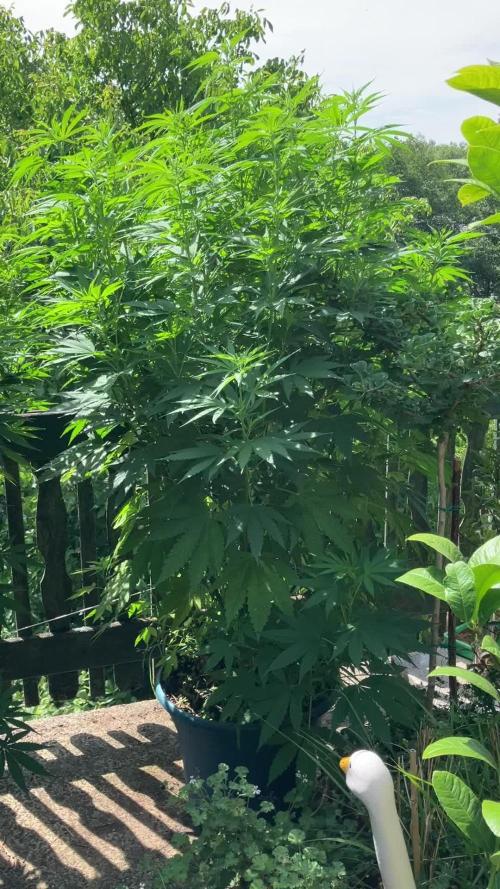
Die Rainbow Road hat in einer insgesamt kühlen Woche noch einmal etws an Höhe zugelegt. Sie wächst ohne Probleme und kommt gut mit den gegebenen Umständen zurecht.
Ich hoffe, dass es so weiter geht.
Viele Dank für euren Besuch, ich wünsche euche eine schöne Grow-Woche!

Likes
278
Share


@Metatronix
Follow
A big hello to all the cannabis growing gardeners...and all the other visitors that came across my grow journal.
This week was very relaxing, i add only PH+ (again ;), Calmag and PowerZyme.
----------------------------------------------------------------------------------
Now cannabis smell is overpowering in my grow room I can finally write something about Spider Farmers 6-Inch Inline Fan with Smart Controller and Carbon Filter :)
As my grow room gets really stinky at times i always invest in a top shelf carbon filter almost twice the size of the one provided by Spider Farmer, to my shock Spider Farmer carbon filter absorbs the smells wonderfully well.
No smell leaks and that just when the fan is running at 5 out of 10 levels of output. The smart controller is something completely new to me, and had a lot of fun experimenting with it during the veg and early flower, when the smell began i needed it to run full time at level 4 or 5 to rid the fragnance.
All in all the whole combo is a great deal. If you are not as keen on technology the set without the controller is awesome on it's own. But to have some extra options open, the controller at the device throws at you a ton of settings you can use to optemiase you grow enviornment.
The SE 7000 is hanged at 28 cm. over the canopy and runs at 550W.
This whole grow's main sponsor is Spider Farmer. You can easily obtain all the great grow equipment we use at: spider-farmer.com
A big thank you to Jessie and the whole Spider Farmer crew for supporting me with the newest technological advancements in horticulture. Thanks to them what i do here is possible.
Thank you SeedsMafia for giving me the opportunity to try out your stock.
seedsmafia.com/en/feminized-cannabis-seeds/moby-dick-feminized.html
Plagron did send us their Contest package for the Power Buds competition .
Thank you for your visit, please leave a like and hope to see you beck here in about a week.

Likes
1
Share


@JoExotic
Follow
Week 8 - Last day for nutes had no idea flower could actually smell like candy without being sprayed with TERPS I’m going to flush these over the next 2 weeks I’ll update next week !

Likes
1
Share


@teabee
Follow
pretty happy with it, nice yield, one plant was perfectly fine and one was a little rough near the end, one plants nugs were very dense the other plants was a bit on the fluffier side. Nice strain but a great rosin producer..


Likes
2
Share


@A_Aron
Follow
Day 50:
Everything is looking happy after the little trimming. Getting ready to head out of town in a few days. Ordered a small automatic waterer from Amazon to assist while I'm gone.
Watering/feeding day.
Each plant got 1 gallon of water with the following things:
5mL per gallon Alaska 5-1-1
30mL per gallon Alaska 0-10-10 (a little more than normal to give them a boost)
5mL per gallon GrowMore Seaweed Extract
15mL Blackstrap Molasses
Scratched into the surface of each pot is a 1/2 cup of Happy Frog Fruit & Flower
Day 52:
Leaving town early on Day 53 for 5 days. To prepare for the time I'll be gone I got an automatic watering system from amazon. Since I only use a total of 4 gallons during watering and only need one watering done while I'm gone, a single bucket will do the trick. I set up the system, installed two watering stems per pot, and made a looped system. In the bucket of water, I added nothing but the water. I don't want to have to worry about stirring it or anything like that. I set the system up to water when lights come on during the 3rd day I'm gone, Day 55. After I had the system set up I watered/fed the plants.
Each plant got 1 gallon with the following:
5mL per gallon Alaska 5-1-1
15mL per gallon Alaska 0-10-10
5mL per gallon Grow More Seaweed Extract
15mL Blackstrap Molasses
Plant 2 also got 1.25mL of AGT-50
Plant 3 also got 15mL of Liquid Culture Microbes
Plant 4 also got both the AGT-50 and LCM at the same amounts above.
Hope the watering system works.
Likes
46
Share


@DogDoctorOfficial
Follow
Hey, cannabis enthusiasts and connoisseurs! 🌿🔥 The journey with our Runtz F1 has been nothing short of legendary, and now we’re at the stage that every grower eagerly awaits—the trim and smoke report. This Runtz F1 has delivered beyond expectations, and I can’t wait to share the details with you. Let’s dive in!
The Trim Process 🌾✂️
The trimming process was an experience in itself, filled with care and attention to detail. Here’s how it all went down:
• Breaking Down the Branches 🌿:
• First, we carefully broke down the plant into manageable branches, making sure to preserve the integrity of each bud. The structure of the Runtz F1 made this easy, with its dense, compact colas ready for precision trimming.
• Trim Bin Magic ✂️:
• Using a Trim Bin, we meticulously trimmed away the sugar leaves, leaving behind only the most beautiful, resin-coated buds. The Trim Bin isn’t just a tool; it’s a game-changer, allowing us to catch every last bit of precious kief that falls during the process. This extra kief is like a bonus for those special moments when you want to add a little something extra to your smoke.
• Preserving Terpenes with Grove Bags 🛍️:
• Once trimmed, the buds were placed into Grove Bags for curing. These bags are revolutionary in the cannabis world, designed to lock in terpenes and keep your buds fresh for the long haul. Unlike traditional jars, Grove Bags use a special TerpLoc technology that creates a perfect microclimate within the bag, balancing out oxygen and moisture levels. This means your buds cure evenly without the need for burping, preserving that incredible citrus terpene profile we’ve come to love from the Runtz F1.
The Legendary Smoke 🌬️🔥
Now, let’s talk about the smoke—because this is where the Runtz F1 truly shines.
• Flavor Explosion 🍊🍋:
• The moment you take your first inhale, you’re hit with a symphony of citrus flavors. It’s like walking through a citrus grove with the sun shining down—notes of oranges, tangerines, and lemons come through strong, each one distinct yet harmoniously blended. But the magic doesn’t stop there; an underlying hint of vanilla sneaks in on the exhale, rounding out the flavor with a creamy, smooth finish. It’s an experience that dances on your palate, leaving you craving more.
• Aroma 🌿🌸:
• The smell is just as captivating as the flavor. As soon as you open the Grove Bag, the room fills with that zesty citrus aroma, complemented by a subtle sweetness from the vanilla undertone. It’s the kind of smell that makes you pause and appreciate the craft that went into growing this plant.
• The Effects 🌟:
• The effects of the Runtz F1 are as balanced as its flavor profile. Expect an initial wave of uplifting energy—perfect for daytime use or when you need a creative boost. As the high settles in, it mellows into a relaxed, yet focused state. It’s the best of both worlds: energizing without being overwhelming, and calming without knocking you out. This makes it an ideal strain for those who want to stay productive while still enjoying a potent, flavorful smoke.
Final Thoughts and Invitation 🎥✨
The Runtz F1 has proven itself to be a true connoisseur’s strain—a perfect blend of flavor, aroma, and effects that’s both complex and satisfying. This was a journey that showcased the importance of patience, precision, and care, from germination all the way to the final cure.
If you want to dive deeper into the entire process, from the first week of veg to the final trim, I’ve documented it all on my YouTube channel. Join me there for a closer look at how this incredible strain came to life, and learn more about the tips and techniques I used to bring out the best in these plants.
Thank you to everyone who’s been part of this journey, from the community to the amazing brands like Gro Diaries, TrolMaster, Aptus Holland, Kannabia, and more. Your support and tools have been invaluable.
Remember, the magic is in the details—so never stop learning, growing, and enjoying the fruits of your labor. Stay positive, stay curious, and keep spreading the love! 🌿💚
#RuntzF1 #LegendarySmoke #CannabisConnoisseur #GroveBags #TrimMagic #StayPositive #GreenMagic #YouTubeJourney
Germination method 🌱 @thecannakan
Genetics Runtz F1 @zam.nesia Runtz auto @kannabiaglobal
Nutrition
@aptusholland 🌿
@aptus_world 🌎
@aptus_es 🌍
@aptusbrasil 🌱
@aptus_thailand 🌿
@aptus_portugal 🌳
@aptususa_official 🍀
@aptusplanttechnz 🌺
@aptusplanttechaus 🍃
Ambient controls🎮
@trolmaster.eu @trolmaster.eu.support @trolmaster.support @trolmaster.agro
Soil @promix_growers_eur @promix_cannabis
LED - @lumatekeu
Watering- @autopot_usa @autopot_global
Love and attention- @dogdoctorofficial
#aptus #aptusplanttech #aptusgang #aptusfamily #aptustrueplantscience #inbalancewithnature #trolmaster #trolmastereurope #trolmastersecrets #Autopots #RuntzBattle #KannabiaVsZamnesia #GreenJoy
As always thank you all for stopping by, for the love and for it all , this journey of mine wold just not be the same without you guys, the love and support is very much appreciated and i fell honored and so joyful with you all in my life 🙏
With true love comes happiness 💚🙏 Always believe in your self and always do things expecting nothing and with an open heart , be a giver and the universe will give back to you in ways you could not even imagine so 💚
More info and complete updates from all my adventures can be found ⬆️ link in the profile description ⬆️
Friendly reminder all you see here is pure research and for educational purposes only
💚Growers Love To you All 💚


Likes
21
Share


@w33dhawk
Follow
Hi alle zusammen dies war die letzte vegi Woche puh! Wieder 10 Wochen ins Land gezogen die Zeit rennt auch 😰!
Die Woche lief ganz gut bus auf Dienstag da wollte ich alles noch einmal nach justieren und da ist mir die lady die hinten rechts steht gerissen also das T von oben ein gerissen (gespalten) hat sie aber nicht sonderlich gestört hab sie so gut es geht fixiert (sollte auf den Bildern und dem video zu sehen sein werde es nächste woche nochmal genauer fotografieren) ist leider dadurch nicht alles unbedingt auf gleicher Höhe so 2 bis 3 cm höhen unterschied zu der kleinsten von den 4 octos aber naja habe Freitag abend nachdem das Licht aus ging den reflektor ausgebaut und einmal Grund gereinigt und wieder eingebaut danach das ganze von meiner Mh auf Ndl gewechselt. Die zeitschschalt Uhr habe ich auf 12/12 umgestellt ab jetzt geht es langsam Richtung heisse Phase 😁😂(ich freue mich schon auf den Duft und das geglitzer) euch allen ein schönes Wochenende mit viel Sonne 🌞🌞🌞🌞🌞🌞

Likes
113
Share


@PEAKYPLANTERS
Follow
the growth of my girls is slowed down, due to the techniques of hst ..... in return my tops are becoming dense and robust.
we will see some beautiful ones
see you around friends

Likes
54
Share


@MadeInGermany
Follow
Flowering day 28
since time change
to 12 / 12 h
Hey guys :-)
The lady is growing very nicely.
The buds start to swell and they start to smell delicious :-) .
I look forward to seeing her every day 💚.
Watering was done twice this week with 1.2 l each.
Have fun and stay healthy 💚🙏🏻
👇🏼👇🏼👇🏼👇🏼👇🏼👇🏼👇🏼👇🏼👇🏼👇🏼👇🏼👇🏼
‘Powered by GreenHouse Feeding’
Copy the link for 10% off all Nutrients 👇🏼
https://shop.greenhousefeeding.com/affiliate/MadeInGermany_PassionGrower
👇🏼👇🏼👇🏼👇🏼👇🏼👇🏼👇🏼👇🏼👇🏼👇🏼👇🏼👇🏼
You can buy this strain at :
https://www.amsterdamgenetics.com/product/choco-cheesecake/
👇🏼👇🏼👇🏼
Use the coupon code: madeingermany
for 10% on all Amsterdam Genetics seeds
Water 💧 💧💧
Osmosis water mixed with Cal/Mag (24 hours stale that the chlorine evaporates) to 290 ppm and Ph with Ph- to 5.8 - 6.4
MadeInGermany


Likes
61
Share


@FoTwenny
Follow
Fo' Twenny here with an update on our little Gorilla x Cookies cultivar from Expert Seeds!
9/16 - Day 12: She is a beautiful shade of green and looks happy. I was one square pots short and when I bought this one, I accidentally got the 7" x 7" instead of the 6" x 6". It will bug me, because I am weird, but I planted her in it anyway. I put 1 tbsp Mycos, .5 tsp Recharge, and .25 tsp of Azos in the whole at the root zone. Sprinkled some White Dutch Clover seed after transplanting. Watered with plain water.
BAD NEWS:
Half of the blue diodes have gone out in the TMLAPY light. This light was actually gifted to me shortly after a friend purchased it from Amazon and realized it was too small for their space. It seemed to be serving it's purpose well for vegging photos and running bumper crops of autoflowers but it failed only four months after the warranty period ended! Weak-Sauce!
GOOD NEWS:
So, I upgraded the 24"x48" tent to Samsung LM301H boards. I ordered a 320w straight single piece heatsink with 3 boards from Geeklight. I went with the 3k spectrum and switchable UV/IR since all my autoflowers bloom under this light. $306 USD after all is said and done.
https://app.alibaba.com/dynamiclink?touchId=1600101815945&type=product&schema=enalibaba%3A%2F%2Fdetail%3Fid%3D1600101815945%26ck%3Dshare_detail&ck=share_detail&shareScene=buyer
9/17 - Day 26: Installed new light
NUTRITION:
Mixing rundown
Foliar Feed & Nutrient Solutiin
2 gal tap h2O run through x2 KDF filters
Start ppm 630
Start ph 7.8
1 tsp/gal Gold Shield Silica Supplement
1 tsp/gal Fox Farm Gringo Rasta Cal-Mag
8.1 ph
.33 tsp gal ph down
pH: 6.5
PPM: 730
Serenade 3 tsp/gal (Always adjust pH prior to adding any microbial innocclants)
Filled Spray bottle with 32 oz of the 2 gal mixed solution.
Add 2 tsp/gal of Fox Farm Flower Kiss (.5 tsp 32oz)
6 tsp/gal Optic Foliar Transport
PPM: 749
pH: 6.4
Added 1 tsp Recharge to the remainder of feed solution (to 1.75 gal) in the sprayer.
Thanks for stopping by my garden!
Please check out my other diaries & give me a follow!
Happy growing my friends! ☺️🌱
Peace, ☮️✌️
Love, 💚🤟
& Frosty Nugs! ❄️🌲
- Fo' Twenny

Likes
12
Share


@Kakui
Follow
Por lejos este ha sido mi mejor cultivo hasta ahora, han sido los cogollos más grandes, densos y llenos de tricomas que he cultivado, comparado con el cultivo anterior en el que usé el mismo tipo de planta, está vez fue muy superior. Los motivos de la mejora pueden ser varios, incluidos más luz, ya que en el cultivo anterior solo tuve 480w, ahora fueron 720w, también usé tutores y palitos de madera para crear una estructura firme en algunas plantas, y fueron estás mismas las que tuvieron los cogollos más grandes, así que lo usaré en todas las plantas del siguiente cultivo. Además el tiempo de cultivo se redujo de 4 meses a 3 meses y medio, aprox. Ahora solo queda esperar unas 2 semanas para el secado y ver cuánto fue la cosecha total en gramos secos, la anterior fue de 635 gramos secos, está yo creo que por lo menos rondará los 700 gramos secos, incluso puede que me sorprenda y sea mucho más.

Likes
58
Share

@Natrona
Follow
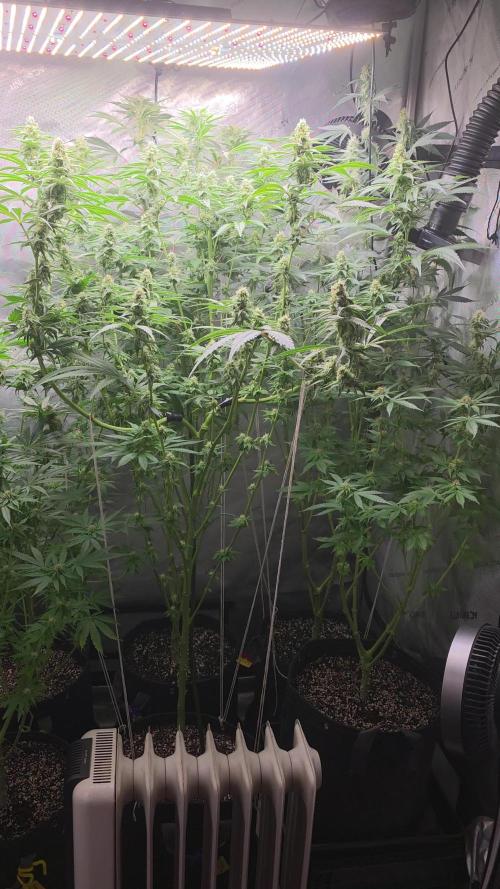
Strawberry Cadillac – STRNG Seeds
W12F3 1/25-31
I fed on 1/24 but Cadillac#1 needs more frequent watering than the others. Watered ph6.4 on 1/26 with another gallon. She is the largest and dries out next to the heater.
1/27 TPS1 14ml/g
Silica Gold 3ml/g
1/27 73 6.5 ph & 935 ppm
1/27 66.3F, 6.6 ph & 1014 ppm
To balance out the feed solution, I blend some of one bucket into the other and then back to the first bucket. I do this a couple of times to even out the PPM and temperature.
Strawberry Cadillac #1 51” #2 52” each drinks 1.5 gal
Strawberry Trop Cherry #1 37” #2 57” #2 drinks 1.5 gal #1 only 1 gal
Straw-Lectric Lemonade #1 40” #2 50” both drink 1 gal.
Other than bud development, they should not stretch any more.
1/29 I did the final defoliation on all strawberry gals. video
1/30 TPS1 14ml/g
Silica Gold 3ml/g
65.6f 6.3 ph & 1110 ppm
66.3f, 6.3 ph & 1120 ppm These are after blending the buckets.
Important dates
11/9 Germination
11/25 Transplant to 1.5 gal,
12/1 Topped, Pinned and removed 2 large center leaves
12/5 Repositioned pins and removed lowest fan leaves
12/16 Topped 4 tops on each plant except Cadillac1 (first topping) and put manuka honey on the cut.
12/24 Transplant to 5 gal
12/27 Defoliate all
12/28 Flip to 12/12
1/05 Supercrop Cadillac #1 at the joint where I topped her.
1/11 !st flower week defoliation and lollipop for all the Strawberry collection.
1/16 More super cropping of Cadillac1 and 1st time Trop Cherry2.
1/29 I did the final defoliation on all strawberry gals.
Stay green, growers love 💚🌿
💫Natrona💫
Likes
3
Share

@FicoCG
Follow
Hey Leute,
Chup Chup die kleine Lokomotive ist stark am Dampfen!!!
Die Woche 7 ist im vollem Gange und die Buds werden immer größer ^^
Ich konnte noch schnell genug reagieren, habe mich jetzt bei einem ppm von 1200 eingependelt.
Die Hitze von der Lampe ist immens, habe sie jetzt auf 75% dauerhaft reduziert, und die Höhe eingestellt, ca 1200 ppfd im ganzen Zelt.
Die Lemon Skunk (Red No. 2) rechts hinten macht mir etwas Sorgen aber jetzt ist es auch nicht mehr so lange bis zur Ernte!!!
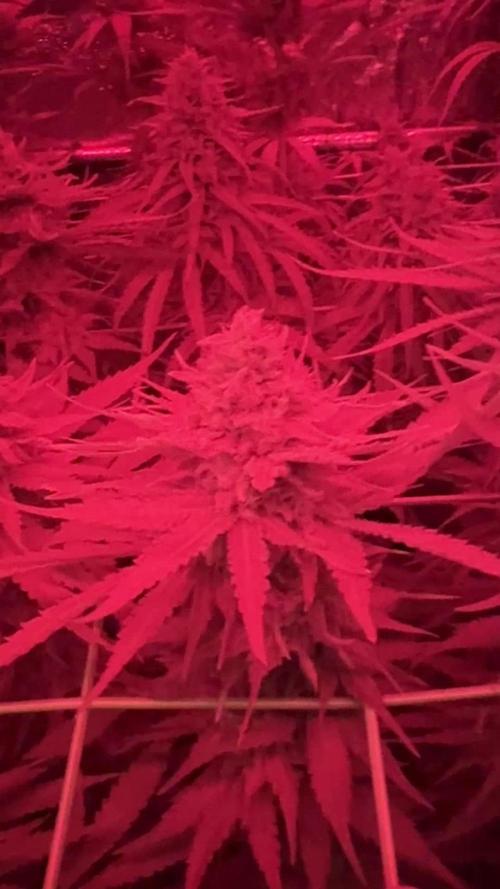
Ich bin mal gespannt ob das mit dem Roten Licht wirklich eine Wirkung hat und ich bessere Buds und früher ernten kann.
Sie haben immer noch immensen Durst alle 4 Tage 5 Liter pH und Dünger Wasser.
Ich hoffe es gefällt euch wie sie aussehen, schade, dass man den Duft nicht durch Handy schicken kann!!!
Liebe Grüße Fićo!


Likes
33
Share


@Ieiogrow94
Follow
Eccoci qui!!!
Esperienza pazzesca ottima genetica le bimbe sono cresciute e maturate nonostante le temperature!
Certo che ne vedremo delle belle!!
Grazie a tutti del supporto e a @Fast_Buds per la collaborazione
Likes
9
Share


@FrostyCloudzz
Follow
Flush flush
Bigger buds buds
Let’s prepare harvest :)
Did the full cycle from the advanced nutrients feeding chart , know I flush and prepare the harvest , planing a late harvest for more cbn and relaxing high - and little bit other terps
Today 16.02.2025 - blooming starts at 20.12.2024 - D59
Likes
26
Share


@PedroAndHisPlants
Follow
Day 64 (First Grow, Flowering Phase):
Hey everyone!
We’re on day 64, and the flowering phase is in full swing. The buds are forming beautifully, and the plants have grown 5-10 cm above the SCROG net, creating a lush canopy. The humidity is steady at around 50% or lower, which is ideal for this stage.
To recap, we've been maintaining an even canopy with the SCROG net and our Timor shield mantis continues to keep pests at bay naturally. Our plants are thriving, thanks to the even light distribution and careful humidity control.
We're considering installing a second fan in a few weeks to improve airflow and potentially adding a second SCROG net to support the plants as they continue to stretch during flowering. This should help stabilize the plants and ensure they get the support they need as the buds get heavier.
Any tips or advice for the next steps? Let us know in the comments!


Likes
25
Share


@XperencdGmanXG
Follow
took my old filters from my full ecosystem fish tank and rinsed them out in the water i gave to the girls. This will be just the same as using fish shit and it will make the buds big and sticky. Next week will tell if it worked.


