


Likes
Comments
Share


@DogDoctorOfficial
Follow
🚂 Cash Express – Pheno B
Week 7 | Grace in Full Bloom
Welcome back to another week of the 8×8 Adventure! 💚🌱
One of the reasons I enjoy phenotype hunts so much is that they constantly remind me there is no such thing as a "perfect" plant.
Every phenotype finds its own balance.
Some become giants.
Some stay compact.
Some grow with explosive vigour.
Others impress through elegance.
Cash Express Pheno B continues to fall into that last category.
She isn't the biggest plant in the room.
She isn't the smallest either.
She's simply developing into a wonderfully balanced lady with beautiful structure, healthy growth and one of the nicest leaf formations in the entire tent.
Week after week, she keeps giving me more reasons to smile.
────────────────────────────
🌿 A Beautiful Balance
As flowering progresses, Pheno B is showing exactly why patience is so rewarding.
Her stretch has been steady and controlled, creating a tall, elegant structure with excellent spacing between flowering sites. Every branch has room to breathe, while the canopy remains beautifully open for airflow and light penetration.
She has reached around 90 cm this week, making her one of the medium-sized ladies in the room.
Not towering above everyone...
Not hiding beneath the canopy...
Just perfectly balanced.
Sometimes that's exactly where the magic happens.
────────────────────────────
🍃 Leaves Like Open Hands
Every time I look at this plant, one feature immediately catches my attention.
Her leaves.
They're absolutely gorgeous.
Large, healthy seven-finger fan leaves spread wide open, almost like welcoming hands reaching toward the light.
They have that deep healthy green colour every grower loves to see, with perfectly formed leaflets and beautiful symmetry throughout the plant.
Healthy foliage tells us a great deal before harvest ever arrives.
Strong leaves mean efficient photosynthesis.
Efficient photosynthesis means more energy.
And more energy ultimately becomes flowers.
Nature has built a wonderful engine here, and it's running beautifully.
────────────────────────────
🌸 Flowers Begin Taking Centre Stage
The flowers continue developing exactly as I hoped.
Every branch is now carrying clusters of bright white pistils that are beginning to stack together more noticeably than last week.
The plant is clearly shifting her priorities.
The stretch is slowing.
Flower production is accelerating.
While they're still early in development, the bud sites are becoming increasingly defined, giving us a much clearer picture of what this phenotype may become over the coming weeks.
It's one of those exciting stages where every morning seems to bring a little more growth than the day before.
────────────────────────────
💡 Light From Above... And Below
As the canopy continues filling out, the combination of overhead lighting from the Future of Grow Black Series LED together with the LumiFlora under-canopy lights is creating an environment where every flowering site has the opportunity to thrive.
The additional light beneath the canopy helps illuminate lower bud sites that would otherwise receive considerably less energy.
Combined with her naturally open structure, this should allow more uniform flower development throughout the entire plant.
It's another small detail that I'm very excited to evaluate as we move deeper into flowering.
────────────────────────────
🌱 Feeding
The AutoPot system continues quietly doing what it does best, supplying fresh nutrient solution whenever the plant requests it and allowing the roots to remain consistently hydrated without overthinking irrigation schedules.
This week's reservoir consisted of:
• Plagron Terra Bloom – 2 ml/L
• Plagron Pure Zym – 1 ml/L
• Plagron Sugar Royal – 1 ml/L
• Plagron Power Buds – 1 ml/L
pH adjusted to 5.8 using Lemon Kick and pH Plus when required.
Everything remains stable, and the plant continues responding with healthy foliage and steady flower production.
Sometimes consistency really is the best feeding strategy.
────────────────────────────
🌡️ Environment
Environmental conditions remained very stable throughout the week, giving the entire room exactly what it needed during this important flowering phase.
🌡️ Day temperature: 29°C
🌙 Night temperature: 25°C
💧 Relative humidity: 60%
🥥 Root zone temperature: 21°C
💦 Solution temperature: 24°C
⚗️ pH: 5.8
⚡ EC: 1.95 mS/cm
💨 CO₂: 639 ppm
💡 Light schedule: 12/12
When the environment remains this consistent, the plants can spend less energy adapting and more energy building flowers.
That's exactly what we're seeing here.
────────────────────────────
📸 Behind the Lens
This week's photographs showcase everything I enjoy about this phenotype.
The close-ups reveal fresh white pistils reaching confidently upward while the overhead shots highlight those incredible seven-finger leaves radiating around each developing flower like a natural frame.
The full-plant portraits show an elegant architecture with evenly spaced branches and excellent internodal distance.
She's becoming one of those plants that's simply enjoyable to photograph.
Every angle seems to reveal another beautiful detail.
And somehow she manages to look graceful without ever trying too hard.
────────────────────────────
🔍 Looking Ahead
The coming weeks should be where things become really exciting.
I expect the remaining stretch to slow even further while the flowers begin stacking more aggressively along every branch.
Resin production should gradually begin increasing, and those beautiful clusters of pistils will slowly transform into proper colas.
From here forward, my job remains simple.
Maintain the environment.
Keep the reservoir stable.
Tuck the occasional leaf when needed.
Then step back and let the genetics tell the rest of the story.
Sometimes the best growers aren't directing the performance.
They're simply giving nature the perfect stage.
────────────────────────────
💚 Thank You
Thank you to everyone following this 8×8 Adventure.
Every diary, every comment and every conversation reminds me how fortunate I am to share this journey with such an incredible growing community.
A heartfelt thank you to GrowDiaries for bringing growers together from every corner of the world.
Thank you to Zamnesia for providing the wonderful Cash Express genetics that continue revealing unique personalities with every passing week.
Thank you to Plagron for the nutrition supporting every stage of this cultivation.
Thank you to Future of Grow LED for delivering the powerful lighting that fuels this entire project.
A special thank you to LumiFlora for the under-canopy lighting, helping ensure every flowering site receives the attention it deserves.
Thank you as well to AutoPot for making irrigation beautifully simple while allowing the plants themselves to decide exactly when they want to drink.
And finally...
Thank you to every grower who follows along, leaves a comment, asks a question or simply enjoys watching these beautiful plants develop.
Your support makes this adventure even more meaningful.
Growers Love, and I'll see you all next week as Cash Express Pheno B continues transforming those elegant seven-finger leaves into a canopy full of beautiful flowers. 💚🚂🌱

Likes
16
Share


@Mopish
Follow
17 Jan - 23 Jan
19 Jan
Kush del Arriero: Looking good in color and size, planning to flush next week, hope those possible nanners don't develop enough, not removing due to harvest time being so close and this one being the one that will probably give me the best yield. Some buds and leaves getting purple colors.
Choco Cookie: Still very small, hope they grow a little more before harvest. Some buds and leaves getting purple colors.
Banana Cake: Small buds, decent trichomes.
I hope that KDA won't cause much trouble to the other two plants, I hope I'm wrong about the nanners... Keeping my plans, finish with nutrients this Sunday and flushing for 7-14 days after that.
I'll add a few more pics later today.
Sat 22
Yesterday a friend with more experience in these things took a look at my plants, he seemed impressed by what I've accomplished on my first grow so far. He also confirmed that the weird things on the KDA buds aren't nanners... phew !
He also confirmed my plans for flushing tomorrow are good.
Likes
2
Share


@KeemBboomin
Follow
Everything is not as accurate as I would like to say, but I wanted you guys to see what I can do
Likes
5
Share


@BushDoctor740
Follow
The frostbanger really comes on strong towards the end of her cycle.Super dense and sticky buds that will make your mouth water just looking at them.I think I’ll just water one more time and let them dry out a bit before cutting the last 3 down.

Likes
Comments
Share


@Humblesinz420
Follow
Gonna separate one and place into a 5 gallon and put other 2 into 10
Likes
13
Share


@FlavoursUk
Follow
Since sprouting above ground I've been top watering RO water until the roots hit the water.
I also covered the net pots with reflective film to avoid any light leaking into the rdwc system to avoid any issues later on in the grow.
Day 5 - Roots are starting to touch the water so I'm expecting the growth rate to pick up soon 😏
Trol master unit is set up and connected to my light at 40% and on a 18/6 lighting schedule. Very handy unit if I must say.
Until the next update

Likes
50
Share


@BudXs
Follow
Home stretch baby!!! Start of week 10 of flower, and things are looking chop ready:) The ill effects of last weeks PK burn have subsided and the plants are back to healthy.
Have been checking trichomes and flower form, and based on my experience, these ladies are coming down in 6 days, October 6th. One of the plants has the hardest, densest, stickiest nug i have ever seen. So looking forward to tasting. I have been off the nutes for a few days and will be water only from here on out.
I have dusted off my old bowl trimmer and drying rack. I have always wet-trimmed and dried in a rack. I dry for about 5 days and then start jarring and burping. The bowl trimmer is soooo fast. It cuts my trim time by literally 90%, will post a video on chop day.
Updates later in week
F66 - Chopped the one girl who had a tonne of amber in her. Looks to be a good 2.5 zips when dry, time will tell if my estimate is correct, but it comes from experience. Other 7 plants coming down on F71. Check my bowl trimmer video!

Likes
25
Share


@Herbz_Unkraut
Follow
i accidently bought some unbuffered coco and mixed it with my ussual earth, had major calmag problems in mid-flower but i´m still pleased with the results...also had a little trouble with mold at the end due to bad weather and high humidity in the final weeks of the grow, had to remove a few buds and harvest early @ day 55 of flower....but there's still alot of great looking buds left for me to enjoy and all look mostly done...
Just harvested and hung them upside down, currently drying them at constant 19.5-20.5°C and 50-60% RH..will update as soon as they are dry

Likes
34
Share


@Robbaus
Follow
Siamo quasi alla fine! Durante la settimana dovremmo essere arrivati al massimo gonfiore dei fiori, i tricomi sono praticamente per metà color latte e per metà leggermente trasparenti, penso che quella di oggi sia stata l'ultima bagnata. Ho tagliato due apicali a campione della pianta che avevo il dubbio fosse ermafrodita, ma da questi due apicali non è uscito nemmeno un seme e l'effetto è stato quello desiderato, tenendo presente che le ho tagliate in anticipo rispetto a quando sarebbero da consumare quindi direi che dovrei aver scampato il pericolo, me ne sono accorto in tempo. Non vedo l'ora di toglierle e vedere l'effettiva resa del raccolto, dovrei essere sui 400g 😁😁🍀🍀💪🏼💪🏼

Likes
4
Share

@IndigoMist8
Follow
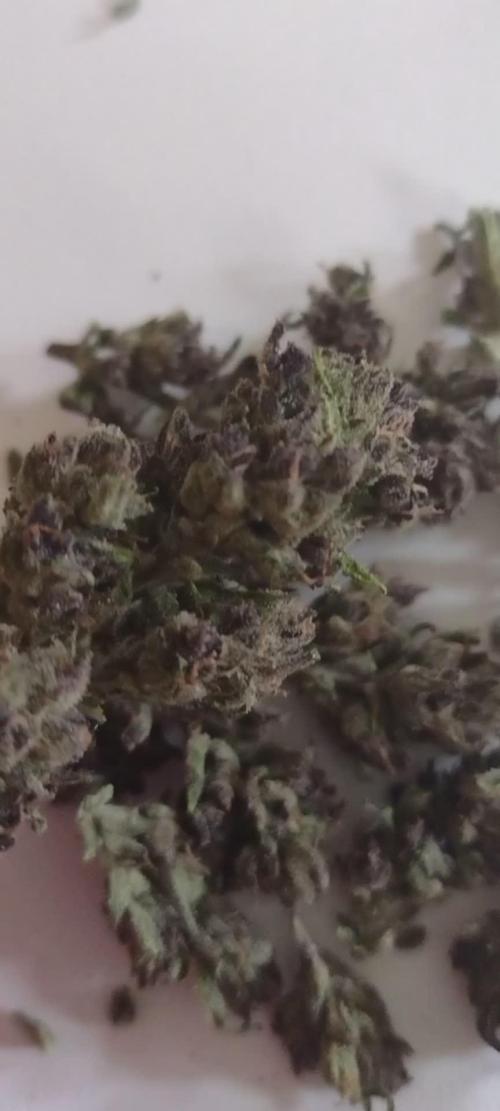
First of the 3 done. The other 2 are not ready and I'm hoping they can get though the next couple of weeks of cold
Likes
Comments
Share


@Billy_Piff
Follow
Fed GH 3 part with Terpinator in flower and some recharge occasionally.

Likes
2
Share


@High_Grade_Dadli
Follow
So far so good... removed most of the lower branches at the very end of the week...let's see the improvement in the week to come...also with the stronger branches that where removed tried my hand at cloning again( y not see if I can get more trees) just have to wait n see
Likes
35
Share


@Hiroots420
Follow
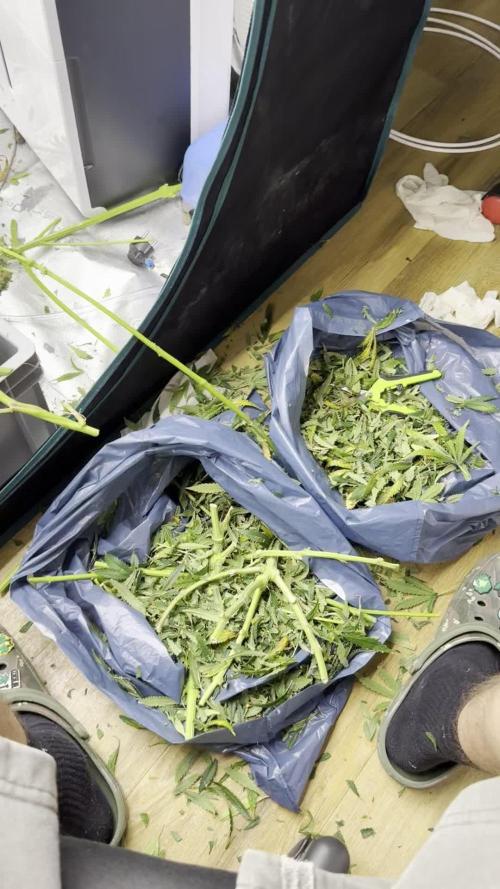
Esta planta viene de 1 año aproximadamente de cultivo y sigue impresionando como el primer dia, es un aroma que lo quiero tener en mis frascos para momentos especiales.



Likes
45
Share


@Ultraviolet
Follow
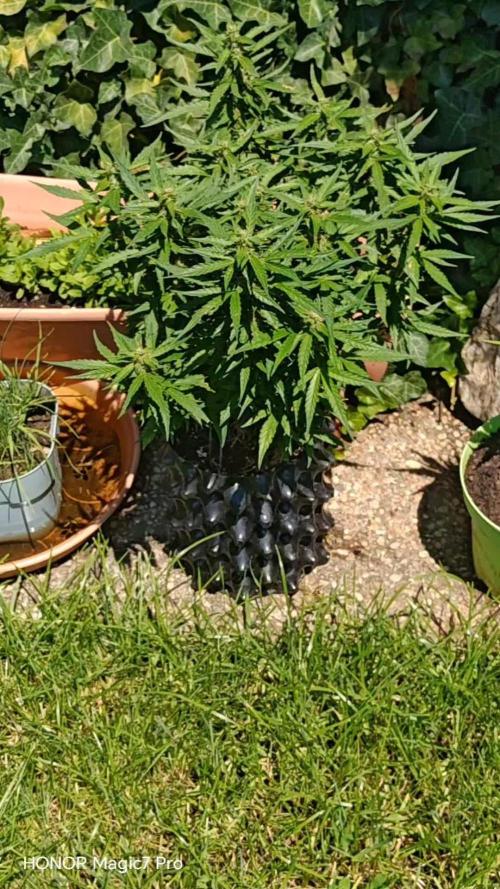
2nd net is up. Early bud formations are promising. holding up to the extremes pretty well, some leaves taking minor damage, but overall, she is holding up, gave her 1 night at 50F see how she would react, stressful. Not advised as it messes with her metabolism, but I want to see if it triggers any anthocyanin response. Love to see her purp up but no signs yet.
My homework.
Rubisco regeneration is intrinsically linked to nitrogen supply because Rubisco is a major sink for nitrogen in plants, typically accounting for 15% to over 25% of total leaf nitrogen. The regeneration phase itself consumes nitrogen through the synthesis of the Rubisco enzyme and associated proteins (like Rubisco activase), and overall nitrogen status heavily influences the efficiency of RuBP regeneration.Structural Component: Nitrogen is an essential building block for all proteins, and the sheer abundance of the Rubisco protein makes it the single largest storage of nitrogen in the leaf.
Synthesis and Activity: Adequate nitrogen supply is crucial for the synthesis and maintenance of sufficient Rubisco enzyme and Rubisco activase (Rca), the regulatory protein responsible for maintaining Rubisco's active state. Nitrogen deficiency leads to a decrease in the content and activity of both Rubisco and Rca, which in turn limits the maximum carboxylation rate, Vmax, and the rate of RuBP regeneration Jmax, thus reducing overall photosynthetic capacity.
Nitrogen Storage and Remobilization: Rubisco can act as a temporary nitrogen storage protein, which is degraded to remobilize nitrogen to other growing parts of the plant, especially under conditions of nitrogen deficiency or senescence.
Nitrogen Use Efficiency (NUE): The allocation of nitrogen to Rubisco is a key determinant of a plant's photosynthetic nitrogen use efficiency (PNUE). In high-nitrogen conditions, plants may accumulate a surplus of Rubisco, which may not be fully activated, leading to a lower PNUE. Optimizing the amount and activity of Rubisco relative to nitrogen availability is a target for improving crop NUE.
Photorespiration and Nitrogen Metabolism: Nitrogen metabolism is also linked to the photorespiration pathway (which competes with carboxylation at the Rubisco active site), particularly in the reassimilation of ammonia released during the process.
To increase RuBisCO regeneration, which refers to the process of forming the CO2 acceptor molecule Ribulose-1,5-bisphosphate (RuBP) during photosynthesis, the primary methods involve optimizing the levels and activity of Rubisco activase (Rca) and enhancing the performance of other Calvin-Benson-Bassham (CBB) cycle enzymes.
Biochemical and Environmental Approaches:
Optimize Rubisco Activase (Rca) activity: Rca is a crucial chaperone protein that removes inhibitory sugar phosphates, such as CA1P (2-carboxy-D-arabinitol 1-phosphate), from the Rubisco active site, thus maintaining its catalytic competence.
•Ensure optimal light conditions: Rca is light-activated via the chloroplast's redox status. Adequate light intensity ensures Rca can effectively maintain Rubisco in its active, carbamylated state.
•Maintain optimal temperature: Rca is highly temperature-sensitive and can become unstable at moderately high temperatures (e.g., above 35°C/95F° in many C3 plants), which decreases its ability to activate Rubisco. Maintaining temperatures within the optimal range for a specific plant species is important.
•Optimize Mg2+ concentration: Mg2+ is a key cofactor for both Rubisco carbamylation and Rca activity. In the light, Mg2+ concentration in the chloroplast stroma increases, promoting activation.
•Manage ATP/ADP ratio: Rca activity depends on ATP hydrolysis and is inhibited by ADP. Conditions that maintain a high ATP/ADP ratio in the chloroplast stroma favor Rca activity.
Enhance Calvin-Benson-Bassham (CBB) cycle enzyme activity: The overall rate of RuBP regeneration can be limited by other enzymes in the cycle.
•Increase SBPase activity: Sedoheptulose-1,7-bisphosphatase (SBPase) is a key regulatory enzyme in the regeneration pathway, and increasing its activity can enhance RuBP regeneration and overall photosynthesis.
•Optimize other enzymes: Overexpression of other CBB cycle enzymes such as fructose-1,6-bisphosphate aldolase (FBA) and triose phosphate isomerase (TPI) can also help to balance the metabolic flux and improve RuBP regeneration capacity.
Magnesium ions, Mg2+, are specifically required for Rubisco activation because the cation plays a critical structural and chemical role in forming the active site: A specific lysine residue in the active site must be carbamylated by a CO2 molecule to activate the enzyme. The resulting negatively charged carbamyl group then facilitates the binding of the positively charged Mg2+ion. While other divalent metal ions like Mn2+ can bind to Rubisco, they alter the enzyme's substrate specificity and lead to dramatically lower activity or a higher rate of the non-productive oxygenation reaction compared to Mg2+, making them biologically unfavorable in the context of efficient carbon fixation. The concentration of Mg2+ in the chloroplast stroma naturally increases in the light due to ion potential balancing during ATP synthesis, providing a physiological mechanism to ensure the enzyme is activated when photosynthesis is possible. At the center of the porphyrin ring, nestled within its nitrogen atoms, is a Magnesium ion (Mg2+). This magnesium ion is crucial for the function of chlorophyll, and without it, the pigment cannot effectively capture and transfer light energy.
Mg acts as a cofactor: Mg2+ binds to Rubisco after an activator CO2 molecule, forming a catalytically competent complex (Enzyme-CO2-Mg2+). High light + CO2) increases demand: Under high light (60 DLI is a very high intensity, potentially saturating) and high CO2, the plant's capacity for photosynthesis is high, and thus the demand for activated Rubisco and the necessary Mg2+ cofactor increases. Mg deficiency becomes limiting: If Mg2+ is deficient under these conditions, the higher levels of Rubisco and Rubisco activase produced cannot be fully activated, leading to lower photosynthetic rates and potential photo-oxidative damage.
Optimal range: Studies show that adequate Mg2+ application can enhance Rubisco activation and stabilize net photosynthetic rates under stress conditions, but the required concentration is specific to the experimental setup.
Monitoring is key: The most effective approach in a controlled environment is to monitor the plant's physiological responses e.g., leaf Mg2+ concentration, photosynthetic rate, Rubisco activation state, and adjust the nutrient solution/fertilizer to maintain adequate levels, rather than supplementing a fixed "extra" amount.
In practice, this means ensuring that Mg2+ is not a limiting factor in the plant's standard nutrient solution when pushing the limits with high light and CO2.
Applying Mg2+ through foliar spray is beneficial to Rubisco regeneration, particularly in alleviating the negative effects of magnesium (Mg) deficiency and high-temperature stress (HTS). While Mg can be leached from soil, within the plant it is considered a mobile nutrient, particularly in the phloem. Foliar-applied Mg is quickly absorbed by the leaves and can be translocate to other plant parts, including new growth and sink organs.
Foliar application of: NATURES VERY OWN MgSO4 @ 15.0g L-1 in a spray bottle.
Foliar sprays are often recommended as a rapid rescue measure for existing deficiencies or as a supplement during critical growth stages, when demand for Mg is high. Application in the early morning or late evening can improve absorption and prevent leaf burn.
The starting point [of creativity] is curiosity: pondering why the default exists in the first place. We’re driven to question defaults when we experience vuja de, the opposite of déjà vu. Déjà vu occurs when we encounter something new, but it feels as if we’ve seen it before. Vuja de is the reverse—we face something familiar, but we see it with a fresh perspective that enables us to gain new insights into old problems. Come walk in the enchanted forest.



Likes
45
Share


@BodyByVio
Follow
Day 41
Strain: @sweetseeds Killer Kush
Feed : @athena.ag @power.si @impellobio
Light: @fluencebyosram Spydr 2i
Likes
19
Share


@Selkot
Follow
this session is (already!) coming to an end 👌
as the buds were so advanced at the end of last week, I lowered the coconut feel and gave a little boost to the Super Boom.
At the end of the week, after checking the trichos, the rinsing seemed to be necessary.
I'm going to cut in 7-10 days 👍
see all my vids :) https://www.youtube.com/channel/UCtAGX0oCBY92aj3VJCG5q-Q/
Likes
144
Share


@TOTEM
Follow
Getting ready for flowering!
On day 45 I placed a metal grid (90x90cm) on the bottom of the pot and a same one on the top as a scrog grid. Then I did a huge defoliation removing as much as I could under the net, exposing many small colas that were covered by upper leaves.
On day 46 I didn’t switch off the lights in the night, so the princess has been awake for more than a day. I switched off the lights in the morning. After about 30 hours of darkness, on day 47 I switched lights back on and set up the timer for the switch to 12/12.
In this first week I’m waiting for the plant to empty the reservoir, then 2 days of flush, and will start kicking bloom nutes (with fungi, bacteria and sugars) at half dosage next week.
