


Likes
Comments
Share

@BlaKX
Follow
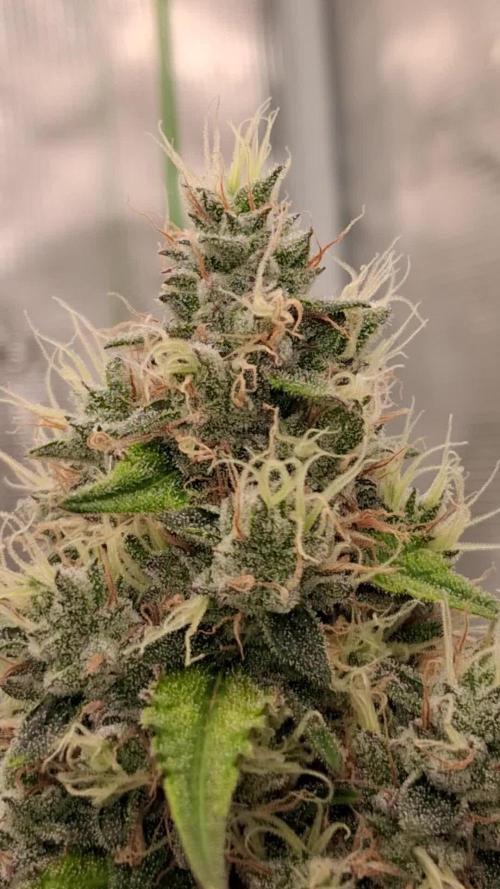
Ende der 9 Woche Growmies!
Endlich habe ich daran gedacht einen Zollstock zu besorgen um die Größe festzustellen und siehe da habe mich nicht verschätzt!
Leider bekomme ich die Hitze im Zelt nicht mehr runter und werde mit 10 Wochen Ernte machen bevor mir Schimmel oder ähnliches passiert.


Likes
11
Share


@VicMallorca
Follow
Buenas señores ! Esta semana ha sido un poco ajetreada en general, las plantas parecen estar listas ,pero dejaré un poco más con agua sola para quitar todo el alimento que tienen almacenado ya que parecen estar cebadas y vomitando los nutrientes, ya que la ec cuando he cambiado el agua ha subido más de lo que puse,entro siendo alta de 3.55 y ha salido en 6,4 la verdad que una animalada, he optado por dejarles 24h agua sola de ósmosis a ec de 0.08,según han ido pasando las horas ha ido subiendo y en 12 horas estaba en 2,15 de ec, pasadas 24h ya estába en 4,12 y decidí cambiarla de nuevo ,después de 10h esta en 1,65.
Pasadas 18h baja a 1,35,eso significa que ya comen de los restos que les quedan.
A mitad de esta semana que viene haré cambio de agua y pondre flawles finish durante 24h y cambiaré a agua de ósmosis sin nada con ec de 0.08.
Por lo que le he leído el flawles finish de Advance Nutrients se pone durante 6h,yo lo dejaré 24h,luego por lo que he leído dicen que para limpiar raíces dos o tres Días de limpieza, que me parecen pocos y así que unos 4 días y cambio de nuevo a agua limpia otros 4 días más a ver si se consumen ellas mismas y empiezan las carencias haciendo que se coman ellas mismas y dejándolas limpias del todo ya que creo que me he pasado en ec.
He tenido que limpiar bien el tanque entero ya que había posos de excesos de abonos y ec ,de tal manera que se había creado una capa de minerales en el tanque y en los riegos que empezaba a joder a las plantas .Esta semana con las lluvias y las bajadas de temperaturas se ha notado en tener que bajar el tiempo de extractores y potencia de ventiladores,así hemos conseguido unas temperaturas y condiciones ideales para el cultivo y la etapa en la están.
Ya estamos en el final del cultivo y me sorprende lo rápido que va todo en el cultivo hidroponico, la verdad que la temporada que viene volveré de nuevo con hidroponico y unas cosas que estoy probando para ver si la temporada que viene todo va au mejor ,ya estoy buscando las siguientes elegidas para todo el año que viene y veremos que nos depara.
Habrá que hacer la cata y pesaje final para ver como ha ido y a que sabe , que es la mejor parte!!!
La verdad que la experiencia de cultivar en sustrato inerte e hidroponico hace que Un entiendas más como alimentar tus plantas y para que es cada elemento de la tabla de cultivo haciendo que se gane en experiencia a la vez que disfrute el aprendizaje en formas nuevas de cultivar!
Parámetros :
Humedad : 40%/45%
Temperatura : 25°C
Temperatura agua : 19°C
Ph 6,4 en el cambio de agua
Ph 6,7 actual
EC 0.62
EC de inicio 0.08 agua de ósmosis de los filtros GrowMax
45L de agua
Abonos:
Advance
2ml/L Flawless Finish
Iremos viendo como va esta semana que viene siendo por lo que parece el final ya que hay mucho tricoma ámbar y muchos de los pelos esta marrones a simple vista y no creo que vayan a engordar mucho más.
Huelen que da miedo a la vez que embriaga ,tengo ganas de verlas cortadas y colgando!!
Nada más en esta actualización semanal! Espero que os guste y gracias por pasaros!! Saludos!!


Processing
Likes
37
Share


@MG2009
Follow
Not much to report slow steady growth cool temps are not helping.Getting warmer weather next week should help speed things up a bit👍


Likes
Comments
Share

@Wierie
Follow
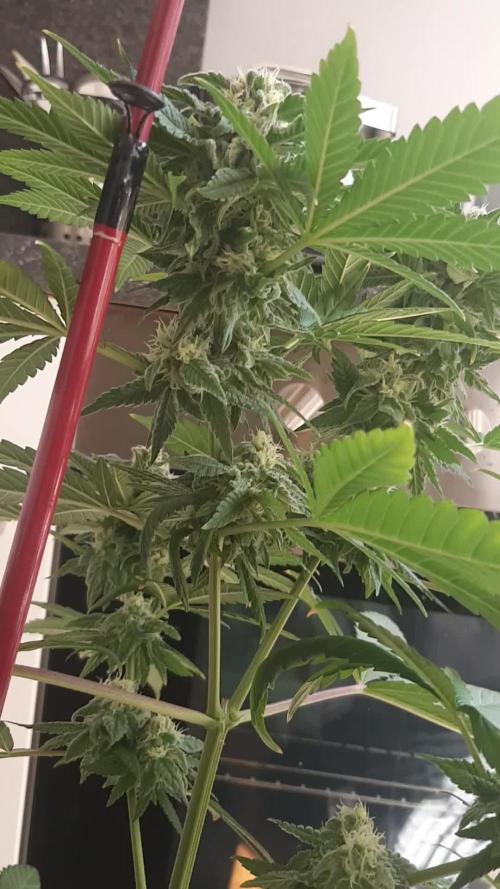
Day 45
Good day frens...
I think i had gave a bit to much nutes lol
She was not drinkin a lot and she turned a bit light green here and there...
I let her dry out for a couple days and she is fine again..
She is starting to add weight puffing up nice here and there..
We have some good weather this week so she will be verry happy...
Other then that nothin has changed ...
Have a look 👍🌴
Good day ladys and gents
Likes
10
Share


@cezario
Follow
Panted the seeds straight in their main pots and put a plastic bag over them to increase the humidity. Removed the plastic bags after the plants were 2 days out of the soil. Temp is around 20c and humidity around 50%. No added nutrients yet. Only using some ph minus to bring the pH levels down to arounbd 6,5. After each watering I am slowly increasing the light intensity. Started on 25% then to 50% of the capacity of the lamp. Noticed in the second week that I had set my timer wrong and the plants were on a 14-8 cycle instead of a intended 18-6.

Likes
55
Share


@Xpie77
Follow
Day 18 of flowering!
💚Please Like This Diary and Leave a Comment!💚
This week the flowers start to swell up. The smell is very nice and love this strain to grow🌿💚🍀
Nutrition: not so much, just a quarter of what is asked on the bottle.
Smell: plant already have a nice smell, very punchy, skunky, forest fruits
Health: nice strong plants, will grow big and flower fast!
Red Wine was created by crossing Rozay F2 with Jet A. They are 2 very powerful aromatic Cali hybrids. This exclusive new Cali strain is a very strong and fast flowering indica-dominant strain. It has an aromatic, intoxicating and relaxing effect. That is comparable to enjoying a good glass of wine.
Red Wine has an average flowering time of about 7-8 weeks when grown indoors. Outdoors it is ready fairly early, usually around the end of September.
The yield is very good. Indoors she has an average yield of 450-650 gr/m². When growing outdoors, 600-800 grams can easily be achieved per plant.
Red Wine has an aromatic scent that can be compared to a full red wine. Her full, purple-green buds are very compact with few leaves. This is very convenient when cutting the plants and saves a lot of time. Smoking this weed gives you a nice high with relaxing properties. The taste of Red Wine is very fruity sweet with an aroma of red grapes.
Flowering time: 7 – 8 weeks
Genetics: Rozay F2 x Jet A
30% Sativa, 70% Indica
Plant height outside: 100 – 180 cm
Outdoor harvest month: from June to October
Yield indoors: 450 – 650 gr/m²
Yield outdoors: 200 – 800 gr / plant
THC: 25%
💚💚Wanna Try Red Wine from Seeds Genetics💚💚
Link:
https://seedsgenetics.nl/product/red-wine-gefeminiseerd/

Likes
7
Share


@HowieMcHowie
Follow
Mittlerweile sind alle Pflanzen voll in der Blüte. Alle zwei Tage wird gegossen. Den kleinen Ventilator habe ich durch einen großen 40cm/50W ersetzt. Der hängt verkehrt rum an der Decke und sorgt für eine Luftzirkulation. Besonders in der Nacht wenn die Luftfeuchtigkeit auf 80% geht. Der Geruch wird etwas intensiver. Ein wenig LST wende ich noch an. Die Bieger lasse ich aber höchstens 2 Tage dran. Keine Lust das mir ein dritter Seitentrieb abbricht.

Likes
54
Share


@ASCBOOGS
Follow
Day 43 veg been doing LST and super cropping but dunno if i should top all the bud sites please could someone give me some advice on that as I have never grown clones before
Day 45 looking a bit better after super cropping and fimming all bud sites

Likes
21
Share


Likes
7
Share

@Trinidad
Follow
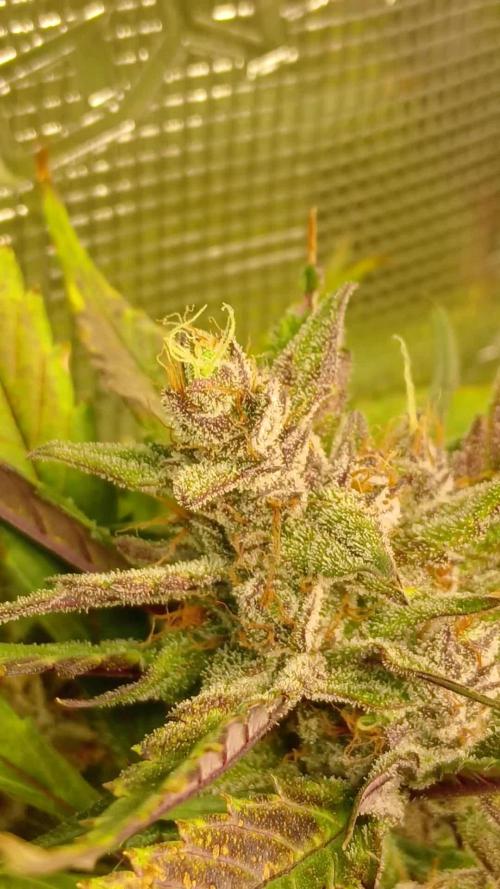
10 weeks...I am beginning to see amber trichomes. I am tempted to harvest her..I will begin flushing today...never did it before...to time it takes some experience and getting some used to..flushing in hydro usually takes around 5 days...
Day 72 and I have chopped
Likes
48
Share


@Focus420
Follow
11.týden
71 - den kontrola v pořádku
72 - den. Pohnojím všechny holky, kromě blackberry a brooklynu ty už jen vodou s ph - (5,8)
73 - den listy na autech začínají žloutnout. Jdeme do finále
74 den - kontrola trichomu kapesním mikroskopem. Trichomy se zdají být pořád nedostatečně jantarové
75 den - celoročky jsem dnes hnojil 😁
Blackberry gum, auto brooklyn a sleep proplachuji...

Likes
54
Share


@TheWeedaltor
Follow
I harvested the bigger strawberry banana who grown under the CMH all time, I will updated next week once dried.
I put the second one (after a vegetative fase with sun from windows and sea breathe, following than the others plants on the border of the garden) in the room where I finished the photoperiod strains and gave her 2/3 week of 400W HPS all for her 💪🏻
Now I will let her finish the flush under the CMH since I set free one place 🤙
The Runtz Muffin got poor light because Skywalker grown as a monster, the scrog net for sure didn’t helped me to raise up the pot nearer to lamp 😬
Next time I will use scrog net only if I grow same strain but I think I will not use it, I prefer have plants free to move in the garden 🤷♂️🏻
Happy smoking to all growers 💚

Likes
32
Share


@Compassionate_Gardener
Follow
The plants continue to develop more and more flower clusters all over the main and side branches, its FANTASTIC to see. 😍 The Shiva Skunk is still a little bit taller (47 cm) than the Serious Kush (42 cm), but the Kush plants have denser flower clusters. Trichome production is now in full swing under the Q6W-Gen.2 LED-lamps, which are still dimmed to 100% (=3 green lights on the dimmer). The plants SMELL DELICIOUS and have a STRONG AROMA now! The Shiva Skunk has a very musky and sweet aroma now with hints of citrus in it, while the Serious Kush smells 'dank', it has an extraordinary strong and gassy smell which is intoxicating!


Likes
35
Share


@nonick123
Follow
Día 73 (12/08) Riego 500 ml H2O pH 6,55
Todas las plantas muestras las preflores hembras! (excepto LemonPaya)
Día 74 (13/08) Riego 250 ml H2O pH 6,55 . Están muy bien hidratadas
Pequeños ajustes de LST
Día 75 (14/08) Hoy día de lluvias torrenciales
Riego 250 ml H2O pH 6,55
Día 76 (15/08) Detecto mosca blanca en varias plantas. Aplico Spruzit a 10 ml/l ahora que aún no estamos en floración
Riego 500 ml H2O pH 6,55
Día 77 (16/08) Riego 500 ml H2O pH 6,55
La mosca blanca ha desaparecido completamente
Día 78 (17/08) No riego. Mañana a primera hora aplico Top Dress y riego profundo
Va a empezar la floración!
Día 79 (18/08) Alimentemos el suelo con Top Dress! 💥 Aplicamos 4 g/L sustrato de Tasty Flowers TD by Lurpe Solutions.
Total = 84 gramos / maceta
Riego con 1 Litro H2O pH 6,5 con 25 ml/L de Humus de Lombriz Liquido
Aplicación foliar Kelp hidrolizado de Lurpe Solutions a 0,25 ml/l
💦Nutrients by Lurpe Solutions - www.lurpenaturalsolutions.com
🌱Substrate PRO-MIX HP BACILLUS + MYCORRHIZAE - www.pthorticulture.com/en/products/pro-mix-hp-biostimulant-plus-mycorrhizae

Likes
6
Share

@Bncgrower
Follow
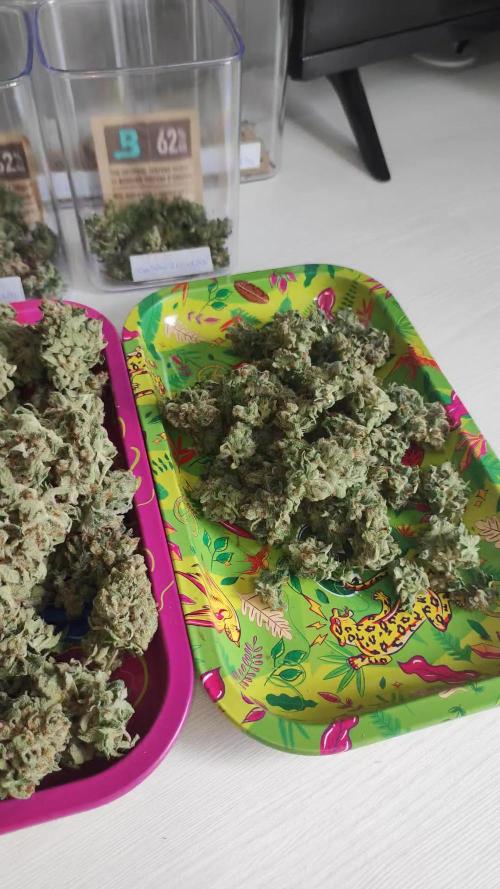
The aroma of Gelato #41 is simply exceptional, to the point that it fills the entire room with its intense and captivating fragrance. Each cultivation only strengthens my admiration for this strain, which will definitely remain one of my favorites, both for its quality and the sensory experience it provides.
*** Gelato 41 has a sweet and creamy aroma, with notes of vanilla, berries, and a citrus touch. The flavor is smooth and creamy like a dessert, with lemon and mint on the exhale.
Likes
34
Share


@PEAKYPLANTERS
Follow
happy Sunday to all of you, masters and novice growers
Welcome back to Queen PEAKY's Gardens
My God! This plant is literally invading the tent !!!!
Perfect cycle and leaves that emanate and express all their joy.... I can only be happier with her .... Because I'm his mom!🌈😎📈🎉
Likes
82
Share


@UnorthadoxDude
Follow
Hello growmies! Welcome to week six of An Epsilon Adventure! Massive thanks to both Shogun and Royal Queen Seeds for sponsoring this grow!
So here we are at week six and every one of these girls are at a slightly different stage, it is quite fascinating to watch them develop one after the other.
Today I made the last adjustment to the light possible. I removed the adjustable hangers and affixed a carabiner which I tightly tied to the top of the tent bar. There is about 1.5 inches of space between the top of the shade and the tallest part of the roof of the tent. Plant 1 is already taller than this, and it looks like plant 6 and maybe even plant 5 are going to join it. It's a madness. I am sure you have already looked at the photos but just in case you do what I do and read the diary first...
Here is my assessment at the beginning of week 6:
Plant 1:
Height: 1st (137cm) - what can I say about this ridiculous plant? Day 36... 137cm tall. I have had to raise the light to as high as it is physically possibly to raise it and it's still not high enough. She is done stretching now, she may add 3-5cm over the next week or so but I don't expect more than that, so her top of her main cola going to have to develop above the level of the light. Nothing I can really do, nothing wise anyway. What a monster plant.
Maturation: 4th - early into flower - bud sites developing, pistils just starting to explode.
Plant 2:
Height: 4th (111cm) - this plant has been there or there abouts as the tallest plant for most of the grow, but she has topped out at 111cm. She will gain some during flower but not much more than a few centimetres. Very impressive plant, loads of bud sites, really big strong secondary branches. This one is going to be colas galore.
Maturation: 3rd - well into flower - all white pistils
Plant 3:
Height: 6th (95cm) For some brief days the tallest plant in the room, she peaked early and is now the "shortest" at "only" 95cm for this "50-70cm" strain. She is utterly dwarfed by four of her five sisters in just about every department, being quite a bit smaller even than plant 4 (although I have removed the most lower nodes from this plant). Compared with her sisters she is almost a runt... except that she is 25cm taller than the strain top-end average and matches the maximal height of the previous tallest Epsilon F1 plant I am aware of. It's not that she is small, actually she's pretty big for an Epsilon F1, it's just that the rest of the girls are on another level altogether. Plants 1, 5 and 6 are all absolute beasts.
Maturation: 1st - well into flower - first shades of brown in some pistils.
Plant 4:
Height: 5th (98cm) although only 3cm taller than plant 3, overall she is a much larger plant. Her secondary nodes are the same height as plant 3.
Maturation: 2nd - well into flower - all white pistils
Plant 5:
Height: 3rd (113cm) - one of the two thick/short girls who have grown at a similar pace all along - she is further ahead than plant 6 but not by much and I think she will probably exceed 120cm this week, though I do not think she will outgrow plant 1 or 6.
Maturation: 5th - early into flower - bud sites developing.
Plant 6:
Height: 2nd (120cm) - my predictions were correct about this girl and her continued growth. I now think she might actually outgrow plant 1, which is quite worrying.
Maturation: 6th - early into flower - bud sites forming - by far the least mature plant of the six.
###
Week 6 Day 2 23:00 30/7
Photographed. Raised the light. Rotated the plants. Inspected, measured and reported on each plant.
###
Week 6 Day 3 23:00 31/7
It has not escaped my attention that the plants that are more advanced into flower have darkened and have some burnt tips. I need to flush them and lay off the base nutes a bit. These plants are just growing and maturing so quickly that I cannot keep up.
###
Week 6 Day 5 02:30 2/8
Fertigated 3l of nutrient mix, without either COCO A or B.
###
Week 6 Day 6 01:30 3/8
photographed
---
Thanks for reading growmies! 👊
==========
Tent: 120cm x 120cm x 180cm
Light: 600w HID Elite Dual Spectrum HPS + Angel Wing Reflector
Air: 5" duct fan system with carbon filter ~300 m3/hour + RAM 9" floor fan + 4" intake fan
Pots: Air Pruner Fabric Pots 30l - UGro XL Coco + horticultural grade perlite (~20%)
Seeds supplied by Royal Queen Seeds https://www.royalqueenseeds.com
Nutrients supplied by Shogun Fertilisers https://www.shogunfertilisers.com/en
==========
Likes
3
Share

@MisterTree
Follow
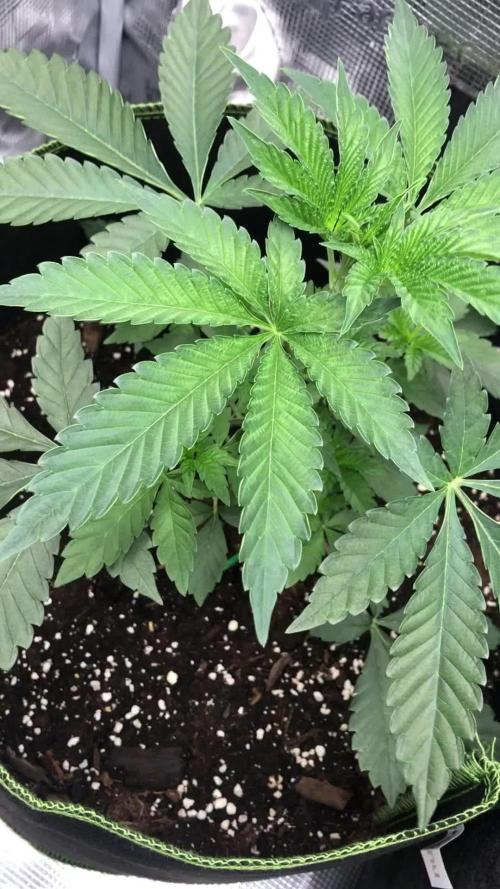
Katy ist einige Tage jünger wie ihre Schwestern, macht sich aber mindestens genau so gut.
Habe sie gestern gegossen und die Keimlingsblätter + die ersten Seitentriebe entfernt.
Auch hier ist Toppen geplant aber frühestens ab nächste Woche.
Danke fürs vorbei schauen schöne Woche noch.
Likes
4
Share


@Jackson_Jay
Follow
Sie zeigt was sie kann und pump volle Wucht alle Kraft in die Blüte. Dünger wurde von Wachstumsphase auf blühphase umgestellt.