


Likes
Comments
Share

@DogDoctorOfficial
Follow
? Blueberry Muffin – Pheno A
Week 8 | Okay… Now She's on Fire! 🔥
Welcome back to another week of the 8×8 Adventure! 💚🌱
If you're discovering this diary for the first time, welcome!
This project is an experiment in patience, genetics and observation. Twelve different cultivars are growing together under the same environmental conditions, lighting, irrigation system and general feeding strategy.
The biggest variable?
The plants themselves.
And Blueberry Muffin Pheno A continues to prove exactly why genetics matter so much.
She has never been the fastest plant in the room, but this week something has definitely changed.
This girl is on fire. 🔥?
🌱 A Quick Recap — How Did We Get Here?
Blueberry Muffin is being grown under a 12/12-from-seed schedule.
For anyone new to the concept, this means the plant receives a flowering light schedule from the beginning rather than spending several weeks under a traditional vegetative photoperiod.
The idea isn't to force the plant into becoming something it isn't.
Instead, we're allowing each genetic to show us what it can do when given the same basic conditions as every other plant in the room.
During the early stages, I followed what I like to call a "no-touch" philosophy.
Apart from necessary care, I avoided constantly manipulating the plants. There was no aggressive training programme and no obsession with making every plant look identical.
There was some gentle leaf bending and positioning when necessary, but for the most part:
I let them grow.
That has given us something I find incredibly valuable now that we're deeper into flowering.
We can actually see how naturally each plant wants to grow.
And Blueberry Muffin has developed into a tall, open and beautifully structured plant, with plenty of space between her flowering sites and excellent visibility throughout the canopy.
🌸 Flowering Development
And now we're getting into the fun part.
The flowers are becoming much more obvious this week, with fresh pistils developing throughout the plant and the individual flowering sites beginning to take shape.
She's still not the densest-looking plant in the room, but that's not necessarily a bad thing.
At this stage, I'm much more interested in how the plant develops over time than in trying to judge the final result too early.
The structure is allowing light and air to move through the plant, and the flowering sites are clearly developing.
We're entering the stage where the focus gradually moves away from producing more vertical growth and toward flower development, stacking and eventually bulking.
She's getting there.
And judging by this week's photographs…
she knows exactly what she's doing. 😄?
✂️ Defoliation — But Without a Calendar
This is also the point where we've started introducing some selective defoliation around the room.
And I want to explain this because it is very easy for newer growers to look at a diary and think:
"Week X means I have to defoliate on this exact day."
No.
That's not how I approach it.
There are twelve plants in this room, and they're not all developing at the same speed.
Some plants are ready for a little leaf removal now.
Others aren't.
Some may receive attention next week.
And some may barely need anything at all.
I'm also doing this entire project myself, so there is absolutely no reason for me to create artificial pressure by saying:
"Today is defoliation day for everybody."
Instead, I look at the plants and make decisions based on what they're showing me.
The goal isn't to remove as many leaves as possible.
The goal is to remove what I don't need, while keeping enough healthy foliage to support the plant.
For Blueberry Muffin, we're now selectively removing a few leaves here and there where they are blocking important flowering sites, creating unnecessary overlap, or simply no longer contributing much to the canopy.
It's a much more surgical approach than stripping the plant bare.
And honestly, I prefer it that way.
Grow with the plant, not against it. 🌱
🌿 The Slightly Light Green Colour
Now let's talk about something I mentioned last week.
Blueberry Muffin is still showing a somewhat lighter green colour compared with some of her neighbours.
It's particularly noticeable on some of the older leaves.
But importantly:
I'm not seeing anything that makes me panic.
The plant is flowering, producing new growth and developing healthy-looking flowers.
However, she is clearly a little more demanding nutritionally than some of the other plants in this room.
And this is where growing twelve different genetics together becomes interesting.
The entire room was asking for more nutrition, so we increased the overall feeding strength.
But Blueberry Muffin?
She's basically saying:
"Thank you… but I might need a little more." 😂
So now we're going to give her some time to respond.
Rather than immediately making another adjustment, I'll watch the new growth and overall colour over the coming days.
If the plant starts returning toward a deeper, healthier green without developing signs of excess nutrition, we'll know we're moving in the right direction.
This is one of those situations where observation is more valuable than chasing a number.
⚗️ Feeding Strategy
The current feeding has been increased slightly as flowering progresses and as the room's overall demand has increased.
At the moment we're running approximately:
Plagron Terra Bloom – 2.2 ml/L
Plagron Power Buds – 1 ml/L
Plagron Sugar Royal – 1 ml/L
Plagron Pure Zym – 1 ml/L
pH adjustment as required
Current solution:
EC: approximately 2.0 mS/cm
pH: 6.0
The important part here is that this isn't simply about pushing the EC higher because the plants are flowering.
The plants are communicating their demand through growth, colour, water consumption and overall development.
We've responded with a moderate increase and now we're watching.
If Blueberry Muffin continues improving, fantastic.
If she tells us that we've gone too far, we'll adapt again.
There is no prize for following a feeding chart blindly.
The chart is a starting point.
The plant gets the final vote.
💡 Lighting
We're currently maintaining a 12/12 light schedule, with the plants receiving a strong flowering intensity.
The canopy is getting approximately 800 PPFD.
For anyone new to PPFD, this is basically a measurement of how much photosynthetically useful light is reaching the plant canopy.
It doesn't tell us everything about light quality or plant response, but it gives us a useful way of understanding light intensity.
At around 800 PPFD, we're providing a substantial amount of light without trying to push the plants unnecessarily hard.
At this stage, I'm happy with where we are.
If the plants continue asking for more light and the environment allows it, there is always room to make adjustments.
But once again:
more isn't automatically better.
We're looking for the balance between light, temperature, CO₂, nutrition and plant health.
🌡️ Current Environment
The room continues to be remarkably stable:
🌡️ Day temperature: 29°C
🌙 Night temperature: 25.6°C
💧 Relative humidity: 60%
⚗️ pH: 6.0
⚡ EC: ~2.0 mS/cm
💨 CO₂: ~693 ppm
💡 Light schedule: 12/12
💦 Watering: approximately 1.3 L/plant/24h
She's growing in a 15-litre AutoPot system, with the root zone continuing to receive consistent access to nutrient solution.
That consistency is particularly useful during flowering because we're not constantly creating large swings in moisture availability.
The goal is simple:
Keep the root zone happy and let the plant concentrate on the flowers.
🔬 Structure & Personality
One of the things I really enjoy about Blueberry Muffin Pheno A is that she's becoming increasingly easy to read.
She's not trying to be the biggest or bushiest plant in the room.
Instead, she's developed a tall, open architecture with a strong central structure and numerous flowering branches distributed along the plant.
The photographs this week really show that personality.
And this is exactly why I wanted to run twelve different genetics together.
If I had only grown Blueberry Muffin, I might simply describe her as "a tall plant."
But when you see her standing beside eleven other cultivars receiving the same treatment, you start to understand that this is her genetic expression.
That's the fascinating part of this project.
🔮 Looking Ahead
For next week, I'm not planning to chase anything.
I'll continue monitoring the colour closely, particularly the newer foliage, while watching how the flowers develop and begin to bulk.
If she responds positively to the increased nutrition, we'll keep things stable.
If she tells us something different, we'll listen.
I'll also continue selective defoliation where necessary, but without forcing every plant onto the same timetable.
There is no need to create stress simply because the calendar says it's time.
We're now entering a stage where patience becomes increasingly important.
The framework has been built.
The flowers are here.
Now we let them do their job. 🌸
And Blueberry Muffin?
She's finally starting to show us why she took her time.
The quiet ones can surprise you. ?🔥
💚 Thank You
As always, thank you so much to everyone following the 8×8 Adventure.
Whether you've been here since germination or you've just discovered this diary, I genuinely appreciate every visit, comment, question and conversation.
This project has become much more than twelve plants in a tent.
It's an opportunity to observe how different genetics behave when we remove as many variables as possible and simply give them the same environment.
A huge thank you to GrowDiaries for giving us a place to document the journey and learn together.
To Zamnesia, thank you for the fantastic Blueberry Muffin genetics and for giving us the opportunity to explore what this cultivar can do under a 12/12-from-seed approach.
To Plagron, thank you for supporting the plants with your growing media and nutrients throughout this adventure.
And to Future of Grow LED, thank you for providing the light that allows us to put all twelve personalities under the same sun and see how differently they respond.
And finally, thank you.
Because growing becomes even more rewarding when we can share the successes, the mistakes, the questions and the lessons with one another.
Remember, this is simply my way of doing things and what is working for me in this particular environment.
There is no obligation to copy anything you see here.
Take what is useful, learn from it, adapt it to your own environment and, most importantly, learn to listen to your plants.
Growers Love, everyone. 💚🌱
See you next week with Blueberry Muffin Pheno A…
…and I have a feeling this little lady may have a few more surprises waiting for us. ?🔥
Likes
Comments
Share

@Lvnsource
Follow
Feed log;
D:30 - 4.0L + 4.0L - [pH 6.8] Si[0.5ml] ,Vega[5ml], Flores[6ml],Ca[0.3g/L/]Mg[0.1g/L] INPUT; [1.1 EC] OUTPUT; 3.6L pH 6.0 [1.74 EC] previous irrigation: D:23
———————————————————————————
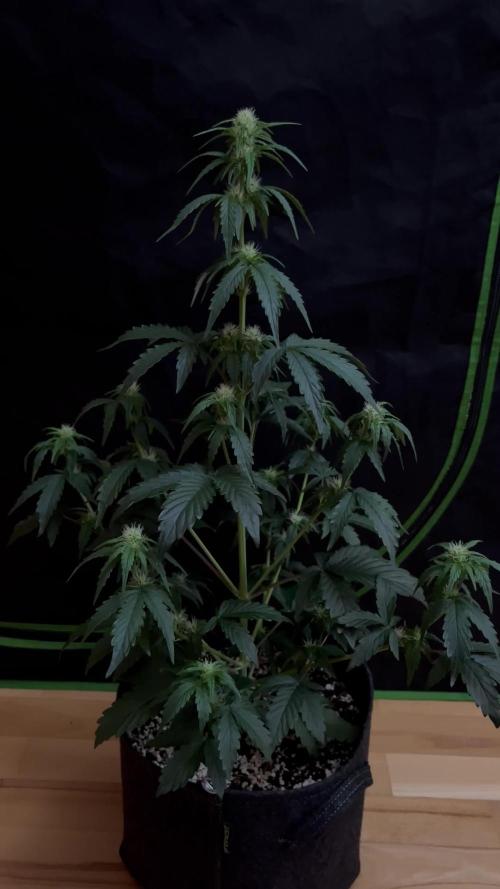
This phenotype decided it wanted to be stout as she entered flower early ; the plant is currently still putting on height and has grown 12cm since day 27! 🌱
I’m still keeping the PAR levels around 550-580 ppfd to squeeze out a few more cm of height 🌞
Likes
53
Share


@DogDoctorOfficial
Follow
Hello, my amazing green-thumbed friends! Welcome to the Week 1 flower report for our beloved P.C.R.s. The transition from veg to flower is a magical time, and our plants are already showing signs of their future glory. Let’s dive into the exciting details of this week!
Entering the Flower Stage
Our P.C.R.s have officially entered the flowering stage, and the transformation is already visible. The stretch has begun, and you can see the plants reaching up, preparing to produce those beautiful buds we’re all waiting for. This stage is all about supporting their growth and ensuring they have everything they need to thrive.
NutriSpray Magic
This week, we’ve been diligently spraying Aptus Holland NutriSpray, and the results are phenomenal. NutriSpray is like a spa treatment for our plants, providing essential micronutrients directly to the leaves. It helps with nutrient uptake, reduces stress, and boosts overall plant health. Our P.C.R.s are absolutely loving it, standing tall and proud with their leaves praying to the light.
Nutrient Transition
With the start of the flowering stage, we’ve made some important adjustments to our nutrient regimen. We’ve stopped using StartBooster and replaced it with TopBooster, which promotes flowering and bud formation. Additionally, we’ve introduced P-Boost, a phosphorus booster that enhances root development and flower production.
TopBooster: Encourages larger and more abundant flowers.
P-Boost: Provides essential phosphorus for robust root and flower development.
NutriSpray: Continues to support overall plant health and stress reduction.
Optimal Conditions
Maintaining the perfect environment is crucial as we move into the flowering stage. Our TDS is now at 360, with a pH of 5.9 and a temperature of 21°C for watering. These conditions are optimal for nutrient uptake and overall plant health, ensuring our P.C.R.s have everything they need to produce those beautiful, resinous buds.
Care and Attention
Paying close attention to our plants during this stage is key. Regularly inspecting for any signs of stress or nutrient deficiencies and adjusting care as needed ensures our plants stay happy and healthy. The love and care we put into this process are reflected in the vibrant health of our plants.
In Conclusion
Week 1 of flowering has been all about setting the stage for a bountiful harvest. With the help of Aptus Holland NutriSpray, TopBooster, and P-Boost, along with our careful attention, our P.C.R.s are off to a fantastic start. The excitement is building, and I can’t wait to see how they develop in the coming weeks.
Shout Outs
A huge shout out to @aptusholland, our main sponsor, for their incredible products that keep our plants thriving. Another big thank you to @artgenetix for creating the phenomenal P.C.R. strain. And to the wonderful community at Grow Diaries and all our followers, your support and enthusiasm keep us going. Let's continue to grow together!
Until next time, happy growing, and may your gardens be full with love and green!
Genetics - P.C.R. @Art_Genetix_Team https://artgenetix.world/
Nutricion @aptusholland https://aptus-holland.com/
LED Power @Lumatek and @viparspectra
As always thank you all for stopping by , for the love and for it all, i fell blessed to have you all with me for one more love journey Thank you Thank you Thank you , you guys are great and have been amazing , thank you for everything !
#aptus #aptusplanttech #aptusgang #aptusfamily #aptustrueplantscience #inbalancewithnature #trueplantscience #dogdoctorofficial #growerslove
With true love comes happiness , Always believe in your self and always do things expecting nothing and with an open heart , be a giver and the universe will give back to you in ways you could not even imagine so !
Growers love to you all

Likes
179
Share


@StarLorr
Follow
Welcome to my Øpium diary.
In this diary:
Seeds: sponsored by Ðivine Șeeds
Media: Promix HP
Nutrients: Advanced Nutrients, Diablo Nutrients, Gaia Green Power Bloom.
Light and Weather: Şun☀️and Mother Earth.🌎
___________________________
Feeding:
Tue 10Sep: 4L water not pH'd
Wed 11Sep: 4L water not pH'd
Thu 12Sep: 4L nutrients pH'd 6.5
Fri 13Sep: 4L water not pH'd
Sat 14Sep: 8L water not pH'd
Sun 15Sep: 8L water not pH'd
Mon 16Sep: 8L water not pH'd
___________________________
*please note that watering are from the top.....since i smashed the saucers with the weed wacker*🤦🏻♂️
______________________________
Amazing weather throughout the week!☀️Sunny 28°C everyday😎
______________________________
Buds are solid and the end is near, no trichome pictures but it's
Almost there!👈🏻😉
______________________________
Thanks for stopping by, likes and comments are appreciated!👊🏻😎
Keep on growin!
Keep on tokin!!!
😙💨💨💨💨💨


Likes
2
Share


@Glizzy420
Follow
Last auto i'll grow , autos are actualy good for fast and not so heavy stoners , my yield is good but not the way i want it , so i'll keep improving my shit , starting with femenised seeds next run also a blueberry , first femenised im going to use , so lets hope it will have a better harvest. Overall this autoflower blueberry yielded the most of all my autoflowers , dense buds , good quality and very fruity smoke!

Likes
11
Share


@Herb4list20
Follow
Harvest
Day 1 moved whole plants to the inside dark room
-Day2.5 after 36h choped plants and hang the whole plants
-Day 4 removed fan leaves plants continue to hang
-day 5 trimmed the buds and cutted them into branches then were put into dry box
-day 7 trimmed buds and was put into airtight plastic containers(opened)
-day 8 closed containers for 1h
-day 9 closed containers for 24 humidy raised from 60% to 62%
-day 10 buds goesvto the final cure
...............................
Through the whole process humidy was controled 50% all the time and temperature 25celsius

Likes
2
Share

@BabyBilly
Follow
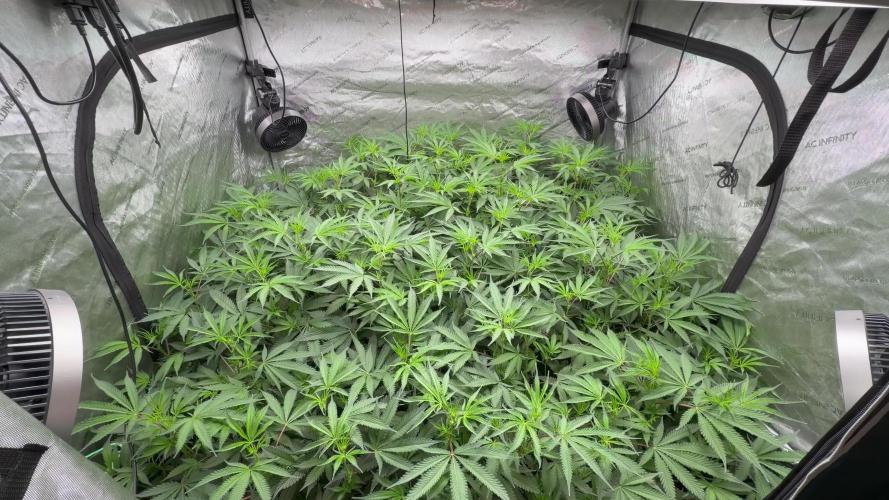
She’s stretching a good amount… I did lollipop before I flipped and it’s grown back aggressively which I’m happy about. Hoping slows down on stretch. I’m just over 2 weeks of flower so I’m hoping she doesn’t stretch much more.
She’s very healthy and the growth is fantastic. A lot of new branches. She really filled out. I’ll have my work cut out for me on day 21 for defoliation. Very happy with the growth so far. I did supercrop some of the taller aux branches cause they’re getting up there. Just don’t want them getting out of control. This pheno is supposed to to be able to handle stress.

Processing
Likes
29
Share


@Lennys_Laboratory
Follow
Feed Started With Tap Water Left Overnight For Chlorine/Chlorides To Evaporate.
Next Day.
Starting EC of our water is 0.10-0.15.
I added 1ML of Regenaroot Per Litre. Then Used Canna Terra Flores Until EC measured 0.7.
I then used the mighty bloom enhancer by the ml until my EC measured 1.3
Always Give A Little Sprinkle Of Great White Into The Mix
Finally i PH'd the mix to 6.2. Made sure the feed was of adequate temp (21c) and continued to feed.
😎

Likes
9
Share


@Dictator
Follow
Now I'll show you how to do LST & Defolation on Autoflowering strain
You should do all this in the third week of vegetation, after which 90% of the plants will continue to vegetate for another week (5 weeks instead of 4) and grow very large autoflowers
Likes
25
Share


@FriendlyNeighbor
Follow
Day 59
Finally Fruit Spirit is going into 48 of darkness after 6 days of flushing....
She smells and looks just tasty cant wait to chop those girls in 2 days!!!!! 😬😁🙌

Likes
17
Share


@OrganicBuds030
Follow
Sie fühlen sich sehr wohl. Die Fotos sind vom 2. Blütetag. Die ersten Anzeichen der Blütephase sind schon zu sehen.

Likes
17
Share


@RoyColt
Follow
Always R.O Water
Watering the plant 3 times for per week
1st flushing. (15 ppm) (03.04.2023) 4 liter with Flaskleen Drain 1700 ppm start
2st flushing. (15 ppm) (05.04.2023) 4 liter with Flaskllen Drain end 400 ppm :)
-Day76 watering (250 ppm)(08.04.2023) 4 liter with Drykoolbloom(2-45-28) 0,39 gr/L and calmag xtra 1ml/L
I had to do Defoliation:(
1000 ppfd
Likes
12
Share


@Froggman
Follow
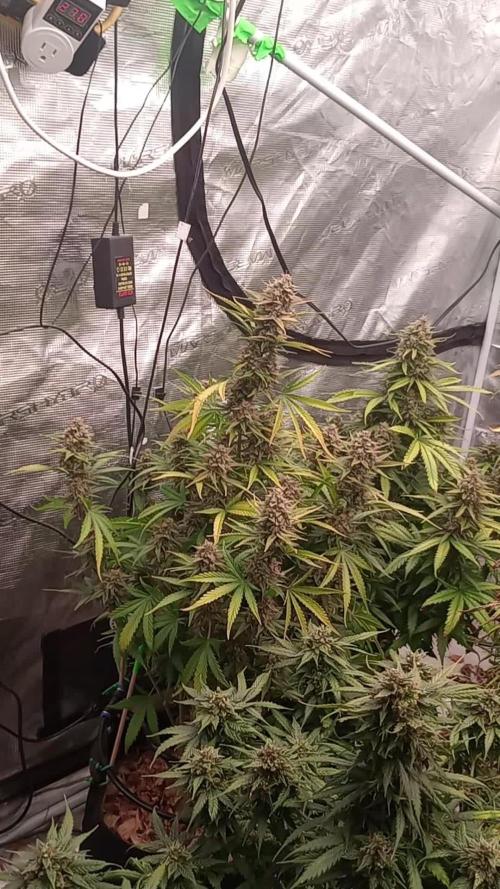
Gave her water last night and plan for shut her down sometime this week. Today is day 84 from when she sprouted.



Processing
Likes
20
Share


@UK420
Follow
Possibly transplanted into oxy pot a little early. But seems to be settling in now. Just need some more root development.
Root Update 27/8 - both oxy pot and 5 plants still in grow cubes, have all had a good increase in root development over night - 27 August
Root Update 28/8 - all grow cubes and one in oxy pot developing well.
Set up:
1 CFL 300w Dual Spectrum light with reflectors
1 kaizen carbon filter and air out.
1 eco fan air in
1 oxy pot
1 9 inch oscillating fan


Likes
8
Share


@THcHunteR23
Follow
J’ai coupé et mis à sécher 1 des 3 . Après 3 bon rinçage j’attends que le substrat est bien séchée avant de couper les 2 autre.
Likes
12
Share


@DisTentAint4Campin
Follow
Very satisfied girls getting frosty definitely starting to stack up just still battling humidity shifts wish I had the whole ac infinitysetup ️ maybe Santa is on here growing too😉 🎄 🙃

Likes
42
Share


@iLoveGoodWeed
Follow
WEEK 7 - The ladies start looking like gorillas 😃
9L Pot trichomes start forming on sugar leaves
12L Pot the buds are strat forming and this lady will be big gorilla