


Likes
Comments
Share


@Professor_Chaos
Follow
Beginning of week...
This plant has been growing for over a month now. I didnt expect it to come out this amazing.. So now I am creating the grow diary lol. I flipped it to 12/12 this week. She was just going to be LST'd but the top had broke off while making adjustments to the LST one day earlier on.. Damnit.. She's still gonna make some dank ass nugs tho! After 3 - 4 days of 12/12 she has already begun her stretching!
End of week...
She has stretched some this week.. Not very much in my opinion.. But some for sure.. Not many pistils yet.. Some but no nugs building yet. When you cruch the leaves you have defoliated from this girl.. They have a more danky smell.. Its crazy.. Different than other strains I have grown.. I didnt expect leaves to carry different smells also!

Likes
6
Share


@Barcelona_Farmers710
Follow
Tardamos un poco en finalizar la anterior y además con alguna que otra plaga, estás se están recuperando de las plagas bastante favorablemente... esperaremos con el transplante coja más cuerpo farmers!🙏🍁

Processing
Likes
9
Share


@Luv2Grow
Follow
Day 71 - Starting week 11 and now that I put my Cherry Cookies into 72 hours of darkness, she’s got a ton of room in the tent now. I gave her 2 gallons of water and nutes today and she’s finally starting to develop some trichs. A very small amount right now but they’re finally starting to show a little.
Day 72 - Nothing really new going on today. She seems to like having a bit more room in the tent now. She’s doing good on water and should be for another couple of days. I just removed a few lower dead leaves today and tucked everything back down.
Day 73 - Nothing really new today, just letting her fatten up and finally starting to get a little bit of frost on her. Gonna need to give her some water and nutes tomorrow.
Day 75 - Went just a bit too long before giving her water. Pulled her out today and extremely droopy but gave her a good 2 gallons of water and nutes to hopefully perk her back up. Had a few more dead leaves at the bottom so removed them and I’ll check on her in a few hours to see if she’s perked up at all.
Day 76 - Overall she’s looking good and looks like she’s getting a pinkish color forming. It’s also looking like she might have a Cal-Mag deficiency going on so will up the Cal-Mag the next feeding to hopefully help her out.
Day 77 - The end of week 11 and she going along nicely still. She’s going to need some water and nutes tomorrow so I’m going to up the Cal-Mag this feeding. Instead of 5ML per gallon, I’m going to up it to 10ML and hopefully that will help her pull through her deficiency she’s got going right now.


Likes
5
Share


@WickedWeedQueen440
Follow
We are now in week 7 (today MAY 13 2024 DAY 53) going into week 8 getting ready to turn off our veg stage and turn the flower on!
We have introduced the next stage of nutrition for the plant ( Fox Farm Big Bloom next we start adding Tiger Bloom) we plan on doing our flower flip between May 16th and 17th and we are looking forward to a 8 to 10 week flower time frame for this strain. We are slowly introducing videos for our gross this will be the first strain and grow Journal of ours where we will be introducing a time-lapse video of the flower stage.
This is my current plant running for the Growers Gauntlet 2024. If you have not checked it out I definitely would there's some amazing Growers and they're doing their thing. Follow along and watch us produce an amazing flowers with some pretty cool growing techniques.

Likes
38
Share


@DomanAtrik
Follow
I've caught various carnivorous critters and released them in my garden. They seem happy here. Just began using overdrive. Cant wait for next weeks pictures.

Likes
23
Share


@SonomaSungrown
Follow
What a season so far.
The three photoperiod girls are looking very impressive thus far. Their growth rate has slowed to about a half inch per day, and the signs of early flowering are appearing.
3/6 Sprayed with Mammoth CannControl
3/10 Light top dressing with Bu's Blend + Custom Amendment Mix


Processing
Likes
13
Share


@ladyjane
Follow
8/10 - In prep for flower I've got some Compost Tea brewing with a little Terp Tea Bloom by Roots Organics. .Also did a little selective defoliation
8/11 - Flipped the ladies to flower today! And all is good in the 8x4.
8/12 - Watered all the ladies with the Compost/Terp Tea. Also did some more defoliation and added some mosquito bits for added pest prevention.

Likes
4
Share


@Oldwied
Follow
Hello flower time
LST goes on. The buds starts to grow. But the lady grows very slowly.
The weather is a rollercoaster drive, it starts with 40°C and ends with 18°C days over.
I removed the lower weak shoots.
Day 35
Photoshooting

Likes
9
Share


@Goltala
Follow
Week 3
Might have went a little over board with the training...
LST'D
FIMMED
SCROGGED
She seems to be showing signs of flowering already and that may be because she was in seedling for 2 weeks instead of just a few days or just 1 week so I may be behind 1 week in my diary... We shall see.
I love the green on her, tells me she is enjoying her nitrogen and isn't starved.
Likes
78
Share


@DevilsBud
Follow
Last update of last Flush other rest of the fast bud run left are
Last ppm numbers for strains where
Red Gorilla Girl 972ppm
Skywalker OG Runtz 542ppm
14/12/22
Skywalker OG Runtz 440ppm drying
17/12/12
Red Gorilla Girl xl 556ppm done
It's a shame these Days that i have to secretly have to enjoy my hobby. It's not ideal to have new grow almost done grow and drying in the same room but if that keeps the smells from being to strong so be it.
Legalization is the key
you can have a dangerous hobby distillery
Going on and nobody Bats a eye destroying life's etc etc
But i cannot grow a plant that helps and is completely save to Grow with technology these days i pay my bills and i grow ONLY for my family
What's wrong with that ?????
Sorry for the rent 😉

Likes
33
Share


@GoldenArrow
Follow
Yaprak temizliği bitkiyi strese sokmadan yapıldı . Birbirinden ayrılan dalların çogu şekil aldıgı için bitkiyi rahat bıraktım scroge cıkardım sıcaklık 28 nem 40 civarlarında . Yapraklar gozlenerek gübreleme yapılıyor pistiller gözüktü.

Processing
Likes
11
Share


@Newbie5648
Follow
Last week of flower. Flushing plants this week with 150 to 200ml water ph 7.0 to 8.0each day
Day 76 plants are pretty much ready for harvest. Buds have fattened up a abit.
Day 77. Alot more orange hairs. Buds fattening up still by a little. Plenty of milky trichomes. Harder to spot orange trichomes but can see them.
Likes
18
Share


@Ironblimp
Follow
To begin the week I gave the plants a lite-defoliation under their skirts, to be specific, I pruned all the bottom fan leaves, and, I did more pruning, removing fan blades covering bud sites. I gave each plant a nutrient-watering, and also a separate ph watering once this week. I'm seeing good leaf growth, and lots of Calyx and Pistols forming on the tops and between nodes that seem to pop up everywhere on the plants. And so far, plant health wise...nothing alarming to be seen yet.

Likes
Comments
Share


@MonsieurDeLaRuche
Follow
the cutting time has arrived!!
It's time to taste it, it smells really good, but not at all like the fresh plant, I'm a little disappointed..
after drying and curing, the variety smells like bananas, very ripe yellow fruit, with an earthy and sweet background!! it's very round in the mouth, very sweet and resinous, but there's some rubbish in the taste, on the exhilaration it's a bit acrid..
I missed the drying, the heads are compact but cottony... I will succeed better next time!!
see you

Likes
18
Share


@valiotoro
Follow
Hello everyone 😎
Week 6 of flower for the Amnesia Zkittlez🍭
Only 1 plant left then finito✔️
Very nice smell super sweet🤤
The buds are super sticky🔥
Likes
216
Share

@Tower84
Follow
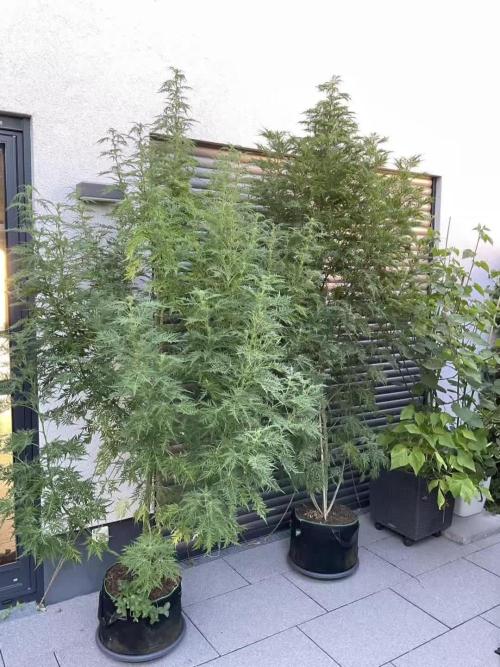
🌿 Woche 22 – Mentha de Croco von Terpyz 🇩🇪
Die beiden Mentha de Croco entwickeln sich weiterhin prächtig 😍🌿. Die linke Pflanze ist mittlerweile ca. 2,14 m, die rechte sogar etwa 2,30 m hoch 📏🚀.
Der Stretch der Haupttriebe ist über die letzten drei Wochen insgesamt eher gering ausgefallen, dafür haben die Seitentriebe ordentlich an Höhe zugelegt 🌱📈. Besonders die rechte Pflanze hat lange Seitentriebe entwickelt und wird dadurch immer buschiger 🌲. Die linke Pflanze ist in der Blütenentwicklung deutlich weiter, während die rechte ihren Schwerpunkt bisher eher auf das Wachstum der Seitentriebe gelegt hat 🌸.
Diese Woche war das Wetter wieder typisch für den beginnenden deutschen Herbst 🍂🌧️. Es war kühl und regnerisch und an einigen Tagen gab es zusätzlich kräftige Windböen 🌬️. Ohne die Befestigung an der Regenrinne wären die beiden Riesen mit Sicherheit wieder umgefallen 💨. Bei über zwei Metern Höhe ist die Kombination aus Wind und der säulenartigen, schweren Pflanzenmasse einfach nicht zu unterschätzen 😅🌿.
Besonders schön entwickelt sich das Bodenleben in den kleinen 30-Liter-Töpfen 🌱. Wenn man den Mulch etwas anhebt, findet man jede Menge Würmer und unterschiedlichstes Kleinstleben – genau so wünsche ich mir mein Living Soil 💚.
Vor zwei Tagen habe ich noch einmal etwas Almicanna Kickflip als Topdress nachgelegt. Die Ladies sind mittlerweile ziemlich hungrig, was bei dieser enormen Pflanzenmasse und dem begrenzten Topfvolumen aber auch nicht wirklich überraschend ist 😄🍃. Ohne die regelmäßige Versorgung mit Komposttee, Fermenten und Topdress wären die Pflanzen meiner Meinung nach deutlich kleiner geblieben 💪🌱.
Da die Blüten jetzt zunehmend an Masse gewinnen, werde ich nächste Woche an einigen Stellen etwas auslichten, um die Luftzirkulation zu verbessern und dem Schimmelrisiko im kommenden Herbst entgegenzuwirken ✂️🌬️. Gerade bei diesen riesigen Pflanzen möchte ich lieber rechtzeitig etwas vorbeugen, bevor das feuchte Herbstwetter richtig zuschlägt 🌧️🍂.
Ich bin jedenfalls unglaublich gespannt, wie sich die beiden Phenos in den nächsten Wochen weiter auseinanderentwickeln werden 😍🌸.
🌿 Week 22 – Mentha de Croco by Terpyz 🇬🇧
The two Mentha de Croco plants continue to develop beautifully 😍🌿. The left plant is now approximately 2.14 m, while the right one has reached around 2.30 m 📏🚀.
The stretch of the main branches has been relatively limited over the past three weeks, but the side branches have really taken off vertically 🌱📈. This is especially noticeable on the right plant, which has developed some long side branches and has become much bushier 🌲. The left plant is clearly further ahead in flower development, while the right pheno has focused much more on developing its massive side branches so far 🌸.
This week brought typical early German autumn weather 🍂🌧️. Temperatures were cooler, there was plenty of rain, and we also had some strong wind gusts on certain days 🌬️. Without the plants being secured to the rain gutter, these two giants would almost certainly have tipped over again 💨. At over two meters tall, the combination of wind and their heavy, upright structure is definitely something to take seriously 😅🌿.
The soil biology in these relatively small 30-liter pots is looking fantastic 🌱. Whenever I lift the mulch, I can see plenty of worms and all kinds of tiny soil organisms underneath – exactly what I want to see in my Living Soil 💚.
Two days ago, I added another Almicanna Kickflip top dress. The ladies are getting pretty hungry now, which isn’t particularly surprising considering the enormous amount of biomass they’re supporting in such limited pot volume 😄🍃. Without regular feeding with compost tea, ferments and top dress, I believe these plants would have ended up significantly smaller 💪🌱.
With the flowers now starting to gain more mass, I’ll have to do some selective thinning next week to improve airflow and reduce the risk of mold as autumn progresses ✂️🌬️. With plants this large, I’d rather take some preventative action before the wet autumn weather really sets in 🌧️🍂.
I’m incredibly curious to see how these two phenotypes will continue to diverge over the coming weeks 😍🌸.

Likes
4
Share

@Ninjabuds
Follow
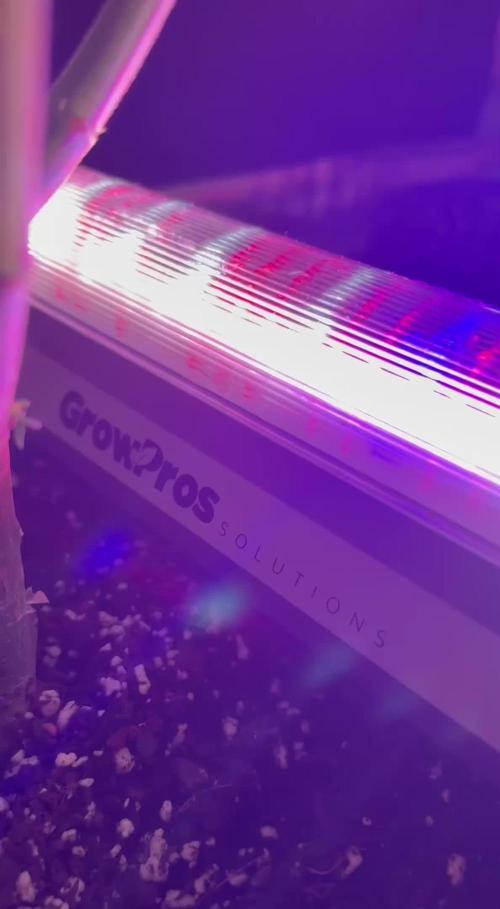
My nine Week 7 flowers are thriving under the new GrowPro Solutions under-canopy lights. The lights have really brought out some amazing colors in the buds. It's so cool to see how much they've changed in just a day! I'm excited to see how they develop even more in the coming weeks

Likes
118
Share


@Grow3rPT
Follow
👉 ( Vegetação ) 👈
📅 Total de Dias 15 - 17/08/2021 / Inicio da 3º semana
📅 Total de Dias 16 - 18/08/2021
📅 Total de Dias 17 - 19/08/2021 / 💦 Rega
📅 Total de Dias 18 - 20/08/2021
📅 Total de Dias 19 - 21/08/2021 / 💦 Rega com 2ml de calmag apenas por prevenção
📅 Total de Dias 20 - 22/08/2021
📅 Total de Dias 21 - 23/08/2021 / 💦 Rega
👉 MARSHYDRO
👉 CODIGO PORMOCIONAL : Grow3rPT
👉 Em marshydro.eu 3% de desconto em qualquer produto

Processing
Likes
46
Share


@PureMedicin
Follow
Added A Humidifier And It work wonders. On 50% humidity where as before i was on 35%. Germinated 5 royal creamatic and 1 fat banana. 2 seeds of the FB didnt make it for some reason. Might been slacking on the germination in the start

Likes
11
Share


@TherealNICOGREEN
Follow
Alle 3 vokser som de skal, jeg har valgt tage en i 12/12 telt:) og en 18-6 telt:) og den 3 er i 18-6 telt også men , er i en 3.5liter potte. Også ser vi på forskellen igen om en 5-7 dage :) Jeg er SIKKER PÅ DEN I 12-12 telt giver størst uds men mindst ud bytte! Og om vendt ved 18-6. Timer! Håber i nyder at følge med og godt nytår husk NU DE SMP BANGE DYR ! Og HINDANDEN OG JER SELV OG LAD NU VÆRE TÆNDE KRUDT MED JERES JOINTS DET SMADER DEN BARE;) JEG taler DESVÆRRE AF EFARING ;)
