Likes
Comments
Share
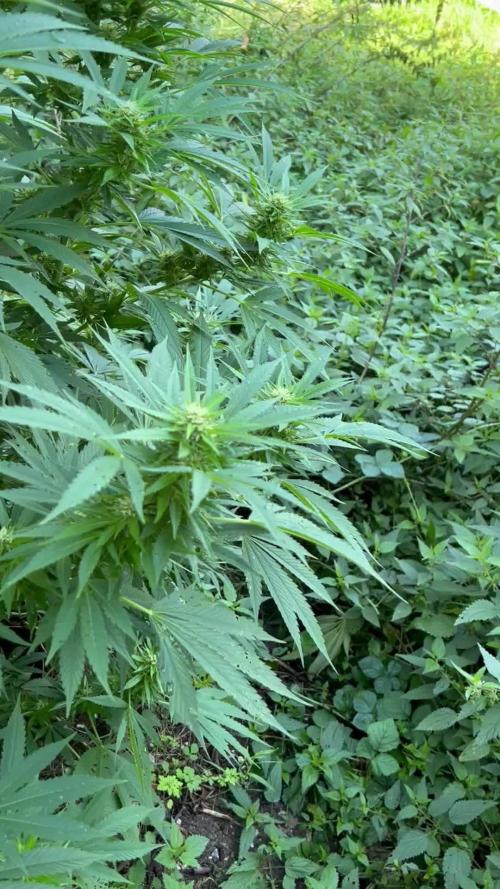
Both of them giving off two distinct olds one is given off for citrus fresh peeled orange smell. The other is given off a cookie dough, sweet sugar, cookie dough.
Likes
221
Share
@Ju_Bps
Follow
Hello growmies 👩‍🌾👨‍🌾🌲🌲, 👋 The end is here, Final lap to the harvest, No water this week, Harvest tonight ✂️ 💡Mars Hydro - SP 3000 80% 41 cm. 🔥 Thanks community for follow, likes, comments, always a pleasure 👩‍🌾👨‍🌾💚🌲. Mars Hydro - SP 3000 💡💡 https://www.mars-hydro.com/sp-3000-samsung-lm301b-greenhouse-led-grow-light NUTRI NPK 💥🔥 https://www.nutrinpk.com/product/npk-mix-pak-for-4-to-5-plants-cannabis-fertilizer/ Pure Instinto - Strawberry Shortcake Auto🌲🌲 https://pureinstinto.com/product/strawberry-shortcake-autoflower/
Likes
1
Share
@ladyjane
Follow
8/22 - There has been some explosive growth among my 4 purple Microdots. They are growing by leaps and bounds each day, 8/23 - So far everything is going smoothly. Just watering each day w/ RO water and organic black strap molasses. 8/24 - Brewing up some compost tea. This will be there first! As they start to get a little bigger I've made a prediction for sex. I think A238 & A239 are male and A240 & A241 are female. We'll see! 8/25- Fed the ladies with the compost tea and used it as a foliar spray as well. They responded very well and continue to have crazy, rapid, growth. 8/27 - They have gotten so big and bushy. I'm going to start a little LST on them today! 8/30 - They are starting to show sex! Still can't tell whether it's male or female...but it should be any day now!
Likes
2
Share
@Cannabot
Follow
My apologies I think I was behind a week on this diary,anyways definetly smell the blueberry with this strain.Chunky nugs ,not the tallest plant but really dense.
Likes
17
Share
First ever harvest! Plant #2 has been covered in trichomes for the last two weeks and with a jeweler's magnifying glass and my camera phone zooming 7x it's clear that many of trichomes have turned amber. I chopped her down last night and have been hanging the branches upside down in a cardboard box with a fan and dehumidifier. I've read I should keep the temperature in the 70s F and the humidity around 50%. I'm doing my best but the garage isn't well insulated so I'm at the mercy of the weather. I'll keep an eye on them and when the branches snap easily I'll get them in jars for curing. Plant #1 still has some time to go. The branches are filling out but to the naked eye there are no trichomes. When I look with the magnifying glass I can see them but I'm concerned that #2 had been coated in them for about two weeks now. Should I just wait? I think I'll just wait
Likes
40
Share
my ardent hello to everyone!)) I generally have a weakness for color) and I am especially fascinated by varieties that change color. I really like this visual effect. I had to try to display it in the photo .. (a rather difficult task to convey the entire spectrum of color in the photo) the foxes began to change color not from the surface, but from the back side) and the color very slowly appears on the surface of the leaves .. I imagine what it will become in a few weeks ...
Likes
29
Share
@Dankdan
Follow
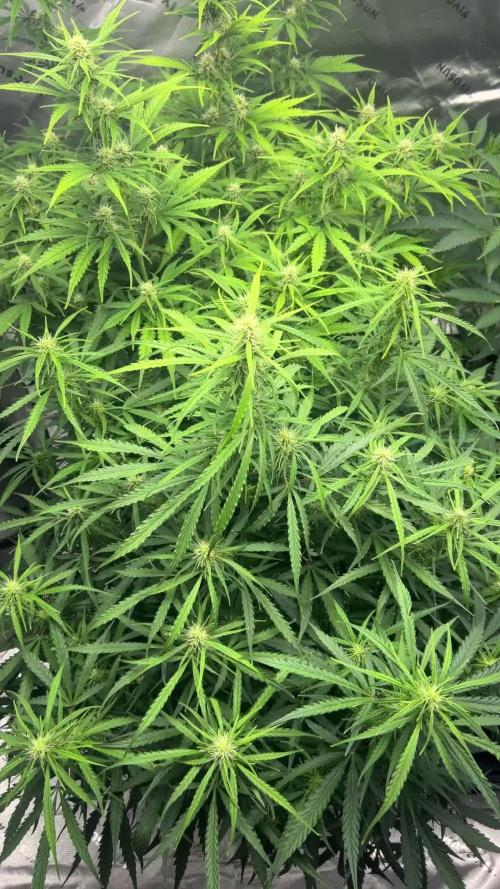
All going ok ... there looking frosty as hell.....nearly on the 7th week of flower just need that fatting up stage now
Likes
2
Share
@Oyziphar
Follow
🌿 Once again, we had very sunny days this week 🌞🌞🌞and another heat wave is coming 😍😍😍 Fourth week of Light Deprivation 👉👉👉👉Every morning at 8:30 am I move the plant in the greenhouse. 👉👉👉👉Every evening at 8:30 pm I move the plant (together with some other strains) inside the growroom (which I don't use in the summer) The plant is making new flowers everyday and she is starting to smell now 👃👃👃 👉 I give the plants every other day a liquid booster with OPF 4:2:8 ; Fulvic 25 ; Yuccah ; Biovin liquid ; Earthworm compost extract. Big Thanks to Luc from Plant Health Solutions / Bioplantenvoeding dot nl 🙏🙏🙏
Likes
8
Share
8th week of Flowering is over. Buds almost doubled in size except Lemon Orange. Smell is pretty heavy and frosting continues. Mimosa Evo and Runtz can not carry their buds anymore. I had to tie them up. Trichomes almost fully milky for all ladies but waiting another week to get 20% Amber. Target VPD is still set to 1,5 with 23 Celcius Target Temp. Top Left: Wonder Pie (GHSC) Top Right: Lemon Orange (GHSC) Middle: Mimosa Evo (Barney’s - Clone) Bottom Left: Runtz (Barney’s - Clone) Bottom Right: Exotic Runtz (Exotic Seed)
Likes
3
Share
44 meiner Ganja Pharma Ladies. Sie stehen wie immer in meinem Living Soil von @white_ash_botanic , bereitgestellt von @growandstyle , und laufen stabil unter meiner @hortispectra . Sattes Grün, starke Struktur – das Mikroleben arbeitet, und die Ladies entwickeln sich genau so, wie sie sollen. ✨ Ich liebe diesen Run und feier die Energie aus der Community jeden Tag aufs Neue. Danke an euch alle und an die Canna Community Germany für euren Support! 💛🌱
Likes
28
Share
@Cronos
Follow
She had a great start but then it degraded. I had to cut a bunch of burned leaves. Since last topping new sites spread out and she seems to recover. # D53 I went walk in forest and disovered very nice mulch with mycelium to prepare JMS (JADAM microbial solution) with it: Ingredients: - 200/300g of forest mulch with mycelium - 2 gallons of dechlorinate water - 3 cooked potatoes - 7.5 gram of sea salt Preparation: - Add the water to the bucket. - Add potatoes inside a mesh filter (pantyhose) and add forest mulch to an other filter, stick them to the bucket. - Add salt, mix the water to dissolve it. - Massage the patatoes filter then massage the mulch filter. - Some reaction could be observed, the water moves like a current in the sea. - Place the bucket covered with tshirt inside grow tent for approx 48 hours. # D55 Feed with 3 liters of dechlorinated water and JMS at 1:10 ratio. # D56 Prepare AACT based on: - 5 liters dechlorinated water - 15 ml molasse of sugar can - 15 ml Bokashi tea - 30 ml JMS - 125 grams vermicompost - 12.5 grams nettle - 12.5 grams horsetail - 5 grams growing guano - 5 grams fish hydrolyzate - 5 grams epsom salt + calmag # Day 57 Feed with 3.8 liters of AACT.
Likes
55
Share
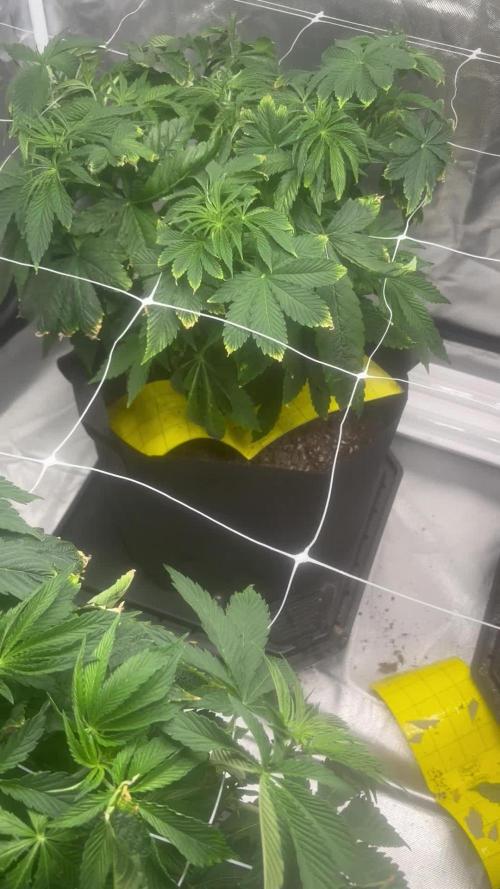
2nd net is up. Early bud formations are promising. holding up to the extremes pretty well, some leaves taking minor damage, but overall, she is holding up, gave her 1 night at 50F see how she would react, stressful. Not advised as it messes with her metabolism, but I want to see if it triggers any anthocyanin response. Love to see her purp up but no signs yet. Remember, For every molecule of glucose produced during photosynthesis, a plant needs to split six molecules of water. This process provides the hydrogen needed for synthesizing glucose and other organic compounds, while oxygen is released as a byproduct. Homework. If Rubisco activity is impaired and it cannot properly function or regenerate its substrate, the plant's leaves are likely to turn a pale green or lime green, a condition known as chlorosis. Essentially, Rubisco activity is highly regulated and susceptible to various environmental and metabolic factors that can cause it to become inhibited, leading to an apparent failure in RuBP regeneration due to a lack of consumption. Rubisco regeneration is intrinsically linked to nitrogen supply because Rubisco is a major sink for nitrogen in plants, typically accounting for 15% to over 25% of total leaf nitrogen. The regeneration phase itself consumes nitrogen through the synthesis of the Rubisco enzyme and associated proteins (like Rubisco activase), and overall nitrogen status heavily influences the efficiency of RuBP regeneration. RuBisCO is a very large enzyme that constitutes a significant proportion (up to 50%) of leaf soluble protein and requires large investments in nitrogen. Insufficient nitrogen supply limits the plant's ability to produce adequate amounts of RuBisCO, thereby limiting the overall capacity for photosynthesis and carbon fixation. Maintaining the optimal, slightly alkaline pH is crucial for the proper function and regeneration of Rubisco. Deviations in either direction (too high or too low) disrupt the enzyme's structure, activation state, and interaction with its substrates, leading to decreased activity and impaired RuBP regeneration. (Lime/yellowing) Structural Component: Nitrogen is an essential building block for all proteins, and the sheer abundance of the Rubisco protein makes it the single largest storage of nitrogen in the leaf. Synthesis and Activity: Adequate nitrogen supply is crucial for the synthesis and maintenance of sufficient Rubisco enzyme and Rubisco activase (Rca), the regulatory protein responsible for maintaining Rubisco's active state. Nitrogen deficiency leads to a decrease in the content and activity of both Rubisco and Rca, which in turn limits the maximum carboxylation rate, Vmax, and the rate of RuBP regeneration Jmax, thus reducing overall photosynthetic capacity. Nitrogen Storage and Remobilization: Rubisco can act as a temporary nitrogen storage protein, which is degraded to remobilize nitrogen to other growing parts of the plant, especially under conditions of nitrogen deficiency or senescence. Nitrogen Use Efficiency (NUE): The allocation of nitrogen to Rubisco is a key determinant of a plant's photosynthetic nitrogen use efficiency (PNUE). In high-nitrogen conditions, plants may accumulate a surplus of Rubisco, which may not be fully activated, leading to a lower PNUE. Optimizing the amount and activity of Rubisco relative to nitrogen availability is a target for improving crop NUE. Photorespiration and Nitrogen Metabolism: Nitrogen metabolism is also linked to the photorespiration pathway (which competes with carboxylation at the Rubisco active site), particularly in the reassimilation of ammonia released during the process. To increase RuBisCO regeneration, which refers to the process of forming the CO2 acceptor molecule Ribulose-1,5-bisphosphate (RuBP) during photosynthesis, the primary methods involve optimizing the levels and activity of Rubisco activase (Rca) and enhancing the performance of other Calvin-Benson-Bassham (CBB) cycle enzymes. Biochemical and Environmental Approaches: Optimize Rubisco Activase (Rca) activity: Rca is a crucial chaperone protein that removes inhibitory sugar phosphates, such as CA1P (2-carboxy-D-arabinitol 1-phosphate), from the Rubisco active site, thus maintaining its catalytic competence. •Ensure optimal light conditions: Rca is light-activated via the chloroplast's redox status. Adequate light intensity ensures Rca can effectively maintain Rubisco in its active, carbamylated state. •Maintain optimal temperature: Rca is highly temperature-sensitive and can become unstable at moderately high temperatures (e.g., above 35°C/95F° in many C3 plants), which decreases its ability to activate Rubisco. Maintaining temperatures within the optimal range for a specific plant species is important. •Optimize Mg2+ concentration: Mg2+ is a key cofactor for both Rubisco carbamylation and Rca activity. In the light, Mg2+ concentration in the chloroplast stroma increases, promoting activation. •Manage ATP/ADP ratio: Rca activity depends on ATP hydrolysis and is inhibited by ADP. Conditions that maintain a high ATP/ADP ratio in the chloroplast stroma favor Rca activity. Enhance Calvin-Benson-Bassham (CBB) cycle enzyme activity: The overall rate of RuBP regeneration can be limited by other enzymes in the cycle. •Increase SBPase activity: Sedoheptulose-1,7-bisphosphatase (SBPase) is a key regulatory enzyme in the regeneration pathway, and increasing its activity can enhance RuBP regeneration and overall photosynthesis. •Optimize other enzymes: Overexpression of other CBB cycle enzymes such as fructose-1,6-bisphosphate aldolase (FBA) and triose phosphate isomerase (TPI) can also help to balance the metabolic flux and improve RuBP regeneration capacity. Magnesium ions, Mg2+, are specifically required for Rubisco activation because the cation plays a critical structural and chemical role in forming the active site: A specific lysine residue in the active site must be carbamylated by a CO2 molecule to activate the enzyme. The resulting negatively charged carbamyl group then facilitates the binding of the positively charged Mg2+ion. While other divalent metal ions like Mn2+ can bind to Rubisco, they alter the enzyme's substrate specificity and lead to dramatically lower activity or a higher rate of the non-productive oxygenation reaction compared to Mg2+, making them biologically unfavorable in the context of efficient carbon fixation. The concentration of Mg2+ in the chloroplast stroma naturally increases in the light due to ion potential balancing during ATP synthesis, providing a physiological mechanism to ensure the enzyme is activated when photosynthesis is possible. At the center of the porphyrin ring, nestled within its nitrogen atoms, is a Magnesium ion (Mg2+). This magnesium ion is crucial for the function of chlorophyll, and without it, the pigment cannot effectively capture and transfer light energy. Mg acts as a cofactor: Mg2+ binds to Rubisco after an activator CO2 molecule, forming a catalytically competent complex (Enzyme-CO2-Mg2+). High light + CO2) increases demand: Under high light (60 DLI is a very high intensity, potentially saturating) and high CO2, the plant's capacity for photosynthesis is high, and thus the demand for activated Rubisco and the necessary Mg2+ cofactor increases. Mg deficiency becomes limiting: If Mg2+ is deficient under these conditions, the higher levels of Rubisco and Rubisco activase produced cannot be fully activated, leading to lower photosynthetic rates and potential photo-oxidative damage. Optimal range: Studies show that adequate Mg2+ application can enhance Rubisco activation and stabilize net photosynthetic rates under stress conditions, but the required concentration is specific to the experimental setup. Monitoring is key: The most effective approach in a controlled environment is to monitor the plant's physiological responses e.g., leaf Mg2+ concentration, photosynthetic rate, Rubisco activation state, and adjust the nutrient solution/fertilizer to maintain adequate levels, rather than supplementing a fixed "extra" amount. In practice, this means ensuring that Mg2+ is not a limiting factor in the plant's standard nutrient solution when pushing the limits with high light and CO2. Applying Mg2+ through foliar spray is beneficial to Rubisco regeneration, particularly in alleviating the negative effects of magnesium (Mg) deficiency and high-temperature stress (HTS). While Mg can be leached from soil, within the plant it is considered a mobile nutrient, particularly in the phloem. Foliar-applied Mg is quickly absorbed by the leaves and can be translocate to other plant parts, including new growth and sink organs. Foliar application of: NATURES VERY OWN MgSO4 @ 15.0g L-1 in a spray bottle. For those high-intensity workouts when 1 meal a day is just not enough! Foliar sprays are often recommended as a rapid rescue measure for existing deficiencies or as a supplement during critical growth stages, when demand for Mg is high. Application in the early morning or late evening can improve absorption and prevent leaf burn. The plant was getting a little limey yellow in the centre. Shortly thereafter, she was back in business, green mostly regenerated. The starting point [of creativity] is curiosity: pondering why the default exists in the first place. We’re driven to question defaults when we experience vuja de, the opposite of déjà vu. Déjà vu occurs when we encounter something new, but it feels as if we’ve seen it before. Vuja de is the reverse—we face something familiar, but we see it with a fresh perspective that enables us to gain new insights into old problems. Confidence is evidence... nothing more. You are confident because you have driven 10,000 times, you are confident because you have spoken 10,000 times. People think confidence is a feeling, but it's not. If you want more confidence, then you need to create evidence, take more shots, collect more data, build more experiences, take more risks; fail, confidence doesn't come first; it is the reward you get for doing the work. no one else wants to do.
Likes
9
Share
Heya Growmies, explosion of growth this week, along with it the first signs of flower. as a result I have made the choice to not clone this girl for reversal, and instead just enjoy her in her entirety. she's fully recovered and bounced back now. I would love to see a stretch! Have a good one! https://marshydro.eu/?ref=belgianbudtender Coupon code belgianbudtender
Likes
25
Share
Sooo today on 04.04.2025 I harvested the 2 Plants that were left. Runtz Automatic by Zamnesia Plant 1: ~400 gram wet 1x Topping 2x Schwazzing heavy LST though Scrog netting The Bud structure pretty dense and big buds thoughout, almost zero small popcorn nuggets! Smell is Citrus Bubbelgum 9/10 Plant 2: ~360 gram wet NO Topping 2x Schwazzing heavy LST though Scrog netting The Bud structure is dense, it does have some very Big buds, but also a lot of small popcorn buds. The smell is Citrus Buggelgum 8/10 And just remember guys, those plants were all grown in 5 Liter Pods (1,5 Gallon)!!! I will post updates once Product is dry. Thanks for the love everyone!
Likes
7
Share
@Moe_Mr_X
Follow
Alles geschafft und bin total zufrieden
Likes
2
Share
@kissrubb
Follow
Actualización 05/10/2024 ¡Hola, growers! Perdón por no poder compartir las semanas completas, pero poco a poco volvemos a la normalidad. Las fotos que ven corresponden al día 01/10/24 y, como pueden ver, están llenas de terpenos y tricomas por todas partes. Tanto la Fruit Gum como la Biscotti x Candy Rain son dos de las cepas más resinosas que he cultivado y, además, desprenden un olor increíblemente fuerte. La Fruit Gum tiene esos toques dulces y nostálgicos, como a chicle de mascar, que me transportan directamente a mi infancia. En cuanto a la Biscotti x Candy Rain, su aroma es como el de una clásica galleta americana casera, ¡muy intenso! Ambas cepas me están impresionando mucho por su resinosidad y aromas únicos. Cabe destacar que las genéticas de Uktha Genetics me han sorprendido gratamente; los resultados están siendo fantásticos. Eso sí, estas cepas comen como camiones, pero mientras se mantenga un control exhaustivo de las fertilizaciones y del medio de cultivo, no hay problema de sobrefertilización. Pronto cortaremos una de las plantas que está bastante adelantada. Espero que disfruten tanto como yo este proceso y, como siempre, ¡buenos humos para todos! 🌱💨
Likes
2
Share
🌿 C99 (Cinderella 99) – End of Week 2: Repotting Day & Into the Final Home! Weekly Update: The little C99 has been developing brilliantly over the past two weeks. However, the small starter cup (Red Solo Cup) reached its absolute limit—during repotting, a gorgeous, dense, and healthy white root system was revealed, having completely root-bound the cup. Time for the next big step! 🚀 Setup & Details: Container: Upgraded from the small cup to an 8.5-liter final pot Medium: Freshly mixed 50/50 Coco-Perlite mix (ideal for maximum aeration and drainage) Special Feature: An Airdome is installed at the bottom to supply the root zone with extra oxygen. Lighting (PPFD): Stable at 400 PPFD Feeding / Watering: Thoroughly watered in right after repotting with an EC of 1.4 and a pH of 5.8. Observations: The plant shows strong vigor, though it was starting to show slightly lighter leaves in the old cup as the nutrients were running low. The fresh coco/perlite mix combined with the tuned EC of 1.4 and pH 5.8 gives her the exact fuel boost she needs. The roots look pristine, and thanks to the Airdome and the increased volume, she is ready to explode in growth. Ready for Week 3! 🌿✨