


Likes
Comments
Share

@HoneyBlunt42
Follow
It's mid-eighth week from the nut plant. About 7-10 days ago, I switched to 12/12 (end of week 6).
Sour Blues is very compact, 27 cm tall. A paradise for engravers with compact spaces. In the week since switching, the 12/12 has grown in size, but hasn't tripled in height. I had a mamba plant nearby, and it's grown significantly - 48 cm. Both plants are in the same box from the nut plant; it's interesting to see and compare. At first, I thought it was the small bag (2 liters), but another experiment disproved that assumption.
The thing is, I simultaneously planted another IZI seed in a plastic basket with 1.5 liters of coconut for hydroponics on HESI compote. I'm also comparing it with the same variety, but on DWC. The height is the same - 27 cm.
But the width: the DWC took up almost the entire 40 x 40 cm box. The sprout in the bag is a 20 x 20 cm square. Both plants are in separate boxes, under the same 40W LED lamp. It looks like I'll be returning to the DWC soon. Now, on the DWC, it drinks exactly one liter per day at 15 liters.
The clones have taken root and are now growing without a greenhouse. The fastest one took root within a week, and the others took two or three weeks to take root.

Likes
8
Share

@RBG
Follow
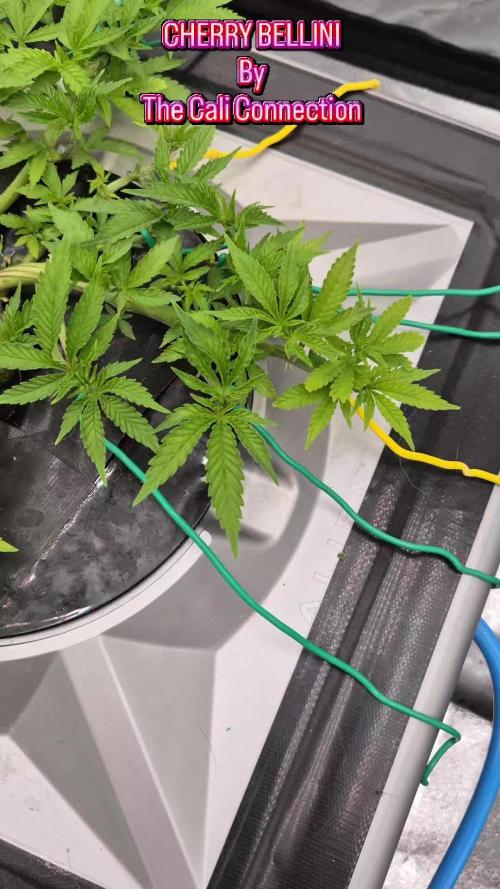
So far Cherry Bellini was a stressful little lady early on during veg, showing signs to anything from a slight e.c change early or ph change or even temps. You name it she would she her displeasure towards you even if you did everything correctly. Later during veg she straighten herself up and became less stressed out towards lst, topping, and everything in between. She's now the biggest one out of the bunch.
Light went from 60% to 90% over Week 5 to Week 6, next 2 days she'll be at 100% ready for flowering.
2 set AC infinity bar lights will go in over this week as well as my scrogg net.
Nutrients this round
Floramax veg1
Floramax organabud
Floramax flowering enhancer ( 1/4 ) dose
Flairforms roots
Sleepz with the fishes ( pythoff )
Cyco platinum series silica
Floramax calmag
E.c 2.2
Ph 5.9-6
Week 6 let's go 🚀🚀🚀
Likes
72
Share


@BodyByVio
Follow
Day 9 I had no choice but to defoliate, the canopy was getting way to dense and humidity was hard to control even with my 30 pin dehumidifier. Hopefully will not affect to much. Probably I will do another defoliation on day 21.
TDS stays at 550PPM this week and CO2 at 1200PPM.

Likes
25
Share


@kizdog
Follow
So this week I saw some decent bud development! There are a couple of colas with tips a little too close to the light, but they aren't getting super high PAR measurements so I think they're good. I added PK 13/14 this week, so I wanted to see some interesting changes. Not as much as I thought, but some flowers are noticeably much fatter than a few days ago. Had an issue with the top layer of my coco getting dry which I realised to be from the 15L dehumidifier I had in there, right next to my pot 😳 So that's now on full power in the room outside of the tent. The heat can be a bit of an issue, reaching 27-28c briefly some days. There's been a couple of fluctuations in the humidity, from 55% RH to 70%, so I've straightened the ducting and tried to perfect my ventilation and environment as much as possible. I'm debating buying a co2 bag to help my plant deal with the heat and intense light. The trichomes are really starting to show, with the 60x magnifier I can see so many cool heads. It just seems that my buds aren't really filling out beneath the pistils, causing me to worry. This week there were so many photos that even after picking out my favourites I ended up with 111 of them! Also, it's worth noting that the nutrient amounts I have listed are in *ml/1.5l. Happy growing!
KIZDOG
Likes
27
Share


@phobic94
Follow
De planten hebben een geweldige geur die heel zoet is ze zijn nu aan het drogen. Na het drogen post ik een rook ervaring

Likes
Comments
Share


@Chamed33
Follow
Just feed her ph water for the last couples of days I’ll be chopping her down this week due to heat wave in my area ..
wish I could let her go few more days
At this stage she’s releasing nitrogen still

Likes
43
Share


@CrazyRussian
Follow
This is a wonderful week of flowering. This week I had to reduce the dosage of my main flowering nutrient, because I started to give them green sensation. I will increase the dose later on step by step back to normal as I see that the girls are okay with it. I had to increase the light distance again, because some of the leaves started to bleach as the lights were too close. That's it for now, I am hoping to see a nice progress in the next few weeks, so stay tuned!

Likes
10
Share


@Smokwiri
Follow
Welcome to my Super Silver Haze week 2, genetics by: Zamnesia seeds
Looking great, kinda fast for a haze by the looks, but very happy.
Probably transplant tomorrow.
....tranplanted a couple hours later
++ some hash oil cartridges for coming weeks, and some high grade morrocan hash rosin


Likes
3
Share


@Kushizlez
Follow
Day 54-64 (June 14th-24th)
(Day 55) I got a good look at all of the plants in the dark and all of them are quite faded out except for black garlic and the blueberries. Running multiple different strains that all feed differently would be a nightmare on a larger scale!
(Day 56) Everything is looking on point and happy. Plants are drinking about a liter of water every 36 hours.
(Day 59) Jack Herer #1 has some of the most wild looking foxtails I’ve ever seen. Not a very desirable trait but it’s cool to grow. It’s smell is pure bliss, it’s now matured to a mango funk. I will do a more in depth look at each strain after dry.
Jack #2 is starting to pop fresh nanners. I think it is from stress due to lack of nutrients and/or heat stress from where it is in the tent. Both jacks are feeding really hard I’ve noticed. If these bananas get any worse I will just harvest early.
Blueberry #1 is developing miniature seeds in its calyx’s and is starting to foxtail like crazy. It almost looks like it’s reveging. Earlier in the season I pulled off an entire bud that was covered in developing seeds but I couldn’t find anymore after that. I will likely find a few bag seeds in this pheno and Jack #2.
Blueberry #2 is still terpless and frostless but it’s really starting to fill into it’s structure now. It’s getting impressively dense but that all it has going for it. This one needs to go 65-70 days at least.
BAOGC #1 is so beefed up and chunky I love it. The main cola will be a good 6 grams and the lowers are thick gram nugs too. I will let this one go until day 65
BAOGC #2 is much smaller but a super hard feeder. It was one of the first to start yellowing. This pheno is pretty average in my opinion. It stacks a little tighter but has small buds
TWOG #1 has this strange velvety look to it’s frost, something I’ve never really seen before. Although it’s a little on the leafy side. It filled out super early and is ready to harvest now. Both are fading out with black streaks on the leaves.
TWOG #2 checks every box for quality so far. This might be the perfect strain and I’m sad I didn’t get a clone of it. The only thing wrong with it is the long trichome stalks and lack of resin heads. It is also an early finisher. I will probably take both TWOGs down on the 21st.
Black garlic is just mouthwatering. This plant literally looks wet with resin. It was super airy at first but slowly filled out to the point it’s one of the denser plants in the tent. Cant wait to smoke this stuff.
(Day 63) Well, every plant in here is looking done except the jacks and blueberry #2. Since I’m harvesting my other tent tomorrow I might as well give everything the chop before I risk bagseeds. I’m going to give a final watering right now and harvest tomorrow. I’m going to be drying in my flower tent kept between 60-65F and 60-65% RH. I will do a full plant hang to extend the dry time for as long as possible.
Guess that’s a wrap then. I will give a detailed breakdown of my errors and final thoughts on the run next week after the dry is completely done. ✌️


Likes
35
Share


@Hiroots420
Follow
23/07/2021 (F DAY 56)
Seguimos observando solamente.
Preparando los dos riegos semanales y cargando el cisterna del blumat.
Empiezan a aparecer unos tricomas marrones en la Sweet Cheese pero muy pocos, se estima que semana que viene o la otra se va!

Likes
11
Share


@Aedaone
Follow
I only fed the #2 plant this weeks mix twice as it is about 2 weeks behind the #1 plant. The #1 plant is very close to harvest. I believe it's in generative 4. I've stopped feeding and the lower fan leaves are starting to yellow. I'm going to let it finish without adding any nutes. The reason is to see how much cleaner the smoke is. If anyone agrees or disagrees with this please comment. I fed the #2 plant again on day 5 but only 8ml per gallon of 3-3-5 fruit and flower. It's eating way more than I thought it would. It's also going to be a lot bigger than the number 1. Again I'm learning the organic soil and feed. It's taking some trial and error to dial in.
Likes
Comments
Share

@Bread_n_Buds
Follow
Forbidden Fruit – Zamnesia Seeds | Germination & Early Growth
Starting another grow diary with Forbidden Fruit from Zamnesia Seeds.
The beginning has been smooth and straightforward, with the seedlings establishing themselves well and showing healthy early growth. So far, everything is progressing as expected, with no particular issues to report.
Forbidden Fruit is a predominantly Indica strain (75% Indica / 25% Sativa), bred from Cherry Pie × Tangie. The combination of these genetics is reflected in its reported citrus, fruity and tropical aroma profile, with terpinolene listed as the main terpene.
Compared with Sativa Fiesta, this one should have a more compact structure, with Zamnesia listing an expected indoor height of around 120 cm. The flowering period is estimated at 8–9 weeks, making it an interesting contrast to the more Sativa-dominant genetics in the grow.
For this grow, I’m using Zamnesia Vegan Grow as the nutrient, together with the Zamnesia Ecosystem grow box, including its ventilation system. Lighting is provided by the Zamnesia Phytonaut LED 480W.
At this stage, the focus is on establishing strong and healthy plants and observing how Forbidden Fruit develops as it moves through the vegetative phase. The reported genetics suggest a more compact Indica structure, so it will be interesting to follow its growth pattern throughout the cycle.
**Strain:** Forbidden Fruit
**Breeder:** Zamnesia Seeds
**Genetics:** Cherry Pie × Tangie
**Genotype:** 75% Indica / 25% Sativa
**Type:** Feminized, photoperiod
**Difficulty:** Moderate
**Main terpene:** Terpinolene
**Flowering time:** 8–9 weeks
**Indoor height:** up to 120 cm
**Outdoor height:** up to 160 cm
**Reported THC:** up to 21%
**Reported CBD:** 0–1%
**Aroma:** Citrus, fruity, tropical
**Reported effects:** Relaxing, soothing
Grow setup:
🌱 Zamnesia Ecosystem Grow Box
💡 Zamnesia Phytonaut LED – 480W
💨 Integrated ventilation system
Zamnesia Vegan Grow
All the products used in this grow are available at
www.zamnesia.com


Likes
27
Share


@BlackForestGrower
Follow
Buds are to heavy had to support them
Week 10 Day 3 bloom - Flushing

Likes
7
Share


@Treesus01
Follow
Used too much bloom nutes and some top leaves were starting to yellow so I flushed and have Been gentle since
Few days later it was t from nutrients it could actually use a little more the lights I have were putting 1700-1800 ppfd on top canopy and was cooking my leaves I lowered the plant so it would get 1200 ppfd on top and it’s back to normal
Likes
200
Share


@Ferenc
Follow
Day 86, 5th of December 2020:
Craziest group I have ever had...
Honestly I just want to see the end. I will be away for 2 weeks almost.
Original Sensible Seeds ladies are dope.
Gelato is very nice proper shape one of my favourite she is just nice and not problematic.... :)
Runtz Gum is amazing nice big buds are on the way really nice! The same no problem with her at all!!!!
Do-Si-Dos OG is just crazy.... She is not an easy lady... problematic... never met a plant like this one. ...
Too much strech and now I need to tie and stand her up somehow i broke one branch.... I put a tape arounf so hopefully saves that bud tho....🤣
Her flowers kill her lol
Black Ghost OG is sweet and good girl she is the easiest player from them she is good for begginners similar to Wedding Gelato even is shape haha....
Wedding Gelato from RQS is just perfect no problem with her at all... good for begginners as well... :)
So This is how it is 5th week has started I just wanna get it done really long journey :)
The lamp is now on 11 hours and off 13 hours. Every week 15 minutes was taken off and after 4 weeks here we go. Strated 12/12 and now 13/11 wanted try to imitate the nature as the light days are getting shorter.
Fertilization has changed no more epsom salt from this week and I will stop giving nitrogen as well from next week.
Processing
Likes
24
Share


@rasta_puri
Follow
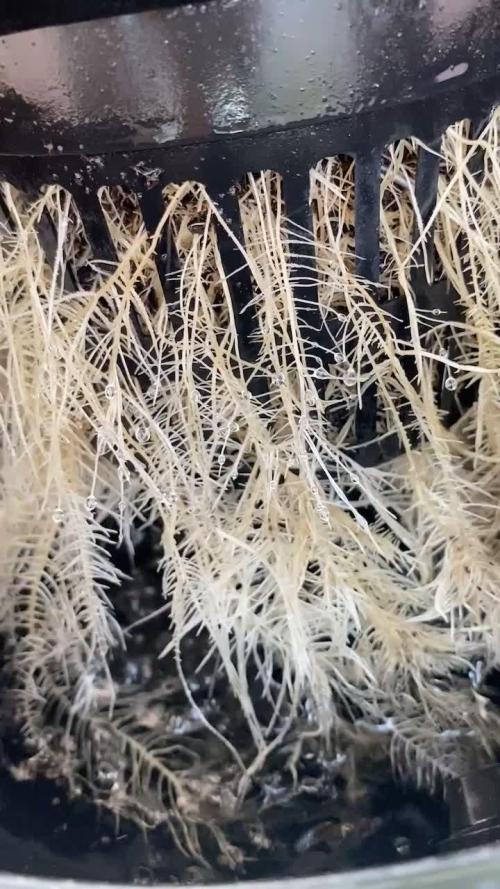
The plant is growing strong. I have to change the wires in order to follow the plant growing. Seems quite hard because there is no soil to attach hooks. So i am thinking to build something that might work better for main lining on hydroponics.
Likes
6
Share


@masterofsmeagol
Follow
5/25 Some pics may be repeated because I forgot to add a new week. Waited until about 11 to bring the girls outside. They were definately dry on top so I used the rest of the gallon to water them. When going outside I noticed a specific kush plant that's lighter than the rest. I really need to up my water volume on these big plants. They are also getting close to not liking it in the 1 gal. and are ready for a transplant. I cleaned the cage so as soon as the weather permits these girls will be outside in the direct sunlight. Basking in the sun in the cage to finish hardening before going into their final homes which will be 20-30 gal smart pots and a 50 gal grow pot. Well SOME of them are ready for transplant. The link kush seems to take its time but it looks extremely indica-E. Weather looks like it will be amazing this week so I'm obviously stoked. Wouldn't suprise me if these girls were outdoors be the end of the week!
EDIT: THE GIRLS STAYED OUT FOR 3.5 HOURS AND LOOKED FANTASTIC. TUEY GOT SOME INTENSE SUN, EXPOSIRE TO THE HIGH RH AND A LITTLE EXPISURE TO THE HIGH WINDS. SPECIAL KUSH SEEMS TO BE THRIVING. I THINK IT WILL DO WELL IN THIS CLIMATE. THAT ONE MK ULTRA IS GROWING AT A RIDICULOUS RATE. I WATERED THE PIBK KUSH THAT WAS LIGHT. I CANT WAIT FOR THE UPCOMING WEATHER. I CAN EXPOSE THE PLANTS TO SOME DIRECT SUNLIGHT AND SEE HOW THEY HANDLE IT. I CAN ALSO GET THE GROW BAGS READY WITH SOIL MOXED AND THEM IN THE RIGHT LOCATION THE DAY BEFORE THE TRWNSPLANT TO FINAL HOME BUT IM GETTING AHEAD OF MYSELF. IM HAPPY THUS FAR. I also added another half hour of darkness so the plants will be closer to actual daylight times. They're down to 16.5. I'd like to have them lower by now but it is what it is. If some reveg I'll deal with it.
5/26 Plants seem to grow an inch I'm a day. MOST are getting to the point where they want to stretch their feet out. Good thing they'll be going in their final homes as soon as they are hardened off completely. I brought them out around 8 this morning. I have to be back at noon but I'm uncertain if leaving them out that long is a good idea. I'll probably have to check them in an hour or so. They're in the lean-to but THAT gets direct sun until the sun rises high enough in the sky to block it. I put them in here rather than the cage so they can build a tolerance to these harsh winds. Topsoil was dry as fuck. I watered everything. I focused on those that SEEMED the lightest and the largest plants. That MK Ultra plant I fimmed is going to be MASSIVE. I'll update what I do as I do it. Oh I also cleaned the bags twice and they are hanging inside the cage with the direct uv rays hitting any part that's discolored. I MIGHT do one more cleaning but I doubt it. Twice is enough. Technically three times but still. I want things to go right. It looks like I've got some pretty good phenos.
EDIT: I PULLED IN (BLOCKING VIEW FROM PART OF THE DRIVEWAY OFF) BECAUSE THAT WAS CLOSER TO MY PLANTS. I GET OUT AND START ADMIRING MY PLANTS AND LOOK ACROSS THE STREET TO SEE TWO STATE TROOPERS AND SOME DETECTIVE ACROSS THE STREET. DAD SAID AN AMBULANCE CAME BUT LEFT WITH NO LIGHTS ON. THEY WERE TALKIMG TO THE COUPLE SEPERATELY. I ATE LUNCH AND THEY WERE STILL THERE. MY HOT WIFE WENT OUT AND THE ALL STARTED FUCKING RUBBER NECKING. MEANWHILE I BROUGHT THE PLANTS INSIDE WITH THE SMALL COVER MY S.U.V PROVIDES LOL. PLANTS WERE LEFT IN DIRECT LIGHT UNTIL IT ROSE HIGH ENOUGH TO CUT IT OFF TO THE LEAN TO. PLANTS SEEM LIGHT. WELL SOME DO. I NEED TO GET A GOOD WATERING SCHEDULE DOWN. JUDGING BY HOW THESE PLANTS TOOK IT TODAY I THINK THEYLL BE OUTSIDE IN FOREVER HOMES WITHIN A WEEK.
5/27 Just poked my head in and checked on them real quick. NO damage whatsoever from all that time in the sun. I left them inside this morning so I can bring them out later in the day to see what happens. I'll add pics later and update what I do.
EDIT: BROUGHT THE PLANTS OUT TO THE CAGE AT A LITTLE BEFORE 10AM AND LET THEM BASK IN THE 85° SUN. THE WIND WAS A LITTLE ROUGH ON THEM. IT WAS ACTUALLY THRASHING THEM BUT MY INTUITION SAID 'LEAVE THEM BE' SO I DID. I DID MORE CLEANING AND FIGURED OUT SPACING IN THE CAGE AND I MIXED A 30GAL GROW BAG AND 2 20GAL GROW BAGS WITH A 50/50 MIX OF FOX FARM OCEAN FOREST AND HAPPY FROG. SOUL WAS MIXED WITH A GRADE STAKE AFTER BEING PUT IN A GALLON AT A TIME (TO ENSURE EQUAL PARTS) AND FINALLY MISED BY HAND. TAKES A LOT OF WORK. IM NOT GOING TO BE AS PICKING WITH THE OTHER ONES. I STILL HAVE MY 50 WITH SOIL IN IT. MAINLY DUE TO LAZINESS AND THE PAIN IN THE ASS IT IS TO MOCE THE FUCKER. PLUS IF IM LOW ON SOIL (WHICH IM NOT) THAT WAS GOOD SOIL AND THE PLANT HAD NO PROBLEMS SO I GUESS IF NEEDED IT FOULD BE REUSED. I NORMALLY JUST EMPTY THAT FIRST AND MIX A SHIT TON OF SOIL IN THERE AND SHOVEL IT IN THE BAGS. THIS WAS MUCH HARDER. PLANTS GOT CLOSER TO 2 HOURS OF DIRECT SUNLIGHT BEFORE I MOVED THEM TO THE LEAN TO. I WILL UPDATE WHEN I HRING THEN IN BUT DESPITE THE HARSH SUN AND WIND THEY SEEM FINE.
EDIT: BROUGHT THE GIRLS IN AT TWO BECAUSE MY WIFE HAD AN APPOINTMENT. NO DAMAGE WHATSOEVER. I THINK IF I USE THIS WEEK TO INCREASE DAYLIGHT HOURS AND UP THE WATERING THESE PLANTS WILL BE READY TO GO IN THEIR HOMES. A FEW ARE BIG AND DEF READY TO STRETCH THEIR FEET.
5/28 With the increased sun some these plants are out growing their containers. PLANTS SPENT APPROX AN HOUR AND A HALF IN DIRECT 85° SUN. EVERYTHING SEEMED FINE AND I WAS GOING TO LEAVE THEM FOR THE DAY IN THE CAGE. THEN I NOTICED THE BIG MK ULTRA'S MAIN STEM (IT GOT FIMMED BUT THE MAIN ONE) WAS STARTING TO DROOP A LITTLE. I PICKED THE PIT UP AND DESPITE A LITTLE BIT OF MOUSTURE ON THE TOP THE PIY WAS LIGHT AS A FEATHER. PLUS SETTING ON THE THEM ON THE TAR WASN'T THE BEST IDEA EITHER. I MISED UP SOME WATER AND WATERED THE PLANTS THAT SEEMED LIGHT. I NEED TO PICK UP LIKE ONE MORE BAG OF OCEAN FOREST FOR MY 50 GAL. I'M GOING TO TRY TO FINISH MY OTHER TWO 20'S AND THE TWO 10'S TONIGHT SO I'LL KNOW WHAT IM LACKING. ITS BASICALLY JUST THE 50. IF MY INTUITION SAYS ITS OK ILL TALE THE "COOLER" DAY TOMORROW AND TRANSPLANT THE THREE PLANTS TGAT ARE GETTING TO BIG FOR THERE POT. ÌF NEEDED I MIGHT GET SOME SCREENS TO USE AS A "BLIND" SO THE PLANTS DONT GO STRAIGHT TO FULL SUN ALL DAY.
EDIT: TJAT HUGE MK ULTRA REVOVETED NOCELY ONCE WATERED AND PUT IN THE SHADE. IT NEEDS TO BE TRANSPLANTED. I MAY DO ITCTOMORROW. PLANTS HAVE GOT TO BE CLOSE TO HARDENED. I MIXED ALL MY SOIL AND FILLED ALL THE GROW BAGS WITH THE MIX. I FINISHED CLEANING THE CAGE AND REMOVED BAMBOO AND TRELLISING. TOMORROW IS GOING TO BE A MILD DAY AND PERFECT FOR TRANSPLANT. SOME OF THESE GIRLS ARE GETTING VERY BIG. I RAN OUT OF SOIL AFTER THE LAST 10GAL GROW BAG. ITS NOT FILLED "ALL" THE WAY AND I GAVENT FILLED MY 50 GAL. I'LL GET THE REST OF THE SOIL I NEED FOR THAT 50 TOMORROW.


