


Likes
Comments
Share

@cangrowz
Follow
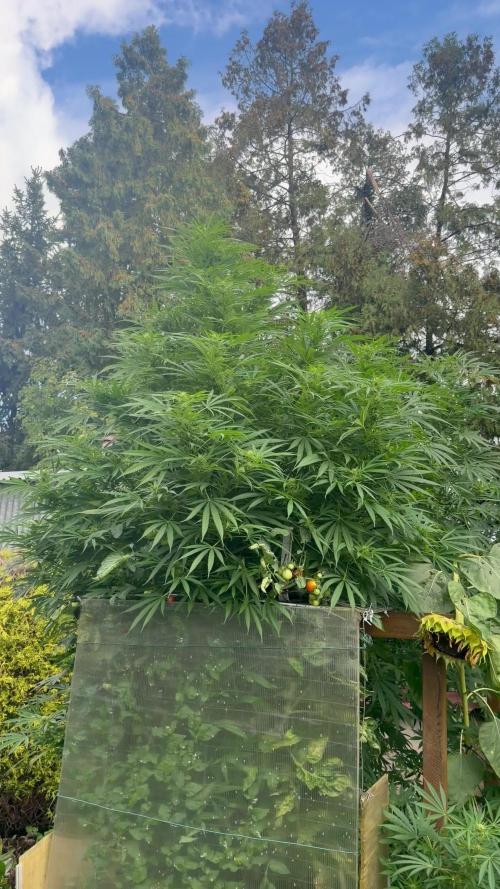
🍋🍇 Air Lemon x Shishkaberry – Mitte Woche 21 🍇🍋
Die Mitte der 21. Woche ist erreicht und im Outdoor-Projekt zeigt sich inzwischen sehr deutlich, dass wir uns langsam in der letzten großen Phase der Saison befinden. Die neuen Bilder vermitteln einen richtig starken Gesamteindruck. Die Pflanzen stehen weiterhin sehr vital und präsentieren sich mit einer beeindruckenden Größe und einer enormen Blattmasse. Gerade im direkten Vergleich zu den vergangenen Wochen wird deutlich, wie viel Entwicklung hier über die Saison zusammengekommen ist.
Die Pflanzen wirken insgesamt weiterhin kräftig und gut aufgebaut. Die Seitentriebe haben sich ordentlich entwickelt und das gesamte Wachstum ist sehr dicht und kompakt. Besonders schön ist zu sehen, wie sich die ersten deutlicheren Veränderungen durch die fortschreitende Jahreszeit bemerkbar machen. Der Sommer geht langsam vorbei und der Herbst übernimmt nach und nach das Kommando. Genau diese Übergangsphase sorgt draußen immer wieder für eine ganz besondere Atmosphäre.
Auch die Aufnahmen aus verschiedenen Perspektiven zeigen, wie gewaltig sich das Projekt inzwischen entwickelt hat. Zwischen den Aufnahmen aus der Nähe und den Gesamtbildern wird die Dimension der Pflanzen besonders deutlich. Die Blätter sehen überwiegend gesund aus und die Pflanzen machen trotz der bereits fortgeschrittenen Saison weiterhin einen stabilen Eindruck.
Jetzt beginnt definitiv die spannende Schlussphase des Outdoor-Projekts. Die nächsten Wochen werden zeigen, wie sich die Pflanzen unter den herbstlichen Bedingungen weiterentwickeln und wie sich die bereits vorhandenen Blüten noch verändern. Nach 21 Wochen Outdoor-Wachstum ist auf jeden Fall schon jetzt klar, dass dieses Projekt eine richtig starke Entwicklung hingelegt hat.
Ich bin mit dem bisherigen Verlauf weiterhin sehr zufrieden und freue mich darauf, die letzten Wochen dieser Saison gemeinsam mit euch zu dokumentieren. Die kommenden Updates werden mit Sicherheit noch einmal besonders interessant, denn draußen geht es jetzt langsam in Richtung Endspurt. 🌿?
Happy Growing Growmies 🌱?💚

Likes
24
Share


@Canadian
Follow
Day 57 the plant has been growing healthy and fine but she is a slow grower .
I know that most of the growers in this platform and elsewhere do defoliate and trim down all the lower branches of the plant so that the plant can concentrate all its energy into the higher bigger and better buds .and I do not do this because I drive the plants very hard with nutrients and those lower branches with small buds always give me the first sign of anything going wrong with her and that's why I leave them as a buffer zone to protect the bigger buds and that way I can push her as hard as I want.
not much to mention about her thank you for reading I will continue to update have a happy grow

Likes
5
Share


@TherealNICOGREEN
Follow
Jeg er så glad for at hende her bare for lov a være vært for det er VIRKELIG EN KÆMPE GOD FLOT PLANTE SYNES JEG SELV 😛 💚☮️💚☮️💚😇🇩🇰glæder mig helt sindssygt til hun går i blomst 🌸 💚💜🇩🇰☮️
Likes
8
Share


@Jays_Not_Here_Man
Follow
Week 6-Day 42 ❤️🇨🇦🌱😎💨
Ladies have been coasting along, haven’t had to do much other than water every 3rd day. I’ve decreased most of N ratio, there is still some in the Cal Mag and Big Bud, and upped the P and K along with the Big Bud. PH has been bang on, I’ve been varying the PH at feeds, and testing the runoff and slurry mix, been a very healthy 6.1-6.4 on the higher end !
Things are getting thicker and hairier in the garden, and with slightly higher RH this week, I’ve been giving them a lot of air flow, seems like the frost on all of them have kicked it up a notch!
They’ve got some incredible terps coming off them, I clearly need a secondary carbon filter when growing these types of potent strains, cause my whole house stinks! It seems that whenever the fan is not running, the wafts of skunk and pine are escaping 🤤 it will be another 2-3 weeks, but I’m getting excited 🤗🌲💥
Happy Growing 🇨🇦❤️👊

Likes
21
Share


@DeeDeeKushner
Follow
Day 50 of flower, 20 days till I harvest. Checking the trichomes daily. These nuggs are some of the best I’ve grown so far to date. They’re chunky and frosty as hell. They’re dense and shaped like golf balls. Patiently waiting to give these ladies the chop! Catch yall on the next update ✌️🏾


Likes
19
Share


@DrLaggis
Follow
HELLO GROWING FRIENDS - Please look at my Aftermovie Growvideo, which cost me about 4 hours to create. hope you like it!
Day 72: The Finale 🌿🌟
It’s finally time. My very first grow is coming to an end—at least the cultivation phase. The plant is now ready for harvest, and I can’t believe how incredible this journey has been. I never expected to enjoy the whole process so much—from nurturing the plants to watching them grow and evolve. I’m absolutely hooked and can’t wait to dive into the next steps: harvesting, drying, curing, and of course, starting a new grow soon with fresh ideas and experiments!
While it may not be the largest yield, the quality of the buds speaks for itself. The time, love, and care I’ve put into this grow is visible, and I’m pretty proud of the results. I’ll admit, I was a bit impatient at times (which I think every first-timer can relate to 😅), but the experience was priceless.
Here are a few interesting highlights from my trimming and harvest process:
1️⃣ Dark Phase Before Harvest
Two days before harvest, I put the plant in complete darkness to encourage resin production. I'm not sure if it really made a difference, but it was worth trying!
2️⃣ Wet Trim vs. Dry Trim
I decided to go for a wet trim because the buds were really dense, and I wanted to avoid any risk of mold. I’ve read that wet trimming can speed up drying and may slightly impact the quality, but this is part of the learning experience. Next time, I’ll try a dry trim for comparison!
3️⃣ Yield Update
Wet, the total came in at 209 grams from my plant. Trimming took around three hours, and it was actually a lot of fun, despite the time commitment.
4️⃣ Curing Plan
The buds are now hanging in the tent for about 8 days. Once dried, they’ll go into jars with Boveda Packs (62% humidity) for another 3 weeks of curing. I'll update the smoke report once they’re fully cured, but I’ve already had a sample of the same strain from a friend, and I can say it’s pretty amazing.
Final Thoughts on My Grow 🌱✨
As mentioned earlier, this grow has been an absolutely incredible experience, and it has definitely set me on a path to jump right into my next grow. There were ups and downs along the way, such as over-pruning, which I believe stressed the plants a bit. Additionally, I think they could have benefited from an extra week to mature. We also faced many temperature fluctuations this summer, which impacted the plants due to external weather conditions.
I’m really pleased with the quality of the buds. The quantity is okay—I can’t fully gauge it yet—but I’m sure there’s more potential to unlock. I’ve gained valuable experience in what worked well and what didn’t. Overall, the countless lessons learned during this grow far outweigh the few mistakes made. I’m incredibly proud of my first results!
As this long journey comes to an end, I want to thank everyone who followed along. I hope you enjoyed all the content. In that spirit, happy growing, and see you next time! 🌟

Likes
226
Share


@HighTV
Follow
| 📅 Week 5 | Days 29 - 35
| 💡 562w 📏42' |
| ☔ 29%-38% |
| 🌡️️🌞 76 - 79 |
| 🌡️️🌑 73 - 75 |
12/07 Weekly Reservoir swaps on all plants to clean them and give fresh nutrients. 2 plants repeated week 4 nutrients with no micro and the other two (including the focus plant in the lapse) are accurate with the Dairy.
12/08 PHed all plants to 5.8 and updated the LST on all the plants. Spread some of plants out to get better lighting as I raised the light s few inches.
12/09 Topped off the reservoirs and PHed them to 5.6 because they have been rising alot. Rotated plants half turn. Did more LST for more light penetration.
12/10 Signs of preflower are starting to show on two plants and the tent is starting to get that flowering smell not to much longer until I need to hook up the carbon filter to stop the stench.
12/11 Updated front left and back left plants to week 5 nutrients with no Floramicro, because these plants hate nitrogen. PH in all reservoirs set to 5.6
12/12 PHed adjusted to 5.8 and topped off all the reservoirs. Did more LST and tucked plenty of leaves away for better light on new growth!
12/13 First real signs of Flower! PH adjusted to 5.8 and reservoirs topped off with water to keep the nutrient levels balanced. Lollipopped the front left plant for experimental purposes.
These plants overall are doing fine and I have 2 different phenotypes displaying. One is extremely reactive to nitrogen and taller while the shorter phenotype is slightly less reactive to nitrogen (both hate it). I am pleased with the growth at this stage and the smell is just starting There is slight purple coloration displaying with the preflowers but nothing really noticeable yet. I am excited for the flowering to start so these girls can start showing their true colors 😍
edit: changed final picture for better lighting.
Likes
15
Share


@masterofsmeagol
Follow
7/27 My phone ran out of storage and wouldn't let me take a video. I tried deleting several other videos bit that didn't work either. Finally I wad able to upload a few RANDOM pictures from the "website" camera. But no video. Everything looked so beautiful tjis morning too. Not watering was the right choice. I defoliated a couple septoria leaves on the reveg 10th planet that wad about to receive its third dose of Plant Doctor. The chem dog #4 and mk ultra this will be their second treatment. Seeing the positive impact of the product and finding a few septoria leaves I decided to treat every plant in the garden with plant doctor. I'm still going to do the diy Dr. Zymes but Plant Doctor had been working good and I want to suppress as much as possible. Everything looks great. I started by giving the thirstiest plants a half gallon of water. I then did a root drench of 3tsp per gallon on every plant but the 10gal. A gallon of solution was used on each plant. I really feel like this is a good mood. Previously AFTER I applied Plant Doctor the plants would have a noticeable positive effect shortly after. I'm hoping this will be the case here. I think stretch has stopped. I have one special Kush that has buds already but EVERYTHING is in early flower. I'll fix the phone and get a video up there.
EDIT: WENT BACK AROUND ONE TO DO A LITTLE DEFOLIATION. EVERYTHING LOOKS REALLY GOOD TO ME. I DID DEFOLIATE A COUPLE SEPTORIA LEAVES. BUT REMOVING A LEAF OR TWO FROM A MONSTER REVEG IS NOTHING. REALISTICALLY I SHOULD BE REMOVING MORE FOR BETTER AIR FLOW. THATS SOMETHING ILL NEED TO DO. SO HAPPY THINGS ARE DOING GOOD. EVERYTHING IS IN VARIOUS STAGES OF FLOWER. NEXT FEED ILL BE USING A BLOOM NUTRIENT. NOT SURE BUT PROBABLY LIQUID KOOL BLOOM.
7/28 Didn't have much time this morning. I've got a wife with medical problems and I'm trying to redue my house before the end of the summer so I'm busy to say the least. Still no pm. Not many pests either. The rose bushes behind them have been DEMOLISHED by jpn beetles. I see no negative active reactions from treating everything with plant doctor 3tsp/gallon. The first plant I treated with it was that 10th planet and its gotten three treatments and looks great. I'll get a spot here or there once in a while but for the most part it's supressed. I have some pruning to do. Everything os in early flower but that one special kush is pretty far ahead.
EDIT: SINCE IT WAS MID 80S I WENT OVER AROUND 1 TO CHECK THE GIRLS. THEY LOOKED GREAT. I DEFOLIATED A COUPLE SEPTORIA LEAVES BUT ONLY A COUPLE. I STOPPED AT A LOCAL SHOP AND SHOWED MY BUDDY A VIDEO. HE SAID TO NEVER SPRAY ANYTHING WITH LEAF SEPTORIA WITH "ANYTHING" BECAUSE OF HOW IT SPREADS. I DIDNT MENTION THE CONTRADICTORY EVIDENCE THAT I'VE FOUND IN MY RESEARCH BUT HEY. HE HASNT LED ME WRONG. PLANT DOCTOR SEEMS TO BE DOING THE JOB. THAT AND DEFOLIATING ANYTHING I SEE. IVE WORKED TOO HARD TO LOSE THEM TO A DISEASE THAT MAINLY EFFECTS THE LEAVES. PLANT DOCTOR WILL KEEP IT SUPPRESSED.
7/29 Today is supposed to be really hot. In the 90's. I watered everything a gallon except the thirstier plants got 1.5 and the 10's got 1/2 gallon. I defoliated a few septoria leaves. I'm sure there will be a few more after watering. Instead of alleviating my concerns my buddy kinda got in my head with the septoria talk. Things will be fine. Everything LOOKS gorgeous. He even said, "They look really good and healthy" and "not to get complacent defoliating." The plant in the 50 seems to be worse off than the others. I'll keep an eye on it but if I got spots near the sugar leaves I might just cut that little runt. This was all preventable too. Person mowing the lawn BLEW DISEASED GRASS, SHRUBS AND BIRD SEED IN MY CAGE RIGHT AFTER TRANSPLANT. I legit had to dig out at least a dozen sunflowers or other seeds that sprouted. Realistically things will be fine. The plant I've been treating for three weeks with plant doctor looks great. So do the others. Everything looks good. I just get occasional leaves I previously would've overlooked or attributed to something else. As long as I can keep it suppressed enough through flower I'm good. Anything that isn't good enough will go towards extracts.
EDIT: WENT OVER AROUND ONE. A COUPLE PLANTS IN TJE BACK THAT I WATERED FASTER WERE LIGHT SO I SPLIT A GALLON WITH THEM. THE 10TH PLANET THAT HAS GOTTEN THE FULL PLANT DOCTOR TREATMENT IS DOING AWESOME. I DID HAVE TO DEFOLIATE A HANDFUL OF LEAVES. HONESTLY I THINK IVE PROBABLY HAD THIS YEARS PRIOR AND DIDNT RECOGNIZE IT. IM PRAYING EVERYTHING WORKS OUT. IM DOING MY PART. I'M GOING TO HAVE TO DO SOME MORE RESEARCH.
7/30 Came over to the 10th planet plant in the front row all the way in the back was drooped all down and is yellowing up pretty good. I defoliated what I could and gave it a gallon and a half of water. I defoliated any sep leaves I could find. If that plant foesnt pick up like they normally do I may need to ditch the plant. If it continues to get yellow and look unhealthy I'd rather get rid of it than risk more damage. It was light as a feather so I assume it will be fine. I'll update as I go. Everything else looked good though.
EDIT: DESPITE IMMENSE ANXIETY I GOT THAT FEELING SO I WENT AND CHECKED THEM. THE ONE I WATERED DID PICK BACK UP BUT IT HAS A LOT OF YELLOW LEAVES. THE 10TH PLANET THATS DOING GOOD WAS BONE DRY AND STARTING TO DROOP. I GAVE IT 1.5 GALLONS. THE HUGE MK ULTRA ALSO WAS STARTING TO DROP AND LIGHT AS A FEATHER. I GAVE THAT A FULL WATERING CAN WHICH IS DAMN NEAR 2 GALLONS. THE REST WILL GET WATERED TOMORROW. NO SIGN OF SEP THIS TIME. I WASNT THERE LONG BUT STILL. THE OTHER PLANTS WERE LOOKING GOOD AND ALL PRAYING TO THE SUN. TOMORROW ILL WATER AND FEED.
7/31 Came over this morning to one of my plants on the 10 drooped right over. I shouldve watered it yesterday when I did the others that were light. Coincidentally the three that needed the water were the 3 revegs. I watered what didn't get it yesterday with a gallon each. I then fed everything a powerade bottle. Started liquid kool bloom today. We shall see how that goes. I defoliated quite a few leaves. I think I may have had sep in the past on some plants and just didn't notice. Plants still look good but I keep a good eye on them. And I defoliate a lot. I've taken my buddies advice and not sprayed anything. I don't really have any pests. A pillar here or there or a "A" cricket or jpn beetle. Of there is one four eyed plant bug but I can't seem to kill it. I've almost caught it a couple times. Anyway like usual I'll keep this updated.
7/30 Girls looked good this morning. I has to water the 10th planet in the front back and one of the 10s. Defoliated a few yellow leaves and picked off a couple sep leaves. It rained a little and I'm really surprised that I haven't seen MORE sep leaves. These girls are resilient. One more day and it's plant Dr day. That 10th planet that has had 3 treatments and will just receive its first "preventative dose" after the three big ones is doing amazing. That one special kush I the front is flowering much faster than anything else. I'm grateful for what I have.


Likes
4
Share


@DeadJoke
Follow
I just uploaded the near full blossom condition!
may be .. i will upload another run
Likes
Comments
Share


Likes
4
Share


@Adam22
Follow
Needed to go in big pots will sort that tmro watered late today they will be fine again once in bigger pot these have been on 12/12 for a few days. Will pl out the gavita they need some hear for a week or 2 led lights not powerful enough now for the plant age it's not growing much now fed today water tmro with transplant
Likes
10
Share


@nonick123
Follow
Dia 0 (06/05) La semilla ha germinado! 💥
Día 1 (07/05) Spray solo agua el top del sustrato. DLI 13
Día 2 (08/05) Spray solo agua el top del sustrato. DLI 13
Día 3 (09/05) Las plántulas se ven vibrantes 😍 Spray solo agua el top del sustrato. DLI 13
Día 4 (10/05) Spray solo agua el top del sustrato. DLI 13
Día 5 (11/05) Spray solo agua el top del sustrato. DLI 13
Día 6 (12/05) Spray solo agua el top del sustrato. DLI 13
Día 7 (13/05) Spray solo agua el top del sustrato. DLI 13
💦Nutrients by Lurpe Solutions - www.lurpenaturalsolutions.com
🌱Substrate PRO-MIX HP BACILLUS + MYCORRHIZAE - www.pthorticulture.com/en/products/pro-mix-hp-biostimulant-plus-mycorrhizae
Likes
5
Share

@smoking_hills9
Follow
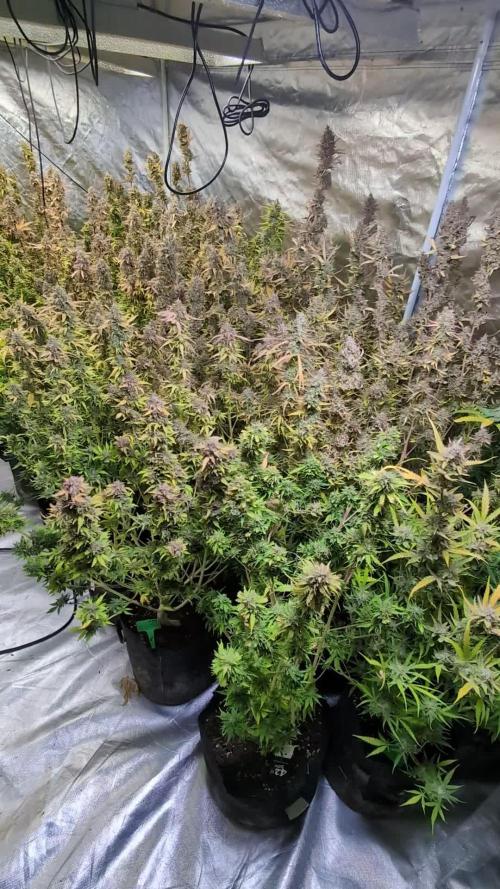
Some beautiful plants especially 1 and 2. Sweet skittles smell. Happy with outcome.

Processing
Likes
13
Share


@Livinit2019
Follow
Finally split up the plants. The big auto has the 2x2 shower to herself now and the bathtub is plenty big for the smaller auto and the vegging bag seed/"mutant". Add the bath tub to the list of domestic areas in my home that Mary Jane has claimed :P
Removing "grow big" from the nurse mix, despite it being recommended in the nute guide provided by fox farm that came with the trio I've been using, seemed to do wonders for the stunting/Yellowing. Unfortunately the top leaves on the bigger auto wilted seemingly irreparably (except for the middle one, like it's flipping me off for putting it through some rough shit >.<). All the other leaves perked back up and are in the process of uncurling.
Thanks for all the answers, you guys. I'm gonna run a flush on these babies tonight or tomorrow. It's been 48 hours since their last watering of 1gal in a 5gal pot, so they should be good to go.
Wish me luck!


Processing
Likes
35
Share


@BarrieGrower
Follow
Looks like this is it, last week of flower and into the darkness they go.

Likes
8
Share


@brunoazazel
Follow
contento con el resultado, se aumenta la dosis de NPK a 14ml/L.
alejé un poco el foco para que se espigue más rápido.
1/3 trasplante definitivo a maceta de 18L.
en unos 15 dias la paso a flora
Likes
1
Share


@DmbTexasRanger
Follow
I should’ve scrog’ed with my strongest two plants.
Trying to pull some very heady buds so went all out on Advsnced Nutrients. Going to A/b test with budget synthetics next grow

Likes
15
Share


@KitaKush
Follow
Having a hard time deciding when to chop her..my second critical..Milky trichomes but not a single amber on the calyxes…the buds have definitely gone through a burst..becoming thicker and dense..some buds falling over so I tied the base with string for support.
This week so many white pistils have popped out and sites like reddit or roll it up are telling me some strains have white hairs up until harvest while others claim more time is needed.
I think I can wait one more week but after that I’m over it!
Likes
19
Share


@Ultraviolet
Follow
Yellow butterfly came to see me the other day; that was nice.
Starting to show signs of stress on the odd leaf, localized isolated blips, blemishes, who said growing up was going to be easy!
Smaller leaves have less surface area for stomata to occupy, so the stomata are packed more densely to maintain adequate gas exchange. Smaller leaves might have higher stomatal density to compensate for their smaller size, potentially maximizing carbon uptake and minimizing water loss. Environmental conditions like light intensity and water availability can influence stomatal density, and these factors can affect leaf size as well. Leaf development involves cell division and expansion, and stomatal differentiation is sensitive to these processes. In essence, the smaller leaf size can lead to a higher stomatal density due to the constraints of available space and the need to optimize gas exchange for photosynthesis and transpiration. In the long term, UV-B radiation can lead to more complex changes in stomatal morphology, including effects on both stomatal density and size, potentially impacting carbon sequestration and water use. In essence, UV-B can be a double-edged sword for stomata: It can induce stomatal closure and potentially reduce stomatal size, but it may also trigger an increase in stomatal density as a compensatory mechanism. It is generally more efficient for gas exchange to have smaller leaves with a higher stomatal density, rather than large leaves with lower stomatal density. This is because smaller stomata can facilitate faster gas exchange due to shorter diffusion pathways, even though they may have the same total pore area as fewer, larger stomata. Leaf size tends to decrease in colder climates to reduce heat loss, while larger leaves are more common in warmer, humid environments. Plants in arid regions often develop smaller leaves with a thicker cuticle and/or hairs to minimize water loss through transpiration. Conversely, plants in wet environments may have larger leaves and drip tips to facilitate water runoff. Leaf size and shape can vary based on light availability. For example, leaves in shaded areas may be larger and thinner to maximize light absorption. Leaf mass per area (LMA) can be higher in stressful environments with limited nutrients, indicating a greater investment in structural components for protection and critical resource conservation. Wind speed, humidity, and soil conditions can also influence leaf morphology, leading to variations in leaf shape, size, and surface characteristics. Small leaves: Reduce water loss in arid or cold climates.
Environmental conditions significantly affect gene expression in plants. Plants are sessile organisms, meaning they cannot move to escape unfavorable conditions, so they rely on gene expression to adapt to their surroundings. Environmental factors like light, temperature, water, and nutrient availability can trigger changes in gene expression, allowing plants to respond to and survive in diverse environments.
Depending on the environment a young seedling encounters, the developmental program following seed germination could be skotomorphogenesis in the dark or photomorphogenesis in the light. Light signals are interpreted by a repertoire of photoreceptors followed by sophisticated gene expression networks, eventually resulting in developmental changes. The expression and functions of photoreceptors and key signaling molecules are highly coordinated and regulated at multiple levels of the central dogma in molecular biology. Light activates gene expression through the actions of positive transcriptional regulators and the relaxation of chromatin by histone acetylation. Small regulatory RNAs help attenuate the expression of light-responsive genes. Alternative splicing, protein phosphorylation/dephosphorylation, the formation of diverse transcriptional complexes, and selective protein degradation all contribute to proteome diversity and change the functions of individual proteins.
Photomorphogenesis, the light-driven developmental changes in plants, significantly impacts gene expression. It involves a cascade of events where light signals, perceived by photoreceptors, trigger changes in gene expression patterns, ultimately leading to the development of a plant in response to its light environment.
Genes are expressed, not dictated! While having the potential to encode proteins, genes are not automatically and constantly active. Instead, their expression (the process of turning them into proteins) is carefully regulated by the cell, responding to internal and external signals. This means that genes can be "turned on" or "turned off," and the level of expression can be adjusted, depending on the cell's needs and the surrounding environment. In plants, genes are not simply "on" or "off" but rather their expression is carefully regulated based on various factors, including the cell type, developmental stage, and environmental conditions. This means that while all cells in a plant contain the same genetic information (the same genes), different cells will express different subsets of those genes at different times. This regulation is crucial for the proper functioning and development of the plant.
When a green plant is exposed to red light, much of the red light is absorbed, but some is also reflected back. The reflected red light, along with any blue light reflected from other parts of the plant, can be perceived by our eyes as purple.
Carotenoids absorb light in blue-green region of the visible spectrum, complementing chlorophyll's absorption in the red region. They safeguard the photosynthetic machinery from excessive light by activating singlet oxygen, an oxidant formed during photosynthesis. Carotenoids also quench triplet chlorophyll, which can negatively affect photosynthesis, and scavenge reactive oxygen species (ROS) that can damage cellular proteins. Additionally, carotenoid derivatives signal plant development and responses to environmental cues. They serve as precursors for the biosynthesis of phytohormones such as abscisic acid () and strigolactones (SLs). These pigments are responsible for the orange, red, and yellow hues of fruits and vegetables, while acting as free scavengers to protect plants during photosynthesis.
Singlet oxygen (¹O₂) is an electronically excited state of molecular oxygen (O₂). Singlet oxygen is produced as a byproduct during photosynthesis, primarily within the photosystem II (PSII) reaction center and light-harvesting antenna complex. This occurs when excess energy from excited chlorophyll molecules is transferred to molecular oxygen. While singlet oxygen can cause oxidative damage, plants have mechanisms to manage its production and mitigate its harmful effects.
Singlet oxygen (¹O₂) is considered a reactive oxygen species (ROS). It's a form of oxygen with higher energy and reactivity compared to the more common triplet oxygen found in its ground state. Singlet oxygen is generated both in biological systems, such as during photosynthesis in plants, and in cellular processes, and through chemical and photochemical reactions. While singlet oxygen is a ROS, it's important to note that it differs from other ROS like superoxide (O₂⁻), hydrogen peroxide (H₂O₂), and hydroxyl radicals (OH) in its formation, reactivity, and specific biological roles. Non-photochemical quenching (NPQ) protects plants from damage caused by reactive oxygen species (ROS) by dissipating excess light energy as heat. This process reduces the overexcitation of photosynthetic pigments, which can lead to the production of ROS, thus mitigating the potential for photodamage. Zeaxanthin, a carotenoid pigment, plays a crucial role in photoprotection in plants by both enhancing non-photochemical quenching (NPQ) and scavenging reactive oxygen species (ROS). In high-light conditions, zeaxanthin is synthesized from violaxanthin through the xanthophyll cycle, and this zeaxanthin then facilitates heat dissipation of excess light energy (NPQ) and quenches harmful ROS.
The Issue of Singlet Oxygen!!
ROS Formation: Blue light, with its higher energy photons, can promote the formation of reactive oxygen species (ROS), including singlet oxygen, within the plant.
Potential Damage: High levels of ROS can damage cellular components, including proteins, lipids, and DNA, potentially impacting plant health and productivity.
Balancing Act: A balanced spectrum of light, including both blue and red light, is crucial for mitigating the harmful effects of excessive blue light and promoting optimal plant growth and stress tolerance.
The Importance of Red Light:
Red light (especially far-red) can help to mitigate the negative effects of excessive blue light by:
Balancing the Photoreceptor Response: Red light can influence the activity of photoreceptors like phytochrome, which are involved in regulating plant responses to different light wavelengths.
Enhancing Antioxidant Production: Red and blue light can stimulate the production of antioxidants, which help to neutralize ROS and protect the plant from oxidative damage.
Optimizing Photosynthesis: Red light is efficiently used in photosynthesis, and its combination with blue light can lead to increased photosynthetic efficiency and biomass production.
In controlled environments like greenhouses and vertical farms, optimizing the ratio of blue and red light is a key strategy for promoting healthy plant growth and yield.
Understanding the interplay between blue light signaling, ROS production, and antioxidant defense mechanisms can inform breeding programs and biotechnological interventions aimed at improving plant stress resistance. In summary, while blue light is essential for plant development and photosynthesis, it's crucial to balance it with other light wavelengths, particularly red light, to prevent excessive ROS formation and promote overall plant health. Oxidative damage in plants occurs when there's an imbalance between the production of reactive oxygen species (ROS) and the plant's ability to neutralize them, leading to cellular damage. This imbalance, known as oxidative stress, can result from various environmental stressors, affecting plant growth, development, and overall productivity.
Causes of Oxidative Damage: Abiotic stresses: These include extreme temperatures (heat and cold), drought, salinity, heavy metal toxicity, and excessive light. Biotic stresses: Pathogen attacks and insect infestations can also trigger oxidative stress. Metabolic processes: Normal cellular activities, particularly in chloroplasts, mitochondria, and peroxisomes, can generate ROS as byproducts. Certain chlorophyll biosynthesis intermediates can produce singlet oxygen (1O2), a potent ROS, leading to oxidative damage. ROS can damage lipids (lipid peroxidation), proteins, carbohydrates, and nucleic acids (DNA). Oxidative stress can compromise the integrity of cell membranes, affecting their function and permeability. Oxidative damage can interfere with essential cellular functions, including photosynthesis, respiration, and signal transduction. In severe cases, oxidative stress can trigger programmed cell death (apoptosis). Oxidative damage can lead to stunted growth, reduced biomass, and lower crop yields.
Plants have evolved intricate antioxidant defense systems to counteract oxidative stress. These include: Enzymes like superoxide dismutase (SOD), catalase (CAT), and various peroxidases scavenge ROS and neutralize their damaging effects. Antioxidant molecules like glutathione, ascorbic acid (vitamin C), C60 fullerene, and carotenoids directly neutralize ROS. Developing plant varieties with gene expression focused on enhanced antioxidant capacity and stress tolerance is crucial. Optimizing irrigation, fertilization, and other management practices can help minimize stress and oxidative damage. Applying antioxidant compounds or elicitors can help plants cope with oxidative stress. Introducing genes for enhanced antioxidant enzymes or stress-related proteins over generations.
Phytohormones, also known as plant hormones, are a group of naturally occurring organic compounds that regulate plant growth, development, and various physiological processes. The five major classes of phytohormones are: auxins, gibberellins, cytokinins, ethylene, and abscisic acid. In addition to these, other phytohormones like brassinosteroids, jasmonates, and salicylates also play significant roles.
Here's a breakdown of the key phytohormones:
Auxins: Primarily involved in cell elongation, root initiation, and apical dominance.
Gibberellins: Promote stem elongation, seed germination, and flowering.
Cytokinins: Stimulate cell division and differentiation, and delay leaf senescence.
Ethylene: Regulates fruit ripening, leaf abscission, and senescence.
Abscisic acid (ABA): Plays a role in seed dormancy, stomatal closure, and stress responses.
Brassinosteroids: Involved in cell elongation, division, and stress responses.
Jasmonates: Regulate plant defense against pathogens and herbivores, as well as other processes.
Salicylic acid: Plays a role in plant defense against pathogens.
1. Red and Far-Red Light (Phytochromes):
Red light:
Primarily activates the phytochrome system, converting it to its active form (Pfr), which promotes processes like stem elongation and flowering.
Far-red light:
Inhibits the phytochrome system by converting the active Pfr form back to the inactive Pr form. This can trigger shade avoidance responses and inhibit germination.
Phytohormones:
Red and far-red light regulate phytohormones like auxin and gibberellins, which are involved in stem elongation and other growth processes.
2. Blue Light (Cryptochromes and Phototropins):
Blue light:
Activates cryptochromes and phototropins, which are involved in various processes like stomatal opening, seedling de-etiolation, and phototropism (growth towards light).
Phytohormones:
Blue light affects auxin levels, influencing stem growth, and also impacts other phytohormones involved in these processes.
Example:
Blue light can promote vegetative growth and can interact with red light to promote flowering.
3. UV-B Light (UV-B Receptors):
UV-B light:
Perceived by UVR8 receptors, it can affect plant growth and development and has roles in stress responses, like UV protection.
Phytohormones:
UV-B light can influence phytohormones involved in stress responses, potentially affecting growth and development.
4. Other Colors:
Green light:
Plants are generally less sensitive to green light, as chlorophyll reflects it.
Other wavelengths:
While less studied, other wavelengths can also influence plant growth and development through interactions with different photoreceptors and phytohormones.
Key Points:
Cross-Signaling:
Plants often experience a mix of light wavelengths, leading to complex interactions between different photoreceptors and phytohormones.
Species Variability:
The precise effects of light color on phytohormones can vary between different plant species.
Hormonal Interactions:
Phytohormones don't act in isolation; their interactions and interplay with other phytohormones and environmental signals are critical for plant responses.
The spectral ratio of light (the composition of different colors of light) significantly influences a plant's hormonal balance. Different wavelengths of light are perceived by specific photoreceptors in plants, which in turn regulate the production and activity of various plant hormones (phytohormones). These hormones then control a wide range of developmental processes.