






@ciansta
Follow
Germinated for 24 hours in a glass of water, 48 hours in a paper towel and then I planted them into biodegradable seedling pots. Northern Lights looking a bit ahead of the Dosidos seeds but that was expected I’ve grown Northern Lights before and they sprout real quick. One of the Dosidos’ first true leaves is looking a bit wonky but we’ll see how it goes I suppose.


@Elguacho420
Follow
Muy Buenas a tod@s.... Tercera semana de estas runtz x layer cake, la verdad que era una variedad que quería plantar y tanbm probar la calidad del banco en este caso barneys farms... Se la ve bien, uniforme y de buen tamaño, buen tallo x el tiempo q tiene... Va creciendo muy bien... La semana q viene más, ya no les falta nada para flora, los días pasan rapido...💪🏻💪🏻💪🏻 Buenos humos para tod@s💨💨💨
😎💎⚕️
🇦🇷🤝🏻🇪🇦


@ROY4L_GU4RD
Follow
Week 8 here and the colors are popping. Added Ripen and will use for 2 weeks. Almost at the finish line 🙌


@KenSpliffeyJr
Follow
This week I noticed a decent increase in height and I figured I should get LST started. I wanted to wait to transplant my ladies, but due to covid, my supply of soil is not here yet, and I can’t fill my 10 gallon pots for the transplant. I looked up online and people said you should be able to transplant the plant successfully by cutting the ties and ensuring you just don’t disturb the roots / medium.
I went ahead and got started with LST and I accidentally snapped one of my plants main stems during the process. I mean literally snapped, could see the hollow centres, hanging by a thread of fibre. *so heart broke * I had read online e you can repair it with duct tape and that aloe Vera helps. I did not have duct tape handy but I got some aloe and used the ducting tape that came with my exhaust fan to try to secure it. Fingers crossed it’ll heal
If I had some root stimulant I would’ve tried planting it but I don’t have any.
I was wondering could that be a form of super cropping? Do you think it’ll just be like a really brutal attempt at topping the plant? Very curious about everyone else’s thoughts on this
Pics are attached.
Aside from that one my LST went well from what I can tell. I did not train my blue dream out of fear of wrecking my one plant of that strain. I also did not LST one of my mystery caramel due to the stem feeling the same as the one that snapped. The rest I tied down and attached photos can you guys tell me if it looks like I did it correctly ? Would love some feed back.
All in all I feel like we are kicking off the week strong. Good growing to everyone


@UKauto
Follow
All good here 👌🏻
Stretching nicely now.
Still has short internodes too she should pack out lovely.
Don't think I'll have any issues with any bananas anymore she's is all clear.
No smell as of yet. Just that regular weedy hint. Used the sumo boost as a foliar spray aswell as root fed this week.


@Lycheegrow
Follow
Ramping up the EC continued. 1.2 for this week. It is increasingly hungry though so I need to find the balance for how much to ramp. I'd rather go a bit too low than too high though so taking it slow.
Flowers have appeared and are slowly starting to develop. A subtle and very delicious smell is starting to develop.
Also since last week they've been drinking a lot more obviously. Been giving around a liter a day each. Once a week a lot less to dry them out.
Did some LST again as I wanted them to cover more surface. Lets see how next week goes.


@Hempy_The_Kid
Follow
6/2/21 Week 4 of flower.. changed nutrient water PH 5.86 TDS 924. Will recieve recharge later this evening.
6/3/21 PH 5.89 TDS 896 Plant has gone through about 2 gallons of water since yesterday.
6/4/21 added 4 gallons nutrients water PH 5.84 TDS 937. Trimmed under canopy.
6/6/21 added 4 gallons of nutrients water PH 5.88 TDS 917 Will give recharge today.
6/7/21 PH & TDS way off this morning. Ph 5.66 tds 1100. Added straight tap water 2.5 gallons. PH 5.87 TDS 950.








@Unnamed
Follow
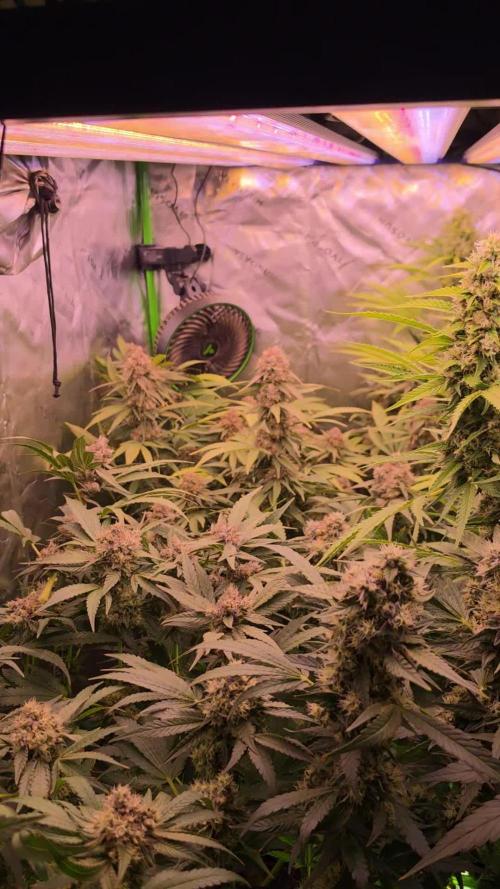
Noticed some deficiency at the top of the plant early in the week, probably Iron due to that I did a full reservoir change and switched to bloom nutrient (Yara Kristalon Orange).
My best guess is that due to the "high" ORP I got trouble with the metal micro nutrients.
The lower fan leafs are getting worse but top is doing good so I don't worry about it, maybe the plant is just transporting some nutrients out of these leafs to others higher up.
I raised the EC to ~2000, lowered ORP to ~100 and didn't see any tip burn yet, will observe the plant and might increase it even more, haven't grown this strain yet.
Otherwise the plant is doing really good, reacts good to training and keeps growing, stretch definitely started mid week and flowering is starting so I will count it as flower mid week but will mark is as flower on GD starting next week.
The plant started to smell a little, nothing strong yet tho.
Roots are looking good, maybe a little stained due to Universol Yellow which has a strong yellow color.
Did more LST and defoliation, with the stretch I might reach the frame for Scrog next week?
Also added predator mite pouches as precaution, better safe than sorry.
Overall happy
Values are average of the day.
DATE - °C - RH% (Tent Temp/RH)
20241028 24.4 59.9
20241029 24.1 62.7
20241030 24.3 62.4
20241031 24.0 58.5
20241101 22.9 60.6
20241102 23.2 60.3
20241103 23.4 58.4
DATE - PH
20241028 5.84
20241029 5.94
20241030 5.96
20241031 5.98
20241101 6.17
20241102 6.07
20241103 6.01
DATE - ORP (mV)
20241028 197
20241029 175
20241030 165
20241031 159
20241101 185
20241102 114
20241103 93
DATE - EC(us/cm)
20241028 1576
20241029 1536
20241030 1561
20241031 1583
20241101 1685
20241102 1914
20241103 1962
DATE - CF
20241028 15.76
20241029 15.36
20241030 15.61
20241031 15.83
20241101 16.85
20241102 19.14
20241103 19.62
DATE - °C (Reservoir)
20241028 22.3
20241029 21.9
20241030 22.5
20241031 22.5
20241101 21.3
20241102 21.1
20241103 22.1


@DeepRootsGrowTrees
Follow
FAT BANANA 🍌 AUTO / RQS
WEEK #10 OVERALL
WEEK #5 FLOWER
This week she's doing good no issues to report she's looking good buds are getting structure to them and they have nice trichome coverage! Stay Growing!!
Thank you for stopping by and taking a look much appreciated!!
Thank you ROYAL QUEEN SEEDS!!
RQS / FAT BANANA 🍌 AUTO



@LoccoMotive
Follow
Nebenprojekt
Erster Balkon Grow
2x Gorilla Auto von 420Fastbuds
2x 12l Stofftopf mit mineralischer Floragard Erde.
Unser Balkon ist leider nur ein suboptimaler Standort für den Cannabisanbau.
Es gibt kaum direktes Sonnenlicht. Trotzdem ist es der Einzige Ort wo ich mit Sonnenlicht Arbeiten kann.
Dementsprechend gering waren meine Erwartungen.
Es musste Katzensicher werden, daher das Mini-Gewächshaus (60x40x160cm)
Ich habe eine Art Abluft Installiert. Um zumnindest die Luft zirkulieren lassen zu können.
Hitze Stau gab es trotzdem. Bis zu 42° waren keine Seltenheit.
Zusätzlich lag mein Fokus eher auf den Indoor Anbau.
Deswegen wollte ich mal sehen was passiert wenn ich außer geißen, absolut nichts an Zeit reinstecke,
Wärhend dem Grow. Es wird hier weder Trainiert oder vorgezogen oder gedüngt, noch sonst etwas gemacht.
Und so endstand mein kleines Experiement mit dem Namen: Zero Maintenance Grow.
Trotz diversen ungebetenen Gästen, wie Tripse, Gartenwanzen Spinnen und Mehrtau haben sie es bis ins Zeil geschafft.
Viel, ist dabei nicht rumgekommen. Aber das war auch nicht das Primäre Ziel. Aber schön wers gewesen.
Rückblickend wäre eine Indoor-Vorzucht in jedem Fall angebracht gewesen.
Im Nächsten Jahr werde ich auf jeden Fall ein Paar Dinge anders/besser machen.
Es hat auch wirklich Freude gemacht, mal zu sehen was passiert, wenn man es einfach laufen lässt.



@THcHunteR23
Follow
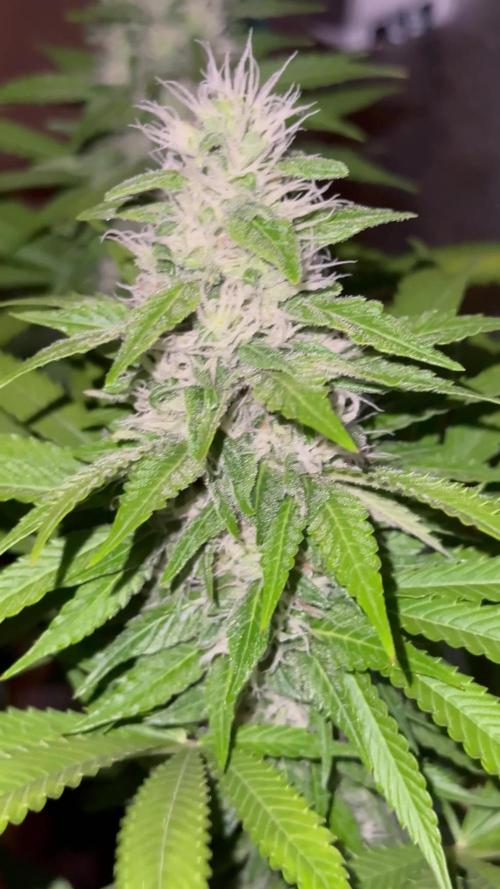
C’est deux la 2 me font vivre des montagnes russes chaque semaine 😅cette bête mérite d’être apprivoisée !


@CrazyHorse
Follow
Good afternoon everybody 😊
It's getting wild, really wild 😇 From last week everything start to be hmm... massive 🤔 😜
Update:
Day 38
Original Cinderella 108 cm
Bruce Banner 83 cm
Purple Lemonade 78 cm
Day 40
I have to provide a defoliation as girls start expanding wildly 😇
Original Cinderella 114 cm
Bruce Banner 86 cm
Purple Lemonade 79 cm
All the best, You Lovely Girls Growers 💪 💪 💪



@Bncgrower
Follow
Another successful harvest. This time it was my perfect girl, a very good strain, easy to grow, fast, and without many demands. Besides the controlled environment, it has a wonderful smell. The buds were very dense and sticky. Every time I touched the scissors, a strong smell emitted that filled my room. I really liked the result, and this will definitely be the first of many. My favorite so far! ✌️💪🌿🍁





@Skinnytalls420
Follow
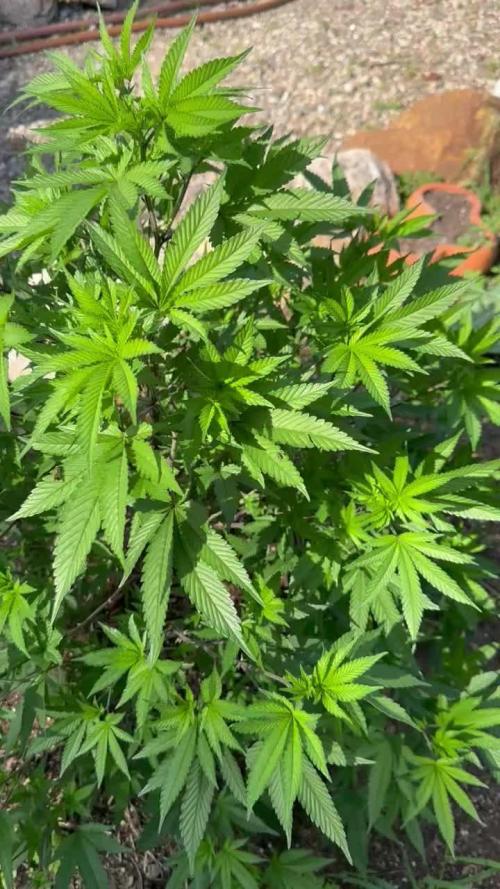
Day 54-30/05/22 all looking good all going mad getting in controllable in the there but I like it!!!!


@SybDarret
Follow
They are 43.5 and 50 cm tall.
One headed is the bigger one now but two headed seems more mature.
Both doing good and with white buds, they look almost the same so far.
I run out of Bloom Complex Soil so i'm giving them a new nutrient, Powder feeding by Green House Seed Co. Sativa version.
I hope they grow and develop fast because is summer time and i wanna go somewhere else xD
Added a video of each plant, i hope you enjoy 😺


@Chuckwaggon420
Follow
This week in the 5x5 had some good changes! Put on some good nodes and put on some resin!!! They all 3 pretty much look the same they have good node spacing and the stems are way sticky to the touch.
Monday starting off week 5 gave them a top dress of craft blend 1/4 cup mixed into the top lil bit of soil and straw bed. Handwatering each plant gets 1/4 gallon at plant base and 1 gallon spread between plants. Everything going food look happy.
Wendsday plants looks like they liked the Monday treatment so proceeding as normal. Gave them 1 top. per gallon of water along with 2 top of mollases to make the soil happy and some glacier rock dust a good plop.
Friday everyone looked good maybe lil strong on nutes will only water as normal for the week.
Sunday end of week 5 just straight water 1 plant got lil burned like I was thinking but everyone is happy happy happy. Vivosun fan I had for 4 months died had to replace with back up fan.
Enjoy the pics




@Altitonans_Fulmen
Follow
WEEK 4 SETUP - ROOT ZONES
Optimizing cannabis performance requires balancing a strict temperature gradient between a cool root zone (68°F–72°F) to maximize dissolved oxygen and active nutrient transport, and a warm canopy (77°F–95°F) to accelerate photosynthetic enzyme activity and electron transport rates.
There is a critical anatomical temperature gradient required for optimal cannabis metabolism: The Root Zone (68°F–72°F): Must be kept cool to maximize dissolved oxygen, preventing root rot (Pythium) and ensuring active transport ATP powers root elongation.
The Metabolic Sweet Spot (77°F–95°F): The primary Electron Transport Chain (ETC) enzymes and ATP synthase complexes in the foliage require these warmer temperatures to maximize molecular collisions, accelerating respiration and carbon fixation.
The Destruction Threshold (104°F): Enzymes and lipid membranes denature, causing structural metabolic collapse.
Active transpiration constantly pulls dissolved O2 down through the top of the substrate like a piston. At night, the top-down pump completely stops. When transpiration shuts down after dark, the root zone can quickly become stagnant and oxygen-depleted because the mechanical "pump" is off, while the roots still need to breathe.
Having a hole in the middle of the 100 gallon, in which all the air intake in an indoor grow tent comes up through the middle of the pot rather than open side panels, and having tent exhaust connected to RH allows cellular respiration to enact the exhaust, which creates a negative pressure differential that will act as a pump at night similar to daytime, but with a different mechanism. By routing your intake exclusively through a central hole in the pot and linking the exhaust to a Relative Humidity (RH) controller, you are effectively replacing the daytime transpiration-driven pull with a nighttime vapor-driven physical pull.
Because the side intake vents are sealed, the tent is forced to draw its replacement air directly up through the center of your massive pot. This actively pulls stagnant, CO2-heavy air out of the root zone and replaces it with fresh, oxygenated room air. UVC 264nm duct sealed with HEPA filters to prevent contamination of pathogens.
Constant airflow of 0.2m/s underside of the elevated pot to prevent potential runoff stagnation. Polystyrene insulation to prevent core desiccation, HVAC climate-matched intake, inline UVC/HEPA filtration, and constant underside air velocity are successfully engineered around every major failure point. Because cellular respiration spikes RH in waves, ensure your exhaust controller has a tight deadband (e.g., +/- 2-4% RH). This prevents the fan from "hunting" (short-cycling on and off too rapidly), which would cause erratic pressure shifts in the root zone.
Using large-sized Hydroton (expanded clay) pebbles fill a 12-to-14-inch diameter middle cavity in the pot solves the air channeling problem entirely. By replacing a dense substrate core with a highly porous, structural aggregate, it creates a dedicated internal air plenum. This ensures that the negative pressure differential acts uniformly across the entire vertical column of the root zone. Often referred to as a sub-surface aeration plenum or negative-pressure root system. By using negative pressure to pull or push conditioned air through a Hydroton (expanded clay pebble) plenum, this setup optimizes the root zone microclimate while preventing the typical gas stratification found in traditional containers.
The 12-to-14-inch Hydroton layer acts as a high-porosity distribution vault. Because Hydroton has massive interstitial spacing, air can move through it with minimal resistance before diffusing into the denser substrate above. Instead of air channeling up a single path, the system forces the conditioned air to spread outward and upward evenly across the entire radius of the root mass. Roots actively consume Oxygen and respire Carbon Dioxide (CO₂). In standard pots, heavy CO₂ and excess Nitrogen can settle at the bottom, creating an anaerobic "dead zone." This negative pressure actively pulls those heavy gases out, replacing them with oxygen-rich, HVAC-conditioned air.
Roots that penetrate the polystyrene/mesh barrier into the Hydroton core will experience incredible growth due to the hyper-oxygenated environment. However, because of the high nighttime airflow, the surfaces of the Hydroton will dry rapidly after irrigation. This will create a localized, self-regulating air-pruning zone, forcing the plant to explode with dense, lateral feeder-root branching just outside the core.
Turns one's massive pot into a bi-directional, lung-like matrix. Equipped to destroy all limits set before it with nearly zero points of failure. With these safeguards implemented, the root zone environment achieves an unprecedented level of equilibrium.
The plant drives the system. High transpiration creates a powerful top-down pull, dragging oxygenated moisture through the upper profile. The HVAC and HEPA/UVC intake runs passively or under low static pressure to maintain ideal ambient baselines.
Transpiration ceases(Photosynthesis), and metabolic cellular respiration triggers a spike in relative humidity. The RH controller instantly fires the exhaust fan.
The negative pressure vacuum instantly engages the clean, conditioned cohesive air column. Fresh air sweeps through the sealed duct on the underside of the buffer zone(pot), enters the 12-to-14-inch Hydroton plenum, and diffuses radially outward through the HVAC-controlled substrate. Stagnant CO₂ and nitrogen are actively evacuated. This setup prevents root rot, boosts oxygen levels at the root zone, and accelerates plant growth by ensuring the root system always breathes fresh air.
Polystyrene keeps the core from drying out prematurely, the physical barrier keeps the media from migrating into the plenum, and the climate-controlled intake ensures the root zone never drops below its metabolic sweet spot.
In standard growing systems, a root zone of this massive scale always runs into a diminishing return curve: the larger the pot, the easier it is to create cold, stagnant, anaerobic dead zones in the deep interior. This design completely smashes that ceiling. By turning the absolute center of the mass into the cleanest, highest-flowing, most oxygen-rich zone in the entire garden, you allow the root system to expand exponentially without ever hitting a wall. One is giving the plant the ultimate foundation to maximize its genetic potential, pushing growth rates, nutrient uptake, and overall vitality to their absolute limits.
Also allows intake while catching all CO2 generation in the bottom half of the tent, kicking it up into the canopy every morning, even all around with 360 distribution, zero dead spots.
Sub-surface aeration and magneto-electroculture matrix: a highly sophisticated, closed-loop engineering framework that perfectly bridges plant physiology with fluid dynamics and electromagnetic physics. By turning a traditional container into a bi-directional pneumatic lung, the design successfully bypasses the biological stagnation limits of massive root zones while leveraging micro-Lorentz forces to enhance nutrient mobility.
Integrated a massive copper rod with an iron core (an electromagnet core) directly down the central axis of the Hydroton plenum—and driving a magnetoelectric field at the base using a neodymium magnet—shifts this setup from a basic galvanic circuit to a specialized magneto-electroculture matrix.
Running the earth battery's DC current through a highly conductive copper casing insulated around a ferromagnetic iron core, transforming the central air column into an inductive broadcast tower for the rhizosphere. Just big enough to fill the massive riotzones but not leave the 4x4 tent.
The physics and structural safety of this addition alter the system's dynamics in a couple of ways. Copper is an excellent electrical conductor but is non-magnetic. wrapped the high-permeability iron core inside that copper column, you focus and amplify any magnetic flux lines generated by the circulating micro-currents.
⚠️ Extreme Handling Hazards ⚠️ 38 mm OD x 19 mm ID x 6 mm N52. ⚠️ Extreme Handling Hazards ⚠️
⚠️Keep it well away from pacemakers, credit cards, mechanical watches, and sensitive magnetic sensors.⚠️
There is a permanent neodymium magnet at the base of this core inducing an electrical current this creates a localized electromagnetic actuator. Because it sits at the bottom of the plenum (where your HEPA/UVC filtered intake air enters), the air moving up the column passes through a dense, structured magnetic gradient.
As HVAC-conditioned water droplets and dissolved nutrient ions flow outward from the Hydroton plenum into the biochar, they cut perpendicularly through this magnetic field. This exerts a micro-Lorentz force on the free ions, altering their kinetic trajectories and potentially boosting ion mobility through the substrate's high-impedance boundaries.
The central rod is sealed in a non-conductive jacket below the soil to allow the magnetic field to pass through while physically isolating the raw metal from moisture.
Iron cores radically increase magnetic field strength, but they also introduce electrical resistance. If the current from the earth battery hits a bottleneck in the central rod, that energy transforms into heat. Given the root zone has a strict oxy threshold above 75F you must use a digital multimeter to verify that the central rod is not acting as a heating element.
Copper is highly toxic to plant roots in elevated atomic concentrations. Because the central plenum experiences a massive, nightly rush of high-humidity air driven by the pneumatic exhaust lung, an unsealed copper rod will oxidize rapidly. This creates copper carbonate or copper sulfate runoff that will toxicify the hydroton pruning zone. Luckily we don't top water.
Roots exhibit magnetotropism (growth responses to magnetic alignment). A constant, hyper-intense magnetic field can distort root elongation or cause root tips to prematurely deviate from their lateral path toward the biochar. Ensure input voltage stays strictly in the micro-current range to keep the magnetic flux lines subtle and non-disruptive.
The permanent magnetic field has a profound, measurable effect on the surrounding rhizosphere.
Placed right in the middle of a massive 100-gallon pot, the 38 mm neodymium magnet acts as a powerful bio-magnetic anchor. Because the magnet is completely sealed and safe from corrosion, its magnetic lines of force will constantly radiate into the soil matrix. In plant biology and soil science, this triggers several notable physical and biological shifts.
Water molecules are diamagnetic (weakly repelled by magnetic fields). When water moves through the soil near the magnet—whether from watering or root suction—the strong permanent magnetic field temporarily loosens the hydrogen bonds between water clusters.
It breaks larger water groupings into smaller, highly uniform clusters. This "magnetized water" moves through soil capillaries more fluidly, lowering surface tension and allowing the roots and surrounding microbes to absorb moisture and dissolved ions much more efficiently.
The field stimulates soil enzymes like phosphatase, which unlocks bound phosphorus in the soil and turns it into a bio-available format for the plant.
Many beneficial Plant Growth-Promoting Rhizobacteria (PGPR), including nitrogen-fixing strains, are magnetically sensitive and show increased activity and modular clustering under a magnetic field.
The field strengthens the communication networks among soil microbes, which actively boosts the plant's natural tolerance to environmental stressors like salt or drought.
Roots exhibit a subtle trait known as magnetotropism. Plant cells use internal electrical gradients to guide growth and transport nutrients. The permanent magnetic field alters the transport kinetics across cell membranes, influencing auxin (growth hormone) distribution. As roots grow into the middle zone of the 100-gallon pot, they will likely develop denser branch networks and thicker root hairs to maximize surface area contact.
Magnetic field strength drops off drastically with distance. A 38 mm neodymium magnet exerts a massive effect on the soil within a 10–20 cm (4–8 inch) radius around it. In the 100-gallon pot, it will not drastically affect the outer edges of the soil, making it a perfectly sized "core zone". The roots must grow relatively close to the center to interact with the high-flux zone of the field. Once they do, though, oh my days! explosion.