


Likes
Comments
Share

@GreenHobbit
Follow
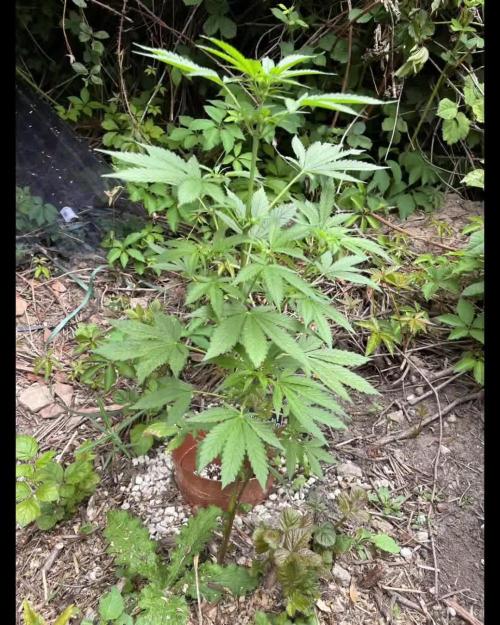
Und damit ist auch die Cinderella Auto endgültig fertig. 🌿✂️
Nach der Trocknung ging sie zusammen mit der Purple Punch durch die Trimbowl. Am Ende sind bei Cindy 36 g trockene Blüten übrig geblieben. Etwas mehr Material landet dabei natürlich im Trim als bei einer sorgfältigen Handarbeit, aber da der Verschnitt sowieso weiterverarbeitet wird, ist mir die enorme Zeitersparnis das definitiv wert.
Ein weniger schönes Thema waren leider die Seeds. Auch in Cindy habe ich einige gefunden. Die Gelato war allerdings mit Abstand am stärksten betroffen, während mir bei der Purple Punch bisher kein einziger aufgefallen ist. Woher der Pollen letztendlich kam, lässt sich im Nachhinein nicht mehr sicher feststellen.
Geruchlich ist Cindy getrocknet sehr exotisch geworden. Allerdings fehlt mir genau das Aroma, das ich von der Cinderella aus früheren Zeiten in Erinnerung habe. Das macht sie nicht automatisch schlechter – nur einfach anders als erwartet.
Bei der Wirkung dreht sie den Spieß dann komplett um. Für eine sativadominante Sorte hätte ich mit etwas deutlich Aktiverem gerechnet. Stattdessen ist sie von den drei bisher getesteten Hobbit-Hole-Damen mit Abstand die schwerste Nummer.
Gelato war mit etwa 4/10 angenehm, aber sehr kurzlebig. Purple Punch brachte ein schönes, gemütliches 7/10-High über mehrere Stunden. Und dann kommt Cindy mit 9/10 um die Ecke und erklärt Körper und Gehirn gleichzeitig zum Sperrgebiet. 🤣
Geschmacklich ungewöhnlich, leider versamt und überhaupt nicht die Cinderella, die ich erwartet hatte – aber bei der Wirkung hat sie definitiv einen bleibenden Eindruck hinterlassen.

Likes
15
Share


@SweetheartOG
Follow
Girls are doing well with the LST. Kosher cake was topped last week and now has what looks like 8 heads.
3rd of June have given the girls living soil veg.


Likes
4
Share


@CannaIGrow
Follow
This plant plus one more started to wilt earlier on in the week, I figured it was probably time to transplant seeing as they had been in the solo cups for 2 weeks. After transplant plants seemed to be happy again. I introduced amino acids this week as well. They are getting the grease spray and drench program
Likes
Comments
Share


@Robom069
Follow
Going into the last weeks iam very happy with my plants
they´re almost too big
but i love the big buds and hope they get very dense
left acid dough
right black domina

Likes
6
Share


@kevxyn
Follow
Die Kleine hat sich nach der Entlaubung letzte Woche wieder super gemacht! Ich lass sie noch ’ne Woche schieben, dann geht’s in die Blüte 😎🌱
Likes
2
Share


@CeeJayy420
Follow
The plant was harvested and trimmed, yielding a total of 112 grams. Buds are notably dense, pleasantly heavy, and visually striking. Their surface exhibits a green velvet-like shimmer, which may indicate optimal trichome density and light-reflective resin coverage. This supports the hypothesis that late-stage environmental conditions—such as controlled humidity and light spectrum—contributed positively to resin production and bud structure. Further analysis during curing will help validate terpene retention and overall potency. Initial results suggest a successful harvest.

Likes
34
Share


@Kynareth
Follow
La planta se está desarrollando bien y parece que la deformación inicial de las hojas va remitiendo, esperaré hasta el próximo par de hojas y realizaré poda apical y LST antes de colocar la malla scrog.

Likes
9
Share


@0JuJu0
Follow
Planted in 25L Pot with pre-fertilized compost soil and a little bit of coco, perlite and little pieces of old woodsticks.
As a fly protection i use spiders and there web to solve this problem because thats the only one i have. So when you see in my tent, webs and the little bit of soil on the bottom what keeps the tentfloor dry and is also good for the spiders, please keep that in your mind.
Likes
42
Share


@GanjaReaper
Follow
This week was a very cold week. 13 to 18 degrees during the day and at night like 10 to 13 degrees.
Therefore the buds didn't swell properly. Luckly one Critical Kush is still swelling but the other one seems to have slowed down.
It's oke, i knew this would happen and the kushes might not finish in time.
Might harvest my Shamans at the end of the month. The kushes I will keep until half/end oktober.
Since this is only a outside fungrow, I'm not making any effort to heat up the climate by putting heaters arround the plants.
Critical Kushes are in their 3th week of flowering.
Somehow GD minimalize the videos after putting 10pictures on the diary, Just click on the next picture and
click on the right arrow to go to the videos.
Have fun looking arround :)


Likes
16
Share


@TerpTurtle
Follow
-Starting to sugar up and pistil structures getting vigor pretty fast!
-Stretch was moderate, remained very active with the defoliation during
-Planning to harvest the Blackcherry Sherb clone & move in a Unicorn Poop x Purple Gelato freebie I got from NASC. Check out my Blackcherry Sherb diary for pics and videos of the pheno I found (:

Likes
22
Share


@Spliffi
Follow
Week 11👍🤙👍🌱
I can see the end. This Contest have been a eye opener!!
Jon Dabs
Check them out here:
https://jondabs.com
@jondabs Instagram
The Sponsors
Check them out here:
Dutch Passion
https://dutch-passion.com/en/
Hydroponic.co.za
https://hydroponic.co.za/hydroponic/harvesting-and-growing-accessories/
Bud Juice
https://www.gohydro.co.za
The Best Grow
https://thebestgrow.co.za
Dynomyco
https://www.dynomyco.com
Nuclear Roots
https://www.nuclearroots.co.za
Photronic
https://shop.photronic.net
Special Thanks to Hydroponic.co.za. I buy all my products from them. Best service.
Daily updates coming...
Likes
Comments
Share

@aldewo
Follow
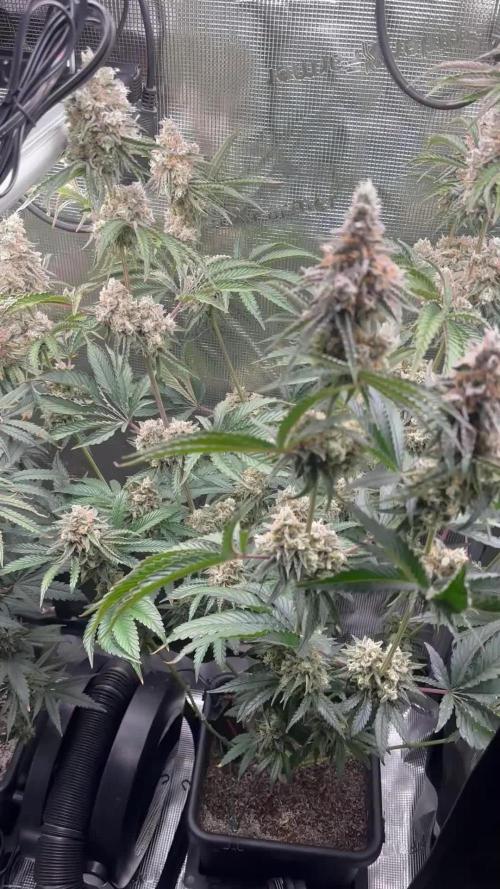
Mega Strain bin super happy 😊. Es läuft alles sehr gut ohne irgendwelche Probleme, muss so gut wie nichts machen 🤗. Die ersten Trichome sind auch schon Bernstein geworden und nach der Mary Jane wird auch geerntet und gewaschen. Leider habe ich es nicht mehr vorher geschafft.

Likes
3
Share


@DrewZenRox
Follow
Into 2nd day of week 3.
Jealousy/Green Poison inside the Epic Attic Tent 1.2x1.2x1.6. Growing Under 'Karma EVO 3'
SkyWalker OG Inside unbranded 60x60x120 Tent. Growing under 'Karma Stealth 1000'


Likes
14
Share


@GoldenWeedGrower
Follow
D78/F34 - 17/06/23 - I changed light schedule hoping she's going better. (6 only red ligh and 7 red-white)
D79/F35 - 18/06/23 - New lights schedule is running
D80/F36 - 19/06/23 - Added water and integrators EC 1.0 and pH 6.4
D81/F37 - 20/06/23 - Nothing to report
D82/F38 - 21/06/23 - Added water and nutes EC 1.0 and pH 5.7
D83/F39 - 22/06/23 - Temp is too high for both water and environment. I see signals of suffering on the flowers (foxtailing)
D84/F40 - 23/06/23 - I'm trying to keep the Tremp under control but isn't easy. To lowering water temp (that now is about 26 °C) I'm adding some ice to the water

Likes
2
Share


@Altitonans_Fulmen
Follow
For most crops, a slightly acidic soil pH between 6.0 and 6.8 is ideal because it optimizes nutrient availability. When soil pH rises above 7.0 (alkaline), the concentration of hydrogen ions H+ drops significantly, and they are replaced by calcium, magnesium, or sodium ions on the clay colloid exchange sites. To naturally lower alkaline soil pH, you can add organic matter (carbon-rich materials), which produces weak organic acids as it decomposes. Maintaining this slightly acidic range stimulates a highly active, diverse microbial community; these microbes decompose organic matter and release carbon dioxide CO2, which plants absorb through their roots and leaves to boost photosynthesis and sugar production. Furthermore, the added organic carbon acts like a sponge, drastically improving the soil's water-holding capacity.
While soil biological activity does involve cellular electron transport, electrical conductivity (EC) in soil is actually a measure of dissolved mineral salts, not a voltage carried by individual microbes. Soil microorganisms secrete organic acids and chelate metallic and non-metallic minerals, transforming locked-up inorganic compounds into bioavailable organic complexes. Unlike harsh synthetic fertilizers that can dehydrate soil life in high concentrations, these naturally chelated nutrients safely nourish the plant, creating a thriving, self-sustaining ecosystem where plants can efficiently synthesize their own food.
Metal-based: Could include elements like iron, manganese, copper, or zinc, which are essential nutrients for plants but can exist in forms not readily accessible.
Non-metal-based: Examples like calcium carbonate, phosphate, or sulfur are also important for plant growth and potentially serve as building blocks for the organic salt.
Chelation in a plant medium is a chemical process where a chelating agent, a negatively charged organic compound, binds to positively charged metal ions, like iron, zinc, and manganese. This forms a stable, soluble complex that protects the micronutrient from becoming unavailable to the plant in the soil or solution. The chelate complex is then more easily absorbed by the plant's roots, preventing nutrient deficiency, improving nutrient uptake, and enhancing plant growth. Chelation is similar to how microorganisms create organic salts, as both involve using organic molecules to bind with metal ions, but chelation specifically forms ring-like structures, or chelates, while the "organic salts" of microorganisms primarily refer to metal-complexed low molecular weight organic acids like gluconic acid. Microorganisms use this process to solubilize soil phosphates by chelating cations such as iron (Fe) and calcium (Ca), increasing their availability.
Added sugars stimulate soil microbial activity, but directly applying sugar, especially in viscous form, can be tricky to dilute. Adding to the soil is generally not a beneficial practice for the plant itself and is not a substitute for fertilizer. While beneficial microbes can be encouraged by the sugar, harmful ones may also be stimulated, and the added sugar is a poor source of essential plant nutrients. Sugar in soil acts as a food source for microbes, but its effects on plants vary significantly with the sugar's form and concentration: simple sugars like glucose can quickly boost microbial activity and nutrient release. But scavenge A LOT of oxygen in the process, precious oxygen. Overly high concentrations of any sugar can attract pests, cause root rot by disrupting osmotic balance, and lead to detrimental fungal growth. If you are one who likes warm tropical high rh, dead already. Beneficial, absolutely, but only to those who don't run out of oxygen. Blackstrap is mostly glucose, iirc regular molasses is mostly sucrose. Sugars, especially sucrose, act as signaling molecules that interact with plant hormones and regulate gene expression, which are critical for triggering the floral transition. When sucrose is added to the growth medium significantly influences its effect on floral transition.
Probably wouldn't bother with blackstrap given its higher glucose content. Microbes in the soil consume the sugar and, in the process, draw nitrogen from the soil, which is the same nutrient the plant needs. Glucose is not an oxygen scavenger itself, but it acts as a substrate for the glucose oxidase (GOx) enzyme, effectively removing oxygen from a system. Regular molasses (powdered if you can), as soon as she flips to flower or a week before, the wrong form of sugar can delay flower, or worse. Wrong quantity, not great either. The timing of sucrose application is crucial. It was more complicated than I gave it credit for, that's for sure. When a medium's carbon-to-nitrogen (C:N) ratio reaches 24:1, it signifies an optimal balance for soil microbes to thrive, leading to efficient decomposition and nutrient cycling. At this ratio, soil microorganisms have enough nitrogen for their metabolic needs, allowing them to break down organic matter and release vital nutrients like phosphorus and zinc for plants. Exceeding this ratio results in slower decomposition and nitrogen immobilization, while a ratio below 24:1 leads to faster breakdown and excess nitrogen availability.
Carbon and nitrogen are two elements in soils and are required by most biology for energy. Carbon and nitrogen occur in the soil as both organic and inorganic forms. The inorganic carbon in the soil has minimal effect on soil biochemical activity, whereas the organic forms of carbon are essential for biological activity. Inorganic carbon in the soil is primarily present as carbonates, whereas organic carbon is present in many forms, including live and dead plant materials and microorganisms; some are more labile and therefore can be easily decomposed, such as sugars, amino acids, and root exudates, while others are more recalcitrant, such as lignin, humin, and humic acids. Soil nitrogen is mostly present in organic forms (usually more than 95 % of the total soil nitrogen), but also in inorganic forms, such as nitrate and ammonium. Soil biology prefers a certain ratio of carbon to nitrogen (C:N). Amino acids make up proteins and are one of the nitrogen-containing compounds in the soil that are essential for biological energy. The C:N ratio of soil microbes is about 10:1, whereas the preferred C:N ratio of their food is 24:1 (USDA Natural Resource Conservation Service 2011). Soil bacteria (3-10:1 C:N ratio) generally have a lower C:N ratio than soil fungi (4-18:1 C:N ratio) (Hoorman & Islam 2010; Zhang and Elser 2017). It is also important to mention that the ratio of carbon to other nutrients, such as sulfur (S) and phosphorous (P) also are relevant to determine net mineralization/immobilization. For example, plant material with C:S ratio smaller than 200:1 will promote mineralization of sulfate, while C:S ratio higher than 400:1 will promote immobilization (Scherer 2001).
In soil science and microbiology, the C:S ratio helps determine whether sulfur will be released (mineralized) or tied up (immobilized) by microorganisms.
A carbon-to-sulfur (C:S) ratio smaller than 200:1 promotes the mineralization of sulfate, when the C:S ratio is low, it indicates that the organic matter decomposing in the soil is rich in sulfur relative to carbon. Microorganisms require both carbon and sulfur for their metabolic processes. With an excess of sulfur, microbes take what they need and release the surplus sulfur into the soil as plant-available sulfate
A carbon-to-sulfur (C:S) ratio higher than 400:1 will promote the immobilization of sulfur from the soil. This occurs because when high-carbon, low-sulfur materials (like sawdust) are added to soil, microbes consume the carbon and pull sulfur from the soil to meet their nutritional needs, temporarily making it unavailable to plants.
200:1 C:S 400:1: In this range, both mineralization and immobilization can occur simultaneously, making the net availability of sulfur less predictable.
This dynamic is similar to how the carbon-to-nitrogen (C:N) ratio regulates the availability of nitrogen in soil. Just as microbes need a certain amount of nitrogen to process carbon, they also require a balanced amount of sulfur. Both mineralization and immobilization are driven by the metabolic needs of the soil's microbial population.
Sulfur is crucial for protein synthesis. A balanced ratio is particularly important in relation to nitrogen (N), as plants need adequate sulfur to efficiently use nitrogen. A severely imbalanced C:S ratio can hinder the efficient use of nitrogen, as seen in trials where adding nitrogen without balancing sulfur levels actually lowered crop yields.
Maintaining a balanced carbon-to-sulfur (C:S) ratio is highly beneficial for plant growth, but this happens indirectly by regulating soil microbial activity. Unlike the C:N ratio, which is widely discussed for its direct effect on nutrient availability, the C:S ratio determines whether sulfur in the soil's organic matter is released (mineralized) or temporarily locked up (immobilized).
Glucose will hinder oxygenation more than sucrose in a solution because glucose is consumed faster and has a higher oxygen demand, leading to a more rapid decrease in oxygen levels. When cells respire, they use oxygen to break down glucose, and this process requires more oxygen for glucose than for sucrose because sucrose must first be broken down into glucose and fructose before it can be metabolized.
In a growth medium, glucose is a more immediate and universal signaling molecule for unicellular and multicellular organisms because it is directly used for energy and triggers a rapid gene expression response. In contrast, sucrose primarily acts as a signaling molecule in plants to regulate specific developmental processes by being transported or broken down, which can be a more complex and slower signaling process.
Critical stuff.
Likes
1
Share

@RooftopFarmer
Follow
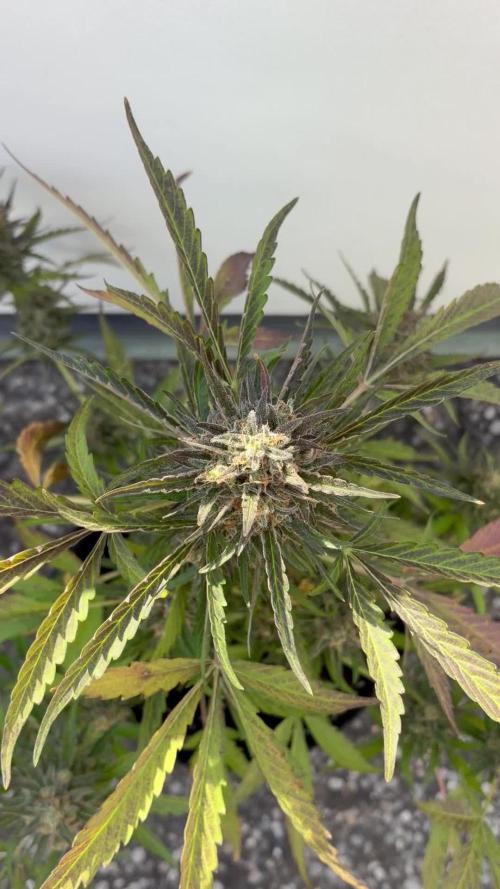
Guava Sundae – Week 10 (Fast Buds Outdoor 2026)
The weather was okay this week. Guava Sundae is almost ready and is therefore being fed less now. She is fully in flower.
The aroma is already extremely strong and very pleasant. Some of her leaves have developed a slight purple tint. I checked the trichomes again and they are much more milky now. Quite a few are already turning amber. No more nutrients from now on as harvest is approaching soon.


Likes
13
Share


@DieselKush
Follow
Oct.29 - We transplanted the girls into soil since they are moving into vegetation phase
Nov.4 - Watered each plant 250mL, 0.25mL of each nutrient for each girl
Likes
4
Share


@Creme_De_La_Creme
Follow
Autopot system was turned on day 15 !!
Now everything is on automatic 🦍🍓🦍🍓
Im not touching this girl until day 50 or some like that, no LST, no topping, just a stress free VEG, lets go !
NO DEFOLIATION AT ALL