The Grow Awards 2026 🏆
Likes
Comments
Share
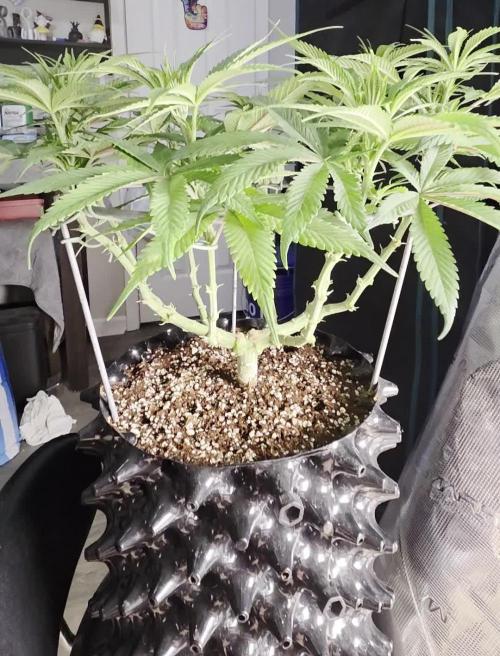
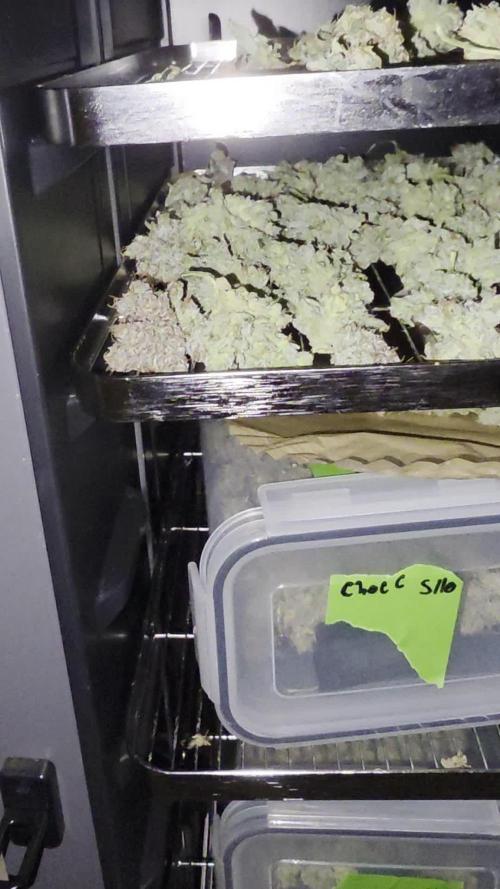
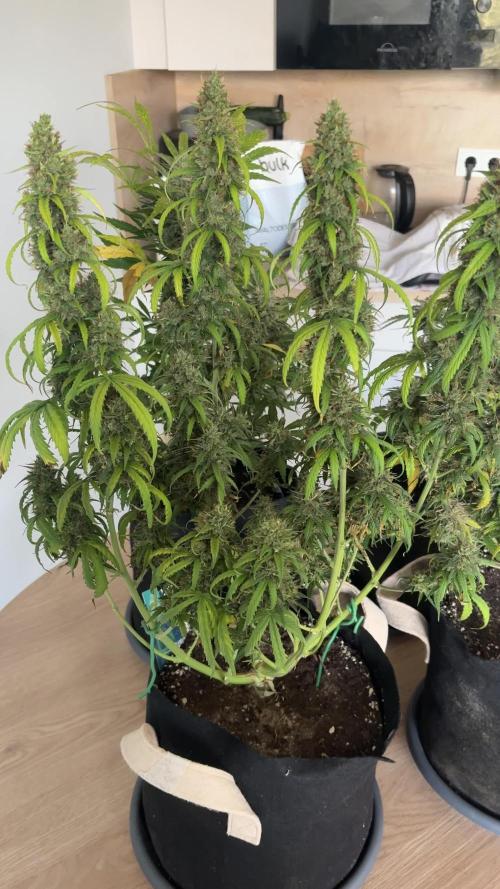
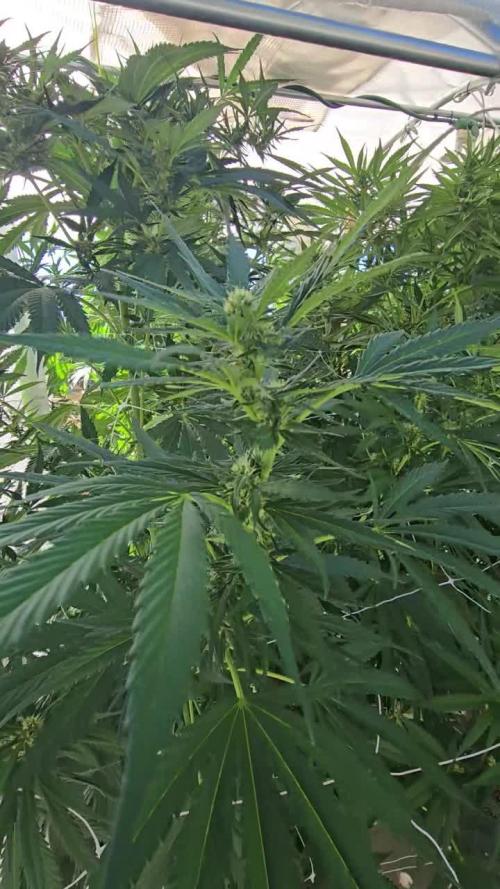
Pictures are taken on day 105 / flower day 49 📸 ********************************************** They getting super frosty and gaining weight, I hope the buds getting bigger in size. 🌹 The nematodes already killed all fungus gnades. 🐛 Happy growing🌱
Likes
5
Share
Both growing under and in exactly the same conditions and substrates and nutes. Ones so much larger both are topped.
Likes
2
Share
En esta nueva semana, he subido la dosis de Bio-Grow 1ml/l más, la planta en sí a desarrollado un tronco grueso con grandes hojas, lo que viene siendo una índica. No presenta ningún defecto, carencia o exceso. Espero que en 1-2 semanas empiece a tirar pistilos, os traeré las mejores fotos y videos que pueda, dulces fumadas máquinas.💀.
Likes
43
Share
[DAY 71] - 5/12/2022 - TS1000 40 cm distance - 100% dimmer: 144 watt; - Light cycle 20/4; - Height: 68 cm from clay (the other one is 80 cm from clay); - 23° C - 70% RH during light - 19° C - 75% RH during night; - EC 1 - PH 6; - Defoliation. [DAY 72] - 6/12/2022 - 23° C - 70% RH during light - 19° C - 75% RH during night; - EC 1.3 - PH 6; - This week I changed the ratio between A (1.5ml/l) and B (2.5ml/l). [DAY 73] - 7/12/2022 - 22.5° C - 70% RH during light - 18° C - 80% RH during night; - EC 1.1 - PH 6. [DAY 74] - 8/12/2022 - 22° C - 70% RH during light - 18° C - 80% RH during night; - EC 1 - PH 6; - Tomorrow I will give her a big nutrients booster. [DAY 75] - 9/12/2022 - 22° C - 70% RH during light - 20° C - 75% RH during night; - EC 1.3 - PH 6; - Video. [DAY 76] - 10/12/2022 - 24° C - 68% RH during light - 21° C - 75% RH during night; - EC 1.6 - PH 5.9. [DAY 77] - 11/12/2022 - 24° C - 67% RH during light - 19.5° C - 73% RH during night; - EC 1.7 - PH 5.8.
Likes
27
Share
All doing perfect not alot to say, defoliated on 18/1/21 and tied a few branches where I could to make a little more room. Maybe 3weeks then ripen +flush Daily updates
Likes
120
Share
Well, these ladies are growing like weeds! 😃 I am getting ready to do their second topping. They seem to be taking nutrients well. I am planning on vegging them out for at least 3 more weeks. Going to have some monsters! 😎 Sincerely, thanks for all the support. 🙂
Likes
12
Share
This is a great strain from a great seed company in Canada, 34 street seeds. I have had great results from germination to harvest with their strains and these Cookies are no different. Nice tight nugs, some great tasting hard hitting smoke 💨 They grew easily enough, no disease or weirdness that couldn’t be solved by proper NPK. This would be a great strain for beginners looking for an easy harvest, with some good bud to show. I definitely did not maximize the potential of this strain this go around, but I still have 2 seeds from the 5 and it will make it back to my garden again. ❤️🇨🇦😎💨
Processing
Likes
5
Share
Son fotos y videos de múltiples cultivos debido a que nunca e realizado un seguimiento como tal, espero realizar uno ahora! Nutrientes Utilizados en general Trybac y Trypack biobizz. Las criticas siempre serán bien recibidas!😋 Espero les guste el contenido!
Likes
7
Share
Onto the next week of flower. Going on a short trip away for 2 days from 17-19th, so the reservoirs will be full before we leave. Got back to more growth and had to raise the light up. Ladies looking great and getting big. We are a few days before lollipop so the tent is a bit humid but not bad. It will be easier to keep VPD at 1.2 after day 50 or so when some of that unneeded growth is out of there. Lollipop done on 21st and 22nd. Next on 23rd to finish up. Things are getting frosty with the CropSalt Bloom nutrients. Ladies didn't mind the haircut one bit Buds are starting to swell!
Likes
3
Share
Buenas farmers!! Después de pasarnos tres dias con sólo agua volveremos con la mitad de nutrientes durante los próximos dos riegos, ya empezamos a prepar nuestras plantas para la fase final ! Un olor espectacular y mucha resina espero guste buenos humos family!💚
Likes
Comments
Share
@Simba732
Follow
❇️ Ms Northern is growing like she has bills to pay ❇️ I still haven’t fed any bottled nutrients because her soil was well amended ❇️ The growth looks good, the branches are coming along so we can begin training. ❇️ She recovered from her defoliation and is on going
Likes
11
Share
Likes
18
Share
Green light is radiation with wavelengths between 520 and 560 nm and it affects photosynthesis, plant height, and flowering. Plants reflect green light and this is why they appear green to our eyes. As a result, some growers think that plants don’t use green wavelengths, but they actually do! In fact, only around 5 – 10% of green light is reflected from leaves and the rest (90 – 95 %) is absorbed or transmitted to lower leaves [1]. Green wavelengths get used in photosynthesis. Chlorophyll pigments absorb small amounts of green wavelengths. Light that doesn’t get absorbed is transmitted to leaves that are shaded out from direct light. This means that leaves at the bottom of the canopy get more green light than leaves at the top. A high proportion of green wavelengths compared to other colors tells lower leaves that they are being shaded out, so they are able to react accordingly. Lower leaves may react by opening or closing their stomata or growing longer stems that help the leaves reach brighter light [1, 2, 3]. When it comes to growing cannabis, many cultivators are interested in the quality of light used for the flowering stage. In many plants, flowering is regulated by two main photoreceptors: cryptochrome and phytochrome. Both photoreceptors primarily respond to blue light but can also respond to green, although to a lesser extent. Green can accelerate the start of flowering in several species (although cannabis has yet to be tested) [1, 4, 5]. However, once flowering has begun, it’s important to provide plants with a “full spectrum” light that has high amounts of blue and red light, and moderate amounts of green, in order for photosynthesis to be optimized. Green light mediates seed germination in some species. Seeds use green wavelengths to decide whether the environment is good for germination. Shade environments are enriched in green relative to red and blue light, so a plant can tell if it is shady or sunny. A seed that senses a shaded environment may stay dormant to avoid poor growing conditions [1]. Some examples of plant species where researchers have documented this response are: ryegrass (a grass that grows in tufts) and Chondrilla (a plant related to dandelion) [1, 6]. Although green wavelengths generally tell plants NOT to germinate, there are some exceptions! Surprisingly, green wavelengths can stimulate seed germination in some species like Aeschynomene, Tephrosia, Solidago, Cyrtopodium, and Atriplex [1, 6, 7]. Of course, light is not the only factor affecting seed germination – it’s a combination of many factors, such as soil moisture, soil type, temperature, photoperiod, and light quality. When combined with red and blue light, green can really enhance plant growth [1, 8]. However, too much green light (more than 50% of the total light) can actually reduce plant growth [8]. Based on the most current research, the ideal ratio of green, red, and blue light is thought to be around 1:2:1 for green:blue:red [9]. When choosing a horticultural light, choose one that has high amounts of blue and red light and moderate amounts of green and other colors of light. Not many studies can be found about the effect of green light on cannabis growth or metabolism. However, if one reads carefully, there are clues and data available even from the very early papers. Mahlberg and Hemphill (1983) used colored filters in their study to alter the sunlight spectrum and study green light among others. They concluded that the green filter, which makes the environment green by cutting other wavelengths out, reduced the THC concentration significantly compared to the daylight control treatment. It has been demonstrated that green color can reduce secondary metabolite activity with other species as well. For example, the addition of green to a light spectrum decreases anthocyanin concentration in lettuce (Zhang and Folta 2012). If green light only reverses the biosynthesis of some secondary metabolites, then why put green light into a growth spectrum at all? Well, there are a couple of good reasons. One is that green penetrates leaf layers effectively. Conversely red and blue light is almost completely absorbed by the first leaf layer. Green travels through the first, second, and even third layers effectively (Figure 2). Lower leaf layers can utilize green light in photosynthesis and therefore produce yields as well. Even though a green light-specific photoreceptor has not yet been found, it is known that green light has effects independent from the cryptochrome but then again, also cryptochrome-dependent ones, just like blue light. It is known that green light in low light intensity conditions can enhance far red stimulating secondary metabolite production in microgreens and then again, counteracts the production of these compounds in high-intensity light conditions (Kim et al. 2004). In many cases, green light promoted physiological changes in plants that are opposite to the actions of blue light. In the study by Kim et al. blue light-induced anthocyanin accumulation was inhibited by green light. In another study it has been found that blue light promotes stomatal opening whereas green light promotes stomatal closure (Frechilla et al. 2000). Blue light inhibits the early stem elongation in the seedling stage whereas green light promotes it (Folta 2004). Also, blue light results in flowering induction, and green light inhibits it (Banerjee et al., 2007). As you can see, green light works very closely with blue light, and therefore not only the amount of these two wavelengths separately is important but also the ratio (Blue: Green) between these two in the designed spectrum. Furthermore, green light has been found to affect the elongation of petioles and upward leaf reorientation with the model plant Arabidopsis thaliana both of which are a sign of shade avoidance symptoms (Zhang et al. 2011) and also gene expression in the same plant (Dhingra et al. 2006). As mentioned before, green light produces shade avoidance symptoms which are quite intuitive if you consider the natural conditions where the plants grow. Not all the green light is reflected from the highest canopy leaves in nature but a lot of it (50-90%) has been estimated to penetrate the upper leaves at the plant level ((Terashima et al., 2009; Nishio, 2000). For the plant growing in the understory of the forest green light is a signal for the plant of being in the shade of a bigger plant. Then again, the plants growing under unobstructed sunlight can take advantage of the green photons that can more easily penetrate the upper leaves than the red and blue photons. From the photosynthetic pigments in higher plants, chlorophyll is crucial for plant growth. Dissolved chlorophyll and absorb maximally in the red (λ600–700 nm) and blue (λ400–500 nm) regions of the spectrum and not as easily in the green (λ500–600 nm) regions. Up to 80% of all green light is thought to be transmitted through the chloroplast (Terashima et al., 2009) and this allows more green photons to pass deeper into the leaf mesophyll layer than red and blue photons. When the green light is scattered in the vertical leaf profile its journey is lengthened and therefore photons have a higher chance of hitting and being absorbed by chloroplasts on their passage through the leaf to the lower leaves of the plant. Photons of PPFD (photosynthetic photon flux density) are captured by chlorophyll causing an excitation of an electron to enter a higher energy state in which the energy is immediately passed on to the neighboring chlorophyll molecule by resonance transfer or released to the electron transport chain (PSII and PSI). Despite the low extinction coefficient of chlorophyll in the green 500–600 nm region it needs to be noted that the absorbance can be significant if the pigment (chlorophyll) concentration in the leaf is high enough. The research available clearly shows that plants use green wavelengths to promote higher biomass and yield (photosynthetic activity), and that it is a crucial signal for long-term developmental and short-term dynamic acclimation (Blue:Green ratio) to the environment. It should not be dismissed but studied more because it brings more opportunities to control plant gene expression and physiology in plant production. REFERENCES Banerjee R., Schleicher E., Meier S. Viana R. M., Pokorny R., Ahmad M., Bittl R., Batschauer. 2007. The signaling state of Arabidopsis cryptochrome 2 contains flavin semiquinone. The Journal of Biological Chemistry 282, 14916–14922. Dhingra, A., Bies, D. H., Lehner, K. R., and Folta, K. M. 2006. Green light adjusts the plastic transcriptome during early photomorphogenic development. Plant Physiol. 142, 1256-1266. Folta, K. M. 2004. Green light stimulates early stem elongation, antagonizing light-mediated growth inhibition. Plant Physiol. 135, 1407-1416. Frechilla, S., Talbott, L. D., Bogomolmi, R. A., and Zeiger, E. 2000. Reversal of blue light -stimulated stomatal opening by green light. Plant Cell Physiol. 41, 171-176. Kim, H.H., Goins, G. D., Wheeler, R. M., and Sager, J. C. 2004.Green-light supplementation for enhanced lettuce growth under red- and blue-light emitting diodes. HortScience 39, 1617-1622. Nishio, J.N. 2000. Why are higher plants green? Evolution of the higher plant photosynthetic pigment complement. Plant Cell and Environment 23, 539–548. Terashima I., Fujita T., Inoue T., Chow W.S., Oguchi R. 2009. Green light drives leaf photosynthesis more efficiently than red light in strong white light: revisiting the enigmatic question of why leaves are green. Plant & Cell Physiology 50, 684–697. Zhang, T., Maruhnich, S. A., and Folta, K. M. 2011. Green light induces shade avoidance symptoms. Plant Physiol. 157, 1528-156. Wang, Y. & Folta, K. M. Contributions of green light to plant growth and development. Am. J. Bot. 100, 70–78 (2013). Zhang, T. & Folta, K. M. Green light signaling and adaptive response. Plant Signal. Behav. 7, 75–78 (2012). Johkan, M. et al. Blue light-emitting diode light irradiation of seedlings improves seedling quality and growth after transplanting in red leaf lettuce. HortScience 45, 1809–1814 (2010). Kasajima, S., et al. Effect of Light Quality on Developmental Rate of Wheat under Continuous Light at a Constant Temperature. Plant Prod. Sci. 10, 286–291 (2007). Banerjee, R. et al. The signaling state of Arabidopsis cryptochrome 2 contains flavin semiquinone. J. Biol. Chem. 282, 14916–14922 (2007). Goggin, D. E. & Steadman, K. J. Blue and green are frequently seen: responses of seeds to short- and mid-wavelength light. Seed Sci. Res. 22, 27–35 (2012). Mandák, B. & Pyšek, P. The effects of light quality, nitrate concentration and presence of bracteoles on germination of different fruit types in the heterocarpous Atriplex sagittata. J. Ecol. 89, 149–158 (2001). Darko, E. et al. Photosynthesis under artificial light: the shift in primary and secondary metabolism. Philos. Trans. R. Soc. B Biol. Sci. 369 (2014). Lu, N. et al. Effects of Supplemental Lighting with Light-Emitting Diodes (LEDs) on Tomato Yield and Quality of Single-Truss Tomato Plants Grown at High Planting Density. Environ. Control Biol. 50, 63–74 (2012).
Likes
10
Share
Hoy es el día 1 (día 35 desde la germinación) de floración de nuestras 3 plantas de Tropicanna Poison XL AUTO. Las plantas han sido sometidas a un entrenamiento LTS con piezas 3D para ver cómo funciona este tipo de entrenamiento. Los 3 fenotipos se diferencian claramente a simple vista, dada la diferencia de portes de cada una. La primera planta es la más alta y tiene un porte muy abierto. La segunda planta es más baja y tiene un porte más compacto. La tercera planta es de tamaño intermedio y tiene un porte intermedio. Esperamos que este entrenamiento ayude a las plantas a desarrollar su máximo potencial. Seguiremos publicando actualizaciones sobre su evolución.
Processing
Likes
2
Share
Likes
51
Share
Here we are at the harvest of one of the masterpieces of the season, Ghost Train Haze Automatic by Zamnesia. ** We remind everyone that we have grown two plants per strain, one without the aid of any technique and the other instead worked with the techniques described below. Technique used // The plant was worked with the MAINLINING technique, particularly successful in this case because the plant with a wide internodal distance put a lot of body until it swelled like a pig. Better with the techniques or normal? It is a plant with a high distance between internodes, the Mainling was truly perfect. This time I am strong for the main lined plant. You can watch plant and I believe it will think the same This is another confirmation that MAINLINING on AUTOFLOWERING in my opinion is only indicated in plants with medium-high internodal distance. This is a real monster not usual for soil in 11 lt pot. Flower quality // The flowers are impressive, the classic haze shape is very long, some are really hard and heavy, I'm not crazy about the taste but by definition the pure haze taste is not among my super favorites but I love it anyway. Check the article in your language // https://www.zamnesia.io/it/guida-growing-cannabis/333-lavaggio-delle-ceme Trichomes // Here we have an absolute majority of milky and cloudy trichomes, still some transparent and some amber, it is not super ripe but for me it is fine. Fertilizers // I am very happy with how I managed to unload the plant which at a certain point before going to flush was fed for a few days only with additives and then went to flush and we are discolored enough. This is a yellow that satisfies me to go to crop and vaporize a delicious plant with no residue of nutrients inside. All Plagron fertilizers and additives in the green / 100% organic version have fully satisfied me. Choose your soil according to your style and calculate the sheet on the website www.plagron.com The fertilizers instead are found in convenient all-inclusive packages on the Zamnesia website. Try a seed of this variety belive in Zammi i superlove this strain.. ---- https://www.zamnesia.io/en/12511-zamnesia-seeds-ghost-train-haze-auto.html Zamnesia Description // From the day her cotyledons emerge from the substrate, Ghost Train Haze Auto will surprise you with her rapid growth and robustness. When she starts to flower, this short sativa will develop long and compact buds with pungent scents of spice, citrus and fuel. Music and frequencies // For about 4/6 hours a day my plants listen to 432 Hz frequencies made especially for their well-being and sometimes a bit of black music to give them those vibrations that only music can give. www.radionula.com All the best that mother nature has to offer is on ---- www.zamnesia.com THE FLOWERS ARE MONSTROUSLY LARGE. HOLY MARY.
Likes
3
Share
I just wanted to let the people know about topping and the benefits and when I did my research there was not much for documentary purposes very great results super cropping is a must and topping to create more nodes
Likes
18
Share
Northern liht bana ilk defa indica sevdiren bir sigara oldu. Diyeceklerim bu kadar