




@Lokalgrower
Follow
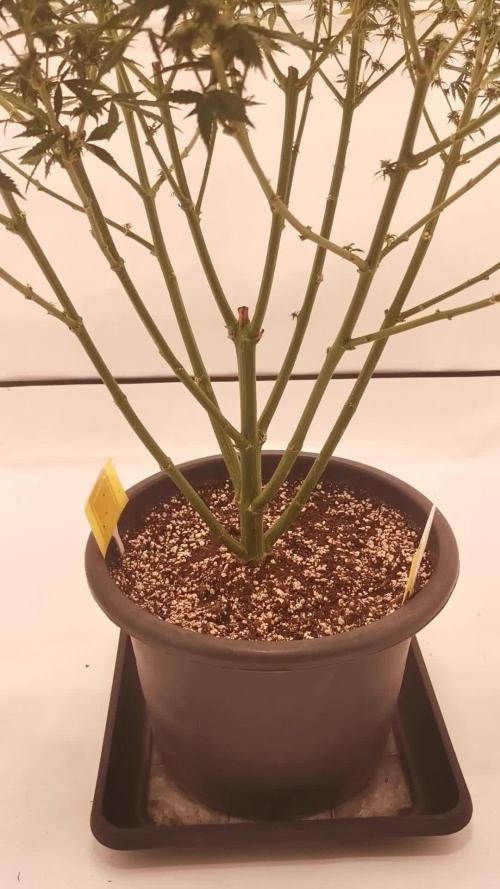
😢😢😢... Hi... Leider musste ich den grow ABBRECHEN 😢🤬😢
Ich habe mir selbst, wahrscheinlich eine Infektion mit Mehltau eingeschleppt 🙈...
( Infektion's Quellen im Garten gab es genug z.b. Kürbis, Sonnenblume, einige andere Blumen)... Obwohl ich auf Hygiene im Zelt achte und auch vorher Hände wasche, Klamotten umziehen, naja das übliche Programm....😢
Nun wird alles entsorgt/verbrannt, das Zelt desinfiziert und dann geht's wieder los... 👋👋👋
shorts_status_processing


@Herbz_Unkraut
Follow
Lowered the lights & will set 24h light on monday
Most of the roots show on the bottom of the pots




@Ultraviolet
Follow
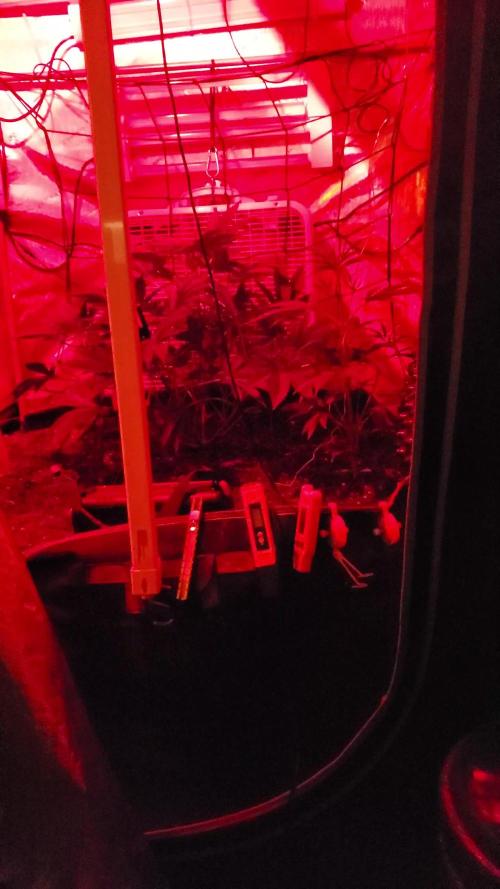
Removed autoflower and put her in her own pot outside the tent.
Foliars applied in strong blue 430nm with 4000Hz tone. 20-minute dose prior to application.
In essence, you're seeing a combination of the infrared light reflected by the plant, which the camera perceives as red, and any residual visible blue light the plant reflects, which results in a purple hue.
I was doing more stretching of the stems, adjusting weights, just a little too much, and it snapped almost clean. I got a little lucky in that it was still connected, wrapped her almost instantly while holding her in place with yoyo's. The core framework is now in place.
If your soil has a high pH, it's not ideal; you want a pH of 6.4, 6.5, or 6.6, which is ideal. If you are over a pH of 7, you have no hydrogen on the clay colloid. If you want your pH down, add Carbon. If you keep the pH below 7, you will unlock hydrogen, a whole host of new microbes become active and begin working, the plant will now be able to make more sugar because she has microbes giving off carbon dioxide, and the carbon you added hangs onto water. Everything has electricity in it. When you get the microbes eating carbon, breathing oxygen, giving off CO2, those aerobic soil microbes will carry about 0.5V of electricity that makes up the EC. The microorganisms will take a metal-based mineral and a non-metal-based mineral with about 1000 different combinations, and they will create an organic salt! That doesn't kill them, that the plant loves, that the plant enjoys. This creates an environment that is conducive to growing its own food.
Metal-based: Could include elements like iron, manganese, copper, or zinc, which are essential nutrients for plants but can exist in forms not readily accessible.
Non-metal-based: Examples like calcium carbonate, phosphate, or sulfur are also important for plant growth and potentially serve as building blocks for the organic salt.
Chelation in a plant medium is a chemical process where a chelating agent, a negatively charged organic compound, binds to positively charged metal ions, like iron, zinc, and manganese. This forms a stable, soluble complex that protects the micronutrient from becoming unavailable to the plant in the soil or solution. The chelate complex is then more easily absorbed by the plant's roots, preventing nutrient deficiency, improving nutrient uptake, and enhancing plant growth. Chelation is similar to how microorganisms create organic salts, as both involve using organic molecules to bind with metal ions, but chelation specifically forms ring-like structures, or chelates, while the "organic salts" of microorganisms primarily refer to metal-complexed low molecular weight organic acids like gluconic acid. Microorganisms use this process to solubilize soil phosphates by chelating cations such as iron (Fe) and calcium (Ca), increasing their availability.
Added sugars stimulate soil microbial activity, but directly applying sugar, especially in viscous form, can be tricky to dilute. Adding to the soil is generally not a beneficial practice for the plant itself and is not a substitute for fertilizer. While beneficial microbes can be encouraged by the sugar, harmful ones may also be stimulated, and the added sugar is a poor source of essential plant nutrients. Sugar in soil acts as a food source for microbes, but its effects on plants vary significantly with the sugar's form and concentration: simple sugars like glucose can quickly boost microbial activity and nutrient release. But scavenge A LOT of oxygen in the process, precious oxygen. Overly high concentrations of any sugar can attract pests, cause root rot by disrupting osmotic balance, and lead to detrimental fungal growth. If you are one who likes warm tropical high rh, dead already. Beneficial, absolutely, but only to those who don't run out of oxygen. Blackstrap is mostly glucose, iirc regular molasses is mostly sucrose. Sugars, especially sucrose, act as signaling molecules that interact with plant hormones and regulate gene expression, which are critical for triggering the floral transition. When sucrose is added to the growth medium significantly influences its effect on floral transition.
Probably wouldn't bother with blackstrap given its higher glucose content. Microbes in the soil consume the sugar and, in the process, draw nitrogen from the soil, which is the same nutrient the plant needs. Glucose is not an oxygen scavenger itself, but it acts as a substrate for the glucose oxidase (GOx) enzyme, effectively removing oxygen from a system. Regular molasses (powdered if you can), as soon as she flips to flower or a week before, the wrong form of sugar can delay flower, or worse. Wrong quantity, not great either. The timing of sucrose application is crucial. It was more complicated than I gave it credit for, that's for sure. When a medium's carbon-to-nitrogen (C:N) ratio reaches 24:1, it signifies an optimal balance for soil microbes to thrive, leading to efficient decomposition and nutrient cycling. At this ratio, soil microorganisms have enough nitrogen for their metabolic needs, allowing them to break down organic matter and release vital nutrients like phosphorus and zinc for plants. Exceeding this ratio results in slower decomposition and nitrogen immobilization, while a ratio below 24:1 leads to faster breakdown and excess nitrogen availability.
Carbon and nitrogen are two elements in soils and are required by most biology for energy. Carbon and nitrogen occur in the soil as both organic and inorganic forms. The inorganic carbon in the soil has minimal effect on soil biochemical activity, whereas the organic forms of carbon are essential for biological activity. Inorganic carbon in the soil is primarily present as carbonates, whereas organic carbon is present in many forms, including live and dead plant materials and microorganisms; some are more labile and therefore can be easily decomposed, such as sugars, amino acids, and root exudates, while others are more recalcitrant, such as lignin, humin, and humic acids. Soil nitrogen is mostly present in organic forms (usually more than 95 % of the total soil nitrogen), but also in inorganic forms, such as nitrate and ammonium. Soil biology prefers a certain ratio of carbon to nitrogen (C:N). Amino acids make up proteins and are one of the nitrogen-containing compounds in the soil that are essential for biological energy. The C:N ratio of soil microbes is about 10:1, whereas the preferred C:N ratio of their food is 24:1 (USDA Natural Resource Conservation Service 2011). Soil bacteria (3-10:1 C:N ratio) generally have a lower C:N ratio than soil fungi (4-18:1 C:N ratio) (Hoorman & Islam 2010; Zhang and Elser 2017). It is also important to mention that the ratio of carbon to other nutrients, such as sulfur (S) and phosphorous (P) also are relevant to determine net mineralization/immobilization. For example, plant material with C:S ratio smaller than 200:1 will promote mineralization of sulfate, while C:S ratio higher than 400:1 will promote immobilization (Scherer 2001).
In soil science and microbiology, the C:S ratio helps determine whether sulfur will be released (mineralized) or tied up (immobilized) by microorganisms.
A carbon-to-sulfur (C:S) ratio smaller than 200:1 promotes the mineralization of sulfate, when the C:S ratio is low, it indicates that the organic matter decomposing in the soil is rich in sulfur relative to carbon. Microorganisms require both carbon and sulfur for their metabolic processes. With an excess of sulfur, microbes take what they need and release the surplus sulfur into the soil as plant-available sulfate
A carbon-to-sulfur (C:S) ratio higher than 400:1 will promote the immobilization of sulfur from the soil. This occurs because when high-carbon, low-sulfur materials (like sawdust) are added to soil, microbes consume the carbon and pull sulfur from the soil to meet their nutritional needs, temporarily making it unavailable to plants.
200:1 C:S 400:1: In this range, both mineralization and immobilization can occur simultaneously, making the net availability of sulfur less predictable.
This dynamic is similar to how the carbon-to-nitrogen (C:N) ratio regulates the availability of nitrogen in soil. Just as microbes need a certain amount of nitrogen to process carbon, they also require a balanced amount of sulfur. Both mineralization and immobilization are driven by the metabolic needs of the soil's microbial population.
Sulfur is crucial for protein synthesis. A balanced ratio is particularly important in relation to nitrogen (N), as plants need adequate sulfur to efficiently use nitrogen. A severely imbalanced C:S ratio can hinder the efficient use of nitrogen, as seen in trials where adding nitrogen without balancing sulfur levels actually lowered crop yields.
Maintaining a balanced carbon-to-sulfur (C:S) ratio is highly beneficial for plant growth, but this happens indirectly by regulating soil microbial activity. Unlike the C:N ratio, which is widely discussed for its direct effect on nutrient availability, the C:S ratio determines whether sulfur in the soil's organic matter is released (mineralized) or temporarily locked up (immobilized).
Applied 3-day drought stress.
Glucose will hinder oxygenation more than sucrose in a solution because glucose is consumed faster and has a higher oxygen demand, leading to a more rapid decrease in oxygen levels. When cells respire, they use oxygen to break down glucose, and this process requires more oxygen for glucose than for sucrose because sucrose must first be broken down into glucose and fructose before it can be metabolized.
In a growth medium, glucose is a more immediate and universal signaling molecule for unicellular and multicellular organisms because it is directly used for energy and triggers a rapid gene expression response. In contrast, sucrose primarily acts as a signaling molecule in plants to regulate specific developmental processes by being transported or broken down, which can be a more complex and slower signaling process.
Critical stuff.
During wakefulness (DC electric current) life can not entangle electrons and protons. During the daytime, the light is sensed as multiple color frequencies in sunlight. Coherence requires monochromatic light. Therefore, at night, IR light dominates cell biology. This is another reason why the DC electric current disappears during the night. The coherence of water is maintained by using its density changes imparted by infrared light released from mitochondria in the absence of light. This density change can be examined by NMR analysis, and water is found to be in its icosahedral molecular form. This is the state that water should be in at night. This is when a light frequency is lowest and when the wave part of the photoelectric effect is in maximum use.
3600


@heinzhammer
Follow
Raised EC to 1.9-2.0 ish
pH 5.8
Raised the Lights to the maximum height.
Tops-to-Light-distance around 25-30cm
Buds are bulking up daily!
This run is smooth as hell. No deficiencies, no pests, plants look happy from beginning until now....
Lets hope the last 5 weeks will be ok!



@Black_Widow
Follow
Привет садоводы и огородники !
Началась новая неделя
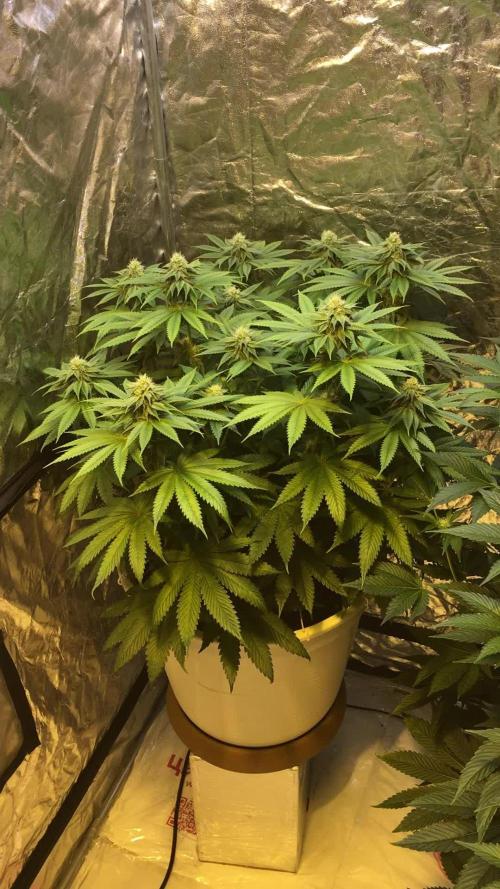
растения выглядят хорошо
подруга гидропоника становится больше
у ее сестры в земле уже 3 неделя цветения


shorts_status_processing


@Randyb4
Follow
Day 113 39 Days of flower, First day of Week 16
Day 115 41 Days of flower
Watered with 4 gallons of spring water with 3 ml/gal of fish shit pH-6.6@68°F, buds are all looking good, all plants have alittle purple in them.
Day 117 43 Days of flower (First day of Week 7)
Day 119 45 Days of flower
Watered with 4 gallons of spring water pH-6.5@70°F. Buds looks better everyday, with less and less white hairs as the days go by. Buds are forming beautifully.


@Insaniac_0
Follow
2/26 to 3/03 Veg Days 8 to 14
Week 2
Not much to talk about here. They took to the soil as expected with no issues.
Feed this week was 2 cups of 6.3ph RO water twice with 4 days between and 4 days after the last feed.
Feed plan next week will increase the amounts to 2.5 cups of plain-no-nute water with about 4 days between feeds. I still want to see the water run through, so if I need to use more than 2.5 cups I will. The idea is to water deep and through, but then make them search for more before the next feed, hopefuly spreading the roots out while doing it.


@Hexus
Follow
Day 85 - We're into a new week! She's still got a way to go yet, but she's putting on mass like no other plant I've grown. Her colas, as you can see in one of the pics from last week, are bigger than gallon jugs. The whole plant is top heavy and I have to be extra careful when pulling her lid to the side to feed her. Her mass is getting wider as well, from the sheer weight of her colas. She's drinking about a gallon a day and showing no signs of letting up.
Day 91 - End of week 13! - She's not done yet, but getting there. Upkeep is pretty much just dumping a gallon of new feed into her every two days or so. I'm pretty excited to see what her yield is at this point, because lifting her out to refill her actually take a bit of muscling.


@Ronin716
Follow
I’m really just updating with photo dumps at this point lol but this white widow is proving to be f*cking massive and these buds are looking like they’re going to STACK!!! I defoliate here and there lightly and open the canopy to get some light further down. She fills a 2x2 out completely! My next run will consist of a few of these for sure!! Should be a great harvest!!


@Waynewhiteski420
Follow
Hope it’s done soon need to move a few plants out 3*3 to in 4*2 to make room
shorts_status_processing


@jahredi
Follow
I was under watering quite a bit in an attempt to make sure I didn’t flush out the benes and nutrients of the super soil. Ironically, I might have killed all the benes. Lol.
Either way, they’re getting about 2.5 gal every other day now. Growing strong.
This has been my strongest plant. At the beginning, I wasn’t very stoked on its structure, but I have to say, this is looking like it will be one heavy producer... It’s growing so much
Just did another spinosad treatment. This one never really had any damage from thrips, but I haven’t seen any more thrips in the greenhouse since the first treatment 10 or so days ago. Saw a leaf hopper in there though 😡


@B4niTa
Follow
After small problems with Cal Mag at the beginning she grow now without any problems💪
I hope around 5 weeks till harvest🙏


@Regenwurm
Follow
Day 35
Diese Woche war im Verhältnis zu den vorherigen ganz ok. Von Woche 4-5 mit dem vegegativen Wachstum zufrieden. Die Seitentriebe kommen endlich etwas mehr zum Vorschein. Ich denke aber das die Ernte klein ausfällt da ich es einfach in den ersten 2 Wochen verkackt habe! Die Vorblüte ist gekommen und es wird demnächst das Licht auf 400 Watt NDL geändert . Die Ladies haben nun auch etas mehr Hunger was gut ist 😁. Ich habe Sie in dieser Woche zum ersten mal mit Drain durchgegossen, das haben Sie gemocht. Die Klimabedingungen waren wie schon die letzten Wochen super.
Peace


@TTerpz
Follow
Start of week 3
Update 2/27: they have been fed with a dose that was cut in half (fox farm dirty dozen)

shorts_status_processing


@603grower
Follow
She came out amazing. Super frosty. I got exactly 2 ounce off of her I wish I vegged her out a few more weeks and got a few more branches. Every still branch was stacked! I love useing this site really helps me keep track of my grow and what I’ve done!




@Satax
Follow
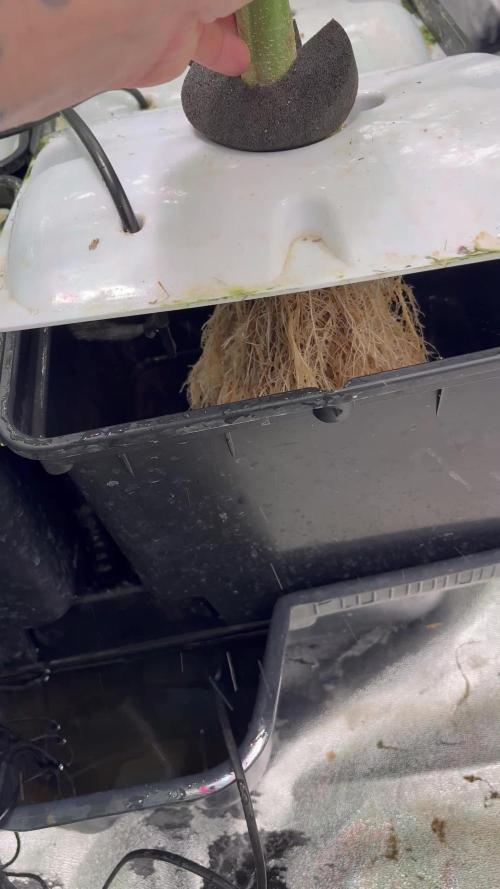
Everything is still going well overall. I’ve always had an issue with a Cal/Mag deficiency that I had to monitor for some of the plants. Otherwise, they’re swelling nicely — the Green Poison is starting to look really good and is showing signs of maturity, earlier than the others. I’m starting the flush on all the plants since I’ve fed them well during the grow, and I think they still have enough nutrients left in their systems.
The smell is very strong, and the buds are dense and resinous — it’s looking promising..
I’m going to start applying my stress technique on the plants by inserting screws into the stems and using a small scalpel to remove some bark along the trunks, in order to push the resin production even further.


@Pirangueiro
Follow
My first plant! I think the setup exceeded my expectations!! Just 60w led. 1 week to dry and know healing in glass pot! Im satisfied.