


Likes
Comments
Share


@Growfather1
Follow
Hello everyone.
Entering week 21, the MAC1 F1 hybrids are still keeping things interesting.
The biggest plant is officially in her sixth week of flowering, and today she received her absolute last heavy dose of PK 13-14.
Starting tomorrow, she is strictly on basic Canna Coco A and B nutrients to finish things out.
Honestly, she has blessed me with a literal jungle of 80+ branches packed with a massive collection of very miniature buds.
Apparently, overdoing the PK 13-14 back in week three was the secret recipe for creating an overachieving green monster instead of massive colas.
Meanwhile, the smaller plant is entering her fifth week of flowering and has only been coasting on a tiny 2 ml per 10 liters of the PK booster.
She will soon hit her maximum dosage of 1.5 ml per liter, so we will see if she actually grows normal flowers or duplicates her sister's chaotic jungle strategy.
Climate-wise, things are fully in check.
Humidity is holding steady between 47% and 55%.
Daytime temperatures sit at 27°C, and nights stay at 20°C thanks to the dehumidifier—if I turn that thing off, it immediately slides down to 18°C or 19°C.
Thanks for stopping by and have a nice day.
Best regards,
Growfather.

Likes
31
Share


@SkunkyDog
Follow
Hallo zusammen 🤙.
Das war die letzte Woche für sie morgen werde ich sie ernten habe etwas Angst das sie sonst Schimmel bekommen könnte weil die Buds so hart sind und draußen ein Scheiss Regenwetter ist.
Sie erhalten 25 Prozent Rabatt in unserem Shop
Mindestbestellwert beträgt 75 Euro
https://greenbuzzliquids.com/en/shop/
Code: GD42025

Likes
13
Share


@DudeGrowsWeed
Follow
This White Widow has some super fat buds on her. And they feel dense as hell!!! Still several weeks away from harvest, but I'm totally looking forward to the smoke report. 👊

Processing
Likes
16
Share


@HisHope
Follow
2/19 Week 8
She is topping 35 inches despite all we could do to control the Flowering growth.
Hate to think how tall she would be if we had not.
So down the line most likely some bend and secure on the high buds in her near future.
Nuets up a little some PK in the mix seems to be really spurring bud growth.
She really does seem to like her accommodations.
2/21 Clean up day!
Defoliated bottom of plant as finally we are no longer as concerned with stretch.
Can really see her structure now, in particular compared to the FF7 beside her.
Continuing to increase the nuets slightly
2/22
New tent setup!
More light more room!... well for now

Likes
1
Share


@Pestitel
Follow
Amazing experience with the Mix Pack, I will try it again next summer for sure. Love the variety.

Likes
40
Share


@Hempface86
Follow
Today is day 77 so we are starting week 12 .. all the plants are doing great 👍 Gummiebears is the real star of the show as she's double any other girls I have going right now.. she in 4 gallon pot and is around 44 to 45 inches tall and has so so many bud sites that are stacking fast.. she is 2 weeks behind in flower but you wouldn't know it .. Grease Gun and Froot by the foot are almost ready for the flush stage , today I fed them next to nothing.. Cream however is still getting full dose and she taking it well ...... Early on I cut the lowest 2 branches and cloned them and stuck them in a vase with nutrient water fore 10 days then stuck them in dirt and boy have they takin off .. they started to reveg and I look forward to seeing how crazy that gets ... pictures about illustrating what they once where vs now .. hope all is well.. God bless everyone 🙏 Happy growing ✌️


Likes
25
Share


@Spike_KCanG
Follow
A couple of problems arose with my two newest grows so I thoroughly checked the compost pot and looked if the worms were okay.
After harvesting the GDP, I wanted to throw out her soil. It had been used two runs and I have no place to reuse it outside. Did my best and sifted through the dirt looking for her worms. Found only six 😔. Four adults and two adolescents who were just getting their red color in.
This was not a good sign. The worms were obviously not reproducing enough to keep up a colony, and that was most likely due to the soil ph. Don't have the instrument to measure it, but as my ph meter was broke the past two weeks.... 😅😅 Time to check in on the Vermicompost and see if they are still 'grinding'.
-----------------------------------
April 17
Last picture I have of her soil structure.
-----------------------------------
April 23
Took that thing apart!!
It must have took 3 hours to sift through all the soil, rip up bark coco and what not. sift out the worms and keep them moist, but it was finished.
I don't know how many worms there are but it's a good handful. About the same amount I put in there in the beginning. There were also perhaps 20 or so eggs that caught my eye. These are good signs!
After the manhandled soil was put into an other pot, I drowned her with 12L of dechlorinated tapwater (thanks to Envi Chlorine Clear!!).
BioDown to 6.3 ph + 0.2g/L Microbes.
I don't know how many liters of water ran off, but that soil is definitely at 6.3 now...
.. and the sewage pipes might be clogged 😅😇😂
Let the pot set to dry, at a tilt. Changed position every 5 minutes or so, about 2 hours long. Hopefully all the excess water is out!
Introduced the Army of Wiggles to their new accommodations and said good night.
There are probably still remnants of BioBizz nutrients in the soil, and I'm too lazy to flush again. Won't start her on the new microbial food until I'm sure the Living take hold of this environment. Coming from a possible 7.5 down to 6.3ph might be an adjustment.
I'll check the topsoil in a week or so and see how the Living are getting along.
-----------------------------------
Thanks for stopping by 👊
See you with the next update!
Likes
15
Share


@Uwish
Follow
The run continues nicely, we still had some temperatures of nutritive solution a little high with the heat of Danielle. It drops drastically in 2 days so I will finally finish this growth in the calm one and will be able to begin my bloom on September 24th.
I apply hydrogen peroxide at a rate of 0.5ML/L, twice a week as a treatment. The root Rot X is used every ten days when changing the nutritive solution.
I put less water in my system, in order to create a wet zone and a dry zone, I make sure that the roots are always immersed of course.
As soon as the temperature drops, I will switch to 800 ppfd for the end of growth and depending on the evolution of the plants I may add some sensi grow a and b to increase the ec a little.
If you are attentive, you will observe on the tips of the leaves or even on the leaves, spots of burns or deficiencies, it is simply the consequence of the pythium a few days earlier.
The last growth update will be around September 24/25.

Likes
27
Share


@Sativa_Juice_Grows
Follow
11/29
Shes growing ok. Green and healthy branches and leaves.
She growing more like a sativa, sativa hybrid
tall and branchy, manageable fan leaves
but because of that she started to get some light burn.
Dont have my tent yet so i cant adjust my light any higher so i tried
to lower the plant down a little
So hoping she can do without super direct light for another day or so.
Other than that shes looking healthy.
11/30
It wouldnt let me do veg and flower in the same week
on the diary so i just split it up in here.
Two busy days.
Tent came i!! which im super excited about
because now i flip the girls to flower.
It wouldnt let me do veg and flower in the same week
on the diary so i just split it up in here.
I spent tuesday putting the tent together
and dropped a video of the new setup because
im REALLY excited about.
got the ladies nice and cozy. Started them on 12/12.
Its my first time on an indoor grow so i hope it works out well
She still has a little of light burn
but shes still green everywhere else
was able to get the light another foot higher
after i moved everything.
12/1
topped dressed with some happy frog soil
Worm casting amount is the only thing i couldnt find a good ratio for
So ill say i mixed about a quarter of the amount of soil
into about 1 to 2 gallons of top soil
i had some down to earth
dry amendments i mixed in with that soil as well.
i couldnt tell how much soil exactly.
I only put in 5 tsp of great white instead of the recommended 7
because i switched the bloom nutes and i didnt wanna over do it
i couldnt tell how much soil exactly.
Fed them some flowering nutes, but cut back
on the amount of nutes by a lot.
Decided im going to just follow what biobizz instructions
say from now on so apparently less is better.
started the bloom and the top max kept everything else the same
and cut out the fish mix for flower, added great white at the end.
Defoliated the bottom few branches and cleaned them up. Nothing to major.
12/2
Temp of tent is steady at 70, 71 degrees.
thats a little bit lower than id like but ill
figure out something in the next few days.
Took the bottom branches and leaves the night before and
Wanted to give it a night of rest before i defoliated the big leaves.
Took most of them off but left the few at the top of the plant.
Looking extremely green. Hoping i get to see some pistils soon.
Likes
2
Share


@Bendedknee
Follow
Light is at max. Need to top dress sometime this week and add some flower nutes let them start flowering soon, can’t afford to much more hight if they are gonna double. Things are as they should be! Happy growing!

Likes
10
Share


@Skully
Follow
🇩🇪
Alles sieht großartig aus! Der Geruch ist sehr fruchtig und intensiv, die Buds sind schön angeschwollen und steinhart. Noch ein/zwei Wochen, dann wird sie zwei dunkel gestellt, um nochmal das letzte rauszuholen.
🇺🇸
Everything looks great! The smell is very fruity and intense, the buds are nicely swollen and rock-hard. Just one or two more weeks, then I’ll put her in the dark for a bit to get the last bit out.
🇪🇸
¡Todo se ve genial! El aroma es muy afrutado e intenso, los brotes están bien hinchados y duros como una roca. Solo una o dos semanas más, luego la pondré en la oscuridad un poco para sacar lo último.

Likes
2
Share

@CalGonJim
Follow
8/25 1215AM MONDAY MOTHER FUCKERS!!! AMINO GENIUS, YUP!!!!!!
220am. Amino Acid Transporters in Plants: Identification and Function. https://pmc.ncbi.nlm.nih.gov/articles/PMC7466100/
8/26 515am Advanced Nutrients Cal / Mag worked!! The stalks are stiffer and less florescent green, very good.
6 AM I gave everybody water at one and a half mL per liter each of advanced nutrients bloom pH 6 everyone looks good.👍.
8/26 1139am. Heavy defoliation worked out nicely. Light feeding and the Cal /Mag is already working. THREE COLA??? Now wondering if 3 cola is the best way to get QUALITY in on gallon. It's SO much easier to dry when it's just a single colas no mess.
8/27 1223AM. They look great. I look like death. pretty sure I smell like it too. Betaine: https://pmc.ncbi.nlm.nih.gov/articles/PMC5976740/.
ATP https://www.ncbi.nlm.nih.gov/books/NBK553175/.
Proline Regulation of L-proline biosynthesis, signal transduction, transport, accumulation and its vital role in plants during variable environmental conditions: https://pmc.ncbi.nlm.nih.gov/articles/PMC6909094/.
8/27 115am. pretty sure my mistakes are comedy gold.
8/27 7am BEST RESIN I HAVE EVER SEEN, LOOKS LIKE A CARPET OF LIVING DIAMONDS....IF I GET MY HANDS ON AN ELECTION MIRCSCOPE....
8/27 1030am They are ALL taking off today!!! Massive resin and flower growth. The top of Apricot is flowering. The Cal /Mag did its magic, I wont need it again. When I noticed florecent green stalks I knew it was time for Cal/Mag as Grok said the Aminos can inhibit their uptake.
827 2 PM I did a water with one and a half mL per liter of advanced nutrients connoisseur bloom. I added a couple of supplements. I added Purpinator 1 mL in 2 L not much very light nutrients.
8/28 206am.
""Kyowa Hakko Bio (KHB) has established a novel industrial process for dipeptide manufacturing. https://www.kyowahakko-bio.co.jp/english/newbio/dipeptides/"".
"L-glutamine (Gln), despite its nutritional importance, is difficult to use as a component of solutions, due to its instability with heat and acids. The Gln-containing dipeptide, AlaGln, overcomes these drawbacks and is expected to be used in medical or nutritional fields. It is branded as Sustamine and is being used in several products."
222am https://www.kyowahakko-bio.co.jp/english/rd/aminoscope/ Info on Aminos
230AM 15 MINUTES TIL FRANK SINATRAS ONE FOR MY BABY...THE QUARTER TO 3 SONG..... https://www.esbnyc.com/about/live-cam MAKE SURE YOU HAVE A VIEW OF NYC ON THE SCREEN ...ITS A WHOLE THEME.... OR THE VIDEO JUKE BOX FROM BLADE RUNNER 2049, I HAVE GOT TO GET ONE OF THOSE! THIS IS ALSO THE TIME I WILL MORE THAN LIKELY BE WEARING THAT CAPTAINS HAT & COSTUME AND THE FANCY SMOKING JACKET AND FAKE PIPE. EVERYONE ELSE JUST LOOKS LIKE AN ASSHOLE WITHOUT THE COSTUME.
145PM. RESIN QUALITY BETTER THEN IVE EVER HAD!!! IT IS LIKE VEVETY FROSTING!!!! SMOOTH, NOT DRY AND CRYSTALY LIKE USUAL!!! ON COOKIE APPLE 1 GALLON 3 COLA.
8/29 1243am Re-evaluating this tonight added 1ml Purpinator last time to add P & K without N, having great results!!!! **Biostimulant Stack** (per 2 L solution):
- **Proline (400 mg, 200 mg/L)**:
- **Role**: Osmoprotectant; reduces oxidative stress (ROS), enhances drought/salinity tolerance, and stabilizes enzymes. Supports terpene/cannabinoid production by protecting cells during flower stress.
- **Dose Evaluation**: 200 mg/L (~1.74 mM) is within the effective range (100-300 mg/L) from plant stress studies. Cannabis trials suggest it mitigates heat/light stress, enhancing resin quality. Good dose for autos in flower.
- **Setria L-Glutathione (250 mg, 125 mg/L)**:
- **Role**: Antioxidant; scavenges ROS, protects photosynthesis, and detoxifies heavy metals. Enhances yield and bud quality by reducing oxidative damage during flowering.
- **Dose Evaluation**: 125 mg/L is safe and effective (100-300 mg/L in plant studies). Aligns with maize trials showing yield protection under stress. Well-suited for autos without risking buildup.
- **L-Glycine (500 mg, 250 mg/L)**:
- **Role**: Precursor for glutathione and proteins; detoxifies heavy metals, supports root health, and enhances nutrient uptake (e.g., Ca). Reduces toxicity in contaminated soils and boosts flower resilience.
- **Dose Evaluation**: 250 mg/L is within the effective range (100-500 mg/L). Higher than your previous mix (100 mg/L), but still safe; supports GSH synthesis and complements glutathione.
- **TMG (Trimethylglycine, 400 mg, 200 mg/L)**:
- **Role**: Methyl donor and osmoprotectant; enhances heat/drought tolerance, membrane stability, and terpene gene expression. Supports bud density and aroma.
- **Dose Evaluation**: 200 mg/L (~1.7 mM) matches plant study ranges (200-500 mg/L). Higher than your prior 100 mg/L, enhancing stress protection without osmotic imbalance.""
CHANGE:
🚨 INCREASE...(DONT FEEL LIKE SPLITTING THE CAPSULE OPEN) L-Glycine (1000 mg in 2L, 500 mg/L)
8/29 234am #### Combined Effects
This mix is well-tailored for autoflower cannabis in the flowering phase, balancing low-N bloom nutrients with biostimulants to maximize bud quality and resilience:
- **Bud Development and Yield**: Connoisseur Bloom’s P-K focus drives dense bud formation, while proline, glutathione, and TMG protect against flower-stage stresses (e.g., high light, heat), potentially increasing yield by 15-30% (e.g., 150-300 g/plant in hydro/coco). Glycine enhances nutrient uptake, supporting larger calyxes.
- **Terpene and Cannabinoid Quality**: TMG and proline upregulate terpene synthesis (e.g., limonene, myrcene), enhancing aroma and resin. Glutathione reduces oxidative damage, preserving cannabinoid stability (THCA/CBDA). No EAA in this mix avoids N-driven potency reduction.
- **Stress Resilience**: Glutathione and proline scavenge ROS, while TMG and glycine bolster osmotic and metal stress tolerance. This is critical for autoflowers, which are prone to stunting in flower under environmental swings.
- **Nutrient Efficiency**: Glycine and TMG enhance uptake of Connoisseur’s chelated nutrients (e.g., Ca, Mg), reducing N needs by improving nitrogen use efficiency (NUE). This aligns with your goal of reducing N fertilizer in commercial farming.
- **Microbial Support**: Glycine fosters beneficial microbes, synergizing with Connoisseur’s organics for root health in coco/soil.""
8/29 "What is the equation for amino acids?
The general linear formula of an amino acid is R-CH(NH2)-COOH. The 20 common amino acids are grouped in classes according to their side chains. Wow what stupid and pointless information, but I'll use the equation as decoration,,,,,,losers.
8/29 355AM fluctuating IQ, cloud like.....what a fucking pain in the ass brain works a few hours over night, and not all hours are consecutive..........blood loss, central nervous system shorts out with too much light, just great.......goddamnit.
8/29 4AM Early -Mid -Late Auto Flower Nutrient mix
Advanced Nutrients Connoisseur Bloom A & B (3ml in 2L) (1.5 ml/L each)
Proline (400 mg in 2L) Nutricost brand powder.
Setria Glutathione (250 mg in 2L) One pill Codage brand 250mg capsule emptied into mix.
L-Glycine (1000 mg in 2L) One pill Nutricost brand 1000mg L-Glycine capsule emptied into mix.
TMG Powder: (400mg in 2L) Nutricost brand powder.
L-Glutamine: (100mg in 2L) Nutricost brand powder. 🚨 MID-FLOWER CHANGE, LOWERING Glutamine. This is the lowest possible amount I can measure accurately . it will overload with N.
8/29 4:35 AM. I really fucking hate when I talk into this fucking thing and it doesn’t fucking save that I have to fucking do it again. God fucking dammit OK I’m going to do foyer sprays today. They don’t need water yet so today will be spraying with amino acids pH 6.5 this bit fucking save goddamnit.😡😡😡😡😡😡😡😡😡😡
8/29 6:41 AM. The amino spray did a great job spectacular how much the leaves opened up right away after it was done since these supplements are edible for humans amino acids they don’t leave a bad smell like agricultural amino acids I’ve tried to use in the past and I can use them on me. I’m taking the same amino acid for me👍👍👍
8/29 818AM Amino's only Foliar Spray today.
🚨Proline (400 mg in 2L) Nutricost brand powder.
🚨Setria Glutathione (250 mg in 2L) One pill Codage brand 250mg capsule emptied into mix.
🚨L-Glycine (1000 mg in 2L) One pill Nutricost brand 1000mg L-Glycine capsule emptied into mix.
🚨TMG Powder: (400mg in 2L) Nutricost brand powder.
🚨L-Glutamine: (100mg in 2L) Nutricost brand powder. 🚨.
Thank you for sharing the details of your foliar spray mix for your autoflower cannabis grow. You’re using a combination of **proline (400 mg)**, **Setria glutathione (250 mg)**, **L-glycine (1000 mg)**, **TMG (400 mg)**, and **L-glutamine (100 mg)** in a 2 L solution, applied as a foliar spray. This mix is amino acid-focused, aligning with your previous interest in essential amino acids and nutrient optimization for cannabis, as well as your questions about flushing agents and personal supplementation. I’ll evaluate the potential benefits, risks, and considerations of this foliar spray for your autoflower cannabis plants, focusing on how these compounds affect growth, stress resistance, and bud quality, particularly given the unique needs of autoflowers (e.g., shorter life cycle, sensitivity to nutrient stress). I’ll also address how this spray complements your earlier nutrient mix and provide practical recommendations.
### Breakdown of Your Foliar Spray Mix (2 L Solution)
Let’s analyze each component, its concentration, and its role in cannabis cultivation when applied foliarly to autoflowers:
1. **Proline (400 mg in 2 L = 200 mg/L)**:
- **Role**: Proline is an amino acid that acts as an osmoprotectant and antioxidant, helping plants manage stress (e.g., drought, high light, nutrient imbalances).
- **Benefits for Autoflowers**:
- Enhances stress resistance, crucial for autoflowers under intense indoor lighting or environmental fluctuations.
- Supports pollen development and flowering, potentially increasing bud set during the short autoflower bloom phase (4–6 weeks).
- Promotes cell wall strength, improving plant vigor and resilience.
- **Considerations**: At 200 mg/L, this is a moderate dose, effective for stress mitigation without risking nutrient overload. Autoflowers are sensitive to overfeeding, so this is appropriate.
2. **Setria Glutathione (250 mg in 2 L = 125 mg/L)**:
- **Role**: Glutathione is a powerful antioxidant tripeptide (glutamate, cysteine, glycine) that protects plant cells from oxidative stress caused by high light, heat, or nutrient imbalances.
- **Benefits for Autoflowers**:
- Reduces oxidative damage in leaves, preserving photosynthesis efficiency, which is critical for autoflowers’ rapid growth cycle.
- Enhances stress tolerance, particularly under high-intensity lighting or CO₂ supplementation common in indoor grows.
- May improve terpene and cannabinoid production by protecting metabolic pathways during flowering.
- **Considerations**: Glutathione is not a standard foliar spray component, but at 125 mg/L, it’s a low, experimental dose. Limited research exists on its direct foliar application in cannabis, but it’s likely safe and may complement proline and glycine’s antioxidant effects.
3. **L-Glycine (1000 mg in 2 L = 500 mg/L)**:
- **Role**: Glycine supports chlorophyll synthesis, protein production, and nutrient chelation, enhancing photosynthesis and growth.
- **Benefits for Autoflowers**:
- Boosts photosynthesis, leading to greener leaves and faster growth, critical for autoflowers’ short vegetative phase (2–4 weeks).
- Chelates micronutrients (e.g., zinc, iron), improving foliar nutrient uptake, though it may reduce calcium/iron absorption (as noted in your earlier question).
- Supports terpene synthesis, enhancing bud aroma and flavor.
- **Considerations**: Your previous nutrient mix used 500 mg/L glycine, and you asked about increasing to 500 mg/L (possibly a typo or volume confusion). At 500 mg/L, this is a high but effective dose for foliar application, though excessive nitrogen from glycine could delay flowering if overused in late bloom.
4. **TMG (Trimethylglycine/Betaine, 400 mg in 2 L = 200 mg/L)**:
- **Role**: TMG is an osmoprotectant and methyl donor, enhancing stress tolerance and metabolic efficiency.
- **Benefits for Autoflowers**:
- Protects against environmental stress (e.g., high EC, temperature swings), improving resilience in hydroponic or indoor setups.
- Supports photosynthesis and nutrient uptake by stabilizing proteins and membranes, beneficial for autoflowers’ rapid growth.
- May enhance terpene production indirectly via metabolic support.
- **Considerations**: At 200 mg/L, this is a moderate dose, lower than your previous 500 mg/L, reducing the risk of nutrient burn while maintaining stress protection.
5. **L-Glutamine (100 mg in 2 L = 50 mg/L)**:
- **Role**: Glutamine is a nitrogen transport amino acid, supporting chlorophyll synthesis and photosynthesis.
- **Benefits for Autoflowers**:
- Promotes lush vegetative growth and greener leaves, ideal for the early stages of autoflowers.
- Enhances stress tolerance via glutathione production (synergizing with Setria glutathione).
- Supports bud development by providing nitrogen for protein synthesis.
- **Considerations**: At 50 mg/L, this is a low dose (down from 250 mg/L in your previous mix), minimizing nitrogen overload risks in flowering autoflowers, which are sensitive to excess nitrogen.
### Overall Effects on Autoflower Cannabis
- **Vegetative Phase (Weeks 1–3)**:
- This foliar spray is well-suited for the vegetative stage of autoflowers, as glycine, glutamine, and proline promote photosynthesis, leaf growth, and stress resistance. TMG and glutathione further protect against oxidative stress from high-intensity lighting or nutrient fluctuations, common in indoor grows.
- The low nitrogen content (primarily from glycine and glutamine) supports vigorous growth without overwhelming autoflowers, which require less nitrogen than photoperiod strains.
- **Flowering Phase (Weeks 4–8/10)**:
- The spray supports terpene production (via glycine, proline) and stress resilience, enhancing bud quality and aroma. Glutathione’s antioxidant properties may protect cannabinoid synthesis pathways.
- However, glycine (500 mg/L) and glutamine contribute nitrogen, which could delay bud ripening or reduce THC if overused in late flowering. Previous research (from your amino acid question) showed amino acids can reduce THCA, so caution is needed after week 5–6.
- Autoflowers have a short flowering window, so foliar sprays should be minimized or stopped in the last 2–3 weeks to avoid nutrient residues affecting bud flavor.
- **Stress Resistance**:
- The combination of proline, TMG, and glutathione is highly effective for protecting autoflowers from stress (e.g., high EC, heat, light intensity), which is critical given their sensitivity to environmental changes.
- Foliar application ensures rapid uptake, bypassing root zone issues in hydroponics or coco.
### Synergy with Your Previous Nutrient Mix
Your earlier nutrient mix (Connoisseur A/B, NO precursors, amino acids, methylene blue) was root-fed and nitrogen-heavy, complementing this foliar spray:
- **Complementary Effects**: The foliar spray’s focus on stress protection (proline, TMG, glutathione) and photosynthesis (glycine, glutamine) enhances the root mix’s growth and bloom support. Foliar application targets leaf health, while root feeding supports overall nutrient uptake.
- **Methylene Blue Omission**: Excluding methylene blue from the foliar spray is wise, as its effects on plants are unproven, and foliar application risks leaf staining or phytotoxicity. Your root mix’s low dose (2.5 mg/L) is experimental but safer.
- **Nitrogen Balance**: The foliar spray’s lower nitrogen (glutamine 50 mg/L, glycine 500 mg/L) balances the root mix’s high nitrogen (glutamine 250 mg/L, glycine 500 mg/L, EAAs, L-arginine), reducing the risk of overfeeding autoflowers.
### Potential Risks and Considerations
1. **Nitrogen Overload in Flowering**:
- **Risk**: Glycine (500 mg/L) and glutamine (50 mg/L) contribute nitrogen, which could delay flowering or produce leafy buds in autoflowers if applied heavily in late bloom (weeks 6–8).
- **Solution**: Limit foliar sprays to once weekly in early flowering (weeks 4–5) and stop by week 6–7 to focus on bud ripening. Use only water or a flushing agent (e.g., FloraKleen, as you preferred) in the final 1–2 weeks.
2. **Nutrient Imbalance**:
- **Risk**: Amino acids (glycine, glutamine) can chelate micronutrients, potentially reducing calcium and iron uptake (as noted in your earlier question). Autoflowers are prone to deficiencies due to their fast cycle.
- **Solution**: Monitor for calcium/iron deficiency (yellowing leaves, interveinal chlorosis) and add a foliar calmag supplement (e.g., 1 mL/L CaliMagic) if needed. Your root-fed Connoisseur A/B provides some micronutrients, but foliar sprays bypass roots.
3. **Glutathione’s Experimental Nature**:
- **Risk**: Glutathione is not a standard foliar nutrient for cannabis, and its efficacy at 125 mg/L is unstudied. It’s likely safe but may not provide significant benefits beyond proline and TMG’s stress protection.
- **Solution**: Treat glutathione as an experiment. Compare sprayed plants to unsprayed ones for 2 weeks to assess improvements in leaf color or bud quality. Discontinue if no clear benefit.
4. **Overapplication of Foliar Spray**:
- **Risk**: Foliar sprays can cause leaf burn or mold if applied too frequently or in high humidity. Autoflowers’ dense canopies increase mold risk in late flowering.
- **Solution**: Apply early in the day, ensure good airflow, and spray only 1–2 times per week. Use a fine mist sprayer to avoid drenching leaves.
5. **EC and pH**:
- **Risk**: The spray’s low concentrations (total ~1.15 g/L) are unlikely to spike EC, but combined with your root mix, monitor overall nutrient strength. The pH (previously 5.9) is suitable for foliar uptake (5.5–6.5).
- **Solution**: Test spray pH (aim for 5.8–6.2) and root zone EC (1.0–1.5 mS/cm in veg, 1.5–2.0 mS/cm in bloom) to avoid overfeeding.
### Recommendations for Your Autoflower Grow
1. **Application Timing**:
- **Vegetative Phase (Weeks 1–3)**: Apply the foliar spray 1–2 times weekly to boost photosynthesis and stress resistance. The mix is ideal for autoflowers’ rapid vegetative growth.
- **Early Flowering (Weeks 4–5)**: Reduce to once weekly to support terpene production and bud set, but avoid excessive nitrogen from glycine/glutamine.
- **Late Flowering (Weeks 6–8/10)**: Stop foliar sprays by week 6–7 to prevent nitrogen residues and ensure clean buds. Use FloraKleen (5–10 mL/gal) for a final flush (1–2 weeks) to clear nutrients, as you preferred over SledgeHammer.
2. **Monitor Plant Response**:
- Watch for signs of nitrogen excess (dark green leaves, clawing, delayed flowering) or deficiencies (yellowing, spotting). Autoflowers are sensitive, so adjust spray frequency if issues arise.
- Compare glutathione-sprayed plants to controls to assess its value. If no noticeable improvement (e.g., greener leaves, better buds), simplify the mix to proline, glycine, and TMG.
3. **Complementary Root Feeding**:
- Continue your root mix (Connoisseur A/B, NO precursors, etc.) but reduce nitrogen-heavy components (e.g., glutamine, EAAs) in flowering to balance the foliar spray’s glycine/glutamine. Aim for 2–3 mL/L Connoisseur A/B in bloom.
- Add a bloom booster (e.g., Advanced Nutrients Bud Candy, 1–2 mL/L) in weeks 4–6 to enhance terpenes and sugars without excess nitrogen.
4. **Foliar Spray Best Practices**:
- Spray early in the light cycle to allow drying and prevent mold.
- Use a fine mist to lightly coat leaves, avoiding runoff.
- Ensure pH is 5.8–6.2 for optimal foliar uptake.
- Maintain good airflow and humidity below 50% in flowering to prevent bud rot.
5. **Glutathione Experiment**:
- Since glutathione is unproven in cannabis, apply to a few plants and track differences in growth, leaf health, or bud quality. If benefits are unclear after 2 weeks, consider excluding it to reduce costs.
### Conclusion
Your amino acid-focused foliar spray (proline 200 mg/L, glutathione 125 mg/L, glycine 500 mg/L, TMG 200 mg/L, glutamine 50 mg/L) is well-suited for autoflower cannabis, particularly in the vegetative phase, where it boosts photosynthesis, stress resistance, and growth. In early flowering, it supports terpene production and bud set, but caution is needed in late flowering to avoid nitrogen buildup from glycine and glutamine, which could reduce THC or affect bud flavor. Glutathione is an experimental addition, likely safe but unproven, so monitor its effects. Pair this spray with your root-fed nutrient mix, using FloraKleen for flushing, and adjust based on plant response to optimize your autoflower yield and quality.
If you can share more details (e.g., autoflower strain, growth stage, hydroponic vs. coco, lighting setup), I can refine the recommendations further. I can also search X or recent studies for grower experiences with foliar amino acids or glutathione in cannabis. Let me know how you’d like to proceed!"
8/29 11:11PM
Auto Flower Amino Feeding Mix Friday Night 8/29 10:48PM
🚨Advanced Nutrients Connoisseur Bloom A & B (3 ml/L in 2L) 1.5 ml/L each
🚨General Hydroponics FloraNectar FruitnFusion at 1 mL/L
🚨Proline (400 mg in 2L) Nutricost brand powder.
🚨Setria Glutathione (250 mg in 2L) One pill Codage brand 250mg capsule emptied into mix.
🚨L-Glycine (1000 mg in 2L) One pill Nutricost brand 1000mg L-Glycine capsule emptied into mix.
🚨TMG Powder: (400mg in 2L) Nutricost brand powder.
🚨L-Glutamine: (100mg in 2L) Nutricost brand powder.
Thanks for the update! It’s great that you’re adding **General Hydroponics FloraNectar FruitnFusion Sweetener** to your root-fed nutrient mix for your autoflower cannabis grow, especially since you don’t have **Advanced Nutrients Bud Candy** but want to incorporate the sugar-based bloom booster I recommended (1–2 mL/L) to enhance terpenes and sugars. Your current mix includes **Advanced Nutrients Connoisseur Bloom A & B (1.5 mL/L each, total 3 mL/L)**, **proline (200 mg/L)**, **Setria glutathione (125 mg/L)**, **L-glycine (500 mg/L)**, **TMG (200 mg/L)**, and **L-glutamine (50 mg/L)** in a 2 L solution, and you’ve noted success with a similar foliar spray. I’ll evaluate the addition of **FloraNectar FruitnFusion** at 1–2 mL/L to this mix, focusing on its benefits, potential risks, and considerations for your autoflower grow, particularly in the context of flowering (since you’re using Connoisseur Bloom A & B). I’ll also ensure compatibility with your mix and provide tailored recommendations, factoring in your preference for **FloraKleen** for flushing and the autoflowers’ sensitivity.
### Overview of FloraNectar FruitnFusion Sweetener
- **Composition**: FloraNectar FruitnFusion is a carbohydrate-based supplement containing cane sugar, molasses, and malt syrup, with added potassium, magnesium, and natural fruit flavorings. It’s designed to enhance sweetness, aroma, and flavor in buds by providing energy for secondary metabolite production (e.g., terpenes, flavonoids).
- **Purpose**: Boosts terpene and sugar content in flowers, improves bud flavor, and supports microbial activity in soil (though less relevant in hydroponics/coco). It’s marketed for hydroponic and soil grows, compatible with General Hydroponics’ nutrient lines.
- **Recommended Dose**: General Hydroponics suggests 1–2 tsp/gal (1.3–2.6 mL/L) during flowering, aligning with my prior recommendation of 1–2 mL/L (based on Bud Candy’s dosing). Your choice of 1–2 mL/L is appropriate.
### Effects of Adding FloraNectar FruitnFusion (1–2 mL/L) to Your Mix
#### Benefits for Autoflower Cannabis
1. **Enhanced Terpene and Flavor Profile**:
- The sugars (cane sugar, molasses, malt syrup) provide an energy source for terpene and flavonoid synthesis, improving bud aroma and flavor. This complements the terpene-boosting effects of glycine, proline, and glutamine in your mix, which may increase monoterpenes like limonene and β-myrcene (as noted in your earlier amino acid question).
- Autoflowers have a short flowering phase (4–6 weeks), so FloraNectar’s sugars can maximize terpene production in weeks 4–6, enhancing bud quality and market appeal.
2. **Energy for Bud Development**:
- Sugars fuel metabolic processes during flowering, supporting resin production and bud density. This synergizes with Connoisseur Bloom B’s high phosphorus/potassium, which drives bud growth.
- May offset potential THC reduction from amino acids (e.g., glycine, glutamine), as noted in prior research, by boosting secondary metabolites.
3. **Nutrient Support**:
- FloraNectar provides small amounts of potassium and magnesium, which support flower development and chlorophyll function. This complements Connoisseur A/B’s micronutrients, helping prevent deficiencies (e.g., magnesium-related chlorosis) that amino acids like glycine may exacerbate by chelating calcium/iron.
4. **Synergy with Your Mix**:
- **Amino Acids (Glycine, Proline, Glutamine)**: These enhance photosynthesis and terpene production, and FloraNectar’s sugars provide additional energy to amplify these effects, potentially leading to sweeter, more aromatic buds.
- **Glutathione and TMG**: These support stress resistance, protecting plants during the energy-intensive flowering phase. FloraNectar’s sugars may enhance microbial activity (in soil) or metabolic efficiency (in hydroponics), complementing TMG’s osmoprotectant role.
- **Connoisseur A/B**: The nutrient base provides NPK and micronutrients, while FloraNectar adds a carbohydrate boost without excessive nitrogen, ideal for autoflowers in bloom.
#### Potential Risks and Considerations
1. **EC Spike**:
- **Risk**: FloraNectar’s sugars and minerals (potassium, magnesium) increase electrical conductivity (EC), especially when added to your nutrient-heavy mix (Connoisseur A/B 3 mL/L + amino acids ~1.15 g/L). Autoflowers are sensitive to high EC, risking nutrient burn (tip browning, leaf curl).
- **Solution**: Start with 1 mL/L FloraNectar to keep EC in the safe range (1.5–2.0 mS/cm for flowering autoflowers). Measure EC after mixing and dilute (e.g., reduce Connoisseur to 1 mL/L each) if above 2.0 mS/cm.
2. **Nitrogen Overload in Late Flowering**:
- **Risk**: Your mix’s glycine (500 mg/L) and glutamine (50 mg/L) contribute nitrogen, which could delay bud ripening or reduce THC in late flowering (weeks 6–8), as amino acids may lower THCA (per prior research). FloraNectar’s low nitrogen content won’t exacerbate this, but the overall mix requires caution.
- **Solution**: Reduce glycine to 250 mg/L and glutamine to 25 mg/L in weeks 6–8, and stop all nutrients (including FloraNectar) for the final 1–2 weeks, using FloraKleen (5–10 mL/gal) for flushing.
3. **Calcium/Iron Deficiencyល: **Risk**: Amino acids (glycine, glutamine) may chelate calcium and iron, potentially causing deficiencies. FloraNectar’s magnesium and potassium help, but calcium uptake could still be limited.
- **Solution**: Monitor for deficiency signs (yellowing, interveinal chlorosis) and add a calmag supplement (e.g., 1 mL/L CaliMagic) if needed, especially in hydroponics/coco.
4. **Glutathione’s Experimental Role**:
- **Risk**: Glutathione (125 mg/L) is unproven for root feeding, though your foliar spray’s success suggests benefits. Its root uptake efficacy is unclear.
- **Solution**: Continue monitoring plant response (e.g., bud size, leaf health) and compare to untreated plants. Discontinue if no additional improvement is seen.
5. **Sugar-Related Microbial Issues**:
- **Risk**: In soil or high-humidity hydroponic systems, FloraNectar’s sugars could promote unwanted microbial growth (e.g., root zone bacteria) if over-applied.
- **Solution**: Ensure proper aeration and avoid overwatering. Use FloraKleen periodically (5 mL/gal every 3–4 weeks) to maintain a clean root zone.
### Recommendations for Your Autoflower Grow
1. **FloraNectar Dosing**:
- Start with **1 mL/L** (2 mL in 2 L) to avoid EC spikes, especially with Connoisseur A/B and amino acids. Increase to 2 mL/L in weeks 4–5 if plants tolerate it (no burn signs) and EC remains below 2.0 mS/cm.
- Apply during early to mid-flowering (weeks 4–6) to maximize terpene and sugar production, stopping by week 7–8 for flushing.
2. **Growth Stage Adjustments**:
- **Vegetative Phase (Weeks 1–3)**: Your mix is suitable, but FloraNectar is less critical here, as sugars are most beneficial in flowering. Consider reserving it for bloom to save costs.
- **Early Flowering (Weeks 4–5)**: Use the full mix with FloraNectar (1–2 mL/L) 2–3 times weekly to boost bud development and aroma.
- **Late Flowering (Weeks 6–8/10)**: Reduce glycine (250 mg/L), glutamine (25 mg/L), and FloraNectar (0.5–1 mL/L) to minimize nitrogen and sugar residues. Flush with FloraKleen (5–10 mL/gal) for 1–2 weeks with plain water (pH 5.8–6.2) to ensure clean buds.
3. **EC and pH Monitoring**:
- Check EC (1.5–2.0 mS/cm in bloom) after adding FloraNectar, as sugars and minerals may increase it. Adjust Connoisseur A/B or amino acids if EC exceeds 2.0 mS/cm.
- Maintain pH at 5.8–6.2 for hydroponic/coco root uptake, consistent with your prior 5.9 pH.
4. **Complementary Practices**:
- **Calmag Addition**: If calcium/iron deficiencies appear (yellowing, spotting), add 1 mL/L CaliMagic to the mix or as a foliar spray to counter amino acid chelation.
- **Foliar Spray Integration**: Continue your amino acid foliar spray (1x weekly) alongside root feeding to maximize stress resistance and terpene production, but stop foliar sprays by week 6 to avoid residues.
- **Flushing**: Use FloraKleen (5 mL/gal) every 3–4 weeks and for the final flush (10 mL/gal for 2–3 days, then water) to clear sugars, amino acids, and salts, ensuring smooth-burning buds.
5. **Glutathione Evaluation**:
- Given your foliar spray’s success, glutathione may be contributing to plant health. Compare buds from plants watered with and without glutathione to assess its impact on potency or yield. If no clear benefit after 2 weeks, simplify the mix to reduce costs.
### Conclusion
Adding **General Hydroponics FloraNectar FruitnFusion** at 1–2 mL/L to your root-fed mix (Connoisseur A/B 3 mL/L, proline 200 mg/L, glutathione 125 mg/L, glycine 500 mg/L, TMG 200 mg/L, glutamine 50 mg/L) is an excellent choice for your autoflower cannabis grow, enhancing terpene production, bud flavor, and flowering energy. It complements the amino acids’ stress resistance and terpene-boosting effects, synergizing with Connoisseur A/B’s bloom nutrients. Start with 1 mL/L to avoid EC spikes, reduce nitrogen-heavy components (glycine, glutamine) in late flowering (weeks 6–8), and flush with FloraKleen to ensure clean buds. Monitor for nutrient imbalances and evaluate glutathione’s role. If you provide details (e.g., strain, growth stage, hydroponic vs. coco), I can further tailor the schedule. I can also search X for grower feedback on FloraNectar with amino acids. Let me know how to proceed!""🚨.
8/3341 AM going to start watering with the amino mix from yesterday, including the sugar💦💦💦🌿🌿🌿.
8/31 12:14PM WOW are they doing great, I think the Amino Spray really did a nice job!!
8/31 854PM. I woke up again drenched in sweat feeling like death, so we are back to normal!!! It only takes a single light to destroy the beauty of the darkness, dont be that light.
9pm put the plants in different tents. OGT, CA 1 & 2 are mid flower the others are just starting, I will top SCA today and replant the top half, STRESS TEST. Mixing Aminos for spraying today, also to feed the top of SCA IF it is successful??!!!
Likes
Comments
Share


@MellowVibes_CBD
Follow
Just water some more everything is still going smoothly
Doing a little topping and cleaning up the plants
Likes
36
Share


@GrumpyOldKev
Follow
As week six comes to an end, plant one is looking really good, very bushy and lots of nodes growing. Where it was topped a week ago there is very healthy growth on the two new shoots and the stem is looking nice and fat, so have decided to start week seven with this plant in LST.
As for plant two, that is starting to look much better. The roots have come out of the bottom of the pot and are crawling down the capilliary matting. They should reach the solution any day now. So for for now this plant is being fed on its own schedule. At least a couple of weeks away from LST though.


Likes
17
Share


@EXZELENS
Follow
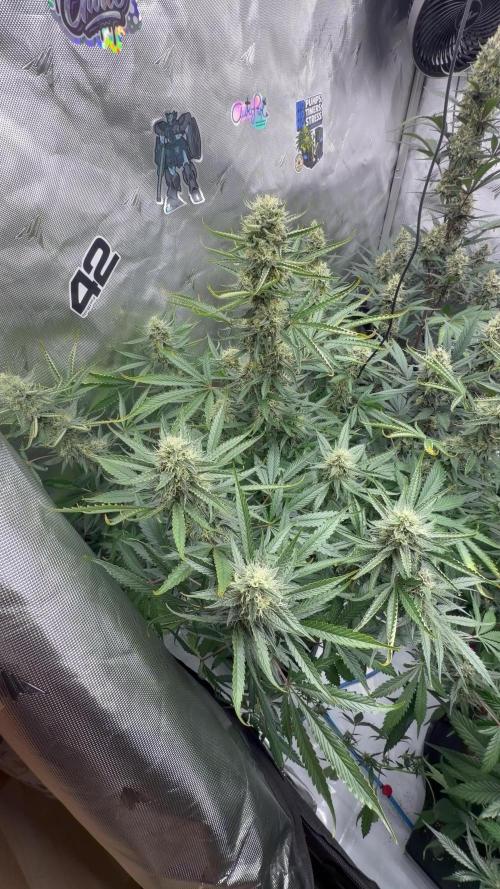
Bud wet weight : 168,1g of trimmed medium to big sized buds
25,4g of tiny tiny buds/larfs = 193.5 grams of trimmed wet buds.
Details on genetics and smoke report above.
This, as my first grow, is way more than I ever expected it to be. I haven´t had that much fun and enthusiasm in a very very long time.
I can´t even explain the feeling it is to harvest your own cannabis, but I know most of you know what I´m talking about haha.
It was really nice to practice LST, even tho it was SO HARD, ´cause I didn´t had barely any space to work since I used a hard pot and did not fill nearly half the size of it and the walls of the pot were really high. It was even difficult to water without dropping water on the lower buds.
I haven´t learnt much about defoliation tho, I feel I need to study a little more about the phases you should or should not do it.
Also, I discovered thrips are a pain in the ass. I had 2 tough weeks dealing with thrips, but in the end it was alright.
I don´t have any humidity control device, which I intend to buy for the next grows.
Growdiaries was really helpful for me, it kept me motivated everyday (not that I wouldn´t have had it anyways), the Grow Questions are REALLY useful and all the community is awesome. Thanks to all people that helped me here on GD during this first grow!
To conclude it: I am really happy and satisfied with how the grow turned out. They look incredible, it almost feels like I can´t believe it still.
Peace.
UPDATES:
07/10 : The buds are now dry and already in curing jars, one of them with a Boveda 58% humidity pack.
The total grams of the dry buds are: 41.4g (medium to big sized buds)
4.1g (tiny buds) = 45.5 grams!
I´m really happy with the results, I thought it would be around 30g so yeah, that´s a really good surprise!
In 2 weeks I´ll be back to update the smoke report.
Thanks so much for reading! Peace.
09/10 : I managed to fit everything in the same container with some space between them, so now every bud is with the Boveda pack.
14/10: It´s been a week and the smell improved, it still smells a little like hay/plant ( even tho it´s not too dry neither too wet ).
21/10: Now it´s been two weeks and even tho the smell isn´t anymore hay, it´s a lot herbal. I really think the aroma can get better, but the taste is already good enough for me. The smoke report has been done and in case I have something to add, I´ll report here.
Thank you so much for reading! Peace.

Processing
Likes
3
Share


@camo420
Follow
NEW BOX: 130x60x120
DIY: storage shelf, solid sheet metal
ELECTRO ################################
thermometer top
thermometer bottom
hydrometer
wlan ip cam (+ir filter)
----------------------------------------------------------------
input: x2 USB PC fan
exhaust: x2 USB PC fan
circulation: x2 USB fan
----------------------------------------------------------------
led panel 1: 300W ASUNDOM LED (Veg/Bloom/Full)
led panel 2: 300W XHGrow Reflector-Series LED (Full)
----------------------------------------------------------------
studio light 1 (vegetation): 36W TaoTronics LED Gold
studio light 1 (vegetation): 50W Balai LED full
studio light 2 (vegetation): 8W VINGO LED blue ligh
studio light 2 (vegetation): 50W Balai LED full
----------------------------------------------------------------
studio light 1 (bloom): 36W TaoTronics LED Green
studio light 1 (bloom): 36W TaoTronics LED Gold
studio light 1 (bloom): 50W JADIDIS LED IR full
studio light 2 (bloom): 36W TaoTronics LED Green
studio light 2 (bloom): 36W TaoTronics LED Green
studio light 2 (bloom): 36W KINGBO LED Deep red 660nm
3x PLANTS ###############################
FastBuds Girl Scout Cookies
pots: 14L
soil: plagron grow mix
Likes
7
Share


@The_Chef_420
Follow
Flowering has begun, pistils have formed and calyx's have grown too. Almost no veg cycle at all with this one, but totally different nutrient regimin compared to my other autos which are 6 weeks in and have no pistils at all.
Likes
21
Share


@Northern_Ent
Follow
Aug 24: Cheese is doing fine.
Don’t take flash pics of photoperiods unless you’re immediately using a 730 nm far red light to put them into dark mode.
Aug 26: gave the plants another lazy compost tea. I was holding off for a couple weeks to avoid giving them too much N.
Aug 28: defoliated some inner branches that were crowding things.

Likes
2
Share


@Bluemels
Follow
Tag 57: Die Green Gelato wächst sehr gut. Ich hoffe sie streckt sich die kommenden Woche nicht zu sehr.