



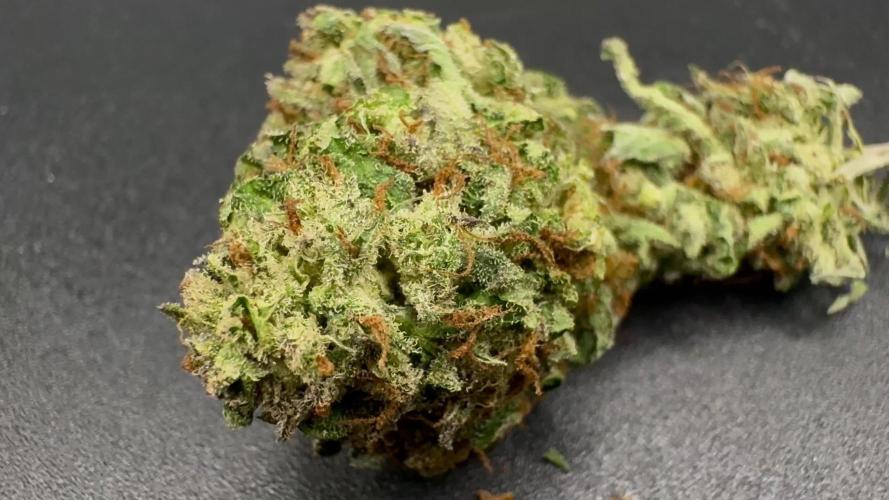




@Ultraviolet
Follow
Its time to prepare for war. *Blows bagpipe*
FISH SH!T THE ORGANIC SOIL CONDITIONER (used twice before and always noticed instantly)
Fish Shit is a living product! It provides a complex Microbial profile that includes thousands of different species of bacteria, fungi, and protozoa. This profile is closer to a natural ecosystem than anything you will find on the market. Fish Shit helps release essential oils and terpenes which contribute to the building of a myriad of flavonoids. Flavanoids play a key role in the development of the most potent aromas and tasteful flavors of a plant and its fruit. Fish Shit contains beneficial microorganisms that help plants maximize nutrient uptake. It does this by transforming nutrients into more usable forms and keeping these nutrients in the soil longer. During photosynthesis plants naturally produce exudates (chemicals that are secreted through their roots). Through these exudates, plants can attract the types of good bacteria that are beneficial to them at different points in their growing cycle. These good bacteria cover the roots and act as a barrier to the invasion of disease-causing organisms that may harm the plant.
What Are Enzymes?
Before we dive headfirst into how, exactly, enzymes can benefit cannabis plants, it helps to understand a little about what these microscopic proteins do. Essentially, enzymes facilitate chemical reactions. They do so by binding with a substrate and forming or breaking molecular bonds. In this context, the substrate is the molecule upon which an enzyme acts to boost the efficiency of a reaction.
•substrate /sŭb′strāt″/
•noun
•The material or substance on which an enzyme acts. A surface on which an organism grows or is attached. An underlying layer; a substratum.
Enzymes are proteins with complex 3D shapes that feature regions called active sites. When the substrate binds to these active sites, it forms an enzyme-substrate complex that causes a chemical reaction to take place, temporarily changing the structure of the enzyme and ultimately causing molecules to either come together or break apart. As a result, molecular products are released, and the enzyme returns to its original shape.
Specific enzymes are capable of binding with certain substrates, as the substrate fits into the active site more or less via a lock-and-key principle. Although, new research suggests a more accurate theory of "induced fit", in which enzymes and substrates undergo structural changes to facilitate the reaction.
If you take the human body as an example, we have an abundance of enzymes in our saliva and digestive system. These molecules bind with substrates in these regions (food particles), working to break down the food we eat into usable parts before converting them to energy.
Enzymes in cannabis work in a similar way to the example highlighted above. Typically, enzymes occur in soil naturally, but if your soil mix is lacking organic material, or you're growing hydroponically, then adding enzymes directly to the substrate is crucial.
By using them in cannabis growing, enzymes not only help break down essential nutrients into smaller, more readily available pieces, but they also support the digestion of dead root cells, clearing a direct path for nutrients.
Overall, enzymes make it easier for your cannabis plants to absorb all the elements they need to reach their full potential. For growers, a plant that reaches its full potential means a bucketload of juicy buds come harvest. This is essential if you want to reuse a pot with old systems left over like mine.
Common plant enzymes include:
•Cellulase
•Xylanase
•Beta-glucosidase
•Hemicellulase
•Amidase
Amino acids are a crucial, yet basic unit of protein, and they contain an amino group and a carboxylic group. They play an extensive role in the gene expression process, which includes an adjustment of protein functions that facilitate messenger RNA
Nitrogen, phosphorus, and potassium are the three main pillars of nutrient solutions and fertilizers, but there are countless other nutrients that your cannabis plants need to produce the best possible harvest. Amino acids are one of them.
You may have noticed that amino acids get a lot of attention from bodybuilders and other athletes. That’s because they play a key role in the synthesis of protein, which, as you probably know, is super important for sports recovery and muscle growth. Amino acids are the building blocks of protein and the foundation of both plant and animal life.
But what do amino acids do for cannabis?
WHY IS PROTEIN IMPORTANT FOR CANNABIS?
Just like proteins are important for the human body, they are equally important for the growth and development of plants.
For example, proteins help plants:
•Facilitate the growth of intracellular plant structures
•Promote energy generation
•Stimulate metabolic processes
•Facilitate the absorption and transportation of nutrients
So, where do plants get these vital proteins from? Well, unlike humans, plants can’t source proteins or amino acids from other organisms. Instead, they need to create their own amino acids, and then use these to build protein. That's why gardeners, much like athletes, go wild for amino acid supplements.
Amino acids help plants by…
• Increasing their production of chlorophyll, which ultimately improves their ability to photosynthesize
• Serving as an easily absorbable form of nitrogen
• Stimulating the synthesis of key vitamins
• Improving their resistance to pests and diseases
• Boosting the strength of their cells
Amino acids also serve as the precursors to auxins, a group of plant hormones produced in the meristems—the apex of the stems where new leaves and stems are born.
Auxins play a key role in the plant, activating genes for plant growth and development by triggering a multitude of vital plant functions. In other words, they determine what its size and architecture will look like. Auxins influence the development of branches, flowers, and roots, and even help to regulate the photoperiod response of the plant.
Some amino acids, like cysteine, also work together with antioxidants like glutathione to help cannabis plants deal with oxidative stress, which can be caused by high-intensity lighting, some nutrient solutions, and high levels of CO₂.
Unlike humans, plants can synthesize all the amino acids they need to survive and develop properly. Unfortunately, however, amino acid synthesis is a really high-energy process, and plants may struggle to produce enough amino acids when exposed to stress.
WHAT FACTORS AFFECT A PLANT’S ABILITY TO SYNTHESISE AMINO ACIDS?
Any kind of stress can affect a plant’s ability to produce enough amino acids.
This includes:
• Drought
• Temperature extremes
• Poor soil health
• Pests
• Diseases
• Poor lighting
• Lack of space
• Poor root health
WHAT DOES ALL OF THIS MEAN FOR WEED PLANTS?
If you want to push your plants to their extreme in terms of floral growth and resin production, you should look into amino acid fertilizers. By making amino acids readily available to your plants, they’ll be able to use crucial energy to grow and bloom, rather than focusing on synthesizing amino acids themselves. Game of Inches, this is another Plants can absorb amino acids via their roots and leaves. They can also benefit from amino acids during both their vegetative and flowering phases. The fastest way for plants to absorb amino acids is via their leaves. The foliar application of amino acids is believed to improve the transportation of nutrients, increase transpiration, and boost photosynthesis. Hence, I recommend feeding your plants with foliar amino acid fertilizers. When doing so, however, carefully measure the amount of fertilizer you use, as—like with any nutrient—overfeeding can damage your plants.
FOLIAR FEED AND SOIL SOAK
• 1 crushed queen anne carrot
• Add 2 tbsp of NPK Raw powdered water-soluble cane molasses
• 20ml h2o2
• 1 crushed radish
• 0.25 tsp NPK Enzymes
• 0.25 tsp NPK Amino Acids
• 50ml coconut water ( nature's own amniotic fluid packed with amino, enzymes )
+ The sound of songbirds.
Onto the predators
1250 -Green Lacewings
Lacewings are extremely voracious predatory insects that feed on several pests. In adulthood, it feeds on pollen and nectar. In the larval stage, it feeds on aphids, thrips, and mealybugs at all stages of growth. It can also attack spider mites in moderate quantities. It is initially an aphid predator, but very effectively controls thrips and mealybugs infestations. It is so voracious that in the absence of prey, it will feed on its congeners. Lacewings are cannibalistic if there is no food available for them. It is therefore important to introduce them into an infestation situation, and not just preventively.
•congener /kŏn′jə-nər/
•noun
•A member of the same kind, class, or group.
•An organism belonging to the same taxonomic genus as another organism.
•A thing of the same kind as. or nearly allied to, another; specifically, in botany and zoology, a plant or an animal belonging to the same genus as another or to one nearly allied.
Ideal temperature 20°C – 26°C
Ideal humidity 60% – 70%
Predatory stage life cycle 21 days
Introduction rate 4 weeks
Storage Refrigerator
Use Immediately
Are there any specific instructions on how to use this predator?
Lacewings are available on small paper cards that you can hang to plant stems. On the cards are dozens of eggs ready to hatch. There are also sterile eggs they can feed on once they have hatched before they are ready to disperse in the foliage. It is important to use them quickly upon receipt to avoid cannibalism. If you don't use them right away, you can store the cards in the refrigerator for 24 to 48 hours to prevent the eggs from hatching too quickly. Avoid storing them for longer than this or you risk losing eggs. 1250 eggs are divided into 7.5 cards, 2500 eggs on 15 cards, and 5000 on 30 cards. The application rate is one card per square meter of growing surface.
Is this predator best used for preventive or curative treatments?
Lacewings are used as a curative solution.
Anything else I should know?
Lacewing eggs hatch approximately 24-72 hours after the cards are exposed to room temperature. When they emerge, the lacewings are just 1.5-2 mm long. They are very small so they are difficult to see. Once hatched, they will stay on the cards for a few hours and then disperse in the foliage. You quickly lose sight of them if you have not witnessed the hatching.
They then live in the foliage for about 3 weeks. Often, you will see them towards the end of their larval cycle. After feeding for 3 weeks, they will triple and even quadruple in size. At that point, they are easier to see. But they remain very discreet insects, it is not abnormal not to see them.
Egg carcasses left behind on the cards do not disappear after the hatching has happened. It's normal to see eggs still on the cards. Visually it is very similar before and after hatching.
Also, on the boxes, there are sterile ephestia eggs which are used to feed the lacewings once hatched. Not all lacewing eggs are viable either. Only a certain percentage of lacewing eggs will hatch. Once hatched, the eggs are white. You can observe this using a magnifying glass.
With,
5000 Stratiolaelaps Scimitus
It is used to prevent or control thrips pupae, fungus gnats larvae, and root mealybugs in the soil. It can also be used for red mites in bird farms or hen houses. The adult is about 1 mm long and is medium brown with a beige triangle on its back. Another fun fact about them is they can survive without prey. They can eat algae and plant debris. This is why they can reproduce and stay in plants for long periods.
Ideal temperature 15°C – 23°C
Predatory stage life cycle 18 days
Introduction rate 2 weeks
Storage Room temperature
Use Within one week
Are there any specific instructions on how to use this predator?
Sprinkle directly on the growing media. They can live in all types of substrates like potting soil, coconut fiber, rock wool, cedar mulch, etc. Stratiolaelaps establish easily so they are permanently fighting pests. One introduction is generally enough unless you have an infestation. In this case, introduce them at least twice at a 2-week interval for best results. If you grow your plants in a 100% mineral substrate, it will have to be released more often since there is less organic matter than in traditional soil.
Do I need to take any specific precautions?
Stratiolaelaps breed in the top layer of the soil. So it is important not to disturb them in the first days following their introduction. They don't like temperatures below 8 ° C. So be sure not to introduce them in a water-saturated or cold environment. Release them 24-48 hours after your last watering. They are very sensitive to chemical acaricides and diatomaceous earth. These methods are incompatible with their use.




@HighOhioAn
Follow
Papaya sherbet what can I say? Has given me a run for my money but the end result is exactly what I wanted. Nice frosty thick: cola beautiful node spacing cannot wait to see how the rainbow melon turns out. Fast buds for life.🔥💯


@Rangaku
Follow
Apple fritter continues to get better and better really developing some nice aroma and sticky as Apple fritter covered in caramel sauce 😂, hopefully swells a bit next few weeks and starts fattening up a bit . Big week next week





@Tommy716
Follow
This week there growing vigorously some plans have gained 6-8 inches in past week!! Had to do some pruning and low stress training to keep the light just right. Went ahead and cranked up all the lights to 100% to aid in flowering as well. Enjoying the features of my new Led setup.Have started to tune the nutrients to support flowering. Taking small steps. There are no signs of stress so far. Finally added a dehumidifier to keep moisture at bay, along with a massive exhaust fan.Still have to be patient and let the lady's tell me what they want. 🙂



@yan402
Follow
🌸🍏✨🍭🌸🍏✨🍭🌸🍏✨🍭🌸
Hi and welcome to another Kannabia grow!
This time I’m running their Apple Fritter (feminized photoperiod). She’s going to veg under 24hr light and be manifolded.
Still cleaning the rest of my Candy Cream GF (11.04.25) — going to sow the seed tomorrow (12.04.25)
*been lazy, sowed on 14.04.25
🌸🍏✨🍭🌸🍏✨🍭🌸🍏✨🍭🌸
---
💭❗💭❗💭❗💭❗💭❗💭❗💭
❗Events & thoughts worth noting❗
💭❗💭❗💭❗💭❗💭❗💭❗💭
12.04.25 (GW1) – Cleaning + flushing the old coco coir. Might need to add another brick. *No new brick needed ✅
This is how I recycle my coco coir — fast, cheap, no BS.
🌿 Harvest plant
✂️ Chop roots small — they stay in for structure (organic perlite)
💦 Hot water rinse — remove salts & dust
🍶 Pre-soak with light feed:
Micro 10ml
Bloom 0ml
GreenBuzz 10ml
Cal-Mag 60ml
FFJ/FPJ 10ml (new disgusting batch)
pH down (citric acid)
♻️ Media stays — Roots stay — Back in service.
14.04.25 (GW1) – Planted seed in final pot ✅
16.04.25 (GW1) – Did last tent clean up + setup ✅📸
17.04.25 (GW1) – Seed germinated 🎉📸 — roughly 48hrs in final pot. Solid start👌♥️
23.04.25 (VW1) – Minimal burnt tips 📸 — not progressing, not a concern.
26.04.25 (VW1) – Started using the new batch of FPJ/FFJ
https://growdiaries.com/diaries/266849-grow-journal-by-yan402
30.04.25 (VW2) – Increased TriPartMicro & GreenBuzzBloom 10ml → 15ml
03.05.25 (VW2) – Increased TriPartMicro again 15ml → 20ml, topped the plant, and added final layer of clay pebbles around the base, trimmed side branches and did LST in preparation for "manifold" 📸
08.05.25 VW3 finished manifold📸
13.05.25 VW4 Increased TriPartMicro to 30ml and GreenBuzzBloom to 20ml.
15.05.25 VW4 Done defoliation and LST 📸
18-19.05.25 VW5 pruned all the shoots bellow my "mains" and did a full defoliation📸
24.05.25 VW6 increased GreenBuzzBloom to 30ml
04.06.25 VW7 did a cleanup📸
11.06.25 VW8 increase TriPartMicro to 40ml
17.06.25 (VW9) – Final structure pass 💈🌿
Did a clean perimeter prune + removed weak shoots. Ended up with 12 tops, was aiming for less, but she made the call
Didn’t fight it, just shaped it the best I could
Airflow’s good, structure’s stable
🛑 No more cuts until post-stretch
Pics coming shortly 😘
Flip coming soon — we’ll see how she handles it.
20.06.25 VW9 Switched lighting to 12 hours, may the stretch begin 🤞
22.06.25 VW10 Did a good LST session,made some pics, and came to some conclusions and a small change of plans:
Originally planned for 8 mains — long, spaced colas and maybe a couple stronger “titans” if she wanted to go that way.
But she’s showing me something else, and I’m not here to fight her — just guide her.
Now after stretch, I’m keeping side shoots only if they: Fill real canopy gaps
Don’t crowd neighboring tops (minimum 15cm spacing)
Aren’t growing into walls or toward the next plant
Anything too close, too low, or heading into shade gets removed. No point forcing it.
Looks like I’ll finish with 14–16 solid tops, depending on how she settles.
I’m just trying to give each one enough light and space to stack properly.
No overcrowding, no larf — just letting her do her thing with a bit of structure.
Increased Tri Part Micro to 50ml as well.
28.06.25 VW11 one week since I flipped to 12/12 and she is stretching nicely, a bit shy in showing pistils compared to the Fantasy Feast regulars I have in the same tent.
29.06.25 VW11 increased GreenBuzzBloom 30→ 60ml
06.07.25 FW1 TriPart Micro: 50→ 30ml
TriPart Bloom: 0 → 20ml
Home-made FFJ/FPJ (Watermelon + Pumpkin): 10 → 30ml
12.07.25 FW1 GreenBuzzBloom 60 →40ml, TriPart Bloom: 20 → 60ml, fpj 30→60ml
19.07.25 FW3 Got some bleached tops, been out and about at job interviews and didn't notice a last minute stretch spurt 😭, should recover fine though plenty of time left 😁
22.07.25 FW3 TriPartMicro 30→20ml , TriPartBloom 60→80ml , GreenBuzzBloom 40→50ml
24.07.25 FW3 Cal-Mag 60→40ml
26.07.25 got thrips but handled them with extra airflow and defoliation.
29.07.25 FW4 GreenBuzzBloom 50→20ml, Home-made FFJ/FPJ (new batch) 60→120ml
31.07.25 FW4 Home-made FFJ/FPJ (new batch) 120→200ml
🌱💦🌱💦🌱💦🌱💦🌱💦🌱
🌿 Day to day tasks & actions 🌿
🌱💦🌱💦🌱💦🌱💦🌱💦🌱
02.08.25 FW4 – Fed 5l of #1 → 2l runoff
03.08.25 FW5 – Fed 5l of #1 → 2l runoff
04.08.25 FW5 – Fed 5l of #1 → 2l runoff
05.08.25 FW5 – Fed 5l of #1 → 2l runoff
06.08.25 FW5 – Fed 5l of #1 → 2l runoff
07.08.25 FW5 – Fed 5l of #1 → 2l runoff
08.08.25 FW5 – Fed 5l of #1 at 75%→ 2l runoff
09.08.25 FW5 – Fed 5l of #1 at 50%→ 2l runoff
(*RUNOFF reused for tomato plants)
🍶💧🍶💧🍶💧🍶💧🍶
💧 Nutrients in 30L #1
🍶💧🍶💧🍶💧🍶💧🍶
💧 TriPart Micro:
10 → 15 → 20 → 30 → 40 → 50 → 30 → 20ml
= 0.67ml/L
🍶 TriPart Grow:
0ml
= 0.00ml/L
💧 TriPart Bloom:
0 → 20 → 60 → 80ml
= 2.67ml/L
🍶 GreenBuzz Bloom:
10 → 15 → 20 → 30 → 60 → 40 → 50 → 20ml
= 0.67ml/L
💧 Cal-Mag:
60 → 40ml
= 1.33ml/L
🍶 Home-made FFJ/FPJ (new batch):
10 → 30 → 60 → 120 → 200ml
= 6.67ml/L
💧 pH Down:
Citric acid (BuxXtrade) — adjust to ~pH 6.0
📦 TOTAL:
360ml per 30L
🔬 12.00ml/L
🍶💧🍶💧🍶💧🍶💧🍶
⚙️✂️⚙️✂️⚙️✂️⚙️✂️⚙️
✂️ Tools & equipment ✂️
⚙️✂️⚙️✂️⚙️✂️⚙️✂️⚙️
✂️ 2× MarsHydro SP3000
⚙️ MarsHydro 150mm ACF Ventilator
✂️ Trotec dehumidifier (big unit)
⚙️ Mini no-name dehumidifier
✂️ Kebab skewers (LST – stainless)
⚙️ Wire + roast skewers (LST assist)
✂️ Scissors (HST)
⚙️ Vacuum (for spills & cleanup)
✂️⚙️✂️⚙️✂️⚙️⚙️✂️⚙️✂️⚙️✂️⚙️
---
🍏🍪🌬️🍬🍏🍪🌬️🍬🍏🍪🌬️🍬
Apple Fritter (Kannabia Seeds)
🍏🍪🌬️🍬🍏🍪🌬️🍬🍏🍪🌬️🍬
Species: 50% Indica / 50% Sativa
Genetics: Sour Apple × Animal Cookies
THC: Up to 25%
Effect: Euphoric, relaxing, creative
Flavor: Sweet, fruity, pastry notes
Flowering: 56–63 days
Resistance: High
Indoor yield: 450–500g/m²
Outdoor yield: 600g/plant
Structure: Strong, bushy, dense buds


@KhaVigga
Follow
i went to work like 2-3 days not coming home and she is nearly dry out to dead but luckily i came back in time and fix it.


@CANNASIM
Follow
------GENERAL COMMENT------
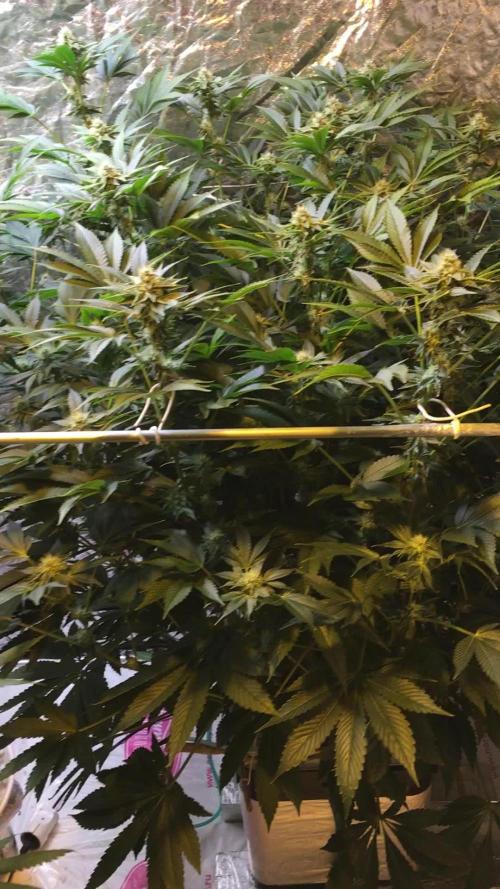
All good, had a flawless week with the girls. Experiencing a lot of issues with the LED though, because of the high humidity in the tent when the lights are out, have to manage that some how... Basically the led matrix fails and blinks till the humidity lower, with this i loose around 1 hr of light a day till it starts all leds... A strange thing to experience!
Forgot to start with the flowering booster, so this week missed Big Bud, but still i gave frequently some Bud Ignitor at least. Next watering Bud ignitor and voodoo juice goes out, Big Bud and Velo Kelp come in to play.
------SM.BB COMMENT------
She did not branch a lot out, so i can count with around 10 branches roughly. Maybe that was due to over removal of the lower growth. Lets see what happens next and how do those will develop.



@Black_Widow
Follow
Привет садоводы !!!
началась новая неделя и сегодня я поменял раствор на новый у подруги гидропоники
тот цветок ,что в земле я полил последний раз Ripen и теперь промывка чистой водой
растения чувствуют себя хорошо и активно кушают
вот такие дела в саду😊


@Koda11
Follow
Beginning: 12/11/2020 10:30 Pm
12/12/2020 5:30 Pm approximately Purple Hulk Auto
MSNL Seeds (First and only seedbank I use as of right now)
(5Gal Fabric Pots) 2 Lemon OG Fem Auto-
Genes: OG Kush x Lemon Haze (High Times Cannabis Cups in 2008 and 2009, alongside first prize at the IC420 Growers Cup)
Flowering: 8 Weeks
Plant Height :Medium 100cm-180cm
Harvest: 300 - 400g/m²
THC: 15-18%
(5Gal Fabric Pot) Purple Hulk Fem Auto-
Genes: GDP x Big Bud
Flowering: 8-10 Weeks
Plant Height: Short 60cm-100cm
Harvest: 300-400g/m²
THC: 19-22%
-Placed under 18/6 light schedule.



@MyLittleGarden
Follow
Vegetationswoche 8 - 30.05. – 05.06.2026
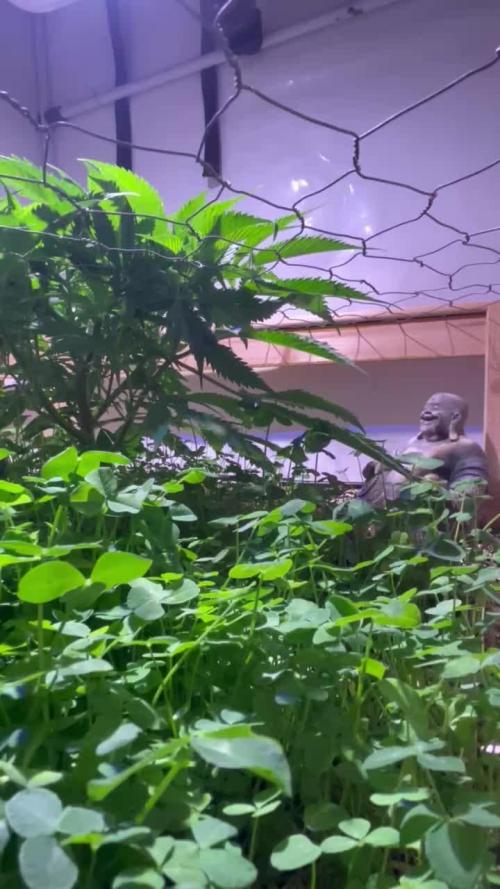
Diese Woche lief alles ziemlich entspannt. Einmal leicht entlaubt und die Triebe weiter unters Netz gespannt, damit sich die Utopia Haze langsam über die Fläche verteilt.
Die Pflanze wächst aktuell richtig gut, sieht gesund aus und hat schöne satte grüne Blätter. Der SCROG füllt sich langsam und das Cover Crop verwandelt das Beet mittlerweile in einen kleinen Dschungel.
Ansonsten habe ich nicht viel gemacht und der Pflanze einfach ihren Raum gegeben.
Blumat-System läuft stabil, Klima passt ebenfalls.


@hilfa
Follow
As tops from largest 3 girls grew I trained them outward to fill the space more evenly, prepping them for their move to the larger chamber next week.
They reacted very quickly to the training.
The smaller of the 3 large plants seems to be needing more water than the other plants, wilting faster. Perks right back up after about 20-30 min of watering.
Topped the rest of the smaller plants for a second time.
shorts_status_processing


@Wicked_Stix
Follow
Day 35 Gave her a flush and fresh nutrients. Added a little maxibloom. Switched lights to 12/12. Did some defoliation.
Nutrients per gallon
.5 tsp maxigro
.25 tsp maxibloom
.25 tsp armor si
.5 tsp calimagic
.1 tsp 90/10 humic/fulvic acid

shorts_status_processing


@AsNoriu
Follow
Day 15. Girls are flying !!! Think on day 18 i will do heavy defoliation, maybe Middle girl will have to be treated differently, she is a bit behind by flower development.
Still see one or two bugs, but today i should get ladybugs from friends shed, they always nest there, but you never know ....
Worst case - this wednesday i will get 200 LadyBug larvas, they should do a deal !!!
Plus, new adventure on horizon ....
FastBuds send me theirs surprise package !!! I know i said never again autos indoors, but this house is just too good not to give a try ! Huge thanks !!! I really will try my best to show beauty of theirs strains !!!
So Future is planed, now just finish those wonderfull Kushes !!!
As you see, my anti-fim'ing worked well on Tallest Kush, other girls managed to save main cola as main, Tallest have it as well, but it shrinked to smallest size and stayed lower than main canopy.
Main stretch is going to the end and after training i will lift Smallest Kush to Middle's level.
Day 15. Update, got like 50 ladybugs. 10 went to this tent, others will go to big one. Still waiting for larvae postage.
Day 16. Heavy training done now : defoliation, lolitoping, watering straight after....
Tallest Kush - 14 tops, amazing, cleared her really high, but it will be 3-4 ounces plant easy, i see structure already, after my version of fim'ing she made 3 tops, where center one shrink to side branch size. Very good structure - thats my target for future grows.
Middle Kush - a bit delayed in flower, but very bushy. After failed attempt of anti-fim'ing all side branches had triple shoots, needed to repeat action most probably ...
Anyway - she will be dofoliated in 4-5 days i think.
Smallest Kush - Midget warrior ;))) She will have hardest nugs from all 3, let's see what size colas she will make, branches shortest, but fatest of all 3.
Day 17. Girls are on absolute max power, looks happy as f@ck and that makes my heart sing !!! ;)))
Day 20. Gave Silica acid with watering. Looks like this tent is free from thrips, girls always prays and drink quick, so its all good in the neighbourhood ;)))
Happy Growing !!!


@UrubCo
Follow
Good start, one of girls is bit smaller, but it's not big problem now. Started adding nutrients. Be optimistic!


@Shizzlemanizzle
Follow
Now tent is here ! plants are exploding:) little one starts to catch up ! Trust in the process👍🏽

shorts_status_processing


@Cannabrown
Follow
Well starting week 4 of flowering and the Peach is showing me some love. Nice tight flowers, beautiful sugar leaves, right now I could not ask for more.
Description
Peach Puree CBD is a high-CBD, sativa-dominant medicinal marijuana strain. It was bred by back-crossing the product of a Sweet Diesel x The Orange (California).
Peach Puree got its name from the delightfully delicious taste of sweet, ripe peaches which also includes notes of creamy lemon. It is a plant that is a breeze to grow requiring no special skills or considerations. Its vigour is also reflected in the proliferation of of dense, sticky buds. Its aroma of citrus and peach is further complemented by the dazzling purple display as leaves turn colour towards the end of flowering.
The THC:CBD ratio is 1:2 with THC levels measured at 5% as opposed to the CBD measurement of 10%. The effect of Peach Puree CBD is extremely gentle yet upifting and it can be used at any time of day for those seeking medicinal relief from cancer, AIDS, insomnia, anxiety, gastro-intestinal problems, epilepsy, muscle tension and more besides.
Characteristics
Breeder/Brand
G13 Labs
Genetics
(Sweet Diesel x The Orange) BX
Pack Size
5 Seeds
Variety
Mostly Sativa
Flowering Type
Photoperiod
Sex
Feminised
THC Content
5%
CBD Content
10%
Grows
Indoors, Outdoors
Medical Conditions
Anxiety, Cancer, Epilepsy, Gastrointestinal Disorder, HIV / AIDS, Insomnia, Muscle Spasm
Medicinal Properties
Yes
Taste / Flavour
Citrus, Lemon, Peach
Effect
Uplifting
Likes
3
