




@DogDoctorOfficial
Follow
💙 PROJECT BLUE TENT – WEEK 15 💙
🌿 BLUE WAFFLE F1 – PHENO B
🍂 AUTUMN IS HERE! BEAUTIFUL LIGHTER COLOURS, INCREDIBLY DENSE FLOWERS, AND THE FINAL CHAPTERS OF OUR JOURNEY!
Hello everyone, and welcome back to another chapter of Project Blue Tent! 💙🌱
My friends, my friends...
WHAT A BEAUTIFUL WAY TO APPROACH THE FINISH! 😂🌈❄️
The season is changing, the colours are appearing everywhere, and the girls are showing us their individual expressions as they approach the end of their flowering journey.
And today, it's all about Blue Waffle F1 Pheno B!
Her sister has been showing us some beautiful darker colours, with pronounced purple, reddish, and brown tones.
But Pheno B?
She's telling a slightly different story!
We're seeing lighter green tones, beautiful colour transitions, and fading throughout the plant. Her flowers are incredibly dense and compact, with an outstanding structure that makes her every bit as interesting as her sister.
Two phenotypes from the same F1 cultivar.
The same tent.
The same ecosystem.
And two beautiful individual expressions!
We're now in Week 15 of flowering, and after observing the flowers, the trichomes, the aroma, and the overall development, I've decided that it's time to move to plain water.
We're bringing the EC down to approximately 0.2 mS/cm, which is our starting-point water reading.
The pH is naturally around 6.8, and we're not using pH Plus or pH Minus.
We're keeping things simple and giving the girls a little time as we approach what I genuinely believe will be the final stage of this journey.
But there's plenty more happening inside this room!
Matilda, our little spider friend, is making another appearance.
We're continuing our macro photography adventures, experimenting with some 3D-printed irrigation accessories for the next run, and observing the results of our under-canopy lighting setup.
And when I look at the flowers throughout this tent, I can't help feeling that all those weeks of work are coming together beautifully.
So, let's give Pheno B the attention she deserves!
🌿🌈💙
🌱 A QUICK LOOK BACK – HOW DID WE GET HERE?
Before getting into this week's observations, let's take a moment to remember the adventure behind Project Blue Tent.
We're growing four individual plants from two different Zamnesia F1 cultivars:
🌈 Blue Waffle F1 – Pheno A.
🌈 Blue Waffle F1 – Pheno B.
🥒 Pickle Lemon Haze F1 – Pheno A.
🥒 Pickle Lemon Haze F1 – Pheno B.
Four plants, two cultivars, and one shared ecosystem.
All four girls have been sharing the same tent, the same general environmental conditions, the same reservoir, the same irrigation system, and the same nutritional program.
Throughout this journey, we've documented their development individually, following the plants from their early stages through transplantation, topping, LST, canopy management, SCROG, defoliation, and flowering.
We've spent considerable time establishing the structure, organizing the branches, managing the canopy, and experimenting with different aspects of our growing environment.
We've also introduced supplemental under-canopy lighting using two LumiFlora 150W full-spectrum fixtures arranged in an X-cross configuration.
Nutritionally, we've been working with the PLAGRON Hydro line, gradually adjusting the program as the girls progressed through flowering.
And now, we're approaching the end.
The major structural work is behind us.
The flowers have developed throughout the canopy.
The plants are showing their individual characteristics.
And we're beginning to see the beautiful changes associated with this final stage.
One of the most interesting aspects of this project is that sharing the same environment doesn't mean every plant will express itself identically.
Even two plants from the same cultivar can show differences in structure, pigmentation, flower formation, and other characteristics.
And that's exactly what we're seeing with our two Blue Waffle F1 sisters.
Pheno A has been showing us some darker, more dramatic colours.
Pheno B is displaying a different visual expression, with lighter greens and her own beautiful combination of colours.
Same genetics.
Same room.
Same general approach.
Different expressions.
And that's precisely why every phenotype deserves her own diary!
💙🌱
🌿 BLUE WAFFLE F1 PHENO B – HER OWN BEAUTIFUL EXPRESSION!
Let's talk about this girl!
Because although her sister has been stealing plenty of attention with those darker colours, Pheno B is certainly not staying behind!
She's looking absolutely beautiful.
The first thing that catches my attention is the overall flower structure.
The flowers are incredibly compact, dense, and beautifully formed.
Looking throughout the plant, we're seeing those little golf-ball-like flowers from the lower sections towards the top of the canopy.
And that's one of the things I've been particularly enjoying during these last weeks.
The plant has developed within the structure we've established throughout the earlier stages, and now we're able to appreciate the results.
The flowers are taking centre stage.
The surrounding foliage is changing.
And the overall appearance is becoming increasingly interesting.
Compared with Pheno A, this girl is showing lighter green tones.
Her sister is moving towards a darker colour palette, while Pheno B retains a more pronounced green appearance throughout parts of her flowers and foliage.
But that doesn't make one more interesting than the other.
They're simply expressing themselves differently.
And honestly, I love having the opportunity to document those differences.
It's easy to look at two plants from the same cultivar and expect them to behave or look exactly alike.
But that's not always what happens.
Individual phenotypic expression can produce noticeable differences, even when plants share the same general environment.
And Pheno B is giving us another beautiful example.
💚🌈
🍂 THE FADING – WHY DOES PHENO B LOOK DIFFERENT FROM HER SISTER?
This is one of the most interesting things happening throughout the tent right now.
We're seeing fading across the plants, but the way that fading appears isn't identical between the two Blue Waffle F1 sisters.
Pheno A has been showing us more pronounced darker colours, including purple, reddish, and brown tones.
Pheno B, on the other hand, is retaining lighter green tones while also showing yellowing and other changes throughout her foliage.
So, why does this happen?
There are several factors involved in the colour changes we observe as plants progress through their life cycle.
One of the main contributors to the green appearance of leaves is chlorophyll.
As chlorophyll levels decline, other pigments can become more visible.
Carotenoids contribute yellow and orange colours, while anthocyanins are associated with red, purple, and blue shades.
Genetics play an important role in how these pigments are expressed.
Environmental conditions, including temperature and light exposure, can also influence the colours we observe.
This means that two plants growing side by side can display different colour combinations, even when they're exposed to the same general conditions.
And that's precisely what we're documenting.
We shouldn't assume that every colour change has the same cause, nor should we use fading alone as proof that a plant is ready for harvest.
Instead, we're looking at the complete picture.
The flower development.
The trichomes.
The pistils.
The aroma.
The overall condition of the plant.
And the changes we've observed throughout the previous weeks.
For Pheno B, the fading is becoming increasingly visible, but her overall appearance remains beautifully green compared with her sister.
And I genuinely love that contrast!
Two sisters, two colour palettes, and two individual stories.
🍂💚🌈
❄️ FLOWERS – DENSE, COMPACT, AND BEAUTIFULLY FORMED!
Now, let's appreciate those flowers!
Because this is where Pheno B really shines.
The flower structure is outstanding.
We're seeing beautifully compact flowers, with a dense appearance throughout the canopy.
And the consistency of the development is particularly interesting.
From the lower flowering sites to the upper sections, we're finding plenty of beautiful flowers to admire.
The photographs show the different angles, the overall structure, and the details that make this phenotype so enjoyable to document.
When we step back, we can appreciate the shape of the plant and the distribution of the flowering sites.
When we get closer, there's an entirely different world waiting for us.
The textures.
The pistils.
The trichomes.
The intricate details of the flowers and surrounding sugar leaves.
And that's one of the reasons I enjoy macro photography so much.
It allows us to explore the details that we might otherwise overlook.
Pheno B has developed a beautiful structure, and the compact appearance of her flowers is particularly impressive.
Combined with the changing colours and the visible frost, she's giving us plenty of reasons to keep the cameras ready.
And just like her sister, she's making it difficult to walk into the room without taking another photograph!
😂📸❄️
👃 THE AROMA – TWO SISTERS, ONE BEAUTIFUL ROOM!
Now, let's talk about something that our photographs cannot communicate.
The aroma!
The room smells absolutely incredible, and the overall aromatic experience is becoming another memorable part of this final stage.
One of the interesting observations is the similarity between the two Blue Waffle F1 sisters.
Visually, they're showing different expressions.
But the overall aromatic impression is remarkably similar.
Of course, without proper analytical testing, I'm not going to invent a terpene profile or assign specific aromatic compounds to either phenotype.
What I can tell you is what I'm experiencing.
The smell is beautiful, the room is wonderfully aromatic, and spending time around these girls has become an absolute pleasure.
And that's something I wish I could share through the photographs!
Unfortunately, you'll have to use your imagination for that part.
😂🌸💙
💡 UNDER-CANOPY LIGHTING – A HIGHLIGHT OF PROJECT BLUE TENT!
I really want to dedicate a section to our supplemental lighting experiment.
Throughout this project, we've been using two LumiFlora 150W full-spectrum fixtures beneath the canopy.
They're arranged in an X-cross configuration, supplementing the main overhead lighting.
And now, as we approach the final stage, we're able to appreciate the flowers developing throughout the different sections of the plants.
The lower flowering sites are particularly interesting to observe.
We're seeing compact flowers throughout the canopy, and the overall development has made this experiment one of the highlights of Project Blue Tent.
The main lighting system provides our primary illumination from above, while the LumiFlora fixtures add supplemental light beneath the canopy.
It's important to remember that several variables contribute to the final result.
Genetics, plant structure, canopy management, environmental conditions, nutrition, and the complete lighting arrangement all play their respective roles.
We cannot attribute every result to one piece of equipment.
But we can document the setup, follow the development, and evaluate what we're observing.
And that's precisely what we've been doing.
I'm particularly interested in reviewing the complete photographic record once the project is finished.
Having individual diaries for all four plants will also give us an opportunity to compare their development and identify interesting differences.
A massive thank you to LumiFlora for making this experiment possible!
These two 150W fixtures have certainly given us plenty to explore.
💡💙🌱
🌡️ ENVIRONMENT – SAME ROOM, SAME CONDITIONS!
Now, let's look at the environmental conditions.
As we've explained throughout Project Blue Tent, all four plants share the same general growing environment.
And this week, we're maintaining the established conditions.
Outside temperatures have increased slightly again, particularly during nighttime.
We're seeing readings above 22°C outside, with one measurement reaching approximately 22.4°C around midnight.
Fortunately, with the air conditioning running, we're managing to maintain the conditions inside the tent without allowing those outside fluctuations to push our internal temperatures higher than intended.
Our current environmental reference is:
🌡️ Day air temperature: approximately 25°C.
🌙 Night air temperature: approximately 20°C.
💧 Relative humidity: approximately 55%.
💧 Solution temperature: approximately 21°C.
🌱 Substrate temperature: approximately 21°C.
We're also keeping an eye on the other environmental readings throughout the room.
CO₂ reference: approximately 666 ppm.
The important thing is maintaining consistency.
We don't want sudden environmental changes simply because the weather outside has decided to become warmer again.
The AC is helping us manage those fluctuations, and we're continuing to monitor the room.
It's quite funny when you think about it.
Outside, summer is trying to make another appearance.
Inside, our girls are giving us a beautiful autumn display!
😂🍂🌈
💧 IRRIGATION – THE ESTABLISHED SYSTEM CONTINUES
The irrigation and drainage arrangement remains unchanged.
All four plants continue sharing the same reservoir and irrigation system.
The recorded watering volume remains approximately 1.6 litres per plant over 24 hours.
As always, this is our recorded reference value rather than a guarantee that every individual plant consumes exactly the same amount.
Individual plants can behave differently, even when they're sharing the same system.
That's another reason why we're continuing to observe each phenotype separately.
At this stage, we're concentrating on keeping the established system consistent while monitoring the plants and their individual development.
We're not introducing unnecessary changes to an arrangement that's already been established throughout the project.
And as we're now moving to plain water, we'll continue documenting the reservoir readings and the changes in our irrigation approach.
💧🌱
⚗️ THE NUTRITIONAL CHANGE – PLAIN WATER FROM HERE!
Now, let's talk about this week's biggest change.
As mentioned in our previous report for Pheno A, I've decided that it's time to move away from our previous nutritional recipe and introduce plain water.
We're now doing the same for Pheno B.
All four plants share the same reservoir, so this change applies to the entire room.
Our current readings are:
💧 EC: approximately 0.2 mS/cm.
💧 pH: approximately 6.8.
The EC represents the starting-point water reading.
The pH is naturally around 6.8, and we're not using pH Plus or pH Minus.
We're no longer adding:
PLAGRON Hydro A.
PLAGRON Hydro B.
PLAGRON Power Buds.
PLAGRON Green Sensation had already been discontinued earlier in flowering.
Why the change?
Simply because, after observing the plants, I feel we're approaching the end of the journey.
The flower development, the density, the aroma, the trichomes, and the overall appearance are all contributing to that impression.
Since this project isn't following an organic nutritional program, I've decided to introduce a period using plain water.
For now, I'm thinking about a few days, potentially around one week.
We'll continue observing the girls and decide how things progress.
I'm not putting an exact date on it because I want to keep the final decisions based on the actual condition and maturity of the individual plants.
And one important clarification: plain water doesn't magically remove nutrients from the flowers or guarantee a particular flavour outcome.
This is simply the nutritional change I've chosen for this stage of this particular project.
The important thing is to document exactly what we're doing and why.
So, from this week onward:
EC approximately 0.2 mS/cm.
pH approximately 6.8.
No additional nutrients.
Let's see how the final chapter unfolds!
💧💙
🕷️ MAHTILDA RETURNS – OUR LITTLE MACRO MODEL!
Well, my friends, apparently Matilda isn't finished with us yet!
Our little spider friend is making another appearance inside Project Blue Tent.
For anyone who missed the previous update, Mathilda is the little spider I spotted wandering around the room.
I decided to give her a temporary starring role in our photography session, and she turned out to be a fantastic subject.
And this week, we're continuing the photographic adventure!
I've included more photographs of Mathilda, because I genuinely enjoy the opportunity to capture these little details.
Look at those legs!
The textures!
The incredible structure!
The details that become visible when we move closer!
It's fascinating how different the world looks through a macro lens.
Something that might otherwise go unnoticed suddenly becomes an entirely different photographic subject.
And that's what I love about macro photography.
It encourages us to slow down, look closer, and appreciate details that we normally overlook.
Matilda has officially become part of the Project Blue Tent photographic collection.
😂🕷️💙
Of course, she's only a little guest appearance, but she's certainly making the most of her time in the spotlight!
📸 MACRO PHOTOGRAPHY – GETTING CLOSER TO THE DETAILS
Photography has always been an important part of documenting these projects.
And during these final weeks, there's so much to appreciate.
The flower structures.
The changing colours.
The trichomes.
The textures.
And our unexpected little spider visitor!
I've been enjoying getting closer to the subjects and capturing details that aren't always visible in ordinary photographs.
I'm also continuing to experiment with macro photography and focus stacking.
For anyone unfamiliar with the technique, focus stacking involves combining multiple photographs taken at different focus distances to create an image with a greater depth of field.
It's particularly useful when working with small subjects at high magnification, where only a limited area can remain sharply focused in a single photograph.
And between the flowers and Matilda, we've had plenty of opportunities to experiment!
I hope you enjoy the photographs as much as I enjoy taking them.
Sometimes the smallest details make the biggest difference.
📸💙
🖨️ BEHIND THE SCENES – NEW 3D-PRINTED IRRIGATION EXPERIMENTS!
Now, let's move away from the flowers for a moment and introduce something I've been working on behind the scenes.
I've been experimenting with 3D printing and have produced a number of prototype bases that I'm currently testing.
The idea is to create a small distribution plate beneath the watering points.
Instead of having water fall directly onto one concentrated area of the coco surface, the plate is designed to help distribute the incoming water more evenly.
The objective is simple:
A more even distribution of water across the surface.
I've printed several prototypes, and I'm currently evaluating their design and how they behave during small tests.
Will the water distribute as intended?
Will the design need adjustments?
Will the final version be suitable for the next run?
That's exactly what we're trying to find out!
I'm not making any claims about the results yet because this is still an experiment.
At the moment, I'm only carrying out a few small tests and checking how the water flows across the plates.
The proper evaluation will come with the next project.
I've included some photographs so you can have a little preview of what I've been working on.
And that's one of the things I enjoy most about this hobby.
There's always something to improve, something to experiment with, and something new to learn.
Project Blue Tent might be approaching its finish, but the next adventure is already taking shape!
😂🖨️💙
🔭 WHAT TO EXPECT NEXT WEEK – IS THIS THE LAST WEEK BEFORE HARVEST?
And here comes the big question!
My friends, I genuinely feel we're very close to the finish.
Looking at the flowers, their density, the trichomes, the aroma, and the overall development, I have the feeling that we're approaching the final days of this journey.
We've now introduced plain water, and we'll continue observing the plants over the coming days.
Perhaps this is the last weekly update before we move into harvest.
Perhaps we'll have one more chapter.
Let's see!
What I don't want to do is promise a harvest date simply because we're excited to reach the finish.
We'll continue looking at the individual plants and assessing their maturity.
Remember, we're growing two different cultivars in the same tent, and even the individual phenotypes can progress differently.
So we need to remain patient and allow each plant to reach her own finish.
What should you expect from the next update?
More observations.
More photographs.
More attention to the trichomes and overall flower maturity.
And potentially the beginning of our harvest documentation!
What shouldn't you expect?
Major environmental changes.
New training sessions.
A new nutritional recipe.
Or unnecessary interventions.
The girls have already done their part.
Now it's time to observe, document, and prepare for the next chapter.
We're getting there!
💙🌸🍂
💬 COME JOIN OUR DOGDOCTOROFFICIAL DISCORD COMMUNITY!
Before we finish, I want to invite everyone to join our Discord family!
If you're already part of the community, you know what we're building together.
And if you haven't joined yet, you're more than welcome!
We've created a place where growers can share their experiences, exchange knowledge, discuss equipment, show their gardens, share photography, and learn from each other.
We also organize our community photo championships, cups, and giveaways!
There's always something happening, and one of the things I appreciate most is the opportunity to learn from people with different experiences, setups, and approaches.
You don't need to be an expert.
You don't need expensive equipment.
You don't need years of experience.
Everyone is welcome!
Come and introduce yourself, share your photographs, join the discussions, and become part of the adventure.
And don't forget to check out our giveaway channels!
👽 Mr. Baggy and other surprises are waiting for you!
💙 JOIN US HERE:
https://discord.gg/dogdoctorofficial
Growers helping growers.
Sharing knowledge.
Learning together.
And having a little fun along the way!
We'd love to have you with us!
💙 FINAL THOUGHTS – TWO SISTERS, TWO EXPRESSIONS, ONE BEAUTIFUL JOURNEY!
My friends, Week 15 has been another beautiful chapter for Blue Waffle F1 Pheno B.
She's looking fantastic.
The flowers are incredibly dense and compact, the structure is outstanding, and the changing colours are giving us another beautiful expression of this F1 cultivar.
Compared with her sister, Pheno B is retaining lighter green tones, while Pheno A is showing us more pronounced darker colours.
And that's precisely what makes documenting individual phenotypes so interesting.
They share the same environment, the same general conditions, and the same nutritional program, yet each plant brings her own characteristics to the table.
We've also introduced plain water this week, bringing our EC down to approximately 0.2 mS/cm, with the natural water pH sitting around 6.8.
The environmental conditions remain stable despite the warmer temperatures outside.
Our irrigation arrangement remains in place.
And our two LumiFlora 150W under-canopy fixtures continue to be an important part of this project's lighting experiment.
We've had Matilda making another appearance, enjoyed more macro photography, and started testing some 3D-printed irrigation prototypes for our next adventure.
And now, we're approaching the finish.
I genuinely feel that this may be the final weekly chapter before harvest, but we'll let the plants guide us.
No rushing.
No guessing.
Just observation, patience, and good documentation.
Two Blue Waffle F1 sisters.
Two beautiful individual expressions.
And another reminder of why every plant deserves her own story.
Same tent.
Same ecosystem.
Different expressions.
Same passion.
Same love.
And another beautiful chapter of Project Blue Tent! 💙🌈🍂❄️
🙏 A HUGE THANK YOU – THE PEOPLE BEHIND PROJECT BLUE TENT!
A project like this doesn't happen alone, and I want to take a moment to thank everyone who has been part of this adventure.
A massive thank you to ZAMNESIA for providing the genetics and making it possible for us to document these beautiful Blue Waffle F1 and Pickle Lemon Haze F1 plants individually.
Thank you to PLAGRON for the Hydro nutrient line supporting the project throughout the journey.
A huge thank you to MARS HYDRO for the irrigation and drainage equipment helping us maintain consistency throughout the room.
Thank you to ZAMNESIA for the Phytonaut LED lighting, curved scissors, and clip fans that continue playing important roles in our setup.
A special thank you to LUMIFLORA for the two 150W full-spectrum under-canopy fixtures. This has been one of the most interesting experiments in Project Blue Tent, and I'm looking forward to exploring the results further.
Thank you to HEMP HOOKS for joining our adventure and providing our community with an exclusive discount opportunity.
🌐 https://hemphooks.com/
Discount code: DogDoctor
15% OFF YOUR ENTIRE ORDER!
We're looking forward to exploring your products further in upcoming projects and sharing our experiences with the community.
Thank you to GROWDIARIES for providing the platform where we can document the plants, share our photographs, and record the lessons we learn along the way.
And finally, a massive thank you to everyone following Project Blue Tent, reading our diaries, supporting the reports, sharing comments, and enjoying the photographs.
Your support makes sharing these individual chapters even more enjoyable.
And to our Discord family, thank you for making this community such a fantastic place to learn, share, and grow together.
If you haven't joined us yet, come and say hello, check out our cups and giveaways, and become part of the adventure!
💙 https://discord.gg/dogdoctorofficial
Until the next chapter, my friends...
Keep growing.
Keep learning.
Keep documenting.
Keep experimenting.
And never lose that passion for the little details that make every run special.
GROWERS LOVE, HAPPY GROWING, AND TAKE CARE, EVERYONE! 🌱💙🌈🍂❄️



@cookingwithninja
Follow
this is week 5. will make fem pollen from this genetics and seeds. crossing with the queen to make AU79. both bridals very strong. this is very very special, already showing me extreme trics in veg. will veg max time 15-20 weeks. I had issues with neglecting my ph, too nigh causing k issues, not phing down, added a few drops b+ nutrient and will be good with my ph. My rh lowest was 23%, so added more red romaine lettuce seeds, dill to grow so I am not wasting my light. It is dimmed to 60% only CW diodes on, NW IR R UVA are off. Only controlling cool white diodes for veg. More red longer wavelengths light for flower, along with uv. Everything is good, extremly positive with this grow!
2 queens on the right topped


@MrJones
Follow
MrJones Cotton Candy Cane by Emerald Triangle Seeds - ViparSpectra XS2000 240W Infrared Full Spectrum LED Grow Light
´🍭⊱╮🍭╰⊰🍭 WEEKLY GOALS 🍭╰⊰´🍭⊱╮🍭
🏡Indoor - 3"x4"x8" Custom Built Grow Closet
🌞Environment - 80F and 60%Humidity - using Humidfyer as needed.
🌾LST and Defoliation - this strain likes to stretch!
🗓️Week 9 of Flower
⚱️5-Gallon 📊6.2 / 6.4 PH
💧 Feeding / Foop Canna Science Nutrients
🌞ViparSpectra XS2000 240W x2 Infrared Full Spectrum LED Grow Light
🕷️ IPM - Will be using Green Cleaner" 1 OZ per Gallon, and CannControl from Mammoth alternating between products each month for Integrated Pest Management.
´🍭⊱╮🍭╰⊰🍭 PLANT UPDATES 🍭╰⊰´🍭⊱╮🍭
📝 Week 14 Notes - Today I made the decision to do the harvest, because of the work I needed t get this down, the buds were ripe - they are sticky - stinky and just beautiful! The Emerald Triangle Seeds are always very good, Foop Nutrients were on point and the ViparSpectra 2000 LEDs were amazing!
╰⊰🍭╰⊰´🍭⊱╮🍭╰⊰🍭╰⊰🍭╰⊰´🍭⊱╮🍭╰⊰🍭⊱╮
🎯Sunday 10.30.21 / Harvested the plants today - they will be in the dry ten for about 2 weeks then I will post up a finished harvest report., Target environmental will be 55/69% RH and 60/65F
╰⊰🍭╰⊰´🍭⊱╮🍭╰⊰🍭╰⊰🍭╰⊰´🍭⊱╮🍭╰⊰🍭⊱╮
Cultivar Information
We have crossed our own Blueberry Headband with Sweet Tooth to produce this super high yielding and very sweet smelling tasty lady, the plant still carries the vigorous veg growth and tight internal stacking of the Blueberry Headband but with the addition of the Sweet Tooth it brings out the sweet berry undertones that were underlying in the original Blueberry Headband making this plant a veritable smell and taste sensation.
Also highly resistant to mold and powdery mildew makes her excellent for outdoor use if you have the space, if not then she thrives just as well indoors.


@Saltoa
Follow
hello again everyone, I'm in my mastery period now. Let the lights turn on, let the show begin. The target is 4x autoflower 400 grams.200 watt LED extra additional light will be added in the flower. Are you ready to go to the destination with me?


@XperencdGmanXG
Follow
finally they are in flower! Yay final foliar spray applied. They are still smelling like chocolate and peanut butter. Did not get 1 drop of rain this week. It is getting so frustrating plants are 1/4 what they should be this year.


@Saintvicious
Follow
Flower stretch and bud sites are setting. Lots of tops from the lst. Fingers crossed.


@VB_Grows
Follow
Maybe one of the biggest autoflowers in soil? Thanks to Fast Buds for this experience.
I think all the love I gave to her really paid out :D
Thanks for following the diary,
happy growing ✊


@sanchelos
Follow
шишка с новой причёской!
появился хороший запах,и так как системный блок дует на шишку,а завехрения воздуха направлены на монитор-запах просто потресающий,обожаю как пахнет растишка)


@Dendegrow
Follow
Welcome to week six! 🌱 Week five was a complete success – all parameters are perfectly aligned. I’ve increased the water conductivity to a solid 3000 and bumped the CO2 level up to 1200 🌿. Light intensity is now set at 1400 µmol in the center and 1000 at the edges, which will keep the plants strong in their generative state 🌞. I’ll maintain these levels until the end of the third week and then start slowly removing the large fan leaves to ensure the buds get plenty of light 💡✨.
I’m also trying something new to activate the “Emerson effect” 🌄: I’m running the deep red lights for 5 minutes before sunset and for another 5 minutes after the day ends. This should give the plants a final boost in photosynthesis, helping to maximize their growth potential! Everything’s looking fantastic so far! The Black Cherry has rooted well across different experimental setups, and at the end of the grow, I’ll provide a full report on the best care techniques for both strains 🌺👌.
Willkommen in Woche sechs! 🌱 Die fünfte Woche lief perfekt – alle Parameter stimmen. Ich habe die Leitfähigkeit des Wassers auf satte 3000 erhöht und den CO2-Gehalt auf 1200 angehoben 🌿. Die Lichtstärke beträgt jetzt 1400 µmol in der Mitte und 1000 am Rand, was dafür sorgen wird, dass die Pflanzen stark im generativen Zustand bleiben 🌞. Ich werde diese Werte bis Ende der dritten Woche beibehalten und dann langsam damit beginnen, die großen Sonnensegel zu entfernen, damit die Blüten ordentlich Licht abkriegen 💡✨.
Zusätzlich probiere ich etwas Neues aus, um den „Emerson-Effekt“ zu aktivieren 🌄: Ich lasse das tiefrote Licht 5 Minuten vor Sonnenuntergang und 5 Minuten nach dem Ende des Tages weiterlaufen. Das sollte der Photosynthese einen letzten Schub geben und das Wachstum der Pflanzen maximal fördern! Bis jetzt sieht alles fantastisch aus! Die Black Cherry ist in verschiedenen Versuchsreihen gut angewachsen, und am Ende des Grows werde ich einen ausführlichen Bericht darüber abgeben, wie sich die beiden Sorten am besten pflegen lassen 🌺👌.


@SuggaShane
Follow
First time running hydroponics. And I’ll say it’s pretty easy although running into problems with ph rising cause of not using ro water so it started getting a potassium deficiency. I think I’m prepared for next run.





@GreenSunrise
Follow
Really started to show flowers this week. took her out of the tent for a clean of the tent. feeding with biobizz bloom, topmax and grow.


@Kmikaz420
Follow
La plante est actuellement millieux de la 10 semaine et j pense pas me tromper en disant que il lui faudra au moins 2 semaine encore ^^ autrement c est une plante assez simple à faire pousser (comme toute leur gorrila) que j adore soit dit en passant ^^
Voilà les amis cette aprem je poste la veg et pour le reste vous devrais attendre un peut .


@m0use
Follow
They are doing well this week, the spikes are holding out and the birds have fucked off with these plants. The steady feeding from the pro mix is still holding up and may feed next week with a smaller dosed solution. The video prerequisite for the contest is a bit funny, not a lot happening in them. Just did a fly by this week. Mustard greens are growing better then these fast buds lol.
Had a near perfect rainbow the other day and included that in all the diaries. Bring some happiness to the page.


@DariaFarms
Follow
27/09: I just came back from a 3 day trip so I am just very grateful to see her alive! I immediately watered her (2L, ph 6.3). She is a bit limp and she has purple-ish leaves but I am going to try and figure out what is is and fix it :)
30/09: She just keeps getting more yellow & pink :/ I gave her 1,5/2L of water (ph 6.4) with all listed nutrients. I hope it will help her.
03/10: Gave her 1,5L of water (ph 6.2) with nutrients, she is smelling really nice :)


@AsNoriu
Follow
So. Its last day of summer, Royal Cookies made my heading totally ...
Thats it, that piece of shit must go.
This is my last bean from 5 RQS Royal Cookies, that i tried to grow. End of summer and that plant is nowhere ...
I must admit, for last 2 month they got only worm castings or bat guano teas, i tried to understand usage of those products and effects on plants. Royal Gorilla clone, like predicted, ended up really nice plant, Cookie in same pot just didn't grew ... Sad sad sad story
I know my last words in video are childish, but so much love given and so much pain received ....

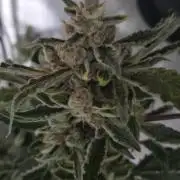
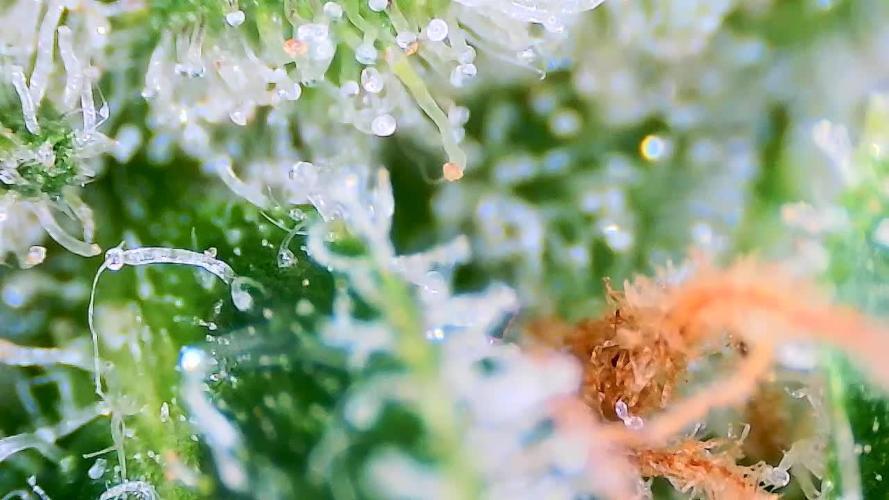

@Prilyfe13
Follow
05/02/2026
This better be the last week. I have her in the dark for the next two days. Hopefully she gives me some color. Or does that work with the light?
Readings:
pH: 5.74
EC: 604 cm
TDS: 430 ppm
Temp: 63.3°
Readings after a small top off.
pH: 5.88
EC: 590 cm
TDS: 413 ppm
Temp: 64.4°
Readings Again:
pH: 6.3
EC: 517
TDS: 405
Temp: 62.8°
05/03/2026
Readings:
PH: 6.25
EC: 588 cm
TDS: 418 ppm
Temp: 67.1°
So we can see that the warmer the water, the higher the concentration of salts. I just added an ice bottle, but it's still working it's magic. The pH seems to have leveled out too. As for the high concentration of salts, I'm gonna have to repeat flushing again.
Well, in this case, I'm going to pull a gallon out and add another gallon and a half or so of plain pHed water. Reason being, I can't get the bottom of the bucket with my water pump. The roots are all in the way. So it's still loaded with nutrients. And now the water is below the roots. I've been doing my best to avoid topping off, but I think I just want to do the swap.
Plain Filtered and pHed tap water readings:
pH: 6.08
EC: 435 cm
TDS: 307 ppm
Temp: 65.7°
I pHed a gallon of water. Pulled 3 gallons out of the bucket and put 3.5 gallons back in. Perfect top off especially for the last few days of flushing. I should probably check the trichomes. I haven't since I put her in the dark 2 days ago.
Update: after taking a short trichome video, this lady is done.
05/04/2026
May the 4th be with you!
Readings:
pH: 6.43
EC: 597 cm
TDS: 416 ppm
Temp: 67.5°