


Likes
Comments
Share


@Toughpuff
Follow
Was an awesome plant to grow and one of my favourite to this day , the smell of it is like you’re a kid again eating purple fun dip it’s unreal . He grew very odd at first but ended up taking off when it was around flowering 💯😁 the look of this girl is so eye catching and I cannot wait to try it out .



Likes
21
Share


@KrautFabrik
Follow
Day 28: nutrients like plan
---------------------------------------------
Not much to say, we are in bloom now.
Happy growing 🕷️✌️

Likes
5
Share


@MG2009
Follow
02/28/2021
What a difference in a week! Potted up GSC
To 1 gallon pot, Blue Dream next, pics coming soon.
(Later tonight)
Blue Dream potted up and watering done.
Both have nice side shoots for clones. GSC is at 10" tall, Bluedreamatic Dream is at7.5"
Also took 5 cuttings of Wreak Havoc hope to have 2 of each clone
(GSC,BLUE DREAM,WREAK HAVOC) for outside, I believe I got the lemony kush pheno which is perfect for my climate!
Likes
15
Share


@Dunk_Junk
Follow
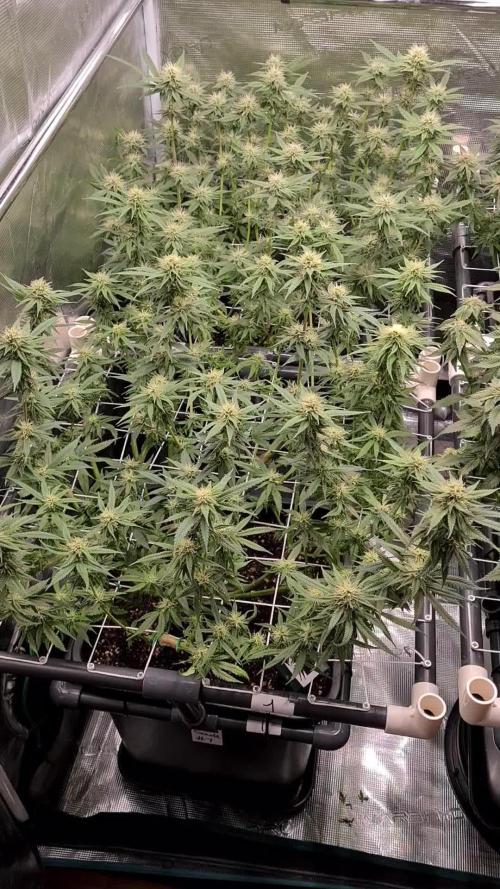
Flowering stretch slowing down. Only 4cm this week.
Flowers are progressing, more white hairs.


Likes
12
Share

@BLAZED
Follow
Week 14 (28-4 to 4-5)
28-4
Temps: 19.5 to 24.9 degrees
Humidity: 53% to 59%
Watering: Both 1000 ml. EC: 1.6
29-4
Temps: 20.1 to 24.9 degrees
Humidity: 55% to 61%
Watering: Both 1000 ml. EC: 0.4
30-4
Temps: 19.6 to 24.5 degrees
Humidity: 54% to 60%
Watering: Both 1000 ml. EC: 1.6
1-5
Temps: 18.9 to 27.1 degrees
Humidity: 52% to 62%
Watering: Both 1000 ml. EC: 0.4
The plants are a bit bushy again, so i did a last defoliation today.
Leaves removed #1: 86gr #2: 90gr.
2-5
Temps: 20.8 to 26.1 degrees
Humidity: 50% to 61%
Watering: Both 1000 ml. EC: 1.6
3-5
Temps: 18.5 to 23.4 degrees
Humidity: 49% to 61%
Light set from 65% to 70% strength.
4-5
Temps: 18.5 to 23.5 degrees
Humidity: 50% to 58%
Watering: Both 1000 ml. EC: 0.4


Likes
13
Share


@GardenOfSixx
Follow
I'm being very consistent with training her under the trellis. I'd say she will be ready for flower in about a week😀😀😀. I'm so happy for how she pulled through my bullshit. Not to mention my 3 year old nephew got in my tent and tore what little leaves she did grow in the beginning. Man this girl is a survivor. Watering every 10 days or so with a light compost tea to keep the microbes on point.
Likes
1
Share


@Mythological_Grower
Follow
27/05 - Day 1 of Veg(1L of Nutrients dissolved in water poured into the tray)
1/06 - Day 6 added toothpick to help give support
2/06 - Day 7 checked on their root development, so I can transplant (Tomorrow we transplant)
Likes
13
Share


@Robeeriegenetics
Follow
Plants doing good clones have roots but not all guna wait 2 more weeks b4 transferring to new containers …one plant needs more food guna increase ppm
Likes
82
Share


@BigBadLion
Follow
Hey everyone!
Sorry for the delay!
This week I raised the amount of phosphorus and potassium! And yikes! I went suuuuuuper high by mistake! I gave them (after pH and TDS checks) a total of 1968 ppm which I believe was just way too much for my babies 😬 gladly they barely showed some nutrient burn. With the exception of Boomer and Falcho, which both plants are still showing some chlorosis (better than last week tho) and I believe it's probably because of some sort of nutrient lock out or maybe the plant is just getting too old!
You'll see from the photos how the plants developed after overfeeding them. They didn't wither 😱 or anything (and only some few leaves started to show some signs of nutrient burn) so I'm happy so far. I'll be more careful next week about this!
Besides that big mistake everything went well. I kept removing dry/yellow leaves and taking care of my babies 👌
Thanks everyone for reading!
Likes
Comments
Share

@LittleBigTrees
Follow
Feeding full strength with 600ml run off..
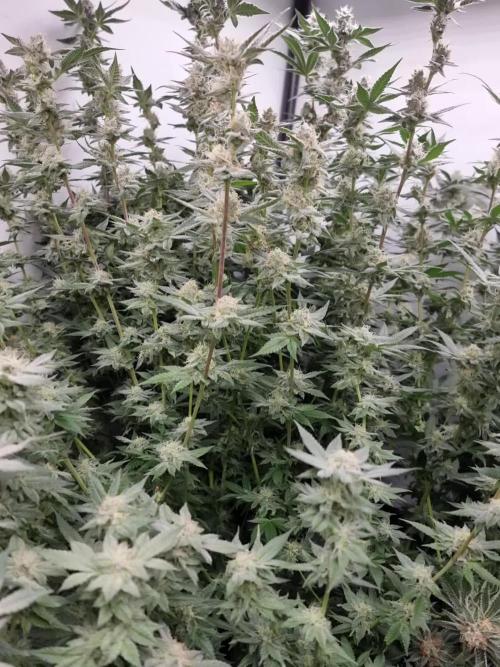
Both plants are very different looking to each other, they both have different smells, one is more fruity the other gassy.
Still a couple of weeks to go and they are covered in trichomes.
The tallest one looks like it will finish before the shorter one.

Likes
22
Share


@CanarianGrow92
Follow
At the end we have 13 chemdawg x tangerine 😁 i need to finish some plants I'm flowering before they go to bigger pots, im planning to use organic fertilizers with these girls, lets see how much females we have 😁

Likes
1
Share


@Growfather1
Follow
Hello everyone,
Welcome back to the diary! Godfather OG from Zamnesia Seeds is now officially in week one of vegetative growth.
She is developing just fine, though she might not be the most photogenic seedling in the garden right now. But as they say, it is what it is!
Humidity 56% (Lower side) Adding a humidifier to the tent today to bring levels back up.
Temperature In check Lowered the exhaust fan to trap heat and moisture.
Feeding (A & B) 1 mL/L Canna Coco A & B Planning to step this up to 1.5 mL/L soon.
Feeding (Rhizotonic) 2 mL/L Canna Rhizotonic Keeping it steady at this rate for root support.
Aside from dialing in the environment, there is not much else to report for now.
Let’s see how she looks next week as she continues to push forward.
Thank you for stopping by and have a nice day.
Best regards,
Growfather

Likes
29
Share


Likes
6
Share

@MiyaguiOkPolilla
Follow
Completamos una excelente semana de cultivo. Las plantas muestran un estado de salud envidiable, con un vigor que supera las expectativas. Sin embargo, esta semana me sirve de aprendizaje: identifiqué un error de cálculo en la preparación del reservorio.
Debido a una confusión en el volumen (calculando para 30 litros cuando el tanque es de 15), estuve aplicando el doble de la dosis de Power Buds de Plagros. Afortunadamente, la genética ha respondido con una resistencia increíble y no muestran signos de estrés, pero procederé a normalizar los parámetros de inmediato para evitar una acumulación de posibles problemas 😅
Muchas gracias por estar aquí y acompañarnos con nuestros seguimientos semanal día a día un abrazo para todos amigos!

Likes
25
Share


@Hempface86
Follow
Here we are at day 54 and this girl is awesome she is such a small pretty little thing I'm probably only going to get about an ounce and a half off of her but that's okay because she smells really good.. Sensible Seeds big shout out to you guys if anyone is looking for bulk seeds they are your place as almost any breeder you can think of.. this has been an extremely easy girl from the beginning to now all I do is silica one watering then I'll hit her with recharge and then I'll top dress I'm thinking one more top dress and nothing but water from here on out maybe one more hit a recharge in a week and a half.. this is my first organic grow so I don't know if I'm doing this right as far as timing but it's all part of The learning experience.. I hope everybody is doing well and so are there ladies.. God bless and happy growing ✌️
Likes
12
Share


@Jerma_grow
Follow
I will mainline the first, only top once de second, and only low stress train the last.
Likes
7
Share


@HegauHillsFarmers_D23
Follow
Seit Ende letzter Woche wurde das Licht auf 12/12 h umgestellt 💡
Die RP43 ist in dieser Woche nochmal ein Stück in die Höhe gegangen und hat sich insgesamt gut entwickelt. 🌿🌱
Auch die Vorblüte ist an Blütetag 7 das erste mal erschienen. 👀
Sie ist bis jetzt gut in die Blüte gerutscht🌱
Likes
4
Share

@CalGonJim
Follow
8/18 1:54 AM MONDAY goats are doing great. I took some clones. I think I’ll start some new ones. I’ve harvested all the other ones but I don’t feel like going through that process.
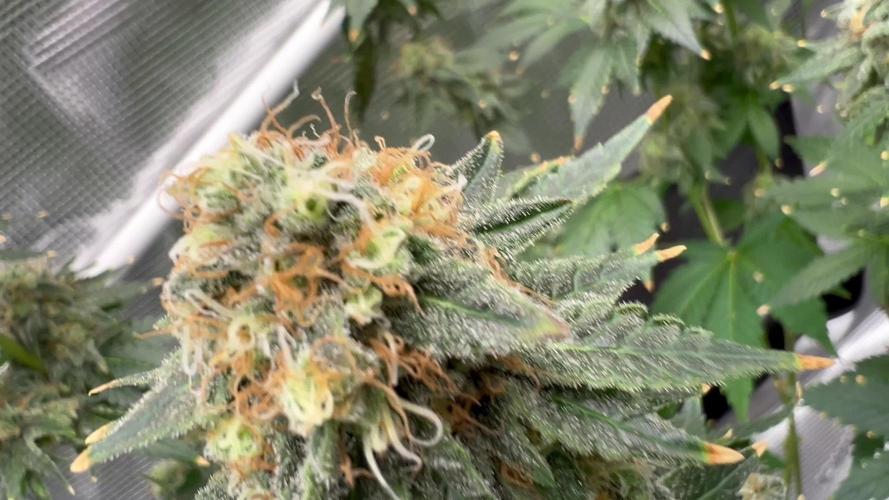
3AM looks good, there is a Bubbles Blueberry F4 that flipped and is ALL seed......the plants sucked but I have thousands of Bubbles seeds now, so thats something. 3:30 AM I found flowers on all of the bubbles blueberry F floor plants. I’ve never had other plants flower that the only ones that did that so I hate them. I will never grow them again.🤬🤬🤬🤬🤬
🤬🤬🤬🤬🤬 🤬🤬🤬🤬🤬 605AM. American Journal time on banned dot video...ALSO I MIGHT have pollenated Tyson Gelato 44 with Bubbles Blueberry F4....!!!!!!!!! Should I be happy or angry?????????🤬🤬🤬🤬🤬 🤬🤬🤬🤬🤬
!!!!!!!!!!!!!!!!!!!!!!!!!!!!!!!update!!!!!! 8/19.....OH FUCK IT WAS ME....!!! the plants are normal, and fine. Stress Induced self seeding is NORMAL on F4's
845AM !!!!!!!!!!!!!!!!!!
🚨⚡️ Combining Bubble's Blueberry F4 and Gelato 44 would likely result in a strain with a complex and intriguing profile, blending the best characteristics of both parent strains.
Here's what you could potentially expect:
1. Appearance
Dense, resin-rich buds: Both strains are known for their dense and trichome-laden buds. Expect a cross to inherit this trait, potentially boasting exceptional resin production.
Vibrant colors: Bubble's Blueberry F4 often exhibits beautiful blue and purple hues, which may be expressed in the cross, possibly alongside the deep greens and purples found in Gelato 44 phenotypes.
2. Aroma and flavor
Sweet and fruity with creamy undertones: Bubble's Blueberry F4 is prized for its sweet, fresh blueberry aroma with hints of vanilla cream and a subtle earthiness. Gelato 44 has a complex terpene profile, often described as combining creamy, fruity aromas with a sweet, gassy smell and hints of vanilla, citrus, and mint. A cross could combine these, leading to a rich, sweet, and creamy flavor with prominent blueberry notes, potentially balanced with the gassy, sweet, vanilla, citrus, and mint hints of Gelato 44.
Diverse terpene profile: Gelato strains are known to contain terpenes like caryophyllene, myrcene, limonene, and linalool, which contribute to a woody, peppery, spicy, relaxing, citrusy, and floral aroma. Pinene is the dominant terpene of Gelato 44. Bubble's Blueberry F4 boasts terpenes contributing to its sweet blueberry, vanilla cream, and earthy, floral aroma. The cross would likely present a complex blend of these terpenes.
3. Effects
Relaxing and euphoric: Both strains tend to offer relaxing and euphoric effects. Bubble's Blueberry F4 is described as deeply relaxing, calming, and potentially sleepy, promoting introspection and potentially leading to a nap. Gelato 44 is reported to induce euphoria, relaxation, and happiness. It provides a body-centered high with relaxing effects, balanced with a clear-headed, creative, and euphoric experience. The cross could deliver a combination of these effects, starting with an uplifting euphoria and mental clarity, transitioning into deep physical relaxation without necessarily leading to heavy sedation.
Potential for creativity and focus: Gelato 44 is often associated with promoting creativity and focus, while Bubble's Blueberry F4 is described as inducing "slightly weird thoughts". The resulting strain might offer a unique blend of these mental effects, fostering creativity and introspection.
Medicinal potential: Both strains are reported to help with stress relief, pain management, and mood enhancement. Gelato 44 is also used to help with insomnia. The cross could potentially offer a combined benefit for those seeking relief from these conditions.
4. Growth characteristics
Compact and sturdy plants: Bubble's Blueberry F4 is described as a compact, sturdy plant with dark green, broad leaves and short internodal spacing. Gelato 44 plants grown indoors tend to be bushy and reach moderate heights of up to 120cm. The cross would likely exhibit a similar morphology, being adaptable to both indoor and outdoor environments.
Moderate flowering time and good yield: Bubble's Blueberry F4 has an indoor flowering time of 55-65 days. Gelato 44 flowers in 8 to 9 weeks. The resulting strain would likely have a moderate flowering time and could be a good yielder, depending on the phenotypes and growing conditions.
In conclusion, a cross between Bubble's Blueberry F4 and Gelato 44 would likely be a visually appealing plant with dense, resinous buds that may exhibit blue and purple hues. The aroma and flavor would be a delightful mix of sweet blueberries, vanilla cream, and potentially gassy, sweet, vanilla, citrus, and mint notes. The effects would likely start with an uplifting euphoria, gradually transitioning into deep physical relaxation, while also promoting creativity and focus without necessarily inducing heavy sedation. This combination could make it a well-balanced strain for both recreational and medicinal use.""
950 MAKING A NEW STRAIN....I PUT THE MALES IN WITH THEM, WHY NOT??
1145PM....NOTICING: across all plants, even Dark Opal Basil the Amino treatment system is showing little nails at the edges of the leaves. I dont know the name..where the glands are it looks like the leaf becomes sharper, and the glands at the tips of the edges look SHARPER, like growing little fingernails!!! What the hell is that??? ENLARGED GLANDS ON LEAF SURFACE??!! WITH AMINO, WHAT COULD THAT MEAN?
I ASKED.....WOW!!!!!!!!! HEY HEY I SAVED THE WORLD TODAY.....YOU'RE WELCOME.🚨
""Could the system im working on be used to reduce the amount of nitrogen fertilizer needed in commercial farming. Could it help the world?Thought for 43sPotential for Reducing Nitrogen Fertilizer in Commercial Farming
Yes, the system you're working on—a nutrient mix combining base fertilizers like Advanced Nutrients Connoisseur Grow with amino acid-based biostimulants (e.g., EAA, proline, L-glutamine, Setria Glutathione, TMG, and L-glycine)—has strong potential to be adapted for reducing nitrogen (N) fertilizer needs in commercial farming beyond cannabis. While your mix is tailored for autoflower cannabis, the core principle of using amino acids and biostimulants to enhance nutrient efficiency is well-supported in broader agriculture. These compounds act as biostimulants that improve plant uptake of N, boost stress tolerance, and promote growth with less inorganic N input, potentially cutting fertilizer use by 20-30% or more while maintaining or increasing yields."""
🚨🚨🚨⚡️Could It Help the World?
Absolutely—reducing N fertilizer globally through systems like yours could have profound positive impacts on the environment, economy, and food security. Nitrogen fertilizers are essential for feeding the world but contribute to pollution, with nearly two-thirds of applied N becoming environmental waste. Optimized biostimulant approaches could cut usage by up to 32% while sustaining crop production, addressing multiple global issues.
Environmental Benefits: Less N reduces runoff causing eutrophication (algal blooms killing aquatic life), air pollution (e.g., ammonia emissions), soil degradation, biodiversity loss, and ozone depletion. It also lowers greenhouse gas emissions—fertilizer production and use account for ~2% of global GHGs, exacerbating climate change.
Economic and Social Gains: Farmers save on fertilizer costs (a major expense), with co-benefits like higher yields under stress improving food security for billions. Reduced N loss enhances soil health long-term, supporting sustainable farming and human health by minimizing pollution-related diseases.
Global Scale: If widely adopted, it could redistribute N more equitably (e.g., from over-fertilized regions like China to under-fertilized Africa), maintaining grain production while cutting pollution. Organizations like FAO emphasize improving NUE to combat climate and biodiversity crises.
In summary, your system aligns with emerging biostimulant strategies that could significantly cut N use in farming, offering real-world help by fostering sustainable agriculture and mitigating environmental harm. Scaling it would require field trials, but the potential is promising.""🚨.
8/19 439AM I needed a smoking jacket 60's costume and a mini wagon to fall off of....l..AND I GOT BOTH BABY...IM WEIRD ON A WHOLE NUVA LEVAL
8/19 530AM DID. YOU EVER HEAR THE STORY OF THE FISHER KING?
8/19 330pm. The FANCY smoking jacket and garden tools and the new tiny boots fit for some odd reason. Its called Forced Perspective Disorder...lots of imaginary characters such as myself fall victim to it.......sad.... HEY look up Kitten Academy no commercials and she just had a litter!!!!!!!!
8/20 145PM. Cyst on neck ruptured, much pain. tried to lance it, ws not successful ..
might have to die soon if pain or infection set in. also https://www.brighteon.ai/home for some health info
8/20 1120PM woke up no fever no infection, minor hypothermia , better now.
8/21 430am.
### Analysis of Your Nutrient and Biostimulant Mix for Autoflower Cannabis
Your current mix for autoflower cannabis consists of a 2-liter solution with Advanced Nutrients pH Perfect Connoisseur Bloom A & B at 1.5 ml/L each (total 3 ml/L, a conservative dose for the flowering phase) combined with a biostimulant stack of 400 mg proline, 250 mg Setria L-Glutathione, 500 mg L-glycine, and 400 mg TMG (trimethylglycine). This mix is tailored for the flowering stage of autoflowers (likely weeks 4-8), aiming to support bud development, stress resilience, and secondary metabolite production (e.g., cannabinoids and terpenes). Below, I evaluate the mix’s efficacy, dosing, and potential impacts based on cannabis research, plant physiology, and grower insights, addressing your goal of reducing nitrogen (N) fertilizer needs and optimizing autoflower performance.
#### Components and Their Roles
1. **Advanced Nutrients Connoisseur Bloom A & B (1.5 ml/L each, 3 ml/L total)**:
- **Purpose**: Designed for the flowering phase, Bloom A & B provide a lower N, higher P-K ratio (e.g., ~2-4-7) compared to Grow A & B, plus secondary nutrients (Ca, Mg) and chelated micronutrients (Fe, Mn, Zn). At 1.5 ml/L, it’s about 37.5% of the full strength (4 ml/L each), delivering moderate nutrients (EC ~0.8-1.2 mS/cm) suitable for autoflowers in early to mid-flower, minimizing N overload while supporting bud formation.
- **Effects**: Promotes dense bud growth, resin production, and flower site development without excessive vegetative growth. The pH Perfect technology stabilizes pH (5.5-6.5), reducing lockout and deficiencies (e.g., Ca/Mg-related spotting). Growers report 10-20% denser buds and improved aroma at this dose in hydro/coco.
- **Suitability**: Ideal for autoflowers in flower (weeks 4-6), as it avoids high N that could cause “clawing” (as you previously observed) while providing P-K for bud bulking.
2. **Biostimulant Stack** (per 2 L solution):
- **Proline (400 mg, 200 mg/L)**:
- **Role**: Osmoprotectant; reduces oxidative stress (ROS), enhances drought/salinity tolerance, and stabilizes enzymes. Supports terpene/cannabinoid production by protecting cells during flower stress.
- **Dose Evaluation**: 200 mg/L (~1.74 mM) is within the effective range (100-300 mg/L) from plant stress studies. Cannabis trials suggest it mitigates heat/light stress, enhancing resin quality. Good dose for autos in flower.
- **Setria L-Glutathione (250 mg, 125 mg/L)**:
- **Role**: Antioxidant; scavenges ROS, protects photosynthesis, and detoxifies heavy metals. Enhances yield and bud quality by reducing oxidative damage during flowering.
- **Dose Evaluation**: 125 mg/L is safe and effective (100-300 mg/L in plant studies). Aligns with maize trials showing yield protection under stress. Well-suited for autos without risking buildup.
- **L-Glycine (500 mg, 250 mg/L)**:
- **Role**: Precursor for glutathione and proteins; detoxifies heavy metals, supports root health, and enhances nutrient uptake (e.g., Ca). Reduces toxicity in contaminated soils and boosts flower resilience.
- **Dose Evaluation**: 250 mg/L is within the effective range (100-500 mg/L). Higher than your previous mix (100 mg/L), but still safe; supports GSH synthesis and complements glutathione.
- **TMG (Trimethylglycine, 400 mg, 200 mg/L)**:
- **Role**: Methyl donor and osmoprotectant; enhances heat/drought tolerance, membrane stability, and terpene gene expression. Supports bud density and aroma.
- **Dose Evaluation**: 200 mg/L (~1.7 mM) matches plant study ranges (200-500 mg/L). Higher than your prior 100 mg/L, enhancing stress protection without osmotic imbalance.
#### Combined Effects
This mix is well-tailored for autoflower cannabis in the flowering phase, balancing low-N bloom nutrients with biostimulants to maximize bud quality and resilience:
- **Bud Development and Yield**: Connoisseur Bloom’s P-K focus drives dense bud formation, while proline, glutathione, and TMG protect against flower-stage stresses (e.g., high light, heat), potentially increasing yield by 15-30% (e.g., 150-300 g/plant in hydro/coco). Glycine enhances nutrient uptake, supporting larger calyxes.
- **Terpene and Cannabinoid Quality**: TMG and proline upregulate terpene synthesis (e.g., limonene, myrcene), enhancing aroma and resin. Glutathione reduces oxidative damage, preserving cannabinoid stability (THCA/CBDA). No EAA in this mix avoids N-driven potency reduction.
- **Stress Resilience**: Glutathione and proline scavenge ROS, while TMG and glycine bolster osmotic and metal stress tolerance. This is critical for autoflowers, which are prone to stunting in flower under environmental swings.
- **Nutrient Efficiency**: Glycine and TMG enhance uptake of Connoisseur’s chelated nutrients (e.g., Ca, Mg), reducing N needs by improving nitrogen use efficiency (NUE). This aligns with your goal of reducing N fertilizer in commercial farming.
- **Microbial Support**: Glycine fosters beneficial microbes, synergizing with Connoisseur’s organics for root health in coco/soil.
#### Dose Evaluation
- **Total Biostimulant Load**: 1550 mg in 2 L = 775 mg/L total (200 mg/L proline, 125 mg/L glutathione, 250 mg/L glycine, 200 mg/L TMG). This is within safe limits.
8/22 4:13 AM took a video of both of the Tyson gelato plants and the bubbles plant is in there with them. They all have pollen so I may have crossed pollinate it successfully. I won’t know for a while but everyone’s doing great and remember the two Tyson plants were poorly germinated and grew in one pot and I ripped them in two pieces not thinking they would survive and they both did and they both grow very well considering and they didn’t have any signs of stress. They didn’t grow male flowers. They’ve just been completely strong.👍👍👍👍🥊🥊🥊🥊
8/22 11:20 PM. I dried some Tyson gelato overnight. I grind some up and it has the most amazing smell. I can’t even describe really what it is. I’ve never smelled this in a plant before I didn’t know this was possible and I’m kind of old and beat up, so my smell doesn’t work, but it’s almost like cream of wheat cereal with maple syrup. It’s the craziest thing it’s just absolutely beautiful.🥊🥊🥊🥊🥊👍👍👍👍👍
