


Likes
Comments
Share


@XoticGROW666
Follow
Good bag appeal smell lik sum sour zkittlez with hit of diesel.

Likes
20
Share


@CampExotic
Follow
Enjoyed this plant. Please make sure you check out high caliber genetics @ phenohunt Seedbank. Only place to get these. S/o to the Midwest growers.

Likes
15
Share


@Canadiancultivation101
Follow
Definitely love the colours on this girl. Very true to her name, very dark purple/black. 10/10 would grow again

Processing
Likes
7
Share


@BCBCGrown
Follow
Buds have shown decent growth and are stacking nicely. I believe they have a calcium magnesium deficiency from the rust spots and purple hues on fan leaf stems. I am a frugal grower and have been researching ways on making my own cal mag but not sure how much of an effect it will have with just a few weeks to go. I'm also thinking the lighter colored leaves could be from light stress because it shows where the light is most concentrated, at the center. I've had the light at about 18" above the lower part of the canopy. But have since raised it a few inches.




Likes
8
Share
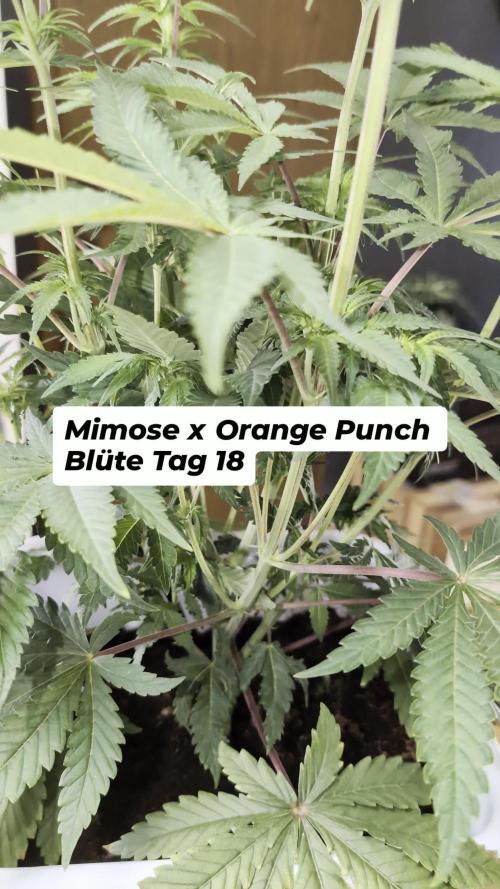

@Pheno_Minds
Follow
Link zum Strain: Mimosa x Orange Punch von Barneys Farm
🔗 https://www.seedsman.com/eu-de/mimosa-x-orange-punch-auto-feminisiert-samen-bfs-mimop-auto-fem?a_aid=PHENOMINDS
🔥 -10% mit dem Code: PHENOMINDS
🌿 Blüte Tag 23
📅 Datum: 22.03.2026
🌬️ Avg. VPD: 1.2 kPa
🔆 Lichtintensität (PPFD): 738 µmol/m²/s
📊 pH (Autopot Tank): 6
⚗️ EC (Autopot Tank): 1,5 mS/cm
🌊 Wassertemperatur: 21 °C
👁️ Pflanzenzustand: Keine Anzeichen von Stress.
📝 Besonderheit: Athena Düngermischung wird nach Schema gemischt und mit Leitungswasser auf den passenden EC verdünnt. Danach wird der PH Wert im Tank justiert.

Likes
6
Share

@ThatsmyGrow
Follow
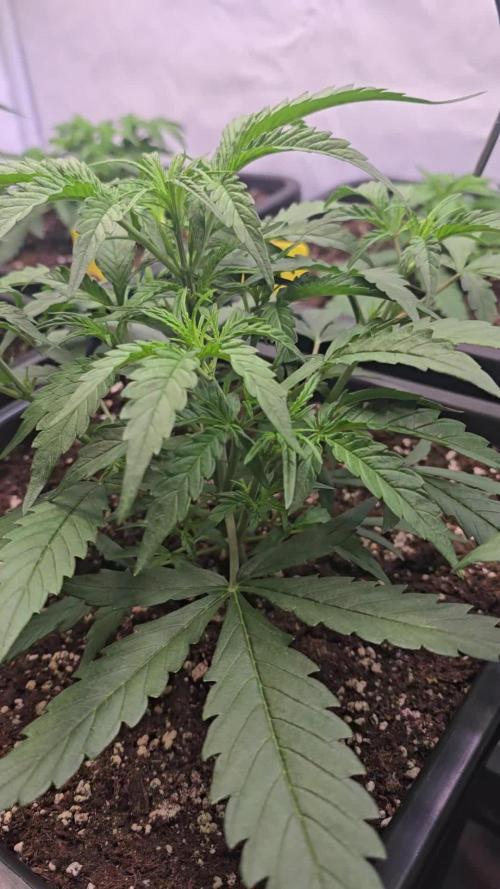
This week is special, i got the New System from ac infinity. I need to get comfort with everything, but its realy high Qualität.
For now we can get the best vpd for the lady, so i hope the best for the grow.
Likes
7
Share


@Danger90946
Follow
Day 43 12/06/2021- Beginning of week five of flower. She should be done soon, she will also get her final feeding soon.
Day 45 12/08/2021- She got her final top dress today from here on out she is on her own all I will do is water with pain water PH to 6.2-6.8 when dry.
Day 47 12/10/2021- She is coming along nicely. Very frosty wish she wasn't a auto so I could of clone her for sure. Today she got a nice treat as it rain in my hometown and that's the water she got. Hoping she is ready by the end of the year. I know she looks funny but she was never topped either.
Day 49 12/12/2021- End of the week, nothing new.
Likes
19
Share


@DeepRootsGrowTrees
Follow
DREAM SHERBERT AUTO / KANNABIA
WEEK # OVERALL
WEEK #2 FLOWER
No issues to report this week she's looking good and her buds are forming nicely. Stay Growing!!
Thank you for taking a look it's much appreciated!!
Thank you KANNABIA!!
DREAM SHERBERT AUTO / KANNABIA

Likes
8
Share

@birdmountain
Follow
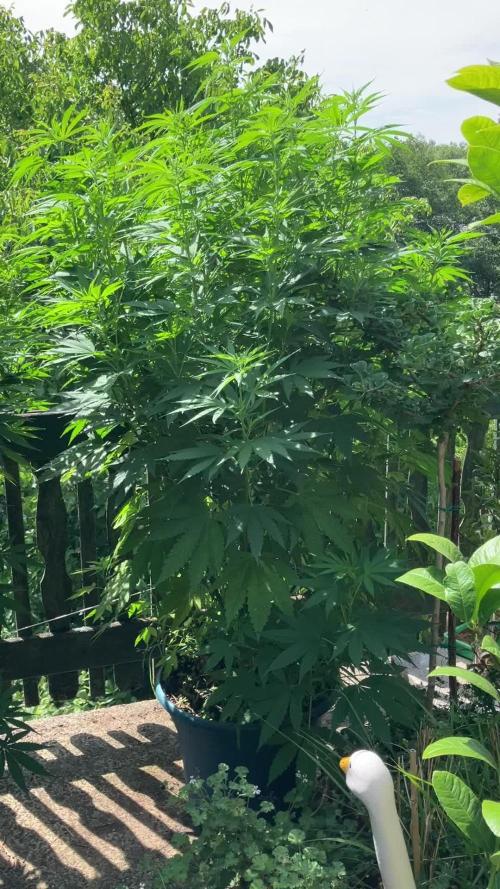
Die Rainbow Road hat in einer insgesamt kühlen Woche noch einmal etws an Höhe zugelegt. Sie wächst ohne Probleme und kommt gut mit den gegebenen Umständen zurecht.
Ich hoffe, dass es so weiter geht.
Viele Dank für euren Besuch, ich wünsche euche eine schöne Grow-Woche!

Processing
Likes
30
Share


@Canadian
Follow
Day 36 Moby Dick it's at 28inches in height and Blue amnesia is at 32. and because the smell has become too strong to contain in the tent I turn on the carbon filter fan 24/7 instead of intervals of every 2 hours on for 30 minutes so now my tent it's not so hot and my plans drink less water every 3-days.
I will keep updating .
day 38 the plants are stretching very fast I'm forced to raise the light everyday the blue amnesia is 39 in tall and the Moby Dick it at 32 inches tall I resumed regular feeding schedules on the plants and they seem to be growing even faster after each watering.
Thank you for reading and have a happy grow.
Day 42 They continue stretching pretty fast blue amnesia it's at 42 inches and Moby Dick it's at 33 3/4 inches. I only have noticed some lower fan leaves turning yellow and drying up I'm going to stop nutrients for the next one to watering sections because I think I've been pushing the plant too hard but it could be normal I just don't know. I posted two Fan leaf pictures to see if somebody has an idea what it could be but I think is probably too much nutrients
I will continue updating thank you for reading happy growing.
Day 44 definitely the issue is my fault pushing it too hard. They have nitrogen toxicity they have all the symptoms the claw leaf the weakness of the leave the yellowing and purple color of some branches the Deep shiny green on the leaf. the fact that I've been pushing that pretty hard I already have water them twice with clean water ph 6.0 hoping to use up all the extra in the pot and I will do it one more time from two days from now and then trying new nutrients at 1/3 full strength. .they seem to be responding well but if they start losing to many leafs i well flosh them in the shawer.
Day 46 because I saw my plans going downhill pretty quick I decide to test Runner run-off it was incredibly High / 4000 + PPM so yeah to the showers they went until runoff was 1000 or below PH was at 6.2 and for the next watering in 3 days from now approximately depending on temperature and thirst of the plans I will resume flowering nutrients only and maybe only at 600 PPM the plant took a beating as well since I have to remove the scrog net and they were being support only buy it but I had no choice it was to see then die and then start over again or giving a flush so they can recuperate and take it slow for a few days until they can handle more nutrients.
My hands end up being very sticky handling the buds even though I did it as gently as humanly possible so they were packed with sticki Racine even though they were stressed out what incredibly robust genetics. I will continue updating thank you for reading and have a happy grow.
Day 48 the plants seems to be bouncing back they lost a lot of fan leaf at the bottom and some of the ones that were turning yellow at the top develop marks . One off the blue amnesia was more affected than the other three plants I will probably hold nutrients for it only for this plant. They stop stretching as much the blue amnesia are measures 44 inches and the Moby Dick is at 40 inch after the flush the buds are getting fatter and bigger every day .
thank you for reading and have a happy growing


Likes
73
Share


@Herbz_Unkraut
Follow
i looked awesome all growcycle...i streched alot & i noticed it drank alot more then the other plants while growing...had a good yield, i´m very happy overall


Likes
13
Share

@DeepRootsGrowTrees
Follow
JOANNE'S CBD / ROYAL QUEEN SEEDS
WEEK #9 OVERALL
WEEK #8 VEG
This week she starting to look much healthier and she growing at a nice rate overall a good week! Stay Growing!!
Thank you for stopping by and taking a look it's much appreciated!!
Thank you ROYAL QUEEN SEEDS!!
JOANNE'S CBD / ROYAL QUEEN SEEDS

Likes
73
Share


@Rwein93
Follow
Ciao ragazzi e bentornati qui per i nuovi aggiornamenti della Mimorange 🍊
Settimana fantastica!💪
Le sorelle all arancia mi sorpendono giorno per giorno. Oltre alla super altezza di 160 cm, ormai raggiunta da quasi tutte e tre, i buds sono sempre più grassi ora misurano 2,5 cm quelli secondari e le apicali 3/3,5 cm.
Questa settimana si saranno allargati di 1 cm abbondante. Sbalorditivo😍
L odore è buonissimo. Un forte profumo dolce di mandarino pervade il naso appena apro il loro lato della tenda.🤤
Ho defogliato loro nel giorno 67 e ho allargato la numero 1 con un po di Lst nel giorno 70. I nuts rimangono invatiati.👍
Eh niente! Anche questa settimana è giunta al termine ragazzi.🤙
Grazie a tutti per aver guardato e restate sintonizzati per nuovi aggiornamenti.🙏
Buona settimana e felice crescita 🌱 🌱 🌱

Likes
8
Share


@Skinnytalls420
Follow
Very happy with the outcome just as good as the first time I grown this strain!!!!
Likes
2
Share


@Green_Peace
Follow
The plants are growing at a good rate now and drinking a litre each per day. I feed them by hand and each plant gets 2litres every other day.
Didn't do anything else this week other than install the trellis on the last day.
This plant is at the back of the timelapse video.
Likes
10
Share


@Kroniclesofnarnia
Follow
Sherbets nearly ready now, another's 2 week plus a week flush should hopefully do it, gorilla glue is coming like dr grin spoon tiny popcorn buds (see pic) think it's cos I've had them on 12-12 not too sure
Likes
28
Share


@Esoteric_growing
Follow
My first attempt at a scrog and only started it at day 7 of flower so a real rush job. Very happy with the outcome, bud quality is very high as is flavour and all from a 20L pot.


