


shorts_status_processing


@eldruida_lamota
Follow
Última semana de floración de estas candy caramelo y es que vaya flores son como rocas muy compactas kio, de lo mejor que e visto también en mucho tiempo fumetillas.
Plantas pequeñas con un buen porte y un buen grosor de tallo, son bastante rápidas a la hora de florecer, os aseguro que las aguantaba una semana más pero por temas de virus y tal decido cortarlas ya que también están bien bastante contento en verdad con esta varieddd.
Mantuve ph hasta el final controlando humedad y temperatura pocas veces desvarío el asunto.
Muy muy contento zambeza hizo un fast bastante curiosa con olores dulces .


@SSKNFbyHAZE
Follow
In a week, I give compost tea, and fermented plant juice once each ^^
Hope you guys have a wonderful day today ^^v
*** Please Like, comment & share ***
Highly appreciated -----/-----<@


@DudeGrowsWeed
Follow
Coming into the home stretch here. I've been flushing for a week, going to give her one more good watering then plan on harvesting this weekend. I still don't see any amber trichomes, but I don't want the dying leaves to cause any bud rot, so amber or not she's coming down this weekend. The smell is super STRONG!!!👍
Thanks to all who answered my question on harvesting. I've been having trouble selecting an answer. I contacted GD support, hopefully they get this fixed soon.


@Trainrails
Follow
### Day 44 ###
She is doing really well, she grew a decent amount, but I'm still hoping on 2 weeks of stretch before she stops.
She is unfortunately still struggling with a deficiency. I'm guessing nitrogen, magnesium and calcium. So I'm waiting for the soil to dry out to give an extra boost on those and hopefully the lower leafs will stop wilting like they are now.
### Day 45 ###
Apperantely I have a nutrition lock. The PH of the runoff water was only 5.6! So I flushed her with 25l of plain water Ph'ed to 6.5. Now the lock is hopefully gone! I have to say I have never seen her this sad before. With her leafs all droopy and stuff.
On a more positive note, my tent arrived! 😁 This is so awesome!
### Day 46 ###
OK the noise of the exhaust fan in my tent is just too much! I switched it with a less noisy one, but now I have no intake fan, should be fine. The loudest part now is the fan inside the tent.
### Day 47 ###
She looks a little better today and the soil is starting to dry. I'm going to wait till Monday before I water and feed her again. Depends on how dry the soil is then.

shorts_status_processing

@eldruida_lamota
Follow
Esos fumetillas, que actualizo esas bombas de candy caramelo 💣 del banco Zambezaseeds.
Y es que ya no les queda nada, estoy pensando en cortarlas con varios días de diferencia, pero ya veremos eso aún está por decidir.
La cuestión es que mirar lo sanas que han llegado hasta el final y a sido Gracias al led que me mando mars hydro.
Esta semana no se echo nada de productos y hasta el corte es lo que seguiré haciendo, con cada riego se alimente la planta con nutrientes o no se tiene que calibrar el ph, mantener la humedad por debajo del 50% Y la temperatura mantenerla entre 22/26 grados.
La flor no es muy grande pero está compacta, tiene bien de resina, el olor es un olor dulce como a chicle de fresa. Muy peculiar y llamativo.
Hasta aquí todo lo de esta semana, disfruten los vídeos y muy buenos humos gente


@Dre25
Follow
Happy what I see so far, I know patience is the key. All my babies looking Beautiful!!! 😭😊😭
7/14 Growing Strong 💪🏽


@Ninjabuds
Follow
The OG kush from rqs is a stellar plant. I grew the OG kush from rqs b4 but it turned out way different b4 it was all green and stacked really well with a hash smell and old school kinda growth. This plant is grayish black nugs with dense goofball size nugs with far internodal spacing. This plant has some super dense nugs with a dank smell with this really good other smell but I can’t put my finger on it kinda fruity but not the normal fruit smell. I can’t wait to smoke this plant when it’s dry and cured. This plant has really long stems that need some help so they don’t fall over the plant has a lot of bending to it so the branch’s can bend a lot without breaking witch is good for long stems but you have to hold them up somehow at the end of flower with steaks or string or something to hold it up right


@Ultraviolet
Follow
Yellow butterfly came to see me the other day; that was nice.
Starting to show signs of stress on the odd leaf, localized isolated blips, blemishes, who said growing up was going to be easy!
Smaller leaves have less surface area for stomata to occupy, so the stomata are packed more densely to maintain adequate gas exchange. Smaller leaves might have higher stomatal density to compensate for their smaller size, potentially maximizing carbon uptake and minimizing water loss. Environmental conditions like light intensity and water availability can influence stomatal density, and these factors can affect leaf size as well. Leaf development involves cell division and expansion, and stomatal differentiation is sensitive to these processes. In essence, the smaller leaf size can lead to a higher stomatal density due to the constraints of available space and the need to optimize gas exchange for photosynthesis and transpiration. In the long term, UV-B radiation can lead to more complex changes in stomatal morphology, including effects on both stomatal density and size, potentially impacting carbon sequestration and water use. In essence, UV-B can be a double-edged sword for stomata: It can induce stomatal closure and potentially reduce stomatal size, but it may also trigger an increase in stomatal density as a compensatory mechanism. It is generally more efficient for gas exchange to have smaller leaves with a higher stomatal density, rather than large leaves with lower stomatal density. This is because smaller stomata can facilitate faster gas exchange due to shorter diffusion pathways, even though they may have the same total pore area as fewer, larger stomata. Leaf size tends to decrease in colder climates to reduce heat loss, while larger leaves are more common in warmer, humid environments. Plants in arid regions often develop smaller leaves with a thicker cuticle and/or hairs to minimize water loss through transpiration. Conversely, plants in wet environments may have larger leaves and drip tips to facilitate water runoff. Leaf size and shape can vary based on light availability. For example, leaves in shaded areas may be larger and thinner to maximize light absorption. Leaf mass per area (LMA) can be higher in stressful environments with limited nutrients, indicating a greater investment in structural components for protection and critical resource conservation. Wind speed, humidity, and soil conditions can also influence leaf morphology, leading to variations in leaf shape, size, and surface characteristics. Small leaves: Reduce water loss in arid or cold climates.
Environmental conditions significantly affect gene expression in plants. Plants are sessile organisms, meaning they cannot move to escape unfavorable conditions, so they rely on gene expression to adapt to their surroundings. Environmental factors like light, temperature, water, and nutrient availability can trigger changes in gene expression, allowing plants to respond to and survive in diverse environments.
Depending on the environment a young seedling encounters, the developmental program following seed germination could be skotomorphogenesis in the dark or photomorphogenesis in the light. Light signals are interpreted by a repertoire of photoreceptors followed by sophisticated gene expression networks, eventually resulting in developmental changes. The expression and functions of photoreceptors and key signaling molecules are highly coordinated and regulated at multiple levels of the central dogma in molecular biology. Light activates gene expression through the actions of positive transcriptional regulators and the relaxation of chromatin by histone acetylation. Small regulatory RNAs help attenuate the expression of light-responsive genes. Alternative splicing, protein phosphorylation/dephosphorylation, the formation of diverse transcriptional complexes, and selective protein degradation all contribute to proteome diversity and change the functions of individual proteins.
Photomorphogenesis, the light-driven developmental changes in plants, significantly impacts gene expression. It involves a cascade of events where light signals, perceived by photoreceptors, trigger changes in gene expression patterns, ultimately leading to the development of a plant in response to its light environment.
Genes are expressed, not dictated! While having the potential to encode proteins, genes are not automatically and constantly active. Instead, their expression (the process of turning them into proteins) is carefully regulated by the cell, responding to internal and external signals. This means that genes can be "turned on" or "turned off," and the level of expression can be adjusted, depending on the cell's needs and the surrounding environment. In plants, genes are not simply "on" or "off" but rather their expression is carefully regulated based on various factors, including the cell type, developmental stage, and environmental conditions. This means that while all cells in a plant contain the same genetic information (the same genes), different cells will express different subsets of those genes at different times. This regulation is crucial for the proper functioning and development of the plant.
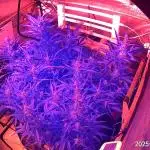
When a green plant is exposed to red light, much of the red light is absorbed, but some is also reflected back. The reflected red light, along with any blue light reflected from other parts of the plant, can be perceived by our eyes as purple.
Carotenoids absorb light in blue-green region of the visible spectrum, complementing chlorophyll's absorption in the red region. They safeguard the photosynthetic machinery from excessive light by activating singlet oxygen, an oxidant formed during photosynthesis. Carotenoids also quench triplet chlorophyll, which can negatively affect photosynthesis, and scavenge reactive oxygen species (ROS) that can damage cellular proteins. Additionally, carotenoid derivatives signal plant development and responses to environmental cues. They serve as precursors for the biosynthesis of phytohormones such as abscisic acid () and strigolactones (SLs). These pigments are responsible for the orange, red, and yellow hues of fruits and vegetables, while acting as free scavengers to protect plants during photosynthesis.
Singlet oxygen (¹O₂) is an electronically excited state of molecular oxygen (O₂). Singlet oxygen is produced as a byproduct during photosynthesis, primarily within the photosystem II (PSII) reaction center and light-harvesting antenna complex. This occurs when excess energy from excited chlorophyll molecules is transferred to molecular oxygen. While singlet oxygen can cause oxidative damage, plants have mechanisms to manage its production and mitigate its harmful effects.
Singlet oxygen (¹O₂) is considered a reactive oxygen species (ROS). It's a form of oxygen with higher energy and reactivity compared to the more common triplet oxygen found in its ground state. Singlet oxygen is generated both in biological systems, such as during photosynthesis in plants, and in cellular processes, and through chemical and photochemical reactions. While singlet oxygen is a ROS, it's important to note that it differs from other ROS like superoxide (O₂⁻), hydrogen peroxide (H₂O₂), and hydroxyl radicals (OH) in its formation, reactivity, and specific biological roles. Non-photochemical quenching (NPQ) protects plants from damage caused by reactive oxygen species (ROS) by dissipating excess light energy as heat. This process reduces the overexcitation of photosynthetic pigments, which can lead to the production of ROS, thus mitigating the potential for photodamage. Zeaxanthin, a carotenoid pigment, plays a crucial role in photoprotection in plants by both enhancing non-photochemical quenching (NPQ) and scavenging reactive oxygen species (ROS). In high-light conditions, zeaxanthin is synthesized from violaxanthin through the xanthophyll cycle, and this zeaxanthin then facilitates heat dissipation of excess light energy (NPQ) and quenches harmful ROS.
The Issue of Singlet Oxygen!!
ROS Formation: Blue light, with its higher energy photons, can promote the formation of reactive oxygen species (ROS), including singlet oxygen, within the plant.
Potential Damage: High levels of ROS can damage cellular components, including proteins, lipids, and DNA, potentially impacting plant health and productivity.
Balancing Act: A balanced spectrum of light, including both blue and red light, is crucial for mitigating the harmful effects of excessive blue light and promoting optimal plant growth and stress tolerance.
The Importance of Red Light:
Red light (especially far-red) can help to mitigate the negative effects of excessive blue light by:
Balancing the Photoreceptor Response: Red light can influence the activity of photoreceptors like phytochrome, which are involved in regulating plant responses to different light wavelengths.
Enhancing Antioxidant Production: Red and blue light can stimulate the production of antioxidants, which help to neutralize ROS and protect the plant from oxidative damage.
Optimizing Photosynthesis: Red light is efficiently used in photosynthesis, and its combination with blue light can lead to increased photosynthetic efficiency and biomass production.
In controlled environments like greenhouses and vertical farms, optimizing the ratio of blue and red light is a key strategy for promoting healthy plant growth and yield.
Understanding the interplay between blue light signaling, ROS production, and antioxidant defense mechanisms can inform breeding programs and biotechnological interventions aimed at improving plant stress resistance. In summary, while blue light is essential for plant development and photosynthesis, it's crucial to balance it with other light wavelengths, particularly red light, to prevent excessive ROS formation and promote overall plant health. Oxidative damage in plants occurs when there's an imbalance between the production of reactive oxygen species (ROS) and the plant's ability to neutralize them, leading to cellular damage. This imbalance, known as oxidative stress, can result from various environmental stressors, affecting plant growth, development, and overall productivity.
Causes of Oxidative Damage: Abiotic stresses: These include extreme temperatures (heat and cold), drought, salinity, heavy metal toxicity, and excessive light. Biotic stresses: Pathogen attacks and insect infestations can also trigger oxidative stress. Metabolic processes: Normal cellular activities, particularly in chloroplasts, mitochondria, and peroxisomes, can generate ROS as byproducts. Certain chlorophyll biosynthesis intermediates can produce singlet oxygen (1O2), a potent ROS, leading to oxidative damage. ROS can damage lipids (lipid peroxidation), proteins, carbohydrates, and nucleic acids (DNA). Oxidative stress can compromise the integrity of cell membranes, affecting their function and permeability. Oxidative damage can interfere with essential cellular functions, including photosynthesis, respiration, and signal transduction. In severe cases, oxidative stress can trigger programmed cell death (apoptosis). Oxidative damage can lead to stunted growth, reduced biomass, and lower crop yields.
Plants have evolved intricate antioxidant defense systems to counteract oxidative stress. These include: Enzymes like superoxide dismutase (SOD), catalase (CAT), and various peroxidases scavenge ROS and neutralize their damaging effects. Antioxidant molecules like glutathione, ascorbic acid (vitamin C), C60 fullerene, and carotenoids directly neutralize ROS. Developing plant varieties with gene expression focused on enhanced antioxidant capacity and stress tolerance is crucial. Optimizing irrigation, fertilization, and other management practices can help minimize stress and oxidative damage. Applying antioxidant compounds or elicitors can help plants cope with oxidative stress. Introducing genes for enhanced antioxidant enzymes or stress-related proteins over generations.
Phytohormones, also known as plant hormones, are a group of naturally occurring organic compounds that regulate plant growth, development, and various physiological processes. The five major classes of phytohormones are: auxins, gibberellins, cytokinins, ethylene, and abscisic acid. In addition to these, other phytohormones like brassinosteroids, jasmonates, and salicylates also play significant roles.
Here's a breakdown of the key phytohormones:
Auxins: Primarily involved in cell elongation, root initiation, and apical dominance.
Gibberellins: Promote stem elongation, seed germination, and flowering.
Cytokinins: Stimulate cell division and differentiation, and delay leaf senescence.
Ethylene: Regulates fruit ripening, leaf abscission, and senescence.
Abscisic acid (ABA): Plays a role in seed dormancy, stomatal closure, and stress responses.
Brassinosteroids: Involved in cell elongation, division, and stress responses.
Jasmonates: Regulate plant defense against pathogens and herbivores, as well as other processes.
Salicylic acid: Plays a role in plant defense against pathogens.
1. Red and Far-Red Light (Phytochromes):
Red light:
Primarily activates the phytochrome system, converting it to its active form (Pfr), which promotes processes like stem elongation and flowering.
Far-red light:
Inhibits the phytochrome system by converting the active Pfr form back to the inactive Pr form. This can trigger shade avoidance responses and inhibit germination.
Phytohormones:
Red and far-red light regulate phytohormones like auxin and gibberellins, which are involved in stem elongation and other growth processes.
2. Blue Light (Cryptochromes and Phototropins):
Blue light:
Activates cryptochromes and phototropins, which are involved in various processes like stomatal opening, seedling de-etiolation, and phototropism (growth towards light).
Phytohormones:
Blue light affects auxin levels, influencing stem growth, and also impacts other phytohormones involved in these processes.
Example:
Blue light can promote vegetative growth and can interact with red light to promote flowering.
3. UV-B Light (UV-B Receptors):
UV-B light:
Perceived by UVR8 receptors, it can affect plant growth and development and has roles in stress responses, like UV protection.
Phytohormones:
UV-B light can influence phytohormones involved in stress responses, potentially affecting growth and development.
4. Other Colors:
Green light:
Plants are generally less sensitive to green light, as chlorophyll reflects it.
Other wavelengths:
While less studied, other wavelengths can also influence plant growth and development through interactions with different photoreceptors and phytohormones.
Key Points:
Cross-Signaling:
Plants often experience a mix of light wavelengths, leading to complex interactions between different photoreceptors and phytohormones.
Species Variability:
The precise effects of light color on phytohormones can vary between different plant species.
Hormonal Interactions:
Phytohormones don't act in isolation; their interactions and interplay with other phytohormones and environmental signals are critical for plant responses.
The spectral ratio of light (the composition of different colors of light) significantly influences a plant's hormonal balance. Different wavelengths of light are perceived by specific photoreceptors in plants, which in turn regulate the production and activity of various plant hormones (phytohormones). These hormones then control a wide range of developmental processes.


@ChitownCannaChica
Follow
Took off some bigger fans that were just blocking bud sites and airflow. She’s short, but packing on the trichomes now and has a very unique smell! Terpene profile is very unique and smells great! ✌️💚🌿💨


@Sundance
Follow
The weak plant is a disaster but learning making the masters, right. The healthy plant is fantastic, smell well and flowers are growing.





@ElBrujoTHC_Official
Follow
Terminamos nuestra quinta semana pasando a floración nuestras fotodependientes 🍀💫 empieza la magia


@Notsogreenthumb
Follow
We’ll week ten is here and I’m amazed to say the least. The girls are doing wonderful. Getting sticky and thick. Probably going to start flushing the zkittles and purple lemonade here in the next day or so. Most of the tricomes are milky noticed one or two ambering. The blackberry has another week I believe. They all smell amazing. Can’t wait to smoke them!


@Appoldro420
Follow
03/01 Wow, I’m honestly blown away by how this grow is progressing! In the last 24 hours alone, they’ve guzzled an incredible 45 liters of water. 😲 I mean, seriously, that’s insane! The stretch is probably just about wrapping up, so I’m keeping busy tying them down for now. Once the stretch is over, I’ll be going in for some selective pruning—there are just so many new shoots popping up. I’ve got to say, I’ve never seen growth like this before.
It’s exhausting, though, and I’ve already run out of zip ties again! 😂 So, tomorrow’s mission: stock up on more.
I’ve noticed a few slightly discolored leaf tips here and there, but it’s really minimal. That’s exactly what I’m aiming for—pushing them right to the edge without overfeeding. 🎯 Also, I just realized it’s been over a week since I added any CO2. Maybe that’s why I’m seeing these tiny signs? 🤔 Something to experiment with moving forward.
Honestly, I’m so curious to see where this grow takes me—there’s so much potential in these plants! Stay tuned, folks. 🌿💪
06/01: Last night, I started defoliating, and I really went at it with a ruthless approach. I didn’t worry about branches snapping while scrogging—my philosophy is simple: the strongest will survive, and the weakest will wither away. Survival of the fittest in action!
I also noticed that one plant seems to be either too wet or too dry. I’ll need to keep an eye on this one because there’s quite a bit of dying foliage at the bottom. My gut tells me it’s slightly overwatered, although that shouldn’t really be an issue with coco. Still, better safe than sorry! 🌱💪


@Quintall
Follow
Die erste Woche ist da die Pfalze in der Mitte hat leider ihren Samen erst recht spät abgeworfen. Deswegen glaube ich das die bisschen gespargelt hat.
Die Pflnazen schlucken langsam immer mehr Wasser. Sie fangen sehr leicht an zu riechen.
Luftfeuchtigkeit immer zwischen 60-70 %
Temperatur 20-25 grad